One if by land, two if by air: A Gamble in Ecuador (a recap of my time in Quito in 2021)

Bear with me, but I am going through my drafts and trying to release a few. I wrote this back in 2021. I decided to leave out the cringe-worthy prologue about the plans I ditched that year reminding of how naive I used to be. But the information and experience I had in Quito as I described it was worth recounting, so here you go!

Currently, I’m sitting in the airport in Guayaquil, Ecuador. I’ve got about 6 hours until my flight to Colombia, so I’ve been reading through my new German Essentials for Dummies book and now finally updating this blog.

What have I been doing in Ecuador, you ask? Well, I needed to check off at least one country from my list this year. I wasn’t sure if I’d be accepted to the Trilingual International Studies program so I went ahead and booked a flight to Quito, Ecuador after deciding that I would make a trip home to visit my folks. My time home completely revolved around family – including a terribly wholesome family roadtrip to visit my grandpa in New Mexico. I really needed to do something for me after that; it wasn’t what I originally had in mind, as I have been hoping to explore several South American countries during the June-July break (thanks, Corona!), but it was a nice way of getting out of my comfort zone and exploring a new place.

I booked the flight back in mid-June after deliberating over flights with my brother. Parentals insisted that flying into Lake Charles was the easiest option for everyone, so I decided that if I was going to be paying extra to fly into a small city airport anyway, I might as well tac on a return flight to Quito. The roundtrip flight cost around $600, $400 of which were covered by finishing my 2-year work contract.

My time at home passed quickly, and before I knew it, I had only booked a single hostel for my first two nights in Quito. Frankly, I like traveling this way, because up until I stayed in Quito for the weekend, I wasn’t even sure where I wanted to go after exploring the capital. My original plan was to casually work my way north since Quito is only about 4-5 hours from the border with Colombia, then cross by land and bus around to some places of interest on the way home (including Pasto and a possible stop in Ibague or Villavicencio).

This was my plan. No flights back. I even did several searches to see what the most viable way of crossing the Ecuador-Colombia border would be. I had it all figured out, I thought, before I even had each day of my trip mapped out.

Until I started talking to other people in the hostel and got a more up-to-date view of the border crossing. Ironic that when you search for information about the Ecuador-Colombia border, the fact that it’s closed on the Ecuadorian side doesn’t come up.

Colombia has opened up their side with Ecuador since mid-June, however Ecuador doesn’t seem to be keen about letting people out or in by land. I understand that ground borders tend to be less regulated and therefore less practical for preventing people with the Corona Virus from crossing, but I feel this is more about population control in general. Plus, it does nothing to efficiently stop the transport of contraband. Airports are perhaps more orderly and “cleaner” in their regulation of the comings and goings of people.

One of my favorite things about solo travel is being able to time and pace things to my liking. I book based on my energy level and the amount I want to do during my stay. I knew from the beginning that I would probably only spend the weekend (Friday-Sunday) in Quito, so I intended to make my time count. That’s how I decided to book a bunk at the Secret Garden hostel in Quito’s historic downtown. This hostel has a breathtaking view of the city. Even when arriving, exhausted, at 11:30 pm on Friday night and having to walk up 4 flights of stairs (this is how you get the amazing rooftop bar view), I couldn’t help but stare in awe at the lights and illuminated monuments of the Ecuadorian capital.

This hostel was perfect for meeting travelers from all over the world, both young and old. The next day, I had breakfast around 9 am in order to be prepared to take off on a 2-hour free walking tour at 10. I sat alone and couldn’t help overhearing the conversation at the table next to me – a mixture of French, English, and German! I admit it, I was itching to just insert myself into that conversation and try practicing my language skills. But I was not fully awake or comfortable and felt that would be obnoxious and awkward, so I contented myself with just eavesdropping (one of the great joys of being a language learner/polyglot).

I cannot hype the walking tour enough. Once I ate and changed, I met on the same rooftop where reception and the kitchen/bar are located to wait for the guide to arrive. While waiting, a girl from Switzerland struck up conversation with me. In hostels, you find yourself meeting people from all over and initially starting conversations the same way over and over again (Where are you from? How long have you been here? What are your plans? Why did you choose x country to visit?). It’s inevitable but enjoyable nonetheless because every person you meet has a slightly different story.

Our group was a European mixture. I was the only American on the tour. Other hostel stayers included a Belgium couple, a Spanish couple, and a man from Sweden. We started with a group picture, being taught about the “Cuy” or rodents (like Guinea Pigs) that were a traditional part of local cuisine as we were told to shout “Cuy!” instead of cheese. (sidebar: I learned this is a homophone with the French word for balls)

The tour felt something like a hike as we went up and down the infinite hills and slopes of Quito. We saw several breathtaking and gaudy Catholic churches, including La Basilica, with its famous condor spire. Entry to most of these buildings and museums costs between $2-5 dollars. We were shown old buildings built on foundations mixed with bones. In pre-Colombian times, people would use the bones of their deceased relatives to infuse the house with their spirit and be protected by them. The bones in the foundations we saw were animal bones, but I wondered where I might see a structure old enough to still have human bones mixed into the stone. We also learned other fun facts about the architecture and saw stones around the Presidential Palace that could be traced back to the time of the Inca based on the shape and texture of their stones.

The highlight of this walking tour is the sampling we got to do. Angie, our guide, took us to a jugueria or fruit/juice spot where we got to try fruits typically used to make juice in Ecuador. Most are the same as in Colombia, except for taxo (I’m still not sure if it has an equivalent in Colombia or if it’s totally unique and native to Ecuador), and some with different names like naranjilla (known as lulo in Colombia). This reminded me of the walking tour I took in Cali which included a last stop in the Alameda market. I bought a jugo de taxo for one dollar, just for the sake of its novelty. I hadn’t missed out on much, though, as the orange-colored juice is quite bland and sort of tasteless in my opinion.

Our next stop included an explanation of how chocolate was made from the bitter cacao seeds/beans and included lots of samples of chocolates made from 60%-100% purity. Apparently, most commercial chocolates (Hersheys, etc.) can’t be considered true, high quality chocolate because they have under 60% of cacao needed to be called “real.” I had had a huge breakfast and was feeling so full I couldn’t even finish all of my chocolate samples – never thought I’d see the day when I didn’t have space for sweets!

Finally we finished our adventure in a private room upstairs where I assume people usually get together with their friends to drink and dance. I got to give a brief salsa demonstration (LOL) because out of everyone there I was the only person that new the basic steps (other than Angie). We got our canelazo (traditional cinnamon drinks mixed – optionally – with sugarcane rum, the most common liquor sold native to Ecuador) and everyone learned the famous drinking phrase: Arriba, abajo, al centro, pa’ dentro!

During this experience, I made plans with my Swiss friend Ramona to go on our own little tour. At first, we were just going to the teleferico (a cable car suspended in the air that is used to quickly scale mountains) to capture of view of the city. Our taxista convinced us that we could squeeze in La Mitad del Mundo (~50 minutes from the hostel) into our schedule and do it all – just for $35. Did I mention Ecuador is more expensive than Colombia? And the currency is dollars? Because that would be a shitton of pesos colombianos and I would refuse. But here, that sounded like a good deal to split between two people. Plus, just to get from the airport (some 45 minutes away at the time I got in, nighttime), I got tricked into paying $30 for a ride that usually would cost $20. Not knowing the local pricing and sleeping on negotiating can really drain your money.

For $5 we entered the Middle of the World monument park. There are lots of museums and shops to visit inside, but the gimmick that this is the exact place where the equator passes (0 degrees latitude) is apparently debunked in the museum we decided to skip.

Another fun tip is to make sure you bring layers or a good jacket. It was so windy, and after sweating during the walking tour, Ramona and I were convinced it wouldn’t be too cold. We were wrong, oh so very wrong – and me more than her because I didn’t even take a sweater just in case.

The real chill factor came with the teleferico. After the fast yet interminable climb to the top overlooking the city (roughing 15-20 minutes long), we were literally in the clouds. We could see our breath. I started losing feeling in my fingers and had to hike at a brisk pace (as brisk as my gasping breaths in the high altitude would allow) in order to stay warm. The trail leads to a swing set, el columpio en las nubes, or the swing in the clouds. By the time we finally got our turn on the swing set, the mountain was completely embanked by clouds and fog.

Instead of waiting in an infinitely long line to go down, we waited out the cold in the cafe. We were literally the last of the people to go down the mountain and had a surprise scare when the gondola suddenly froze when we finally had the base station in view. Trust me when I say, I was lowkey-highkey screaming on the inside.

Our night was tied together with a mediocre meal at the hostel and a great night out. We went up in taxi with a Danish guy that had been sat with Ramona for dinner and the Swedish man we met on the tour. We enjoyed a couple cups of canelazo and an incredible view of the Virgen del Panecillo, the name for the hill overlooking the city. We weren’t expecting to find a full fair of street food and live performances at the top of that hill, but our night was made by the visit.

To return to my predicament, I discovered that night that I wasn’t the only one hoping to cross into Colombia by land. After making lots of calls, an acquaintance I made in The Secret Garden hostel concluded that you could cross by taxi without getting stamped, as long as you didn’t need to return to Europe. Obviously, the legality of such a situation is murky, but with that information, on Sunday I booked my next stay at Hospedaje Vertientes del Imbabura. I set out full speed ahead towards Otavalo once I felt rested enough.

The Ecuadorian countryside was lovely. I got to meet some kind locals — a taxi driver that told me about how inflation with the switch to the dollar had affected people living in Ecuador for the worst; a kindly innkeeper for lack of a better name that told me about the local Andean culture of Imbabura with their Summer Solstice festival and rituals; even in Otavalo I found kind faces in the Plaza de los Ponchos where I ended up buying two ponchos (one of which unfortunately was synthetic, but I got what I could on a limited budget). From Otavalo, I hiked up to a waterfall with a local guide and tried some local food before caving to the realization that I was not willing to risk crossing the Ecuadorian border illegally.

Tearful, I ended up booking a flight from Quito which I honestly do not regret as much as I thought I would. The funny thing about spending money when you travel is you rarely look back and say, “Fudge! I shouldn’t have spent that money that clearly went towards making my life better!” It hurts in the moment, especially when you miss a flight and have to pay for a new one, but in this case, the monetary cost of leaving Ecuador legally was worth the stress of booking a last-minute flight to avoid taking risks by going in some pirate taxi on some sketchy dirt road between Ecuador and Colombia that could have ended up costing more in more ways than one.

So! Moral of the story: spend the money and forget about it. In the long run, it doesn’t matter. Traveling well and taking precautions will never be a waste of money, even if that money could have been spent better or wiser.

At least that’s my takeaway from this experience 3 years later. It hasn’t been that long in reality, but it feels like ages have passed since then, and so it goes….
From the Archives: Poesía de Resistencia

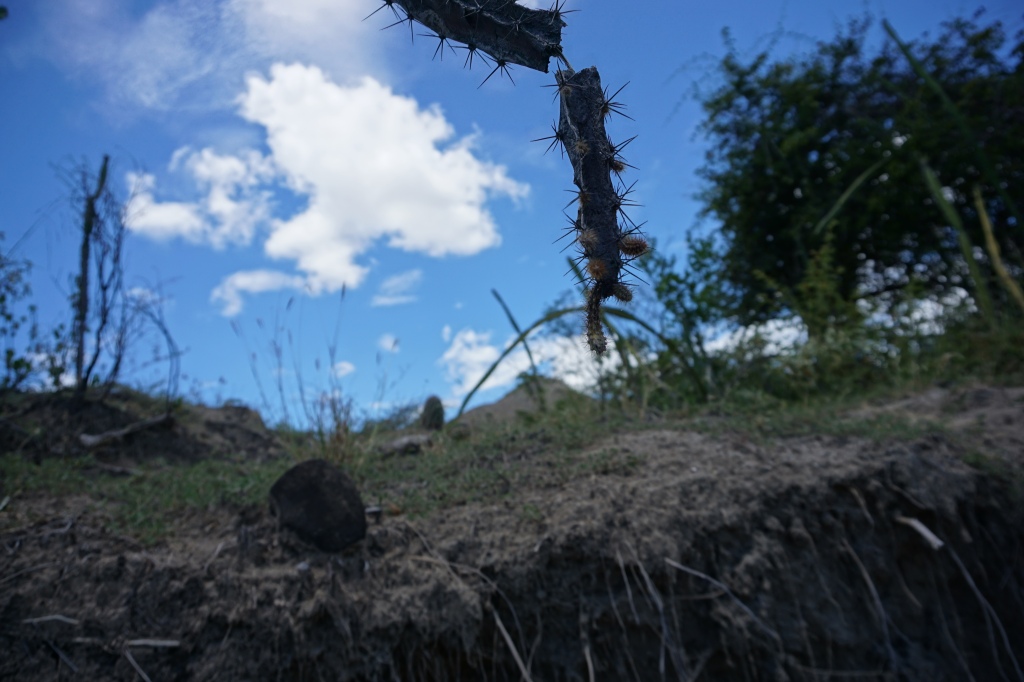
Vida Desértica – El Desierto de la Tatacoa, el Gris

Esperanzas Caídas: la Flor Transplante

Puedo embrujar con mi belleza,
Una mirada coqueta, un vistazo de miel
Y carne y hueso y sangre
Pero eso no me completa
No me define.
Mis venas se convierten en raíces
Buscando tierra fértil en la que
Se puedan sentir en casa
Pero sólo encuentran huecos,
Lugares donde se pueden quedar
Sin angustia, sin molestia, sin pena,
Pero pronto se ponen a morir.
Sus hojas se marchitan y
Se vuelven marrón, gris, negro y
La flor se cae al suelo,
Descuidada, olvidada
En tierra extranjera
Y distante, los recuerdos de 
Su belleza encantadora
Se van olvidando, esfumando
Aunque la transplante pidió lo contrario,
Que la cuidara bien la tierra,
Pero está envenenada en cada rincón
Y no había forma de evitarlo
Ni prevenirlo ni siquiera darse cuenta
Antes de que desaparezca todo
Y no queda nada mas que tierra yerma.

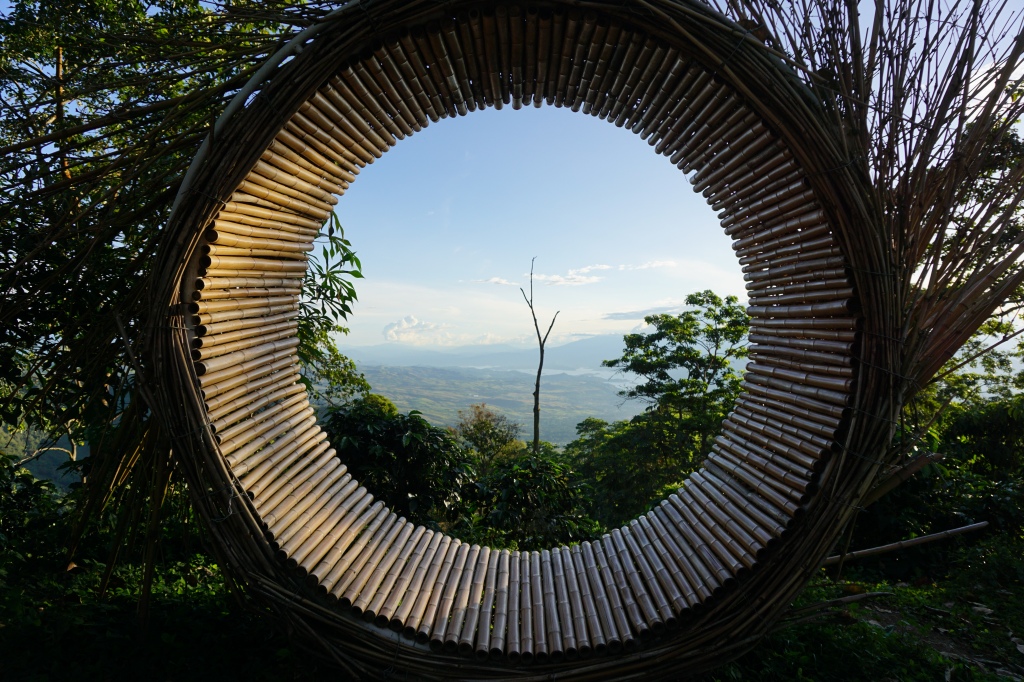
Perfect Circle – Montaña el Gigante, Huila

La Lucha Ajena

We cannot fight injustice
In isolation.
That’s what they want–
Each of us struggling from 
Our own separate little islands,
Fighting like we’re alone.
Only if we band together
As people, as humanity,
Can true change come.
Why do you think so many
Marxist revolutions ended
In dissolution and confusion,
Corrupted by global capitalism
And elitism and the Vanguard–
Fuck the Vanguard.

Only if we come together as one,
Organize, empathize,
Will we end injustice,
End the bloodshed in the streets
And the mindless fury–
The greed of the rich,
The survivalism of the poor,
All hustling for themselves or
A dream deterred;
Langston Hughes knew:
If we can feel
For a poem or feel
Pain for some character
Whose heart never felt,
Who never existed,
Then why not fight
For our fellow flesh-
And-blood.

We’re always saying:
“The struggle is real,”
But what are we struggling
If not the struggle of others:
The women in the sweatshops,
In the brothels of the so-called
Third world, a broken model,
The obrero and the aspiring
Rapper, painter, entrepreneur,
Survivor, whatever you are,
Wherever you come from–
Compton, Harlem, Honduras,
Martinique, Korea, the Congo,
The slums, the suburbs,
‘Cause who are we?
Are we our hoods
And gentrified oases,
Segregated from one another
As if our flesh were
Sliced in pieces and flayed
From our bodies?
Who are we
To struggle at all,
The struggle of others–
But if we aren’t,
Moving, fighting, bleeding,
Breathing the struggle
Then we are dust on the wind
Of history,
We are soon forgotten,
Negatable, silent,
Better off dead–
Nothing.

‘Cause who the fuck am I?
White girl, middle class girl,
Ignoring the fact that middle class
Is code for upper class aspiring,
‘Cause I never wanted the lies
They were selling, like high-
Priced cosmetics, all fluff
That I don’t need anyway–
I’d rather cut my legs off
Fighting someone else’s
Battle than waste a few hours
Deciding if my skin is too white
To care or if the bags under my
Eyes are too offensive to the eye.
‘Cause I believe if it’s hurting you,
It’s hurting me.
We’re all part of the same body,
And if I let them sever you,
Why not sever myself
And give into the depression
Eating me alive without meaning–
Better with meaning,
To scream till my lungs
Explode, to know
What it feels like
To have a reason
To suffer
And in doing so
Lessen the suffering
Of others.

La Ceiba, Gigante – símbolo nacional de la libertad de Colombia

Adaptación

Tengo el don de la adaptación.
El mundo siempre está cambiando y
yo también.

Cambio de piel
Cambio de voz
Cambio de opinión
Cambio de perspectiva
Cambio de tema
Cambio de camino
Pero a la vez

No cambio por nadie–
Y nunca lo haré.

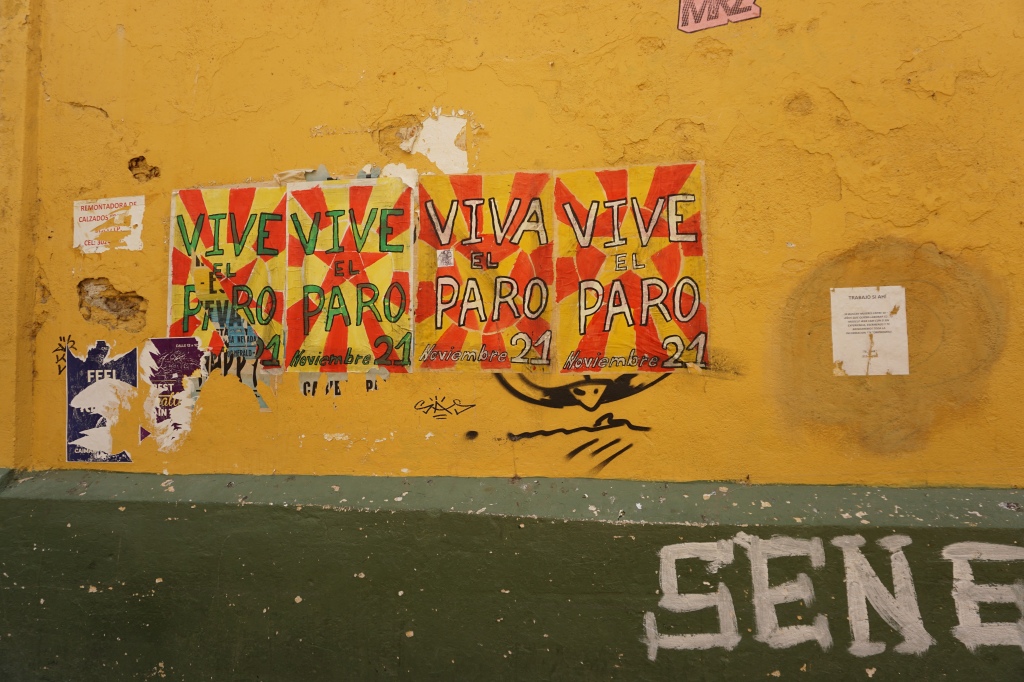
Viva el Paro – Santa Marta, Magdalena

“They’re Killing Us”: Paro Nacional and Witnessing a Human Rights Crisis

Pode ser uma imagem de uma ou mais pessoas e texto que diz "LAWMARTINEZR NOS QUIE REN SACAR LOS OJOS PORQUE SABEN QUE YA LOS ABRIMOS"

The heat has been suffocating in the “City of the Holy Kings.” Since yesterday, we’ve been under a perpetual veil of heavy clouds and humid heat. Last night, I thought for sure that the sky would finally break open and rain would wash the streets clean.

Instead, the heat and dimness continue. The only thing that washed the streets of Valledupar last night was the blood of civilians protesting. The explosion came, but not in the form of rain, thunder, or lightning. The tension caused by the chaos that seized the march and the detention of protestors is palpable and unrelenting.

Social media has given us the gift of reaching people from around the world in a matter of moments. Tears wet my cheeks as I read through and watch video after video of a horror that seems to have happened over night. If only. Imagine, if social media had existed in the 80’s when farms were actively being gassed or during the Segovia massacre of 1988. The past 30 years have been marked by the slaughter of union leaders, farmers, campesinos, indigenous people, sympathizers of certain political parties, and anyone with the gall to demand that their human rights be respected.

As someone that studied Latin American history and politics, I felt stirred by these facts and narratives having only been able to experience them dead on the page. I didn’t imagine that I might actually be in the middle of one of these historical and devastating moments. I didn’t realize just how sadly entrenched they are in the human experience of people living under oppression in communities all over the world.

There have been dozens of videos circulating of people running through the streets, tanks filling the city, teargas shrouding the air, the sound of weapons firing, children screaming as their anguished faces are washed with milk, the cries for justice even as the police deny the right to protest, deny that they themselves are acting with cruel impunity. As they throw teargas bombs into buses full of civilians. As they gather around the people, non-binary, men, women, elderly, children, and grab them, threaten them, punch them, force them into corners, and carry them off on motorcycles.

I’ve always wondered about these ESMAD characters. They’re supposed to be brave defenders of the public. An anti-riot branch of the Colombian police force. They’re supposed to be these pillars of justice that go to protests to dissuade violence and looting. In fact, it’s ironic to see them in their heavy armor carrying their huge weapons as they tower over and surround – unarmed young people that look defenseless by comparison – and incite violence. And we are supposed to believe they are protecting the community from the protestors they mercilessly intimidate?

Everyone I know is against this tax reform and supporting the constitutional rights of Colombians to protest. Except, astonishingly, for the members of the military I’ve met. According to statistics circulating, around 80% of the Colombian population are against the tax overhaul reform that’s supposed to respond to the economic crisis the country is facing. How does it propose to solve the crisis? By taxing and subsidizing. The main issue that people are expressing with this method is that the crisis being faced in Colombia – unemployment, increasing poverty, a poor and slowly executed vaccination process – is not going to be fixed by raising taxes and adding new ones. True, part of the taxing would only apply to the wealthier sectors of society, but it would also include the struggling middle class or middle class-aspiring sector.

And all to be able to provide an 80.000 pesos (that’s only around $22 USD!) monthly subsidy for people living in extreme poverty. What will that do? Oh, so much if you ask the richest sector of Colombian society who perhaps could afford to do just a little bit more. But that would require that money stop being stolen from public works budgets, equally inflated in importance but never producing the promised result.

People are skeptical. People are scared. Who could possibly blame them, when the stakes are this high and everything they’ve experienced from the authorities so far has resulted in lies and more lies.

And now, to top it off, it takes marches for the president to call for a “reworking” of the reform. It takes the documenting of at least 21 murders by the military and the police, 940 cases of police brutality, 672 arbitrary arrests of civilians, and 4 victims of sexual violence (that we know of) for people to take notice of what has been a history soaked in blood. That’s why, in solidarity, as a sign of resistance, Colombians use the flag as their icon, upside down, placing the red blood of the patriots who fought for freedom at the top.

As an expat living in Colombia I’ve learned that even though I may never understand what it’s like to have grown up in extreme poverty, living on $100 or less a month working every day of the year with zero paid vacation time, in a country in civil war where tanks and fully armed soldiers can be seen patrolling the streets for no known reason except to “maintain order” – I stand. I stand with the people that are sick of living in fear.

Just as any US American should. This is just as much our fight. After all, our country funded all of this military equipment. Our country provided the resources to militarize the police force. Our country supported the “paraco hpta” of Uribe as it has countless right-wing military dictators. Our country benefited by keeping so many countries impoverished and suppressed.

And now? We’re finally starting realize that these actions and choices have consequences. Allowing corruption to exist in other places to benefit businesses in “first world” countries is like setting your house on fire to warm your own room during the winter. Now, the countries that have dealt with the brunt of colonization and foreign intervention and neo-liberalism have governments corrupted at every level, and this corruption leads to the same economic crisis happening in Colombia. And with a global pandemic? Full hospitals, under-paid medical workers, non-existent relief packages, non-existent state aid for the nearly 40% of the population living below the poverty line, and a population in which only 1 859 657 out of 51,321,307 people have been vaccinated so far.* And the list goes on and on…

Yet the conversation remains divided along economic lines. Just like in the US, here we have people feebly and some even passionately decrying vandalism and chiding those brave enough to protest. In spite of the fact that the protestors have stopped and even prevented and returned looted goods, there is always a portion of the population which demonizes all protestors as criminals who want the government to “give them everything.”

No, not everything. Just the human right to a life of dignity. Just a transparent government with a clear record on its budgets and military maneuvers. A stand against corruption. The right to demonstrate. The right to a future where children cannot be killed and gassed by the police and face zero consequences.

I know. It’s overwhelming. So much is happening in the world right now. And then there’s this. But these are just the consequences of history. If we don’t learn our history and see how we are all connected by it, we will never escape the domino effect we’ve been locked into. We are all facing one global struggle. If we cannot come together, if we cannot care about our neighbors, then we’re screwing ourselves over just as much.

While all of this is going on, I’m teaching classes online from my apartment in Valledupar. I’m living my dream life, and yet nothing could feel more upsetting and wrong.

To relieve some stress, I order a snack. I walk down the stairs out to meet the delivery man. He’s lost, and for a good reason. My apartment building has gone ghostly silent. All of the corridors are dark. I haven’t been outside today, but if what I’ve been watching online is any indicator, the sense of abandonment and fearfulness is real. Just the other day, Uribe posted on his twitter condoning the use of violence and force to suppress protestors out of “self-defense” against “terrorism.” With leaders like this with all of their shady, violent histories and absent morals, yet somehow untouched by international authorities – it’s easy for me to comprehend this silence. Plus, my apartment is somewhat removed from the heart of the city. But I can imagine that the silence there is just as heavy. Silence like a paperweight, a reminder of what’s happened and what’s to come.

I sense that this is only the calm in the eye of the storm. Many have posted warning against false fliers calling for protestors to meet tonight. They say this is a tactic that is used to round up the protestors and slaughter them all at once. Protesting will resume tomorrow, though, and I plan to be there.

This might not be my fight, but I am here and I will be there in spirit and in body to make sure that I can be some part of the change I have been dreaming about seeing in the world. As so many have said before me, including the current president of the United States: “Our silence is complicity.” And I refuse to choose silence.

Our power is in our voices, our platforms, our identities. Do not underestimate your power and ability to fight injustice.

*Meanwhile, in the US over 105 million people have already been vaccinated; Colombia continues to be in its “2nd phase” in which only medical workers and people between 60-79 years old are eligible to be vaccinated. Global inequality is real.

Pode ser uma imagem de 1 pessoa, em pé e ao ar livre
Credit to: @bryanbeltran_ph (https://instagram.com/bryanbeltran_ph?igshid=cpxlbgzr2ohu)

Some useful sources:

COVID-19 Vaccine Tracker: How Many People Have Been Vaccinated In The U.S.? : Shots – Health News : NPR

covid-19-data/Colombia.csv at master · owid/covid-19-data · GitHub

Vacunación contra la COVID-19 en Colombia – Wikipedia, la enciclopedia libre

Colombian Tax Reform and International Tax Law – Universidad Externado de Colombia (uexternado.edu.co)

Reforma tributaria 2021: esto es lo que deben saber los colombianos – El Espectador – YouTube

In Colombia, 19 Are Killed in Pandemic-Related Protests – The New York Times (nytimes.com)

Petition to involve the UN:

Petición · Que la ONU Intervenga YA para detener el genocidio que promueve el gobierno en Colombia · Change.org

Opportunities for Growth

During quarantine last year, all of the time I had to myself gave me lots of opportunities to digest thoughts that had not yet crystalized for me before. About myself, my goals, and most importantly habits and how integral they are to being successful and staying motivated.

So often we put ourselves in this catch-22 scenario where we can only do what we want if we sacrifice our own mental health in some way. We can never win. If we do what we want, we have no time. If we don’t, we feel like we aren’t doing enough.

Wait, was I just projecting my own problems with prioritizing? I guess so. I confronted these feelings a lot during my time in quarantine, needless to say.

We want to create, but struggle to do so. We want to exercise, but fail to find motivation. Wanting to achieve our goals, but — for some reason or another — we still procrastinate on them. We fail to fall in love with the process.

We have to start. That’s the first step. Then from there we have to keep going. That’s been harder than starting, some days. So I started doing a little research on how these new habits I want to form can be done in the most logical and passive way possible. Passive, in the sense that it doesn’t have to be this aggressive struggle to do as much as possible every day. I’d been living by that rule, going against the grain and pushing myself past the bounds of self-care: all or nothing. And yes, I felt drained, and somewhat unsatisfied as a result. Because it never seemed to be enough.

Growing up, my dad would always be watching Seinfeld. I was a big fan, even if a lot of the more sophisticated jokes went over my head. It was always a groundbreaking show to me, in a way, because I felt it had a different vibe than other sitcoms that were big at the time. It felt somehow more authentic.

Never would I have guessed that there was more than just comedic genius behind its creator’s success.

“After a few days you’ll have a chain. Just keep at it and the chain will grow longer every day. You’ll like seeing that chain, especially when you get a few weeks under your belt. Your only job is to not break the chain.”

I found this wonderful article (which I now cannot refind) all about the Seinfeld strategy, described above by my boy Jerry Seinfeld. He pointed out that while most people get demotivated and off–track after a bad performance, a bad workout, or simply a bad day at work, top performers settle right back into their pattern the next day. They reset and keep their long-term goals in mind. They embrace the new obstacles as opportunities for growth.

The Seinfeld Strategy works because it helps to take the focus off of each individual performance and puts the emphasis on the process instead. So instead of obsessing with where we want to be on a daily basis, we focus on the small steps it takes to reaching our destination.

So step one is to choose a task that is simple enough to be sustainable. At the same time, you have to make sure that your actions are meaningful enough to matter. And that your strategies are varied enough to keep you engaged and passionate.

Last month, I also learned about S.M.A.R.T. goals from the Habits for Happiness podcast I discovered for free with my audible subscription. I started 2021 listening to this podcast, and I would highly recommend following this strategy developed by George T. Doran way back in 1981 to help with setting clear objectives in any aspect of life. 

What makes them SMART? You have to ask yourself about any given goal you choose to set: Is it Specific? Is it Measurable? Is it Achievable/Realistic? Is it Relevant to your overall vision? And finally, what is your Timeframe for reaching your goal? You can add on points for exciting and recorded, among other qualifiers, as you see fit.

Although it has been quoted to death, as Greg Reid asserted, writing down a goal, breaking it down into steps, and following through with those steps, with the consistency of the Seinfeld method can make all the difference.

But most importantly, the motivation must be authentic. I realized how hard it was to cultivate motivation when I was actively and frequently struggling with depression. That is true for any dopamine and vitamin D deprived individual such as myself. It comes down to chemical composition. How can we level out and correct the release and maintenance of certain chemicals in the body? I realized that addressing this issue had to be part of my plan. Every plan needs room for maintenance and repair, in the event of a setback or *ahem* breakdown. And once I was in the states, finding solutions to those on-going chemical factors became a priority. 

When it comes to treatment of a disorder or illness, not breaking the chain becomes even more important. One day without taking your medicine or exercising or meditating can cause a dramatic swing in your mood and perception of your situation, as well as your motivation and momentum. It’s not often a permanent state or condition, but it can have damaging effects on your mental wellness and overall assessment of your own progress.

So, as I coped with the new balance adjustments on my chemicals, while evacuating, having no place to call home, virtual classes, familial tension… I fell back even harder on my routine. I focused on the little things that I could do for a short period of time each day. I made sure to zero in on the most pleasurable aspects of those steps in my plan.

I didn’t stop studying French. I’ve almost cleared the lessons on Duolingo and reached a B1 level in about a year of study after knowing next to nothing and not being able to fully immerse myself in real life use of the language. I’ve gradually been building up my content on social media. I’m trying to apply my SMART goals and the Seinfeld method to my writing as well — and I think it’s getting more consistent. I still get blocked looking through all of my drafts, but as long as I am still writing a few lines a day, publishing once I’m satisfied at least a few times a month, then I feel I am reaching my goal.

Another routine that made a huge difference during quarantine was establishing morning rituals. I try to use my phone as a tool to wake me up mentally via podcasts (like Up Next by NPR to get my daily overview of the news), the Daily Stoic, and YouTube videos by channels that post Alan Watts videos and self-help/introspective tips like Better Ideas and Awaken Insight to name a few. Getting your mind right and finding your best headspace in the morning is the best way to wipe the slate of the previous day’s struggles and stumbling blocks and start with a fresh outlook.

I have continued to make this a part of my routine, as well as filling my body with light, healthy food like fruits, grains, and oatmeal to help prevent my typical digestive problems. Health can never take a backburner in our daily life — if nothing else, I think 2020 taught a lot of us that.

Additionally, I applied the Seinfeld method to doing yoga daily in the mornings during my 2 and a half months in lockdown. I reminded myself that it doesn’t matter how much exercise I do, the intensity nor the duration, so long as I don’t stop doing it. Previously, I felt frustrated seeing the results of my hard work in the gym fade after I became too busy to go regularly. What’s the point if the results wouldn’t stick and I’d repeatedly have to start over every time I went?

That’s where not breaking the chain is truly genius. Even if your growth is not linear or exponential, it does pay off in the long run. I haven’t done yoga daily since my time in the States, but since returning to the gym – and on days when I have a lot of tension, pain, and stress – I use the techniques I learned during those 60 whole days straight that I practiced yoga at least once a day. 

It worked! What I learned stuck. And not because I never took time off or never had slow days or short sessions. On the hard days, I took breaks and shortcuts, but I didn’t stop.

In 2021, I continue to think proactively, to enjoy rest and productivity, socializing and self-care in equal measure. The balance has gotten easier, even though it truly is an uphill battle. It’s never as easy as it looks or seems. That’s important to keep in mind. Comparing ourselves to others is the least productive thing we can do when looking to grow and live life to the fullest.

I’ve got to shoutout both my brothers who are a strong example to me of this persistent approach to goals. Jace has gone from knowing next to nothing about music theory and never seriously learning to play an instrument to being able to sing while playing and write songs on the guitar in under a year. How badass is that? As someone who was often a defeatist with new hobbies, I was inspired by how he refused to take a day off from playing or get frustrated, even when he was in exhausting and stressful situations or when progress seemed slow.

My older brother Seth is an extremely hardworking family man. In spite of two hurricanes, having to move suddenly, and all the other crazy consequences of last year, he continues to be a high performer in everything he does. From sports to management and sales, he’s a true inspiration to me as he has become so successful in his work and family life, alike. I’m lucky I’ve had some strong examples in my personal life that have helped me to reach this proactive point in my journey.

I write through the exhaustion of a new hybrid teaching schedule. I’m continuing to learn more about video and photo-editing, teaching and what the hell’s going on in the world — because I’ll need that if I want to get where I am heading. I have projects that I haven’t finished, but at least I have something

And while progress is not linear, the important thing is to keep going.

I love sunrises and dusk pictures, and how could I not include some of my first edits from my New Years trip and a lovely shot of my own backyard (not in that order).