Return to Colombia: The Drama

If you follow my blog, you should know by now that I’m very candid. I don’t just share my travel tips and destinations. I also share my life, my insights, my failures, and my revelations.

3 weeks ago exactly, I came back to Colombia with great expectations. There was a lot to look forward to: a birthday, a baptism, and a wedding. Wow, all that was missing was the irony of a funeral. And, in a metaphorical sense, that’s what I got.

But first, some context. The first week of January this year whilst sitting on a plane minding my own business, I met someone. I fell asleep on him, to be more exact. Snored and drooled on him. And felt completely mortified. Not because I thought anything would happen with this person, but because I would never want someone to invade my space, and there I was, all up in a stranger’s grill. Looking disgusting.

All the same, I was exhausted because that was day following a night sleeping in the Atlanta airport. I had woken up after about 4 hours of sleep and groggily taken my flight to Florida, then got on the next plane to Cartagena with the intention of making up for the sleep I lost.

When I finally came out of it (after the plane landed and abruptly jolted me awake), I realized something bewildering in the state I was in: my earbud had fallen out of my right ear. The same ear that had been leaning against the guy on my right. Now, I didn’t want to cause a scene, so I tried to look around as casually as possible, but when it wasn’t in my seat or by my feet or anywhere around me, I started panicking.

That’s when my neighbor spoke up. He helped me find the earbud, and we started talking organically. That never happens. My first thought was: How can I make sure this conversation doesn’t turn into awkward small talk? And before I knew it, he was telling me about the sabbatical he’d taken for his mental health, and I was sharing the similar experience I had when I decided to leave Colombia.

There was a transparency, an understanding. A spark. As we got off the plane, I started walking slowly to not cut off our conversation. When finally we split up, I couldn’t help but wonder if I should have given him my instagram – and as if he had read my mind, when he got out of the bathroom, he came back to the line (his line was shorter because he didn’t have to go through immigration) and asked me for just that.

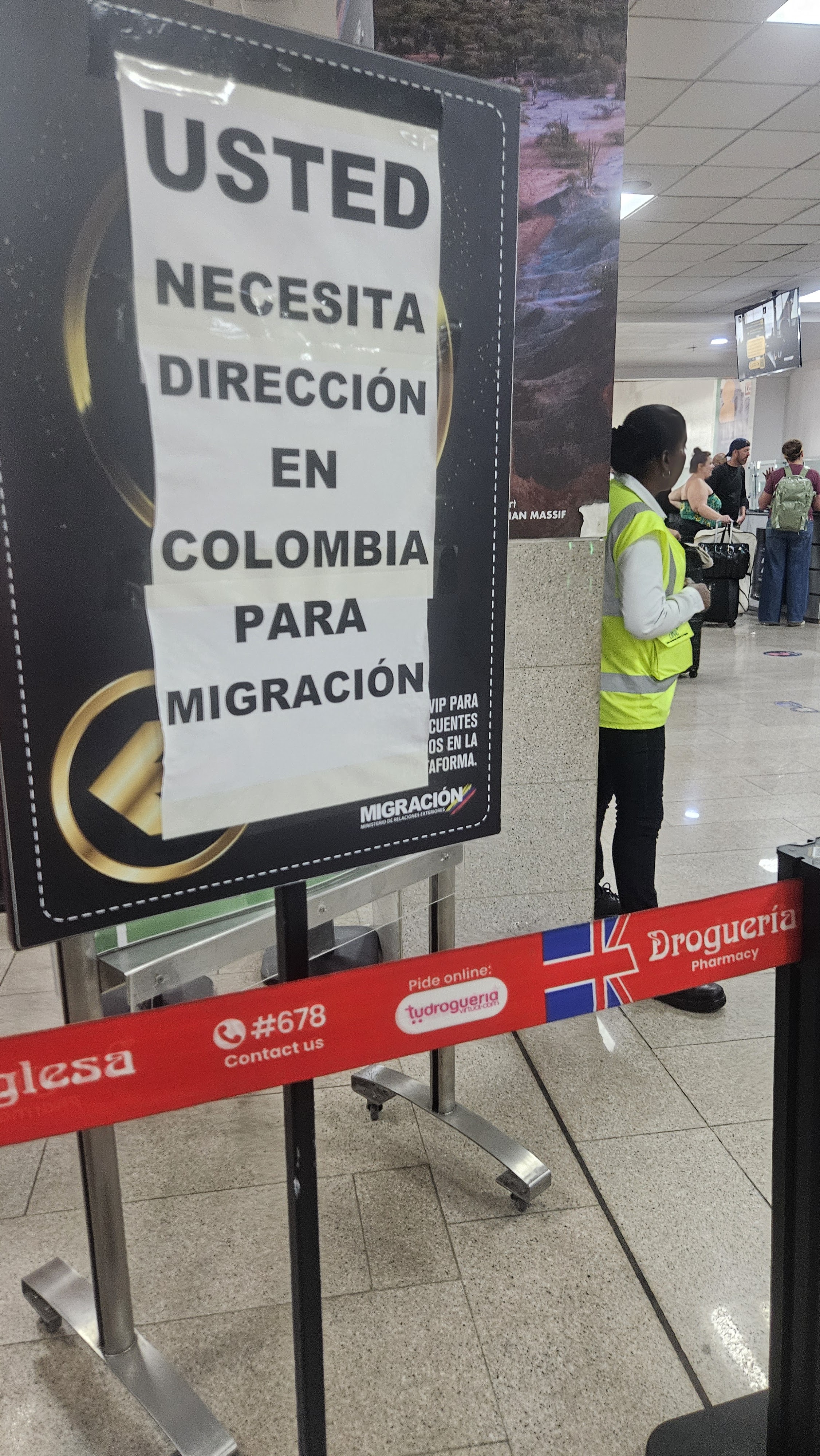
Random point of interest: Colombian immigration now expects you to provide verbal confirmation of where you will be staying while in Colombia.

Of course, my eyes lit up. But I still didn’t expect anything. We added each other, and I scanned his grid. I liked what I saw; he wasn’t someone extravagant and fake. He had few pictures and most were with family or traveling. Shortly after that, he texted me saying he had gotten out already and offering to give me a ride to my hotel. I had told him I was meeting a friend, and she came to meet me. I took him up on the offer.

The look on my friend’s face when I told her some random guy from the plane offered to give us a ride was priceless. But I trusted my instincts. And from that moment, we stayed in contact for 4 straight months. About a week later, he visited Valledupar, we met each other’s friends, and spent a weekend getting to know each other in person, taking it slow. Then 2 weeks later, we arranged to meet again when we were both in Bogota and spend a whole 9 days together.

I guess it’s strange to say we were taking it slow with all the talking we did and all the time we spent together, but that’s really all it was. There was a mutual respect for boundaries that I found refreshing. The second time around, we opened up even more about traumas, expectations, the past, the future… Let’s face it. I’m 34 years old. There’s no way I’m interested in an extended “talking stage.”

But now, I’m left wondering what qualifies as wasting time if you define your desires quickly and things still end shortly after. Well, you don’t waste as much time. The transparency is something I will definitely take with me. But still, my mind can’t separate and detach, even if I’m just getting to know someone. The more I fantasize about the future, the harder it gets. Finding a middle ground is challenging for me.

Long story short, our inside joke when discussing the future was “TBD” – nothing was certain, but we were okay with that. Things happen as they should, and time always tells.

I went back to the States with my plans to return to Colombia already clear for the aforementioned baptism/wedding. As our communication remained consistent, we decided to plan a trip together. We both agreed that you can’t fully know someone from afar, so what better way than traveling together? It’s true and proven by my previous experience travelling with friends and ex-partners that you really do see everything clearly about the other person when you travel with them: the good, the bad, and the ugly.

Spoiler alert, but I really was banking on this experience not ending up in the ugly or bad category. We made a google doc together. He likes clarity, and over the years, I’ve also grown better at planning ahead, budgeting, choosing accommodation, transport, etc. I quickly put together the first leg; that one was crucial because I’d be coming back just in time to celebrate his birthday with him.

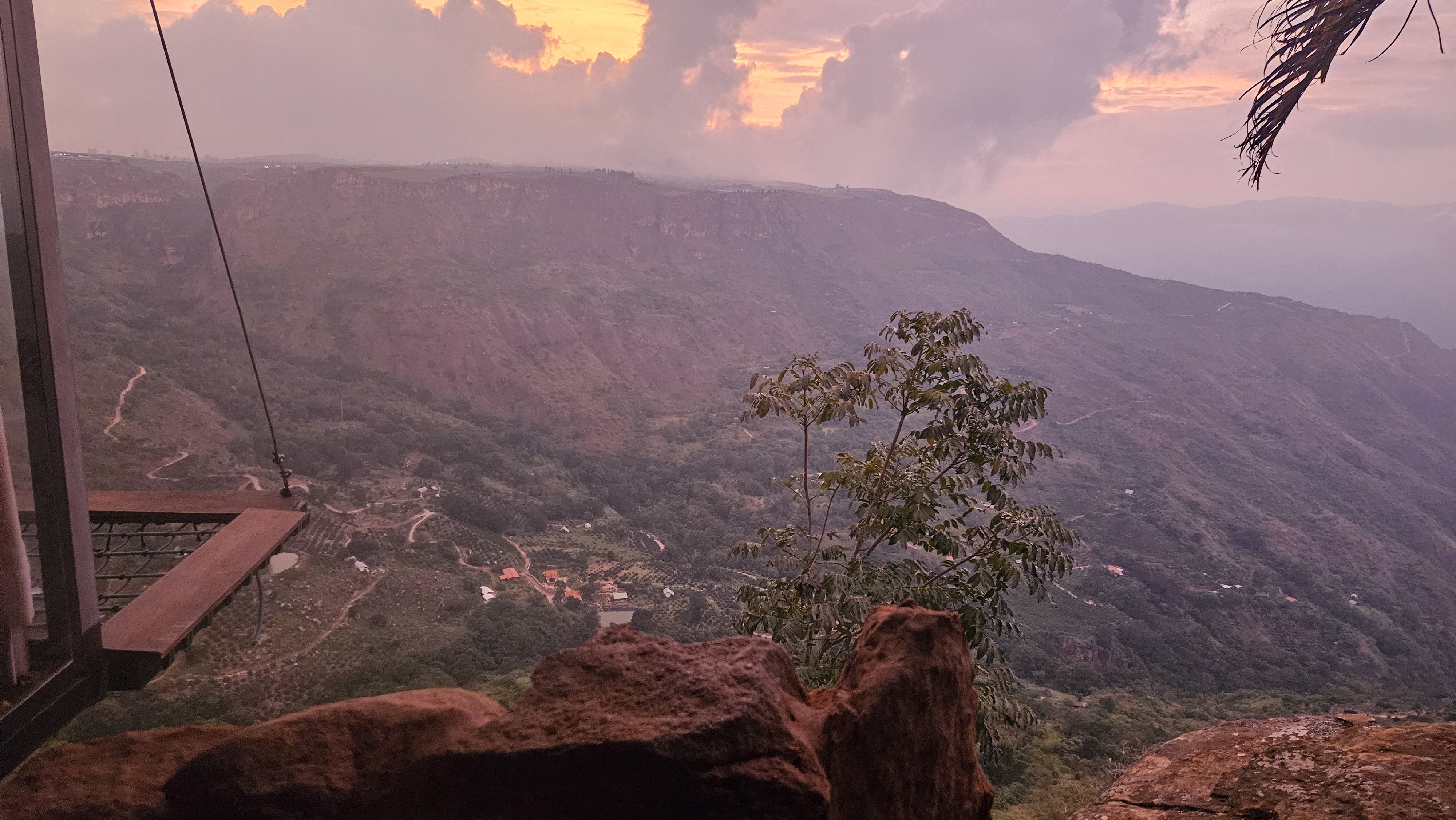
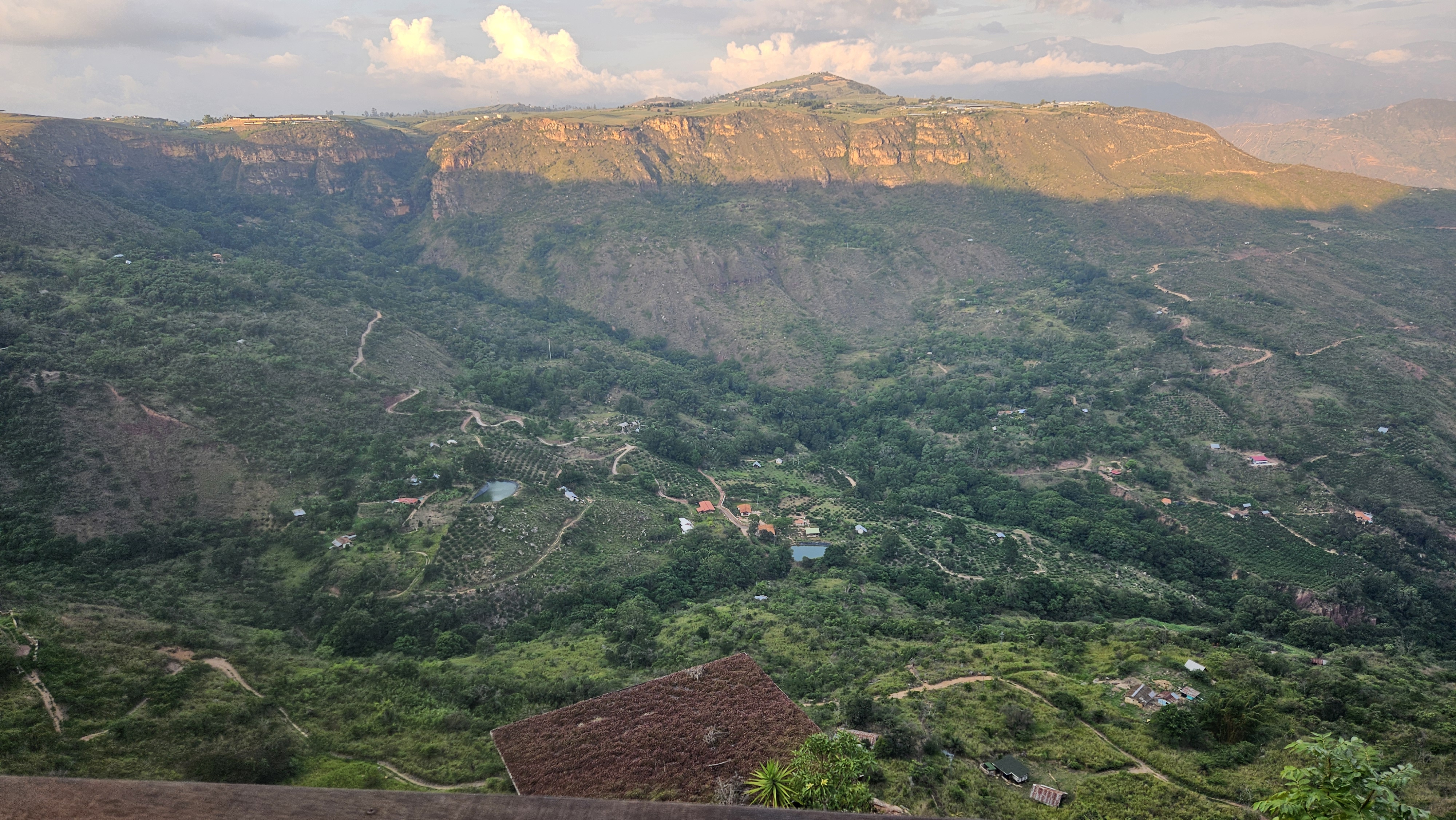
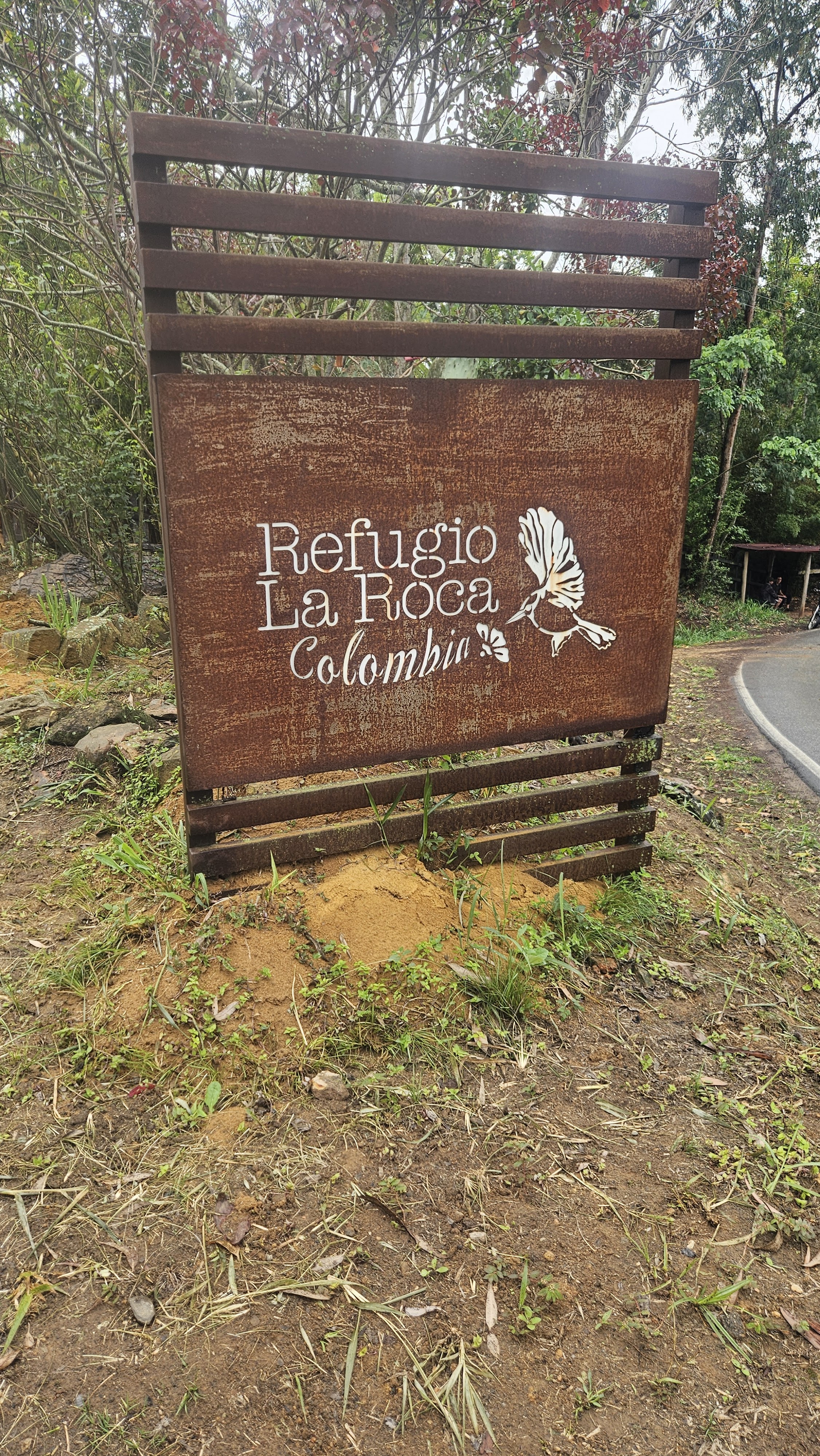
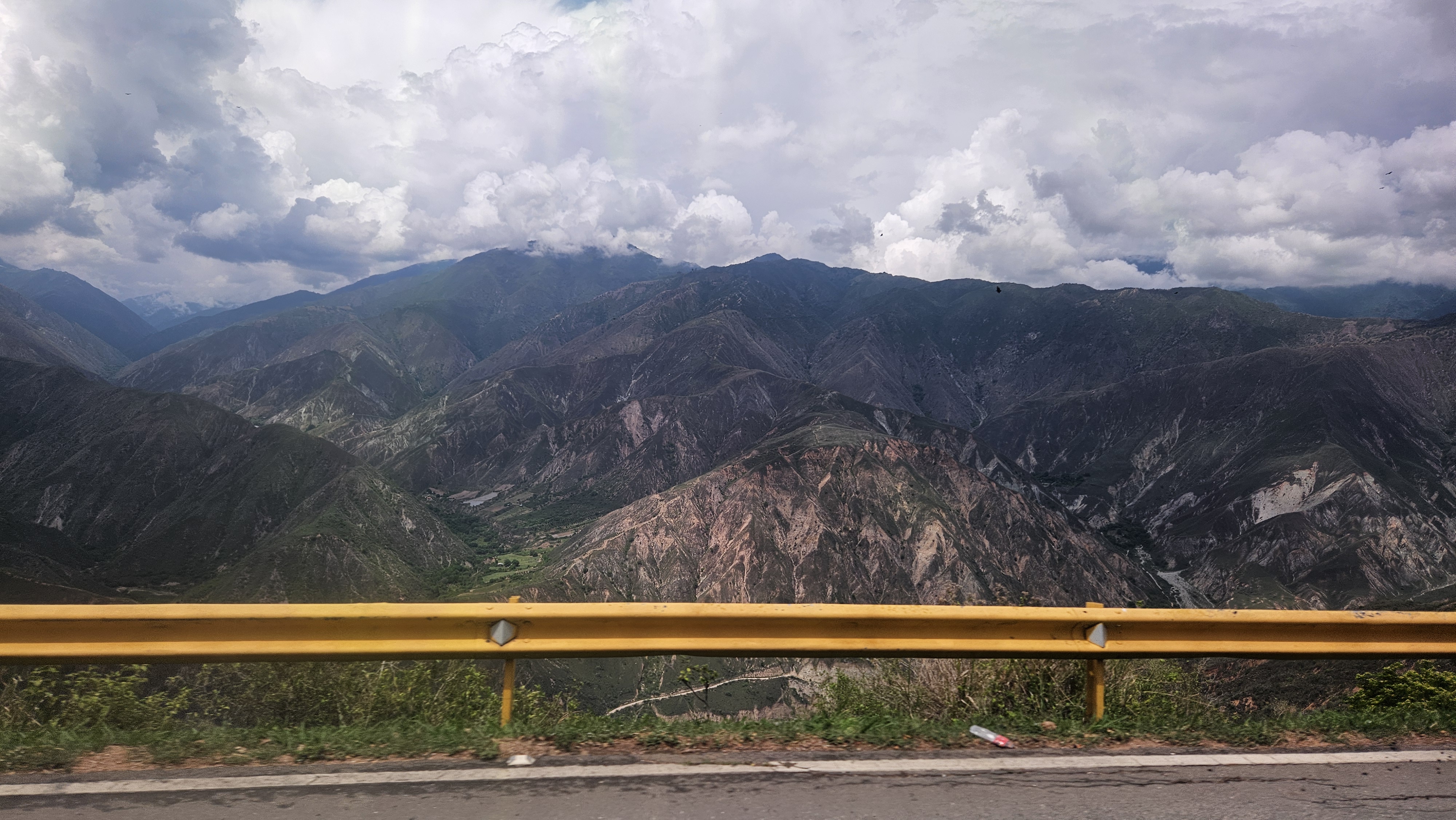
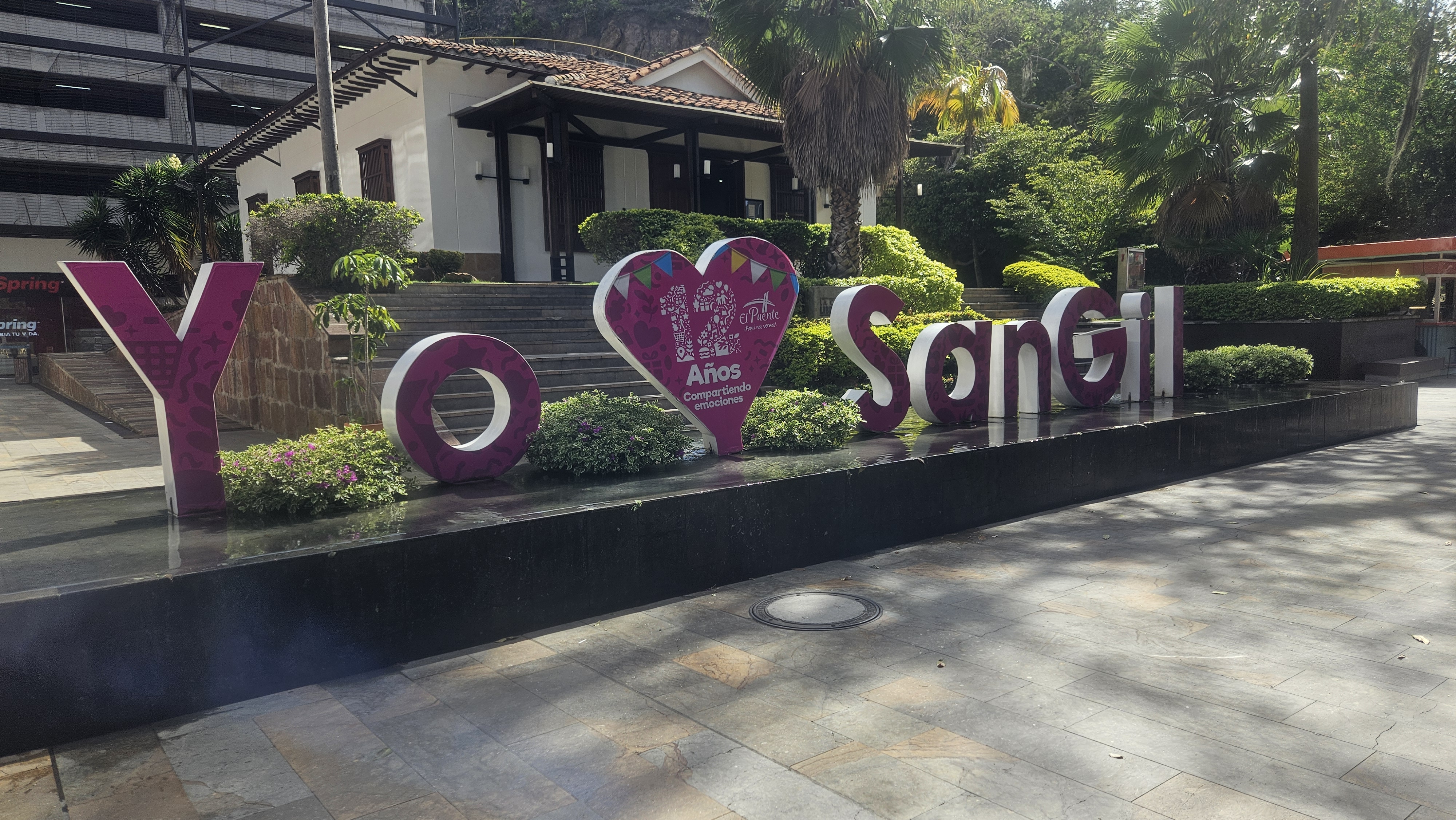
The plan went like this: 5 days in Bucaramanga staying in an apartment, a night at Refugio La Roca at 1 and a half hours from the city surrounded by canyon vistas for his birthday, a week in San Gil, and from there, there were a few options, but we weren’t able to define it all because I didn’t have all the information about the baptism. Still don’t, except that I probably won’t be here for it.

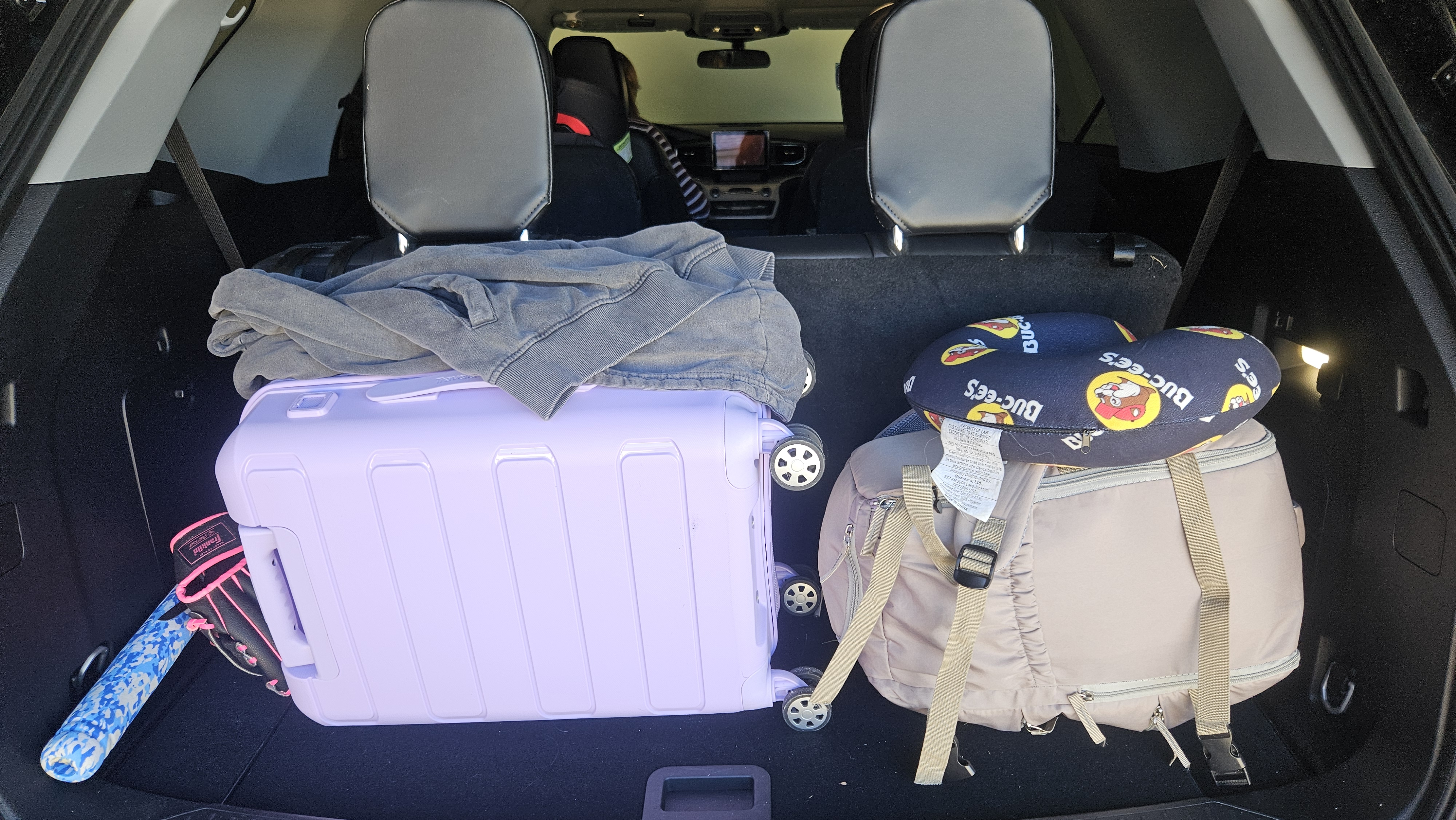
My luggage for a 3 and a half month trip – how’d I do?

A few flights later, lunch, and a taxi, and we’re on a 12 hour bus from Cartagena to Bucaramanga. The next day basically I got sick. I’ve only just really recovered from that icky flu (congestion still hanging on tho). Then, I felt the tell-tale signs of a UTI. Lovely. Just in time for his birthday in the middle of nature. I was weak, in pain, and yet still teaching my lessons and trying to do my part to make the trip go smoothly.

I got a uroanalysis done in San Gil and only got prescribed with antibiotics last week, so it was a long process of pain and discomfort.

The setup is to say, I wasn’t at all at my best. I was messy and feeling pretty unmotivated to establish my routines. I didn’t realize how this might be coming off, but there were moments. Like when I used his towel to avoid getting the floor wet. I do that with my own towel, but if I was in a dirty place, I’d usually dry myself off first. Still, I didn’t do that this time, he noticed, and it bothered him.

Since the end of January, he had already expressed that the way I chew (especially when I’m tearing into something out of hunger or enthusiasm) activated his misophonia. I have misophonia, so I could understand that. But it still kept causing trouble. When he first told me it bothered him A LOT, I’ll admit, my thought was DOOMED because I know it’s an unconscious habit that would take me time to improve, and if it was that distressing for him (I think of how partners that snored or smoked affected me), then even a small thing could be a dealbreaker.

Still, we both were able to discuss it, and after quickly processing the feedback, I turned off my black-and-white thinking that he would never accept me and instead chose to think proactively. We came up with a code for him to remind me when the smacking was obnoxious.

2 months apart, less than 2 weeks together again, and we’re sitting at a table in Gringo Mike’s talking about his conflicting feelings about our future. The past few days had been tense, but it was a slow burn.

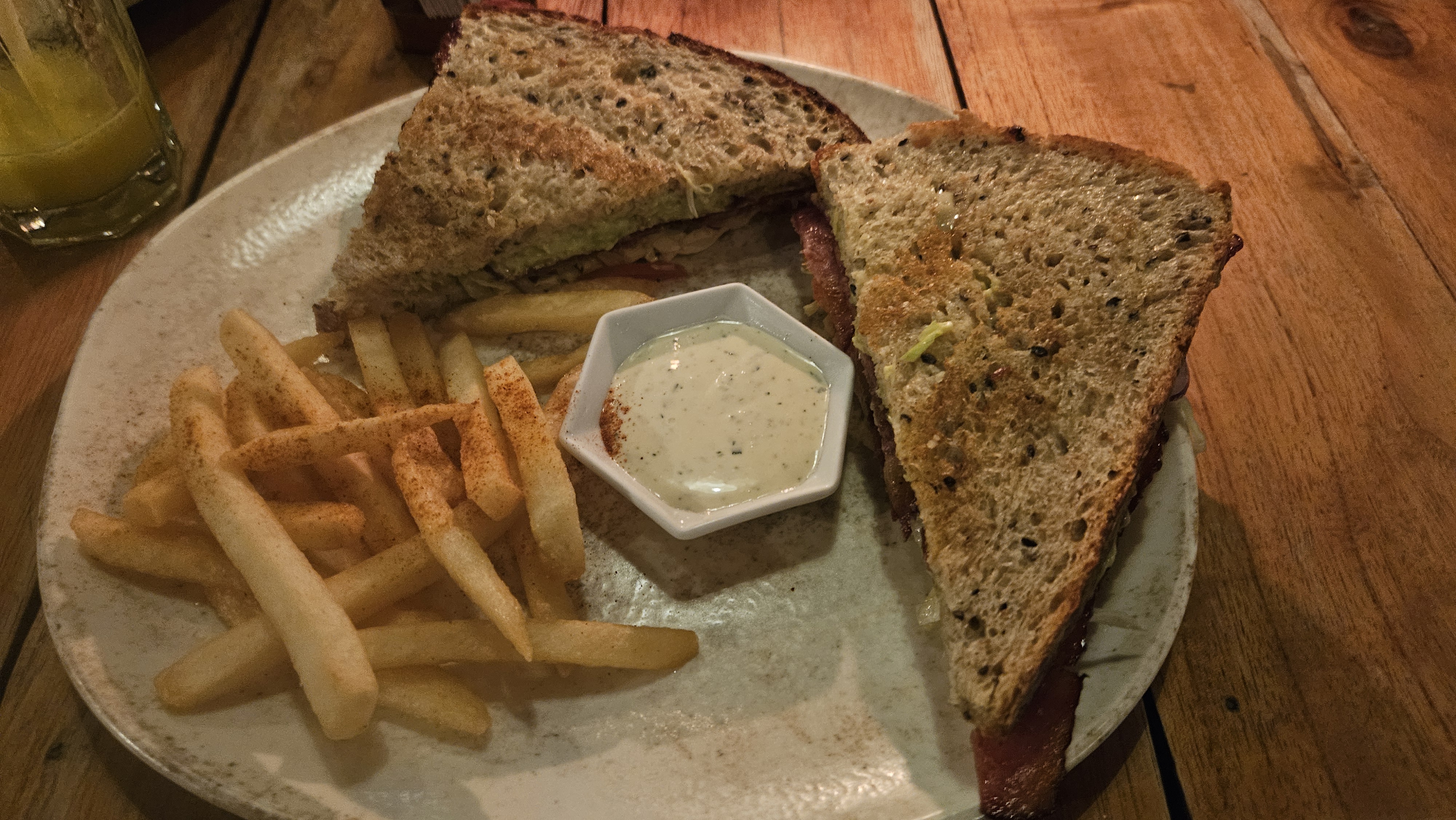
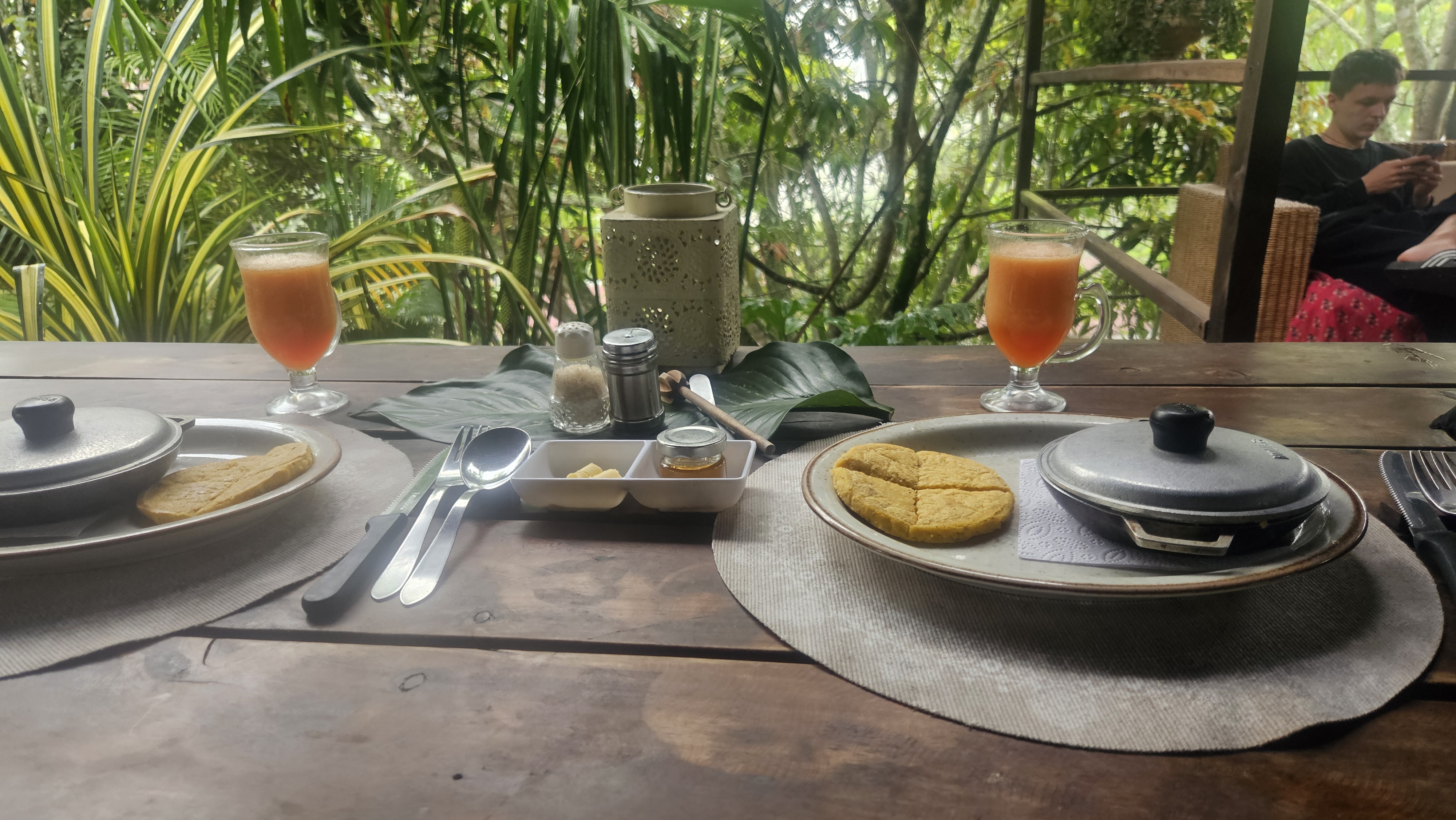
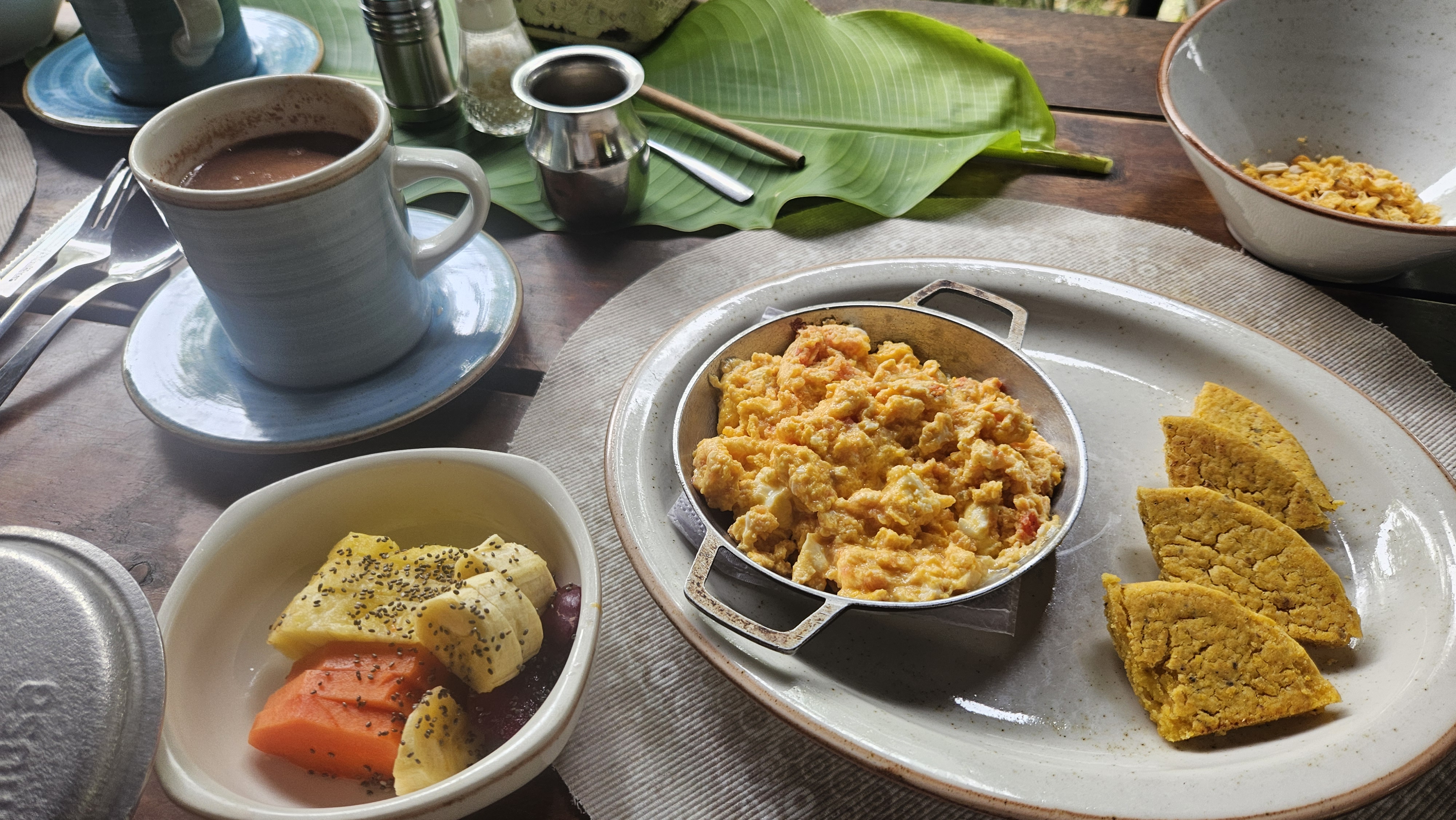
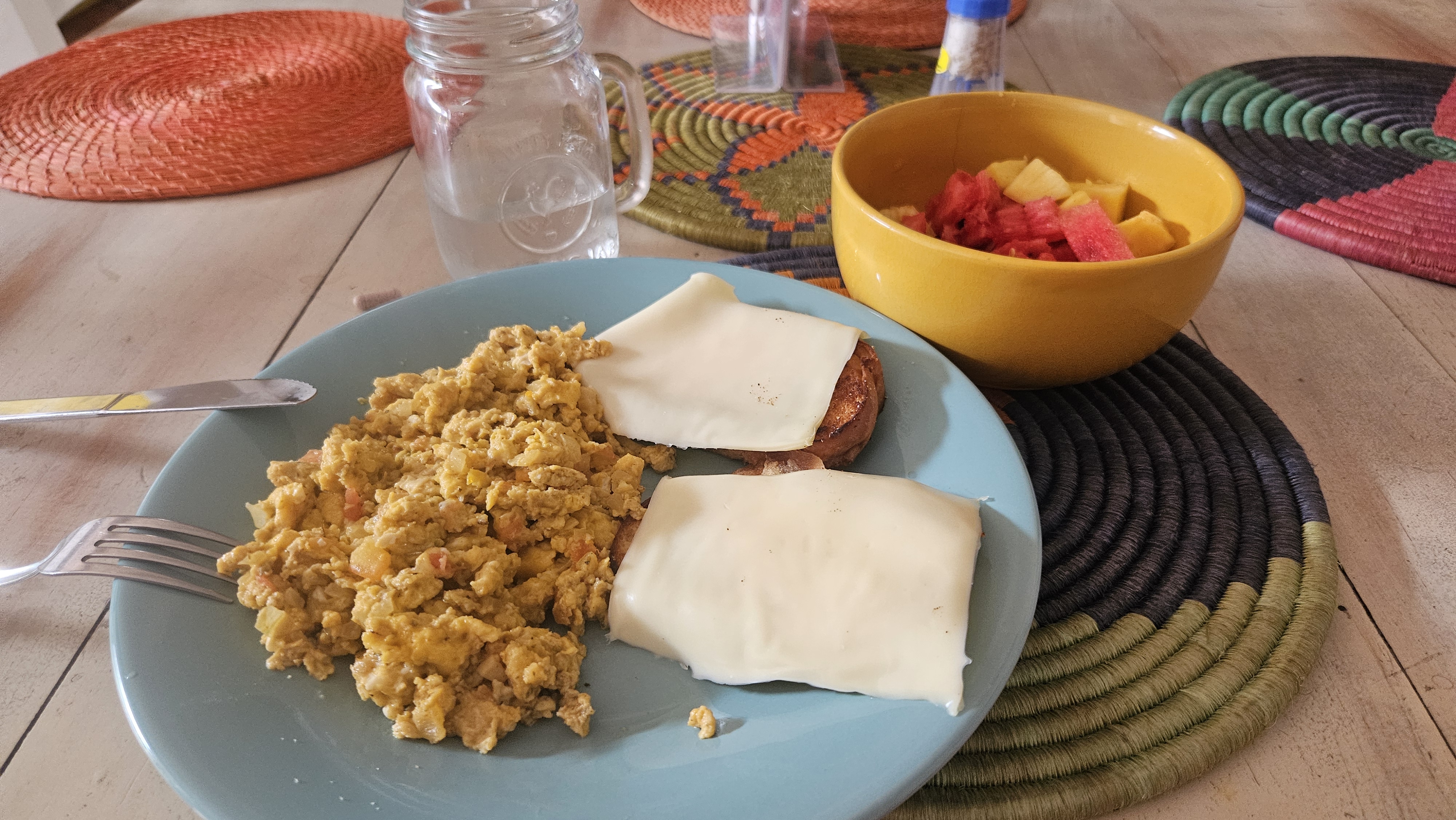
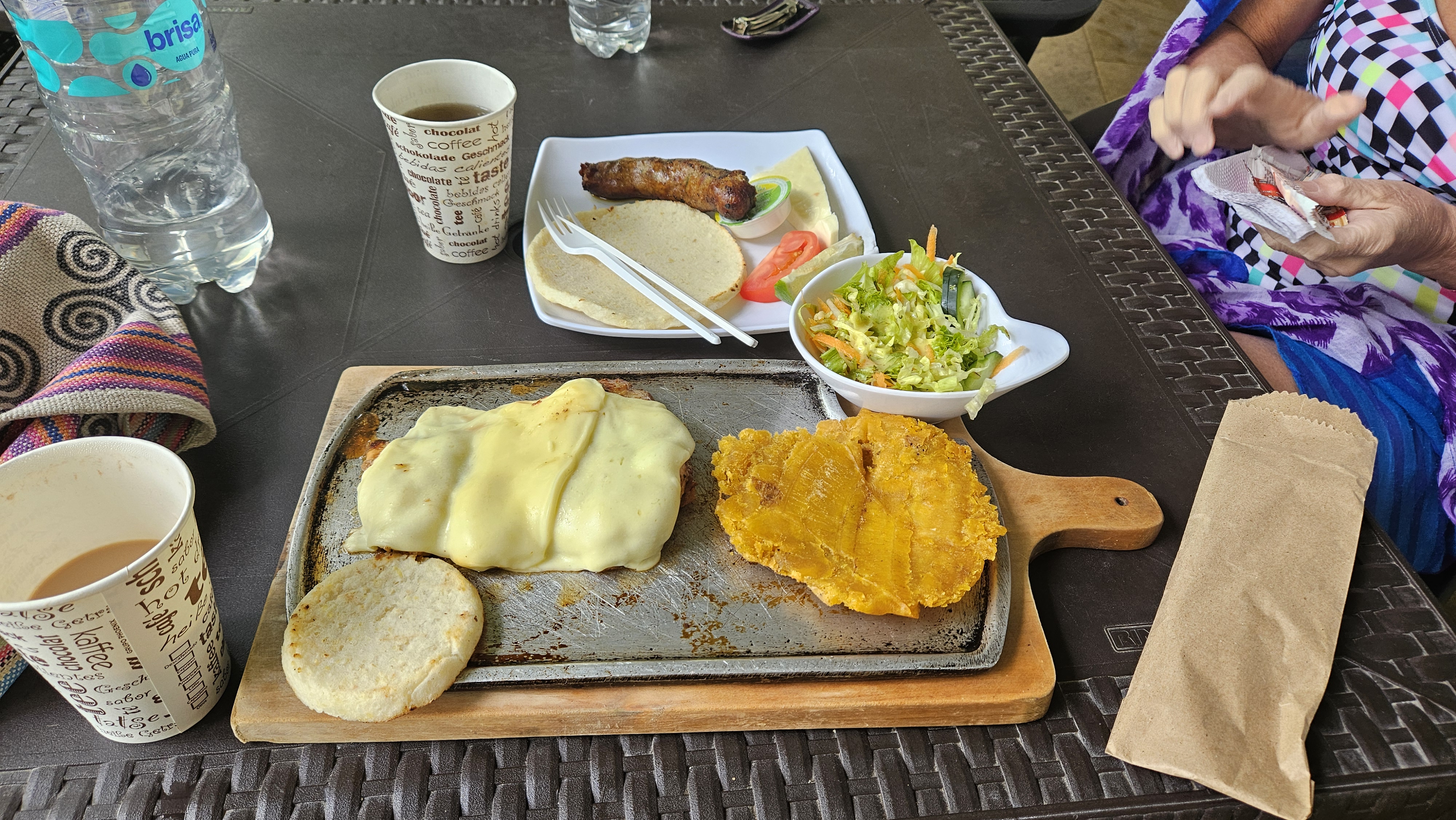
The Last Supper in question

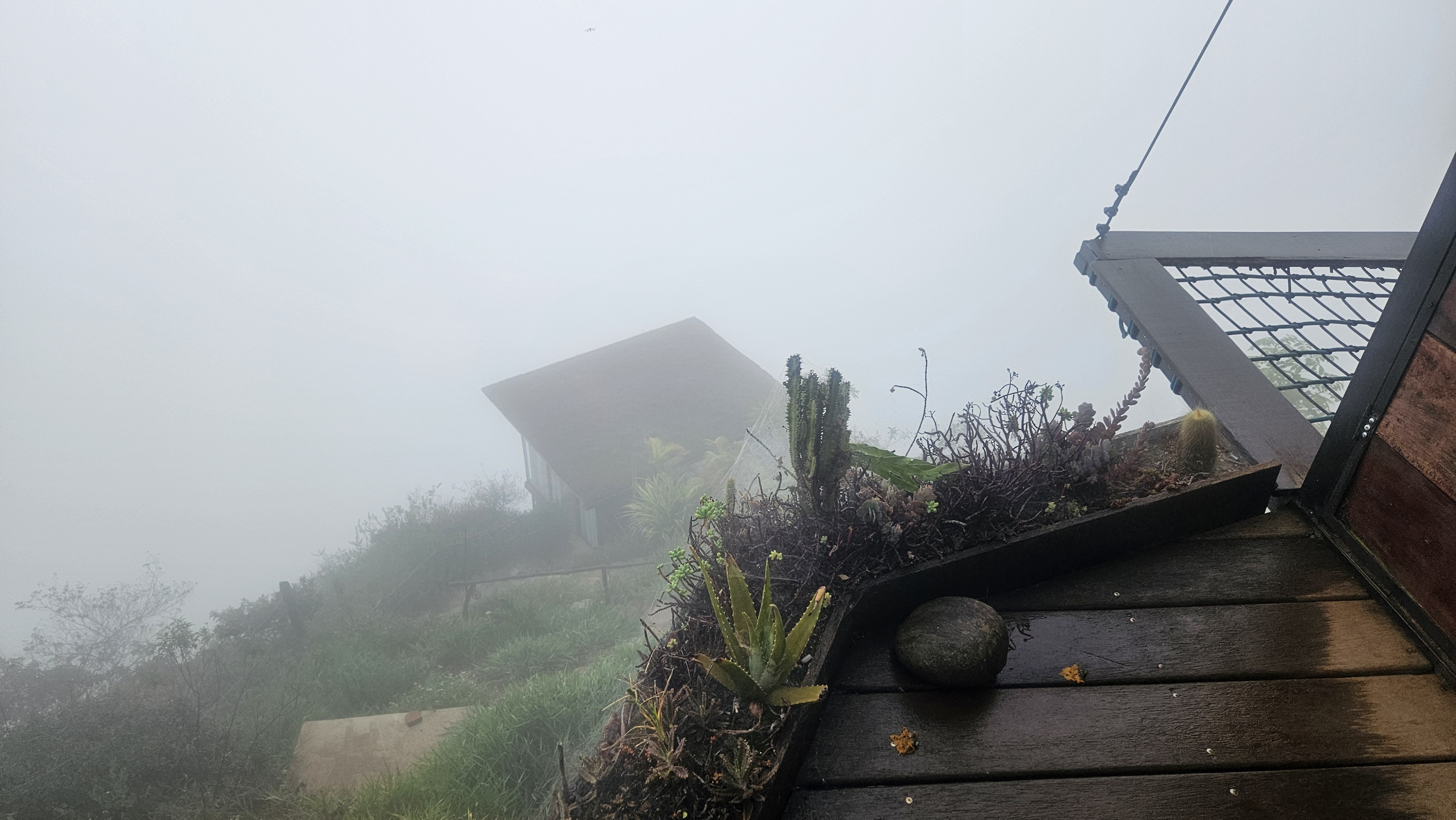
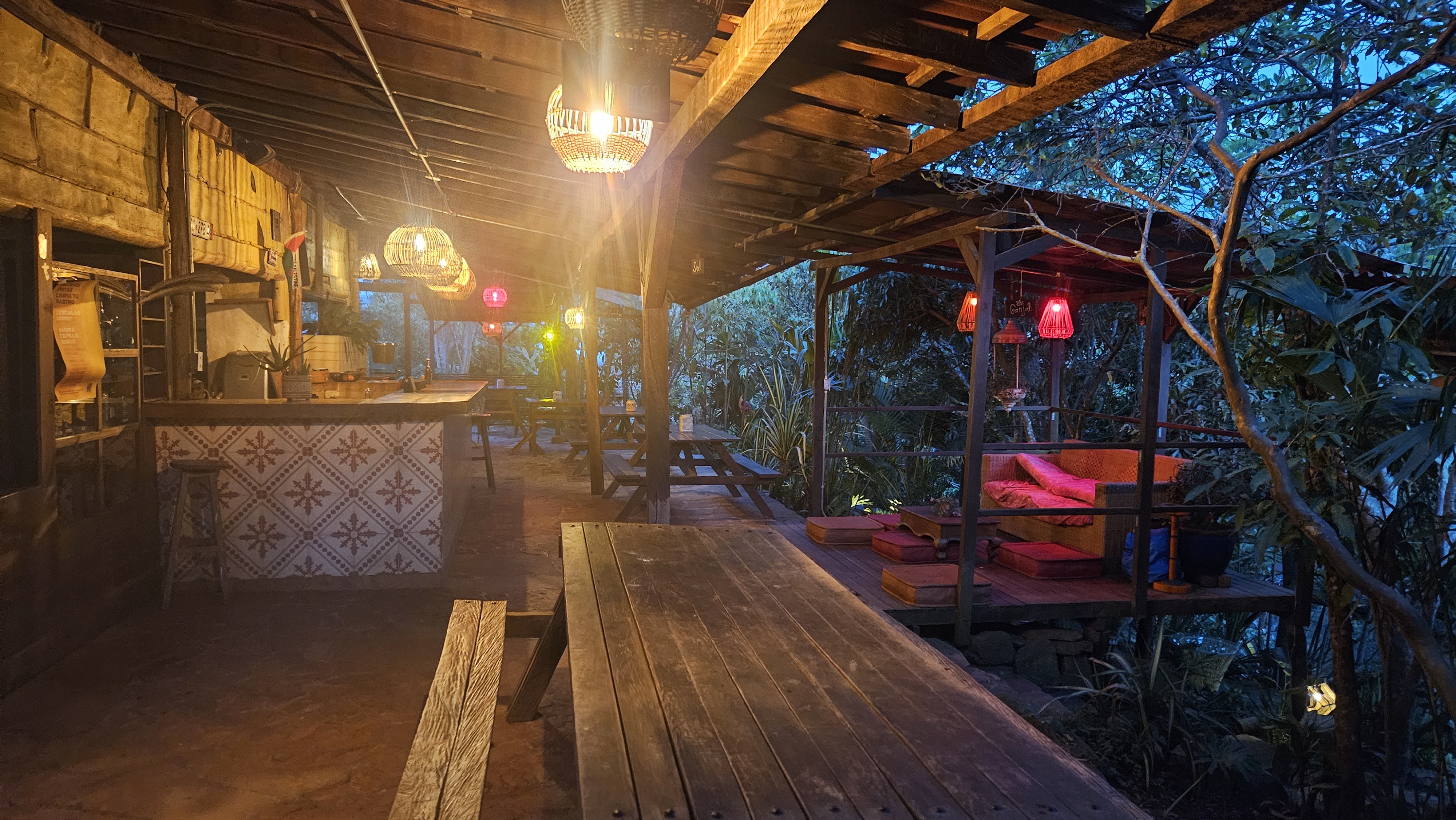
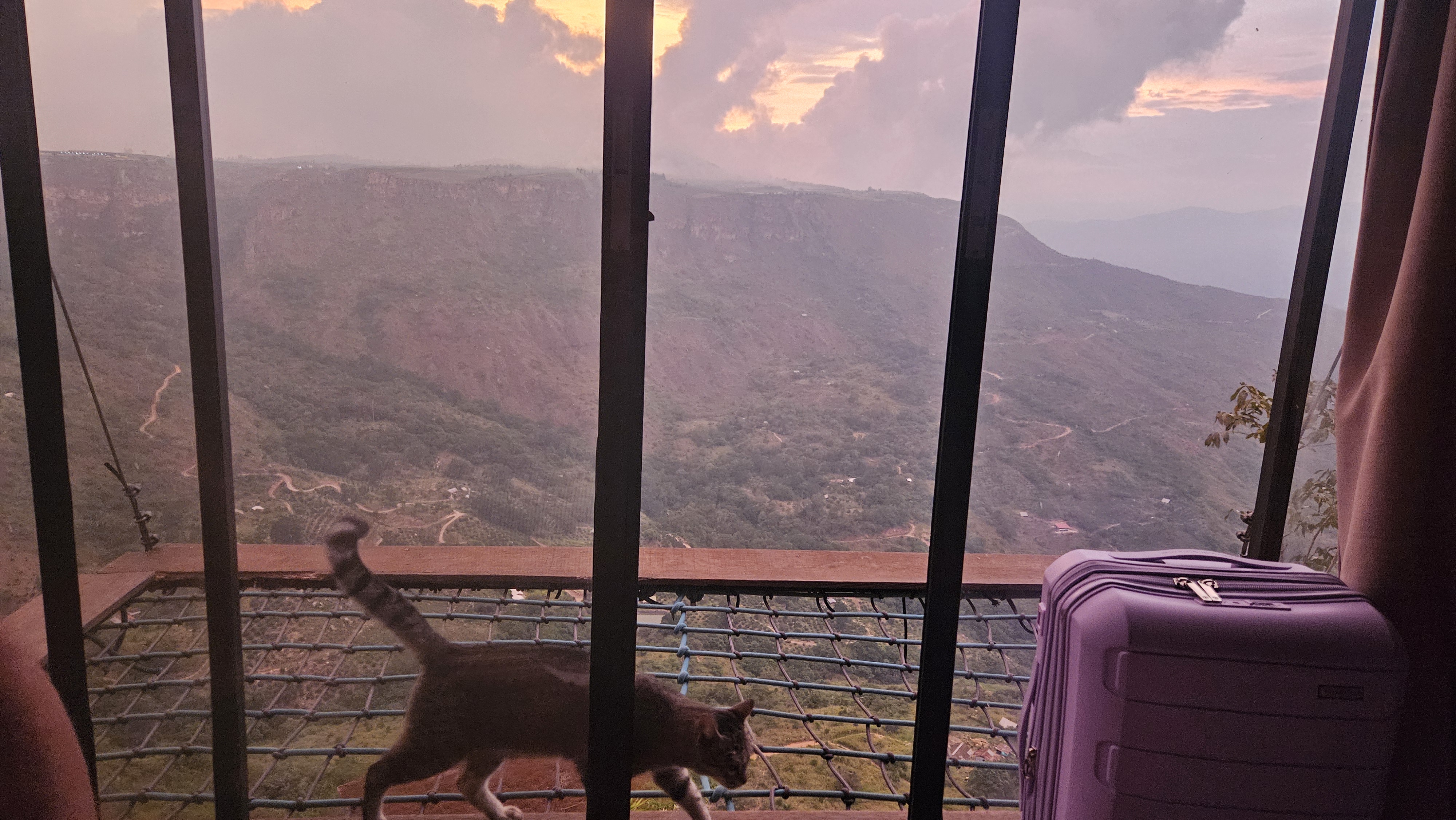
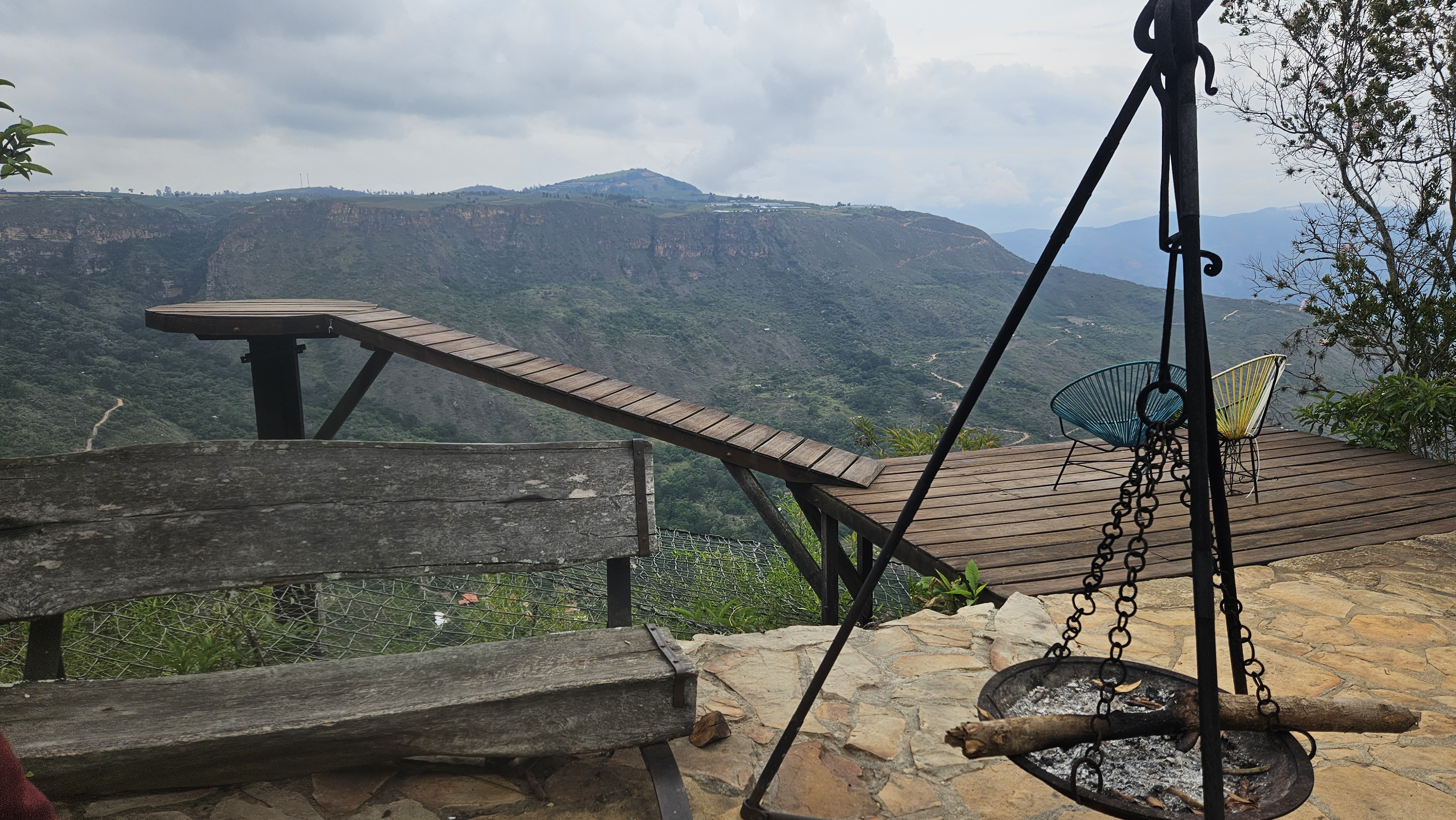
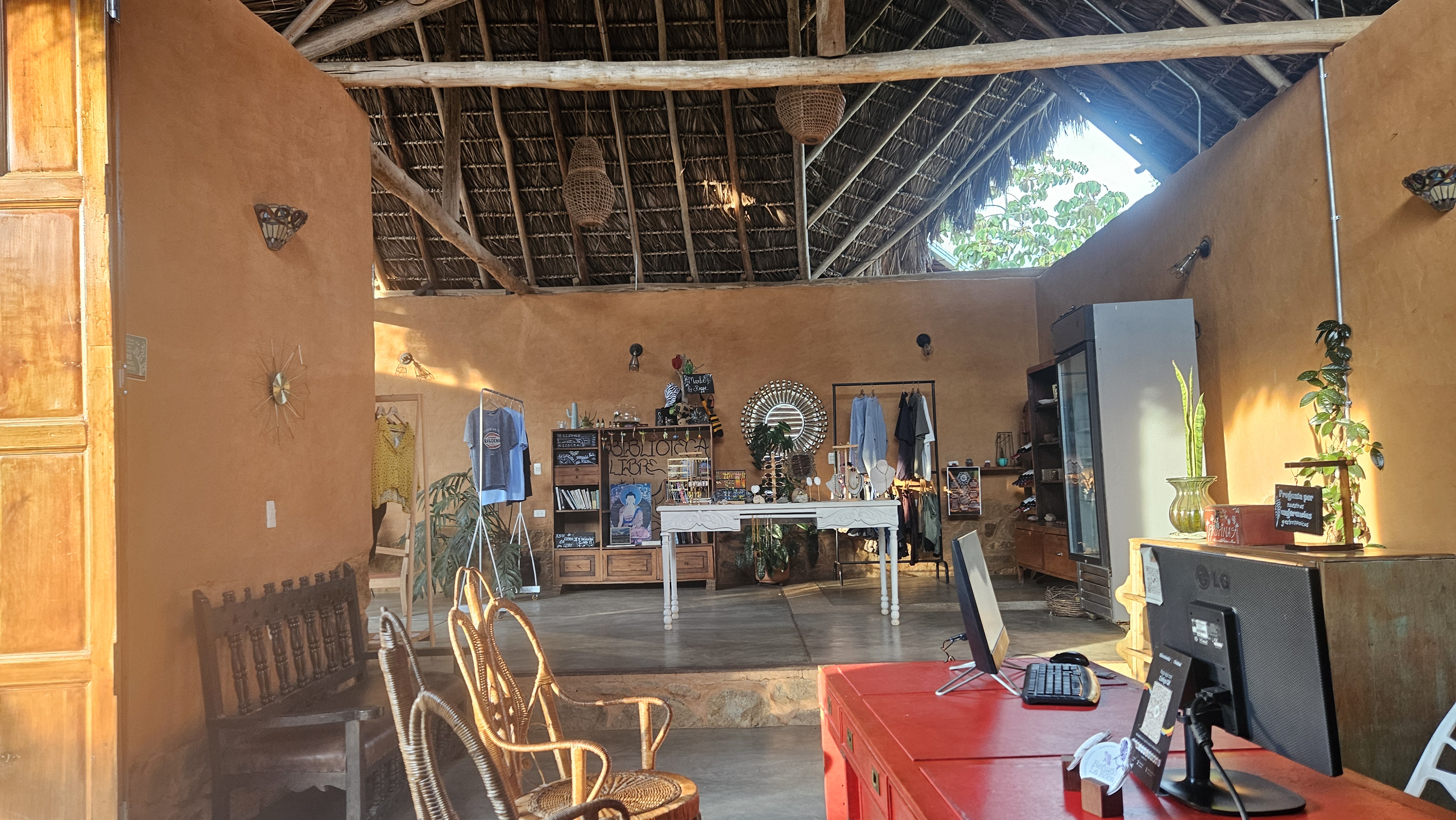
There was a paro (road blockage caused by strike) in Santander, so we ended up spending 3 nights instead of one in Refugio. The staff was lovely to us. They gave a generous discount for the nights we were stuck there that even eliminated the cost of food we had consumed. The place was beautiful and utterly worth it. Cool air, stunning sunrises and calming sunsets. I had the room decorated for his birthday, and they had gone above and beyond, covering the bed and floor with flowers and providing a moist, delicious brownie and a bottle of wine. There was even a cat that came and snuggled with us every day. Plus, the internet was strong enough in the restaurant for me to get all of my work done in relative comfort.

Yes, there were stressful moments. I felt shutdown because my body was in misery. UTI’s and nature do NOT go well together. I woke up at 5 am from the pain and had to just sit on the toilet or stand under the soothing hot waters of an outdoor shower complemented by a colorful landscape view. Yet, I was not okay. I felt lucky that he stepped in and helped make sure we got the discount and communicated proactively with the staff, because I didn’t have the energy to. The situation was frustrating, and I felt like a Colombian would be better received. In the end, everything went well. Crisis averted.

What did we learn? Well, we had a nauseating ride to San Gil. Those curves are BRUTAL. We both felt like shit. He was having trouble hearing. I spoke to him in Spanish, he asked me to repeat myself in English, and I took it the wrong way. I admit, my insecurities with partners using me to practice their English was my main hangup. That escalated quickly, and we were outside of Meraki boutique hostel arguing. I thought he’d called me an asshole (my hearing after that ride was also shit, apparently), everything happened fast.

There it was. The cracks that showed. And then the next night, dinner, he uses our code word in an irritated tone just as I am opening my mouth to answer a question he had asked me – and I snapped. That was the beginning of the end. Hard conversations, irreconcilable differences – to him, that to me had just been motivated by stress and discomfort. No future. That was his conclusion. No use investing more time, energy, and money.

So, now I’m solo traveling, unexpectedly, and dealing with a breakup I equally was not prepared for. I thought that maybe things would go downhill slowly so we could handle it with grace, but it turned out to be a fucking avalanche. I’m still conflicted about his reasons, the way he spoke to me and decided to leave. I honestly believed him when he said he didn’t give up easily. I guess I underestimated just how serious his past trauma and triggers were. Because apparently, I activated all of them. And to him, no amount of time and calm to reconsider was going to change anything.

Takeaways? If you want to get to know a person, you can travel with them. It works. But be prepared for anything. Even ending up alone. Always have a backup plan in mind, an exit plan or an escape door for the other person. I didn’t think he would get tired of me first, and I think the blow that dealt to my ego has been the worst of it, but I’m trying to cope and treat myself with compassion.

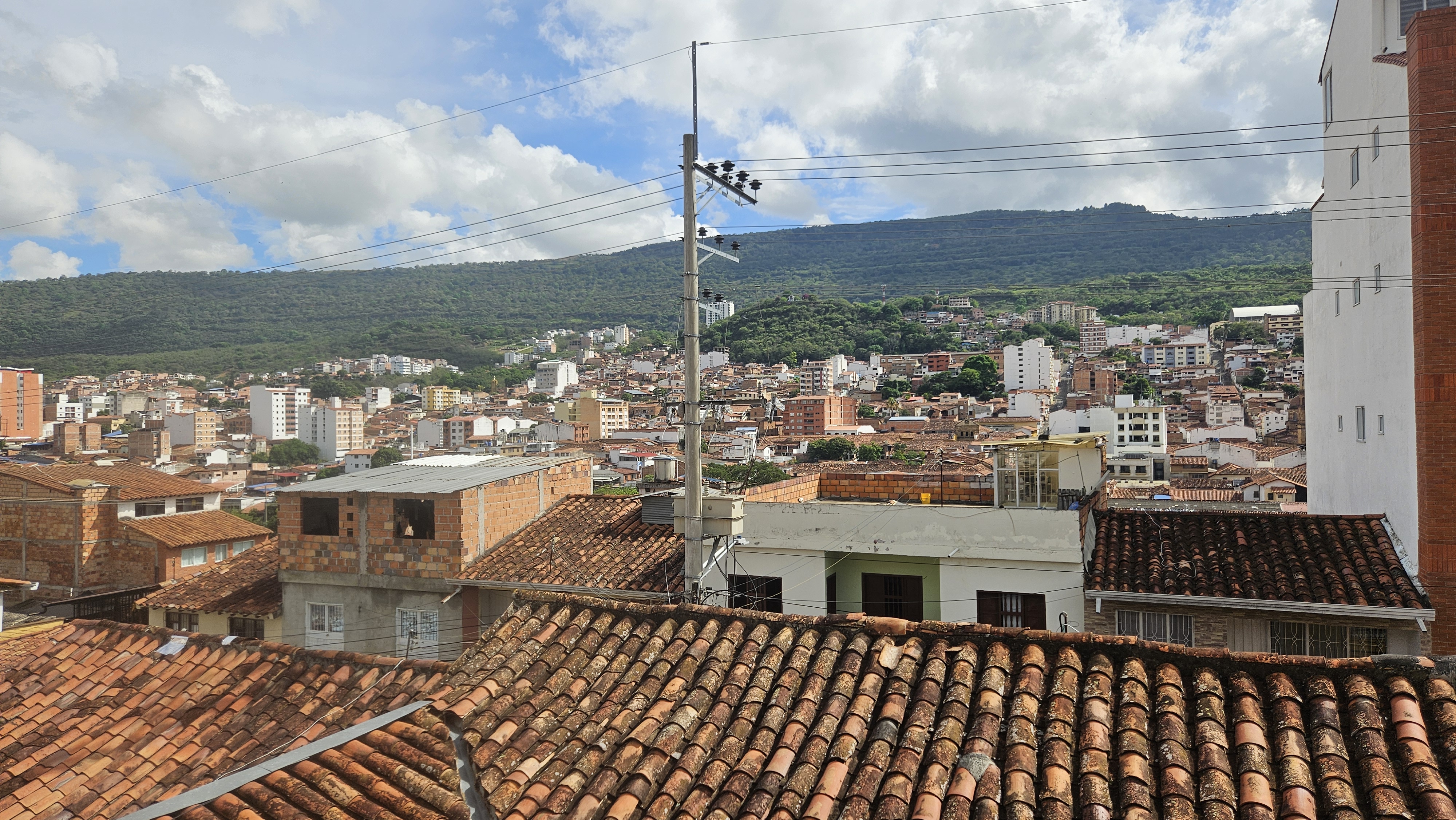
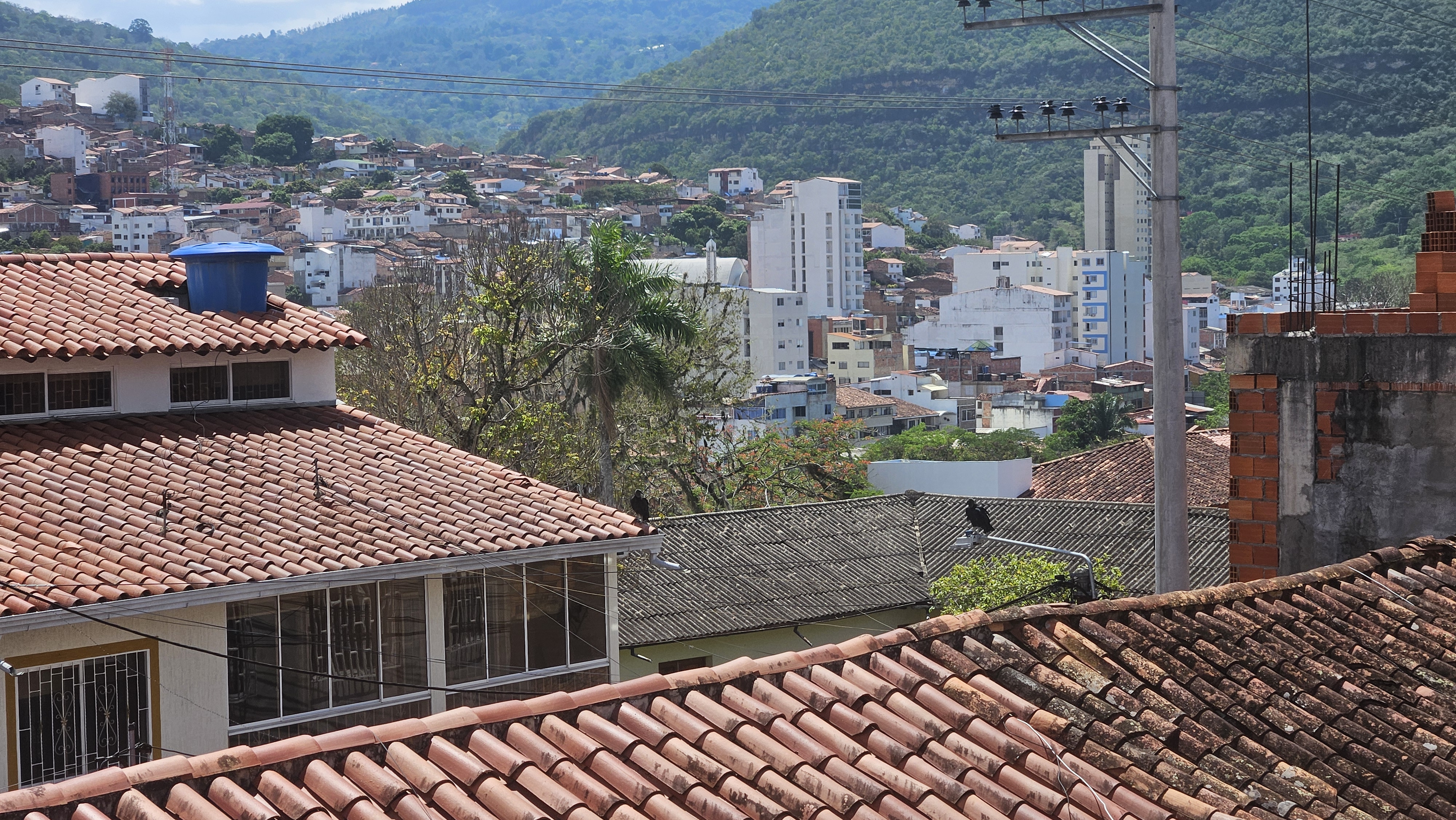
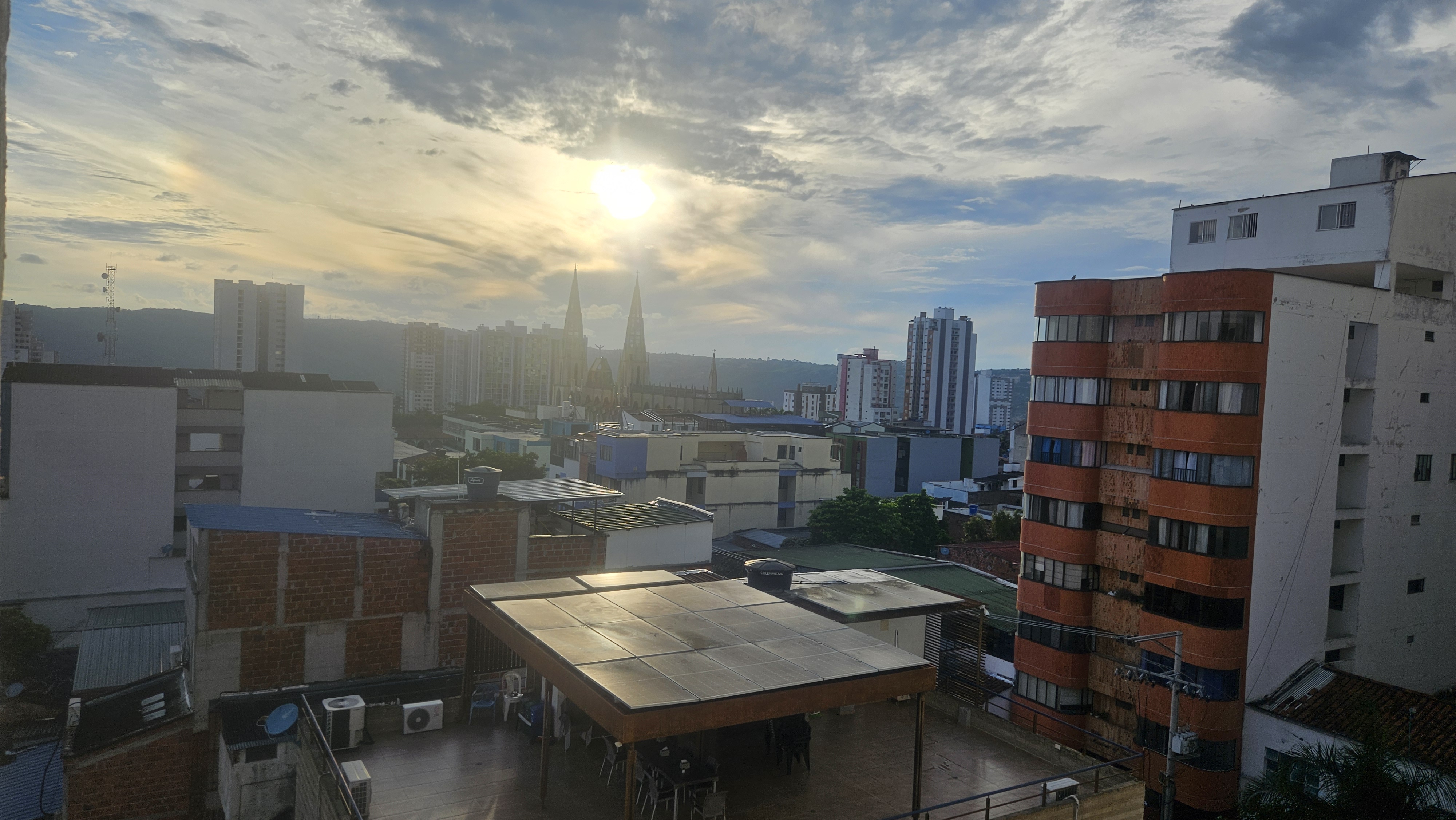
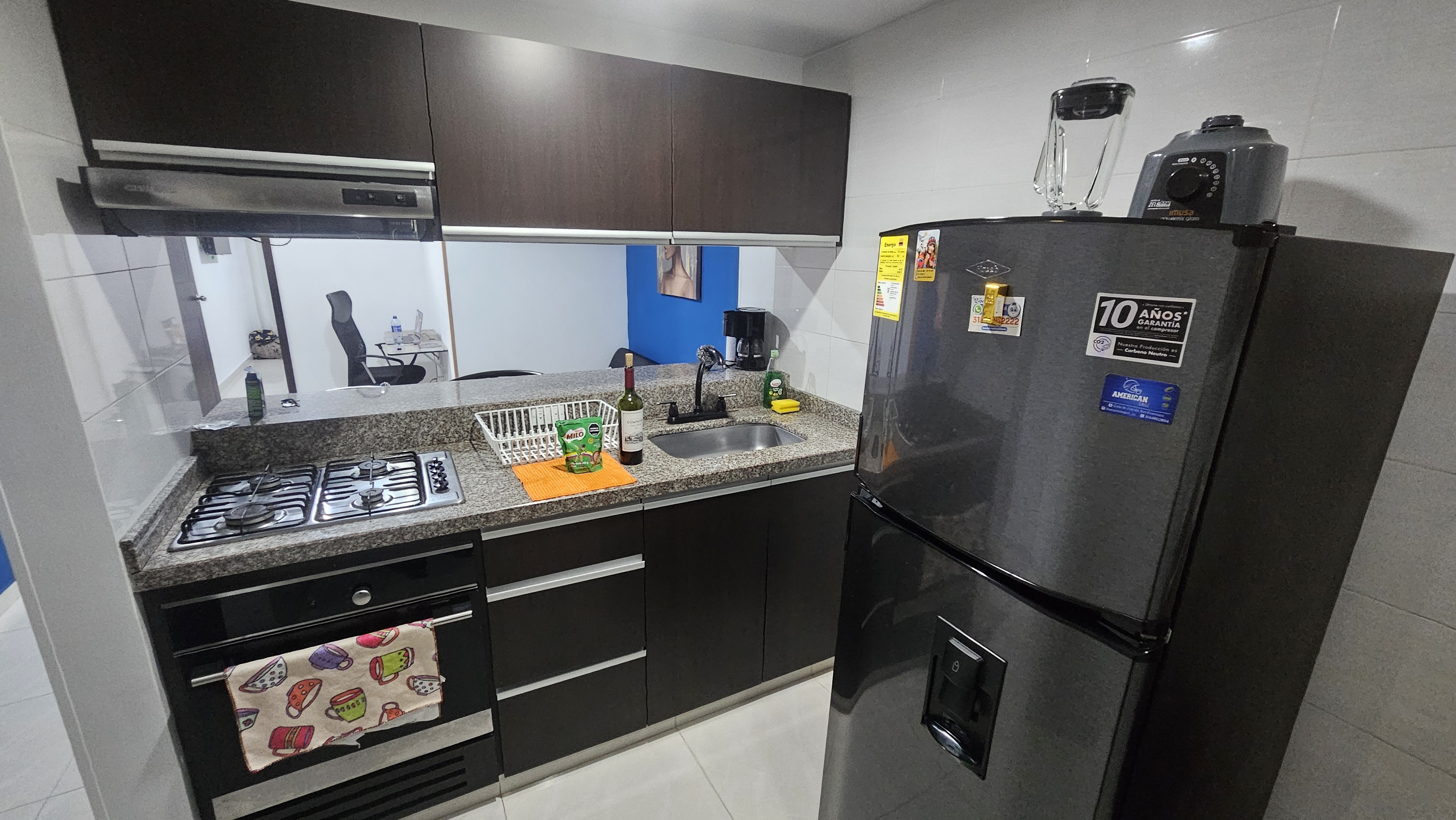
All of this being said, I have been working hard and trying to stay on track with my side projects. I’m almost done editing my next youtube video. My next move was to go back to Bucaramanga and get an apartment with a workspace – and it was my best choice. As much as staying with my friends can be convenient, I’ve realized I really love being alone. I don’t feel like I’m bothering anyone and able to keep things to my liking. I’ll be posting about my accommodations and budget – another reason I came back to Bucaramanga is because food and taxis are CHEAP here, it’s not a sprawling city like Bogota, but it has all of the luxuries, and the weather is practically perfect.

I’ll also be sharing insights and tips as I prepare to go from Colombia to East Asia. Korea, Japan, and Thailand, I’m coming for you! I just need this time to process… And I thank you, compassionate reader, for letting me vent and share my Drama with you on this blog.

P.S. The Drama reference is intentional: I saw the movie on Sunday, and WOW. If you like morally ambiguous, emotionally charged movies that challenge you, where you don’t know whether to laugh or cry, I would highly recommend it.

Termalismo: Hot Springs in the Eje Cafetero (Colombia) Part 1

Well, well, well. Time to start my recap series. The first two months of this year were full of travel. I spent all of January in Brazil and February revisiting some gems in Colombia. My posts most likely won’t be in chronological order but rather highlights as I feel inspired to share.

After last year’s February travel success, I had to spend my birthday month traveling again this year. Once again, I made catching up with friends the guiding light of my route. Lucky me, they live in different parts of Colombia. So, I got to revisit 3 capitals: Bogota (THE capital of Colombia), Medellin, and Manizales.

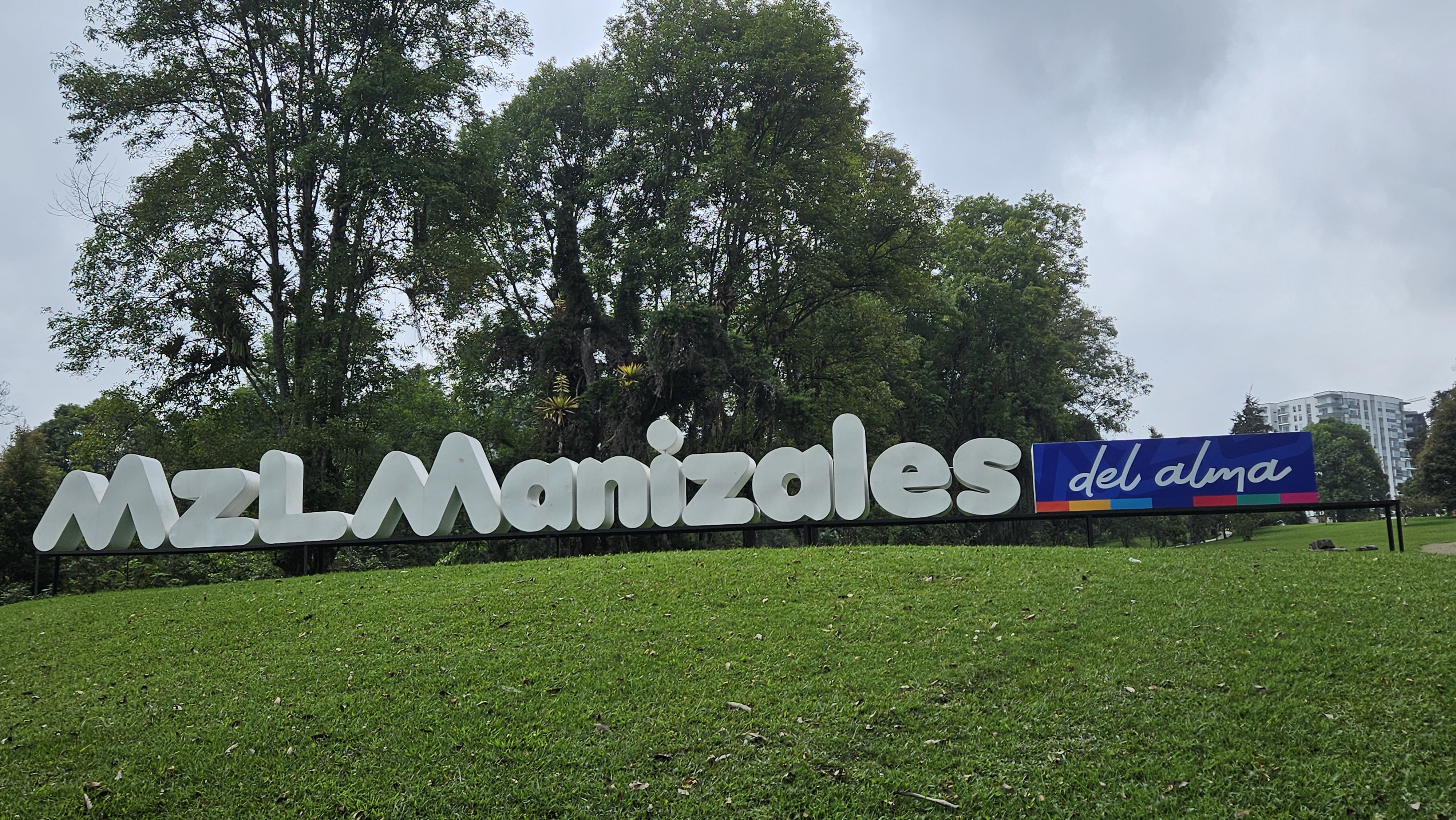
In this post, I’m going to break down some gems in the Eje Cafetero. I like to call it the Coffee Country of Colombia (because, alliteration). I’ll start with one of its capitals: Manizales. After a week in Medellin, I chose not to take a bus or plane straight to Manizales. I took a smaller bus to cross Antioquia and reunite with my friend Carin in Jardin.

While discussing our reunion, we had gone back and forth about where we would go to take advantage of our new lease on life as digital nomads. On one hand, neither of us had been to the Colombian Pacific Coast (Chocó). However, if we were going to meet in Jardin, that would be farther from our set-off point so, we compromised to visit an area I had some experience with. I didn’t need to be convinced to go back because for me, Coffee Country is best country.

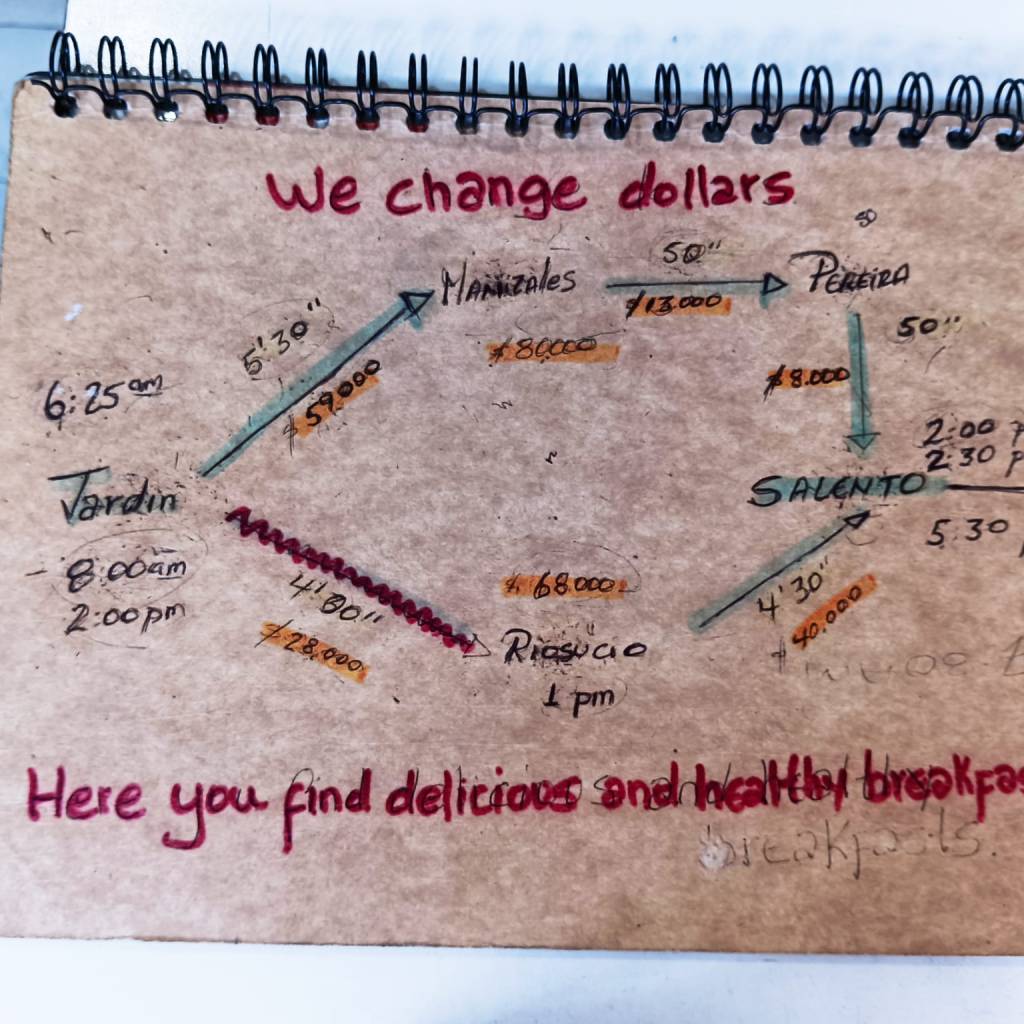
This was the route option laid out by my wonderful friend, including the times we could go and the prices available. The trip from Jardin to Manizales was supposed to take 5 and a half hours.

Carin helped plan and coordinate an adventure for two remote-working ladies. Her organization and practical mindset were the tools that my more spontaneous style needed to make everything work. Having a timeline was key, especially since this would be my last hurrah in Colombia before my flight from Bogota back to the States.

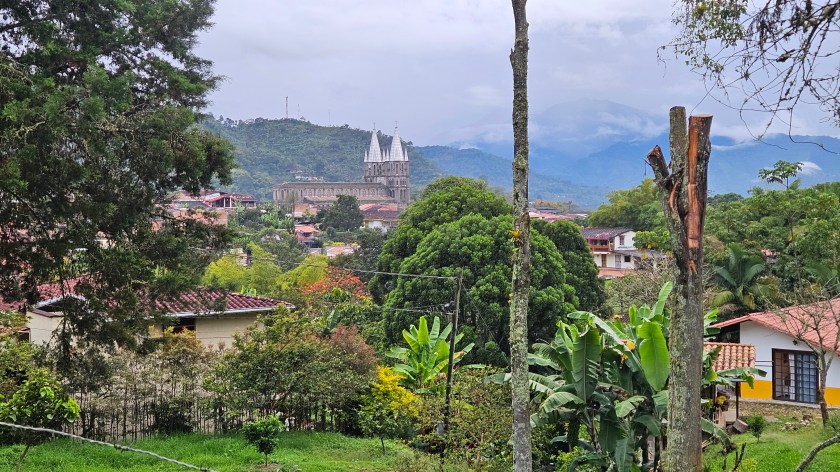
Jardin itself is a verdantly scenic mountain village right on the edge of Coffee Country (official map above). It attracts international tourists year-round, and for good reason. It may not be an official part of the Eje Cafetero, but it’s surrounded by farmland including coffee farms that form a big part of local culture and identity. It’s always a joy to visit. For the sake of proximity, budget, and practicality (plus a bit of nostalgia), we decided to spend 5 days there before going east.

In spite of a week of mostly perfect weather, lightning, thunder and heavy rain kept us up the night before the ride to Manizales. This came as no surprise since one of the consequences of global warming in Colombia has been the rise of long droughts and unpredictable torrential rainfall outside of the usual rainy/dry seasons. The problem is, there are only a couple routes in and out of Jardin. One of those routes is through “trocha” – muddy off-roading. This was the only way Carin had taken before.

When we rolled out of bed by 5 am, there was a feeling of foreboding. We had bought our tickets for the van to Manizales ahead of time. If it went off-road, chances are the road would be closed due to the heavy rain. I was anxious to check that the trip wouldn’t be canceled. So, I charged out, umbrella in hand, to mall walk all of 5 blocks to the tiny terminal area. I saw a bus to Medellin was already pulling away from the Rapido Ochoa garage. Everybody seemed to think I was crazy for worrying (small town people don’t worry, as God always provides). It turned out, we’d be on the other road out of the town. Crisis averted.

The van involved a short but brutal, winding mountain path that actually gave me motion sickness. I’d never puked in a bag before and seriously hope I never will again. But that aside, it was a smooth trip, and we made it to the Manizales terminal in record time.

Manizales Trip Summary

Land transportation from Jardin to Manizales: 80k COP for a shared van (pay in El Portal, on Calle 8, and get lunch or a snack while you’re there!)
We left at 6:30 am and were there by 10:30 am, shaving a full hour and a half off of the expected travel time.

From Manizales Terminal to Santa Rosa del Cabal: 13k COP for a small bus (Empresa Arauca)

Lodging: 3 bed apartment (Booking) in La Enea neighborhood (ideal for hiking and contact with nature)

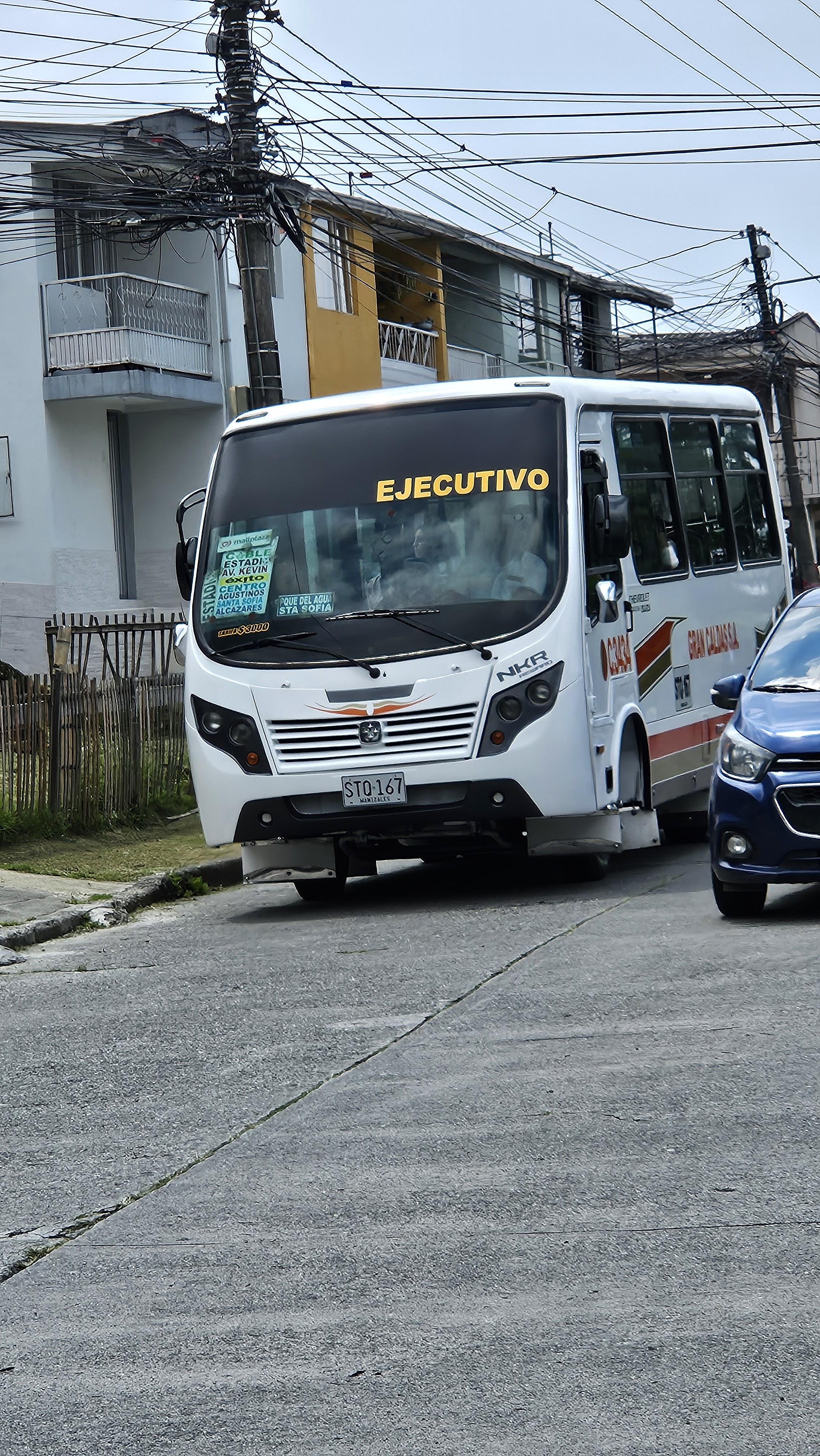
Getting Around in the City: local buses (Gran Caldas) – 3k COP (though you can see the fare written, and some buses cost less)
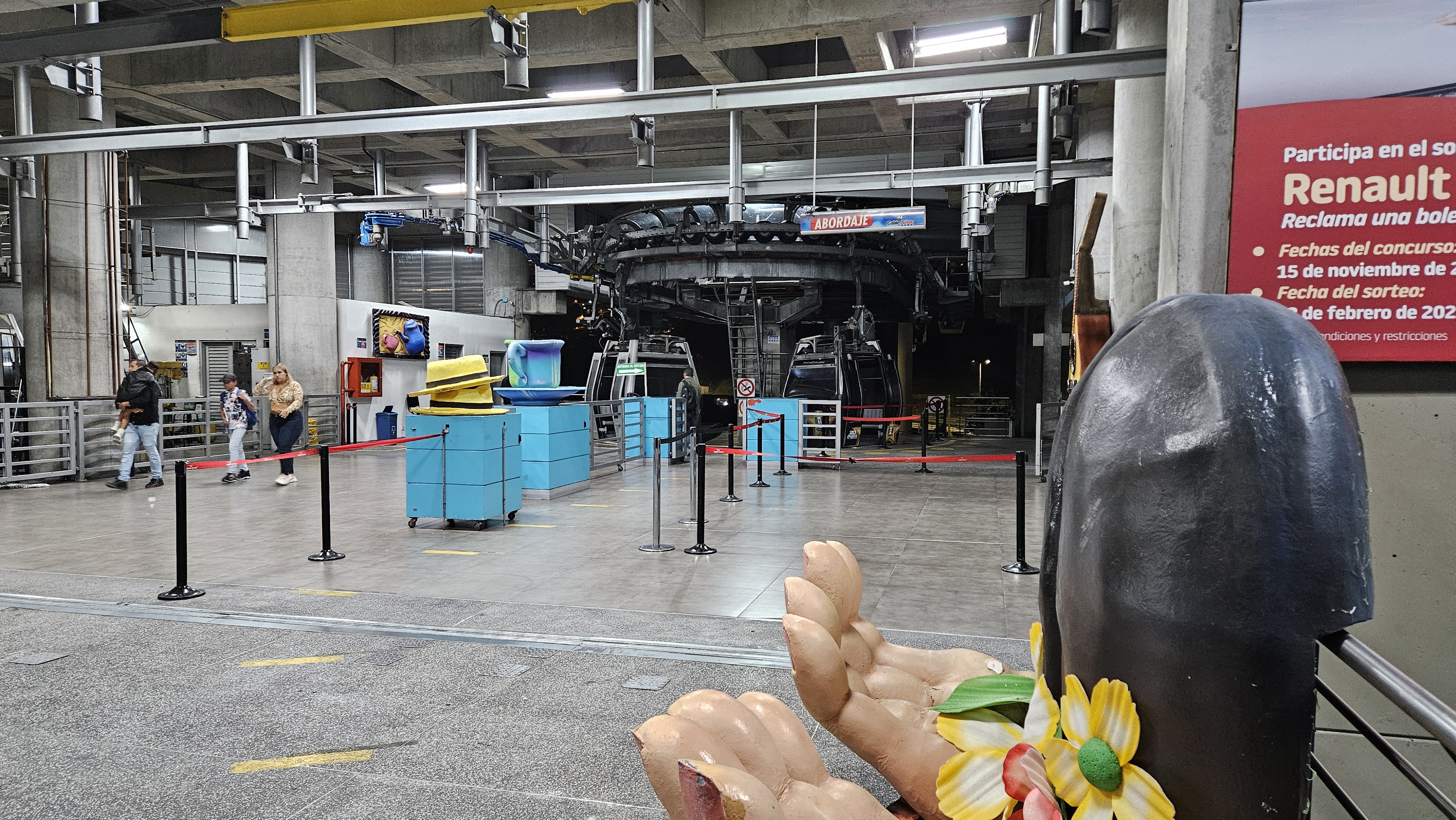
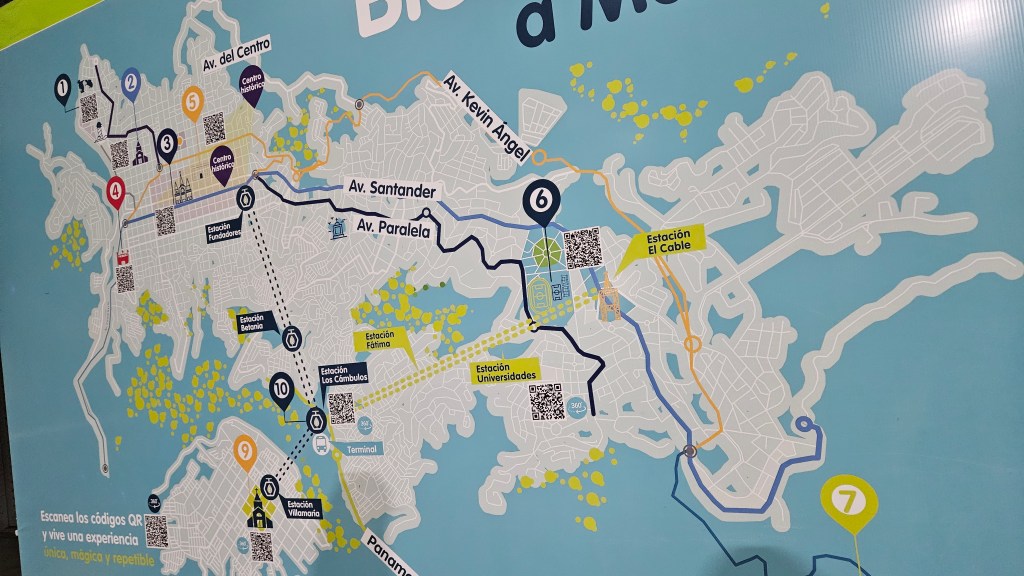
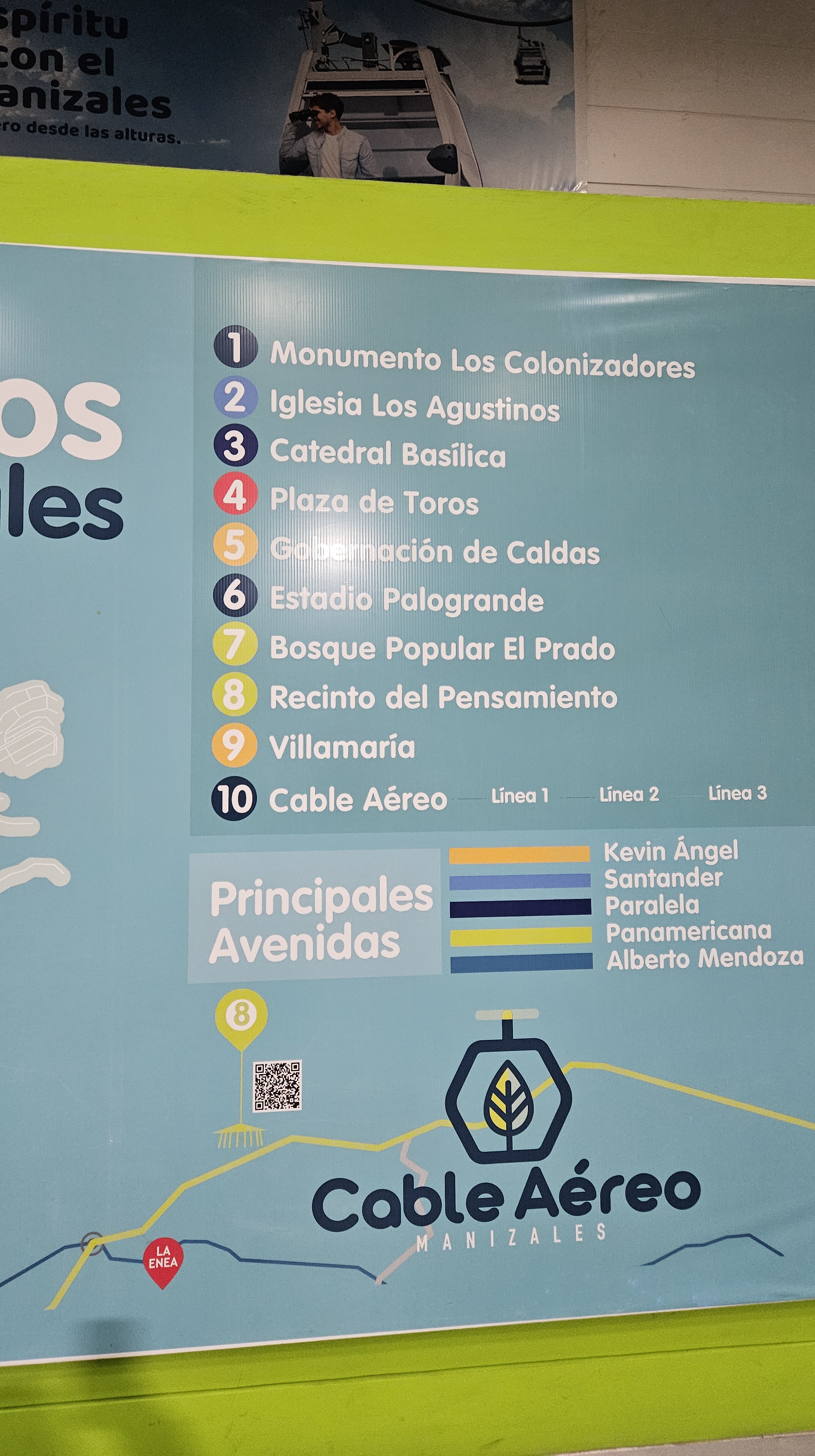
-Teleférico (cable cars): a bit limited, they can take you from one end of the city to the other, through the bus terminal or downtown. It’s great for the highlights of “touristing” – the views and the experience.
-Taxis – we didn’t have to rely too much on them since public transportation in the city passed often and was reliable. Still, they aren’t the most expensive option – we paid 14k to travel 9 km from the Bus station to our apartment.
Highlights: -El Bosque City Park
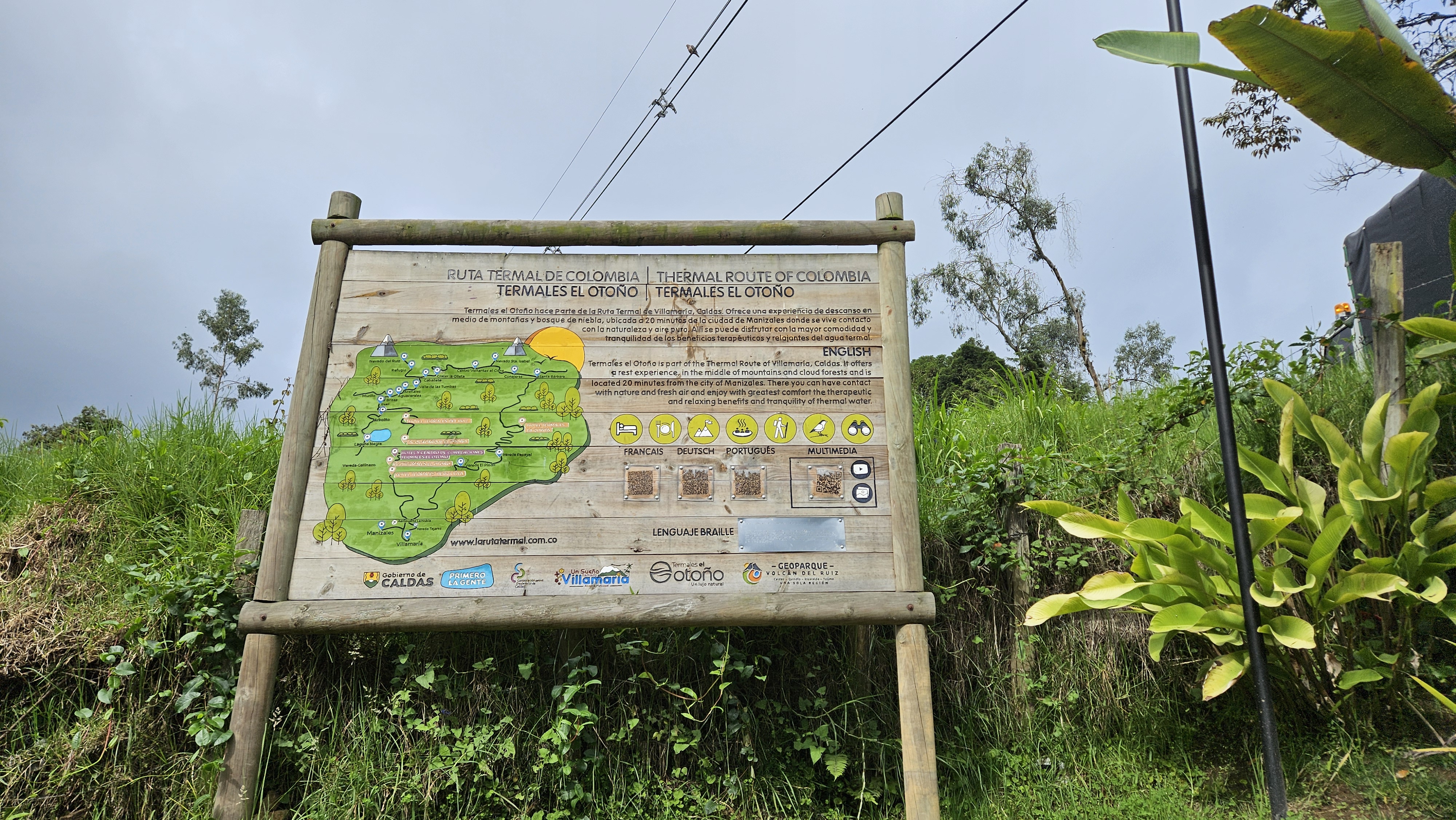
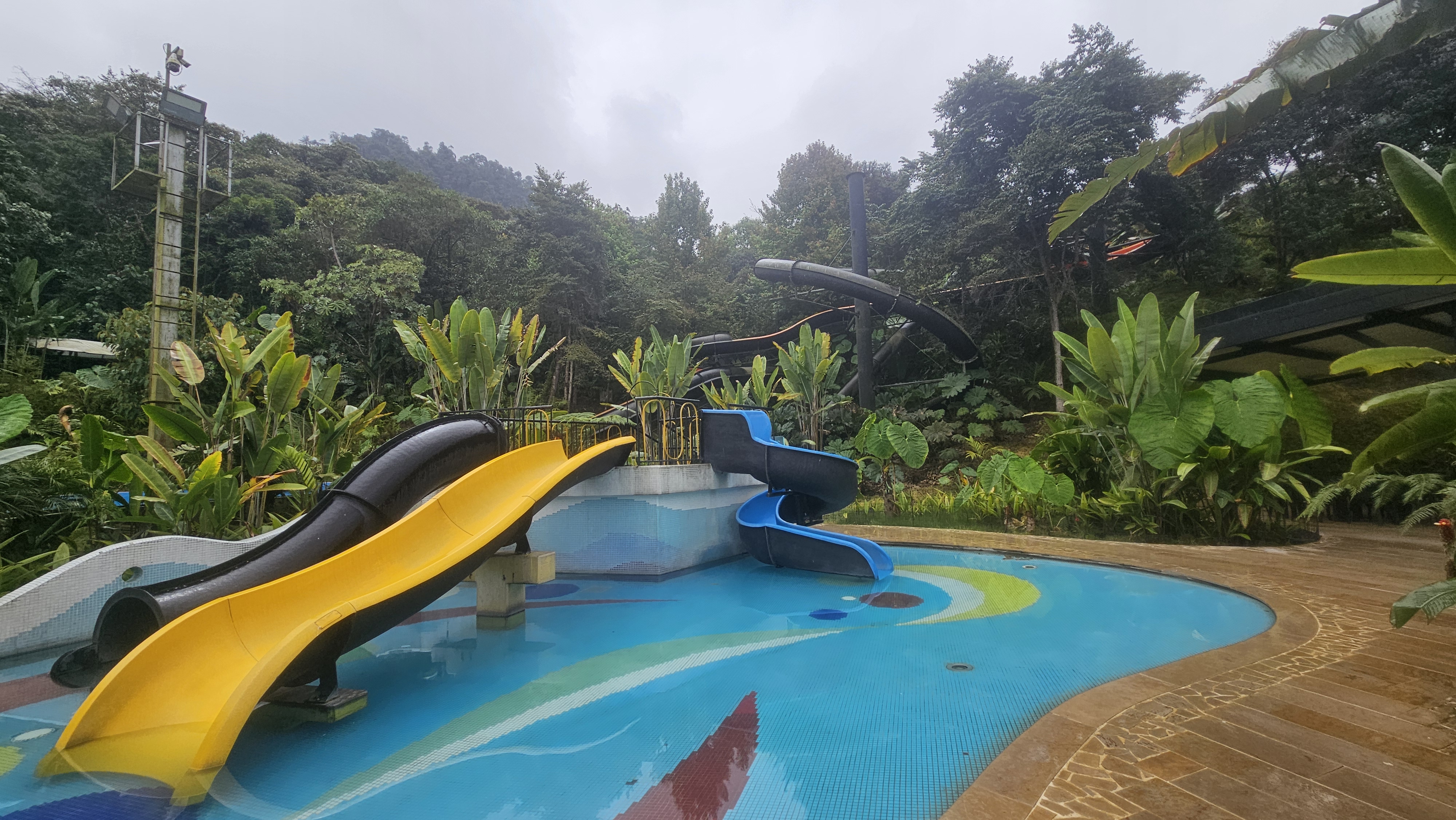
-Termales del Otoño and Acquaparque (just outside of the city)
-El Centro – the heart of the city
-Chipre – the best view of the city (when it isn’t cloudy)
-El Cable – limited but practical public transportation and a rush to see the city from above
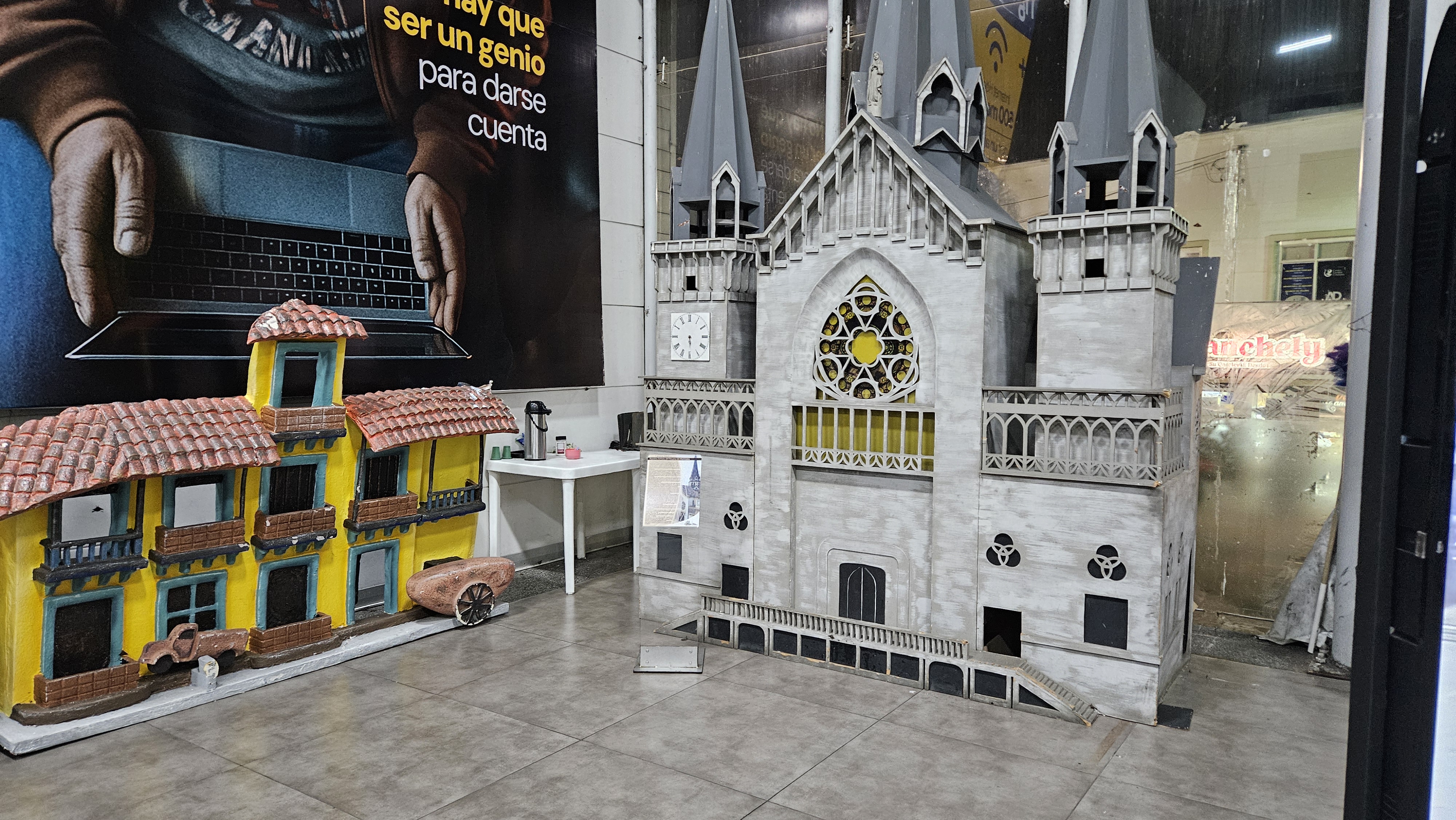
-the architecture and cultural attractions
-the hospitality and politeness of the locals

Where to Stay

I’ve had the pleasure of staying in Manizales twice now. The first time was during a solo travel adventure in 2019. It was at the tail-end of my Semana Santa week-long vacation, so peace and comfort were my focus. That’s how I ended up staying in Lodge Paraíso Verde. Living up to its name, it was a green paradise surrounded by lush mountain vistas of the city’s northern outskirts.

That was a perfect introduction to this city. I remembered the hospitality of the workers at the lodge. They helped organize an affordable taxi ride to get to the other side of the city and go to Termales del Otoño. The taxi driver was so nice, I kept his contact and called him again when it was time to go back to the bus terminal.

This time, Carin and I knew that we wanted to go to the hot springs. The first time, I wasn’t aware of “termalismo” or hot springs tourism, nor had I ever heard of the termales in Manizales, so the recommendation led to a revelation. Carin and I had been working hard and traveling harder; thus, our objective was to explore, get in touch with nature, and relax at some point while doing it. What better way than hot springs?

Since our goal was clear, when looking at booking options, we picked out something to the south of the city. Little did we know, we were uncovering a gem a casual tourist may not consider. La Enea is a residential neighborhood surrounded by serene trees and mountains. Being that it’s so suburban, we also found the accommodations less expensive. We spent about $76 usd (319,200 cop) to stay 3 nights in a 3-bedroom apartment. We needed good internet and our own spaces to work, which “el acogedor apartamento La Nubia” provided.

We were walking distance from a plethora of shops and local dining options (mostly standard fare: bakeries, fast food joints, delicious arepa stands, with a few niche options like (Colombian style) Chinese food and a rock bar).

That first day, I needed to work, so Carin set out and explored for the both of us. She discovered that the city was extremely walkable, even reminding her of Germany in the way city crosswalks are set up. While out, she was “adopted” by a local family that offered to take a picture of – and then with – her. Her first impressions: friendly, clean, safe, and organized!

Getting Around

While out and about, the locals were happy to answer our questions or point us in the right direction. The few times we got disoriented, we were directed by a local to look for the Gran Caldas bus. They explained that on the sign posted in the window we would see which direction it was headed – either out of the city towards the springs or towards the cable cars and the city center.

One of the first things we found out was that there was no need to waste money on taxis in Manizales. The local buses, particularly the Gran Caldas, have routes that connect the city from the center outward. That’s how we were able to save money on transport. Traffic also was nowhere near as bad as in crowded cities like Bogota and even Medellin at peak hours. The bus got us around pretty quickly and efficiently.

We could even use it to get across the highway to the forest that caught our eye on the taxi ride to our apartment. Of course, Carin found out firsthand that walking there was not a problem either. In fact, it was just as straightforward as asking a bus driver where to get off. The foot bridge over the highway was easy to reach and cross, and then it was all uphill from there. The Bosque Popular El Prado was the perfect break from a long day of lessons.

We took the bus to get to the Termales del Otoño hotel and after that to go back into town. We only needed to stay on that same bus till we reached the downtown cable station, Fundadores.

There, you can take the cable car for just $2,900 pesos per trip. I’ll be honest: we did this at night and while it was worth the experience, I was petrified. The distance covered by the hanging gondolas is long, the boxes seat about 6 people, and at one point, the line stopped with alarms sounding. Thank God we weren’t suspended in the middle of the cable, but can you imagine? It would have been better if I had done it in daylight like Carin had when she went out alone, but after an amazing 3rd day, I didn’t want to skip it (even if dangling in the sky makes my stomach drop).

Highlights and Attractions: Termalismo

Once I recovered from the ride (the next day), I was ready to explore!

Manizales combines all of the things I love about Colombian Coffee Country: friendly, helpful locals, clean, organized cities surrounded by idyllic towns, lush greenery, perfect temperatures, and natural wonders. Manizales itself is the most peaceful capital city. It’s another world compared to the hot, chaotic coastal cities like Santa Marta, Riohacha, and Cartagena. In my opinion, it’s a city that doesn’t get enough credit – and perhaps that lends to its appeal.

However, we weren’t traveling just to explore the city. Our aim was to enjoy the scenery, take hikes, and then soak in the hot springs. This sort of tourism has a name in Spanish: termalismo. If you look up the different tourist attractions in the area, it even has its own category: Hot springs tourism.

On the Manizales tourism website and app (https://visitmanizales.com/que-hacer-en-manizales/termalismo/), we discovered there were 3 main destinations under the “termalismo” category (not including Termales del Ruiz, located closer to the national park than to the city of Manizales). We also found out that the website – a smart resource, in theory – was not exactly up to date. This post can hopefully shed some light on what to expect if you are looking for hot springs in Manizales.

We took the Gran Caldas down the via a Gallinazo. Its last stop left us just outside of the Termales del Otoño hotel. Coincidentally, the hotel and its three pools were closed for a private event that day. That part was the only one I had visited in 2019. The day pass is cheap, but the luxurious hotel is quite pricey. There were still two other options to visit hot springs connected to el Otoño.

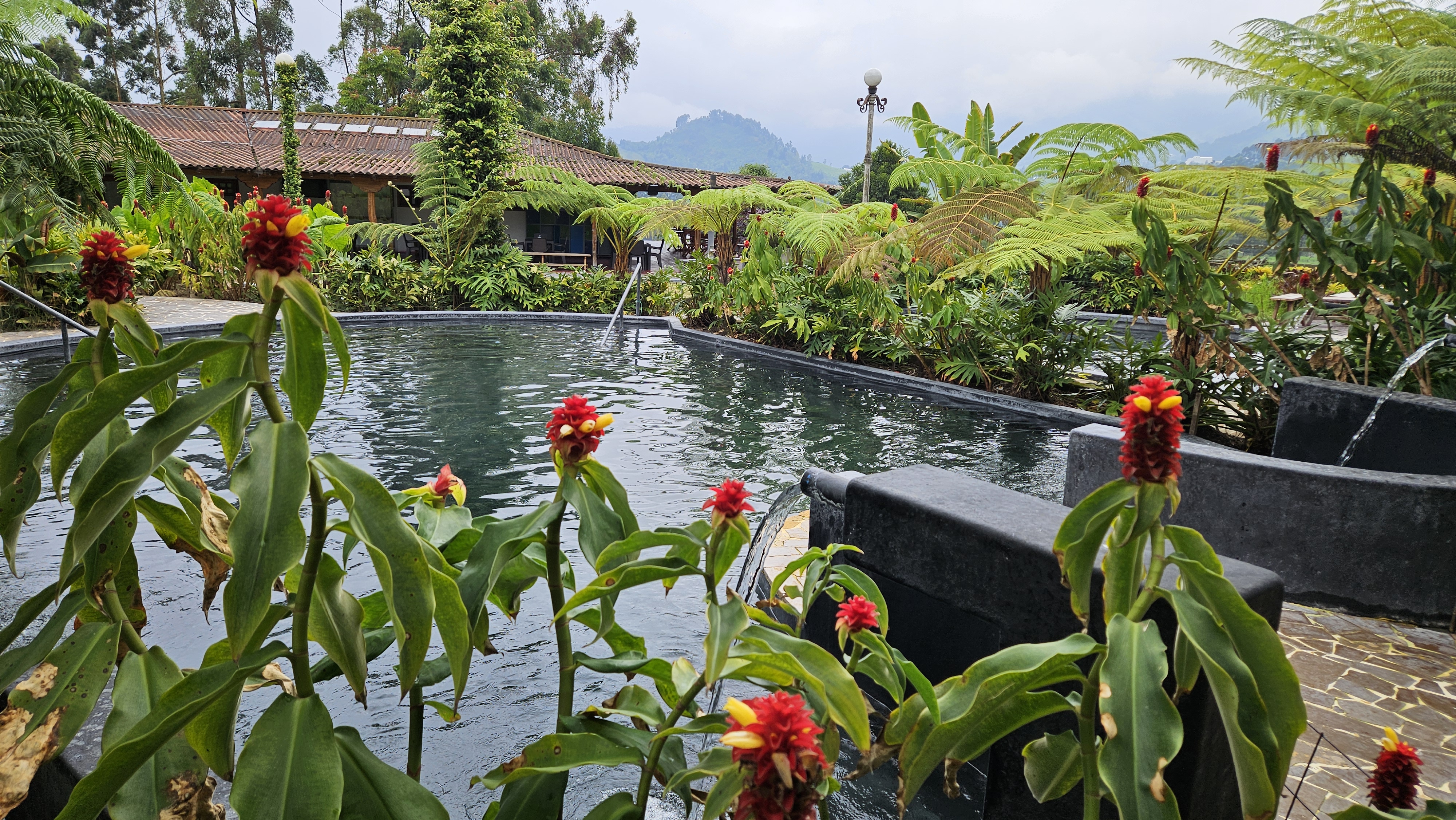
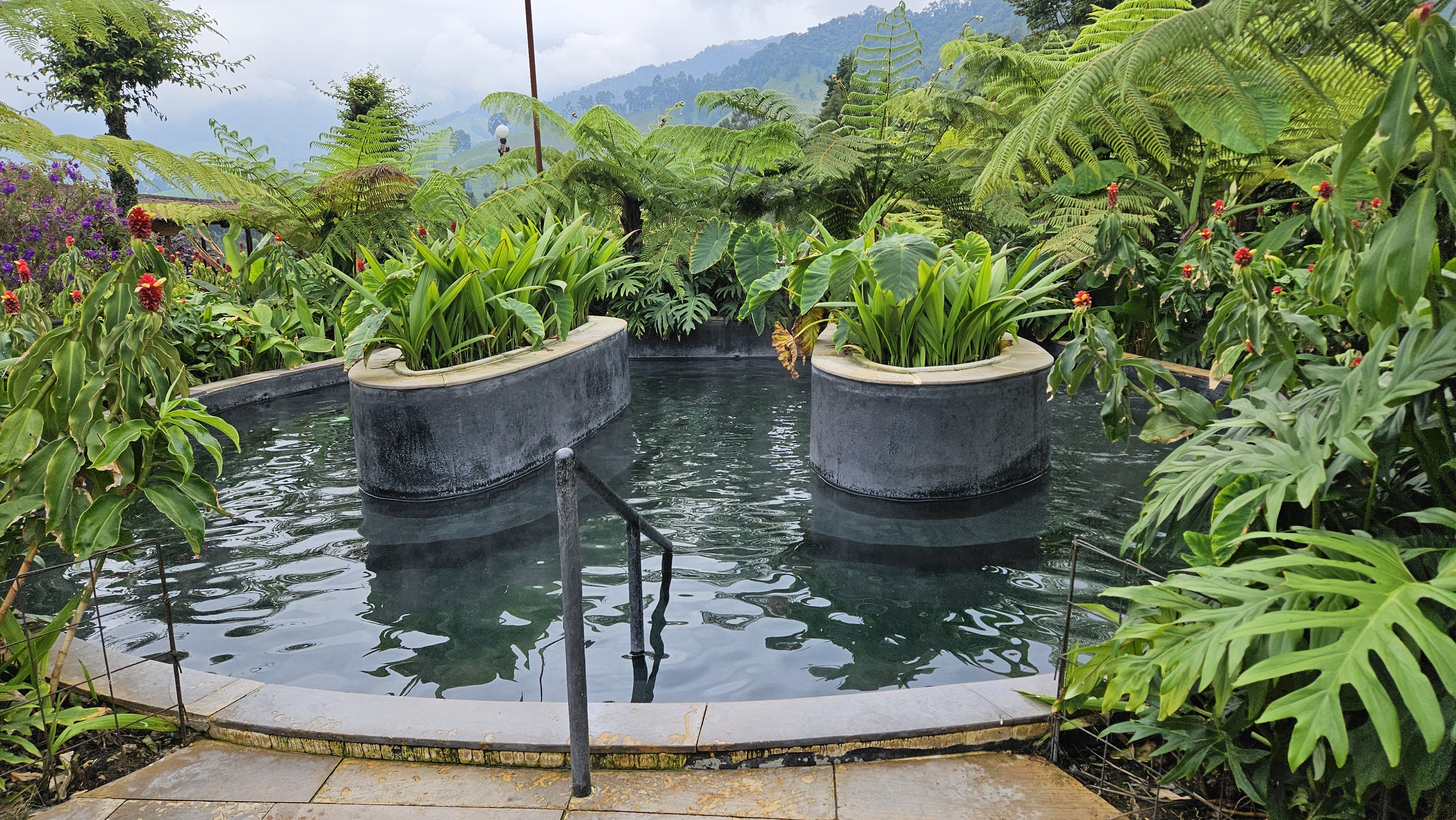
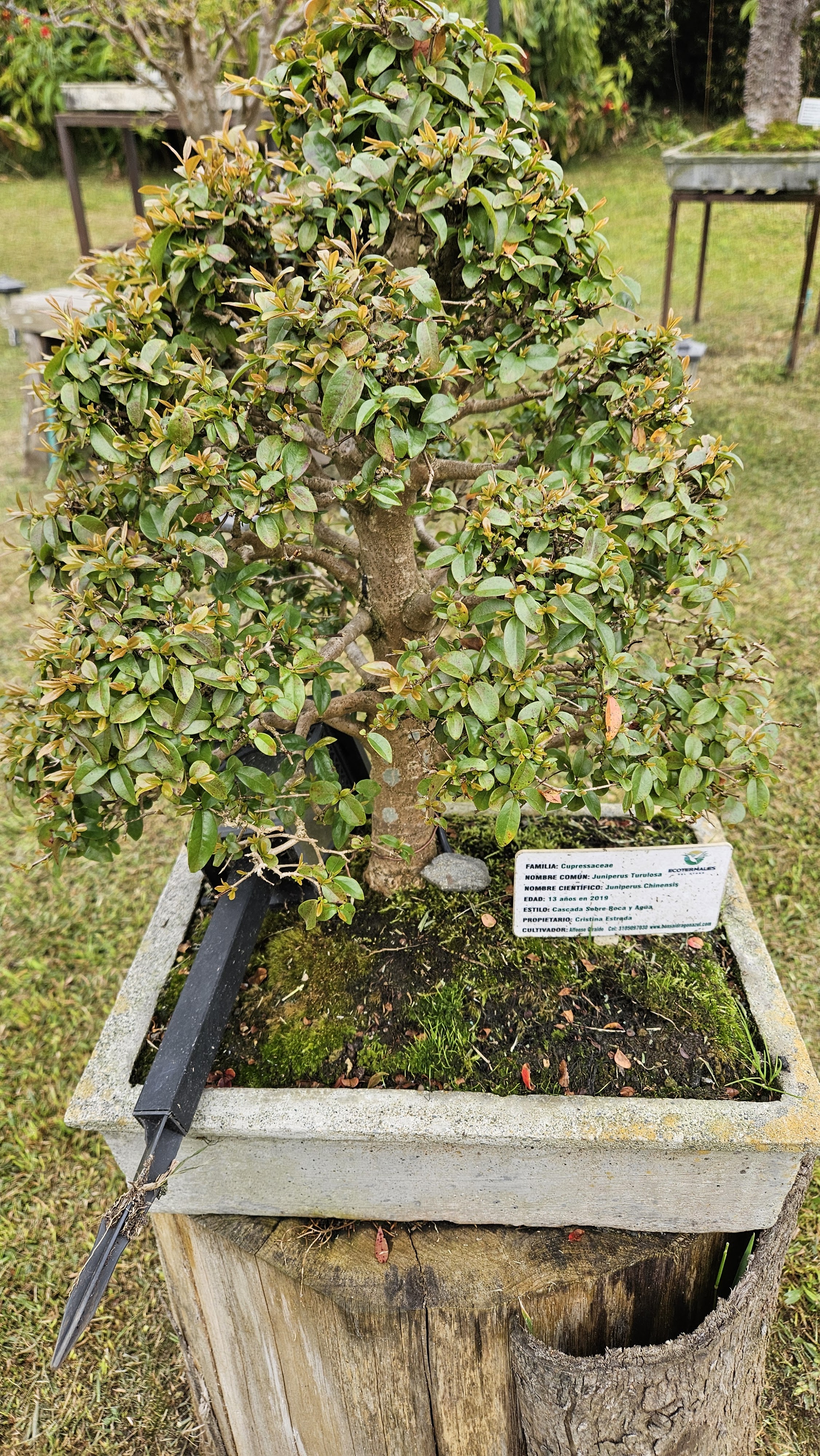
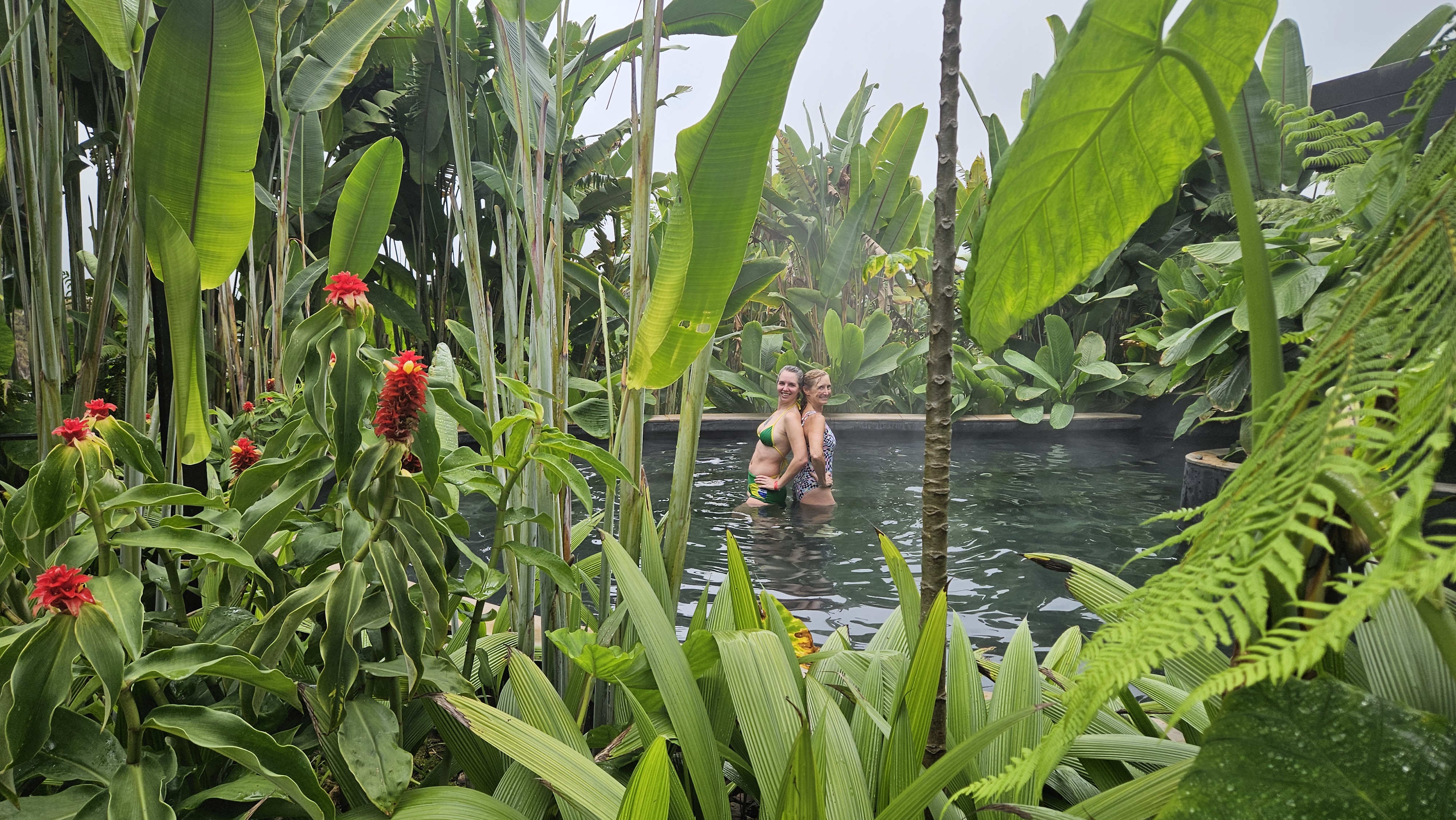
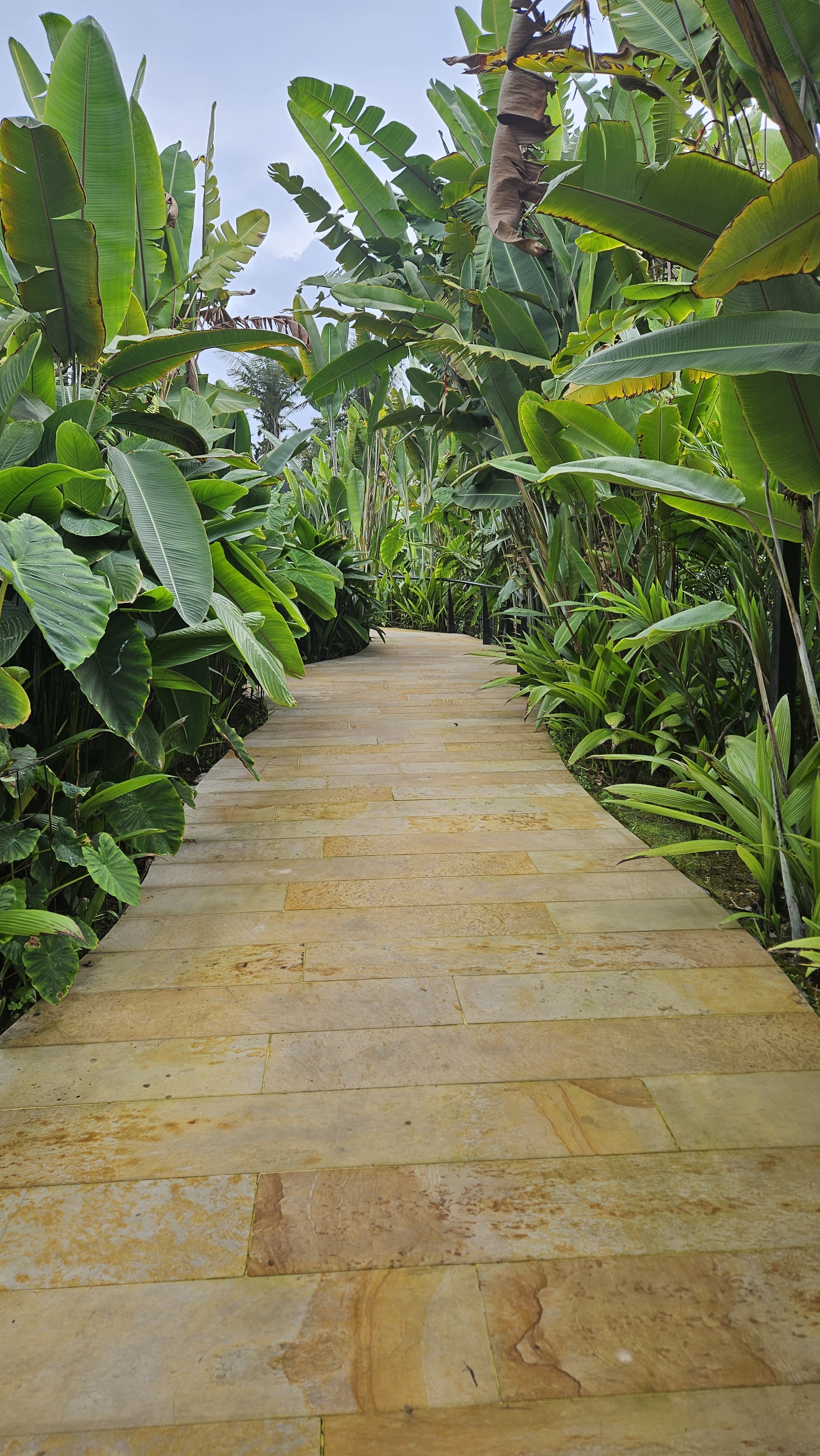
The first was the Ecotermales, a zen garden surrounding relaxing pools. There you can order food at the restaurant or even book a massage with the spa. The garden is teeming with flowers attracting hummingbirds and other colorful feathered friends. Although we were there before the official opening time, the kind attendants allowed us to enter and look around. We took full advantage, snapping pictures of the beautiful pools, the bonsai garden, the decorations. Still, this was all you could do there. There was no hike, contrary to what the website lists. It was better for rest and relaxation, and we wanted a little adventure. We ultimately decided that we would consider coming back after visiting the water park.

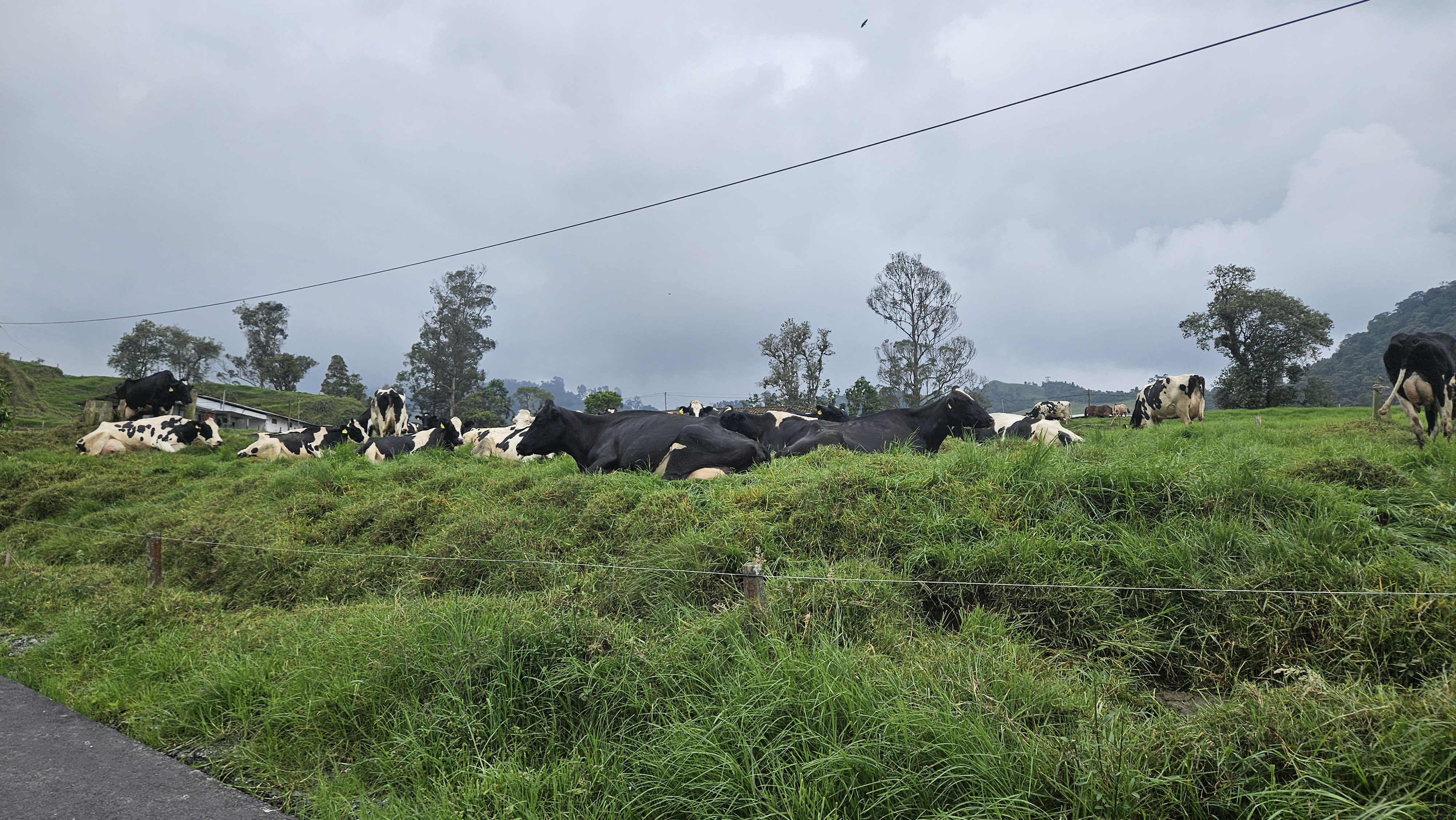
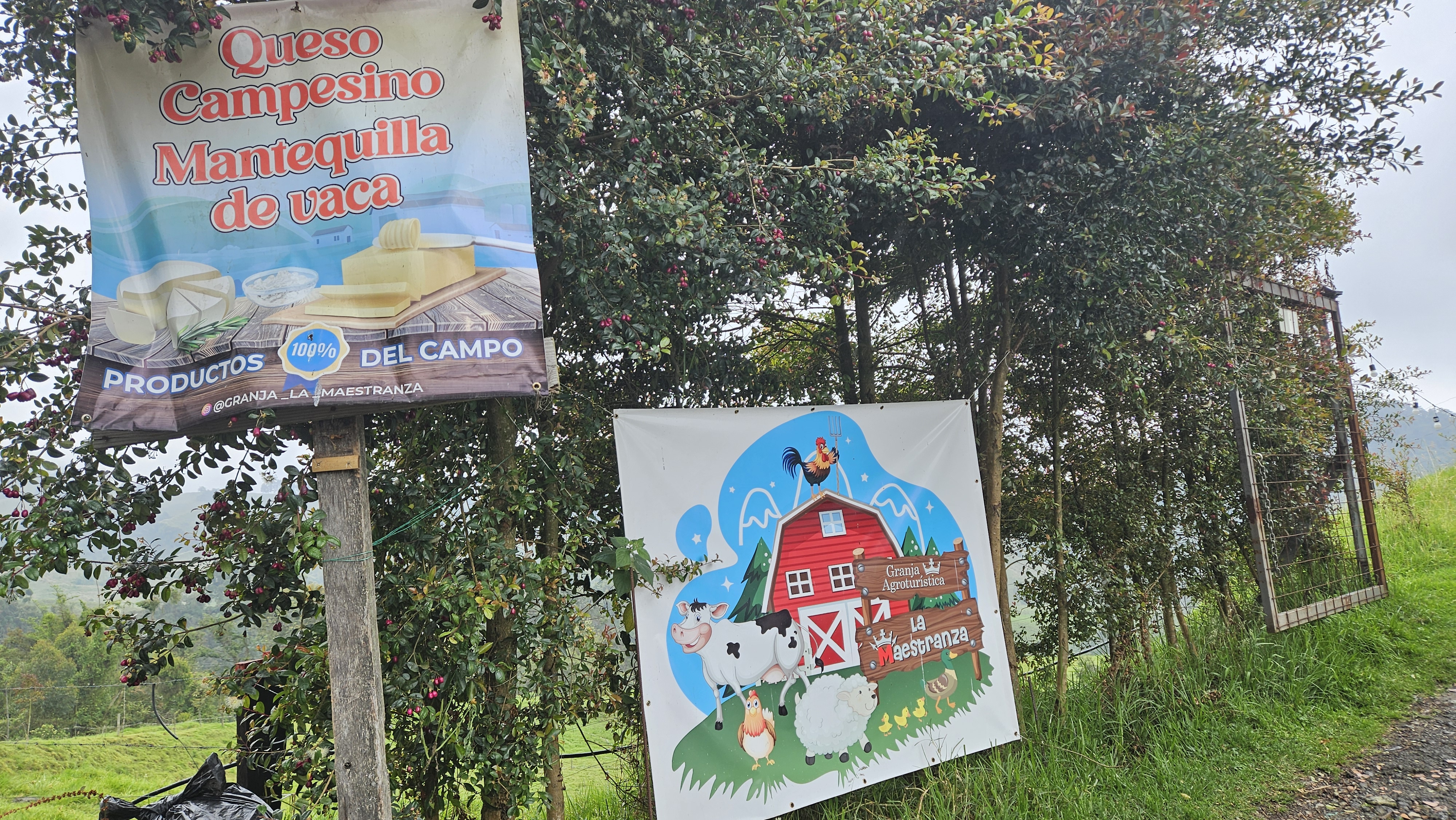
The Ecotermales people told us that we would either need to get a taxi or walk to the Acquaparque. We wanted a hike, so we went for it. The 30-minute hike did not disappoint with its views. We passed Finca Guayabito and felt like we were in Wisconsin, surrounded by dairy cows. On the way back from the park, we given a ride by the shuttle driver working for the hotel. He affirmed the impressive investment needed to have dairy cows in Colombia. The land was rich and owned by someone even richer. Outside of the park, across the road you could buy cheese and butter produced by that investment.

After hiking up some hills (just the workout we were looking for), we found the parking lot near the top. We were greeted by a friendly black and white kitty. Because it was Saturday, we had to pay 10k more than the usual price (60k instead of 50k – still only $14 USD). On the plus side, on the weekends it opens earlier; during the week, doors open at 12 pm. It worked out perfectly.

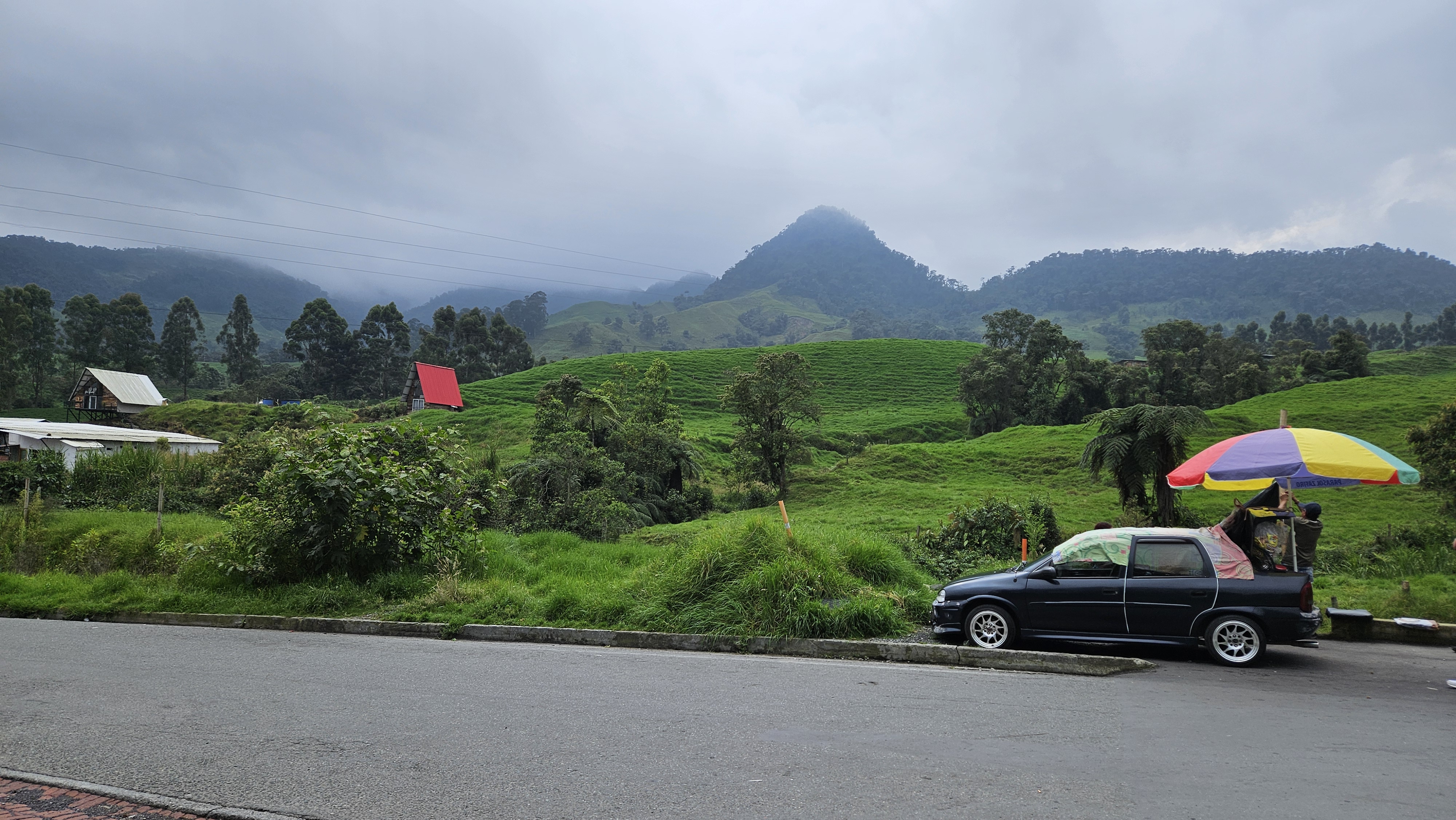
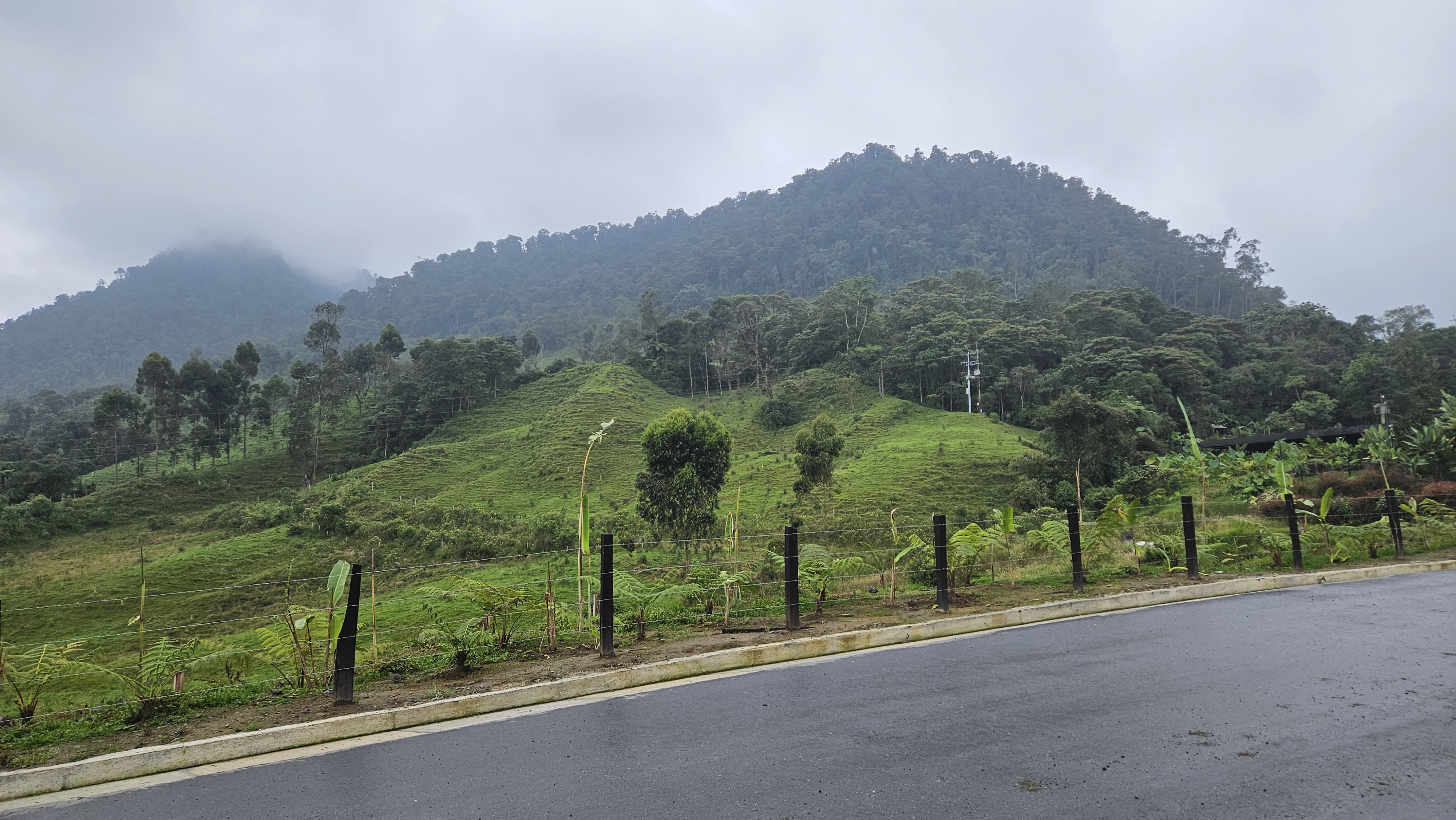
The park is shrouded in mist and overtaken by vivid vegetation. The information on the Manizales website painted a different picture. Clearly outdated, the price listed is about half the actual price. Many years have passed since the post was made showing a bare, open, somehow brighter version of the park. Its current version is better, more exotic, and the awnings are a practical addition considering the frequent rains.

I tried out one of the three slides. It was hard to work up the courage for several reasons: I didn’t have flip flops, for one thing. That made getting up the hill on the mossy walkway difficult. Getting up there was hard enough, but then psyching myself up to get in the icy waters (yes, the slides waters are not from the springs) was another challenge. I got a lot a water up my nose as I rushed down. It was fun, but getting up there to do it two more times was too much to ask.

We were also informed that the eco-trail was closed. Though the hike up the road had been nice, we were disappointed. Apparently the unseasonably heavy rains had done some damage and made it too dangerous for hiking. Oh well, if we ever go back, we will have something left to experience.

All in all, we had a relaxing day. At lunchtime, the menu had plenty to choose from. Carin went for the traditional agua de panela (brown sugar cane infused water) with an arepa, chorizo, and cheese. I went for something a little pricier, patacon and Neapolitan-style chicken with an arepa and salad and hot chocolate. The drinks helped us warm up. The cold rain had made it hard for us to get out of the pools.

We mostly lounged in the warm waters and made new friends. After our lunch, we got back in to get some tasty cocktails at the wet bar. We floated from pool to pool lazily, enjoying the contrast of cold raindrops and steamy water.

Once the weather had cleared up, we decided it was time to get back to Manizales. We had to make the most of our last full day in the city. Resting in the water had recharged our batteries, so no need to go back to the ecotermales. Our skin and hair felt super soft, our hands pruny from the hours spent in the hot springs. What a refreshing experience! With the shuttle, we got back to the hotel in a few minutes. We jumped straight on the Gran Calda bus headed back into the city to spend the afternoon and evening exploring.

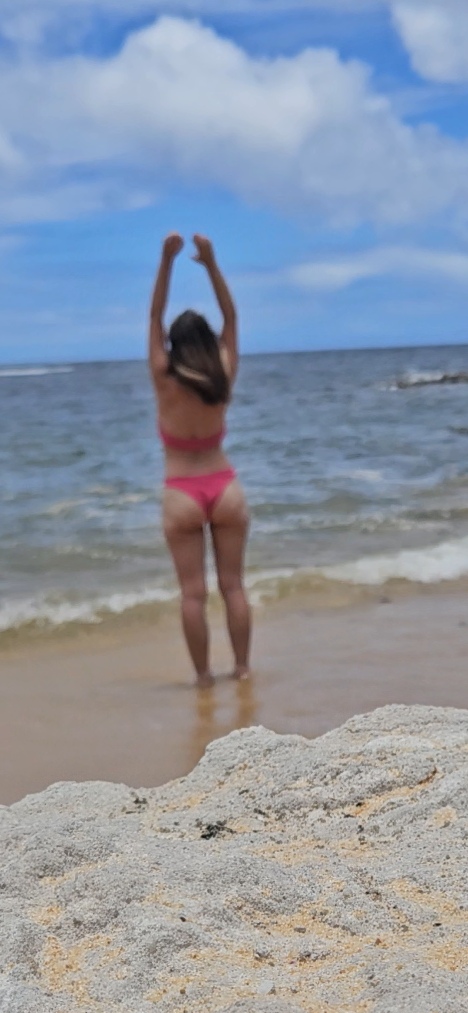
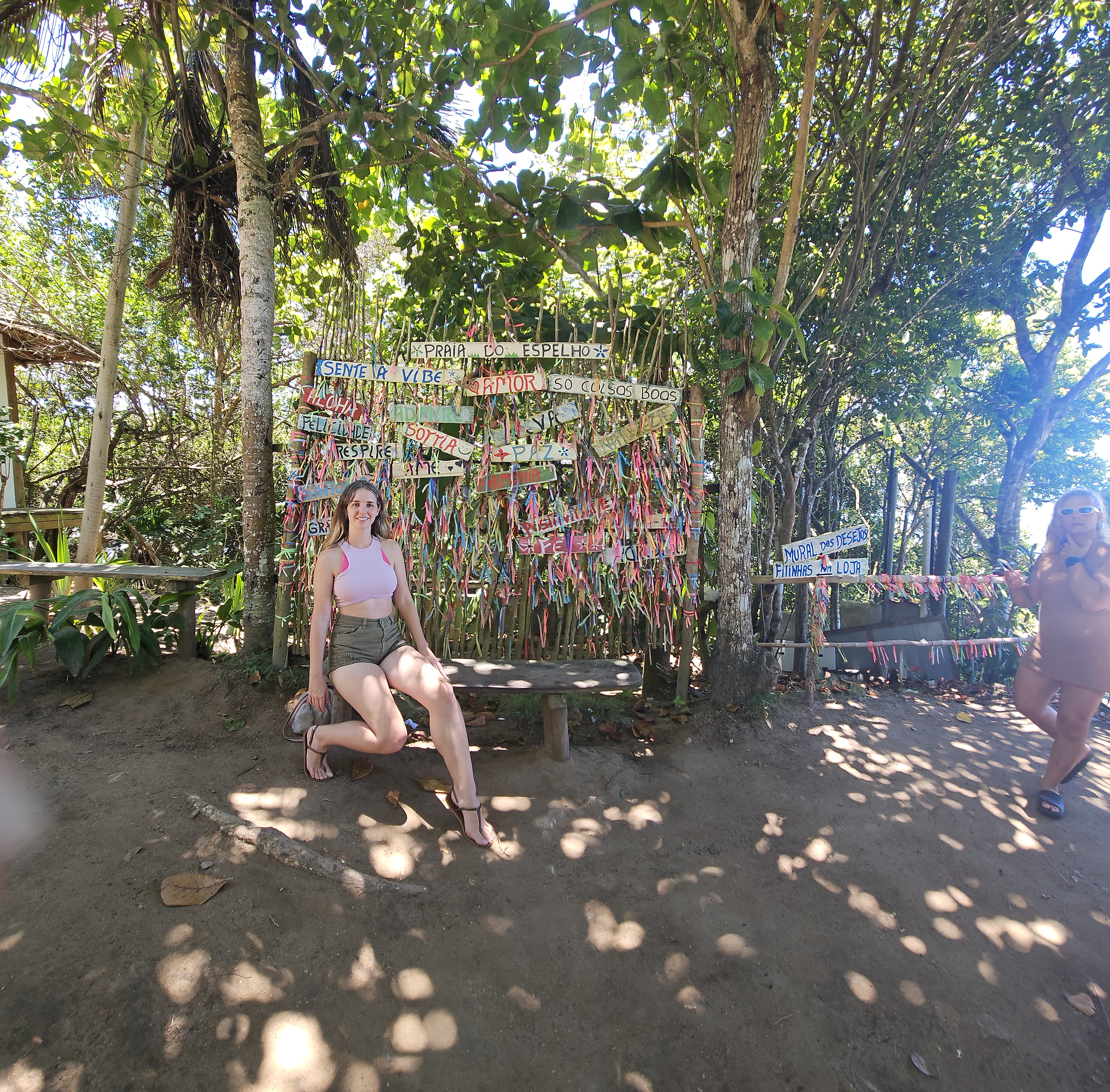
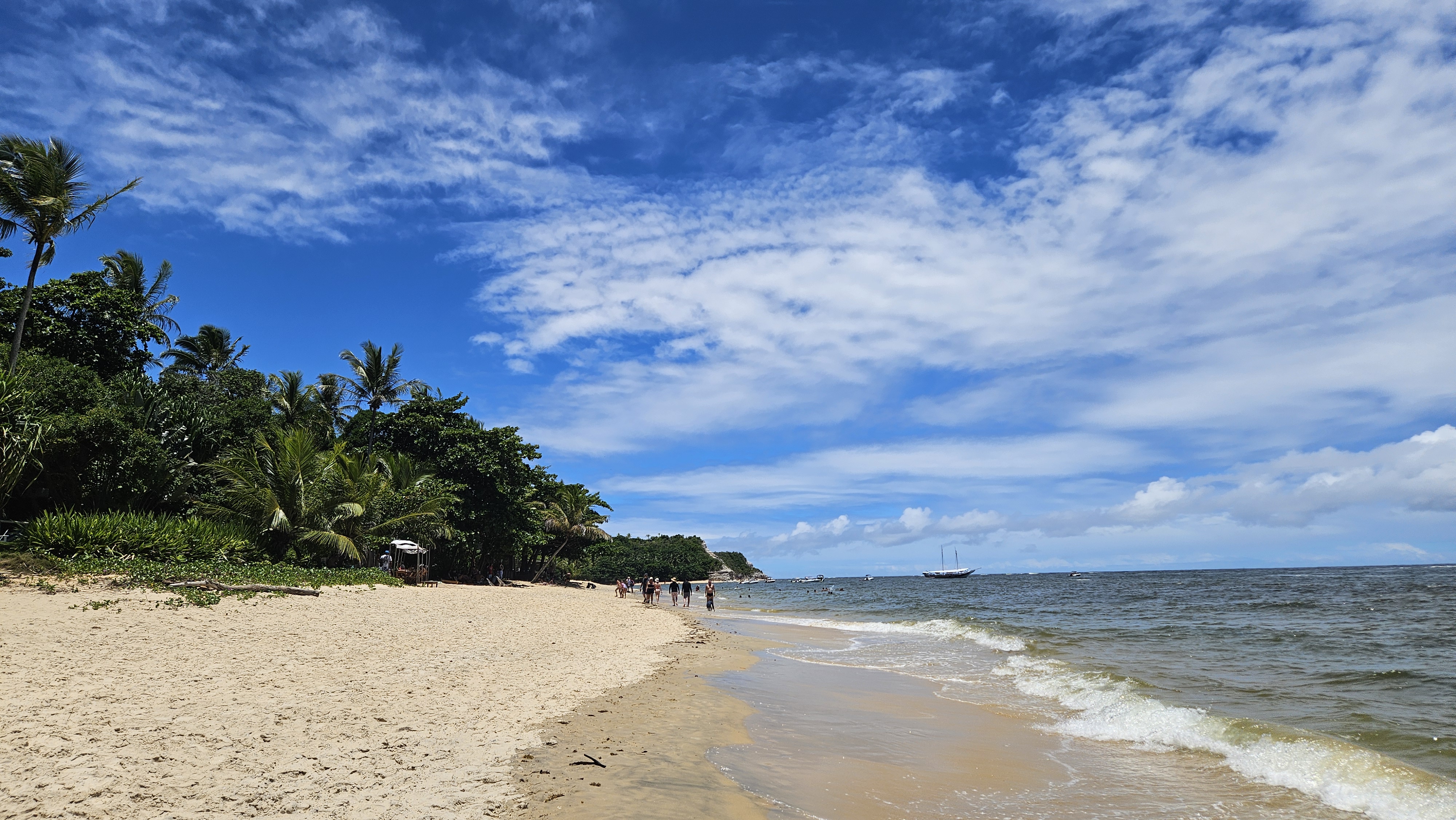
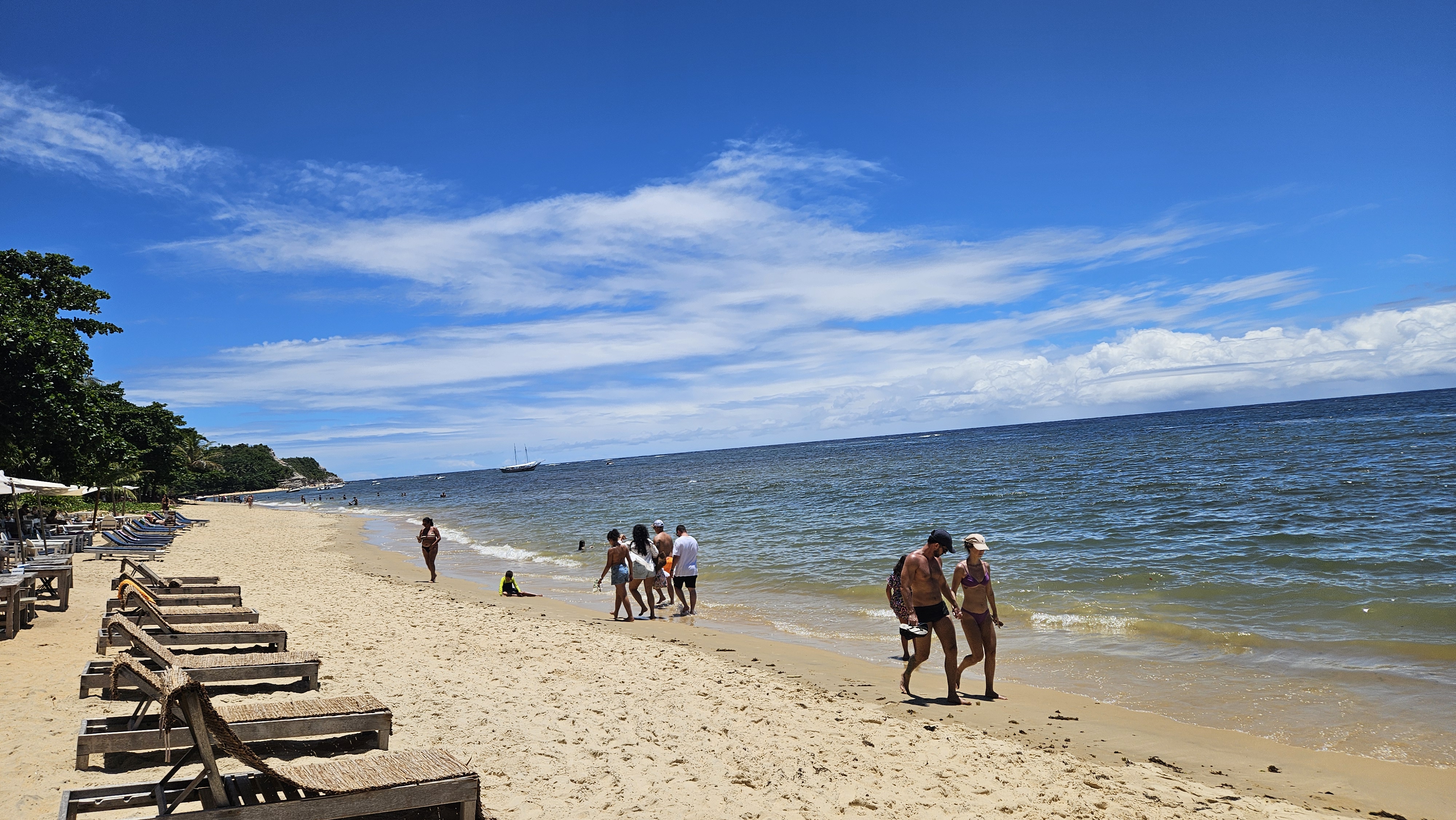
Beach Day in Brazil: Reflections from Praia do Espelho

This journal excerpt is taken from week 4 in Brazil, January 25th, 2025. Since I named my blog “adventurer’s diary” I figured, why not post one of my journal entries? Along with some photos taken at this stunning destination.

This entry came 10 days after my time in Salvador. I arrived in Brazil on December 28th after sorting out the over-stay fine with Colombian immigration in Leticia. I took a motocarro to Tabatinga, the Brazilian border town, with my flight ticket bought, ready to go to Manaus. Or so I thought.

My entire time in Brazil, I had issues with GOL Linhas. I would buy a ticket online; they would say it was confirmed. Then I would find out my payment was refunded. With no email notification. Both in Tabatinga and Manaus I ended up having to buy the ticket in the airport. I never did figure out why. Was it due to the security on my credit card (which is supposed to be ideal for travel – come on Aviator Mastercard!)? Or the hold they put on my bigger transactions after a random case of fraud.

Whatever the case, I showed up at the airport thinking I had a flight and found out it was canceled. Lucky for me, there was another flight leaving about an hour after the flight I showed up for. So, it all worked out.

That was to get to Manaus. After attempting and failing to buy my Manaus-Salvador flight ahead of time, I knew what to expect. I made sure to get an airbnb close to the Manaus airport. Then, I went to buy my ticket in person.

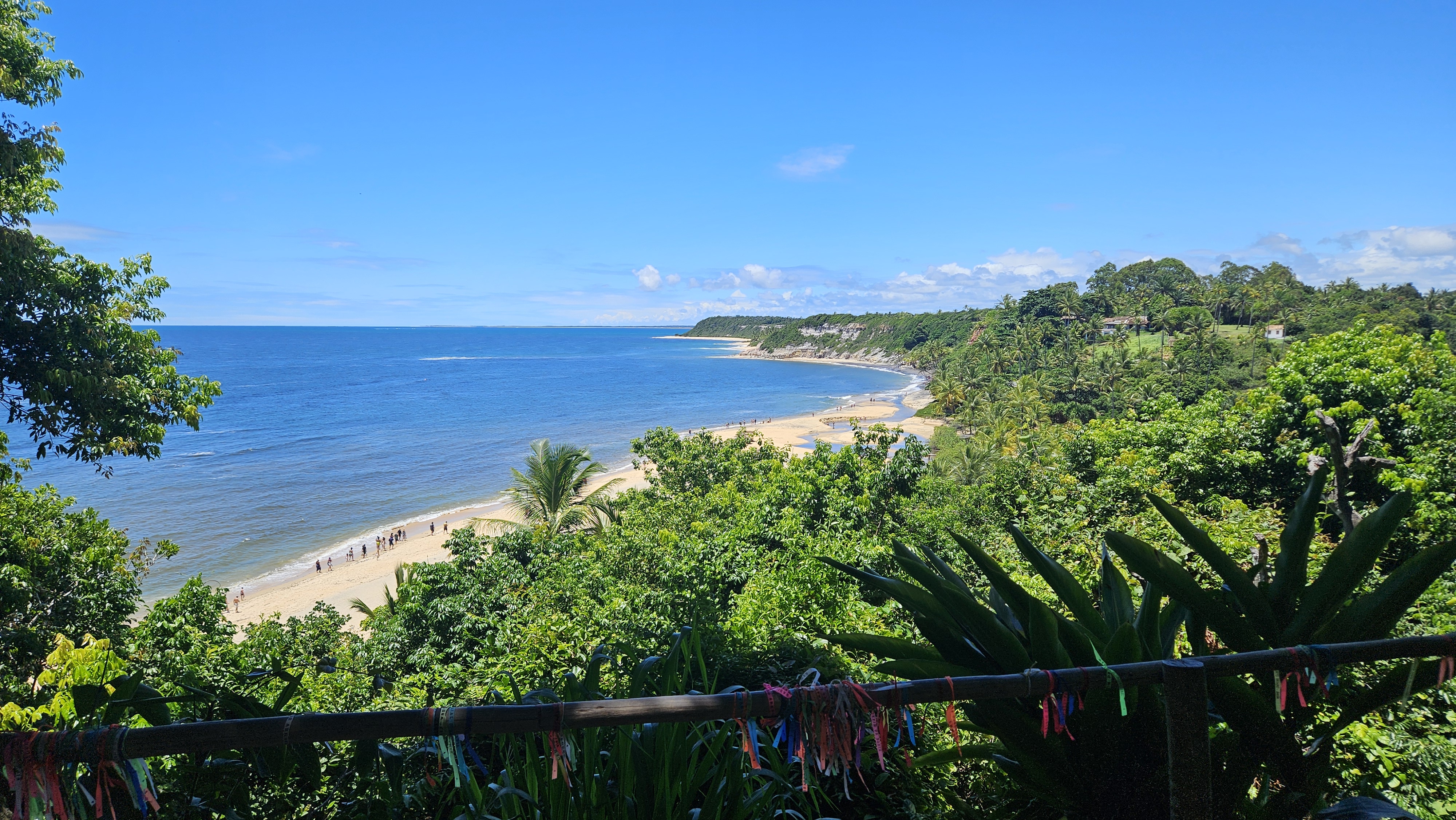
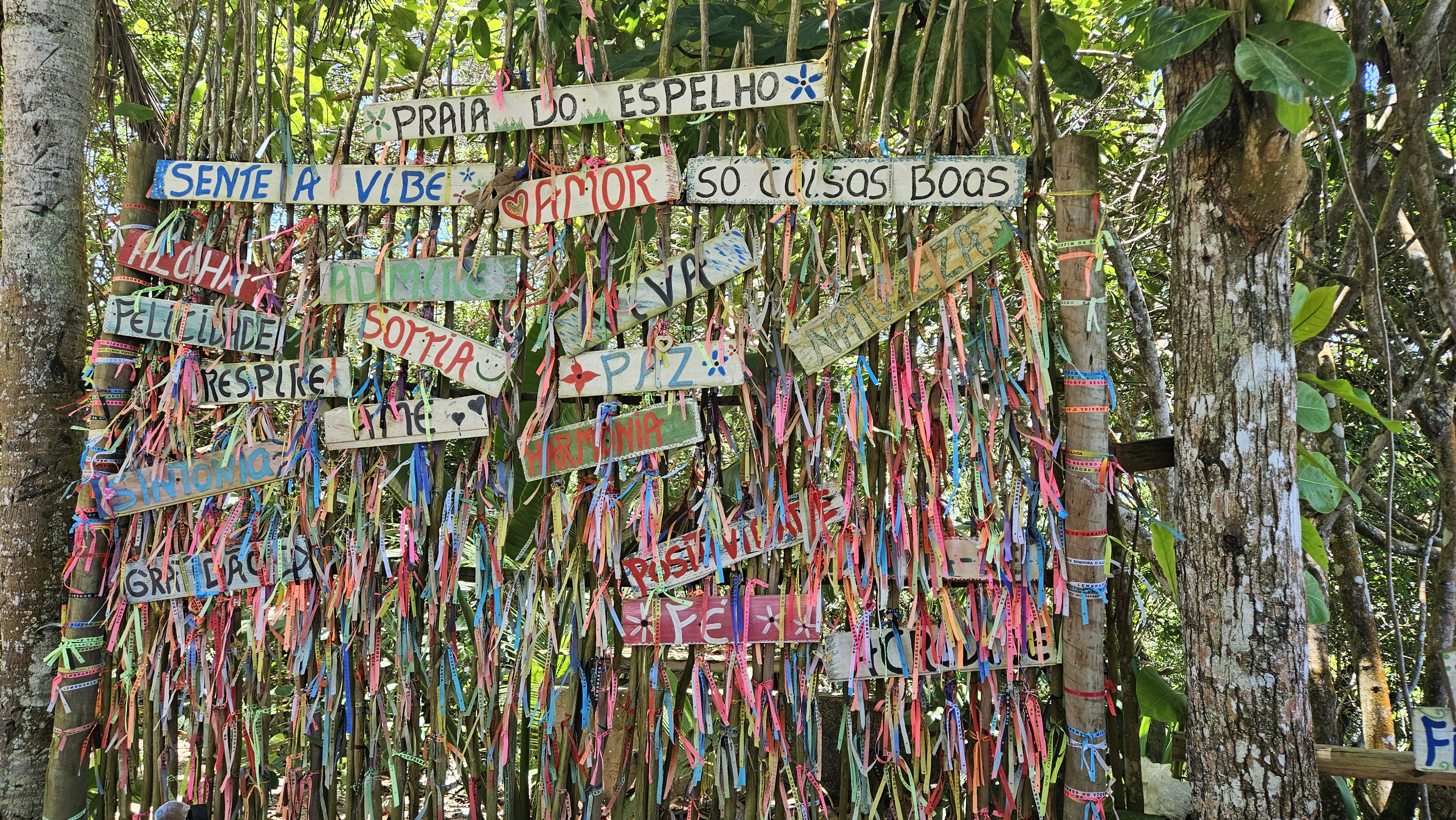
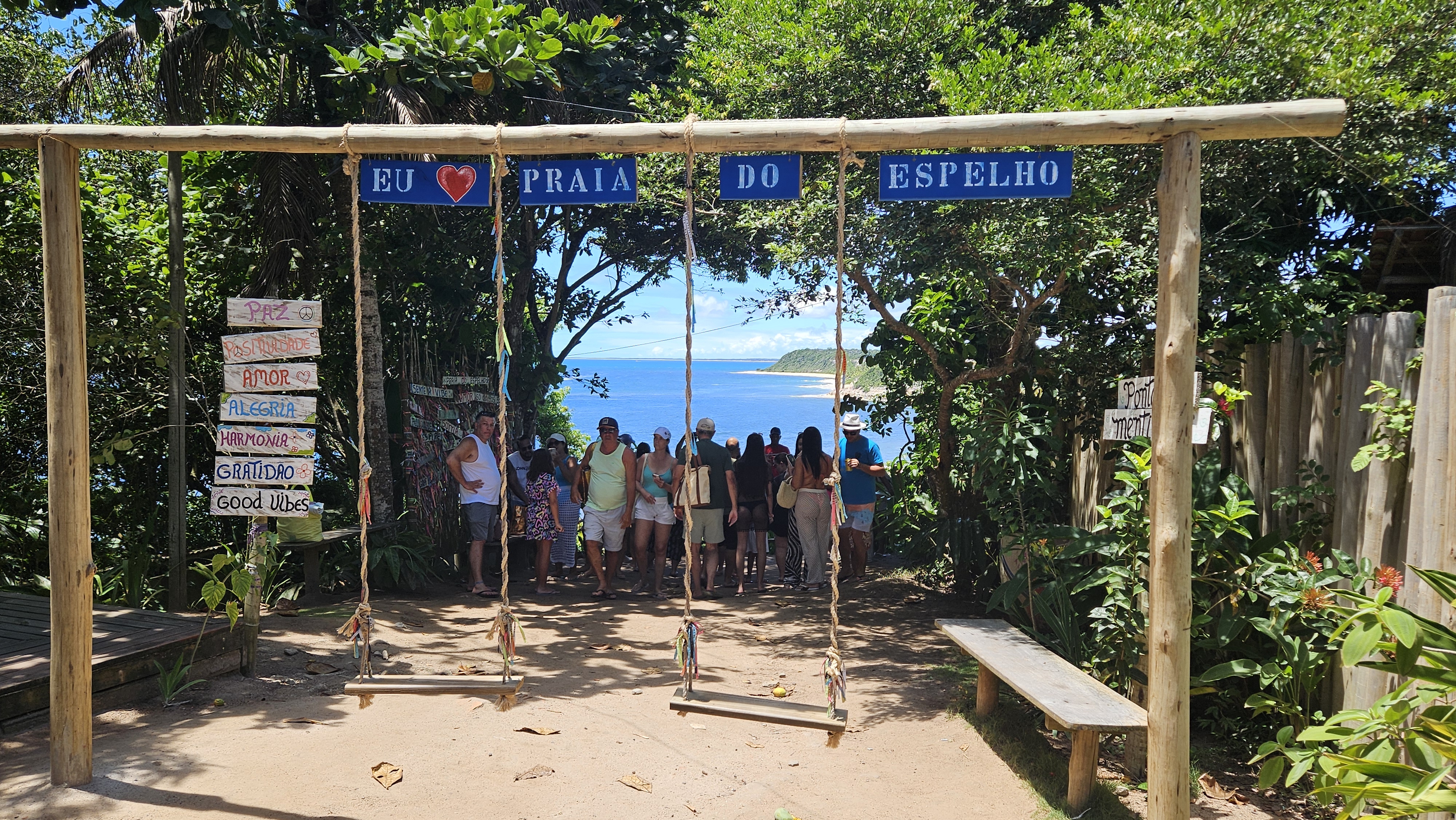
This was just a sample of the setbacks I experienced. By making a plan, I finally could have this transcendent day at the beach – Praia do Espehlo, some 2 hours from where I was staying in Porto Seguro.

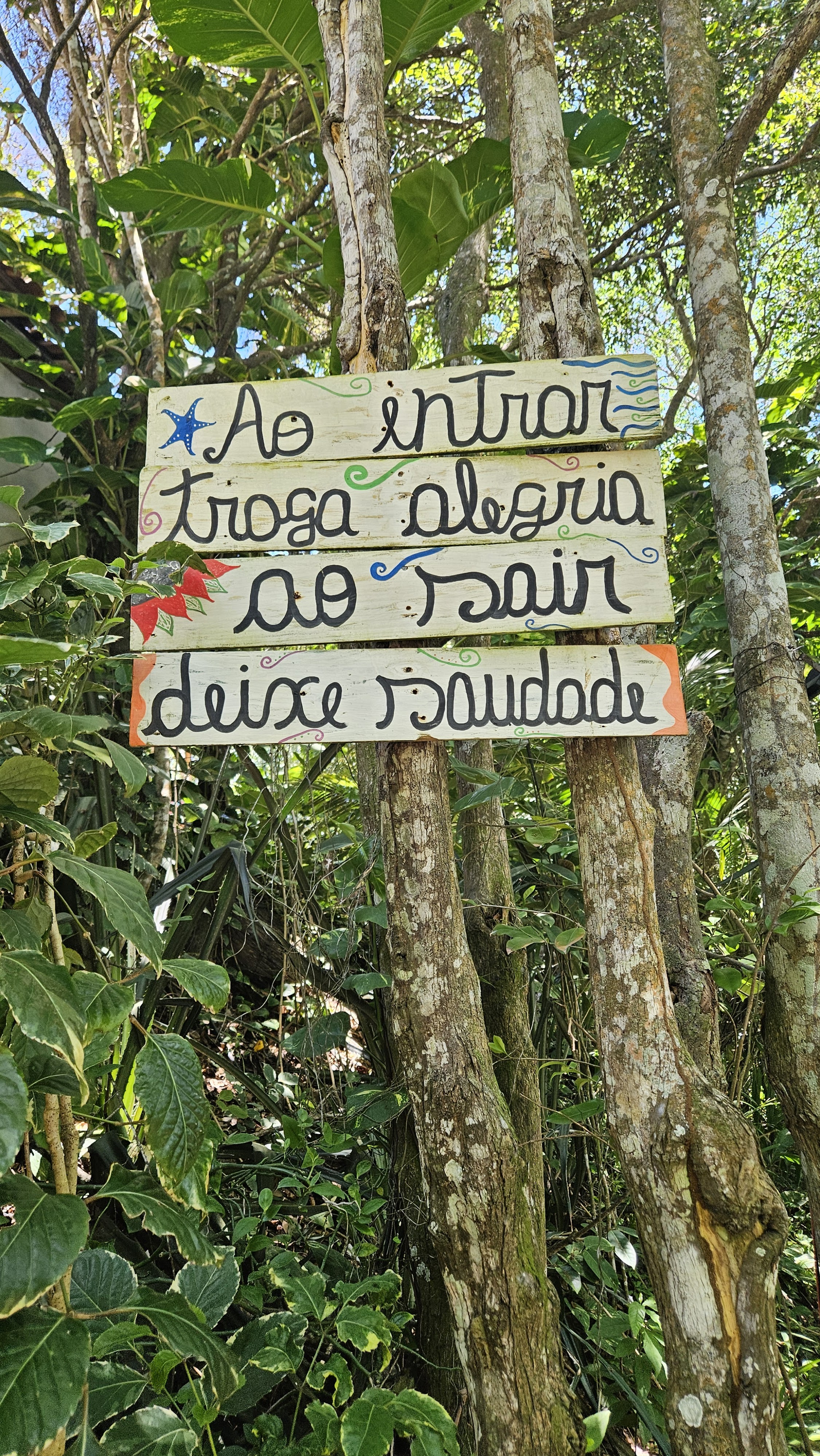
When you enter, bring happiness, when you go, leave yearning.

Here’s a slice of my experience:

I’m at Praia do Espelho with a tour group. The tour cost 120R$ (~21 USD). The ride here on the tour van was bumpy, but I’ve been so tired, I still fell asleep.

It’s hard to describe vibes and generalize my experience with Brazilian people. On one hand, groups I have been haphazardly integrated into have been hit or miss – sometimes coming off as cold or discordant. I guess in those rare cases where I was invited to join close friends, I felt like there was little room for a third wheel. Or maybe I’m not confident enough in Portuguese to break the ice. I could just as well be misjudging the situation based on the little I can see on the surface.

All the same, Brazilians have been some of the most helpful and patient people I’ve encountered. Even on the street. One of the silly little things that has stood out to me after so much time in Colombia is how people actually respect pedestrian crossing. Even in the States that is insanely rare – you’re at a crosswalk, and the drivers stop to signal you to cross. Even bike riders take heed. The sense of awareness of other people and road rules seems stronger here.

What scares me is the intensity of the men. If they find you cute, they shoot their shot at all costs. I’ve gotten three or more new contacts because of this. You have to set boundaries, but I learned that well in Colombia. Been there, done that, could write a book on it. You can’t take all the flattery too seriously because that is typical modus operandi. A thinly veiled tactic to convince you they’re sincere.

But, on the other hand, it’s been nice not being pegged as gringa right off here. Brazilians come in all shapes and sizes. And they’re aware of that. It helps that I also speak Spanish. Still, I try not to default to speaking it. That has made being spontaneous more challenging. But that’s the idea. I’m mainly asked if I’m “Argentina” because most tourism comes from there. After all, it is summer here in the Southern Hemisphere. It’s high season in beach towns (so not great for my wallet). I imagined that but still didn’t prepare. Sometimes you just have to do things, accepting all consequences of your rash decisions.

Brazilian music is fire. You don’t hear Colombian music much or any music in Spanish. And, why would you, I guess? You rarely hear Brazilian music in Colombia. Brazilian’s have such a rich variety of musical styles and rhythms of all types that unless you happen to be in a community where Hispanic people live (mainly of the Venezuelan diaspora), you aren’t likely to hear Vallenato or merengue, or even reggaeton for that matter.

That means full immersion.

I just explored the beach. We got here around 10 am and leave at 3 pm.

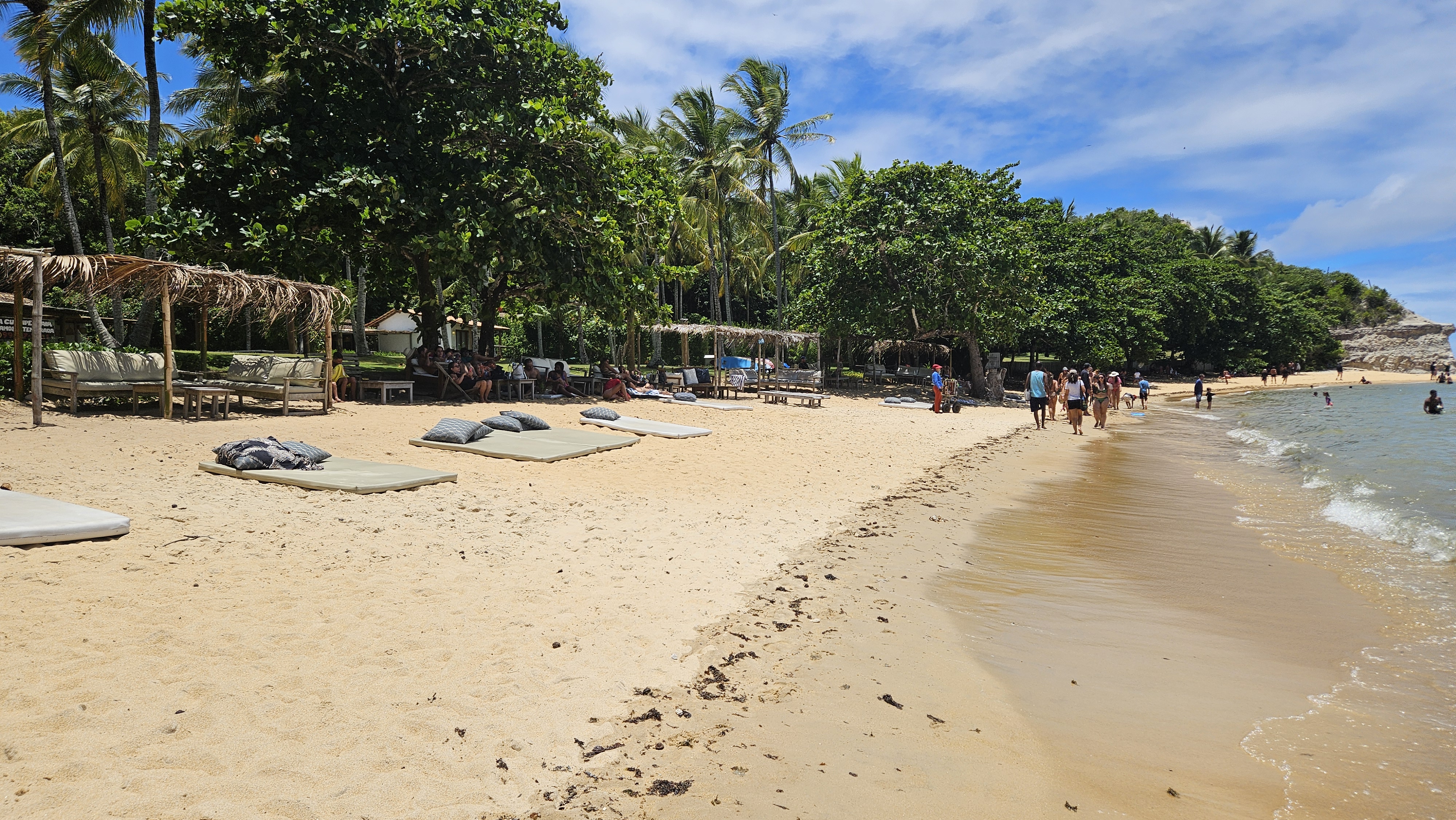
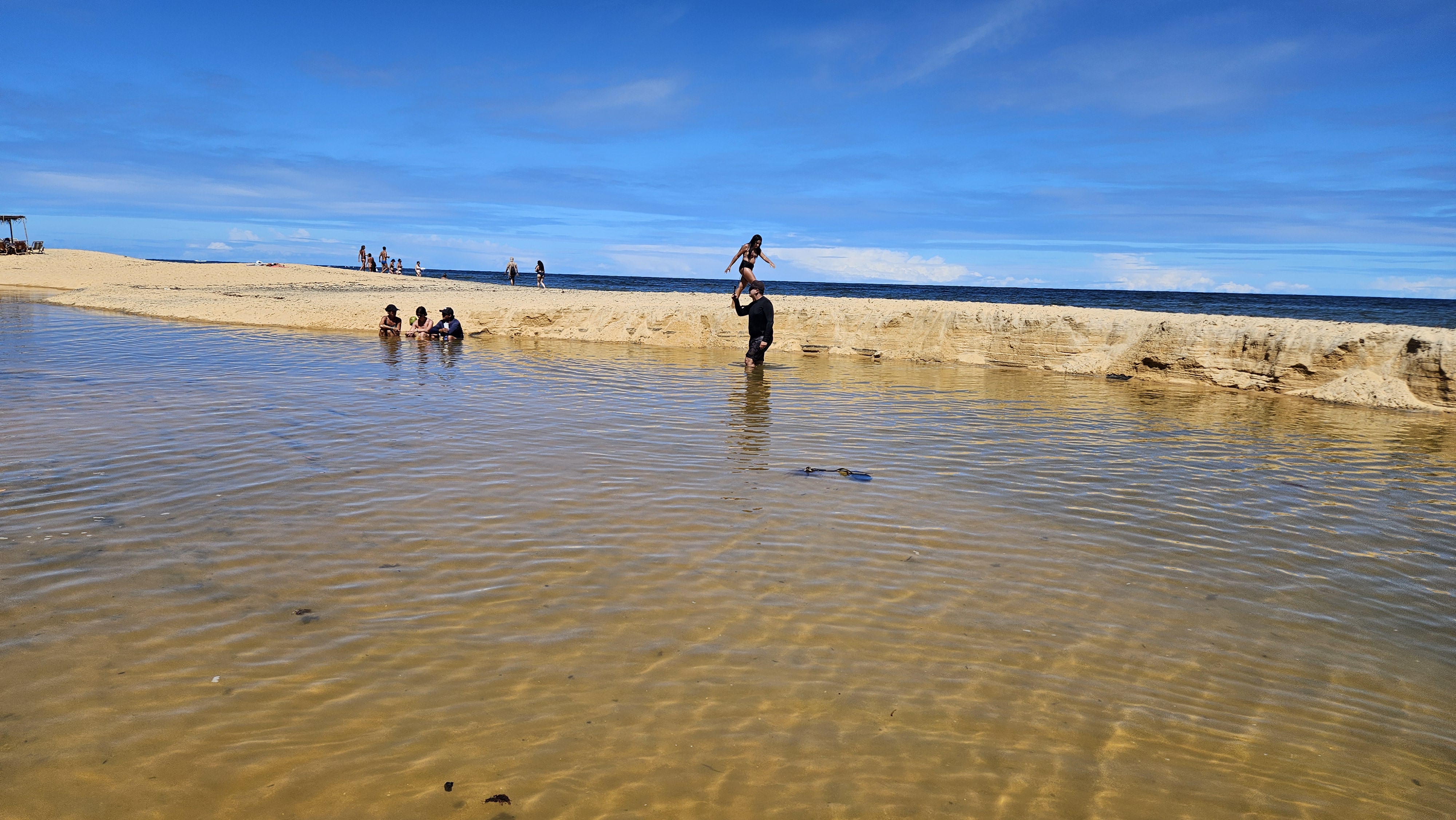
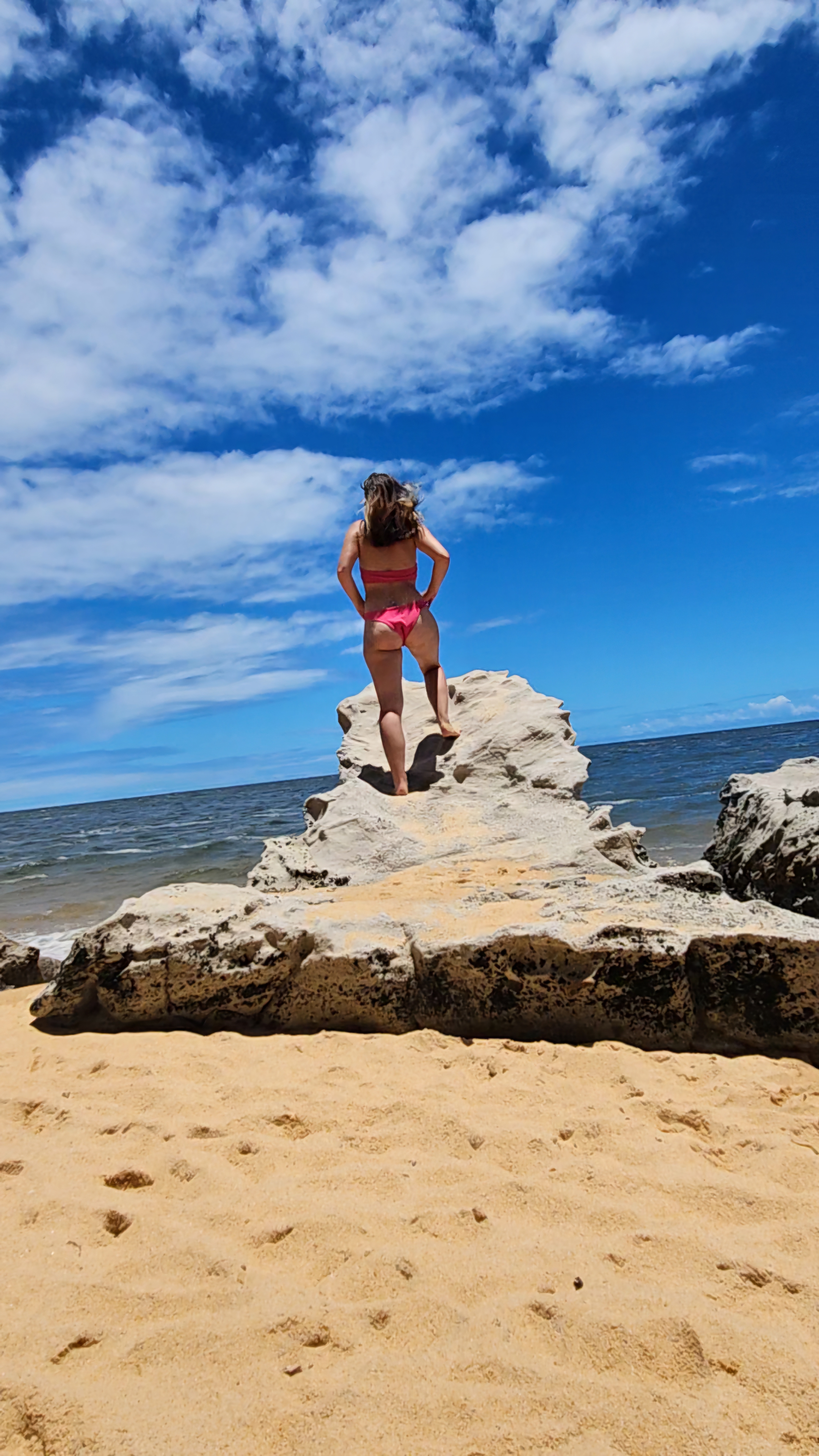
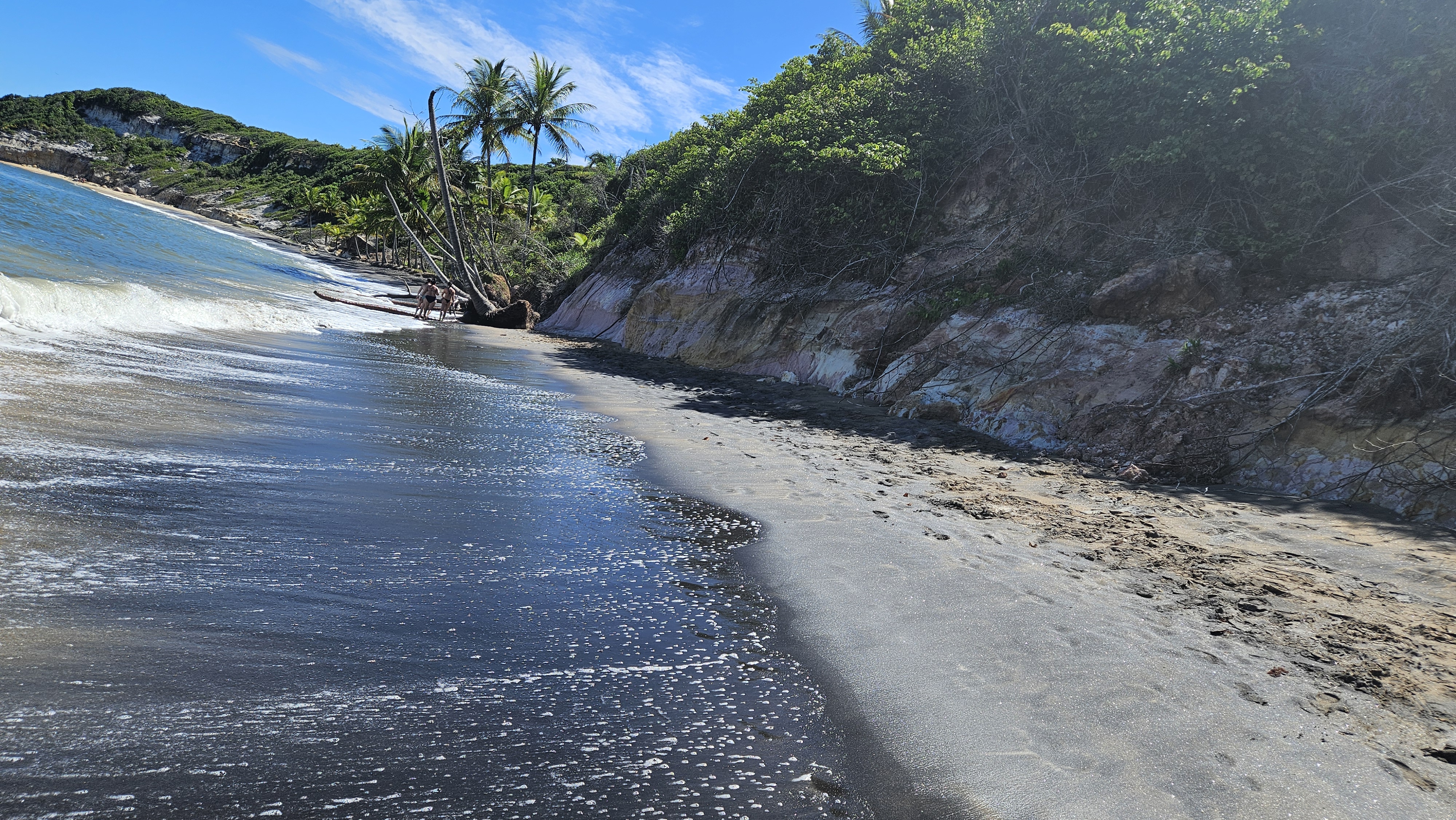
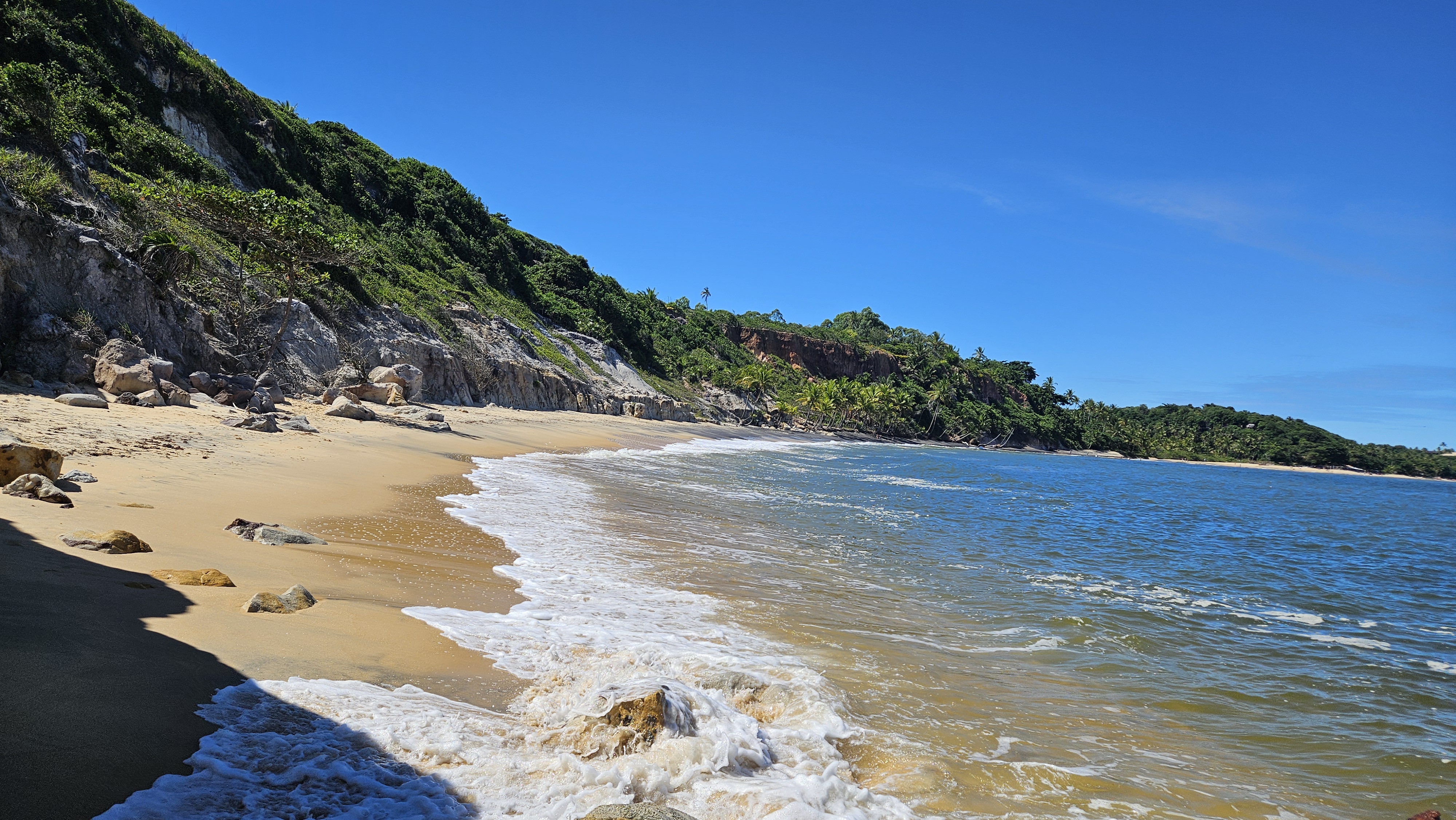
The beaches here are like natural swimming pools: few big waves, soft, fine sand, lukewarm water – cool but not cold enough to shiver. I walked along 4 different small beaches connected to this stretch, sectioned by rocks, cliffs, and reefs. I saw people snorkeling, and I imagined all the colorful fish, coral reefs, and anemones they could see.

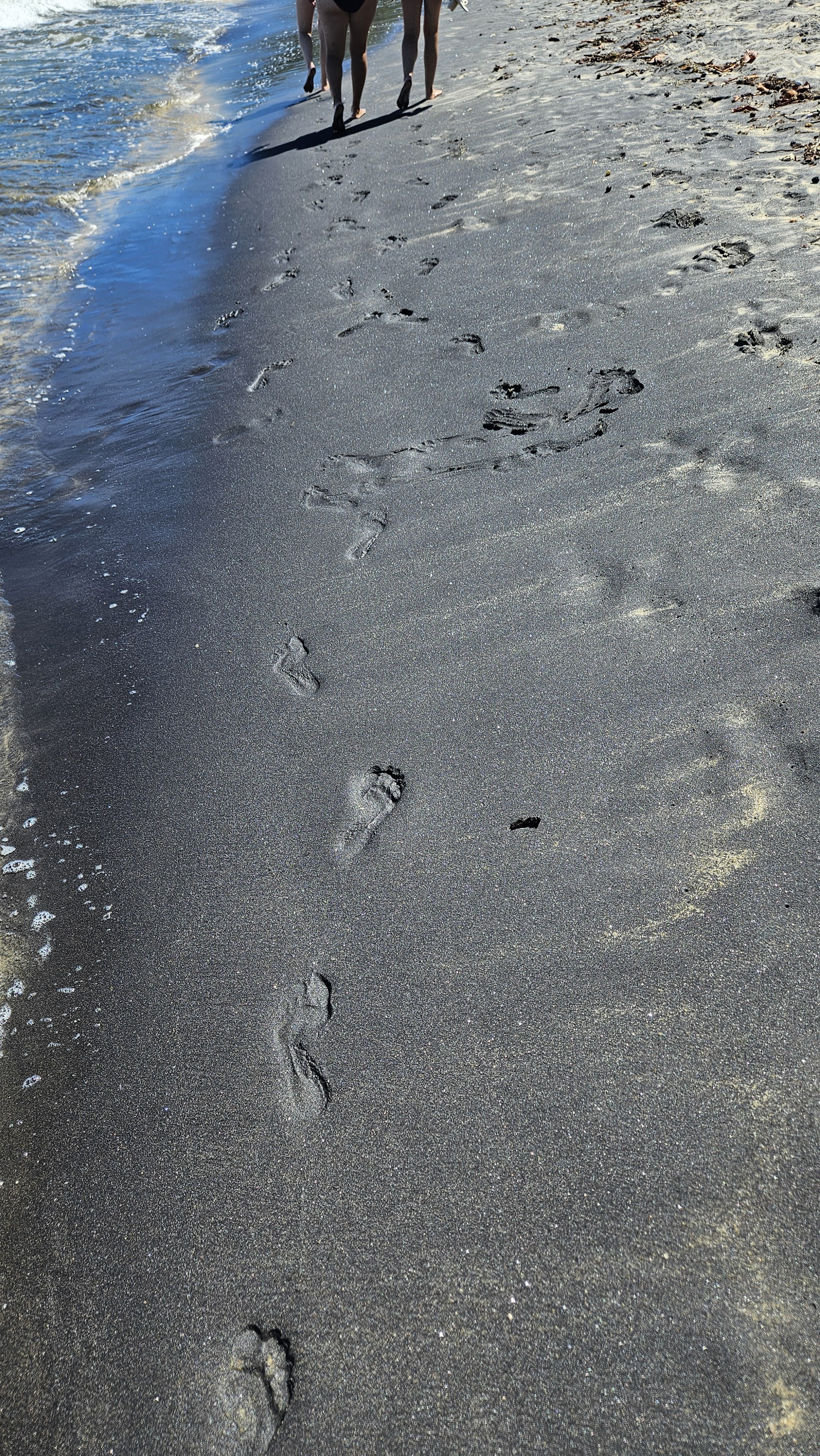
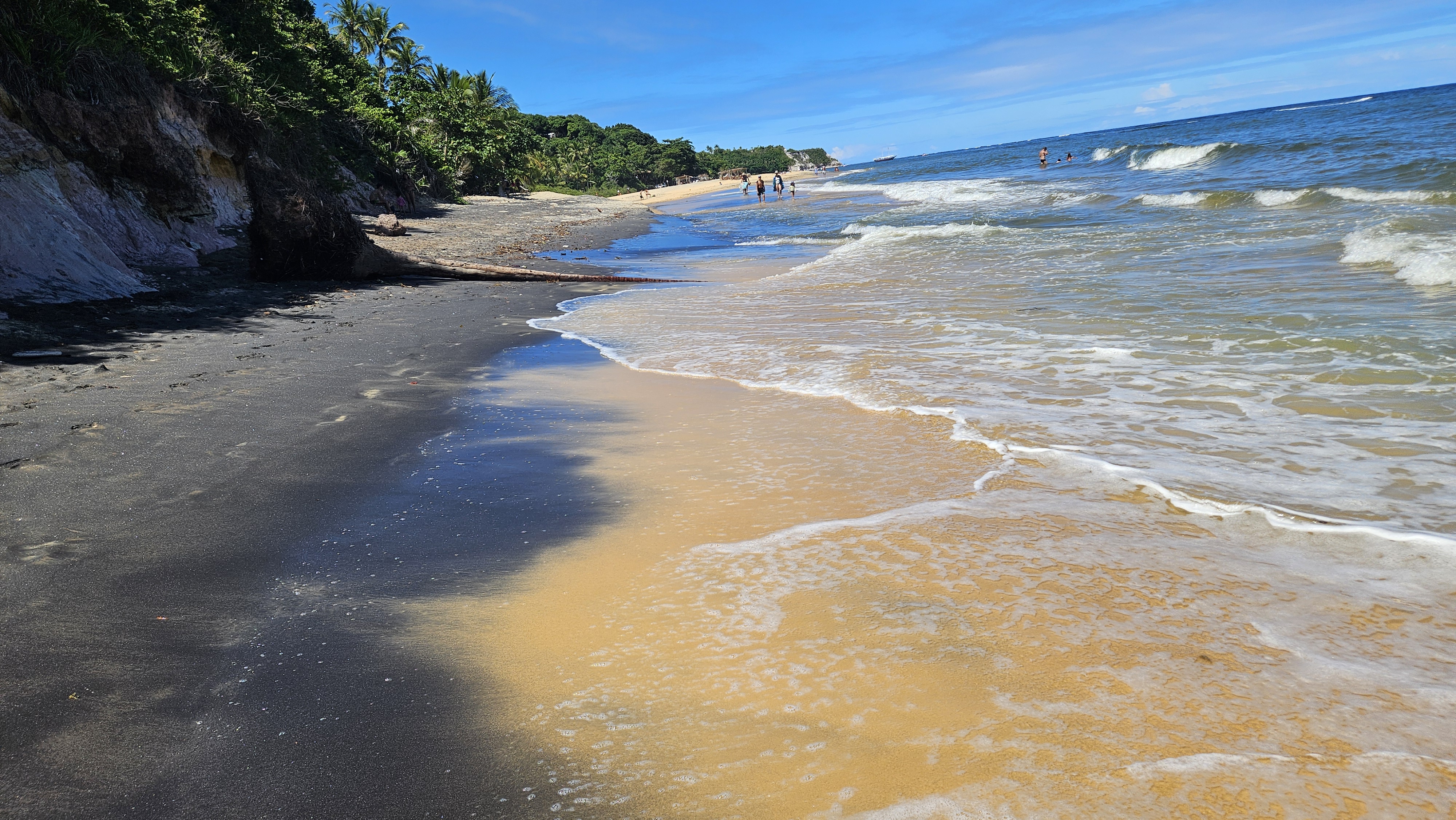
I floated on my back, peacefully rocked by steady waves. No rocks under foot in most of the sections. Some are covered by black sand that ripples when you walk on it, others orange, almost red when mixed with the deep blue water; the sand turns black and seems to pulse like something alive when you step on it. In other parts of the beach stretch the sand looked almost tanned ivory, shining in the sun, lending credence to the name: Mirror beach. All of the sand is smooth, inviting when wet, hot from the Brazilian summer sun, but I followed the shoreline to soak my feet as I went.

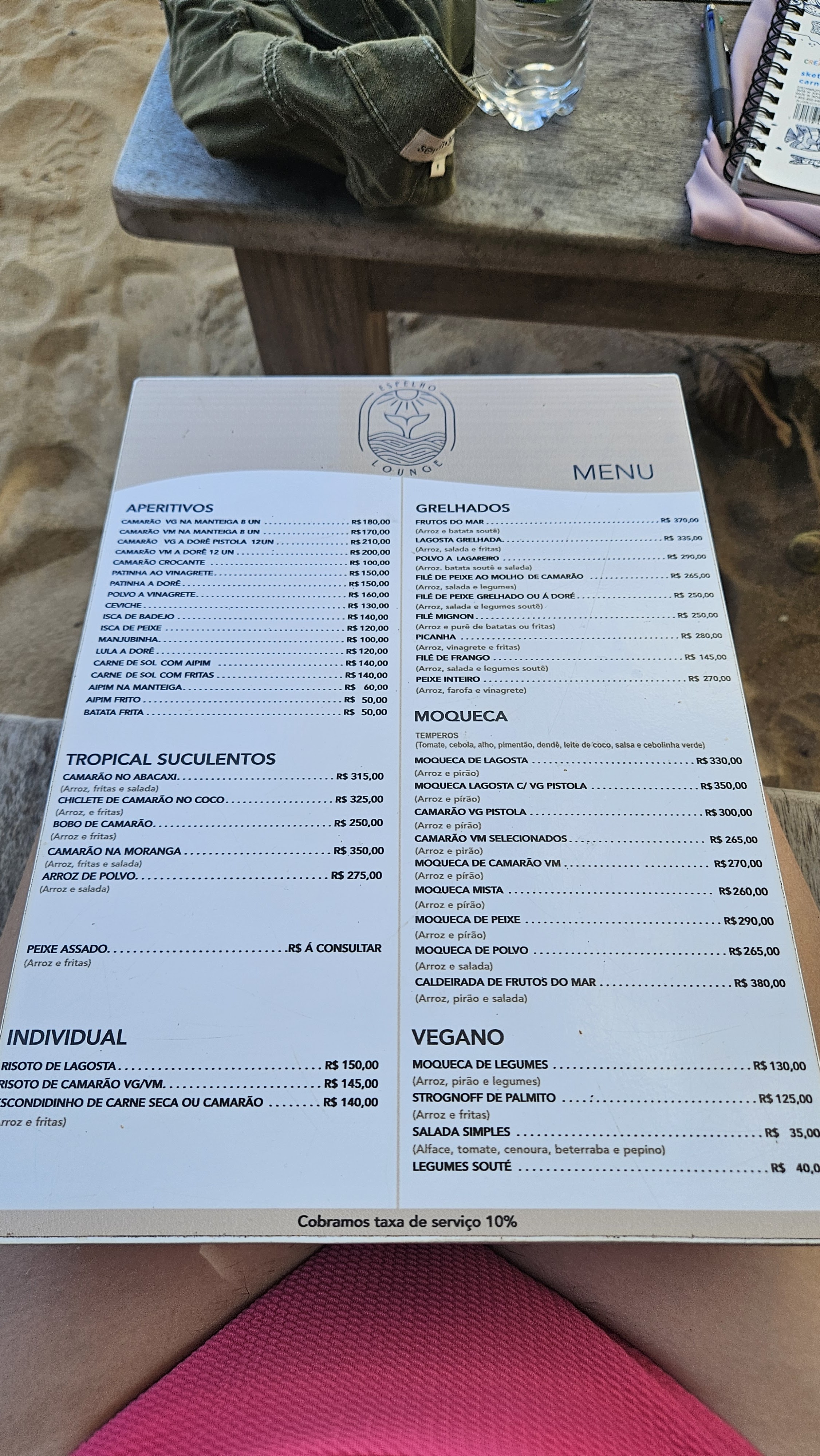
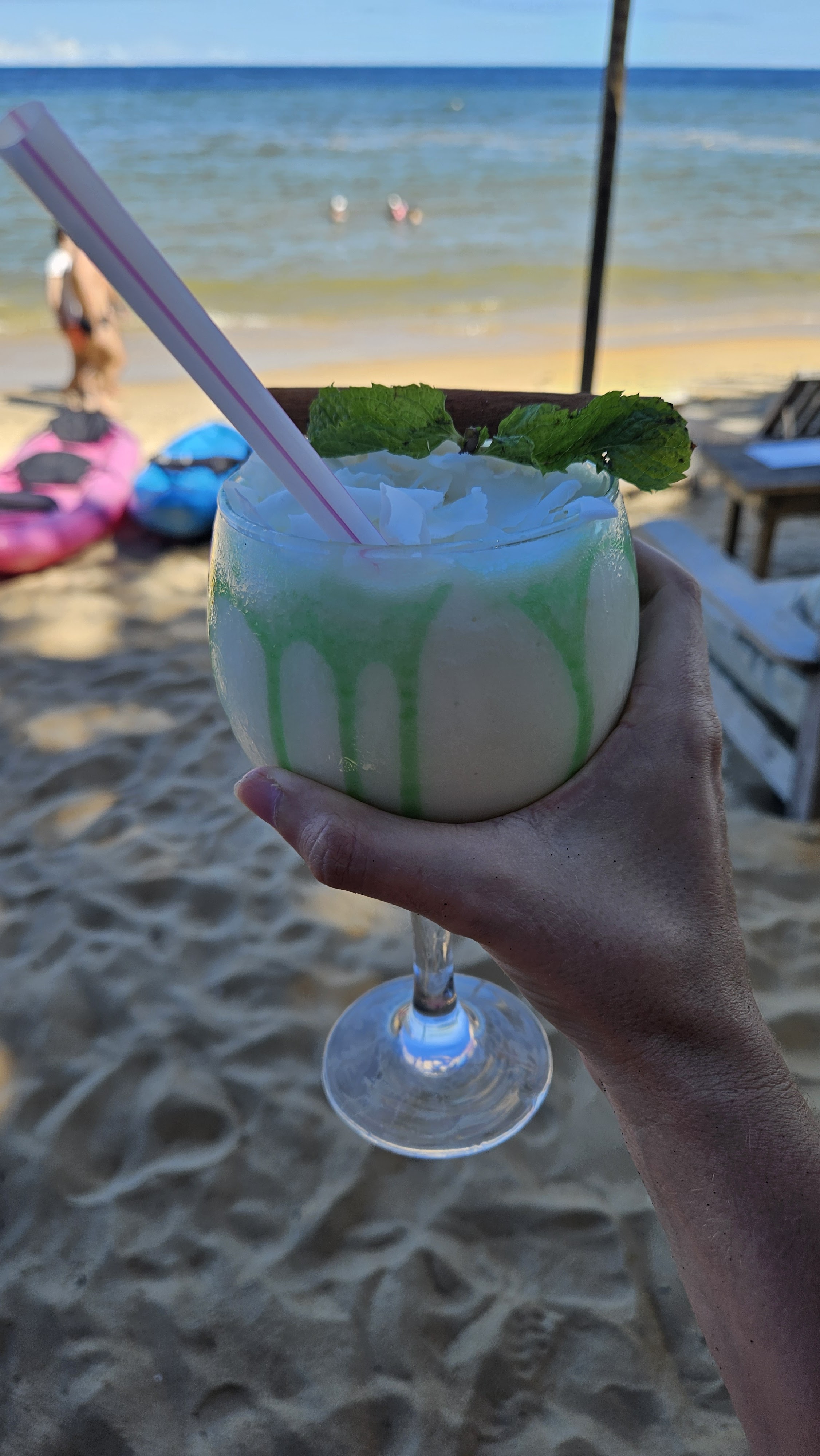
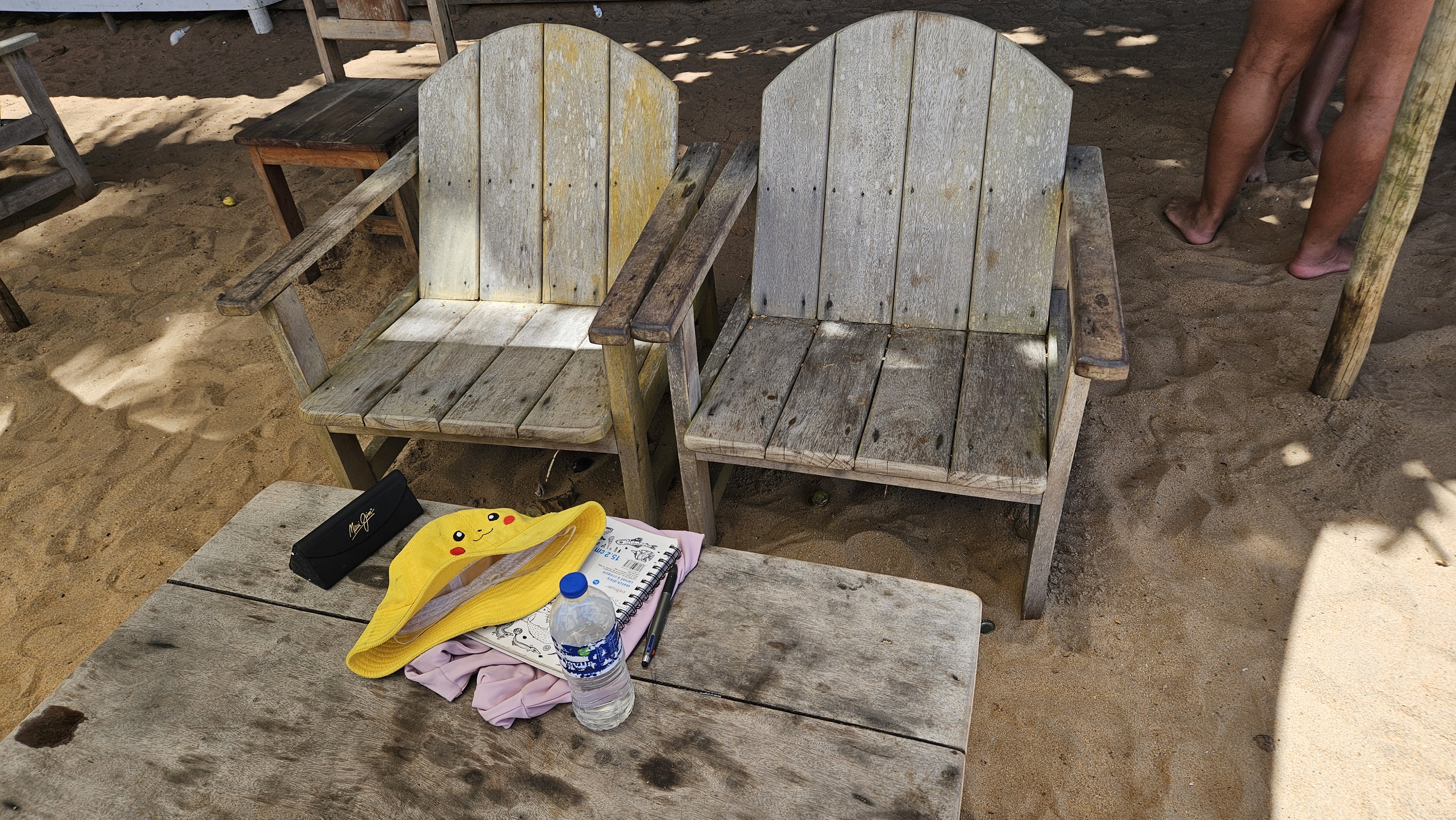
Now I’m listening to a three-man band play what sounds like Brazilian zydeco. They play the same type of accordion popular in Louisiana. There’s a guy playing a triangle, and the accordionist is also the singer. I think I’m in heaven: sipping my obligatory (over-priced) cocktail, a mint-flavored piña colada, taking it all in from my wooden beach chair in front of the ocean under a parasol…

Day 3 in Leticia: Change of Plans (Again)

I’ve spoken till I’m blue in the face at this point on instagram and whatsapp and messenger voicenotes, but I figure why not add to the chronicles with a blog post?

I am the living, breathing example that not everything is rainbows and beautiful instagram shots when you travel. In fact, a great many things can stress you out, leaving you drained and frustrated.

I woke up feeling tired but optimistic. The internet signal was too weak in my last hotel to teach my classes, and surprise: it was raining. I got here at the beginning of “winter” as the locals call rainy season. I knew that I would, but I didn’t think it would end up affecting me this much. I had to reschedule my first class of the day as a result.

With nothing else to do, I decided to check out quickly and use that hour to try to get things sorted out with immigration as fast as possible. To cover myself from the rain, the receptionist at the Tapir hotel gave me a plastic rain poncho. That was an act of kindness I really do appreciate. And with that, I hurried to the office around the corner.

Well, as was to be expected, more complications were waiting for me. Lisbeth, the migration lady, printed out an invoice I was to take to efecty to pay. (Efecty, for the uninitiated, is a Colombian company similar to Western Union) Second “surprise” of the day: I have to pay with cash. Like the rain, this wasn’t really a surprise, I mean, I figured as much, but I still wanted to believe there might be another way. I wanted to be wrong, basically.

What’s a girl to do? Thank Buddha for good friends. One was able and willing to transfer the money I needed to my Colombian account. I just needed to take care of my preply classes first so that I could go take out the money to pay the fine. At my next hotel, which is further out of the way than I expected or would like, the internet was just strong enough for me to have 3 lessons. With the camera off, of course, because it was pouring all day, which meant even starlink’s signal wasn’t strong enough.

Words can’t express the gratitude I feel for my students’ patience with me. I did the best I could, and once I was finished, I headed out searching for an ATM or corresponsal (shop that partners with a bank where you can withdrawal money). Good thing this capital city is small — smaller than Valledupar, more like a town (Fonseca, La Guajira comes to mind). Walking around in the rain would have been worse if I couldn’t have oriented myself as well as I did. Plus, on the bright side, no taxis needed!

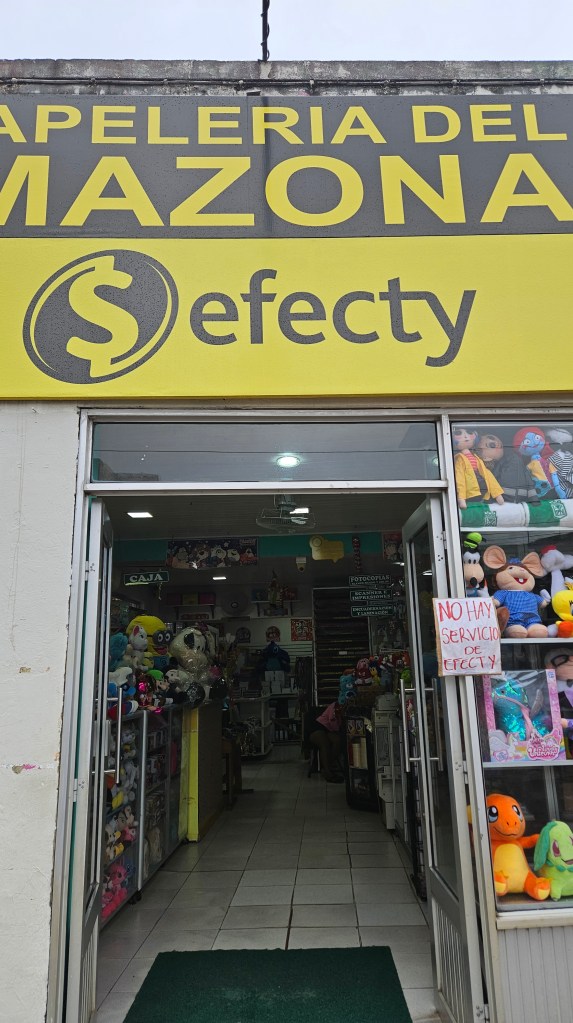
Once I got to the efecty, I was hit with my 3rd “surprise” of the day: no service! The people working in the shop with the efecty sign were blunt: there are no efecty’s working in the city. This floored me, but of course I wasn’t going to take their word for it.

Like a game of cat and mouse where the mouse is always a bit faster…or is it like a dog chasing its own tail? Similes aside, I turned around and headed straight for the migration office around the corner. First I asked the guard about what I had heard about efecty, and he immediately pointed me to Lisbeth.

When I told her what had happened, her face froze. According to her, if they said that efecty was down in the city, then there were no other options. She made it clear as day to me that the only way I could pay my fine was at an efecty — there was no longer a bank with a government connection. I could not — still cannot — believe what I was hearing. I thought about those people that she had told me were also being fined in December. Apparently, there were more of us than usual. I tried to stay calm and asked her, “Do you have at least a list of efecty locations that I can check instead of going door to door trying to find one?” To be clear, I had not had much success looking on google maps.

Ultimately, she gave me this list, and the place that she recommended the most was not even listed on google maps. She apologized for everything, telling me she was embarrassed but unable to change the system. I get it. It has to suck just as much for her, being the bearer of bad news. I also apologized for my own frustration; it’s just nothing had prepared me for such a ridiculous conundrum. She claimed that most likely it was the rain that had caused the system to crash, and that it could be fine the next day.

When I walked outside, I noticed that just next door there was an efecty sign on the building. Huh? One right next door and she didn’t even mention it? As soon as I walked in, I also saw the sign saying there was no efecty service for the moment. I decided to ask the teller if she knew where I could find a working efecty.

The 4th (well 5th if we consider only being able to pay a government fine at an efecty that apparently isn’t available a “surprise”) gut-punch of a surprise I did not see coming. All efecty’s had been down, according to the lady, and that’s why the people at the first one had said what they did. And not only that, efecty had been unavailable for over a month. I felt stupified. How did the immigration officer not know in such a small town where she had had to charge so many people that the only form of payment was not available — for over a month?! How?!

The light at the end of the tunnel was that there was one “rumored” to work, the same one the officer had recommended to me saying that no one had any trouble using as far as she knew — but why not just tell me about it in the first place instead of sending me on a wild goose chase? We may never know.

So, I walked the 7 odd blocks to get to this place, my blisters growing by the moment, only to find it closed for the day. There was also not a single efecty sign on the building. Should I be worried?

Well, with my luck, I am more than a bit worried. I need to get out of this town. I’ve even started a gofundme because as I said in the migration office, all of this mess is costing me by the day just to stay and drag things out when all I want to do is pay the government what I owe it. The worst thing is I can’t even leave the town unless I want to be considered culpable and deported — which is to say, not allowed back into the country without a visa ever again.

A wise man on my instagram feed says that for something to be beautiful or strong, it had to be “burnt and battered and bent into shape.” Maybe that’s what I’m going through? Maybe I’m just an idiot? Maybe, but I hope this information prepares you in case you are ever unsure about your immigration status — don’t trust officers, do the math and be proactive. But also I guess the message is, don’t give up, because you never know when the answer might be waiting behind the next obstacle.

So, with that, I bid you all adieu and goodnight. I am exhausted, and all I can hope is that tomorrow will be a little bit less awful than today.

You guys can find my gofundme here: https://gofund.me/f4dabab1

Every little bit helps ❤

Overstaying in Colombia

Today is Christmas, and instead of spending time with loved ones, opening presents, feeling abundance, I’m recovering from a beaten down immune system, sitting in a cheap hotel room in the middle of Leticia, Colombia. I was supposed to be spending Christmas on a boat cruise through the Amazon. However, I made a huge mistake, and I am hoping my experience can be of use for others that might also encounter a similar situation.

I have been spending a lot of time in this beautiful country. As a tourist with no visa, I knew that my days were numbered. 180 days is the standard, with a total of 90 days you can spend in two separate entries (or divide it up how you will). This year has been somewhat hectic, and though I haven’t been officially living in Colombia, I did use it as a homebase before deciding to go home and save money in August. I had calculated my days, but I wasn’t 100% certain where I stood in the system.

Generally, upon reentry, the migration officer is supposed to review your days, stamp your passport, and write the exact number of days allowed to stay in the country. I know this because last year when I was in a similar situation, the officer told me exactly how many days I had left and warned me that if I didn’t leave before that time, I should pay for an extension (salvoconducto) to avoid bigger problems — like the ones I’m facing now.

This time was different. I still remember how the guy looked at me. With disdain, indifference — and this strange air that he knew he was taking a shortcut by writing 90 days and didn’t care how that might affect me in the end. Sure, he may have been tired, and a lot of people come and go at this time of the year. But once I showed my passport to get my exit stamp, initially I was told there must be a mistake on their end.

When I got to Leticia early on Christmas Eve, I found a very mediocre (to avoid a stronger word) airport with little guidance. It was the taxi drivers, ironically, that told me where I should get my passport stamped (no signs indicating that there was a migration office in the ugly building that honestly resembled a bus terminal more than an airport). That was after I had consulted the internet and found I would need to go downtown to the migration office — the information on the internet always seems to contradict, and that’s part of why I’m writing this now.

Ironically, when you enter Leticia, they charge a 45k COP tourist fee that is supposed to support the local processes, sustainability, and infrastructure for tourism. Nobody talked about this before I got there either, but it was required in order to leave the airport.

I went back into the airport and entered the migration area. There was an office with one guy working. I found him busy trying to approve an entry stamp for two Guatemalan ladies with long, tired faces. Avianca had rerouted their flight, and now they were stuck entering Colombia officially when it was supposed to be just a layover. Although I empathized with their situation, I was impatient because as usual the process was far too slow, with the guy calling and calling and typing and carrying on, rehashing the same details as if they had not explained what had happened clearly enough.

I had left my bags with the taxi driver and two other foreign women I had decided to join to split the taxi, so I was even more aware of how long it was taking just to get a stamp. The ladies had time, plenty as they would need to wait for the next flight, and they also told the officer that if I just needed an exit stamp, he could take care of that and then get back with them (bless their souls for that kindness). But he dismissed me and told me it wouldn’t be long. Then when I mentioned why I was in a rush, he snapped at me. Clearly he didn’t like that I was questioning the operation or why it was so inefficient. Trust me, I’ve been in a position like his, and I wasn’t blaming him, but he should have been clear that what he was doing would take a while so I could act, not just ignore me then get irritated when I asked how long it would take.

The tension mounted with me repeatedly saying “Hagale, hagale” because he would not just do his job after that. He had to keep reprimanding me for being out of line and defending himself and the migration system. When he finally called me forward, he did apologize, I’ll give him that, but he made it clear that he was more concerned with saving face in front of the other ladies. I had mentioned that it was unfortunate how problematic the immigration process could be, and he had corrected me saying this was a routine issue that was no fault of his or Colombian immigration. In short, the defensiveness was because he knew the job he was doing sucked.

Then came the moment he finally checked my passport and the system. He found I overstayed and that I would need to go to the central immigration office to pay — just what I hoped I would not have to do since by this point, I’m running low on COP in my Bancolombia account. Of course, he couldn’t take care of the process there. (That would be too convenient)

When I left that building, disgruntled, I was lucky to be received by a very kind taxi driver named Jose. He gave me a fair price, recognized my emotions, and told me that these sorts of things happen every day. He had seen so much that I didn’t even have to say what was wrong. I felt both sad and comforted as he told me about his late-wife’s inability to receive medical care in Colombia because of paperwork and fees he was not able to pay. They were charging him in dollars, only because she was Brazilian, a foreigner, unable to be affiliated to a Colombian medical plan.

That broke my heart. His words will stay with me forever: “My wife died of cancer before they were able to solve this bureaucratic problem appropriately.” No solution could be offered, just money that he didn’t have.

The folklore as they call it in Colombia continued once I spoke to the immigration officer in the official office. She was a kind woman with a killer style, purple and blue hair and tattoos a plenty. She spoke to me openly and seemed to be on my side, especially when she observed the 90 dias written on my passport stamp. She recognized that it wasn’t right or fair – unlike the guy at the airport who told me it was my responsibility to keep track of my days, not theirs.

Still, you know that this and worse happens regularly. I broke down sobbing at the prospect of having to choose between paying almost 400 USD to “fix” this constancy problem or be deported and no longer welcomed into Colombia without a passport. She didn’t console me as much as she told me that everything has a solution and not to cry. Typical.

But imagine a Christmas like the one I’ve had. My throat swelled with inflammation and my head hurt more than I could stand. The option of just leaving for Brazil and accepting deportation was not an easy out with me feeling that way. After some time using the shitty internet they offered trying to ask for advice and weigh the pros and cons of both options, I decided to get a hotel nearby and sleep on it.

That was the best choice I could have made. Today I feel better. Although I didn’t eat all of yesterday, I got medicine and had a good lunch today. I’ve been looking at my budget and logistics. Flying straight home would cost me more than toughing it out and moving forward with my plans. I decided I will pay the fine — tomorrow, since the office is closed for Christmas today — to avoid bigger problems in the future. As many friends have reminded me, even if I evade the fee, they will find a way to get their money sooner or later.

This means that I have to adjust my travel plans, my budget, and how much I’m willing to do. I could change my flight out of Brazil, but at the price I got it, I don’t think it would be worth it. Now I’m looking at a month traveling. If I find hosts to couchsurf with or stick to hostels, I have a budget in order where the primary expenses are transportation or potential tours I decide to go on. Local food is not so expensive, so I can handle those costs as well.

Tomorrow I will go back and pay the fine. Then I’ll book my place on the ship to Manaus for Saturday. If all goes well, I’ll get to Manaus on New Years Day, where I will spend a week or two there before flying to Salvador and then making my way down the coast to Rio.

There are still question marks circling my head. How will tomorrow go? Will they charge more than what they said? What about when I’m in Brazil — what if something else goes wrong?

Well, at least I have students and friends that support me. My family has also been there encouraging me to do what I feel is best. So, it’s just a matter of staying flexible and open-minded.

That’s traveling. That’s life. And this year has been nothing if not one learning experience after another.

One if by land, two if by air: A Gamble in Ecuador (a recap of my time in Quito in 2021)

Bear with me, but I am going through my drafts and trying to release a few. I wrote this back in 2021. I decided to leave out the cringe-worthy prologue about the plans I ditched that year reminding of how naive I used to be. But the information and experience I had in Quito as I described it was worth recounting, so here you go!

Currently, I’m sitting in the airport in Guayaquil, Ecuador. I’ve got about 6 hours until my flight to Colombia, so I’ve been reading through my new German Essentials for Dummies book and now finally updating this blog.

What have I been doing in Ecuador, you ask? Well, I needed to check off at least one country from my list this year. I wasn’t sure if I’d be accepted to the Trilingual International Studies program so I went ahead and booked a flight to Quito, Ecuador after deciding that I would make a trip home to visit my folks. My time home completely revolved around family – including a terribly wholesome family roadtrip to visit my grandpa in New Mexico. I really needed to do something for me after that; it wasn’t what I originally had in mind, as I have been hoping to explore several South American countries during the June-July break (thanks, Corona!), but it was a nice way of getting out of my comfort zone and exploring a new place.

I booked the flight back in mid-June after deliberating over flights with my brother. Parentals insisted that flying into Lake Charles was the easiest option for everyone, so I decided that if I was going to be paying extra to fly into a small city airport anyway, I might as well tac on a return flight to Quito. The roundtrip flight cost around $600, $400 of which were covered by finishing my 2-year work contract.

My time at home passed quickly, and before I knew it, I had only booked a single hostel for my first two nights in Quito. Frankly, I like traveling this way, because up until I stayed in Quito for the weekend, I wasn’t even sure where I wanted to go after exploring the capital. My original plan was to casually work my way north since Quito is only about 4-5 hours from the border with Colombia, then cross by land and bus around to some places of interest on the way home (including Pasto and a possible stop in Ibague or Villavicencio).

This was my plan. No flights back. I even did several searches to see what the most viable way of crossing the Ecuador-Colombia border would be. I had it all figured out, I thought, before I even had each day of my trip mapped out.

Until I started talking to other people in the hostel and got a more up-to-date view of the border crossing. Ironic that when you search for information about the Ecuador-Colombia border, the fact that it’s closed on the Ecuadorian side doesn’t come up.

Colombia has opened up their side with Ecuador since mid-June, however Ecuador doesn’t seem to be keen about letting people out or in by land. I understand that ground borders tend to be less regulated and therefore less practical for preventing people with the Corona Virus from crossing, but I feel this is more about population control in general. Plus, it does nothing to efficiently stop the transport of contraband. Airports are perhaps more orderly and “cleaner” in their regulation of the comings and goings of people.

One of my favorite things about solo travel is being able to time and pace things to my liking. I book based on my energy level and the amount I want to do during my stay. I knew from the beginning that I would probably only spend the weekend (Friday-Sunday) in Quito, so I intended to make my time count. That’s how I decided to book a bunk at the Secret Garden hostel in Quito’s historic downtown. This hostel has a breathtaking view of the city. Even when arriving, exhausted, at 11:30 pm on Friday night and having to walk up 4 flights of stairs (this is how you get the amazing rooftop bar view), I couldn’t help but stare in awe at the lights and illuminated monuments of the Ecuadorian capital.

This hostel was perfect for meeting travelers from all over the world, both young and old. The next day, I had breakfast around 9 am in order to be prepared to take off on a 2-hour free walking tour at 10. I sat alone and couldn’t help overhearing the conversation at the table next to me – a mixture of French, English, and German! I admit it, I was itching to just insert myself into that conversation and try practicing my language skills. But I was not fully awake or comfortable and felt that would be obnoxious and awkward, so I contented myself with just eavesdropping (one of the great joys of being a language learner/polyglot).

I cannot hype the walking tour enough. Once I ate and changed, I met on the same rooftop where reception and the kitchen/bar are located to wait for the guide to arrive. While waiting, a girl from Switzerland struck up conversation with me. In hostels, you find yourself meeting people from all over and initially starting conversations the same way over and over again (Where are you from? How long have you been here? What are your plans? Why did you choose x country to visit?). It’s inevitable but enjoyable nonetheless because every person you meet has a slightly different story.

Our group was a European mixture. I was the only American on the tour. Other hostel stayers included a Belgium couple, a Spanish couple, and a man from Sweden. We started with a group picture, being taught about the “Cuy” or rodents (like Guinea Pigs) that were a traditional part of local cuisine as we were told to shout “Cuy!” instead of cheese. (sidebar: I learned this is a homophone with the French word for balls)

The tour felt something like a hike as we went up and down the infinite hills and slopes of Quito. We saw several breathtaking and gaudy Catholic churches, including La Basilica, with its famous condor spire. Entry to most of these buildings and museums costs between $2-5 dollars. We were shown old buildings built on foundations mixed with bones. In pre-Colombian times, people would use the bones of their deceased relatives to infuse the house with their spirit and be protected by them. The bones in the foundations we saw were animal bones, but I wondered where I might see a structure old enough to still have human bones mixed into the stone. We also learned other fun facts about the architecture and saw stones around the Presidential Palace that could be traced back to the time of the Inca based on the shape and texture of their stones.

The highlight of this walking tour is the sampling we got to do. Angie, our guide, took us to a jugueria or fruit/juice spot where we got to try fruits typically used to make juice in Ecuador. Most are the same as in Colombia, except for taxo (I’m still not sure if it has an equivalent in Colombia or if it’s totally unique and native to Ecuador), and some with different names like naranjilla (known as lulo in Colombia). This reminded me of the walking tour I took in Cali which included a last stop in the Alameda market. I bought a jugo de taxo for one dollar, just for the sake of its novelty. I hadn’t missed out on much, though, as the orange-colored juice is quite bland and sort of tasteless in my opinion.

Our next stop included an explanation of how chocolate was made from the bitter cacao seeds/beans and included lots of samples of chocolates made from 60%-100% purity. Apparently, most commercial chocolates (Hersheys, etc.) can’t be considered true, high quality chocolate because they have under 60% of cacao needed to be called “real.” I had had a huge breakfast and was feeling so full I couldn’t even finish all of my chocolate samples – never thought I’d see the day when I didn’t have space for sweets!

Finally we finished our adventure in a private room upstairs where I assume people usually get together with their friends to drink and dance. I got to give a brief salsa demonstration (LOL) because out of everyone there I was the only person that new the basic steps (other than Angie). We got our canelazo (traditional cinnamon drinks mixed – optionally – with sugarcane rum, the most common liquor sold native to Ecuador) and everyone learned the famous drinking phrase: Arriba, abajo, al centro, pa’ dentro!

During this experience, I made plans with my Swiss friend Ramona to go on our own little tour. At first, we were just going to the teleferico (a cable car suspended in the air that is used to quickly scale mountains) to capture of view of the city. Our taxista convinced us that we could squeeze in La Mitad del Mundo (~50 minutes from the hostel) into our schedule and do it all – just for $35. Did I mention Ecuador is more expensive than Colombia? And the currency is dollars? Because that would be a shitton of pesos colombianos and I would refuse. But here, that sounded like a good deal to split between two people. Plus, just to get from the airport (some 45 minutes away at the time I got in, nighttime), I got tricked into paying $30 for a ride that usually would cost $20. Not knowing the local pricing and sleeping on negotiating can really drain your money.

For $5 we entered the Middle of the World monument park. There are lots of museums and shops to visit inside, but the gimmick that this is the exact place where the equator passes (0 degrees latitude) is apparently debunked in the museum we decided to skip.

Another fun tip is to make sure you bring layers or a good jacket. It was so windy, and after sweating during the walking tour, Ramona and I were convinced it wouldn’t be too cold. We were wrong, oh so very wrong – and me more than her because I didn’t even take a sweater just in case.

The real chill factor came with the teleferico. After the fast yet interminable climb to the top overlooking the city (roughing 15-20 minutes long), we were literally in the clouds. We could see our breath. I started losing feeling in my fingers and had to hike at a brisk pace (as brisk as my gasping breaths in the high altitude would allow) in order to stay warm. The trail leads to a swing set, el columpio en las nubes, or the swing in the clouds. By the time we finally got our turn on the swing set, the mountain was completely embanked by clouds and fog.

Instead of waiting in an infinitely long line to go down, we waited out the cold in the cafe. We were literally the last of the people to go down the mountain and had a surprise scare when the gondola suddenly froze when we finally had the base station in view. Trust me when I say, I was lowkey-highkey screaming on the inside.

Our night was tied together with a mediocre meal at the hostel and a great night out. We went up in taxi with a Danish guy that had been sat with Ramona for dinner and the Swedish man we met on the tour. We enjoyed a couple cups of canelazo and an incredible view of the Virgen del Panecillo, the name for the hill overlooking the city. We weren’t expecting to find a full fair of street food and live performances at the top of that hill, but our night was made by the visit.

To return to my predicament, I discovered that night that I wasn’t the only one hoping to cross into Colombia by land. After making lots of calls, an acquaintance I made in The Secret Garden hostel concluded that you could cross by taxi without getting stamped, as long as you didn’t need to return to Europe. Obviously, the legality of such a situation is murky, but with that information, on Sunday I booked my next stay at Hospedaje Vertientes del Imbabura. I set out full speed ahead towards Otavalo once I felt rested enough.

The Ecuadorian countryside was lovely. I got to meet some kind locals — a taxi driver that told me about how inflation with the switch to the dollar had affected people living in Ecuador for the worst; a kindly innkeeper for lack of a better name that told me about the local Andean culture of Imbabura with their Summer Solstice festival and rituals; even in Otavalo I found kind faces in the Plaza de los Ponchos where I ended up buying two ponchos (one of which unfortunately was synthetic, but I got what I could on a limited budget). From Otavalo, I hiked up to a waterfall with a local guide and tried some local food before caving to the realization that I was not willing to risk crossing the Ecuadorian border illegally.

Tearful, I ended up booking a flight from Quito which I honestly do not regret as much as I thought I would. The funny thing about spending money when you travel is you rarely look back and say, “Fudge! I shouldn’t have spent that money that clearly went towards making my life better!” It hurts in the moment, especially when you miss a flight and have to pay for a new one, but in this case, the monetary cost of leaving Ecuador legally was worth the stress of booking a last-minute flight to avoid taking risks by going in some pirate taxi on some sketchy dirt road between Ecuador and Colombia that could have ended up costing more in more ways than one.

So! Moral of the story: spend the money and forget about it. In the long run, it doesn’t matter. Traveling well and taking precautions will never be a waste of money, even if that money could have been spent better or wiser.

At least that’s my takeaway from this experience 3 years later. It hasn’t been that long in reality, but it feels like ages have passed since then, and so it goes….

From My Notes: Days 4-5: Adventures in San Gil and surrounding towns

It’s 10 am. I’m headed to Curiti. From there I’m going to hike to the pozos, some natural pools that are perfect for dirty humans to swim in. I meant to head out an hour ago — I left my hostel at about 9 when I meant to leave at 8. So here we are.

The bus from the Terminalito to Curiti cost just 3.500.

We got there in 20 minutes.

The 7 pozos are probably better when you’re swimming with friends, and not on your period, but I enjoyed the peace. The walk seemed unending, especially alone. I enjoyed the views, the goats and sheep off in the distance and the rolling mountains reminding me of some warmer Switzerland (or what I can imagine the Swiss countryside might be like; pure speculation). I thought I was going to burn for sure. It’s been humid, warm, but overcast. I guess I got lucky. My skin is still peeling from my adventures snorkeling and laying out on the beach in Santa Marta. Otherwise I’m in tact.

I think I made it to 6 of the 7 pozos. After confirming that they all had people in them in some capacity, I picked the one that was the most ample with the fewest people. I think it was two groups, a family, and some couples. I waded around and enjoyed the water cascading from the top to the bottom where I sat. Being in water always refreshes me. I had to do some light rock scaling to get in and out, but I managed the take a dip and put back on my shoes and dress without soaking them. 

I ran into a lady I met at the hostel with her partner and child. She was surprised I was alone and figured I must have been bored. In reality I needed a quiet hike and swim like that. I had seen water far clearer and more aqua but it was still worth the experience. She had rented a small tube for 2 mil. She told me there were bigger ones for 4-6 mil. Next time, I said. I wonder when that will be.

I took lots of pictures and videos before heading back to Curiti to enjoy a brownie con helado and a bebida santadereana (it was really good). Then it was back to the hostel to rest for a bit before waiting a solid hour to take a bus up to Páramo.

The bus to Páramo was just 6 mil ($2). The town was tiny and not so far away.

I checked into Posada San Luis, an inn just up the road from the central park and church at 5:33 pm. I immediately got met with a few obstacles I vented about in my notes:

Though nice, the lady working at the front desk couldn’t offer recommendations.

There were no restaurants to eat at, so I had to settle for a very basic hotdog at a small resto-tienda in the main square.

For the first several hours the WiFi wouldn’t work.

When I went to ask someone, there was no one at reception to help me (And likewise when I returned from eating, I had to let myself in).

Help seemed nonexistent. But you get what you pay for, and while $50 mil has gotten me more in Colombia, it still wasn’t so bad.

Day 5: Páramo 

Páramo is a town that bases its tourism almost solely on extreme sports and outdoor activities. There are next to no restaurants around the square. Even though it was not so late when I got there, like 6 pm, everything was dead. I checked in where I found to my further dismay that the WiFi wasn’t working. I guess I needed to disconnect, but why did it have to be when I had a private class scheduled?

Gloria, an ex teacher and now the person I presume running the hotel Posada San Luis told me I could find Fastfood near the park. In reality there was only one place open, half pharmacy half tienda/restaurant. I was dodging bugs while waiting for my lulo and hotdog. I like eating alone, but there’s something uncomfortable about being the only person sitting in silence with nothing to look at. Am I the only one that feels that way? The jugo de lulo was good, the hotdog had too much salsa de piña, but I went back to my hotel with a full stomach, which was the important thing.

Eventually the WiFi randomly connected, but I still took the chance to go to bed before 10 pm. I woke up several times during the night, not because I was uncomfortable, but just because my body wasn’t prepared to rest as much as it was. That and the fan eventually was too cold. Good problems, in my opinion.

I got up before 7, got ready, had a complimentary tinto and ate one of the apples I brought from home. I got in touch with the tour company, Camine Mano. They opened at 8, so I was among the first people to show. The inn is a block from the main square, and this tour company is located right next to the police station. I was set, changed into my hiking shoes, leggings, a tshirt with my swim suit underneath. I struck up conversation with one of the guides, a nice guy by the name of Juan Camilo. We discussed language learning, a topic that comes up a lot in my travels. Usually after they realize where I’m from and what I do. And show surprise that I’m from the states but speak Spanish well. I’m cautious to take this as a compliment, wholesale, but it’s still a nicer comment than what this one taxi driver said to me the other day in Valledupar: “Wow just goes to show! Four years and you still have an accent!” Not one of my happiest moments. But bless the man for his honesty. The only thing worse is when they praise you and you know it’s pure bullshit. So it is what it is.

Two of the first women to arrive ended up scooping me and including me in their pictures for the tour. I suppose because it would be a cheaper deal to split the cost with a third person, but still, like the group I met in San Gil, they were very open and friendly. They were both a bit older than me and super nice. I’ve encountered more people from Bogota during this trip than from anywhere else. Sincerely all the encounters have been positive. They’ve included me in their groups and asked genuine and insightful questions. It’s refreshing after so much of the same in Valledupar, even after 4 years of living there. This is why I like traveling. It’s easy to forget that people and culture is not the same everywhere. Even in the same country, there are so many types of people, accents, and cultures. It’s reminded me of why I love to travel so much.

There are definitely fewer foreigners in these parts, I’ve noticed. I’ve yet to encounter an American. Our trip to the cave (la Cueva del Indio) was pretty much all people from the interior — Bogota, Cucuta, and the surrounding areas. We made fast friends as we waited around to enter the cave and speculated about what we might see and just how scary it might be. It was a relief to know I wasn’t the only one a little apprehensive about the famous “Salto al Vacio” at the end of the trek. There were 3 or 4 children with us on the tour, so that frankly put me at ease. It really wasn’t nearly as terrifying as my imagination could conjure.

At the end of the tour, soaked, the girls bought me an ice cream before it was time to go our separate ways. I went to the hotel, quickly changed out of my damp clothes, and ran to catch the next bus leaving Paramo and heading one-way to San Gil. That was not something I had anticipated, as I had originally chosen to stay outside of San Gil in order to save time between traveling to my next destination, Tunja, Boyaca.

I realized while taking the bus from San Gil to Tunja that Socorro is much bigger than Páramo. I should’ve stayed there. It even had its own terminal. But hindsight is 20/20, and all worked out anyway.

The bus from San Gil to Tunja left at 2:45. I got there around 10 pm, my phone dead, in the middle of a cold highway in the same dress I had changed into after my spelunking. Once again, all the credit to a kind taxi driver that happened to be sitting right down the road (I wasn’t dropped at a terminal this time, because the Tunja terminal is located a bit outside of the city). I told him the name of my hotel and suggested he google it when he couldn’t recall where it was located. Before I knew it I was taking a hot shower before bedding down in my singlet hotel room a mere block from the main Plaza Simon Bolivar.

A marathon, not a sprint

I got into Bucaramanga at 5 am. Even though I slept on the bus and even had a row of two seats to myself in the front to lay across and try to become comfortable, I still felt exhausted. (I still feel exhausted)

All I could think about was the hotel room waiting for me. I knew it was too early to check in — I booked the room for Monday night. I didn’t care. I couldn’t think.

I listened to Kafka on the Shore on the bus ride until I fell asleep 5 chapters in and had to replace it with relaxing music to avoid missing anything and having to relisten to the same chapters. Kafka is the self-given pseudonym of the protagonist, a 15 year old male runaway. Like most Murakami stories I’ve encountered, his solitude is interrupted by a chance (what they call “karmic”) meeting with a girl called Sakura. They had each fallen asleep on the bus around the time that I did the same. They woke up just as sore and exhausted as I did. Somehow that seems appropriate.

I got to my hotel quickly enough, 8 pesos, and I was promptly informed that there was nowhere for me to sleep until checkin at 3 pm. Let’s just say, I’m less than impressed with Ayenda hotels. Still, the receptionist, Maria Fernanda, was accommodating and helped me get a room in another hotel. Just $25 mil pesos more for a private room upgraded with AC. The only downside is its proximity to reception — right by a noisy downtown street with noisy workmen and guests. But beggars can’t be choosers. I was just happy to have somewhere to sleep. I underestimated how tired I was.

I slept from 6 am until noon. I had three missions today: get a SIM card, print, sign, and email a contract, and find a place to eat and work at. I somehow accomplished it all. I’m sitting outside of Crepes & Waffles right now, getting ready to give an English class. I’ve been here since 4 pm. It’s located in Parque Pio, a very central location that’s had people in and out since I’ve been here.

Many recommended I do different things today. I liked the idea, but my exhaustion overrode everything. Tomorrow I’ll be staying at a hostel in San Gil. I’ll go to Canyon Chicamocha and hike. Adventure is around the corner. But today was evidence that my body needed rest above and beyond all else.

Travel like you’re running a marathon, not a sprint. That’s something life has taught me. Listen to your body. You don’t want to be miserable rushing around doing things just because you feel that’s what you’re supposed to do.

Semana Santa diaries: Anxiety

Somehow even with 3 days of preparation, I still have this gnawing fear of forgetting something. Leaving something undone. Packing too much or too little. Miscalculating.

This is travel anxiety. An old friend I know too well. Almost like an ex I can’t seem to shake off. We just keep on getting back together, no matter how toxic our relationship is clear to be.

Well, it’s my first time solo traveling in a year and a half. I experience this anxiety pretty much everytime I do. I’m always on edge. But I’ve come to see it as a sort of excitement and expectation of the adventure to come. Before the plunge into the unknown.

I have a love-hate relationship with risk-taking. The last time I visited one of the towns on my ever-growing list of destinations, I tried paragliding for the first time. That was in October of 2019. I was somewhere between fear, excitement, and denial. I have this little fear of falling from high places. Not a general fear of heights, but a phobia caused by the vulnerability of looking down and feeling you could die. That’s vertigo, right? It was a thrill. I’m not planning on doing it again though, and definitely not while solo traveling.

This semana Santa, I’m focusing on places I’ve heard about often but still haven’t seen. Tonight I’m heading to Bucaramanga. My bus leaves at 9 and will get there around…6? 5? Something like that. Depends on the number of stops. It goes fast at night.

I’ll be exploring some places that I’ve already been to, like San Gil, with many I new towns like Páramo and Villa de Leyva.

I have all of my destinations mapped out pretty much, but with my personal brand of ADHD, trying to plan each day’s activities is beyond me. It’s so overwhelming my jaw clenched just thinking about it. I have an idea of what each spot has to offer, but I’ve decided to take things slow and not stress over doing every single activity. I just want to soak each place in, come away with a feel of what I liked and what I found jarring or strange. That’s part of the fun of immersive travel.

And I have not 1 but 2 weeks to do this thanks to Covid. We’ll be virtual for 2 whole extra weeks. So I’ll be working while traveling, a foreign concept but a welcomed challenge. That means for next week, I’m looking for private rooms at the best price I can find.

I spent the day sussing through different locations and properties on booking, deciding which would give me the most bang for my buck. I almost wanted to say “f it” and go extravagant and expensive, but then I remembered that 2 weeks of travel require a bargain hunting mentality to avoid financial stress later. So I used what I could find about different destinations and the best deals in the nicest hostels and hotels I could find to guide me on this journey. I’m going to start cheap and slowly work my way up, as will be required while I’m teaching virtually.

I’m also going to look like the biggest tourist ever as I’m going to be carrying not one but TWO backpacks — my big mochilero bag and my laptop backpack. I think it’ll be more comfortable than having a purse or shoulder bag in the long run. Plus I want to keep my laptop on me at all times when I’m not checked in somewhere.

So that’s the plan. In an hour and a half I’ll be at the terminal. I cleaned my apartment (3 loads of laundry — and I still have dirty clothes — dishes washed, trash taken out, floors swept), I’ve rested and showered to mentally and physically prepare for the bus ride. Now I’m contemplating popping an Antianxiety pill or two and meditating.

I always anticipate the adventure. But that doesn’t mean I stop grappling with the negative and positive sides of anxiety. And that’s okay. Confronting the things that give us anxiety and finding the good in them is how we grow.

Migracampi: Ecotourism in Pueblo Bello

Finally! Some inspiration to publish travel content, brought to you by my first paseo (short/roadtrip) of 2021 in Colombia!
Let’s start with the facts:

Town: Pueblo Bello, Cesar, Colombia
Lodging: Migracampi (just say “donde John” to the driver — they’ll know where to drop you off)
Distance: 53 km, about an hour from Valledupar (the capital of Cesar)
Transportation: bus or Coomaple Colectivo ($15.000/~$5 USD per person)
Style: Camping/Glamping
Prices: 35-40.000 pesos (~12-14 dollars)/night
Breakfast, coffee, and tea Included
Food and drink available to buy on site (including beer! and other more “exotic” local spirits)
Host: John Alvarez (@migracampi)

The long and short of it – follow me on Instagram for more!

Now that I’ve gotten the key info out of the way, let me narrate my incredible experience with Migracampi.

This was my second time staying at the backyard campsite. It had been just over a year ago when I first decided to explore. My third time going to Pueblo Bello.

Pueblo Bello, although a small town, is something of a cultural crossroads between the indigenous cultures under the “Arhuaco” cultural umbrella that live in and around the Sierra Nevada and the post-colonial mainstream Colombian culture. And then people like me, foreigners from all over the world that have been drawn to these little-spoken-of gems hidden among a kaleidoscope of more “developed” tourist attractions in the country.

The creator of Migra, John, is acutely aware of the cultural and ecological significance of the space he inhabits. He paves the way as an entrepreneur who has managed to grow his space greatly within the course of a single year. In fact, he never seems to tire of his various projects to expand on the sustainable mission of his lodging and tour ecotourism services.

Let me start from the beginning. To get to Pueblo Bello from Valledupar, my friend and coworker Carin and I only had to take a taxi to downtown Valledupar. Near an outdoor shopping center called La Galeria, in an alley-like street bursting with venders of fruits, vegetables, clothing, and even school supplies, you can find several transportation offices.

The one we were looking for was easy to spot — Coomaple. We walked in, gave our names, and were quickly instructed to load a white truck by the driver. We paid the driver the 15.000 peso fare once we got to Pueblo Bello — after picking up two and a half more passengers (including their adorable white puppy, Aaron).

The ride up through the mountains leading to the Sierra Nevada is twisted and gave me a bit of motion sickness on the way up, but “luckily,” the truck got a flat tire. While the driver used rocks in the place of a car jack, I sat on the curb of the road, trying to remind myself that things like this happen in Colombia all the time. A flat tire on a sloped incline should be the least of my concerns!

The greenery and blooming flowers welcome you into Pueblo Bello. Unlike in Valledupar, it has been raining regularly. The air is crisp and fresh. The sound of birds fills your ears from all sides. For those that appreciate it, like my friend Jose, it is the perfect place for bird-watching and spotting varieties of birds unique to the region.

We were greeted by John upon arrival. I felt like I was being welcomed home by an old friend — secret handshake and all. A native of Pueblo Bello, John has a sort of energy that makes you feel immediately relaxed and open. He’s just a genuine person, on top of being an earnest host, and a fantastic trail/tour guide.

He showed us our lodging, which exceeded our expectations – even mine having stayed at Migra before. When I visited Migra for the first time a year ago, I had opted for the simple tent experience. The tents are set up by John and include a sleeping pad, bedding, and a flashlight. They are comfy and minimalist. However, this time I had opted to try the “Glamping” experience.

My gorgeous, inviting bed for the weekend. ~Glamping~

Products of his ingenious crafting abilities, John offers two mini homes, cabins made from recycled materials. The windows shine green as the light hits repurposed beer bottles which have been set in the place of glass windows to allow for air to constantly circulate within the cabin. The two cabins sit on different sides of the enclosed camping space. One is made for an individual and the other can fit two people in a queen-sized bed. The decorations are impeccable, reflecting the same attention to detail that you can observe and appreciate around the entire space.

Every personal touch makes sense while creating an inviting, familiar atmosphere. In the middle of camp, there is a public sink with a mirror and handsoap, additional to the two bathrooms with sinks, showers, and mirrors of their own. There is a garden with chairs set up perfectly to enjoy the sunset and sounds of nature or even a smoke, if that’s your fancy. John even dabbles in beekeeping and has his own bee house of friendly bees on the grounds. The signature bar to the left of the entrance continues to be the hub where music plays, and food and drink are offered at low prices that belie their quality.

Even a simple sandwich displays John’s individual style and attention to detail.

With so much to offer, I had not imagined how much more I would find this time around, only a year later. As I noted, John had not taken a day off. Now the Migra campgrounds include a treehouse deck (which will eventually be converted into a cabin) with hammocks hanging in a chill space underneath. This area is cleverly furnished with plants and books, just like the other spaces of Migracampi. We rested and ate in the shade, waiting for our other friends to arrive before going on a bike ride around Pueblo Bello.


John helps you get information and reserve any activities you might want to do in Pueblo Bello. After a quick phone call, he found out that the locals that rent out bikes only had 3 available that day. There were 5 of us. John rented out two of his own bikes so that we could all take off together without a problem.

Biking in Pueblo Bello is just 5.000 pesos an hour. We spent three hours — 2 of which were spent at the river drinking and enjoying the water — exploring Pueblo Bello from top to bottom — literally. The majority of the ride through the town is downhill when heading towards the river and hiking towards the waterfall. The way back posed a problem for me since I had opted for two beers and we had stopped at an ice cream shop before going down to the river. I quickly got winded trying to fight my way up the rather steep hills. Then I started to feel dizzy and nauseous.

My friends helped me to get a bottle of water and a automoto taxi back, just as it started to rain really hard. I was more than relieved to unload the bike and leave it in the front so that I could lay down in a hammock and catch my breath. Once again, the host was graceful enough to return the bike for me without any hesitation.

Another thing to keep in mind about Pueblo Bello is that it rains pretty frequently, depending on the time of year, sometimes suddenly and heavily, especially during the rainy season. Rainy season starts around the end of February, so we are finally seeing an end to the months of drought typical of the dry season.

My poor friends had to book it to get back to the house where we rented the bikes in the rain. They returned their bikes, and we all convened for dinner and drinks on the campground. The rain fell hard, harder than I had seen since I left Louisiana, and lightning streaked the sky in a soothing yet intimidating way. There was no danger; this is typical of the rainy season.

I stayed up until the sun had completely disappeared, but once I ate, with the rain still coming down, I slid into my glamping cabin, slipped under the fluffy quilt and went straight to sleep, even as some of my friends stayed up to chat and drink Churro, a distilled ancestral liquor found in this region of Colombia.

I’ll end this with the peaceful memory of that cool night. The bedspread was just thick enough to keep me cozy and comfortable despite the low temperatures. The sound of birds is a constant symphony at Migracampi, one that lulled me to sleep and then woke me up early the next morning.

To be continued…. (leave some applause if you liked this review/check out my instagram!)

Day 2: The hike to La Tranquilidad and the Deluge that came after.