Updates: Minca and what I’ve been up to (Reflections on Stagnation)

Anybody who follows this blog knows it’s been a long time since I’ve posted. One might question, “What the hell has she been up to? Por que tan perdida?”

In reality, I have been lost, lost in a whirlpool of endless work and exhaustion. When I’m not working, I’m too tired to dedicate my thoughts to anything in particular. You see, for the past month or so, I’ve been working double, and I’ve had my weekends taken from me as well. Now that I finally get a long weekend (and I don’t travel *sigh*), I decided to rectify the situation by posting a blog entry.

So what have I been up to, aside from work?

Back in January, I visited Minca. I had been wanting to wait and post about this when I had all of my pictures uploaded on my computer. It’s 3 months later, and I still haven’t done that, but I might as well stop procrastinating.

Minca was the first solo trip I had taken in while without much planning or premeditation. The last time I did that was when I went to Palomino for the first time during my first two months of living in Colombia. That was an experience to remember, one that I look back on when I think about traveling alone and ask myself who will I talk to? Literally every time I’ve had that concern and chosen to just ignore it I always end up meeting the best people.

That day, I literally woke up at 1 am on Saturday, got ready, went to the bus station, and took the first bus going to Santa Marta (with a good company, that is – Copetran). There are always buses leaving to local destinations in the coast (and I think in most of Colombia), which makes this spur of the moment travel so ideal. Can you imagine doing that in the states? Well, don’t if you have because unless you have your own car, there is no same-day travel planning that won’t cost you an arm and a leg.

Minca was an introspective experience. I road around the area with a mototaxista all day, from 9 till 6, exploring everything on the map of interest they had shown me when I arrived. I didn’t pay for a tour or anything, though I’ve heard there are some great ones. I realize if I had done that I may have interacted with more foreigners, but I was going for a laid back, more introspective getaway, and that’s exactly what I got.

The highlights were the waterfalls and the amazing views. I started the day by going to swim in Pozo Azul. When going up those steep mountain paths and roads, I tried to imagine doing it all on foot instead of paying to 100 mil to get taxied around. Nooo thank you. I was looking to relax, after all, not get home more exhausted than when I left.

DSC02965

If you are looking to push yourself and have a hiking retreat, of course I would definitely say go for it! And if you’re staying for an entire extended weekend, it just makes sense to save money and explore on foot. But I went with a single day and night planned out in my mind – and initially, I wasn’t even sure if I would stay the night.
DSC03005

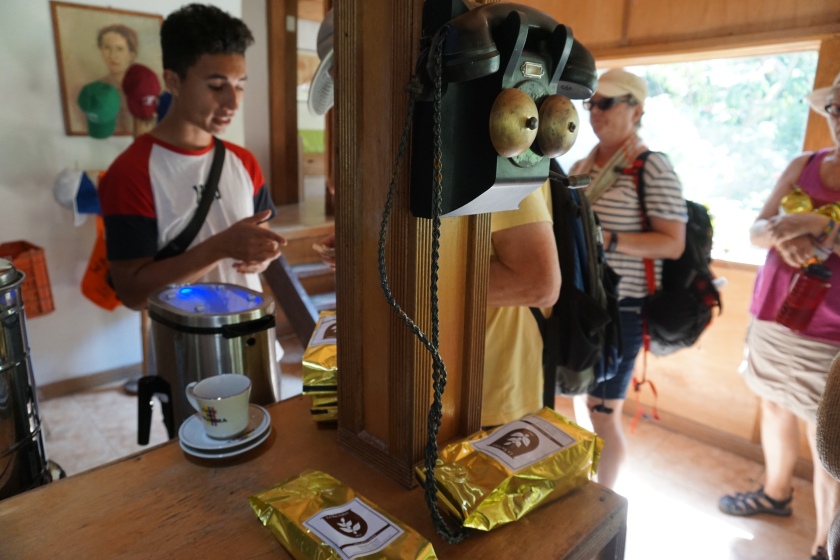
I took a tour of a coffee farm, La Victoria, which turned out to be extremely fascinating and less fluff than you would expect. The tourguide happened to be a physicist who knew all about the ends and outs of the coffee gathering, preparation, production, and distribution process. I learned everything from why the coffee sold inside Colombia is such crap to how the irrigation and draining system works to shuck (I think that’s the word) the coffee beans. Plus it came with two cups of coffee, one at the beginning and one at the end. I had lunch there (an over-priced vegan friendly doubledecker sandwich because I was too hungry to be asked to wait and look for something cheap and local).

DSC03006

DSC03051DSC03003

DSC03004

DSC03002

The coolest part was having a taxista willing to wait on me for 2 hours and watch my things when I went swimming. He also tolerated all of my questions about the place during the ride, which meant I got to learn a lot along the way.

The “tour” was followed by more winding up and down the mountain and stopping at Los Pinos (the pines) to peep the amazing (if smoggy) view of Santa Marta, the ocean, and the peaks of the Sierra Nevada. Unfortunately, said smog was veiling the view, so no dice. Still, I enjoyed taking some pictures with my camera.

From there, I got to see the famous Casa Elemento. I didn’t go all the way to their treehouse hammocks, but I did some lounging about on the big ones in the main common area. You buy a wristband to get in for like 15 mil and you can spend as much time as you want. The hostel covers an expanse of property with lots to do and see. The wristband also includes a drink. Obviously if you stay there, you get access to the hammocks, pool, and cabins without paying extra. It’s worth it, but I chose a hostel close to the town of Minca to leave early the next day, and Casa Elemento is still about 40 minutes away from the town.

This slideshow requires JavaScript.

I couldn’t lounge for too long because the sun was starting to go down at this point, and I had one last top before going to the hostel. The Marinka waterfalls were amazing – plus you get a good, exhausting hike as well. Be sure to check them out. On the path up, I had an old man compliment me on my tattoo (which I never expect from the elderly for obvious reasons), and the best part was he wasn’t even hitting on me! He even told me to look out for those costeños and their “labia” (a sort of sweet-talking bullshitting). We both had a good laugh.

DSC03189

Most of the tourists I met in Minca were German and French. The hostel I stayed at was run by some Argentinians that were really nice, the usual open-minded traveler types. That night, I went to an open mic and shared some wine and beer with one of the girls and a volunteer at the hostel. He happened to be a Colombian transplanted and living in Canada. We shared our philosophies on how we hated living to work. He explained how he uses his hated 8-5 job to pay the bills and save to travel for months at a time every year.

Lately, I’ve been thinking more and more about purpose – the purpose of me living in Colombia, working as much as I do, the purpose of this blog and the way I organize my time. I’m not working to live; lately I’ve been living to work. And that has to stop. That’s part of why I chose this lifestyle. That’s why I write and do other things. My purpose is trying to produce something meaningful while I’m alive. I think we should all aspire to do as much. Not to live to work, but to try to move beyond the realm of simply existing, tolerating, rinsing, washing, repeating.

Therefore, I’m in transition, trying to slowly find my way again. A year ago, my goals were very clear. I go back to that dauntingly clear and ambitious list and wince. I am still working towards those goals, but I haven’t been taking as many steps to see them through.

That’s why, as much as this post is about Minca, it’s also a recap of why the hell I’ve been lost all these months and where I want to go with this blog and my life. I’ve been having a lot of conversations about maintaining a sense of clarity towards the things that matter in life. About dedicating time to things that matter. About why this matters. It’s time to replant those goals and water them and give them another chance to flourish and blossom. It’s never too late.

I took a book from the hostel I stayed at in Minca which just seemed right: Sobreviver. It’s in Portuguese. I’ve been reading it very casually, but my goal is to finish and post about it and my insights here. The book is basically about the following reflection: life isn’t just surviving, but in order to live well, you must be resilient. In order to be resilient, you must be a survivor. And that means pushing past negativity and working through every obstacle thrown at us.

 

Every day Situations in which knowing Spanish is and will be life-saving in Colombia

As has become customary, I will begin this post with a disclaimer: I live in a smaller part of Colombia, not in Bogota. I live in a place where foreigners are still a novelty – yes, that word is very appropriate in this case. If you go to most places in Colombia, expect an array of questions and curiosity, regardless of the situation you might find yourself in, particularly if you find yourself in a less metropolitan place.

Still, there is something you must keep in mind: Colombian culture is a communicative culture. It is a verbal, expressive culture, to such an extent that you have to be careful not to take things at face value because being expressive also means being exaggerative at times. Especially in the coast.

I’ve traveled in other parts of Colombia, but the daily experiences have been had living in Valledupar, Colombia. If you happen to end up in these “wild west” areas for tourists, knowing the language spoken is so essential, even if you’re starting with the basics. Here you will build up that base, which is the value of avoiding the more tourist- and foreigner-populated areas. If what you’re looking for is authentic experiences and interactions, you will find them here. However, you might not always like it.

The experiences I’ve had where language has been essential are more numerous than I expected. As a somewhat reserved person, I wasn’t expecting to need to speak to strangers every time I leave my house. However, that’s what you should prepare yourself for, even if what you’re saying are simple greetings.

In the street, people will greet you. Seems normal, but if you are introverted or used to living in big cities, it can be off-putting to be rushing down the street a wreck to get to work while people are telling you good morning and asking how it’s going. However, your needs for Spanish vocabulary are basic, obviously, returning the gesture is more than enough under most circumstances.

por-que-los-piropos-son-acoso

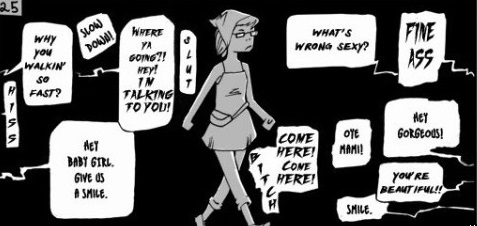
Unless those simple greetings are accompanied by catcalls. They can be as seemingly harmless as “my beautiful queen” (mi reina hermosa) to more grating like “uy mami me das ganas de pecar” (mami you make me feel like sinning – yeah wishing I was making this up but it happens). The response here can be as simple as a glare or a non-response, gracias if what was said was actually a genuine, non-cringy compliment and you feel like it merits thanks, or a straight up comeback such as, Y calladito te ves mas bonito (“And you look nicer with your mouth shut”). It really depends on your mood what level of Spanish you need for this daily encounter, but the point is, as a woman, you need to prepare yourself for the daily reminder that you are female-presenting and are outside walking around, whether you go out looking like Miss Universe or roll out of bed sick and go out in basketball shorts and a big t-shirt (speaking from personal experience – yes, really). Catcalls get old, but there are other interactions with mostly men you will have ahead of you, such as…

CatcallingThe21stCenturyWoman

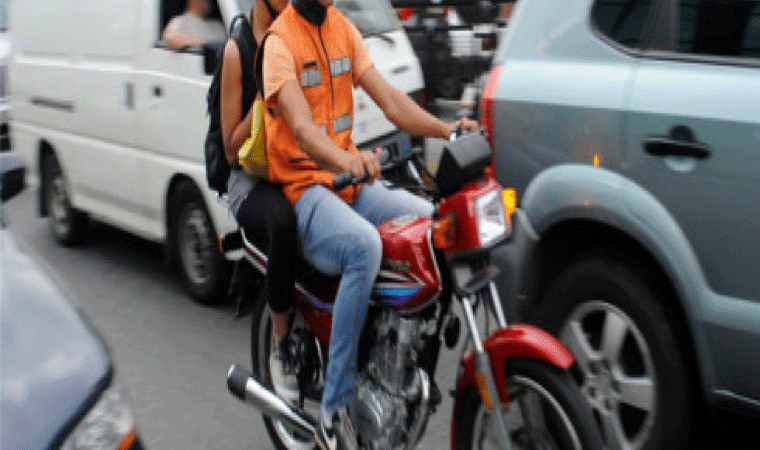
Taxistas. Even in smaller cities or towns, people that don’t have cars are given options in the form of taxis – either of the traditional yellow variety or mototaxis. Mototaxis are literally just that – motorcycles driven by random men with no special markings. Sometimes they come in “uber” form, but the only app for that is whatsapp. They have no signs or distinguishing features usually since I’m not sure they are technically legal, but if you notice a motorcyclist honking at you like crazy, he is probably trying to get your attention in case you are a potential passenger – not because you’re attractive. So despite all of the catcalling, this is actually less cringe-y.

mototaxista-760x450

So whether regular taxista or mototaxista, expect to have the using “I’m going to…” conversation regularly. But, not only that! Make sure that you have some idea of the landmarks near where you are going. If you expect them to understand a simple address you are dead wrong. Unless it’s a very straight-forward destination that everyone recognizes, then just the name of the place might be sufficient. But as a rule of thumb, I like to have a general idea of what is around the place I’m going, aside from the Barrio – which is more than just a basic sentence. Be prepared to get a lot of practice there.

Then there is the often inevitable conversation that is had with the taxista. Sometimes this happens even when you try to bury yourself into a chat conversation in your phone (which may or may not be genuine depending on if you have data or not – the all-inclusive unlimited text plans aren’t as common here). The questions usually touch on the same familiar territory, so you will be better at this form of small talk before you know it. It usually starts with, “You aren’t from here, are you?” and ends with “So what do you think about that President Trump?” That part might be hard for a new arrival, but hope for that outcome and not the “Why aren’t you married? Got any kids? And your husband? You thinking of marrying a Colombian guy? Could it be me?” route. Oh, yes, most taxistas are male, so that it takes that turn at least once is absolutely guaranteed. Fun.

If you thought you might be safe from verbal/aural overload once you reach your destination, well, I’m sorry to inform you that you are completely wrong. When you go shopping, especially if it’s downtown or in a local tienda, expect to be pummeled with questions. What are you looking for, how can I help you, etc. What you would expect, of course. But if you’re going clothes shopping or more likely window shopping, they probably won’t accept a “just looking” response. I’ve been followed around a store as I literally walk about aimlessly hoping they will get bored before exasperatedly turning and saying, “Look, I literally am just looking, and now I’m leaving.”

0d039-tiendas-de-barrio

In the tienda, you might need to go with a list prepared. I’ve gone so many times only vaguely knowing what I want, and I literally forget everything because they put me on the spot. Obviously not everyone is as flighty as me, but if you are still in the learning stage of Spanish, expect you will need to communicate what you need. And clearly. I once asked for meat, but I was expecting to be shown a portion, not asked how many pounds (libras) I would like. I had no idea and gave away my foreignness by asking for a reference. You see, I think in the States we get used to shopping visually, the typical supermarket experience where you walk up and down aisles picking and choosing what you need, looking at everything unhurriedly. But if you want to get things cheaper, you will want to shop locally, and if you shop locally, you will be expected to rattle off everything you need – while competing with other Colombians to speak. And costeños will speak over you, and in this case, the first and the loudest gets the fastest service. Facts.

The pharmacy or drug story (drogería as it is called more commonly in Colombia) is another challenge. You see, if you have a prescription, it is pretty much the same as in the states – you show the paper, they give the medicine, you done. But in Colombia, drug stores don’t rely on prescriptions alone. In fact, you can find independent pharmacies like la rebaja and la receta on pretty much every corner downtown. There are a few big pharmacies that resemble CVS and Walgreens in the states like Farmatodo but most of them are smaller cornerstore deals.

larebaja

Just like in the tienda, don’t expect calm browsing. Introverts are probably feeling uncomfortable. “You mean I have to describe all of it to the pharmacist?” Well you can go the route of describing your symptoms, because let’s face it: coming to a new country means not always knowing the exact equivalent of every daily item branded under a different name in the states. Tylenol exists, but it has different, more common generic forms like Acetomenofen, the scientific name which most Colombians know regardless of the brand. Most medicines I associated with brands which only exist in the states, I realized. Knowing a brand might be useful when dealing with toothpaste, for example. Colgate is even a “pasta de dientes” replacement – however you need to pronounce it in Spanish: col-ga-te, syllable by syllable, like it’s spelled, otherwise they will stare at you in blank confusion. And so it goes with most everyday products, like hair styling brands, which are still common here. Pharmacies here have all of the products under glass in the display counter where you have to request them in order to receive them from the pharmacist, which is where knowing exactly what you are looking for comes in handy. Not all of the products will actually be visible in the display counter, and some pricing or brand options and preferences will be offered. Cuidado!

But as you can imagine, linguistic adaption takes time, but with time, it comes. So don’t get too overwhelmed if you are imagining how you will handle all of these very direct, verbal situations. Daily you will be immersed, and if you are going to live in another country in order to learn the language, that is ideal. My fluency has increased so much, even if my reserved nature has only slightly shifted, so there’s that!

Sometimes funny, sometimes scary, often a challenge, using Spanish in the coast of Colombia is a reality you should expect and take advantage of because it will make you more confident using the language.

Looking Back: (Mis)adventures in Parque Tayrona and Santa Marta

Finally I had my Colombian adventure. I set off on Tuesday around 1 pm thinking I wouldn’t get a bus until 2:30, but to my pleasant surprise, when I arrived at the bus terminal I was immediately led to the bus leaving at that exact moment. The trip was a bit uncomfortable. Initially, I thought I had the best luck – the back seat to myself. Then this entire family climbed onto the bus, and to my dismay, there were no free spaces other than the ones next to me. So the mother and father sat next to me with their three children piled on top of them. Not the most pleasant of scenarios, but it only lasted about 3 hours. Then I was told to get on a smaller bus that would take me straight to Santa Marta. Again, another cramped voyage. Imagine me, a relatively tall white woman in the last row of a roughly 25-seat mini-bus packed with Colombians of a darker complexion. I was like a sore thumb stuffed in a box of sardines.

But before I knew it, that leg of the journey was over and I was in my hostel, Solaz, in Santa Marta. I had a really neat conversation with the taxi driver who picked me up in front of the terminal about ignorance that leads to hero worship of even the most deplorable figures – in this case, Trump and Maduro. I never considered that there were Venezuelans that admired and even worshiped him with a certain fervor. My taxista, a Venezuelan, understood it just as much as I understand the fervor people in my own family have towards Trump. He left me with his number, saying if I ever needed anything in the city to let him know. A man who had been a successful detective with several houses, for the first time, reduced in a way to a solitary life working in the public sector of Colombia. Now that would make a novel – but that was his life. The whole thing struck me as quaint.

I can’t lie, I had some unrealistic expectations for this trip, particularly for seeing my friend. After all, his posturing of things was pretty ideal. We were to go out wandering around Santa Marta talking and then later drink and dance the night away. I even imagined us traveling a bit afterwards together as well.

Well, suffice it to say, it didn’t happen that way. We all ended up being to tired to properly drink and dance, so I retired early. And honestly, that’s okay. Everything was fun but not life-altering. I kept finding myself getting quiet and pensive because it didn’t feel like I felt it should. And I realize that’s the danger. Thinking too much and figuring yourself into a story that isn’t yours. All the same, I generally enjoyed the experience I had, all because a relatively new friend had the nerve to tell me “ven” – come through.

The great, and frankly unexpected, part of this adventure was the connections I gained along the way. That night I met Clari and Dani, two incredible Argentinian girls. They were both planning on going to the same destination that I had in mind from the beginning: Parque Tayrona. My friend introduced us, and we hit it off fairly well. They are both biology majors from Buenos Aires with a myriad of other skills between them: both cook, sing, dance (tango!), ride horses, among a million other little things aside from being extremely intelligent. It’s not that often that you meet truly formidable people in life, but I felt like they could definitely be described as such.

I got to know them a good deal in Santa Marta, eating out and hanging out in the hostel and going to swim and sunbathe in Rodadero (oh, did I mention they’re both great swimmers too?). But I really saw what made them tick on our trip to Tayrona.

We went into the trip with the entrance tickets to the park pre-bought – a must to avoid long lines in peak tourist season – and (supposedly) lodging already a given. That part ended up being wrong, though, as when we arrived to the camp site with extremely over-priced food, there was actually no tents available for us to rent. It got worse considering the guy that worked there wouldn’t even help us. So not long after, it was put our bags back on our backs and hoof it to the next campsite.

When we got there, we were so relieved to have made it through this jungle of hills and sandy hikes: rivers, ant-trails, and muddy clearings we had to cross by balancing ourselves on logs – so relieved that we didn’t even consider if we were getting a good deal. $35.000 a person for 2 big tents and one little one, in a seemingly less crowded campsite? We’ll take it!

Unfortunately, when we returned from hiking along the beach that afternoon we discovered that not only was the place very crowded (so crowded in fact that the kitchen ran out of meat and there were few chairs to spare for our group of 5 to sit at), but that it was also extremely unsanitary and the food sucked, was overpriced, and lacked variety! There were 2 bathrooms on the entire campsite. One had a shower. One. Fast forward later that night when I’m trying to wash myself off while another person is dying in the stall next to me of food-poison-induced diarrhea…not pleasant. Not to mention the tents were practically on top of each other, plus hammocks outside of them and all around. And this to the fact that most people were loud, intoxicated, and sick, and you get a really big headache. I think we all learned a valuable lesson: always book ahead. And book Cabo.

Backing up a bit, the hike along the beaches were to die for – almost literally – exhausting but definitely worth it. Despite some inconvenient physical circumstances, I managed to get in the ocean, hike up all of those fun jungle hills, and make some incredible memories. I just felt very…unsanitary while doing so. And crampy.

That day, we explored Las Piscinas, la Laguna de los Caimanes, and half-hiked to Cabo before realizing it would be dark on the hike back because we left way too late (we’re talking about starting an hour-long hike around 4/5 pm – not a great idea). So after discovering how fucked up our campsite was, we decided to go to a different, more family-oriented campsite to eat and enjoy some music. Colombia is not Colombia without music (especially blasting Vallenato).

We convinced the lady cooking to make us pasta which was pretty decent (and huge so almost worth the $21.000 we spent on it). We also broke out the aguardiente and beers. I discovered that night that in reality, Argentines don’t drink as heavily as Colombians. Andres and Julian, both from Bogota, were all for passing out the shots. We started during our walk to the other site (in the dark under an absolutely incredible starry sky unsullied by light pollution) and continued once we were mostly finished eating. Food was accompanied by beer, of course.

Then, we started playing some hilarious drinking games. One involved using a specific letter of the alphabet to describe your genitals. I learned a lot of new vulgarities and adjectives in this one, and I actually didn’t do so bad! Another was Pregunta, Pregunta which was literally Question Master – each person can only ask a question and respond with a question. This led to more shots then you would think, but possibly not as much as the categories game (another concept I was familiar with from King’s Cup – ohhh college). Somebody picks a category and each person has to say something within the category. The Argentine girls also taught us a game involving crossing arms and tapping the table in an unbroken chain. Way harder than you would think, especially while walking the knife’s edge of tipsy and fucked up.

We were accompanied by a French girl, Alice, who we met in the shitty campsite earlier that day. Exploring with her was fun, although she also wasn’t much of a heavy drinker. I think Colombian culture has exacerbated my own party-loving spirit. When she and Clari were ready to retire, the fun had only just begun for me. I was tipsy and dancing with Andres, and Dani and Julian had coupled up as well. I’ve noticed that this coupling off to dance thing probably has a lot to do with the hookup culture I’ve seen here. Nothing happened out of the ordinary that night, but it does tend to happen under those circumstances.

When you travel, you learn so much about other people, and from them, you also learn about yourself. I suffered a couple really major crises during the trip. I went back to the party after promising to go back with Andres to walk Julian and Dani back from the site and “take care of them,” which doesn’t work very well when you are well liquored up yourself. I unfortunately forgot that I was carrying my cellphone in my purse – while crossing the laguna de los caimanes – Alligator Lagoon. On the way out of the campsite on the hill, I made an Olympic-metal hop across a log that connected one side to another. Beaming with accomplishment, I turned to share the light with my friend coming behind me. The log was not totally level of course and my foot slipped and – bam! I slipped straight down into the lagoon. Of course, my own welfare wasn’t the real worry for me in my intoxicated state – the damage the water did to my brand new Moto g5 as I scrambled to get out and continued to fall, eventually pulling Andres with me was the real tragedy of the moment. New cellphone – dead. Pride – also dead. I cried so much that night, it was ridiculous. Andres did his best to comfort me, but I was pretty distraught, so we sat by the side of the ocean for at least an hour leaning against a log of sorts, him trying to distract me from my tech tragedy, me trying to rationalize the situation and failing and just being angry at myself.

After the wild, regrettable night, I woke up in the big tent with a pretty shitty hangover, exhausted from barely sleeping, sore all over, and just generally blah. In spite of that, we decided to carry on and hike down to Cabo. We had a breakfast at the same place we had partied the night before and hurried on our way. Hiking in sand, by the way: don’t do it. My shoes were soaked and dirty, which meant soggy feet after spending what seemed like hours in beautiful aqua blue oceans and shiny, gold-flecked rivers. Cabo was a dream, and the hike there and back really was not so bad. We passed the time by swapping stories and singing Disney songs both in Spanish and English. We unanimously decided that next time, for sure, we would have to stay there. And book in advance. Just go Cabo.

What I was not prepared for was the hike out of the park. 2 hours or more, not including the 1 hour hike back to the main campsite from Cabo. My feet were soggy and blistered. Every step slowly became more painful, and then, like fools, we decided to finish the last leg of our hike (which could have been cut shorter on bus) on foot instead. The sensation of stepping on knives stabbed through me with every painful step. At first, the trip didn’t seem so far. Just a little bit further…but after each turn that did not seem to bring us any closer to our destination, I began to bitterly lose hope.

Clari was patient with me, as was Andres, who took my bag to help lighten my burden. Clari distracted me with engaging conversations about past lives (”Muchas Vidas, Muchos Maestros” was a book she recommended me that I must remember to read). We talked about the permanence of energy in the universe and strange dreams and uncanny knowledge of things one has not directly experienced. Andres thought we sounded high, but it was just the mixture of our shared mysticism and hiking delirium. We got on to plan other potential trips, Spain being a shared interest. She assured me that I could go visit in Argentina anytime.

Finally, that little adventure was over. The other tragedy came after deciding recklessly to go out and drink cocktails and tequila shots while suffering from severe exhaustion – and eat meaty, heavy street food. The stomach virus I had the next day was so severe I was unable to even smell food without becoming nauseous and vomited pretty much everything in me that diarrhea didn’t wipe out. Andres and Dani had decided to move on to La Guajira, leaving me in the hostel with Clari and some kind German girls that had taken up residence. Clari helped me get the strength to go to the clinic to get some shots and a ton of drugs to deal with the poisoning. I lost that Saturday in Santa Marta sleeping, and the next day, it was time to go home.

So, big takeaways from the trip:

  1. Don’t take your cell with you on midnight treks over alligator lagoons while intoxicated. Just…don’t do it. Hindsight is a bitch.
  2. Don’t let shit that is over and done with affect and ruin your present.
  3. Don’t be afraid to open up to strangers. They might end up becoming some of your best company.
  4. Don’t overthink the reaction of others to that essence which is you – any negative reaction is their problem.
  5. Street food involving meat should be avoided at all costs. Eating in places where conditions are unsanitary, regardless of how tempting the cheapness of that place is must be avoided.
  6. And finally: don’t wait – buy your entradas (tickets) to the park and book your campsite or hostel in advance. Make sure you have all the facts. Don’t be like me.

In the end, I don’t regret any of it, even the misadventures and all of the callouses my feet acquired. The trip represents life in a big way. It was a microcosm of the wins, losses, and connections one experiences when they dare to live without limits and open themselves up to people. It’s not always going to be pleasant and epic, but it will teach you something if you let it. Those lessons will stay with me, buried away in my consciousness. This is the year of autonomy and letting go of fear. This trip was part of the autonomy. And it was only the beginning. Bring on the next adventure: Central America!

10 Things I wish I would’ve known about living in Colombia

Before I moved to Colombia, as you can imagine, I was completely nervous. Excited, yes. Prepared? I wasn’t sure. The uncertainties were all around me.

So, like most people in the age of technology, I took to the internet. I looked for blogs/vlogs, lists, articles, College Humor pieces – anything that could give me an idea of what it would be like living and working in Colombia.

Unfortunately, I came up mostly empty. For all that travel blogs and teach-abroad blogs are quite popular these days, I couldn’t find many vlogs or posts with information I found pertinent (and personal). It was all mostly general or stereotypical – salsa dancing, tourist attractions, and the general basics for travel and work – how much you could expect to make, where you could expect to work, etc. But as far as the different elements of culture shock, language, daily life, traveling on a budget, making friends and forming relationships – well, the internet seemed silent.

Maybe I’m just bad at search engines. Either way, I feel there is a need. So I would like to share my top 10 things I wish I would’ve known before moving to Colombia.

(I should preface this by saying this information mostly applies to the Colombian coastal region, and the difference between the interior of the country and the coast definitely makes the list of things I wish I would’ve known about Colombia before living here.)

Image result for mapa de las regiones culturales de colombia
Just keep this in mind – there’s practically a different dialect for every one of these regions.
  1. Bogota is not Colombia. And the differences between regions can be much more dramatic than one would expect (culturally, dialectually, etc.). I knew this because I had visited both beforehand, but I didn’t realize just how big the rivalry between different regions in Colombia is. You won’t be just adapting to a new culture based on the country, but also based on the region you choose to live in as well.
  2. Colombia is not as dangerous as it once was. You are not likely to get kidnapped by random taxi drivers anytime you go out. You won’t see violence in the streets. However, crime caused by the incredible degree of inequality and poverty is real. Because of this, you will probably be robbed or mugged at least once – oh, by the way, don’t go out with your cellphone at night, or if you do, don’t own a fancy, expensive smartphone. You have been warned.
  3. People are not always to be taken at face value. Things are not always what they seem on the surface, and if money is involved, one should err on the side of caution. It is very likely if you are working in anything that requires charging or loaning money that you will have to hassle that person in order to get it, because Colombians either never have money because of how awful the economy is or simply don’t want to pay when they do have money.
  4. Relationships and gender roles are truly influenced by machismo. But it’s not always as obvious as you think. Lies, deceit, and general toxicity all tend to play a role, and to many people here, this looks normal due to the culture.
  5. The cost of living and exploring is inexpensive. Even though you can’t expect to make a lot of money by US dollars standards, you can still manage to save and live your best life. Travel by bus and plane to different parts of Colombia is inexpensive, but work can be extremely draining (because schools here are not well-organized, and the hierarchy can be extremely stressful – more on this in a different post). It’s a real game of give and take with your schedule to keep things in balance.
  6. Your personality will change if and only if you are truly immersed in the culture. You wanna get good at dancing to Latin music? You have to let yourself be taught and be spontaneous. Same with your degree of fluency in Spanish. Most people here don’t speak English and are very shy to do so (aside from the annoying cat-callers that only know one phrase – like “I love you” and “hello”), so if you are interested in learning Spanish, this is a great place to do it. However, you should come willing to make an effort and learn from the people around you.
  7. Most people do not know that much about the US. So questions get repetitive. It’s kind of like how when I’m in the states, questions revolve around 30 year old issues like Pablo Escobar and drug cartels…yeah, ignorance is the same no matter where you are, but at least the questions are mostly about Trump, somebody who is actually alive and relevant.
  8. Colombia really does not have seasons. I honestly didn’t realize that. So if you pick a hot place to live, expect that to be a constant. If you pick a colder, rainy place (like Bogota), that will also be a constant, with some flux depending on the months and dry or rainy seasons. Weather is not necessarily a constant, but the general temperature and variety of weather definitely is.
  9. In a small city like Valledupar, transportation is so easy and cheap. Of course, the same can’t be said for sprawling cities with a shitty Transmilenio bus system in place of a metro, but trust me, if you live in small town Colombia, moto-taxis for $2 mil a ride will become your best friend. Cheap street food like arepas, empanadas, deditos de queso, and papas rellenas will become your best friend, too. I should probably just do a whole post on food, let me bookmark that for later…
  10. People will embrace you. Sure you have to root through the people that want to use you for the perceived money or influence that gringos have, but people here are truly so warm and willing to share with others, so long as they sense that you are a genuine person as well and you are willing to open up. That has to be one of my favorite things about the culture.

Now that I’ve written those 10, several more things occur to me. But I’ll leave that for another post. Basically, living in (coastal) Colombia is a spontaneous experience, so you need to be open-minded and aware of your surroundings. Appearances often are not to be trusted, but life is looser and more flexible – which means if you crave and thrive on structure, la Costa probably isn’t the place for you.

However, that being said, I think this country offers something for everyone. Medellin, Cali, Bogota, Bucaramanga – all of these great cities are different from cities in the coast. In Colombia, one size definitely does not fit all.

I hope this is helpful to anyone considering living, working, or at least traveling in Colombia. As with life abroad in any country, a willingness to adapt to your environment is always important and necessary. There will always be things you don’t like – be it the slowness, the poor attitude toward customers, the backwards gender norms, the superficiality, in the cases I’ve seen that were less than pleasant – but you can learn and grow from these differences and observations as well. All of that makes the experience that much more rewarding and totally worth it.

If you’ve lived in or are living in Colombia, do leave a comment below sharing what you discovered but didn’t realize before living in Colombia (along with which part of Colombia you lived/are living in!).