![Nómada [con] Rumbo](https://nomadaconrumbo.com/wp-content/uploads/2021/04/cropped-dsc07640.jpg)
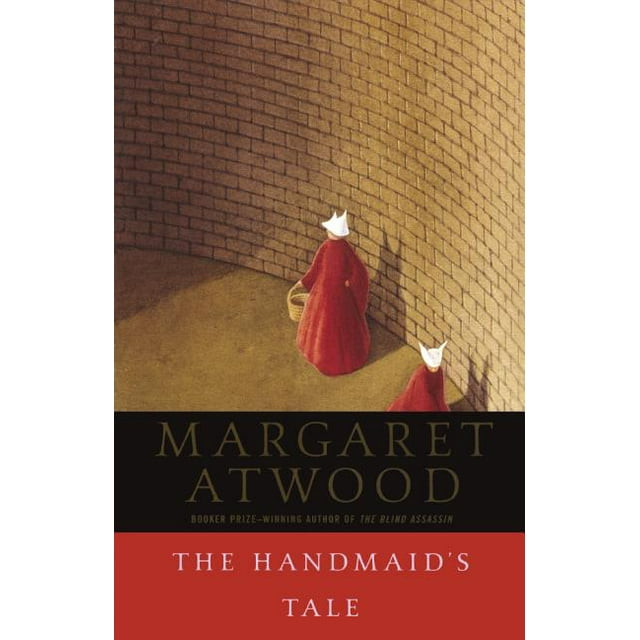
I picked up The Handmaid’s Tale during my travels earlier last year. I finally started it on my way home in August. The timing couldn’t have been more apt with the 2024 election season looming. As I read, I was struck by how Atwood’s dystopian vision reflects today’s struggles with democracy, justice, and the rise of extremism. The Hulu adaptation, released during the first Trump administration, expands the novel’s themes, offering a grim exploration of how fragile freedom can be—and how quickly it can be surrendered by those with even the best of intentions. The parallels between Atwood’s imagined world and our own are unsettling, especially as the adaptation explores how societal complacency and extremism intertwine to erode fundamental freedoms.
A US Tradition: Freedom of Religion or Dominance by Faith?
The Handmaid’s Tale draws on the history how the US was founded, where many of the original colonists came seeking freedom to practice their religious sects and form their societies according to their interpretation of divine law. It all started with religious freedom. Or was it religious hegemony? Was the pursuit of religious freedom, in reality, driven by a desire to reshape society’s hierarchy according to a different dogmatic order?
Is that where things all went wrong? With the state of American democracy, the state of global regression and reactivity, it’s hard not to ask these questions, especially after reading a dystopian novel and watching a series which reflects on how the US has evolved since the novel was published in the 80s. Or rather, how the issues have advanced and the socially conservative continue to openly veer further and further to the right.
The colonization of the United States, colonization in general, entailed “freedom and justice” for a small margin of the population that at the time was significant in comparison to the Europe of the time. Still, which part of the world has been able to move past the dark ages? We still seem so mired in the Puritanical (and rightly named) dilemmas of our “forefathers.” Now that block has led us into the hands of a tyrant, someone that would fire and threaten those that oppose him or disagree with him and have the final say on how we define truth.
That is, concretely, the antithesis of freedom. The antithesis of justice, represented by immunity being granted by being elected. In this case. Exceptions are dangerous. Is the law no longer something that applies to everyone? We’ve grown so corrupt and so confused that some would believe he has earned his clemency by popular vote.
These themes of American identity and the idea of a collapsed US state are sketched on the page and brought to life by the Hulu series. In the book, the titular Handmaid June remains nameless. Her true identity was never discovered, as noted by the historians in the epilogue that spoke about analyzing and studying her recordings. They could not even be sure of who her Commander was, though they had some theories. That was something both fascinating and frustrating about the read. A frustration that the series satisfies, an itch that was scratched by realizing the world building hinted at vividly.
From Fiction to Reality: Lessons for Modern Politics
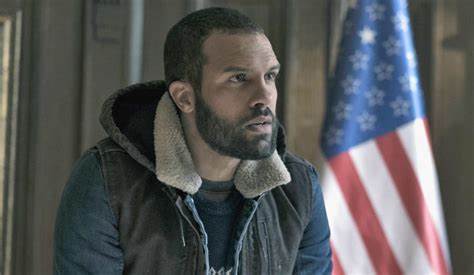
“I hate this world,” the Luke of the TV show says as he adjusts the straps of his wife’s bulletproof vest. That sentiment could not resonate with me any deeper. So much of the series deals with a wish-fulfillment induced by the novel’s air of hopelessness, including the definitive reunion of this couple, divided by Gilead law that, once established, had the power to annule marriages and divide families “in the name of God.”
The final season of the show explores the backlash of Canadians towards the influx of American refugees due to a scenario in which the US divides along religious and political lines. I feel that the Americans expressing this sort of hostility towards Haitian refugees and other immigrants need to watch this show, need to imagine a world where their home is no longer theirs, where they become the unwanted immigrants by no fault of their own choices or power. Empathy is the weak point of many, sadly, drowned out by American arrogance and dogmatic belief in “one nation, under God, indivisible…”.
After the final episode of Season 5, I was devastated by the idea that, as in real life, the problems had only continued to mount, with new challenges, and no clear, neat resolution. Like the handmaids in training forced to scrub an old church, I feel a stir; I want more.
Characters and Parallels
This final handmaid scene centers on the affection Aunt Lydia has developed for Janine. A character like Aunt Lydia is worthy of a deep analysis of her own. She reminds me of the many women that believe that they are doing the Lord’s work by oppressing and punishing others, no matter how much they want to sincerely help people and do the right thing. They can’t break free of the system they are complicit with without being broken in turn. Moreover, the woman herself is such a broken character. The glimpse of her backstory did well to show her on-going conflict between giving people a chance and her outward and inward rigidity with herself and her own natural needs and urges. She is hard on others because she is harder on herself. That makes her, as detestable as she can be, a sympathetic character on a road to hell paved with good intentions.
In the 5th season, June’s violent journey of healing comes full circle. It’s almost like a detox and a reckoning after the conclusion of the 4th season where she takes revenge on Commander Waterford and starts the 5th season unhinged and blood thirsty. Yet by the end of the final season, she questions her husband about the need to have a gun. She has realized that Gilead and the violence normalized there in its mass executions and torturous practices are what pushed her to embrace her own dark side and cling to it in a situation where she had otherwise been powerless.
Parallel to the protagonist, the Serena Joy’s development was something I would never have expected to be so pleased and uplifted by. Admittedly, from my perspective, they are both women being oppressed by the same system in different ways. The difference is that, of course, Serena is humbled and forced to face the consequences of the flaws in the society she helped build and promote. She’s stubborn and self-interested, self-assured on narcissistic levels, but there is a sense that she has realized that she was blinding herself, unable to accept the mistakes made by supporting a regime like Gilead’s. With the shoe on both feet, her eyes are opened in an irrevocable way that adds to my excitement to see what happens next in a future season.
For me, Serena represents so many pious women, as does Lydia, that do not realize how their own beliefs and dogmas can ultimately do more harm than good. By passing judgment on others, they also make themselves more vulnerable to have judgment passed on them, as women in this patriarchal system have no real power. The warning: When you sign away your rights, be aware that there may be no going back.
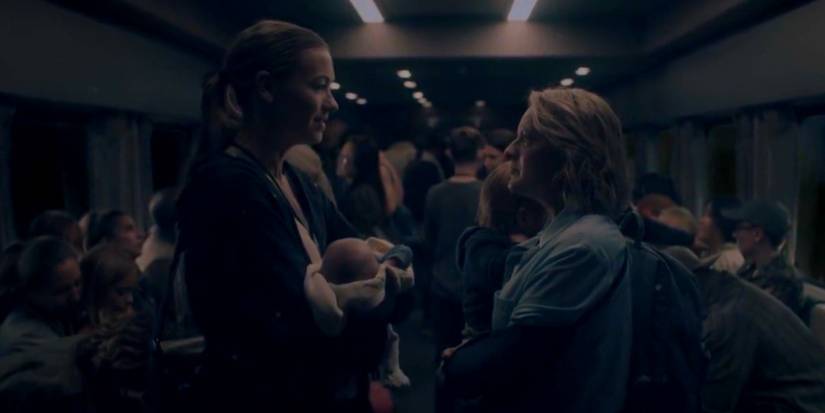
What a closing shot. Billy Eilish’s Bury a Friend set the perfect tone as a bemused June stares into the eyes of a happily surprised Serena, a woman who had to free herself by following June’s advice, two women that were turned against each other by Gilead, by the system, by men and the hierarchy they created.
Self-Fulfilling Prophecy: Warning or Reality?
“America wasn’t Gilead until it was too [redacted] late. And then it was.” This powerful line comes from a June waking up to the reality that Canada is not the safe haven she had hoped for. No place is safe once extremism takes hold, and that is the fear I feel seeing the direction of US politics in 2024 (early 2025).
The ending of this season is a wakeup call. This is how freedom dies. It might seem dramatic, but I hear the warning from Elizabeth Moss’s character loud and clear. All this time, people see that things are changing and yet they choose to reject reality because “This is America.” But what happens when what America means, its very foundations, are revealed? Our American dream is a warped, redacted version of our history and reality. A manipulation of truth. And it all started with this religious freedom leading to religious extremism – in spite of the effort to separate church and state – so much so that this tenuous separation is brought under fire in every election, especially in states that have not fully stepped out of the dark shadow of our history, that scarcely learned the real history of this country.
What does it mean to live in a totalitarian regime? It means the threat of lost life for expressing any opinion, thought, or sentiment that goes against the established order of things. You might feel comfortable along the path to this sort of autocratic society thinking that you will be protected from some “enemy within.” But the truth is, you might just lose everything in the process, even your humanity. Even your home. Even your life.
All in all, the series does a good job of fleshing out the world that Margaret Atwood offered a limited first-person perspective of in the novel. It brought me to tears several times because of how real it all felt. How real it could be. Division between religious extremists and everyone else is feeling more and more inevitable. And at the end of the day, the extremism is propped up by non-religious figures like Joseph Lawrence in the series, people that know how to take advantage of the dogma, fear, and selfish interests of the average person.
To conclude my reaction to the end of the Handmaid’s Tale season 5, it was not the most satisfying ending — as I’ve said, I want more. The heart wants what it wants, and mine is broken. Luckily, at the point that I am editing this post (3/11/25), season 6 is right on time which should hold up an even more unsettling mirror now that Trump has undeniably taken over and set up an even more extreme, unsettling regime.
In the wake of the 2024 elections and everything following the inauguration, The Handmaid’s Tale serves as a stark reminder of the fragility of freedom and the dangers of complacency. Atwood’s warnings are not just fiction—they are a call to action. Let us not wait until it’s too late to protect our rights, our democracy, and our humanity. Let us not surrender our freedom to love out of fear and clinging to the false promise of stability.
This reflection was written around the time before and after the 2024 election — I didn’t want to rewrite it including all we know and have seen now, but I think it still speaks to the big picture and observations the show brought up for me.







 Nómada [con] Rumbo