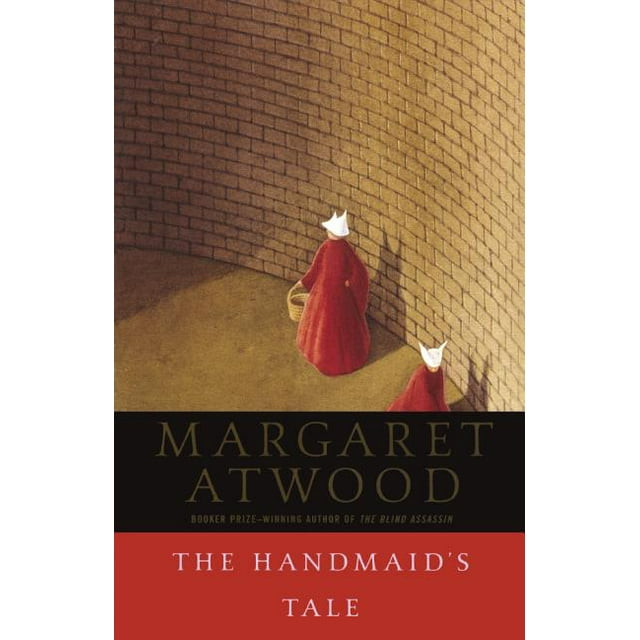
The Handmaid’s Tale: A Cautionary Tale of Religion’s Divisive Power

I picked up The Handmaid’s Tale during my travels earlier last year. I finally started it on my way home in August. The timing couldn’t have been more apt with the 2024 election season looming. As I read, I was struck by how Atwood’s dystopian vision reflects today’s struggles with democracy, justice, and the rise of extremism. The Hulu adaptation, released during the first Trump administration, expands the novel’s themes, offering a grim exploration of how fragile freedom can be—and how quickly it can be surrendered by those with even the best of intentions. The parallels between Atwood’s imagined world and our own are unsettling, especially as the adaptation explores how societal complacency and extremism intertwine to erode fundamental freedoms.

A US Tradition: Freedom of Religion or Dominance by Faith?

The Handmaid’s Tale draws on the history how the US was founded, where many of the original colonists came seeking freedom to practice their religious sects and form their societies according to their interpretation of divine law. It all started with religious freedom. Or was it religious hegemony? Was the pursuit of religious freedom, in reality, driven by a desire to reshape society’s hierarchy according to a different dogmatic order?

Is that where things all went wrong? With the state of American democracy, the state of global regression and reactivity, it’s hard not to ask these questions, especially after reading a dystopian novel and watching a series which reflects on how the US has evolved since the novel was published in the 80s. Or rather, how the issues have advanced and the socially conservative continue to openly veer further and further to the right.

The colonization of the United States, colonization in general, entailed “freedom and justice” for a small margin of the population that at the time was significant in comparison to the Europe of the time. Still, which part of the world has been able to move past the dark ages? We still seem so mired in the Puritanical (and rightly named) dilemmas of our “forefathers.” Now that block has led us into the hands of a tyrant, someone that would fire and threaten those that oppose him or disagree with him and have the final say on how we define truth.

That is, concretely, the antithesis of freedom. The antithesis of justice, represented by immunity being granted by being elected. In this case. Exceptions are dangerous. Is the law no longer something that applies to everyone? We’ve grown so corrupt and so confused that some would believe he has earned his clemency by popular vote.

These themes of American identity and the idea of a collapsed US state are sketched on the page and brought to life by the Hulu series. In the book, the titular Handmaid June remains nameless. Her true identity was never discovered, as noted by the historians in the epilogue that spoke about analyzing and studying her recordings. They could not even be sure of who her Commander was, though they had some theories. That was something both fascinating and frustrating about the read. A frustration that the series satisfies, an itch that was scratched by realizing the world building hinted at vividly.

From Fiction to Reality: Lessons for Modern Politics
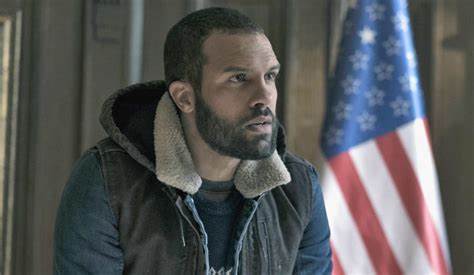
“I hate this world,” the Luke of the TV show says as he adjusts the straps of his wife’s bulletproof vest. That sentiment could not resonate with me any deeper. So much of the series deals with a wish-fulfillment induced by the novel’s air of hopelessness, including the definitive reunion of this couple, divided by Gilead law that, once established, had the power to annule marriages and divide families “in the name of God.”

The final season of the show explores the backlash of Canadians towards the influx of American refugees due to a scenario in which the US divides along religious and political lines. I feel that the Americans expressing this sort of hostility towards Haitian refugees and other immigrants need to watch this show, need to imagine a world where their home is no longer theirs, where they become the unwanted immigrants by no fault of their own choices or power. Empathy is the weak point of many, sadly, drowned out by American arrogance and dogmatic belief in “one nation, under God, indivisible…”.

After the final episode of Season 5, I was devastated by the idea that, as in real life, the problems had only continued to mount, with new challenges, and no clear, neat resolution. Like the handmaids in training forced to scrub an old church, I feel a stir; I want more.

Characters and Parallels

This final handmaid scene centers on the affection Aunt Lydia has developed for Janine. A character like Aunt Lydia is worthy of a deep analysis of her own. She reminds me of the many women that believe that they are doing the Lord’s work by oppressing and punishing others, no matter how much they want to sincerely help people and do the right thing. They can’t break free of the system they are complicit with without being broken in turn. Moreover, the woman herself is such a broken character. The glimpse of her backstory did well to show her on-going conflict between giving people a chance and her outward and inward rigidity with herself and her own natural needs and urges. She is hard on others because she is harder on herself. That makes her, as detestable as she can be, a sympathetic character on a road to hell paved with good intentions.

In the 5th season, June’s violent journey of healing comes full circle. It’s almost like a detox and a reckoning after the conclusion of the 4th season where she takes revenge on Commander Waterford and starts the 5th season unhinged and blood thirsty. Yet by the end of the final season, she questions her husband about the need to have a gun. She has realized that Gilead and the violence normalized there in its mass executions and torturous practices are what pushed her to embrace her own dark side and cling to it in a situation where she had otherwise been powerless.

Parallel to the protagonist, the Serena Joy’s development was something I would never have expected to be so pleased and uplifted by. Admittedly, from my perspective, they are both women being oppressed by the same system in different ways. The difference is that, of course, Serena is humbled and forced to face the consequences of the flaws in the society she helped build and promote. She’s stubborn and self-interested, self-assured on narcissistic levels, but there is a sense that she has realized that she was blinding herself, unable to accept the mistakes made by supporting a regime like Gilead’s. With the shoe on both feet, her eyes are opened in an irrevocable way that adds to my excitement to see what happens next in a future season.

For me, Serena represents so many pious women, as does Lydia, that do not realize how their own beliefs and dogmas can ultimately do more harm than good. By passing judgment on others, they also make themselves more vulnerable to have judgment passed on them, as women in this patriarchal system have no real power. The warning: When you sign away your rights, be aware that there may be no going back.
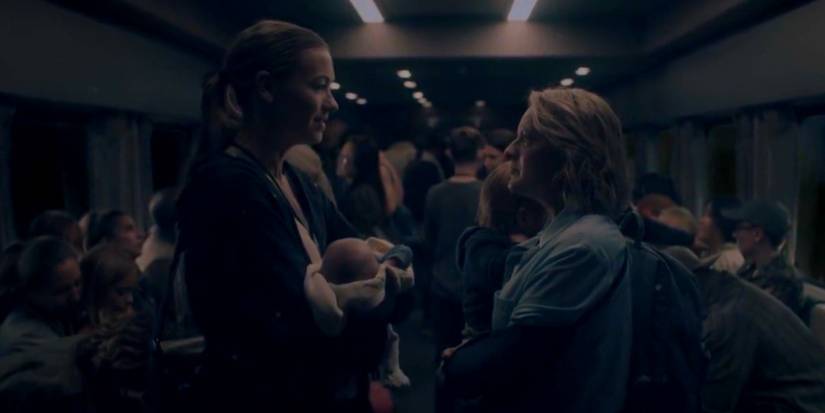
What a closing shot. Billy Eilish’s Bury a Friend set the perfect tone as a bemused June stares into the eyes of a happily surprised Serena, a woman who had to free herself by following June’s advice, two women that were turned against each other by Gilead, by the system, by men and the hierarchy they created.

Self-Fulfilling Prophecy: Warning or Reality?

“America wasn’t Gilead until it was too [redacted] late. And then it was.” This powerful line comes from a June waking up to the reality that Canada is not the safe haven she had hoped for. No place is safe once extremism takes hold, and that is the fear I feel seeing the direction of US politics in 2024 (early 2025).

The ending of this season is a wakeup call. This is how freedom dies. It might seem dramatic, but I hear the warning from Elizabeth Moss’s character loud and clear. All this time, people see that things are changing and yet they choose to reject reality because “This is America.” But what happens when what America means, its very foundations, are revealed? Our American dream is a warped, redacted version of our history and reality. A manipulation of truth. And it all started with this religious freedom leading to religious extremism – in spite of the effort to separate church and state – so much so that this tenuous separation is brought under fire in every election, especially in states that have not fully stepped out of the dark shadow of our history, that scarcely learned the real history of this country.

What does it mean to live in a totalitarian regime? It means the threat of lost life for expressing any opinion, thought, or sentiment that goes against the established order of things. You might feel comfortable along the path to this sort of autocratic society thinking that you will be protected from some “enemy within.” But the truth is, you might just lose everything in the process, even your humanity. Even your home. Even your life.

All in all, the series does a good job of fleshing out the world that Margaret Atwood offered a limited first-person perspective of in the novel. It brought me to tears several times because of how real it all felt. How real it could be. Division between religious extremists and everyone else is feeling more and more inevitable. And at the end of the day, the extremism is propped up by non-religious figures like Joseph Lawrence in the series, people that know how to take advantage of the dogma, fear, and selfish interests of the average person.

To conclude my reaction to the end of the Handmaid’s Tale season 5, it was not the most satisfying ending — as I’ve said, I want more. The heart wants what it wants, and mine is broken. Luckily, at the point that I am editing this post (3/11/25), season 6 is right on time which should hold up an even more unsettling mirror now that Trump has undeniably taken over and set up an even more extreme, unsettling regime.

In the wake of the 2024 elections and everything following the inauguration, The Handmaid’s Tale serves as a stark reminder of the fragility of freedom and the dangers of complacency. Atwood’s warnings are not just fiction—they are a call to action. Let us not wait until it’s too late to protect our rights, our democracy, and our humanity. Let us not surrender our freedom to love out of fear and clinging to the false promise of stability.

This reflection was written around the time before and after the 2024 election — I didn’t want to rewrite it including all we know and have seen now, but I think it still speaks to the big picture and observations the show brought up for me.

Writing Project: Entre Comillas

I’ve been stumbling upon and rereading some writing projects that are (yes) mostly unfinished, but I’d like to take the time to share some of them and see if getting some feedback might motivate me to finish.

I feel like prefacing this project might be a good idea so that you get what I was going for.

A couple of years ago, my brother and I were talking about love stories and clichés. He gave me a unique challenge that I began to build upon and have added to here and there whenever I stumble across this piece of writing. It’s interesting, because I am a classic example of a writer that takes their own experiences and morphs them to try to tell a story of something (I hope) someone else might have experienced but that, naturally, does not 100% align with my own thoughts or experiences. It offers me a bit of perspective on my own experiences, while making my own writing feel more concrete without simply and narcissistically copy/pasting experiences from my own life — I have other mediums for that (*glares pointedly at Part 2 of my roadtrip post sitting in my draft folder*).

This project I decided would be bilingual. A love story of a different kind. The idea of two people meeting, not being able to understand each other, yet falling in love anyway. This hasn’t actually happened to me, but it has happened to a family member of mine, and I found the whole idea rather fascinating. I mean, how does one fall in love without understanding the other person? Seems like a pretty big stretch to me.

And so, naturally, writing about it would be the perfect avenue for exploring this concept which people apparently experience, but I have not.

However, as I said, this sort of project does borrow influences and experiences from my own life, allusions that people who know me well might recognize.

And it’s bilingual. I realized that it would cause an interesting marketing issue if I ever wrote a full book — because yes, there are a lot of bilingual readers out there (especially people that can read Spanish and English – yes, huge market win?) — but I would want people that don’t speak or read Spanish or English to find it accessible somehow as well (aside from reading the translations with mere context). (still not sure how I would accomplish this) But the whole idea is that, just as these two people could not fully understand one another, the pieces that they shared would be enough to craft this bigger picture. Yay, literary elements and whatnot.

While I catch up with other projects, I’m going to upload what I’ve written of this story in installments, since I’ve already completed around 4 chapters of the story. If it receives any response, maybe I’ll continue? Or if I get useful feedback, that could serve a source of inspiration.

I’m just curious, and I want to start sharing more of my fiction pursuits for peer review. Looking forward to seeing the response (if any!).


Cuando se acabó la gran noche, solo me quedé pensando. ¿Qué tal que fuera toda una gran casualidad? ¿Que tal que me quedara con ella? ¿Tendríamos una familia ahora en aquel apartamento tan moderno en aquella ciudad tan fría? 

“Stay,” me dijo. Como de costumbre, me quedé mirándole los labios. Tan finos, hasta pintados de rojo. Pensé que al fin le entendía.

“Ya no. No se pudo,” le repliqué, y sus ojos no dejaban de mirarme a los míos.

Me prometía todo, sí, como no. Se dice que solo sabes lo que tienes cuando te toca perderlo. En mi caso, podría decir que eso es sólo la mitad del cuento. Y qué cuento más largo. Pero al final, la cama vacía habló por sí misma. Primero la suya. Después la mía.

Me marché.

Pero ¿cómo fue que empezó todo? ¿qué momentos tan pequeños se convirtieron en los que sé que me marcarán para el resto de mi vida?

Just like that, he was gone. I knew I would have to adjust again, to the quiet spaces in between. To the haunted melodies of the sad songs for lonely lovers we used to enjoy together. You see, I didn’t realize how much one could understand in spite of a language barrier. So much of what we communicate we do not say in words alone.

I never really knew what I wanted – to be. I could be one thing one day and a thousand things another. I wanted to be a writer. An actress. A politician. A teacher. A chef. Whatever it was in the moment, regardless of what the profession or fancy might be, I at least knew that I wanted to be great, by whatever definition of greatness I was willing to apply.

I knew I wanted to leave Arkansas. The endless fields of agriculture and livestock had nothing for me. I don’t even have a green thumb. Naturally, there was no better option for a young, indecisive dreamer than to pick up and move to Los Angeles and live a cliche like so many before me. Behind me, there were the winding country roads and broad plains, a life I was sure I would never miss.

Yo siempre me he sentido como una persona decidida, cuando no había camino, me lo abría, o sí o sí. Igual, nunca me imaginé que me iba a marchar de mi familia, de mi comunidad. Aún no supero el eco de su llanto, y los suplicos de mi niña: no se vaya, no se vaya, con Dios todo se puede.

Pero al final, me dejaron ir. Soltaron la correa. Porque su bien también depende del mio, y si uno no tiene milpa y no tiene palanca, conexiones para que uno salga adelante, pues se estanca. El peso de mis pasos fue como si me amarraran hierro a los zapatos. Pero seguía hacia adelante, hacia esa ciudad rodeada de montañas y la esperanza de una estatua verde, una mujer que abraza a cualquiera que aguante hambre, frío, desolación… El sueño americano.

Now you might think because I was raised in Fayetteville, Arkansas–big for a southern city with the same small town feel that seems ubiquitous in the Southern USA–that I had never seen things that could make any normal person’s skin crawl. That I wasn’t ready for skid row. 

In reality, Arkansas is far from a idyllic paradise. For me it was more like a swamp hidden among old town charm. Kissing cousins were actual cases of incest and child molestation. A man resembling Pennywise the Clown sans makeup actually lived on my block and had a known reputation for watching and perhaps even trading child porn on the Dark Net. A known sex offender, he had the most uncanny way of looking through any person he met with his unworldly steel gaze. Most people were repelled, but nobody could deny a morbid curiosity. Nobody had ever tried to bust him, in spite of this common townsfolk knowledge of the things he must do in the dark confines of his brick prison. Whenever his sickly grey gaze landed on me as I waited for the school bus in the morning, I felt a convulsive shiver pass through me. I began to feel my heartbeat in my feet, and I suddenly forgot the layers of clothing I would wear on cold mornings as my limbs began to tremble. Still, he was also the little league coach’s assistant, and most people would never talk bad about him to his face.

Then there were the Mason’s. They had changed the face of Fayetteville. All of the small mom and pop shops they owned by the end of the first decade of the 2000’s. They stunk of old money and racism, slavery and lynchings. Few would admit it, but Mr. John Frederick Mason Jr. had been known to don the white hood and go out on night prowls. Again, everyone kept quiet, especially when he gave big donations at all of the ten or more main Christian churches in the town, each claiming to be the first or the closest to God. In reality, I was fairly certain God had shifted his gaze away from Fayetteville long ago.

And yet, you would think when I announced that I was moving to Los Angeles that I had just said I was going to have public orgies with a group of demonic familiars – while getting high and overdosing no less. Most would never dare to leave, for fear of what could be worse. But still, I have to admit that they were right to be skeptical about my rushed decision to take off. I was a lost sheep, free to wander until I got myself eaten by the first wolf I encountered. Sheep’s clothing not required.

Me lo propuse en un día de calor ardiente y persistente. Miraba por las tierras que ya no eran mías, que ya se adueñó de ellas el cartel, mientras plantaba la mano en la frente. Tanto sudor, todo para que me llegaran y me quitaran mi hogar. La frustración se sentía en cada rincón, susurros de qué pasaría con el nuevo presidente de Gringolandia, hechizos de las brujas y los brujos de la comunidad, que se colocaban siempre en la orilla de toda maldad.

Y me decidí. A pesar de todo, no me quedaba de otra.

I could keep living there, I admit. I had my college degree from the University of Arkansas, conveniently located in my hometown. I had a little bit of sway in the community, but not Mason level sway. Still, there was some hope for upward mobility, what with both of my parents being productive members of society. My mom worked in one of the local high schools and even had a position in the school board. My father, though not as noteworthy as he would like, had a financial firm and one of the most easily hated professions on earth. They both set the bar for a life of potential security, if not the old school power play of more influential families.

All the same, the day I left was an act of pure rebellion from a young woman that had never stopped being an adolescent. I felt a sort of pit in my stomach as I threw the majority of what I needed in the one big suitcase I had had for years and had never used. I left at midnight, thinking idealistically that if I drove all night, I might just see my first California sunrise peak over the mountains the next day. What I didn’t realize was that the road from Fayetteville to Los Angeles is over two days long, and the sun rises in the East and sets in the West. I had enough savings to sleep in my car that night and regret every decision I had made up to that point. Still, I convinced myself, rationalizing and reasoning all in one contradictory step, I was living the adventure of my dreams. Nobody could stop me. I was going home, where I belonged.

A Book Review: 1984

Now, I realize this is supposedly a travel blog, or at least, like, a traveling teacher blog. But I’m rather proud of the fact that I finally finished reading a book in spite of my “busy schedule” (which, yes, I know is a sorry excuse for not being able to finish books most days, but bear with me). I also happen to be a literary enthusiast, albeit a lazy one. So, in short, my book review of 1984.

Let me just go ahead and admit it. I came late to the 1984 party. Most of my friends had to read it in high school. After finally reading it, at my 25 humble years, I must say it both makes a perfect and at once absolutely inappropriate book for a high school audience. On one hand, the concepts with which it deals are important and necessary for the budding highschooler intellect, and far be it from me to say that highschoolers aren’t capable of wrapping their heads around the irony of such party slogans as WAR IS PEACE. FREEDOM IS SLAVERY. IGNORANCE IS BLISS STRENGTH. But on the other hand, I can’t help but think that as a result of the importance of exposing this often banned book to young people it almost gets cast off as just another YA classic must-read. Classic and must-read it is. YA, though? Far from it.

I want to start by saying I disagree with many reviews claiming that this is merely (or primarily) a bleak projection of the future (now-present/past). I say merely because just as this book has been pigeonholed a bit for its controversial political nature, I think it also has been reduced ideologically to a simple black-and-white warning.

More accurately, it is a sort of road map for how exactly totalitarian governments function and by what means it takes to subdue and stupefy an entire population. Does this happen in many forms today? Yes. Is it building into some dark-future climax of which 1984 is the inevitable result? Not likely, as this book proves that these sorts of horrendous thought-control (or brainwashing) systems have been at work in any number of governments for the past century, and beyond, if not on such an extreme and absolute scale. So, in that way, limiting it to a narrative revolving around fantasies of a specific futurescape is too narrow for what it was intended, while it also seems too narrow to define it strictly as a book speaking of the trials of its time in hyperbole.

Which is, of course, the exact balance that makes 1984 a timeless classic. (and TL;DR: Erich Fromm basically discusses this in depth in the excellent Afterword of my Signet Classics edition of the novel)

To steal from that afterword, “Orwell…is not a prophet of disaster. He wants to warn and awaken us.”

Moving on to my actual review. This book does an enormous amount of world building in a brief amount of time. It manages to maintain an absurd yet convincing projection of the sort of world that could exist if the systems already in place became powerful enough to subdue all rational thought.

1984 was published in 1949, and so, in that sense, was one of the earliest novels to discuss a specific image of society set in the not-so-distant future based around social ills that were novel and terrifying during its conception (even alluding to the threat of nuclear war, which at the time, had not happened yet, although the bombs were in their early test stages). As both dystopian and social science fiction, it takes the cake for its crisp, developed image of a world in which thinking about the very words freedom and equality is a crime punishable by torture and death because of its “unorthodox” nature. It basically carries the desire to make a group of people submit to their oppressor absolutely and willingly to a logical extreme which could and does in fact (if more subtly) happen. After all, who hasn’t met a strong right-wing nationalist that doesn’t tend to doublethink (meaning holding two contradicting beliefs, one based on rational, concrete fact and one on irrational, fear-driven vitriol and choosing to believe the other at all costs)? There’s a reason the language of this book has found its way in our modern lexicon.

And on that note, one of the most fascinating aspects of this novel for me as a linguist was its explanation of a language developed solely to limit the range of thought. This speaks to Orwell’s brilliance as a linguist and language enthusiast (fun fact: Orwell became fluent in Burmese while policing in Burma–Burmese!). It appears that “Politics and the English Language,” in which he talks about the use of language and writing to manipulate the masses, is going on my to-read list.

Logically, this concept plays a crucial role in 1984 as Orwell developed “Newspeak” for the novel in order to show how government establishments like his fictional Ingsoc* could use language in order to alter the thought patterns and thereby limit the perceptions and ability for critical thought of its citizens across the generations. Andrew N. Rubin sums it up thusly: “Orwell claimed that we should be attentive to how the use of language has limited our capacity for critical thought just as we should be equally concerned with the ways in which dominant modes of thinking have reshaped the very language that we use.”

This “Newspeak” is not to be mistaken for “Netspeak”; however, I will say that there are some striking similarities which would lend them to comparison or unconscious association. The shortening and concision of words to convey basic meanings, not to mention the use of emojis in our current era to convey messages without words. Still, let’s not confuse ourselves: the purpose of netspeak has expanded and evolved outside of the rules of some militant single-party system and actually adds words to its vocabulary at an incredible rate and to serve a diverse number of purposes. Newspeak, on the other hand, was established and continuously developed by the party to eliminate “problematic, heretical/unorthodox” words from the English language, as a process of control rather than of free expression.

In the book, Orwell dedicates a whole appendix to this very subject, explaining 3 different types of vocabulary developed and implemented in written form using Newspeak and how it ties into the ideology of the Party. Linguistics, y’all. I’m in love.

Additional to language and vivid 3rd person accounts of the world that offer a window into how this world works, the government itself is fleshed-out via internal prose and the limited 3rd person perspective of the narrator who works within (and against) this system. It details an intricate layer of self-contradicting Ministries (of Peace (War), Love (torture), Truth (falsifications), and Plenty (rations)) and a Party-centered class system** that lend an otherwise distorted world its solidity and credibility – its relevance across time. The extreme nature of these manifestations proves how a society like the one Winston Smith lives in could come to exist and flourish. Plus, the irony can be appreciated by anyone aware of our own version of each ministry in the US (not to mention *cough* fake news).

The main character, Winston Smith, is not exactly your every man. In a way, that is what makes him so appealing. He is hapless, yes, and inevitably doomed (but don’t worry, if you’re like me and still late to this party, I won’t spoil that ending for you!). His crime? Loving to fornicate, keeping a journal, and possessing a smidge of human curiosity and rational thought. In every other way, he is exceedingly unextraordinary and even unlikeably, disturbingly human – paranoid, weak, and withdrawn. In a single word, grotesque. These traits create a relateable, truthful character trying to take some type of action in a cold, systematic world, so even though he’s not the sort of person I would generally root for, his perceptions and desires are real enough to bring me close enough to truly examine the twisted world he inhabits.

Relating back to why I don’t exactly consider this teen-appropriate***, the novel really takes you there as far as delivering on the violence of thought and action that living in a supremely fascist society would produce. On one hand, shocking details like that of the protagonist imagining raping and murdering a woman (that later becomes his quite unromantic love-interest) and scenes which expose the reader to torture in detail that even made me cringe seem like a lot to delve into without the right emotional maturity. But I suppose that’s what makes it a challenging and important read, and more so because these aspects highlight what a society of humans stripped of their humanity could look like – as well as the how and why.

1984 is not one of those books you can rank. Of course, we all have our preferences. But for the content, the message and how it is put across, the characterization, the writing style (crisp, sharp, and solid), and the linguistic and historical depth and analysis without being too pedantic – well, frankly, I give it 5/5 stars and approval as certainly not overrated. It continues to be relevant. And as long as the Capitalist machine functions, with bureaucracy and warfare in high demand, it will continue to be relevant, showing that it is not simply alien situations (relative to the “Western world”) like that of the Soviets, the Nazis, the WWII era Japanese and Chinese and North Korea which have sought to control and decimate its populations into mere bodies, party placeholders to uphold their regimes unknowing of the part they play in the machine.

5470

Perhaps this work is so poignant because it holds up a mirror to the Imperial West and global warfare by placing it in a country called “Oceania,” including the United States and the United Kingdom. By bringing this system close to home and using a sort of parody and hyperbole, Orwell causes the Western reader to take a good, hard look at who the true enemies of “freedom” are and who they are not.

My final reflection left by this novel was this: if thought is so threatening for a totalitarian society, what would the world be like if those thoughts actually became actions? If we all exercised our freedom to express? Many of use sit from the convenience of our homes (myself included) mulling over the issues plaguing our world. Like Winston, we feel the limits of the society we live in and the enormity of the system we are up against – imperialism, capitalism, patriarchy, the intersections of them all. In the end, also like Winston, we may try to fight back, but we do very little. Many joke by saying “Thinking isn’t a crime yet,” but the next logical step, just as Winston concluded with the proles is to turn those thoughts into actions. To mobilize. The last thing every human being is left with is the ability to think rationally. Let’s not forget to act on those thoughts, too.

*Newspeak for English Socialism, the idea produced to show an England following models witnessed in Stalinist “socialism” and more presently, in North Korea
**Three classes are strictly defined as unalterable but undefined along race, gender, or monetary lines: the Inner Party, the Outer Party, and the proles; each has different rules of conduct and luxuries, with the Inner Party having the greatest amount of luxuries and the greatest restrictions on conduct, and the proles having the fewest of both and being thought of as animals with no real power of class consciousness.
***Not to be a stiff; I read a ton of books in high school that were dark and gritty, but mostly its just that the themes are far darker than I personally would have expected to be relegated to this age group.