Every wrinkle, like a scar, is part of my story, It’s part of my journey, It’s deeper than the tattoos on my skin, Written into my DNA Like the generational trauma, Passed down like family heirlooms Through the years.
It is what I make it, Like my story of– pain, beauty, humanity, witnessing. I can erase my wrinkles, But they would remain All the same– the wisdom, the hard fought hard won wars with myself– the stress and anxiety– the fear of abandon.
Is beauty youth or grace? Does “aging gracefully” mean Showing grace, self-possession And self-acceptance, or is it dyeing my hair and getting botox? Is that all a lie, manufactured confidence? Is aging gracefully winning the genetic lottery? Does it mean having no scars?
I’m 32, and society already has me labeled as irrelevant, no matter the creases on my forehead, the greys in my hair. Or at least that’s how it feels, How it once was and for many Still is.
Yet I choose to love who I am now, Who I’m becoming and un- Becoming– Age-willing, time-abiding Chronos-Prothimos, I’m not done changing yet, And to change is to live And be alive.
How this year began (ish) (or how last year ended?) – Roadtrip Recap of Colorado and New Mexico to come!
It’s been 4 years since I made this blog. Four years living in Colombia. A metamorphosis and exploration of the world and of self. That’s what this project has been for me. So much has changed and developed in my life. One thing’s for certain: we never stop growing, changing, and discovering new things about ourselves and the world.
And guess what? I have over 50 followers now!
Wow, that’s like, 50 more than I ever expected, honestly. Especially when I struggle to stay writing motivated even though I have so many things I want to write about. Thank you to everyone that actually reads what I write! Bigger thank you for the feedback I’ve received. That feedback, beyond the likes, really does help push me to sort out the thoughts in my head and keep writing.
I think with everything going on, we’ve come to realize that all anyone ever wants is a connection. We use social media to gain that connection with the world, and while many detractors of social media say it is making us more shallow and disconnected, I happen to belong to the camp that believes that virtual connection is the way of the future. It is the complement of empathy that allows us to see through the eyes of others. And it’s free (virtually) to (almost) everyone! The sad part of course is that it still isn’t globally accessible; we still suffer a crisis of global inequality. But we continue to march toward a future where all of those bridges have been extended across the world, across the lines of social class, race, and nationality, and we will truly be one world.
This is what I believe. And this is what I enjoy discussing with my students. Now more than ever, these children living privileged lives in Colombia have the opportunity to truly consider themselves Global Citizens. That excites me and motivates me to really educate them about history, social movements, things that are occurring outside of their geopolitical bubbles.
That’s been the objective of this bimester. January has been interesting, because my vision and the message I want my students to take away has grown with every lesson. Students teach us — teachers must be receptive to that. I’ve discovered from teaching in quarantine that while modeling and setting rubrics and expectations is important, giving students and their support systems the freedom to convey what they have learned in their own way is infinitely more important. Learning occurs when seeds are planted in the deepest parts of our brains, but those seeds can only be cultivated by our care and interest.
Long story short, if I dictated every creative choice for my students, I would be alienating so many of my students to the point of turning them off to the subject and creating a mental block. When kids aren’t given agency, they don’t cultivate their knowledge. It becomes a chore. Something to be memorized, regurgitated, and then forgotten.
If they don’t remember any of the facts by heart, I won’t care, so long as curiosity is ignited in their hearts to continue learning and exploring more.
That’s become my mission, as an educator. As a content creator (is that what this is?). I want to inspire curiosity. I want to empower others to look for their own answers and express them in their own way. Creativity should be nourished and encouraged, and I believe from that curiosity and creativity, arrives a deeper level of learning.
Looking back, my writing ended up being more significant than I gave myself credit for. I want that to continue. I want to continue commenting on my experiences, traveling and exploring, but also the daily regular parts of life that can lead to the insights I have uncovered while sharing my writing and thoughts on this platform.
2021 did not start with fireworks for me. It started in under a star-specked black sky in the freezing cold New Mexico desert. I came into this year resolving to hold onto peace amid the chaos. And boy, has this been a chaotic year already. January itself seems like this saga of sudden explosions, like a chaotic pendulum swinging from one extreme to the other while hitting things in its path.
I started this year out sick. I thought it was because of the exposure to temperatures I wasn’t used to, the long hours driving, during my road trip. I could tell it was viral when I found myself aching and laying in bed, too exhausted to walk from one end of the house to another. That only lasted a few days. I also had headaches, an on-and-off sore throat, and other sinus issues. So I got tested before coming back to Colombia. It was a swab test by the Civic Center, free and efficient, but the results were not taken quickly.
I took the test right before coming back to Colombia. Literally the day before my flight. My mom was not happy. I was embarrassed, I admit, and I made sure to frequently sanitize my hands, keep my mask on, speak to no one, and avoid breathing on anyone.
Things continued to go less-than-swimmingly when I got to Bogota and found out the SIM card in my phone had deactivated and my work visa had expired because I had been out of the country for over 6 months. Surprise! On top of that, I would need to quarantine. All I wanted to do was get to my airbnb, but my host wasn’t prepared for my arrival. When I got to the apartment building, I got to scare an old lady working the desk. It was already pretty late once I got through a mile-long customs line moving at a snail’s pace. Welcome back, right?
The rockiness continued the next day. I continued to feel tired and sluggish, and taking advantage of how close the apartment was to the airport, I chose to leave about an hour before my flight. I didn’t get the email to check in. Lovely. So when I got there, I had to fumble through my phone (which is falling apart) to find my flight confirmation number next to my name.
All of this took me just long enough to miss my flight by five minutes. Not miss my flight, really, but the gate had closed and they wouldn’t be able to load my bag. So I paid a $40 penalty to get on the next flight to Valledupar.
After making it back to this land of unending summer, I got to my apartment only to find the internet had not been restored. There was no gas. Things were falling apart — including the AC. I was feeling overwhelmed. This feeling lingered during the following week when I got my positive COVID test and immediately started taking all of my medicine.
It took some pestering and some persistence, but now I finally have things sorted with my apartment. The AC has been fixed, the gas and internet were turned back on, and now I’m back to virtual classes. And that’s been a relief.
But February is coming, and with that comes new challenges. We’re going to start our hybrid program. Classes will only last until 12 pm, but I will be working for that entire time, either in the classroom or virtually or supervision duty. Let’s hope I can maintain my flow and my vision.
Around the time President Biden finally was sworn in, things began to normalize themselves in my own life. At the beginning of the month, the upheaval I predicted unfortunately struck. We’ve all been through so much in such a short time, witnessing this National conflict and tension as the far-right rejects the system of democracy they feel betrayed by. So much is at stake. But this new presidency has involved actions that show an acknowledgement of reality and necessity. The necessity of unity. And that has renewed my hope. Let’s hope things continue on this track. And that political gridlock doesn’t frustrate this hope.
This hasn’t been a normal first month of the year. But it has been better than some. I’ve confronted these situations head-on, both personal and professional. (Did I mention I’ve got a new job in the works?) I put my plans into action, just as I taught my students the importance of not just setting goals but making SMART goals — that is Specific, Measurable, Achievable, Relevant, and Time-conscience.
Our collective goal? To learn something new everyday. To not be afraid to make mistakes. To try new things and explore new hobbies. My students really are an inspiration to me. They’re fantastic, hard-working, and compassionate. I couldn’t have been happier to talk about New Years resolutions with a group of kids who were otherwise unfamiliar with the concept. That helped me iron out my own.
The beginning may be rocky, but the end results will be worth it. Get those vision boards ready! Here’s to rocking 2021.
What are your goals for this year? How will you make them happen? Or better yet, how will you maintain a growth mindset that will allow you to be flexible with your timetables assuming that you run into setbacks along the way? I’d love to read what you guys have thought about 2021 so far and where you hope it will go!
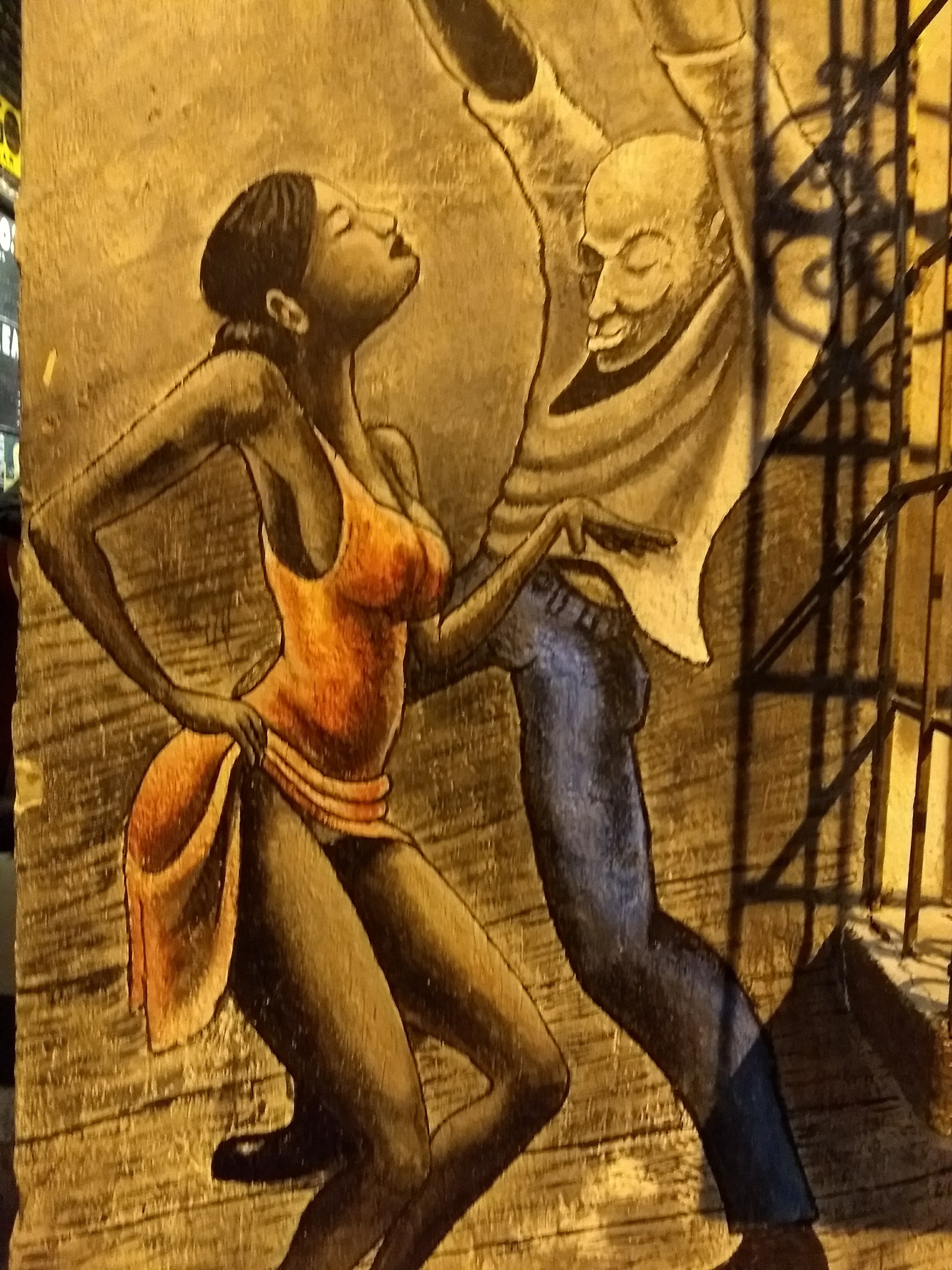
A lovely mural outside of the Village Coffee Shop in Boulder (highly recommend it).
I want to open this entry with some food for thought: writing is a spontaneous process, guided and crafted, edited and poked at, but at the end of the day, for me, it is best done as a spontaneous, passion-filled, heat-of-the-moment endeavor. My best writing comes at my best moments. I never really know when those moments will strike. So I will try to write more in the hopes of having more of those “Aha!” moments.
My friend’s mother gave me the best spark to the meager kindling of my inspiration on New Years Eve. We were discussing, as many have, how this 2020 is the beginning of a new decade. How crazy is that! We both were meandering along the paths our lives had taken during this decade, and how with this new one, we were granted more new paths, more new journeys and lessons. In a sudden “aha” moment burst, I told her that 2010 had been for me my first full 10 years as an adult. And what a strange concept being an adult is. But it was true. She looked at me, a long look, the type you know will be followed by something you’d better take note of, and told me I should write it down, reflect on what these 10 years have meant to me, how I have grown, where I have been. And how that might show me well where I can go in the new decade.
And, as you can guess, I am heeding her advice.
Being an adult is no small thing although in the US we make it as simple as having a car and moving out of your parents’ house. In the past, passing from a child to an adult was a huge deal, communal rites of passages established in every culture and religion. We still celebrate many of these landmark moments: graduations, confirmations (if you’re Catholic), marriage (in many cultures, the first time you are made to leave your family home), and more. The age marker shifts depending on these cultures and traditions, just as what it means to be an adult can shift.
How did I know I had been an adult in 2010 for the first time in my life? Well, yes, some of it is obvious. I moved out officially, although I already lived and studied outside of my home from the age of 16. But still, once I graduated from high school and moved to New Orleans for college, it became a ritual to only visit home about twice a year. And it’s been like that ever since. I have not once lived in my house since the summer following my graduation in 2010.
Responsibility is also a common thread. We joke about it when we proclaim we are “adulting” just for getting out of bed, having some caffeine, working most days, cleaning our house, paying bills, etc. Being autonomous beings in a Capitalist society, basically, where our biggest concerns are first HOW and then WHAT we will eat, HOW and WHERE we will sleep, and HOW we will provide for ourselves to shape our present and maybe, just maybe, our future. These are things that as “real” adults we have nobody there chiding us and telling us when to go to bed or how much money to spend or save or even forcing us to go to work. Our choices become autonomously OUR OWN once we are Adults. And now I had this role, well I had for a while, but now bills and jobs were also included in the picture. Of course it became even more “real” once I graduated college, but that can just be added to the list of milestones marking this decade of First-time Adulthood.
When discussing the decade, my friend’s mother (being in a much more advanced stage of life) mentioned that hers was defined by loss. Loved ones and friends passing away, in greater and greater number. I, too, felt this shift during my 2010’s. For the first time, I began to lose people I had cared about and known since I was a child. When I moved to California after graduating from UNO, I was hit by two very large losses: the death of my paternal grandpa and two close elderly neighborhood friends. It was at the middle of the decade, 2015, when I realized that I had made a very tough choice. Even though moving away was the dream I had fed and pursued since I was young, I had no idea how hard it would be to have to hear over the phone or read a message stating that someone that I had loved and felt eternal had passed away. Death really does exist in a paperweight – it is a part of life, one nobody escapes. It is a season, and as seasons go, we will experience our times of abundance and our times of loss.
I was lucky, however, looking beyond those I lost, to experience an abundance of love in the form of new friendships, new journeys, and new opportunities. With time, these experiences brought confidence, something which has not been entirely stable for me by any means, but has completely shifted the way I view myself, others, and generally the world around me.
I lived as a nomad, or so I believed. Almost 5 years in New Orleans. Graduated. On to almost 3 years in California. And now 3 years in Colombia. Three very different places. Each place has marked me, just as the tattoo I have marks my chest. The symbol is important to me – the heart, guiding and guided by travel. Why did I end up in California? Well, I fell in love while I was studying in New Orleans. Many times I fell in love during my first decade as an adult. Many times I was made to say good bye and let go of people, realizing that perhaps I loved something more than the person, but the concept of a perfect existence in harmony with someone else. In truth, only the universe knows what’s in store, and so I guess I’ll keep wandering, although I’m not anywhere the nomad I like to think I am.
Comfort. Economic stability. Struggles. Transition. All of this marked the second half of the past 10 years. I had moments where I felt perfectly content, and yet still anxious because I wasn’t completely doing things on my own. I still needed help. Being autonomous does not mean you stop relying on others. We all are in this web of interconnection and interdependence from the very beginning – there’s no escaping it. Sometimes I made choices simply out of necessity, living with people because I feared I could not afford to live alone, or taking jobs (or extra jobs) to keep myself afloat. I’ve been lucky to reach a point where I have no imperative to do either – I can finally be a self-sustaining individual. But that comes from years of sacrifice, saving, and biting the bullet when asking for help.
I thought moving away would magically give me a complete detachment from my family and the humble, somewhat embarrassing place I come from. It does not. In fact, becoming a full adult has made it sink in even deeper that we must embrace ourselves for what we are, and that means accepting our roots. It also means making peace with them and the people that brought us up, as flawed and problematic as they may be.
In these ten years, I broke ties with people I thought I loved, and I mended and forged ties I never thought possible with the people that watched me grow. I spent Christmas with my family this year, and I couldn’t help marveling at how at peace I felt being at home with them. I wasn’t running from the reality of things. The illnesses, the financial struggles, the religious tension – it’s all there, but as an adult, I’ve been able to forgive the scars given when I was too young to understand them and fully understand why these things had happened. It was not an overnight process. It wasn’t some lifetime hallmark experience where one holiday we finally all came together and put our differences aside – no. This took years of healing, years of talking and not talking. But in the end, somehow, throughout all of the turbulence that was my 2010’s, I found peace. I was able to let go of all of that bitterness and just forgive and accept the things that had happened.
No small part of that was realizing that I didn’t need to let myself be ruled by those negative feelings. Therapy helped me become stronger during this decade, and I hope it continues to do so whenever I need it. Friendly reminders that we are all humans living on a rock floating in this infinite galaxy just trying to do basic things like survive and be happy – and all of the complications our expectations can put on that and stress us out.
In this decade, I found stoicism and meditation. I found family with new friends in different places. I found commonalities in things that seem oh so very different at first glance. I learned how to listen more and react less.
Most importantly, I am still learning and will continue to learn in 2020. I never intend to stop learning. I think I may have even finally found my calling, or the “Next Phase” in the plan. I always like the feeling of having a plan, something I can coordinate and follow when my internal chaos seems too much.
Yes, I was shattered many times. I suffered in relationships that I chose and chained myself to. I became a victim, the thing I detested most, just to “save” someone else (I guess that would be a martyr, right?). And I realized that true love really does start within oneself, within one’s friendships and the ties that bind beyond romanticism and physical and chemical urges. Love, as a concept, is so much more than anything we give because we feel we must in order to be loved. I began to learn at several points of love’s infiniteness. And I continue to walk that path and realize it’s okay to walk it alone at times, to walk it sure of one’s own steps, without diving in and getting lost in the murky waters of another person’s ego.
I survived this decade as someone who honestly didn’t want to survive sometimes. A person paralyzed by fear, yet willing to travel to another country and try something different. A person believing herself insignificant and flawed, yet willing to make mistakes in order to learn. The 2010’s may have been my rite of passage, my baptism by fire. And the truth is, I am and will always be the same person with a few new ideas and experiences and traumas to carry along with me.
But at the heart of this is growth. Growth and change, not fearing either of them. That is the pride I carry after so many dark and inspiring moments in the 2010’s. I started believing I had nothing to show for myself and my dreams. I have ended it and walked into 2020 knowing I have everything, certain that I will somehow continue to be exactly where I am meant to be.
In life, it can be very difficult to make time for yourself, and more so when you think you’re making time for yourself when you’re actually juggling your time with a million different activities or obligations.
Sound familiar to any of you out there?
We find ourselves running in circles, trying to fulfill so many duties and live up to so many expectations – our own expectations – that we forget to sit back and reflect on the nice little things happening in our everyday lives.
So here, I want to reflect (also because my therapist suggested it and its therapeutic and maybe, just maybe, this will help someone else) on all of the little ways life in Colombia has led me to explore new things and challenge my own mindset.
Last weekend was the celebration of the 51st annual Festival Vallenato. To Colombians from this region, Festival Vallenato is like freaking Coachella. The Coachella of Vallenato music. Of course, Vallenato music is a niche genre (shhh, don’t tell the average Colombian that (obviously I’ve met many exceptions that don’t like Vallenato, but yeah)). So while people here will boast that Festival Vallenato brings people from all over the world to the humble city-town of Valledupar, they mostly mean it attracts cachacos, or Colombias from further inland and south in Colombia, to come visit, drink in the street, enjoy a few parades, live music, and general chaos.
The Piloneras is one of the biggest cultural attractions – people dance in traditional clothing to the rhythms of traditional music. Carlos Vives happened to be present in the middle of the parade this year, which meant people were even more obnoxious than usual.
Any New Orleanian reading this will probably think, “Hey! That sounds like Mardi Gras!” Well, you would be correct, because just like New Orleans in Mardi Gras, for anyone that doesn’t enjoy an overly-crowded, intoxicated, stuffy, obnoxious atmosphere brimming with tourists, it is absolutely exhausting and overrated. Don’t get me wrong, I enjoyed going to some Mardi Gras parades (like Bacchus and the more adorable Barkus and the more nerdy Chewbacchus -spin offs for the whole family to enjoy- that’s why I love New Orleans, right there), but overall the city just became a lot…heavier, and I’ve never had much love for tourists. For one thing, everything revolves around making a buck and taking advantage of those that don’t know that things are actually usually way cheaper. It happens here, it happens there, it happens everywhere.
That’s how the two cities are connected. They are both popular for clear reasons: party, music, and atmosphere. However, those same things make the cities slow and stagnant. Which is where I’ve been thinking I feel stuck in a pattern of always picking the same sorts of things, even if I don’t like them and they aren’t necessarily good for me.
Beyond the comparisons between Festival Vallenato and Mardi Gras, the folclor of both lends some time for teachers to rest because the world of these small places revolves around niche annual celebrations. So I had Thursday through Wednesday off. Not bad. However, did I get anything done?
No.
I got drunk, and I got sick. I missed work, and I didn’t go to the gym. Basically, I had a down week. But I’m hoping to use this apparent down week to put together renewed energy to return to old projects.
Graphic description of how “productively” I spent my relaxing weekend off. Also pictured: Churro.
It’s difficult to start over in the middle of the year, but in reality I’m not starting over because I got a strong start. The school year is almost over, and there’s a lot to do and even more to look forward to. It’s just moving on to a new chapter, really.
In the past few months, and especially during Festival, I’ve become much closer with my Colombian friends, specifically of the costeño variety. Remember that costeños don’t necessarily live in the coast but are referred to by this term based on their location in coastal departments (states connected to the coast in some way), accent/dialect (they share a common language that is deeply embedded in their culture), and folclor, or a general set of musical, dance, and folkloric traditions that the likes of Festival Vallenato and Carnaval embody. I want to share with you guys a small list of vocabulary I’ve picked up by spending more time integrating myself here and practically becoming* costeña:
guandolo/wandolo: an alcoholic beverage, resembling a moonshine that tastes like a sweet beer, distilled from panela, distributed low-key in Valledupar. I have tried it, and all I can say is: I couldn’t feel my face. My ear felt like it was on fire. I felt woozy and like general crap. I drank it too fast. Apparently I was drunk. Without the euphoria. Hopefully it’s better next time (whenever that will be).
It may not look delicious, but panela does wonders for congestion and a sore throat. Just heat it up in boiling water, add lemon and honey, and voila!Churro: a strong, tequila-like alcoholic beverage also distilled from panela – not to be confused with the delicious cinnamon treats you can buy from local street vendors. This was great when michelado with lemon, orange, and pepper (weird, I know, but when in Valledupar…), but I swear the hours of high did not prepare me for a whole day of feeling like absolute shit. This brings out the worst in people. However, will try again. It’s hella good but look out for the… guayabo: term used in Colombia for hangover. Every country has its own term: crudo en Mexico, goma in Nica/Costa Rica/Guate, etc., resaca in most other places. But in Colombia, you can be enguayaba@. And also it feels like shit. parche: a group of amigos that do amigo things, like drink wandolo in the plaza or go on trips to La Mina or a casa campo. The verb parchar means to do these sorts of things, or just chill/hangout and gossip with friends. ‘So va (eso va): the adorable costeñol way of saying I’m down, that’s on, hell yeah. Also, most words and syllables are shortened here in the coast. marica/mk: used to express strong or serious feelings which should punctuate all your sentences when talking to someone in confidence (i.e. a good member of your parche), shortened to mk in text, not to be confused with the homophobic insult. el vacile (se pega): catchphrase of Monofonico (a popular and spectacular local champeta band), the term vacile has several meanings, including a non-serious, uncommitted relationship within which the goal is having fun to anything that is considered a good time, entertaining, or fun; can be applied to music (i.e. a live show), a group of people with a good vibe, an entertaining person or video, etc. i.e. Eso es cule vacile, marica. (That’s chill as hell/a hella good time/fucking amusing, dude – wow this is really hard to translate into American slang because Americans also have way too many phrases and slang depending on the region you’re from, plus it’s constantly changing and evolving. And I’ve been out of the country for most of the time for almost 2 years now, so forgive me if the phrase I use is actually super outdated and lame). Cule: literally culo de, or an assload of something. A lot. So if someone wants to understate how much they like you, they might say, tu me gustas cule poco. barro: used to react to something shitty. Oh, your girlfriend cheated on you? Barro, cachon. cachon: a guy that’s been cheated on. I don’t know why in Latin America they add insult to injury by having terms for people that have been cheated on, usually used to insult or mock them, but here you are. It comes from the phrase pegar cacho which is the Colombian way of saying to stick horns on someone, which was an old English phrase as well (used by Shakespeare, even!) for cuckolding. The more you know! I suppose another translation would be a cuckold or a cuck…without the erotic/fetishy connotation that is. The female alternative is, of course, cachona. peye: something that is just really shitty or lame. Cule cosa peye – that’s some lame ass shit. jopo: ass or butt, usually a fat one, but can also be referred to something that’s lame and sucks. Cule evento jopo. “Fucking lame/shitty event.” Cule vaina jopo = any random thing that is really, seriously ass in nature. arrecho: in la Costa de Colombia, not in Venezuela or many other places, this means horny. Anywhere else it means pissed off. Be careful with this one. Nojoda: used to punctuate a sentence to express frustration or shock. Deja la flojera, nojoda! “Stop being so fucking lazy!” Nojoda, enserio, mk? “Fuck, seriously, dude? Are you fucking kidding me?” I could list a million examples more, this one is super common. And not only Colombian – I first learned no me joda/no me jodas in Costa Rica back in 2011. True story.
There’s waaaaay more where that comes from, but I think I’ll save that along with a more comprehensive list of examples and English-language equivalents for another post. To summarize, it’s been cool to immerse myself so thoroughly in another culture and dialect. Soon I’ll be talking about my time in Bogota and Medellin and sharing the different ways in which people there speak and act. Language, as I have always believed, is so deeply entwined in culture. It exists to compliment culture and also to express its invisible beliefs and values. So, rest assured: there’s more to come on this subject.
Please feel free to mention any of your favorite costeñol expressions or terms I may have missed below! Costeño Spanish is fast becoming one of my favorites, and it is in no small part due to the expressive, dynamic culture it is a part of.
So, while Festival Vallenato was full of peyes and being sick is even more peye (cule vaina peye, mk, at that), I’m happy with everything I’ve been able to take in while living in Valledupar. I’ve been staying productive with English classes and transcription writing. I’m trying to remain grounded and centered on both what I want and what I need for this moment. Yes, even in a city as small and slow as Valledupar, good times are all around to be had. To appreciate other places, we must also learn to appreciate the place we are at.
Parchando con las mejores ❤ Festival Vallenato 2018
*Spoiler: I will never actually be costeña; relax people, it’s just a “decir“
I’ve decided to share the poems that I have written since living and being inspired by life in Colombia. Some days the inspiration is so great, I can’t help but sit and let flow poem after poem. They generally aren’t long, but I feel they are significant for where I am in my life and the person this experience has molded me into being.
Plus, come on, y’all. I’m practically 26. I’ve been telling people I’m 26 without meaning to because subconsciously I’m already there. I feel like in this year and a half I have grown and matured more than in all of my years before combined.
Okay, maybe that is a bit hyperbolic. But yes, I’ve really settled into myself. And that shift in perspective, the embrace of self and denial of anything that does not grow or nourish the self is due in large part to the simple decision I made to live and teach in Colombia.
I will put the Spanish and English versions for those that don’t speak Spanish, so you can hopefully really absorb the meaning.
Al mal Tiempo
Her voice Like the arroyo washing back A reassuring hush
Her eyes Like half moons hidden Beneath dreamy clouds
Her bones Brittle yet stark like yue bark Not easily bent
I see her Sitting in her mecedora Reading Catholic psalms In her flowing, multihued manta
The strength of the Colombian- Of the Wayuu- Al mal tiempo, buena cara.
This first poem I wrote back when I was first living in Fonseca at the end of 2016. I stayed with an older woman of Wayuu-indigenous origins (though she is very much a part of that culture presently) who was the sister of the woman that inspired this poem. I was always struck by her straight back in the face of difficulties and hardship and her unwavering resolve. Just every part of her radiates strength that her fragile body would deny. The Wayuu are a strong people. Even though there were moments she could get under my skin, I’m so happy for the time I spent with her and her family.
El Abismo
No es que sea por rencor
Pero espero que sigas con ese ardor
Y ese salado sabor
Cuando mi nombre pasa por tu boca,
Por todas las lágrimas y sudor
Gastados en vano por tocar
El abismo más profundo de mi alma.
The Abyss
It’s not to be bitter,
But I hope you still feel the burn
And that salty taste
When my name passes through your mouth,
For all the tears and sweat
Spent in vain by touching
The deepest abyss of my soul.
Love has come knocking at my door, although the fruit of that love was far from savory. Sometimes, recontextualizing myself within this culture, understanding the way people play the game of relationships, was something I had to do in order to survive and remove myself from situations that did not serve me on my journey or help me love myself, but instead led me further astray and caused me to forget myself and what has always been important to me.
Dark times, toxic relationships, shifts that have challenged me in this journey and have inspired my verses as well. Sometimes the best way to phrase and manage the hurt people can cause you is via poetry. The end of my last relationship can be summed up as a…
Twisted Fairytale
In truth, the slate has been wiped clean.
He broke the chains of my denial
With his poor, decrepit tongue
Sugar-coated in lies and poisoned in seduction.
I could never live, could never know true
Desire, love, heartache
Again by that harsh sword-
I would rather fall on my sword
Than taste those bittersweet remedies
Again and fall beneath myself.
Thank my pride for the strength it provides;
Thank my love of self and other to realize-
I was never loved by that other and never
Would be or could be-
Thank my nerve to say enough is enough.
And most importantly, thank the signs
Held up by angels among me,
Those gentle voices that know
And eyes that have seen and stung
With tears so that mine would not-
Thank my friends who have taught me
My own self-worth, to trust my own inner voice,
For they are the true heroes in this sad story
Where I am both the damsel and the knight,
And happy endings are never what they seem.
So, with that epoch sealed, I decided to love myself. To love myself ferociously and passionately, secure in the knowledge that I am all I have got.
Narcissus
I would jump into a million lakes,
Head down, face first
Into my reflection,
If it means that I could love
Myself,
Alone; Forever.
Faithful
I made a promise
To never be unfaithful again
To the most important person
In my whole world,
The one I go to bed with
Every night:
Me.
In spite of the pain I experienced, the journey itself has been totally worth it. It has aided in my process of self-discovery and the affirmation of my self-worth and independent spirit. Since breaking up with my ex, I have traveled both outward and inward – to Tayrona, Santa Marta, Ocaña, climbed the beautiful Estoraques, and began planning my independent summer adventures throughout South and Central America. The breakup opened a floodgate of creativity for me that has led me to be more reflective and respect and recognize the beauty in all the things around me.
Continuum
Puedo verlos bailando,
La ondulación como olas En un mar ámbar E inquieto.
I can see them dancing, The undulation like waves In an amber, restless sea.
Taken outside of a club in Santa Marta during my get-away in early January
Acertijo
Mi Esencia
No se puede atrapar
En una mirada de miel
Y un cuerpo
De carne y hueso.
Soy tierra y fuego–
El mar y sus olas bailadoras–
Soy palabra y aire–
Soy–
Riddle
My Essence
Cannot be trapped
In a honey gaze
And a body made
Of meat and bone.
I’m earth and fire–
The sea and its dancing waves–
I’m word and air–
I am–
The idea here was to be phrased like a riddle. I start by going to the root of my meaning, my essence, that which makes me as a person. I was reflecting not too long ago on the selfie sensation, the need to post pictures of oneself and show the world our best face. I realized that who I am really isn’t contained by that image–in fact, it could never be contained by it because that image of decaying perfection is also impermanent.
So what am I? I am a human being. And human beings transcend the prisons their flesh holds them in. Our spirits and energies make us one with nature, and nature brings meaning to what we are. I suppose it’s something I’ve learned about myself, the view I have of myself as being now far less narrow and 2-dimensional.
There have been other scribblings and fragmented thoughts along the way, but these were the principle verses I have written here. I feel like they represent the metamorphosis – the starting and beginning again where I started from but a bit fuller and wholer, the whole cycle of self-growth – really well. Now, to add some more to the list.
Now, I realize this is supposedly a travel blog, or at least, like, a traveling teacher blog. But I’m rather proud of the fact that I finally finished reading a book in spite of my “busy schedule” (which, yes, I know is a sorry excuse for not being able to finish books most days, but bear with me). I also happen to be a literary enthusiast, albeit a lazy one. So, in short, my book review of 1984.
Let me just go ahead and admit it. I came late to the 1984 party. Most of my friends had to read it in high school. After finally reading it, at my 25 humble years, I must say it both makes a perfect and at once absolutely inappropriate book for a high school audience. On one hand, the concepts with which it deals are important and necessary for the budding highschooler intellect, and far be it from me to say that highschoolers aren’t capable of wrapping their heads around the irony of such party slogans as WAR IS PEACE. FREEDOM IS SLAVERY. IGNORANCE IS BLISS STRENGTH. But on the other hand, I can’t help but think that as a result of the importance of exposing this often banned book to young people it almost gets cast off as just another YA classic must-read. Classic and must-read it is. YA, though? Far from it.
I want to start by saying I disagree with many reviews claiming that this is merely (or primarily)a bleak projection of the future (now-present/past). I say merely because just as this book has been pigeonholed a bit for its controversial political nature, I think it also has been reduced ideologically to a simple black-and-white warning.
More accurately, it is a sort of road map for how exactly totalitarian governments function and by what means it takes to subdue and stupefy an entire population. Does this happen in many forms today? Yes. Is it building into some dark-future climax of which 1984 is the inevitable result? Not likely, as this book proves that these sorts of horrendous thought-control (or brainwashing) systems have been at work in any number of governments for the past century, and beyond, if not on such an extreme and absolute scale. So, in that way, limiting it to a narrative revolving around fantasies of a specific futurescape is too narrow for what it was intended, while it also seems too narrow to define it strictly as a book speaking of the trials of its time in hyperbole.
Which is, of course, the exact balance that makes 1984 a timeless classic. (and TL;DR: Erich Fromm basically discusses this in depth in the excellent Afterword of my Signet Classics edition of the novel)
To steal from that afterword, “Orwell…is not a prophet of disaster. He wants to warn and awaken us.”
Moving on to my actual review. This book does an enormous amount of world building in a brief amount of time. It manages to maintain an absurd yet convincing projection of the sort of world that could exist if the systems already in place became powerful enough to subdue all rational thought.
1984 was published in 1949, and so, in that sense, was one of the earliest novels to discuss a specific image of society set in the not-so-distant future based around social ills that were novel and terrifying during its conception (even alluding to the threat of nuclear war, which at the time, had not happened yet, although the bombs were in their early test stages). As both dystopian and social science fiction, it takes the cake for its crisp, developed image of a world in which thinking about the very words freedom and equality is a crime punishable by torture and death because of its “unorthodox” nature. It basically carries the desire to make a group of people submit to their oppressor absolutely and willingly to a logical extreme which could and does in fact (if more subtly) happen. After all, who hasn’t met a strong right-wing nationalist that doesn’t tend to doublethink (meaning holding two contradicting beliefs, one based on rational, concrete fact and one on irrational, fear-driven vitriol and choosing to believe the other at all costs)? There’s a reason the language of this book has found its way in our modern lexicon.
And on that note, one of the most fascinating aspects of this novel for me as a linguist was its explanation of a language developed solely to limit the range of thought. This speaks to Orwell’s brilliance as a linguist and language enthusiast (fun fact: Orwell became fluent in Burmese while policing in Burma–Burmese!). It appears that “Politics and the English Language,” in which he talks about the use of language and writing to manipulate the masses, is going on my to-read list.
Logically, this concept plays a crucial role in 1984 as Orwell developed “Newspeak” for the novel in order to show how government establishments like his fictional Ingsoc* could use language in order to alter the thought patterns and thereby limit the perceptions and ability for critical thought of its citizens across the generations. Andrew N. Rubin sums it up thusly: “Orwell claimed that we should be attentive to how the use of language has limited our capacity for critical thought just as we should be equally concerned with the ways in which dominant modes of thinking have reshaped the very language that we use.”
This “Newspeak” is not to be mistaken for “Netspeak”; however, I will say that there are some striking similarities which would lend them to comparison or unconscious association. The shortening and concision of words to convey basic meanings, not to mention the use of emojis in our current era to convey messages without words. Still, let’s not confuse ourselves: the purpose of netspeak has expanded and evolved outside of the rules of some militant single-party system and actually adds words to its vocabulary at an incredible rate and to serve a diverse number of purposes. Newspeak, on the other hand, was established and continuously developed by the party to eliminate “problematic, heretical/unorthodox” words from the English language, as a process of control rather than of free expression.
In the book, Orwell dedicates a whole appendix to this very subject, explaining 3 different types of vocabulary developed and implemented in written form using Newspeak and how it ties into the ideology of the Party. Linguistics, y’all. I’m in love.
Additional to language and vivid 3rd person accounts of the world that offer a window into how this world works, the government itself is fleshed-out via internal prose and the limited 3rd person perspective of the narrator who works within (and against) this system. It details an intricate layer of self-contradicting Ministries (of Peace (War), Love (torture), Truth (falsifications), and Plenty (rations)) and a Party-centered class system** that lend an otherwise distorted world its solidity and credibility – its relevance across time. The extreme nature of these manifestations proves how a society like the one Winston Smith lives in could come to exist and flourish. Plus, the irony can be appreciated by anyone aware of our own version of each ministry in the US (not to mention *cough* fake news).
The main character, Winston Smith, is not exactly your every man. In a way, that is what makes him so appealing. He is hapless, yes, and inevitably doomed (but don’t worry, if you’re like me and still late to this party, I won’t spoil that ending for you!). His crime? Loving to fornicate, keeping a journal, and possessing a smidge of human curiosity and rational thought. In every other way, he is exceedingly unextraordinary and even unlikeably, disturbingly human – paranoid, weak, and withdrawn. In a single word, grotesque. These traits create a relateable, truthful character trying to take some type of action in a cold, systematic world, so even though he’s not the sort of person I would generally root for, his perceptions and desires are real enough to bring me close enough to truly examine the twisted world he inhabits.
Relating back to why I don’t exactly consider this teen-appropriate***, the novel really takes you there as far as delivering on the violence of thought and action that living in a supremely fascist society would produce. On one hand, shocking details like that of the protagonist imagining raping and murdering a woman (that later becomes his quite unromantic love-interest) and scenes which expose the reader to torture in detail that even made me cringe seem like a lot to delve into without the right emotional maturity. But I suppose that’s what makes it a challenging and important read, and more so because these aspects highlight what a society of humans stripped of their humanity could look like – as well as the how and why.
1984 is not one of those books you can rank. Of course, we all have our preferences. But for the content, the message and how it is put across, the characterization, the writing style (crisp, sharp, and solid), and the linguistic and historical depth and analysis without being too pedantic – well, frankly, I give it 5/5 stars and approval as certainly not overrated. It continues to be relevant. And as long as the Capitalist machine functions, with bureaucracy and warfare in high demand, it will continue to be relevant, showing that it is not simply alien situations (relative to the “Western world”) like that of the Soviets, the Nazis, the WWII era Japanese and Chinese and North Korea which have sought to control and decimate its populations into mere bodies, party placeholders to uphold their regimes unknowing of the part they play in the machine.
Perhaps this work is so poignant because it holds up a mirror to the Imperial West and global warfare by placing it in a country called “Oceania,” including the United States and the United Kingdom. By bringing this system close to home and using a sort of parody and hyperbole, Orwell causes the Western reader to take a good, hard look at who the true enemies of “freedom” are and who they are not.
My final reflection left by this novel was this: if thought is so threatening for a totalitarian society, what would the world be like if those thoughts actually became actions? If we all exercised our freedom to express? Many of use sit from the convenience of our homes (myself included) mulling over the issues plaguing our world. Like Winston, we feel the limits of the society we live in and the enormity of the system we are up against – imperialism, capitalism, patriarchy, the intersections of them all. In the end, also like Winston, we may try to fight back, but we do very little. Many joke by saying “Thinking isn’t a crime yet,” but the next logical step, just as Winston concluded with the proles is to turn those thoughts into actions. To mobilize. The last thing every human being is left with is the ability to think rationally. Let’s not forget to act on those thoughts, too.
*Newspeak for English Socialism, the idea produced to show an England following models witnessed in Stalinist “socialism” and more presently, in North Korea
**Three classes are strictly defined as unalterable but undefined along race, gender, or monetary lines: the Inner Party, the Outer Party, and the proles; each has different rules of conduct and luxuries, with the Inner Party having the greatest amount of luxuries and the greatest restrictions on conduct, and the proles having the fewest of both and being thought of as animals with no real power of class consciousness.
***Not to be a stiff; I read a ton of books in high school that were dark and gritty, but mostly its just that the themes are far darker than I personally would have expected to be relegated to this age group.
![Nómada [con] Rumbo](https://nomadaconrumbo.com/wp-content/uploads/2021/04/cropped-dsc07640.jpg)


![panela-100-organica-la-mejor-panela-de-origen-natural--D_NQ_NP_853725-MCO25492020671_042017-F[1]](https://nomadaconrumbo.com/wp-content/uploads/2018/05/panela-100-organica-la-mejor-panela-de-origen-natural-d_nq_np_853725-mco25492020671_042017-f1.jpg)


 Nómada [con] Rumbo