![Nómada [con] Rumbo](https://nomadaconrumbo.com/wp-content/uploads/2021/04/cropped-dsc07640.jpg)
2020 has not given as much as it has taken away. That is an irrefutable fact. And I speak not only for myself – in fact, I speak more for the world than for myself. 2020 has taken away our ability to be together without fear. But in spite of this, and disregarding how lucky I’ve been, the solitude 2020 has given me has been an unexpected gift. The solitude, while seemingly empty, has proven that it’s full – full of possibilities – right, not wrong.
As a society we have experienced great losses this year. But many of us have also been able to find the glimmers of hope within what appears to be an endless abyss. Apocalypse does not just mean the end. According to William Blake and his contemporaries, the true meaning of apocalypse was rebirth – destroying in order to introduce something else. Apocalypse comes from Greek words meaning to uncover, to reveal. In the case of the history, humanity – to reveal a new world after the old one goes down in flames.
So, with that in mind, even if you aren’t Christian, perhaps there is some hope of redemption in the ideology of apocalypse?
Much has died in my life to bring new things to life. I had to cut some people out of my life that disturbed my growth. I think this time has been a crucial time and space for us to collectively analyze our paths. As a species, how can we continue down the path that is unfolding? What other options are there? Where did we go wrong?
The time in solitude led me to questions, as I pined over old pictures of drunken nights and thought about old lovers. A part of me has always known that I romanticize the past, once a new challenge comes along. The conquered challenge always seems like the more appealing one when faced with new paths and pitfalls.
At some point, I had to start asking myself: am I moving towards my goals? Are these people nurturing my true self? Or am I simply stumbling along looking for some relief from loneliness? Some external cure for an internal ill?
This journey for me began in my apartment in Valledupar, Colombia. I was totally alone for almost 3 months (with a few moments in between where I spent time with my neighbor or met up with a friend). I had to reroute myself. For so long, my life had been a constant race from one destination to another. Work – gym – tutoring – sleep. Long ago, I began learning the value of self-care. But it wasn’t until I was forced to truly take care of myself that I realized just how it was done. And how little I had dedicated to my own well-being before.
As one day seemed to bleed into another, I became more and more aware of my routine. I began to construct my time around the goals I wanted to achieve. I was inspired by greats like Kobe Bryant and Seinfeld and authors like Brandon Sanderson – people that had made their passions into their careers, against the odds. The lessons they taught were rooted in a simple concept: Don’t break the chain.
I began setting goals, for meditation time, yoga, exercise, languages, reading. And it paid off. For once in my life, I maintained a routine that was both productive and balanced. Balance is an important concept when it comes to self-care. Too much of anything can be a detriment – too much exercise, too much work, too much productivity. I found that in creating my own routine, I also need to be mindful of my multiple needs.
I began to get to know myself again. I left a harmful relationship a little over a year ago. As is generally the case, my healing didn’t happen overnight. I tried to convince myself I was over all of the pain by working out, socializing, casually seeing other people – the typical escape plan from the doldrums of daily life which I know would inevitably make me turn inward and reflect.
But in quarantine, I began to realize that there was no escape. The things I had learned in therapy, meditation, self-help books – all of it was true and valid. You could not passively set out to improve yourself. You had to make an active effort to address different issues, just like a pianist or a basketball player trying to improve their precision – they focus not only on their strengths, but they actively put time into the areas they are weaker in. That’s the only way an average person could become an exceptional person. The solitude wasn’t something to numb myself to.
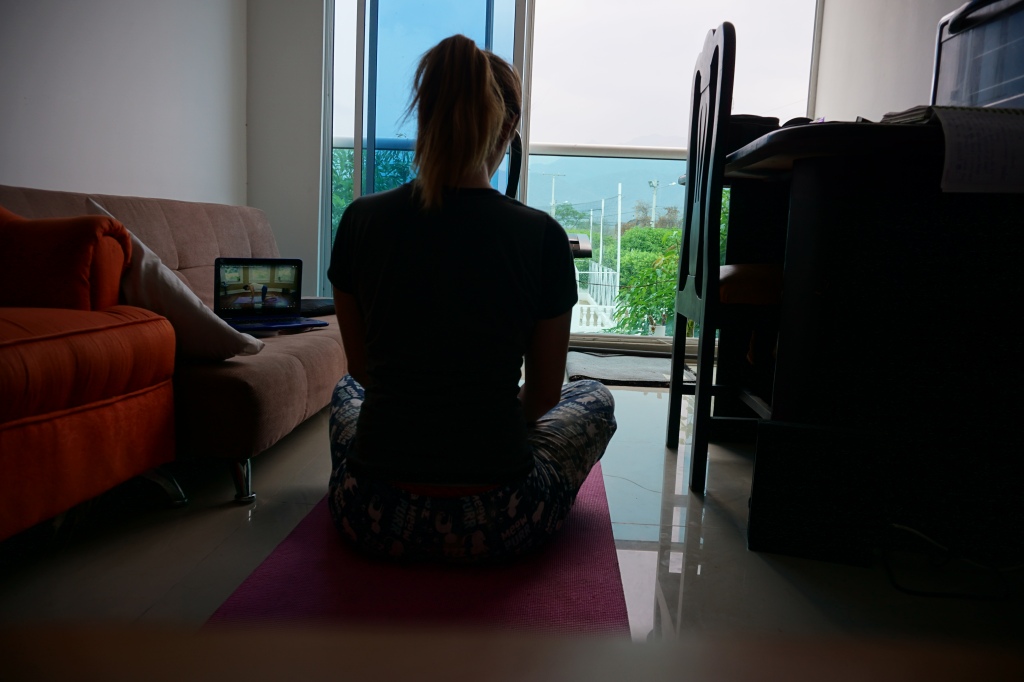
The solitude was teaching me how to be. How to be myself again. How to be my own woman. What does that mean, to be your own person?
As a woman, you grow up having your identity attached, not unlike members of any other gender, to external concepts. But for female-assigned persons, this emphasis tends to be on the social group, the community, the partner. The feminine sphere is set up in this landscape, intentionally and subconsciously. Women are taught they should nurture. They should attach their identity to a partner – and then, when the time is right, they must eventually surrender themselves to the ideals and identities of another.
I once had a partner who threw this blatantly back in my face. You see, like most, I grew up feeling like I was lacking. And as a result, most of my energy went into pleasing others. Pleasing others meant never doing anything wrong. It meant being predictable. Pleasing everyone meant being perfect. And yes, that’s what many young women feel they must do in order to be accepted and therefore successful in society.
One step at a time, I developed my identity. I had my own interests. I had my own convictions. But I found something troubling in me: I was too malleable. I would try to match the person I was with, my social circle, my partner. When one ex told me that my entire identity was fake – all borrowed from others – I was understandably hurt and furious. All of those experiences and interests weren’t just someone else’s – they were mine. They formed part of the person I was becoming every day.
And yet, in the solitude, I began to see the truth in one aspect of that harsh and reductive judgment – I did change myself to suit others. All the time. I felt anxiety when I couldn’t play the right part, when I couldn’t be what someone else wanted. And in my last relationship, this impulse to please at all costs nearly crushed me. Until I couldn’t take it anymore. Until I looked in the mirror and said to myself, “Either I die, or I stop living this way.”
And with the support of others, I took the steps to be free and end my last relationship for good. But the truth is, I didn’t really feel okay with being alone, not until some time alone passed and I learned to breathe on my own again.
How can you be your own woman? By embracing solitude. By reserving your attention for things that grow and inspire you. By agreeing to disagree but refusing to agree in order to appease someone else. So long I thought I was being “good” by biting my tongue and taking the path of least resistance. Other times, I thought in order to be authentic, I had to fight, and not only that, but I had to win at all costs. And yes, being a skillful arguer and being persuasive is important. Being diplomatic is equally incredible. It’s so important to me, in fact, that I plan to make a career out of diplomacy. Use of words and the ability to understand the perspectives and arguments of others – these are important life skills that all human beings need.
But like I said, anything in excess can be a detriment. Censuring myself reflexively had stunted me. It made being myself seem like a fight or flight situation. And over time, living in another culture, dominating another language, I had begun to brush off little by little those self-imposed restrictions. I was moving toward being my own woman.
You see, I realized something. In the past, I had associated my singleness with some of creatively, the best years of my life. I wrote a book, essays, took pictures, reflected, studied actively, with no one to get in my way or distract me. Yet when the wrong person came along (the right one to catch my eye and attention), I would sacrifice my interests, little by little, or seek constant validation from my partner in the case that we shared the same passion.
My search for validation overshadowed my search of self.
When I came home, I began spending time with my younger brother. I wasn’t expecting to learn something so important from who I may have easily written off as a hormonal, mercurial teenager, a person still in the stage of life where he is “figuring himself out” – except, wait. Did I ever take the chance to really figure out who I was? Well, those were my experiences, right? The sum of them was equivalent to who I am.
No, something stood out to me about Jace’s search for self: rebellion. But not just the teenage rebellion we all have experienced growing up in strict households. No, I realized the answer was sitting under my nose all the while.
See, I’ve always been resilient. When I put my mind to something, I have an unbreakable iron will. Except when the issue became one of conforming with others. Most of my choices never led me down the path of least resistance, down the feminine, communal, passive path. Oh no, on the contrary, the times I asserted myself, I became more and more removed from the people that I was supposed to care the most about – and I did and do care about them. But my choices, while not simply self-serving, never brought me closer to them.
And I saw my brother doing the same thing. And struggling. But being real and authentic and honest with the people around him. Refusing to lie about who he was anymore. We both had grown up with the same limiting circumstances – our parents expected us to be one way, but that did not match who we are on the inside or what we believed, even in secret. Our convictions ranked supreme.
The element I had always been missing was radical honesty. An honesty with myself and with others that was unwavering. In discovering myself, I was discovering that I needed to be more honest. Living at home was no easier than living in isolation – and with hurricanes and living with relatives which were of different minds than my own – well, I felt like I had to play that game again. Sacrifice the self for personal relationships. Again.
But slowly, as I began to rediscover my passions and interests, I began to radically embrace this new approach: to stop telling people what they want to hear, and to embrace the moments when people share their truth with me. Because we all have our own truth, our own worlds within us. Nobody can take that from you. Be you non-binary, trans*, man, woman – you are entitled to your identity.
So many existential struggles have come down to this core truth, this core right to an identity.
And yet, for so long, in the pursuit of perfection, I would not allow myself to be myself. Even with people I loved and respected and trusted – more so because their opinions mattered even more to me. You could melt under that pressure; you could lose yourself. And I had, several times over.
I noticed a shift. As I began pouring more energy into myself and embracing my own interests and identity – even when other people didn’t like it or made fun of me for it or misunderstood me – I also stopped projecting my insecurities onto others. I became free to observe others with less self-conscious baggage. I was no longer analyzing things through a twisted, dirty lens that warped things to reflect back on me. And I opened up.
And you know what? Other people began to open up to me. My parents, the people who had been best at making me stifle myself and discard the things that make me unique (and the people whose love and acceptance I craved the most as a child, un-coincidentally), saw the real me and embraced me. They have openly told me how much they love who I am – without prompting. Just by me being my uncensored, unapologetic self. They have been able to appreciate me without all of the layers of anger that pinned me down before, layers of guilt, layers of insecurity – shed.
I got out of my head. And I was able to be present for others – a perfect bonding of my love for Stoicism and Buddhism and Mindfulness, all these things I have read and studied and attempted to apply to my life for the past 5 years or so – I finally started feeling successful at applying them to my real life. The joy as well as the pain overwhelmed me.
And I realized I was whole. I was not all good nor all bad. I was simply my own woman, my realest, truest, most conflicting self, the protagonist of my own story. And knowing what I know now, there’s no going back. I can only continue in this process of Becoming. And now I know: anything or anyone that gets in the way of that will be no true obstacle. Because I was my own biggest obstacle, my own biggest critic – all alone, all along.

 Nómada [con] Rumbo