April was a busy month for me. It was full of my greatest aspiration: traveling! I made lots of new memories and travel friends along the way. I also made a lot of mistakes and I learned a lot of lessons, which I will be sharing with you guys, free of charge, today! After all, as you may recall, another one of my great aspirations for this blog is sharing information and experience gathered while traveling, as well as my general experiences teaching and living abroad.
This year, Holy Week (or Semana Santa), a Catholic holiday which marks the “Spring Break” of Colombian schools, fell between April 14th and 21st. Most people take this time to travel and detach from work as much as possible. During this week I was able to visit 5 different cities and many places in between. So where did I begin my week-long excursion? Cartagena de las Indias, the capital of the department of Bolivar. Where was I supposed to begin my trip? Barranquilla, Atlantico.
This slideshow requires JavaScript.
The first leg of the journey^
Cartagena: Misadventures and ProTips
How did that happen? Because I didn’t pay attention to my itinerary and got mixed up with my flight to San Andres out of Cartagena (a trip I took 2 weeks later). I ended up going to Cartagena instead of Barranquilla. Oops.
Sometimes mistakes end up being big wins. I can’t complain because I got to spend a day with two of my best friends. We went to the closest (if far from the best) beach, Bocagrande, located conveniently in downtown Cartagena.
I stayed the night at Folatún hostel, a hostel right next to San Felipe Castle in a neighborhood called Mango. This area is pretty touristy. During that weekend they charged only 21.000 pesos for a bunk in a shared room – a great price when lodging costs usually go up during Semana Santa. They have good ratings because of their low prices compared to other options in Cartagena, but I wasn’t too impressed with the space. It’s a pretty small hostel, located on the floor above a salsa restaurant called La Colonia in a bright green colonial house-style building. The view looking out on the city isn’t that great either considering there’s construction going on in the area. But, true, for the price – and the delicious breakfast it included – it got the job done.
Bear in mind, the historic part of Cartagena is super touristy in general. If you go, even just for a layover, and you want to go out, expect to spend. One of the two friends I met up with had lived there teaching English for several years so he was able to keep the price reasonable with the taxis, but as a rule of thumb, be wary of taxis in Cartagena. The drivers are not the friendly, serviceable type. In every city I stayed in I could tell you volumes just by how the taxi drivers treated me and how much money they tried to get out of me – not to mention their methods for doing so. The taxi I took from the Cartegena terminal drove around in circles groaning about not knowing where my hostel is based on the address. Of course he wouldn’t hear that I couldn’t do much more as I’d only been to Cartagena briefly twice before…and yet I had to be the one to suggest that we stop at a nearby hotel and ask for directions to get to the hostel. Then he tried to overcharge me. Note: make sure you confirm a price you’re okay with before getting in the cab. That’s what saved me.
As an aside, if you plan on taking a taxi in ANY city in Colombia, I 100% recommend you download the In-Driver app. While it may seem sketch, it’s just as legit as the uber app in my opinion, but the major difference is you set the price. I didn’t pay more than 10 mil for any taxi I took during my whole trip thanks to it, even in routes where the taxi drivers naturally up the price (airports, long treks downtown, terminals, etc.). It’s yet to steer me wrong.
During my visit to the beach with my friends we had lunch (McDonald’s – I know, so Colombian, but it had literally been almost a year since the last time I had McDonald’s) and had to head back in time for me to get a taxi to the bus terminal and take off to my actual departure point, the airport in Barranquilla. Luckily Barranquilla is only 2 hours (3 max with traffic) from Cartagena, so I left in the afternoon and had just enough time to make it to fly at 8:30 pm.
This slideshow requires JavaScript.
Cali
I loved Cali. If I could go back and stay even a month, I would (and I’ve met people traveling for months in Colombia that ultimately go back and stay in Cali indefinitely). I would even be so bold as to state that it is my favorite Colombian city that I have visited so far, Medellin notwithstanding.
That being said, I suffered a relatively drastic misfortune during the beginning of my stay there. I arrived late Monday night only to realize the bag I had checked wasn’t my bag. I thought, “Surely this must be Avianca’s fault!” But no, it’s more bizarre than that.
I was riding on a bus in a rush to get to the airport, because, you know, I went to the wrong city to begin with. When I got off the bus, it was dark, we were stopped in the middle of the highway, and the bus guy literally threw a bag that in the dark bore a strong resemblance to my grey backpacker’s bag (it was even mostly the same color). The only clue I had at the time was that it felt…heavier. But I was in a rush and had to call a cab right away and basically threw it in without stopping to study it closely. When I got to the airport, I had to run to check the bag and run back to withdrawal money and pay the taxista. Throughout all the running, I never realized I had someone else’s bag.
It took me getting bombarded by likes, messages, and a friend request from a girl that had been on the same bus for me to realize what had happened. I had left her bag with Avianca, assuming the mix-up had happened post check-in. And that was the story I was sticking to so that Avianca would play a major role in switching our bags back.
After lots of calls and stress (and wearing the same clothing I had traveled in for almost 2 days straight, the real nightmare), I finally had my bag sent to me (no easy feat and not cheap as the other girl basically used the argument that she had no money to send me my bag and refused to take equal share of the blame). All of the stress and having to return to the airport was worth it to get my clothes back, though.
The moral of the story? Be careful on those smaller colectivo-style buses in Latin America. Most of the big buses will tag your bag. This bus did not, and ultimately cost me some stress, time, AND money.
In spite of all this background stress, I went on an excellent Street Food walking tour organized by a tour company called Callejeros (wearing the same clothes I had arrived in the day before and sweating my ass off in jeans and a black shirt, no less). Cali is pretty ideal for walking tours as it may get hot around midday but is pretty mild in general and quite cool in the morning and at night, especially when it rains.
The Street Food Walking tour was guided by a Cartagenero, so we got to discuss some differences between Cali and the coast. Turns out Caleños favor ¨cachaco¨ slang like chimba even though they are practically on the coast too – albeit the Atlantic coast. The Caribbean coast is just special I guess. The tour guide and I both agreed that costeño Spanish was a million times more vulgar (backed by lots of evidence which deserves its own post), and we had a good laugh which other tourists probably found hard to understand.
We made our way to the big market, Galeria Alameda, stopping along the way to try ceviche and local mini empanadas, all the while discussing Cali identity, safety, salsa culture, and art found around the city. Once we got to Galeria Alameda, we started by sampling lots of fruit. I loved it. Some I was familiar with but new for a lot of the Europeans and gringos on the tour (like lulo) and others were totally new to me or avoided because it looks weird but actually really good. We also had samples of dishes like sancocho (a typical stew also eaten in the coast), ceviche, and samples of morcilla (blood sausage), yuca, catfish, and a Colombian-style corn meal tamale called “bollo.” We also stopped and tried juices like borojo which I had tried before but not love nearly as much as I did in Cali. Last but not least we had some delicious coffee and gelato on the way back to the hostel.
Now as far as Colombian cuisine goes, most foreigners I know find it bland. I like it, but I also have a low tolerance for spice due to my dear friend Acid Reflux. Colombian spices tend to revolve around cumin and salt. But Cali people seem to enjoy a good deal of peppers (called aji in Colombian Spanish) and spices. Most of the us on the tour were quite impressed, even me after living so long in Colombia. The tour costs 30.000 (aprx. 10 dollars) which when you consider all the food you try and the places the guide shows you and the great information, it’s totally worth it. I could go on more about this tour but it practically deserves it’s own post.
Thanks to the tour, I made some cool friends from South Africa. We got together from the beginning when we were both waiting to go on the same tour. We grabbed a cab together and started talking about what travelers usually talk about – where we had come from, why we were there, and where we were going. They were two girls, both in their early twenties, who had done so much that I honestly was not expecting to be so much older than them. I love meeting people while traveling. They told me about how safe and serene it is to travel in Africa, at least in non-conflict zones and all they had seen. They were coming from Boulder, Colorado and just barely learning the basics in Spanish so I was happy to give them some mini lessons and translate when needed.
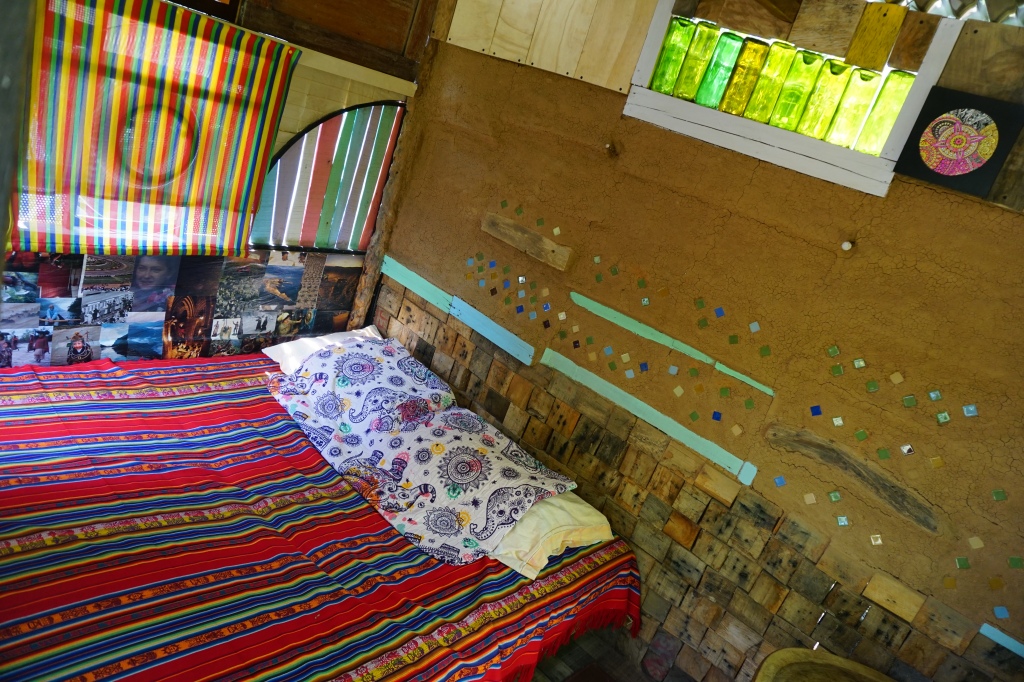
That night, they invited me to go out and even gave me a change of clothes. I had decided to do another walking tour to learn about the history of Cali and see some of its major landmarks, so I was feeling really tired. Once I laid down, I knocked out fast. Oasis hostel is nice because it’s in a calm part of the city but still not that far from the center. It has a slight party hostel edge – a nice patio, a jacuzzi which never got used while I was there, and space for travelers to congregate and swap stories – yet noise winds down at a reasonable hour. The girl working the majority of the time I was there was also from the Caribbean coast and was super helpful in all things, especially when it came to retrieving my bag and avoiding getting over charged by taxis.
The next day, I struck out on my own to explore. I went to the famous Parque de los Gatos, a path lined with fantastical painted cat sculptures – a real cat fanatic’s attraction. I meandered around downtown and had lunch before deciding to grab a taxi up to the famous Cristo Rey, a 26 meter tall Jesus monument overlooking the sprawling city of Cali. The air was cool, and leading up to the statue there was a cute park and a marketplace full of religious and Cristo Rey paraphernalia and dulce cortado, a treat Cali is famous for. The panorama view made the 15 mil I ended up paying the taxista more than worth it – and that was a big bargain considering he also waited for me and took me all the way up.
The same taxista was kind enough to make some recommendations for what to see from there. He told me about Caliwood, a museum honoring Cali and Colombia’s cinematic history. This was a treat, and more so because the owner happened to be there. We started talking as soon as I walked in. It so happened that he had visited New Orleans and was a well-known director in his own right. The tour started with an explanation and showing of 6 original short films and included an audio walk-through (via headphones) of the history of cinematography in Colombia and in general.
Afterwards, the owner gave me his card and tipped me off on where to go next in my journey. I told him I wanted to go to Valle de Cocora but wasn’t sure where to go after that. He suggested Manizales and its hot springs. He also told me about the other museums I went to see once I left. This was another one of those moments that have taught me in recent years that it’s better to take a chance and talk to strangers than keep to yourself when traveling. That’s how you can get the most out of your journey!
From there, I walked to the closest museums he pointed out for me on my tourist map and got to explore La Tertulia. La Tertulia Museum of Modern Art impressed me because in every room, there was an art expert or historian available to explain each piece displayed. Sometimes art is not just about interpretation – talking to the experts, I was able to realize that even a plain dirty canvas had volumes to say about the social and historical climate of Colombia. If you enjoy art and history, it’s worth the visit.
Now, I’m sure at this point thinking: Hang on, you said you were in Cali, right? So what about the salsa? Well that night, thanks to my Couch Surfing App, I was able to experience Cali night life and squeeze in some salsa dancing before heading out to my next destination. I had taken a free salsa class at the hostel in the evening once I got back from my tours and was ready to try my new moves! I messaged a few people before finding someone that was free and willing to go out and show a foreigner the ropes. We went to his favorite salsa club (can’t remember the name right now, but it was not the one everyone always goes to – that one had an endless line out front). We, on the other hand, enjoyed live salsa music and danced a few songs. Seems like I’m not half-bad at salsa, but don’t take my word for it!
This slideshow requires JavaScript.
Salento
As I said, Cali was a real catch. Like all Colombian cities, it was easy to get to the terminal de transporte and take off the next morning on one of the earliest buses and begin the next leg of my adventure. (*only downside: Cali’s terminal is one of the few I’ve been in with no source of wifi)
Many towns were recommended to me, but if you want to be close to the mystical Valle de Cocora, Salento is the one. The downsides: it was full of tourists. Semana Santa is high tourist season for pretty much any attraction in Colombia. The colorful colonial streets were full, I found myself wandering through elbow-to-elbow with people.
The weather was chilly and the atmosphere quaint. In the end, I was happy to have picked one of the last available hostels in the town – Coffee Plantation Hostel. Just as the name suggests, the hostel is connected to a coffee farm in the outskirts of the city where most people go to see how coffee is grown and produced. At my hostel, coffee is harvested regularly and sold to guests who can then roast it themselves. I watched the process but didn’t partake as it was already late at that point and there was no coffee left to buy.
The highlights of Salento were the beautiful colonial architecture and a charming, majestic lookout point on the extreme end of the city opposite where my hostel was. The walk up the winding staircase was steep, and as I mentioned, crawling with people. But the view at the top was worth it – the only bad thing? My phone was dead. Just like it was in La Tertulia. Sadness. But the image captured in my mind of the rolling green, a river and tons of palms off in the distance, past the mountains, marking Cocora Valley will not soon be erased. I learned from a local (creep – but I won’t get into that here) that the palms and trees are unique to the region, and there are several different species which produce woods and cocos. The area has been incredibly preserved, unlike other parts of Colombia. That along with its cool and temperate climate make this region the most comfortable and beautiful part of Colombia, on a practically objective level.
I spent a night bundled up in the cabin-like room of the Coffee Plantation Hostel, going to bed early in spite of the distant drumming of the Holy Week celebration. That was Good Friday, the night when they commemorate Jesus’ death on the cross. I didn’t feel like walking far in the cold to watch because the next day I had to wake up early to go back uphill into town to find a Landrover that would take me to the Valle de Cocora.
This slideshow requires JavaScript.
Valle de Cocora
This had been at the top of my to-visit list. I had seen pictures and one night, I even dreamed about visiting the misty, enchanting Valle de Cocora. It’s a valley full of the some of the tallest palm trees in the world. I took a horseback riding tour, a typical tourist trap (40 mil or so to enter – it was way more if I wanted to do an entire runthrough “recorrido”), but I have to admit, it was fun and I got some excellent information about the palm season.
One drawback to keep in mind: April and the middle part of the year are rainy season months. I knew this going into it, so I was smart and took the earliest 4×4 Jeep to get there (thanks, Liz, for the heads up!), but many wait and get caught in the rain. Clouds started to push their way in around midday, and 1. I was out of there and out of the town by 2, just when it was starting to pour, and I regret nothing. Since I got to the park around 8 am, I had a solid 4 hours to walk around, hike up and down the path, and take loads of pictures of the otherworldly landscape.
So, protip: Go early to avoid the heavy fog that would ruin your photos and rain that would cause you to get stranded in the tourist-heavy area. Ask a local or the hostel people if you aren’t sure what season it is.
4×4 travel was super cheap, 6 mil or around that (I might need to go back and check). I was able to catch a ride in the first Jeep I saw on its way out, no hassle. It left me at the entrance of the city, so all I needed to do was walk back to the hostel, grab my things, check out, and head to the little bus station. As fate would have it, a bus was just heading out of the town. Most of these local buses and colectivos have a super low cost, anywhere between 4 and 8 mil depending on the distance. This one was heading for Armenia, which I had been advised to go to in order to catch a bus more easily to my next destination: Manizales, Caldas.
This slideshow requires JavaScript.
Manizales
I booked a hotel once I had decided the route I was going to take in Cali. The Eco-friendly hotel is tucked away in the mountains, a bit far from the bus terminal, but the view is absolutely breath-taking. It was the priciest of my accommodations because it was an actual single-room hotel, but that was what I was aiming for. I decided after so much hiking, I would need a space to relax before making the 14+ hour bus ride back to Valledupar.
The 80 mil that I paid (only ~$35 USD so still VERY cheap) did not include the meals I ate there, but the additional cost was low, $10 mil a meal. I practically had the open-air hotel to myself, so I was able to enjoy the tranquil sounds of birds chirping and rain falling. It rained a few times while I was there, adding to the soothing atmosphere. The ladies that worked there made me feel at home and readily provided me with details when I asked about the hot springs, my biggest motivation for stopping in Manizales to begin with. They hooked me up with a taxi driver they knew and trusted (taxista de confianza) that gave me a ride there and back and also to the airport the following day.
I was charmed by how polite the people I encountered in this part of Colombia were. Nobody was trying too hard to get every last penny out of me (a regular thing living in the cost), people were calm while also eager to help out. Even the conversations I had with the taxi driver and hotel staff were pleasant. I truly felt a sense of hometown hospitality.
I didn’t get to see much of Manizales. Most of what I saw was from the taxi window on the 45 minute ride to the hot spring. In spite of how long of a distance it was, I was able to arrange with the driver a pretty reasonable fair – $30 mil roundtrip. He picked me up at the time I said and even pointed me towards the spring with the best deal: Termales de otoño. The entrance fee was only 25 mil. I also reserved a meal and had a delicious canelazo while enjoying the three levels of pools that were included. Once paid for, I could stay as long as I wanted, so I decided since I arrived at 6 to stay until 9.
This was the perfect plan to relax and contemplate everything I had done and seen in only 5 days. Colombia is truly an amazing country with a diversity of landscapes and activities. The best part is traveling is so accessible, and if you travel like I do, avoiding pricey things you can get cheaper, you are able to enjoy some luxuries here and there. My stay in Manizales was my luxury, my peace and quiet, my retreat before the long trek back to Valledupar. The warm, steaming pools were the ideal contrast to the chill of the region and the remedy I was hoping for to sooth my aching feet after all of the uphill walks in Cali and Salento.
The next morning, it was back to the terminal – which YES, does have wifi. Unlike the two buses I had to take to get back to Valledupar which did not. The return was my least favorite part, naturally, because neither one of the buses I took was spacious or nice, and the trip was long. Long. There was construction on the highway from Manizales to Medellin, causing a regularly 5 hour trip to take almost 7 hours due to lots of stops along the way. Then, I had to take a bus from the Southern terminal to the Northern terminal in Medellin – yes, that’s how big of a city it is. From there, it was a full night on the bus to get back to Valledupar. That usually has a length of 14 hours. I got lucky in that it was an hour or so less, but man was it a relief to be back.
Seeing the Eje Cafetero gave me a different view of a Colombia, a green, scenic, peaceful side I would not mind spending more time exploring in the future. I will definitely be going back in 2020!
![Nómada [con] Rumbo](https://nomadaconrumbo.com/wp-content/uploads/2021/04/cropped-dsc07640.jpg)


 Nómada [con] Rumbo