![Nómada [con] Rumbo](https://nomadaconrumbo.com/wp-content/uploads/2021/04/cropped-dsc07640.jpg)
Well, well, well. Time to start my recap series. The first two months of this year were full of travel. I spent all of January in Brazil and February revisiting some gems in Colombia. My posts most likely won’t be in chronological order but rather highlights as I feel inspired to share.
After last year’s February travel success, I had to spend my birthday month traveling again this year. Once again, I made catching up with friends the guiding light of my route. Lucky me, they live in different parts of Colombia. So, I got to revisit 3 capitals: Bogota (THE capital of Colombia), Medellin, and Manizales.
In this post, I’m going to break down some gems in the Eje Cafetero. I like to call it the Coffee Country of Colombia (because, alliteration). I’ll start with one of its capitals: Manizales. After a week in Medellin, I chose not to take a bus or plane straight to Manizales. I took a smaller bus to cross Antioquia and reunite with my friend Carin in Jardin.
While discussing our reunion, we had gone back and forth about where we would go to take advantage of our new lease on life as digital nomads. On one hand, neither of us had been to the Colombian Pacific Coast (Chocó). However, if we were going to meet in Jardin, that would be farther from our set-off point so, we compromised to visit an area I had some experience with. I didn’t need to be convinced to go back because for me, Coffee Country is best country.
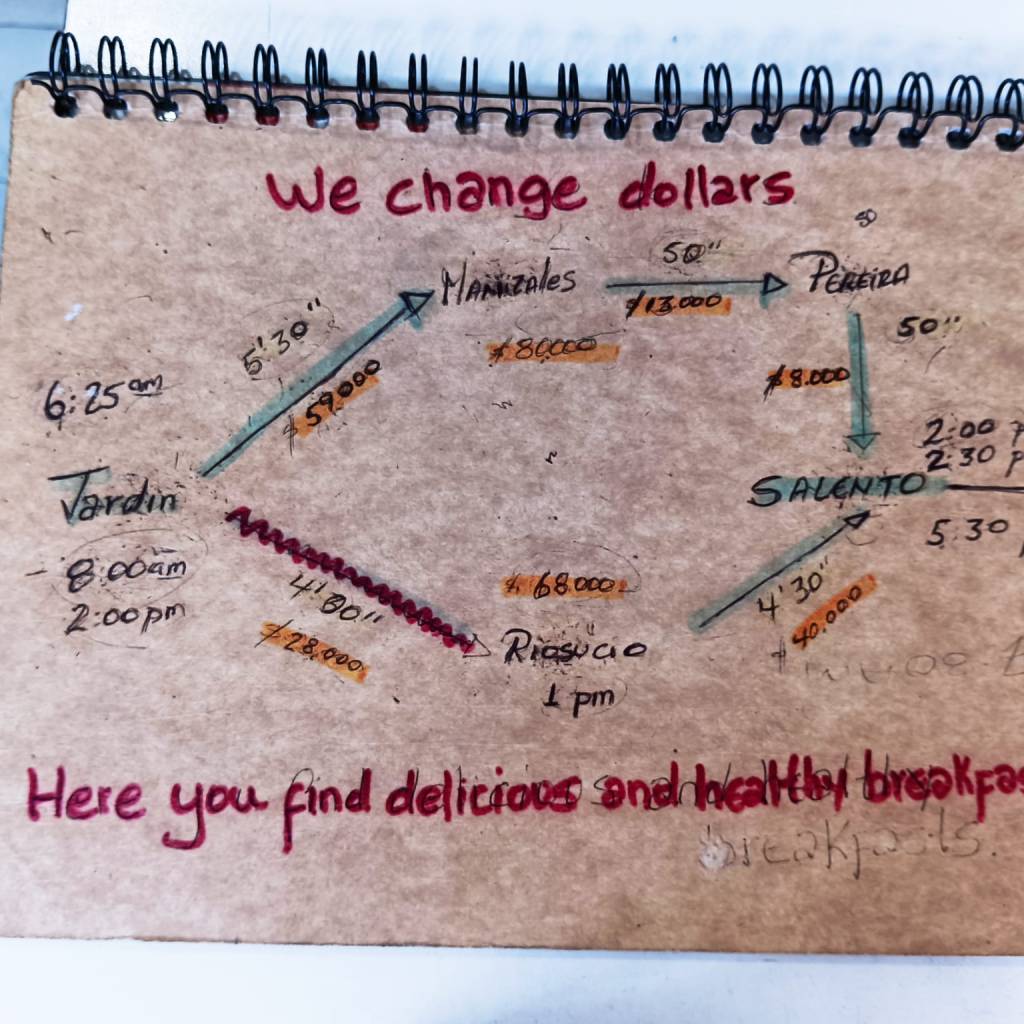
Carin helped plan and coordinate an adventure for two remote-working ladies. Her organization and practical mindset were the tools that my more spontaneous style needed to make everything work. Having a timeline was key, especially since this would be my last hurrah in Colombia before my flight from Bogota back to the States.

Jardin itself is a verdantly scenic mountain village right on the edge of Coffee Country (official map above). It attracts international tourists year-round, and for good reason. It may not be an official part of the Eje Cafetero, but it’s surrounded by farmland including coffee farms that form a big part of local culture and identity. It’s always a joy to visit. For the sake of proximity, budget, and practicality (plus a bit of nostalgia), we decided to spend 5 days there before going east.
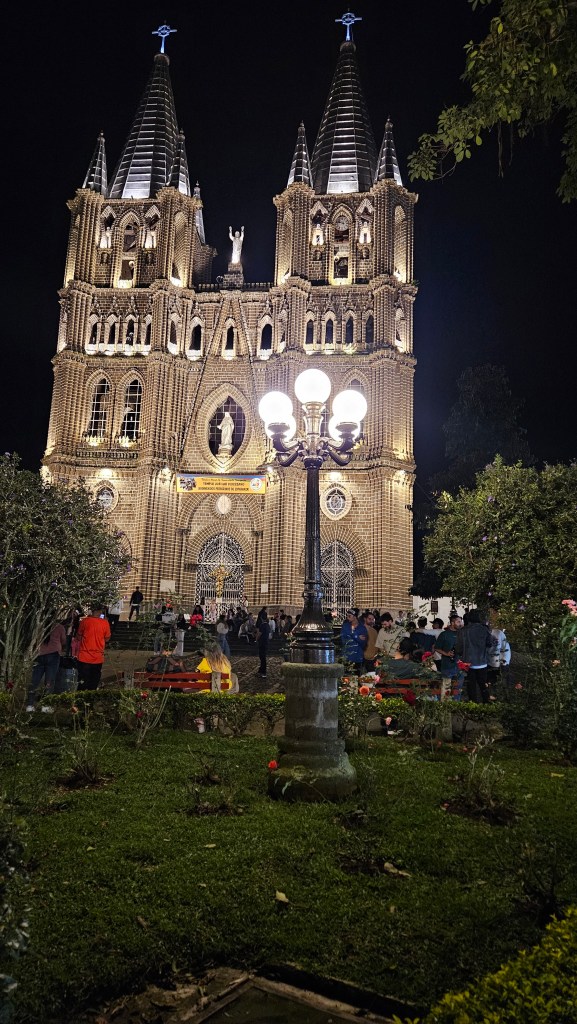
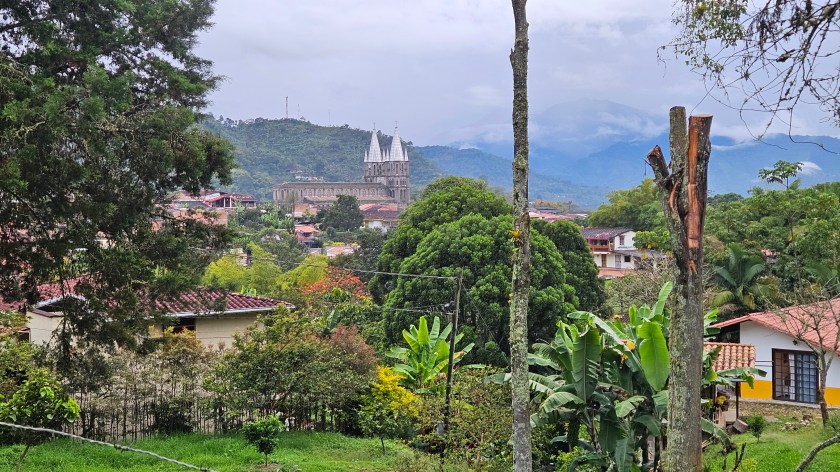


In spite of a week of mostly perfect weather, lightning, thunder and heavy rain kept us up the night before the ride to Manizales. This came as no surprise since one of the consequences of global warming in Colombia has been the rise of long droughts and unpredictable torrential rainfall outside of the usual rainy/dry seasons. The problem is, there are only a couple routes in and out of Jardin. One of those routes is through “trocha” – muddy off-roading. This was the only way Carin had taken before.
When we rolled out of bed by 5 am, there was a feeling of foreboding. We had bought our tickets for the van to Manizales ahead of time. If it went off-road, chances are the road would be closed due to the heavy rain. I was anxious to check that the trip wouldn’t be canceled. So, I charged out, umbrella in hand, to mall walk all of 5 blocks to the tiny terminal area. I saw a bus to Medellin was already pulling away from the Rapido Ochoa garage. Everybody seemed to think I was crazy for worrying (small town people don’t worry, as God always provides). It turned out, we’d be on the other road out of the town. Crisis averted.
The van involved a short but brutal, winding mountain path that actually gave me motion sickness. I’d never puked in a bag before and seriously hope I never will again. But that aside, it was a smooth trip, and we made it to the Manizales terminal in record time.
Manizales Trip Summary
Land transportation from Jardin to Manizales: 80k COP for a shared van (pay in El Portal, on Calle 8, and get lunch or a snack while you’re there!)
We left at 6:30 am and were there by 10:30 am, shaving a full hour and a half off of the expected travel time.
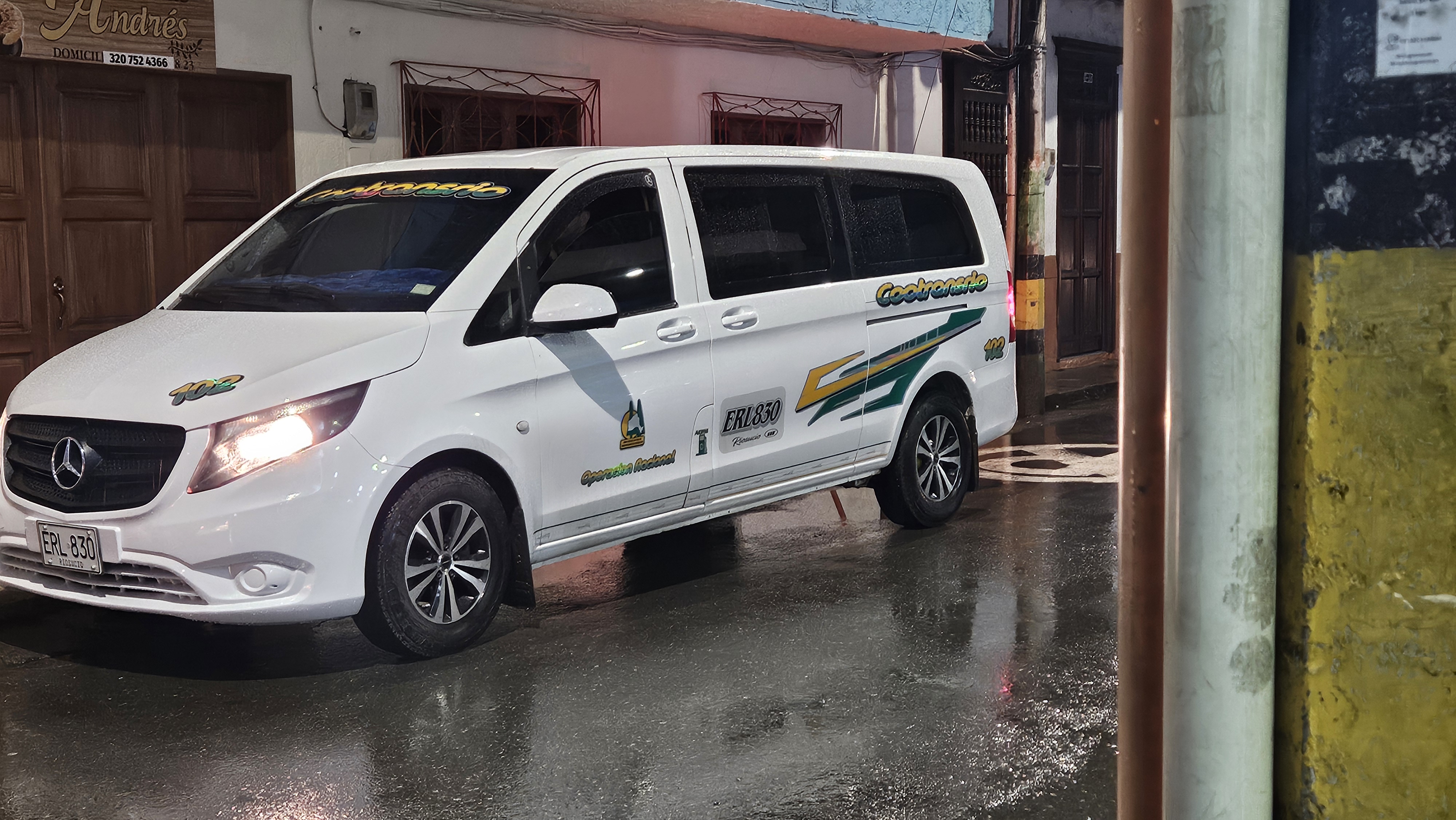
From Manizales Terminal to Santa Rosa del Cabal: 13k COP for a small bus (Empresa Arauca)

Lodging: 3 bed apartment (Booking) in La Enea neighborhood (ideal for hiking and contact with nature)



Getting Around in the City: local buses (Gran Caldas) – 3k COP (though you can see the fare written, and some buses cost less)
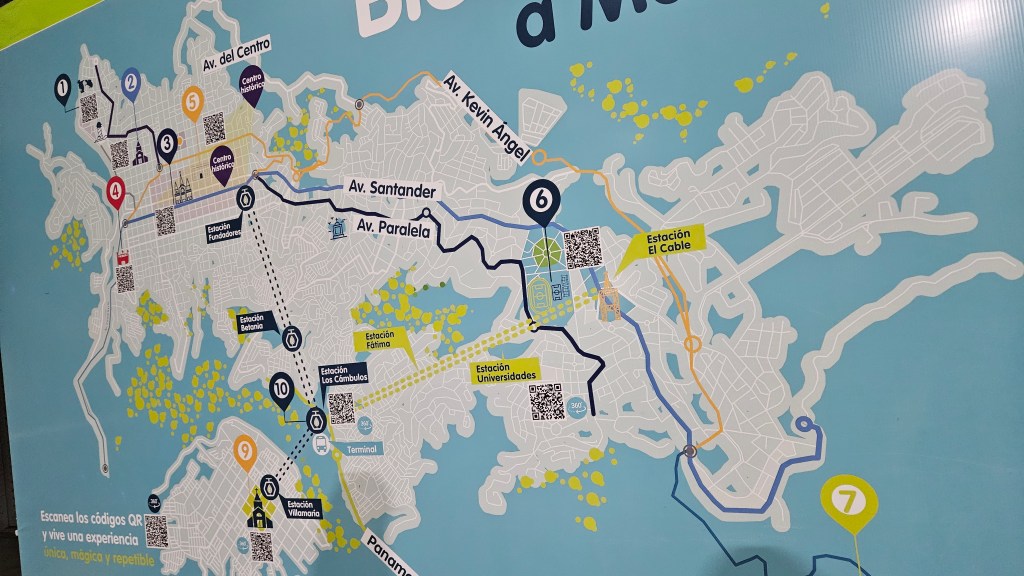
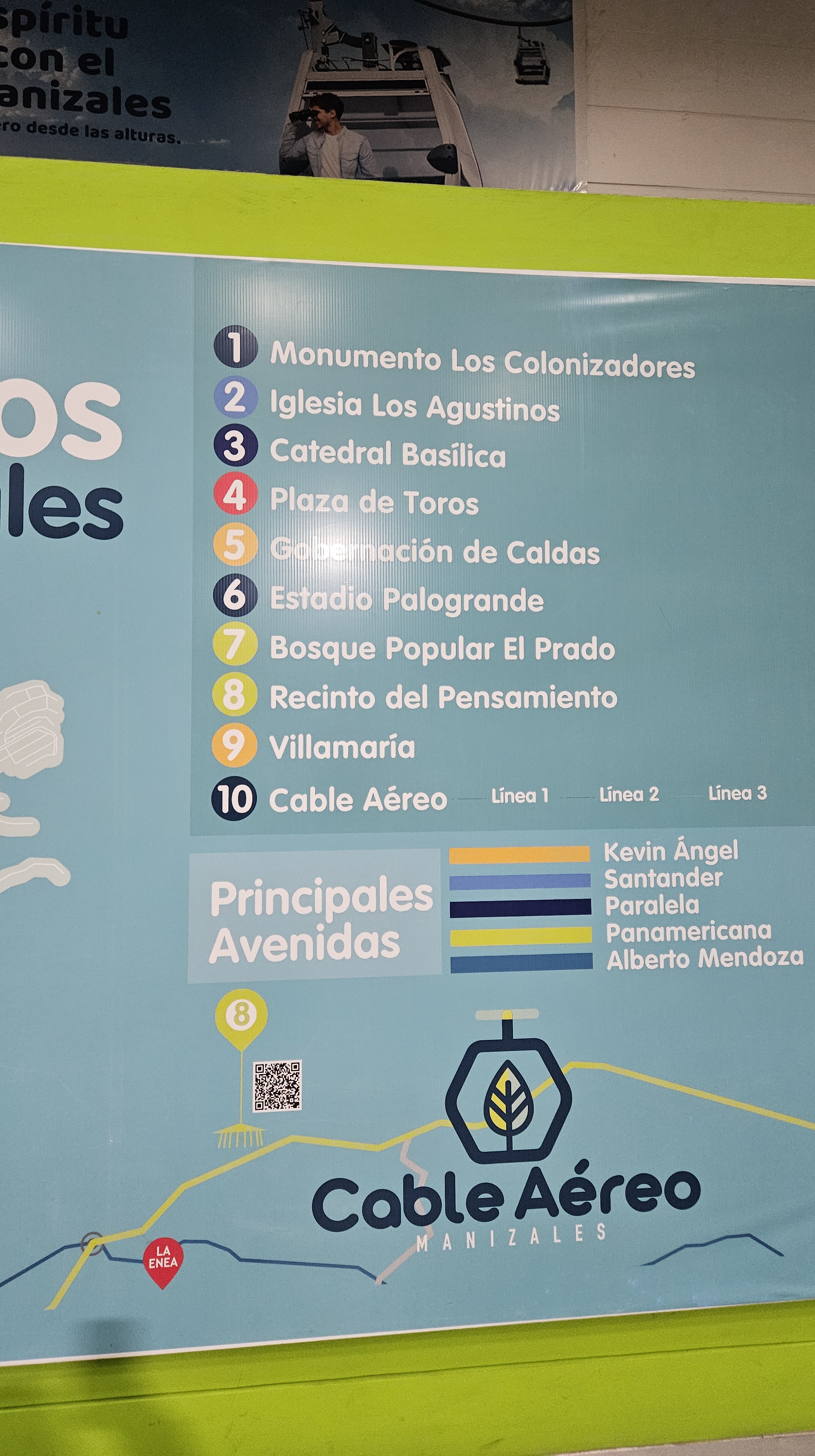
-Teleférico (cable cars): a bit limited, they can take you from one end of the city to the other, through the bus terminal or downtown. It’s great for the highlights of “touristing” – the views and the experience.
-Taxis – we didn’t have to rely too much on them since public transportation in the city passed often and was reliable. Still, they aren’t the most expensive option – we paid 14k to travel 9 km from the Bus station to our apartment.
Highlights: -El Bosque City Park
-Termales del Otoño and Acquaparque (just outside of the city)
-El Centro – the heart of the city
-Chipre – the best view of the city (when it isn’t cloudy)
-El Cable – limited but practical public transportation and a rush to see the city from above
-the architecture and cultural attractions
-the hospitality and politeness of the locals
Where to Stay
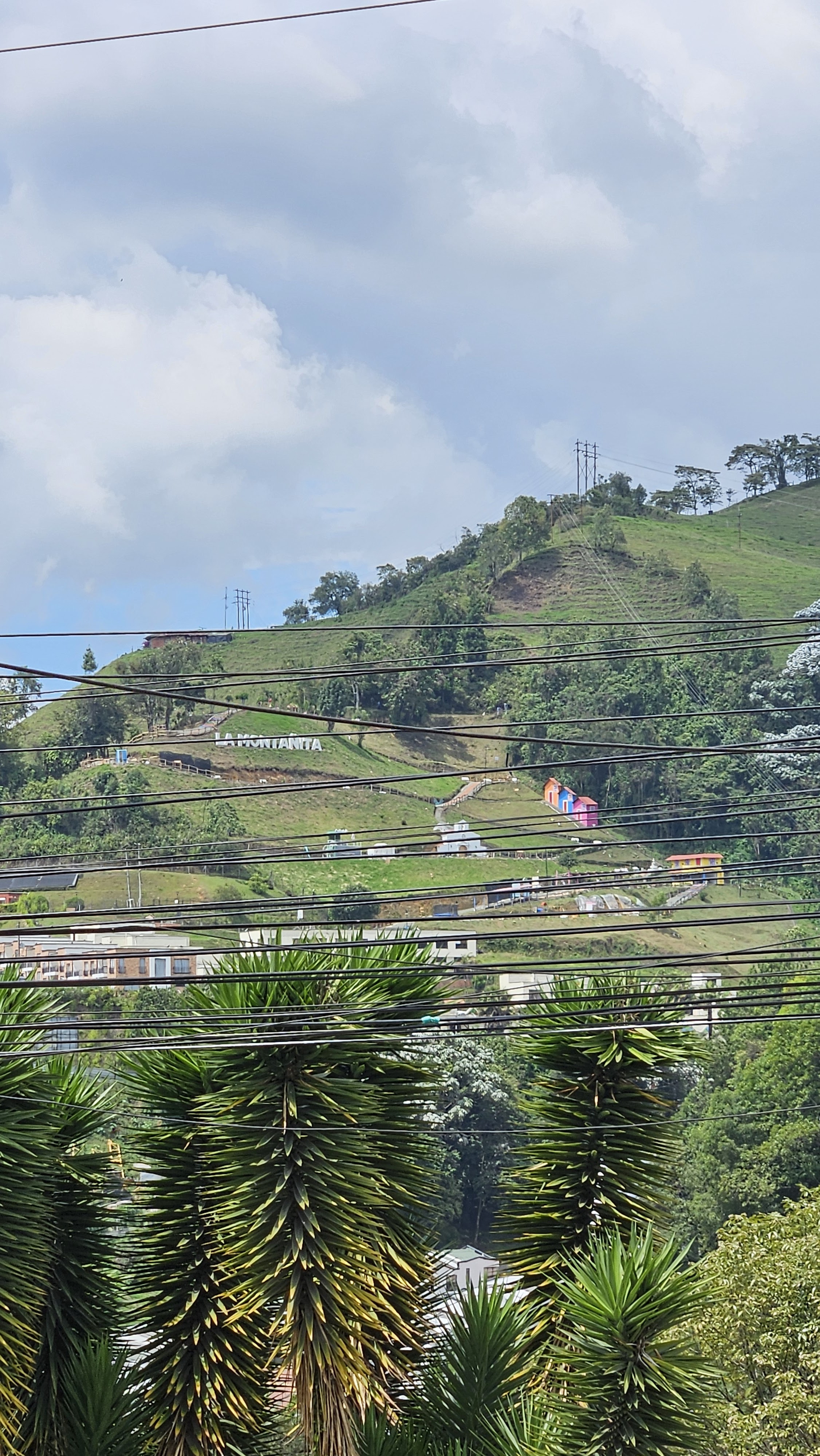
I’ve had the pleasure of staying in Manizales twice now. The first time was during a solo travel adventure in 2019. It was at the tail-end of my Semana Santa week-long vacation, so peace and comfort were my focus. That’s how I ended up staying in Lodge Paraíso Verde. Living up to its name, it was a green paradise surrounded by lush mountain vistas of the city’s northern outskirts.
That was a perfect introduction to this city. I remembered the hospitality of the workers at the lodge. They helped organize an affordable taxi ride to get to the other side of the city and go to Termales del Otoño. The taxi driver was so nice, I kept his contact and called him again when it was time to go back to the bus terminal.
This time, Carin and I knew that we wanted to go to the hot springs. The first time, I wasn’t aware of “termalismo” or hot springs tourism, nor had I ever heard of the termales in Manizales, so the recommendation led to a revelation. Carin and I had been working hard and traveling harder; thus, our objective was to explore, get in touch with nature, and relax at some point while doing it. What better way than hot springs?
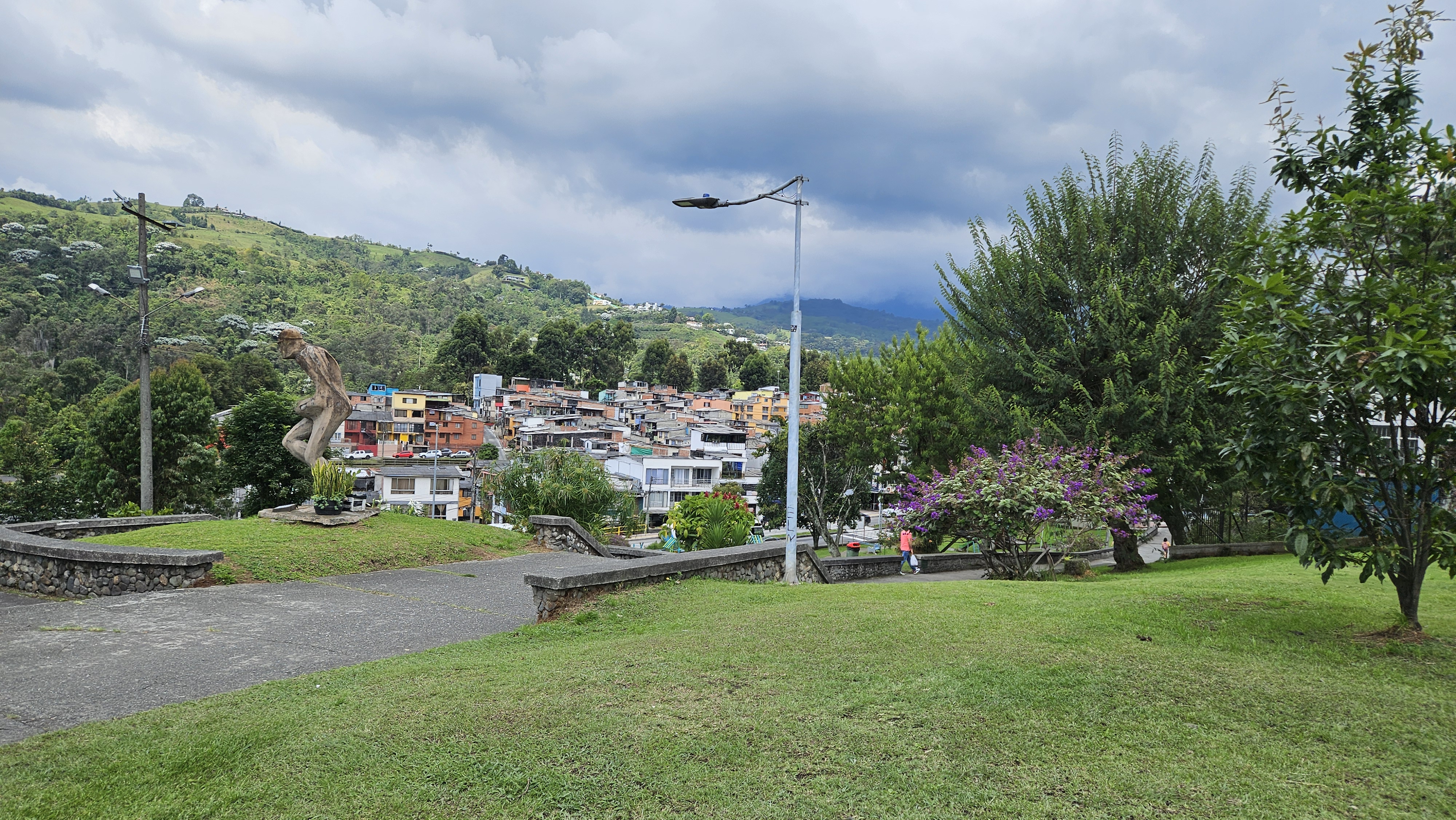
Since our goal was clear, when looking at booking options, we picked out something to the south of the city. Little did we know, we were uncovering a gem a casual tourist may not consider. La Enea is a residential neighborhood surrounded by serene trees and mountains. Being that it’s so suburban, we also found the accommodations less expensive. We spent about $76 usd (319,200 cop) to stay 3 nights in a 3-bedroom apartment. We needed good internet and our own spaces to work, which “el acogedor apartamento La Nubia” provided.




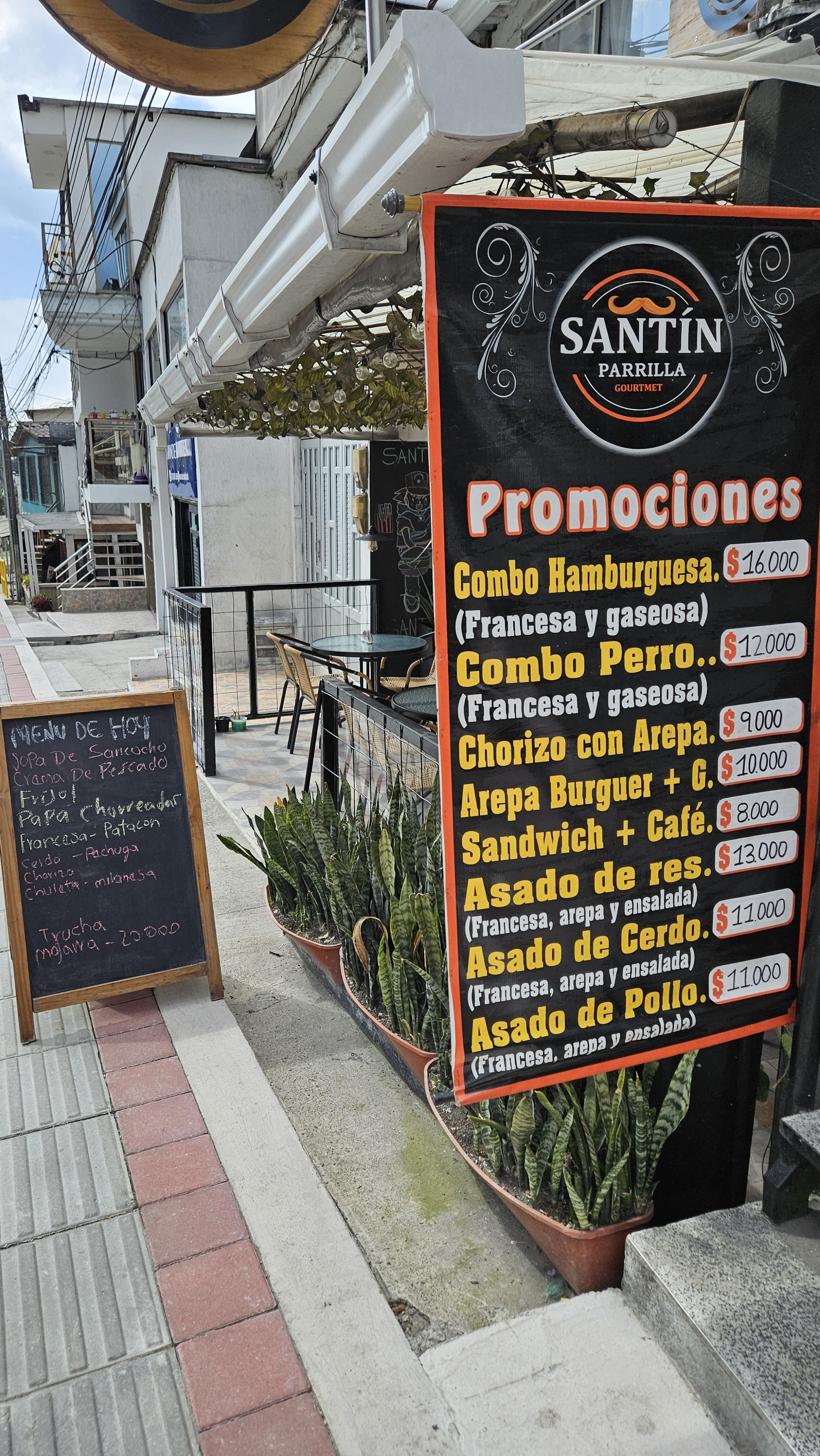
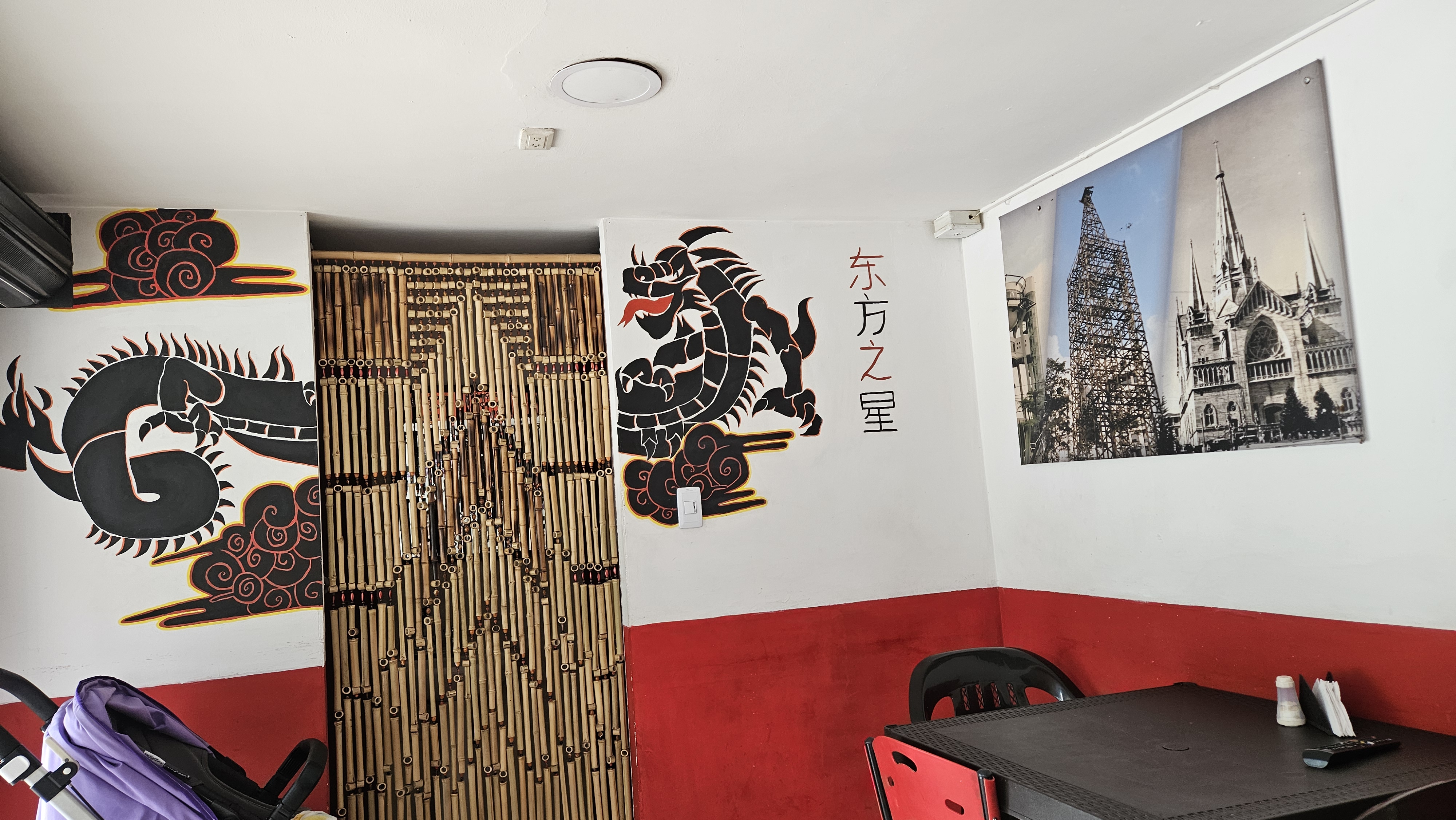
We were walking distance from a plethora of shops and local dining options (mostly standard fare: bakeries, fast food joints, delicious arepa stands, with a few niche options like (Colombian style) Chinese food and a rock bar).
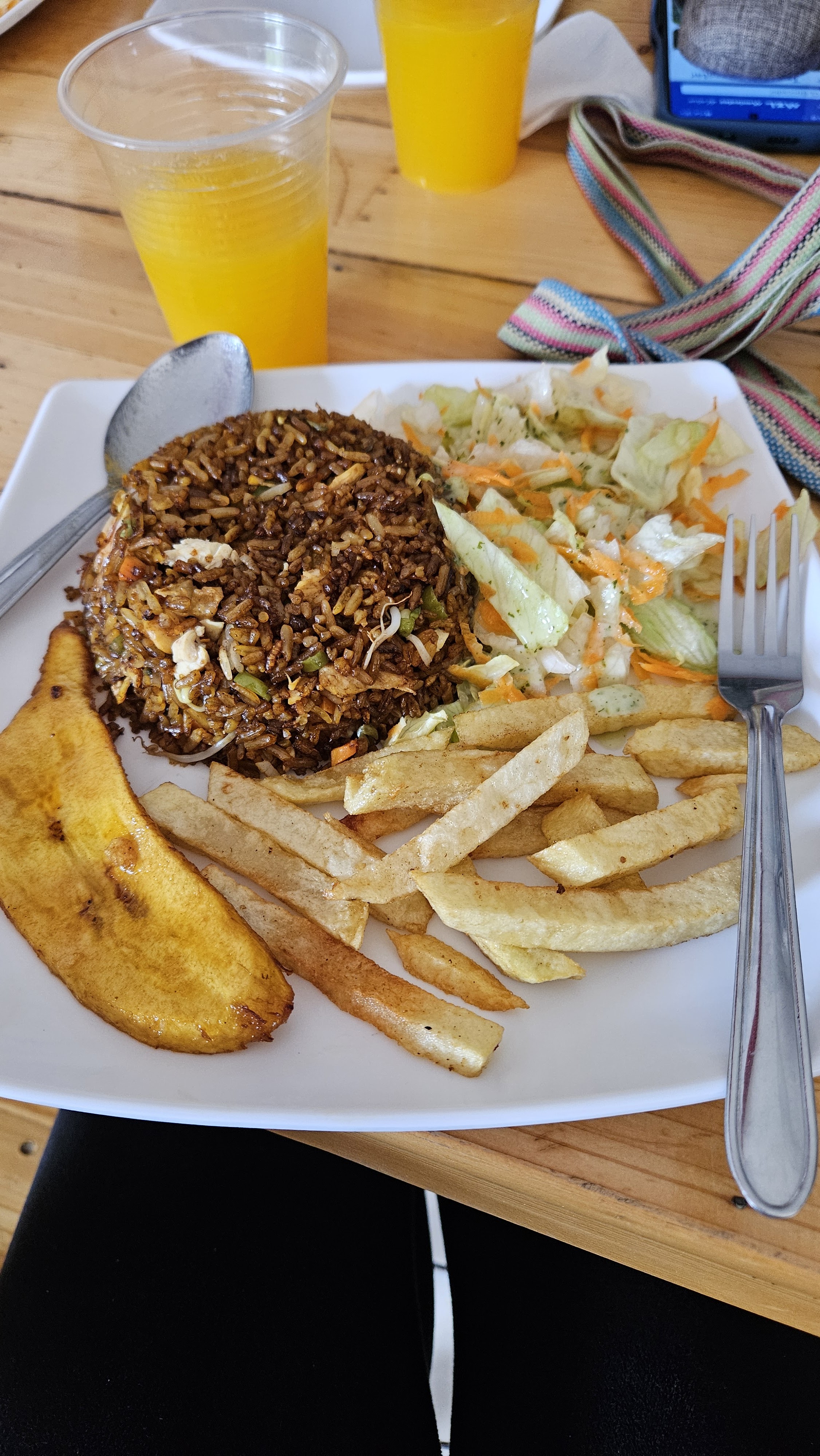

That first day, I needed to work, so Carin set out and explored for the both of us. She discovered that the city was extremely walkable, even reminding her of Germany in the way city crosswalks are set up. While out, she was “adopted” by a local family that offered to take a picture of – and then with – her. Her first impressions: friendly, clean, safe, and organized!
Getting Around
While out and about, the locals were happy to answer our questions or point us in the right direction. The few times we got disoriented, we were directed by a local to look for the Gran Caldas bus. They explained that on the sign posted in the window we would see which direction it was headed – either out of the city towards the springs or towards the cable cars and the city center.


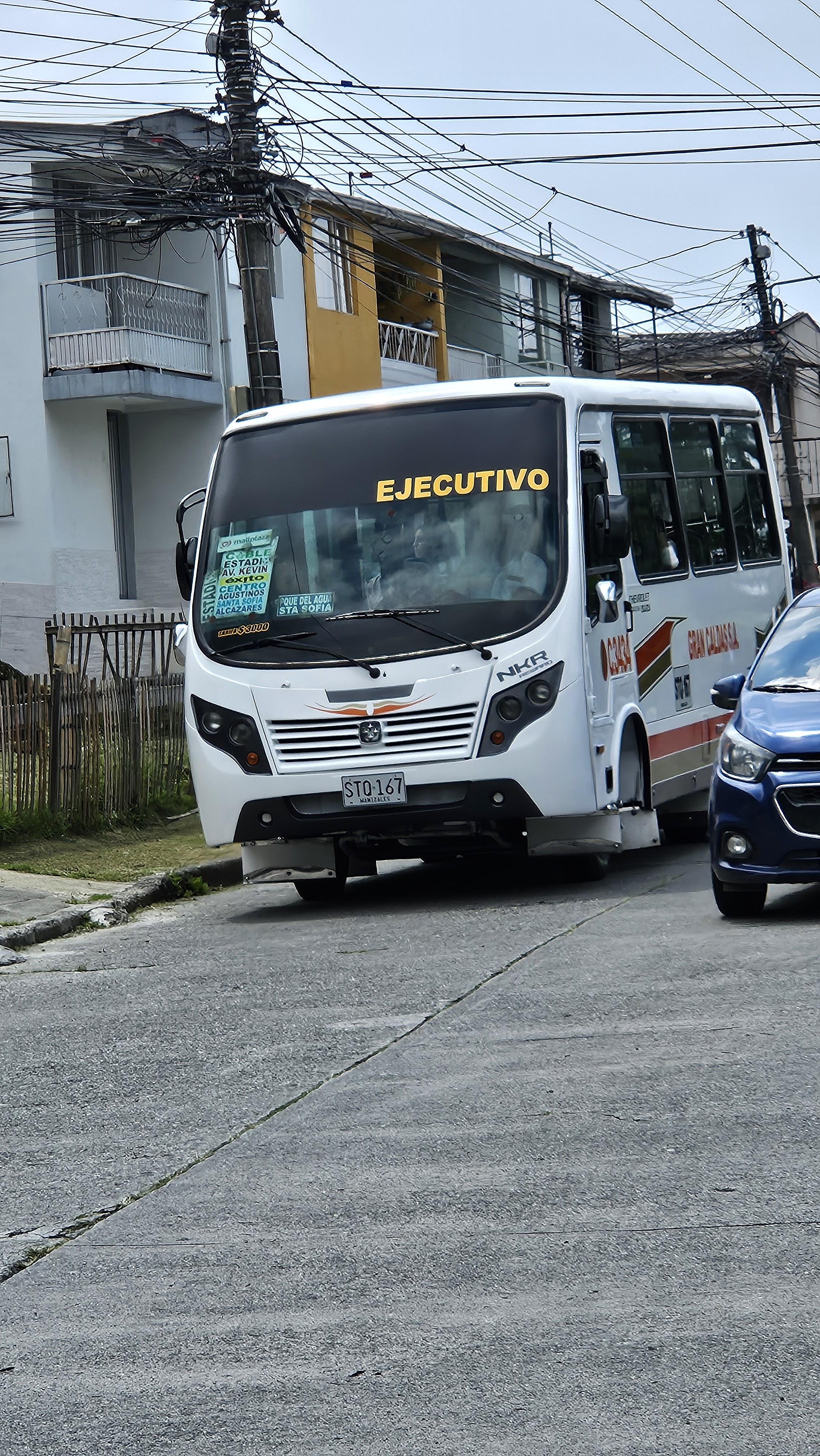
One of the first things we found out was that there was no need to waste money on taxis in Manizales. The local buses, particularly the Gran Caldas, have routes that connect the city from the center outward. That’s how we were able to save money on transport. Traffic also was nowhere near as bad as in crowded cities like Bogota and even Medellin at peak hours. The bus got us around pretty quickly and efficiently.
We could even use it to get across the highway to the forest that caught our eye on the taxi ride to our apartment. Of course, Carin found out firsthand that walking there was not a problem either. In fact, it was just as straightforward as asking a bus driver where to get off. The foot bridge over the highway was easy to reach and cross, and then it was all uphill from there. The Bosque Popular El Prado was the perfect break from a long day of lessons.
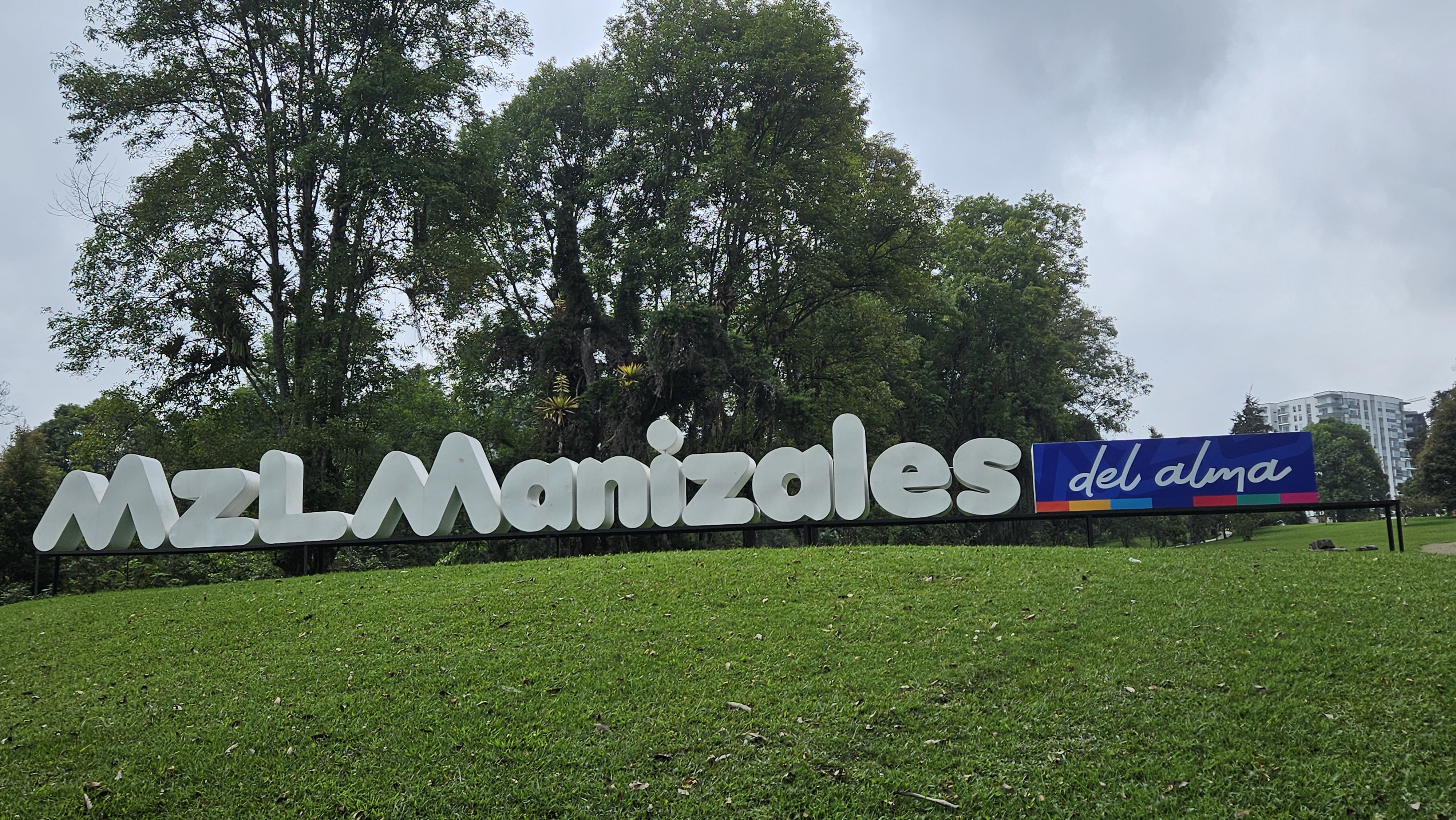


We took the bus to get to the Termales del Otoño hotel and after that to go back into town. We only needed to stay on that same bus till we reached the downtown cable station, Fundadores.
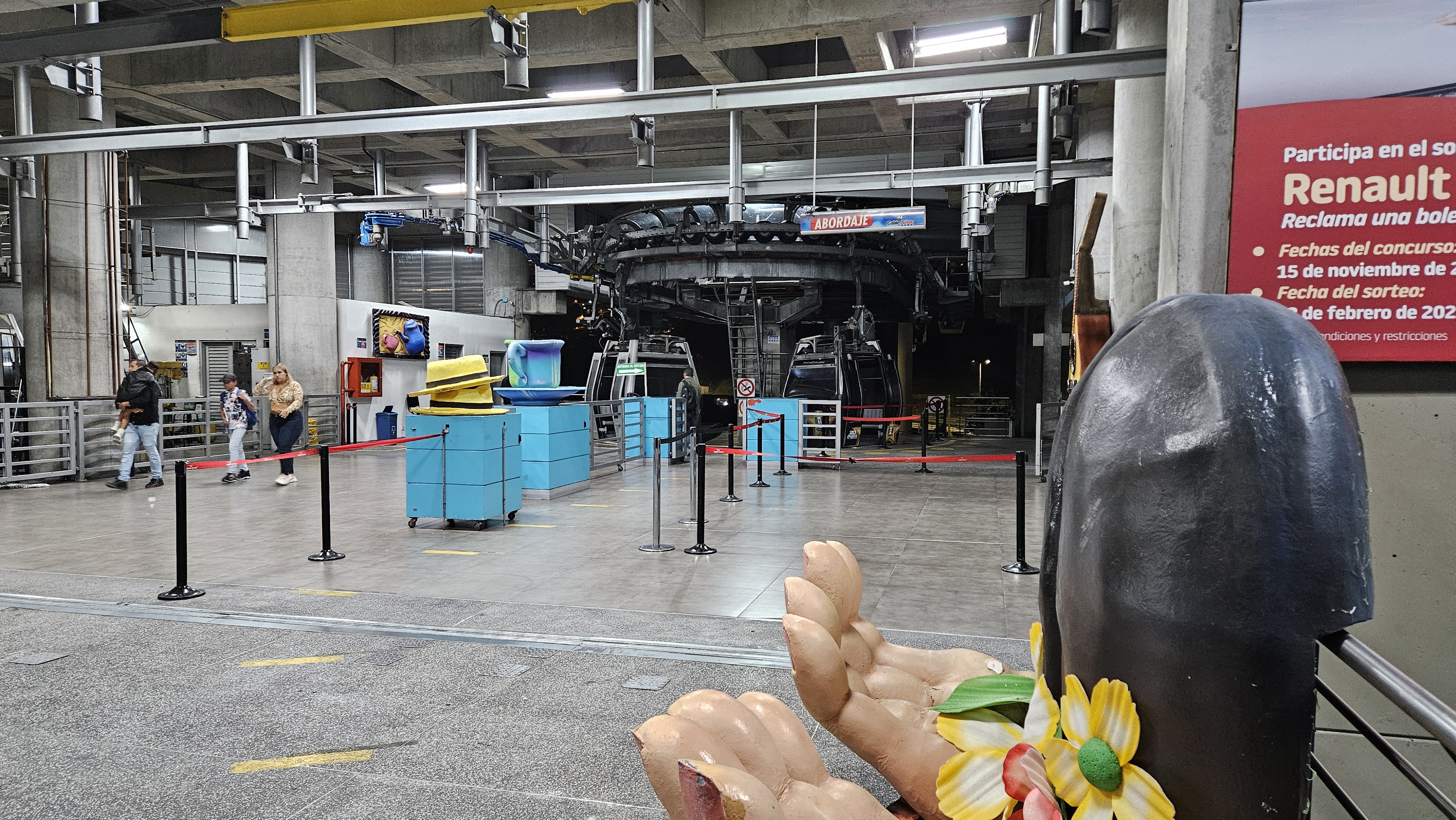
There, you can take the cable car for just $2,900 pesos per trip. I’ll be honest: we did this at night and while it was worth the experience, I was petrified. The distance covered by the hanging gondolas is long, the boxes seat about 6 people, and at one point, the line stopped with alarms sounding. Thank God we weren’t suspended in the middle of the cable, but can you imagine? It would have been better if I had done it in daylight like Carin had when she went out alone, but after an amazing 3rd day, I didn’t want to skip it (even if dangling in the sky makes my stomach drop).

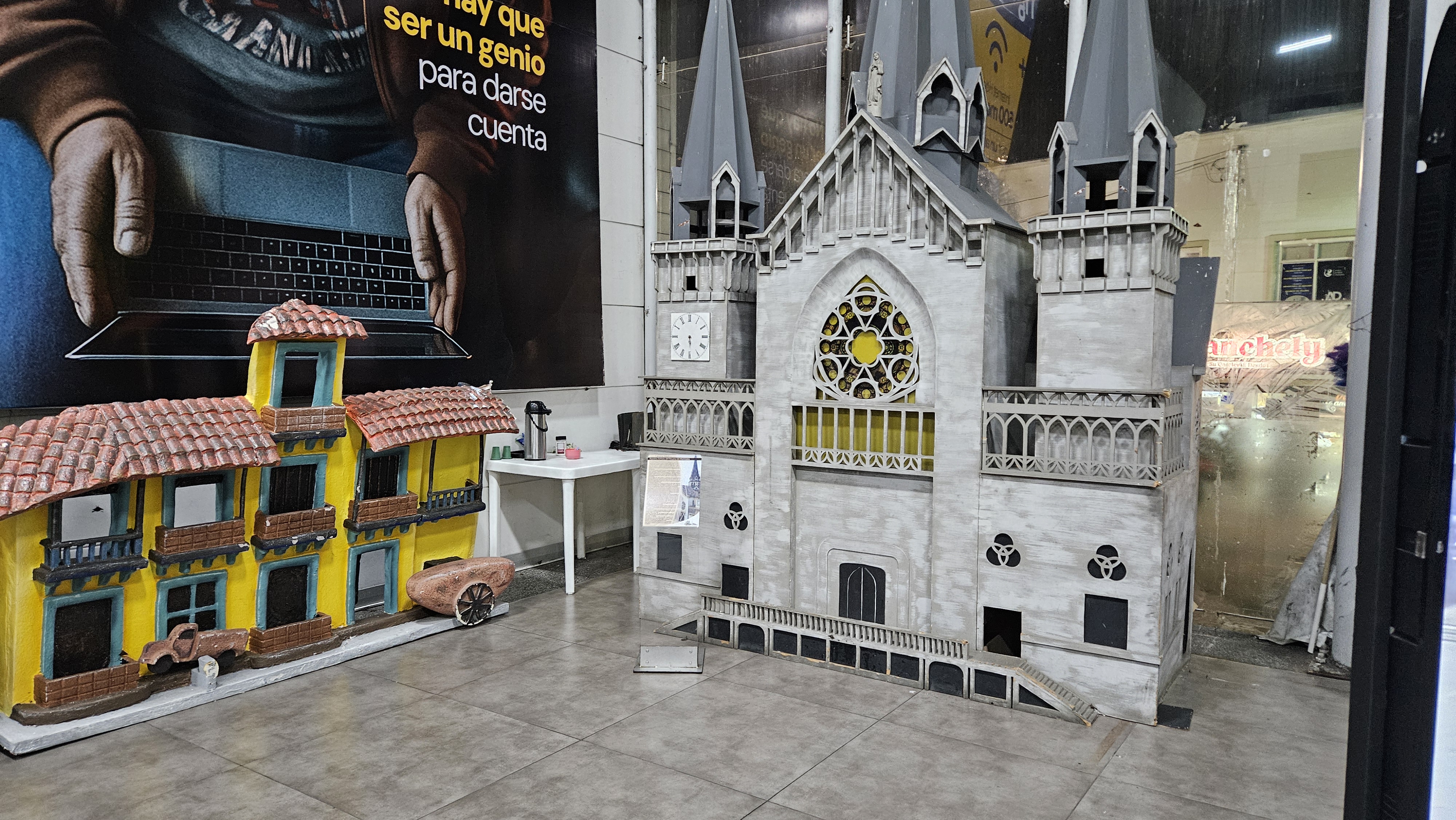



Highlights and Attractions: Termalismo

Manizales combines all of the things I love about Colombian Coffee Country: friendly, helpful locals, clean, organized cities surrounded by idyllic towns, lush greenery, perfect temperatures, and natural wonders. Manizales itself is the most peaceful capital city. It’s another world compared to the hot, chaotic coastal cities like Santa Marta, Riohacha, and Cartagena. In my opinion, it’s a city that doesn’t get enough credit – and perhaps that lends to its appeal.
However, we weren’t traveling just to explore the city. Our aim was to enjoy the scenery, take hikes, and then soak in the hot springs. This sort of tourism has a name in Spanish: termalismo. If you look up the different tourist attractions in the area, it even has its own category: Hot springs tourism.
On the Manizales tourism website and app (https://visitmanizales.com/que-hacer-en-manizales/termalismo/), we discovered there were 3 main destinations under the “termalismo” category (not including Termales del Ruiz, located closer to the national park than to the city of Manizales). We also found out that the website – a smart resource, in theory – was not exactly up to date. This post can hopefully shed some light on what to expect if you are looking for hot springs in Manizales.

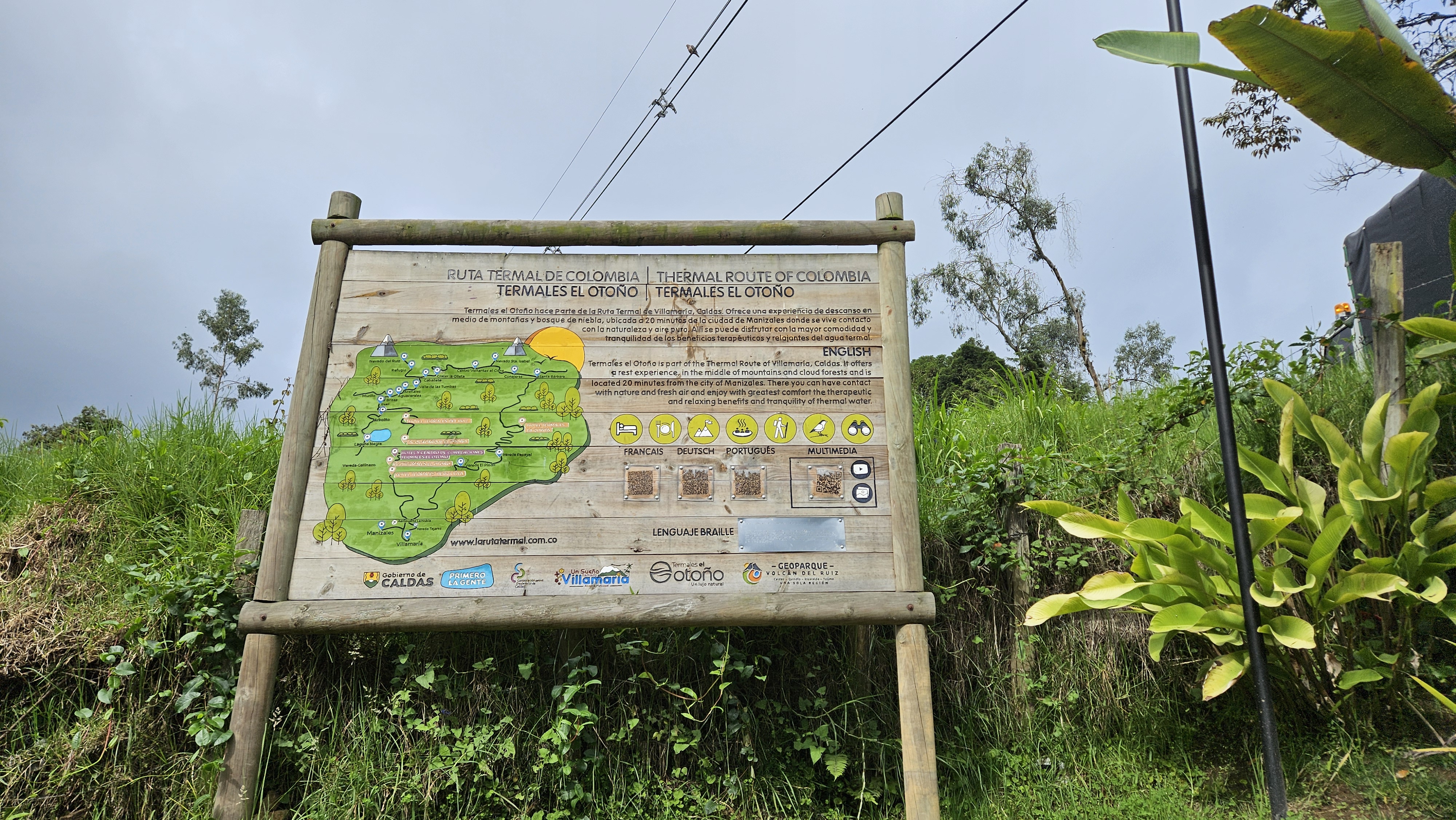
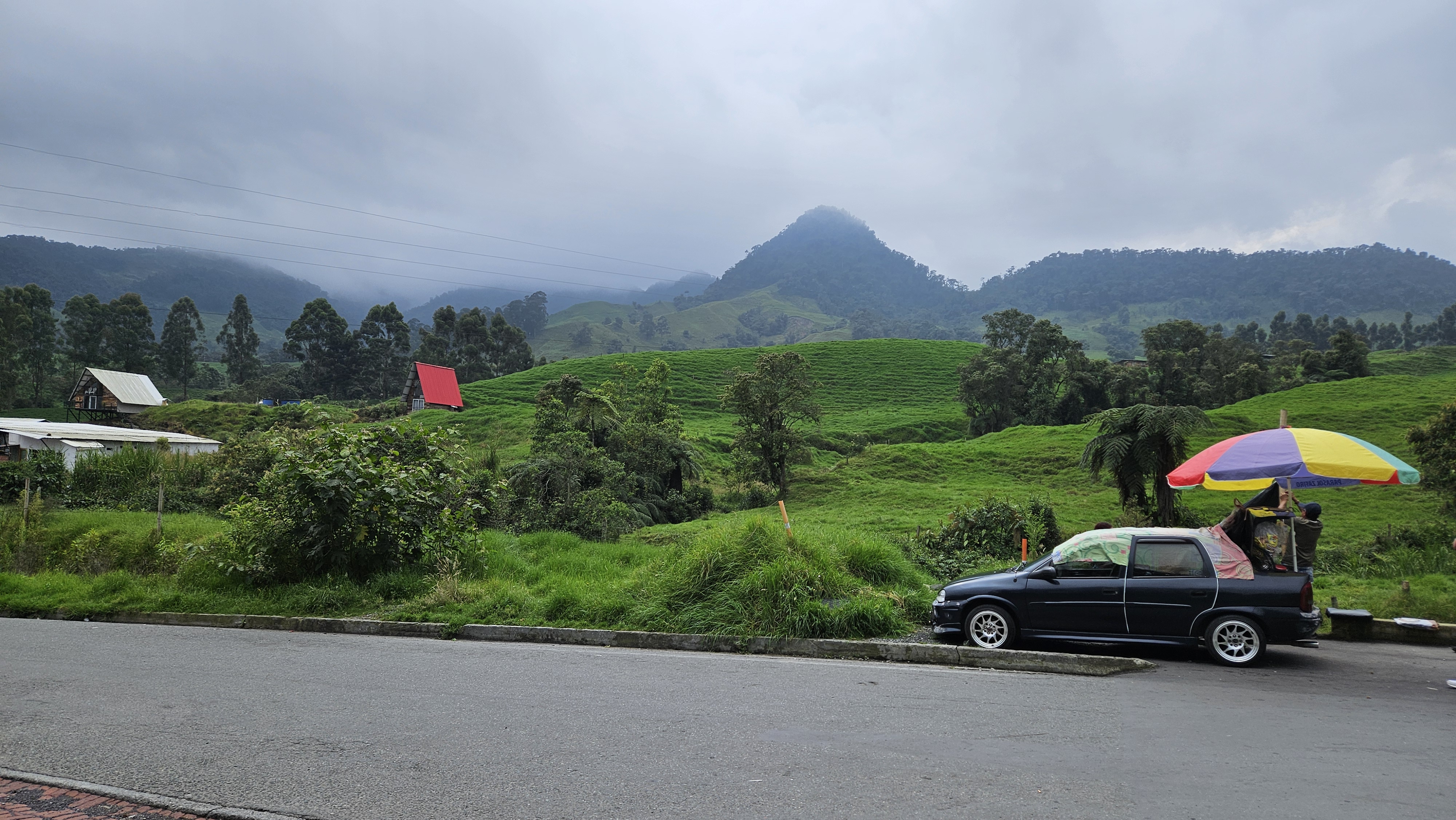
We took the Gran Caldas down the via a Gallinazo. Its last stop left us just outside of the Termales del Otoño hotel. Coincidentally, the hotel and its three pools were closed for a private event that day. That part was the only one I had visited in 2019. The day pass is cheap, but the luxurious hotel is quite pricey. There were still two other options to visit hot springs connected to el Otoño.

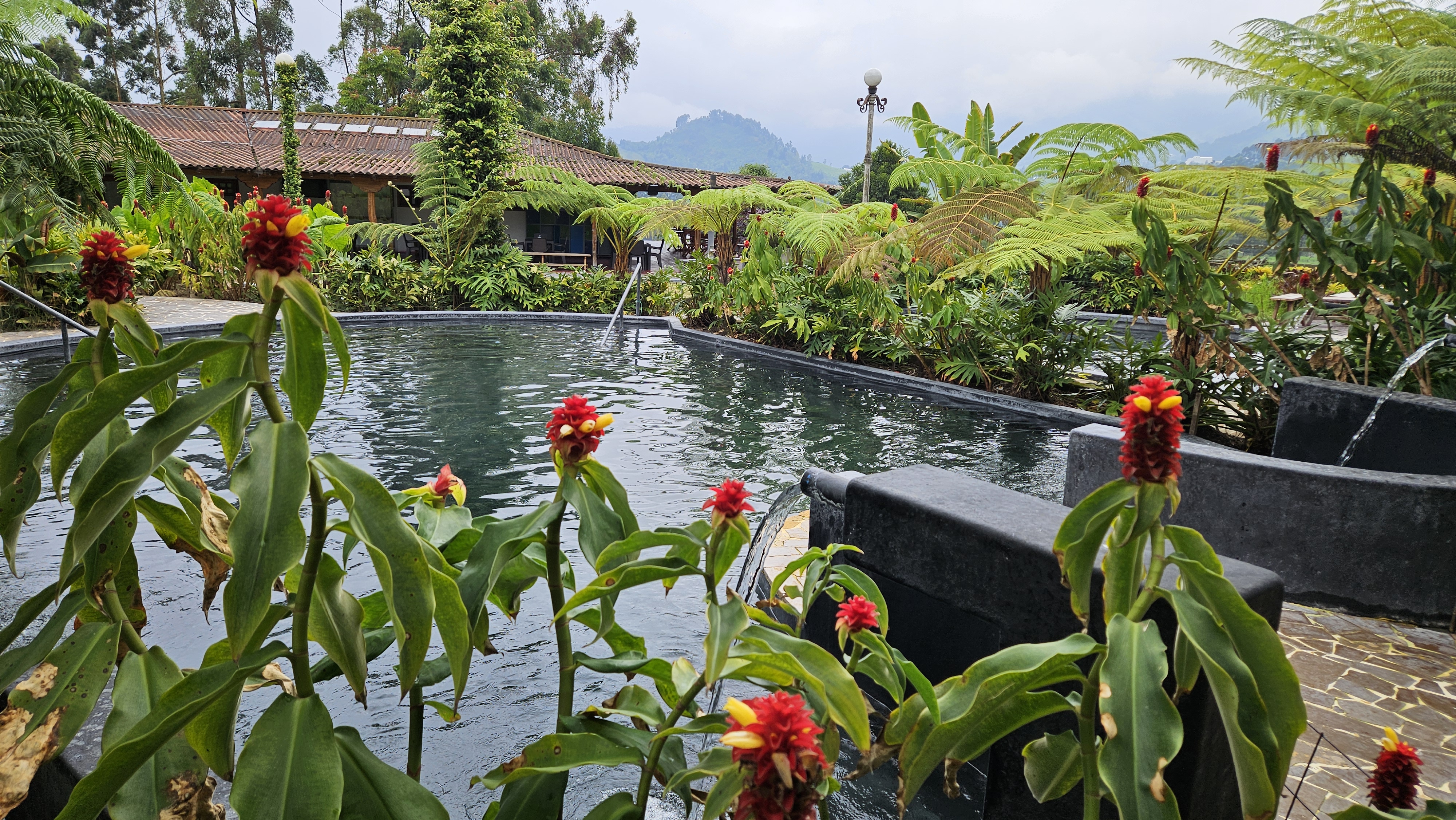
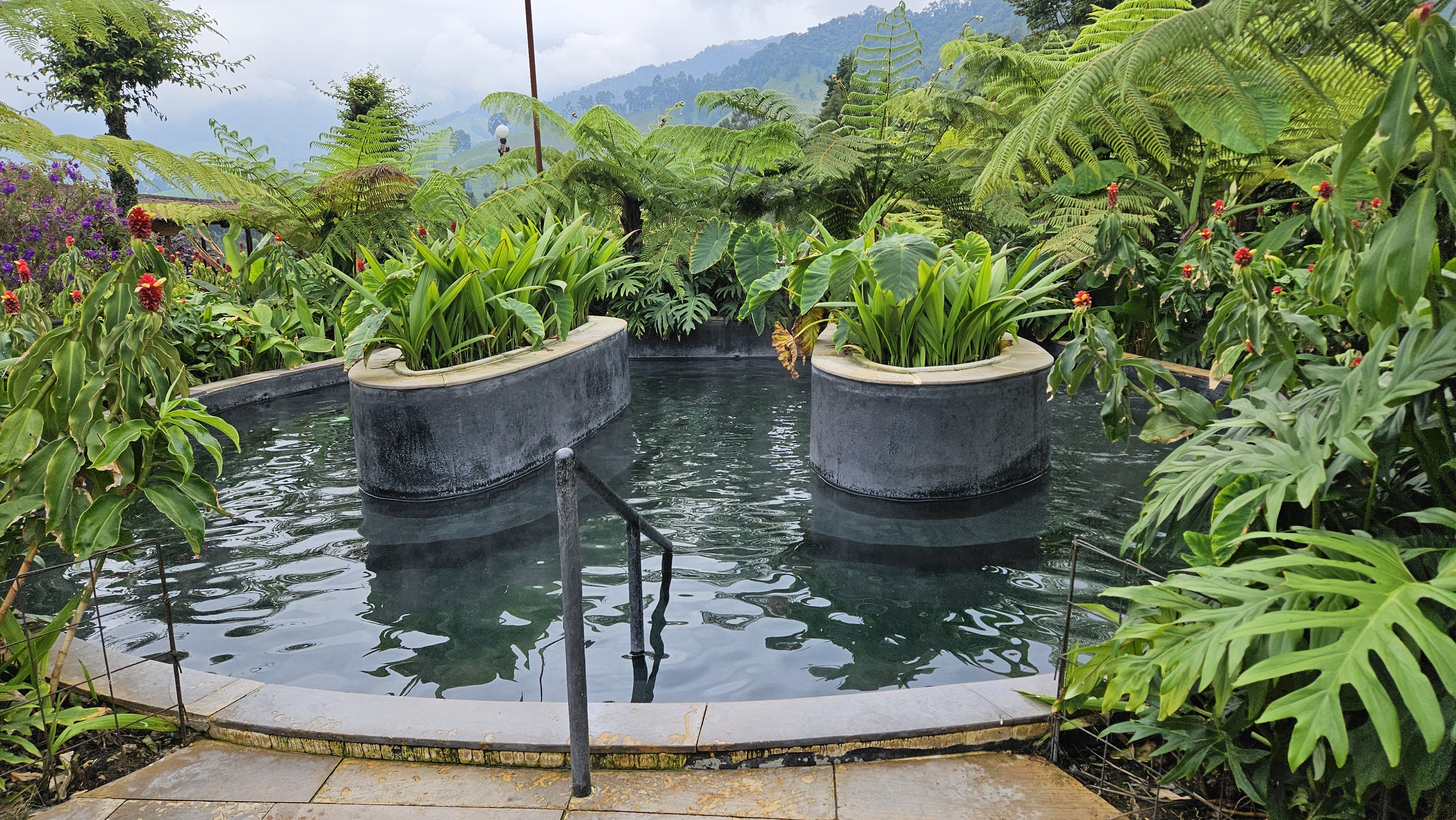


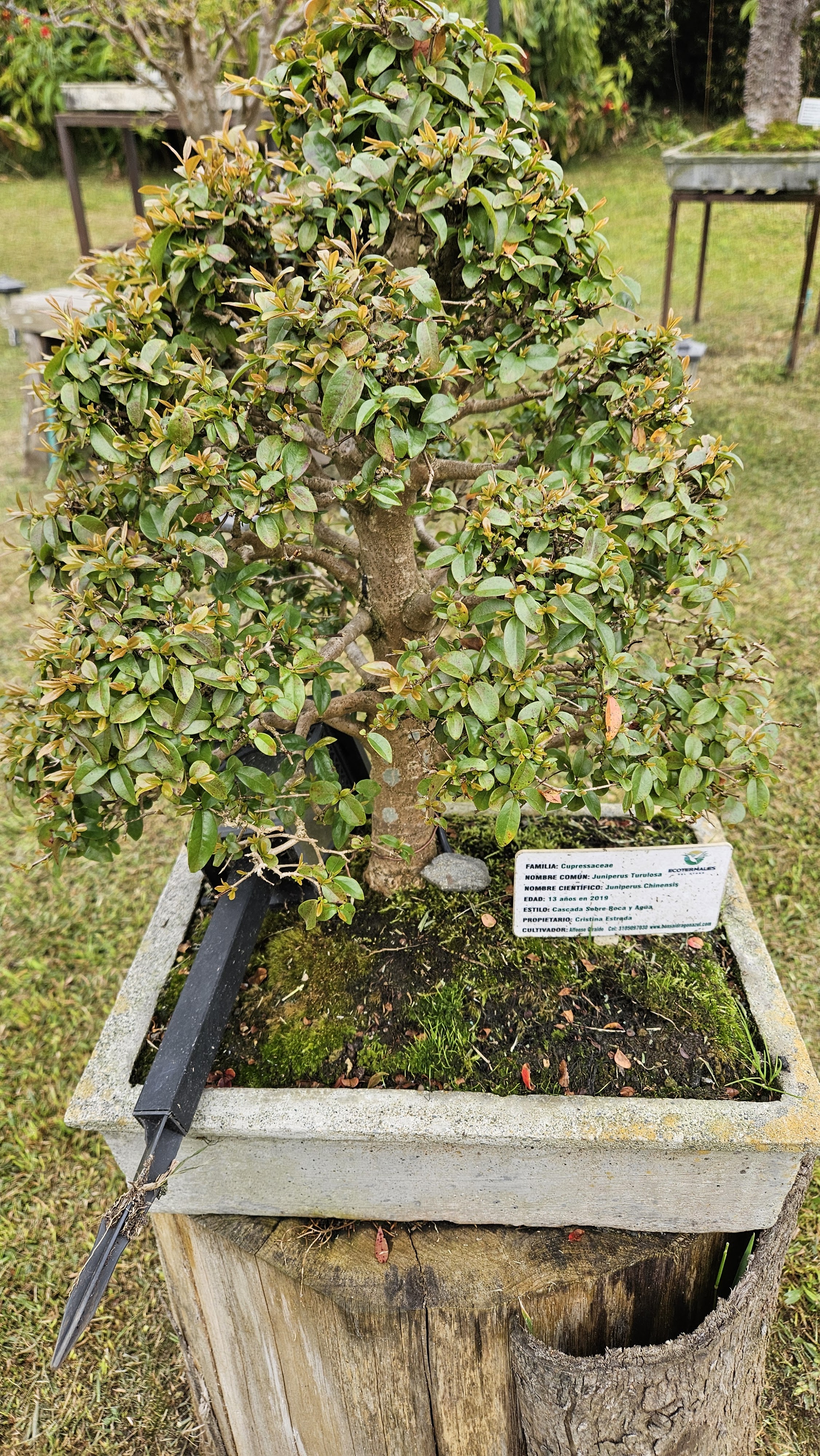


The first was the Ecotermales, a zen garden surrounding relaxing pools. There you can order food at the restaurant or even book a massage with the spa. The garden is teeming with flowers attracting hummingbirds and other colorful feathered friends. Although we were there before the official opening time, the kind attendants allowed us to enter and look around. We took full advantage, snapping pictures of the beautiful pools, the bonsai garden, the decorations. Still, this was all you could do there. There was no hike, contrary to what the website lists. It was better for rest and relaxation, and we wanted a little adventure. We ultimately decided that we would consider coming back after visiting the water park.
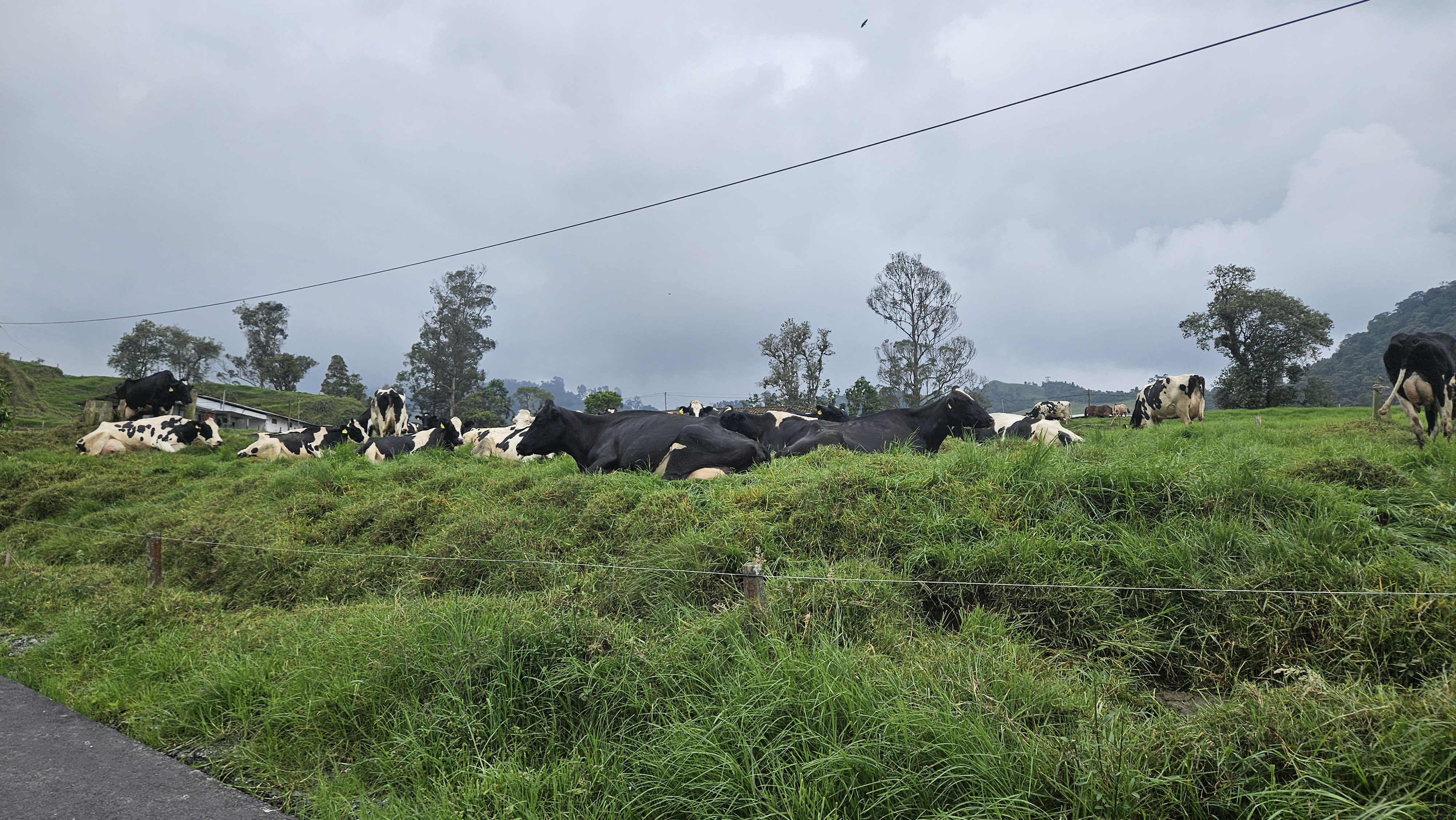

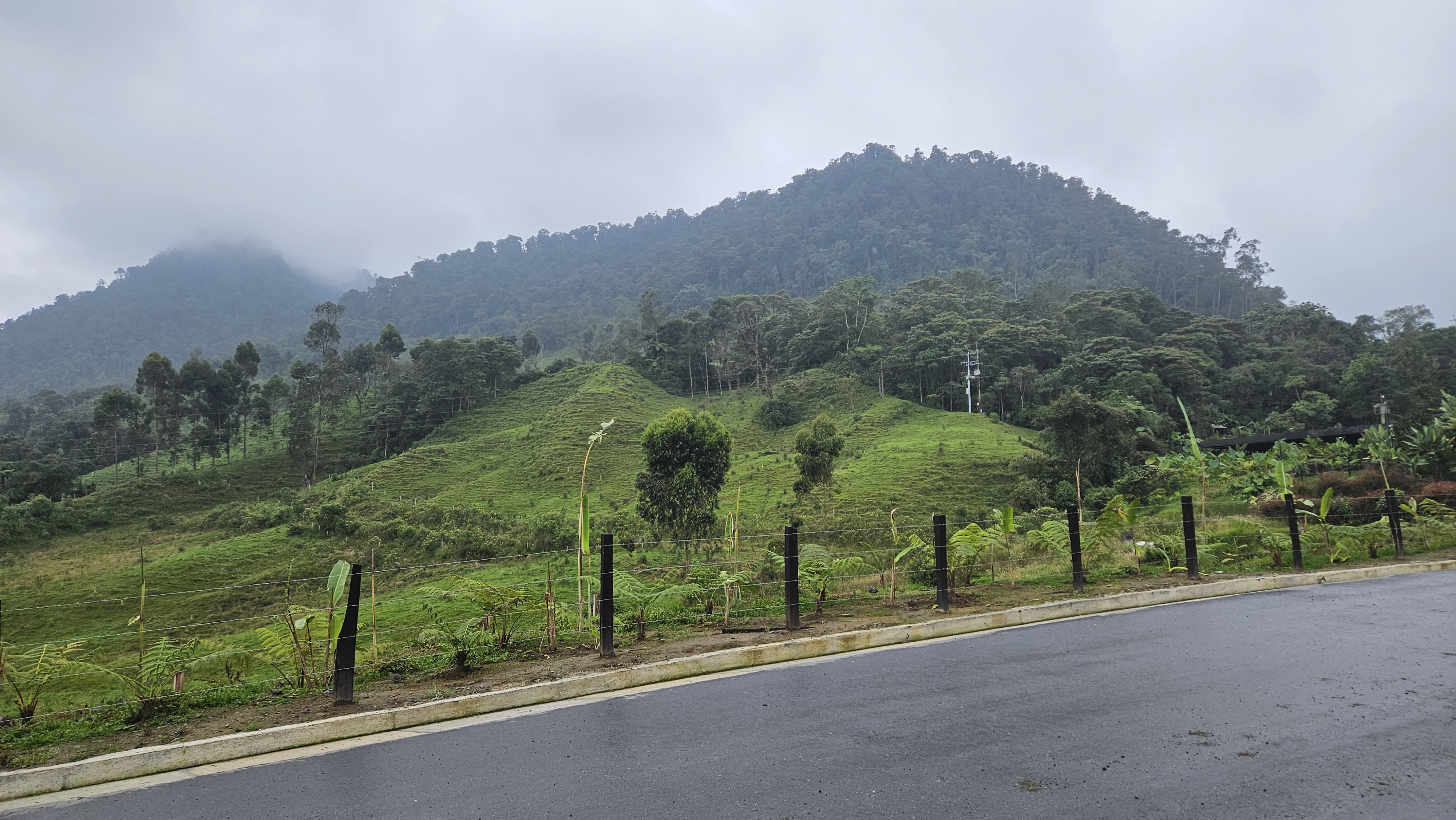
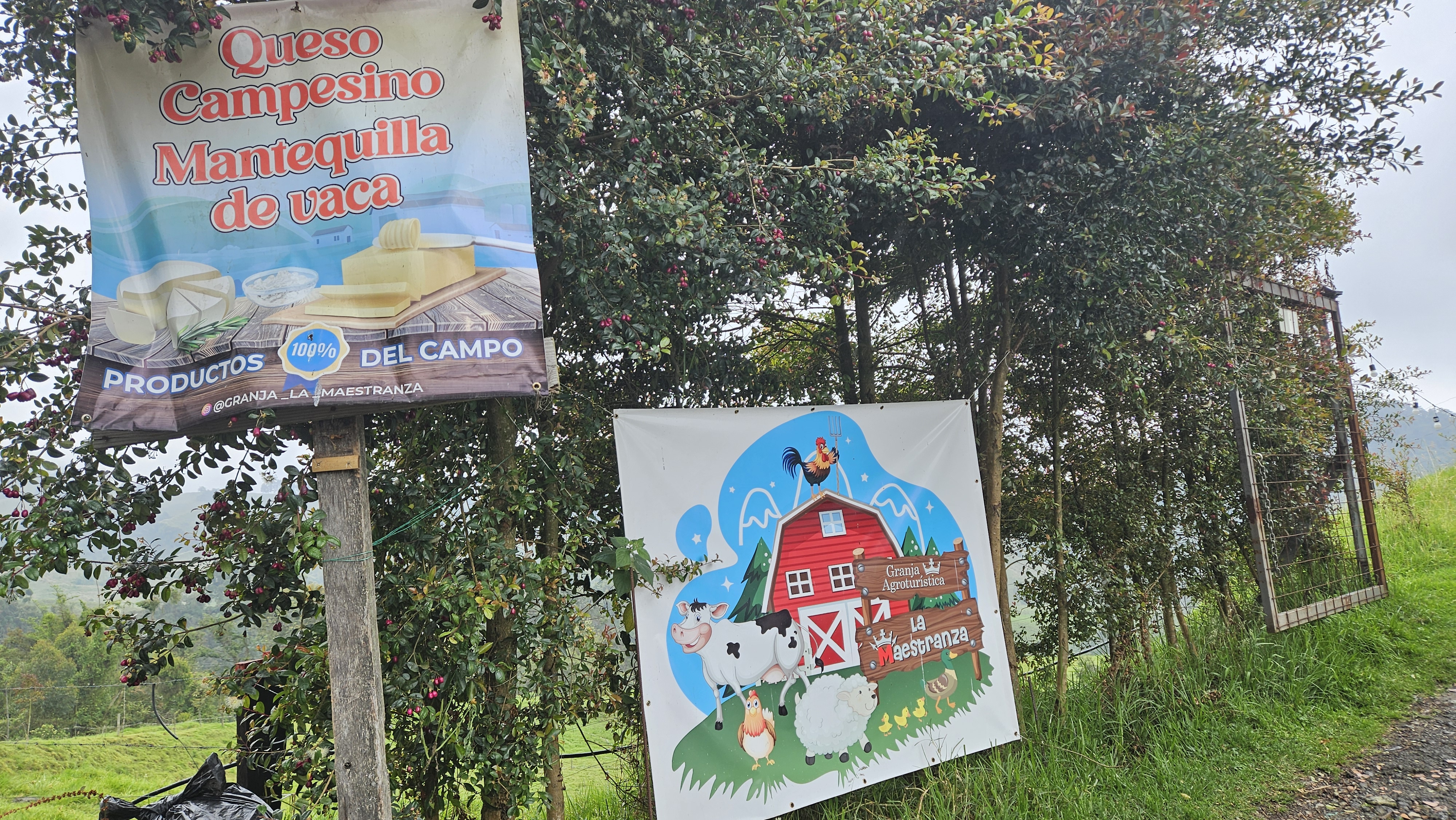

The Ecotermales people told us that we would either need to get a taxi or walk to the Acquaparque. We wanted a hike, so we went for it. The 30-minute hike did not disappoint with its views. We passed Finca Guayabito and felt like we were in Wisconsin, surrounded by dairy cows. On the way back from the park, we given a ride by the shuttle driver working for the hotel. He affirmed the impressive investment needed to have dairy cows in Colombia. The land was rich and owned by someone even richer. Outside of the park, across the road you could buy cheese and butter produced by that investment.
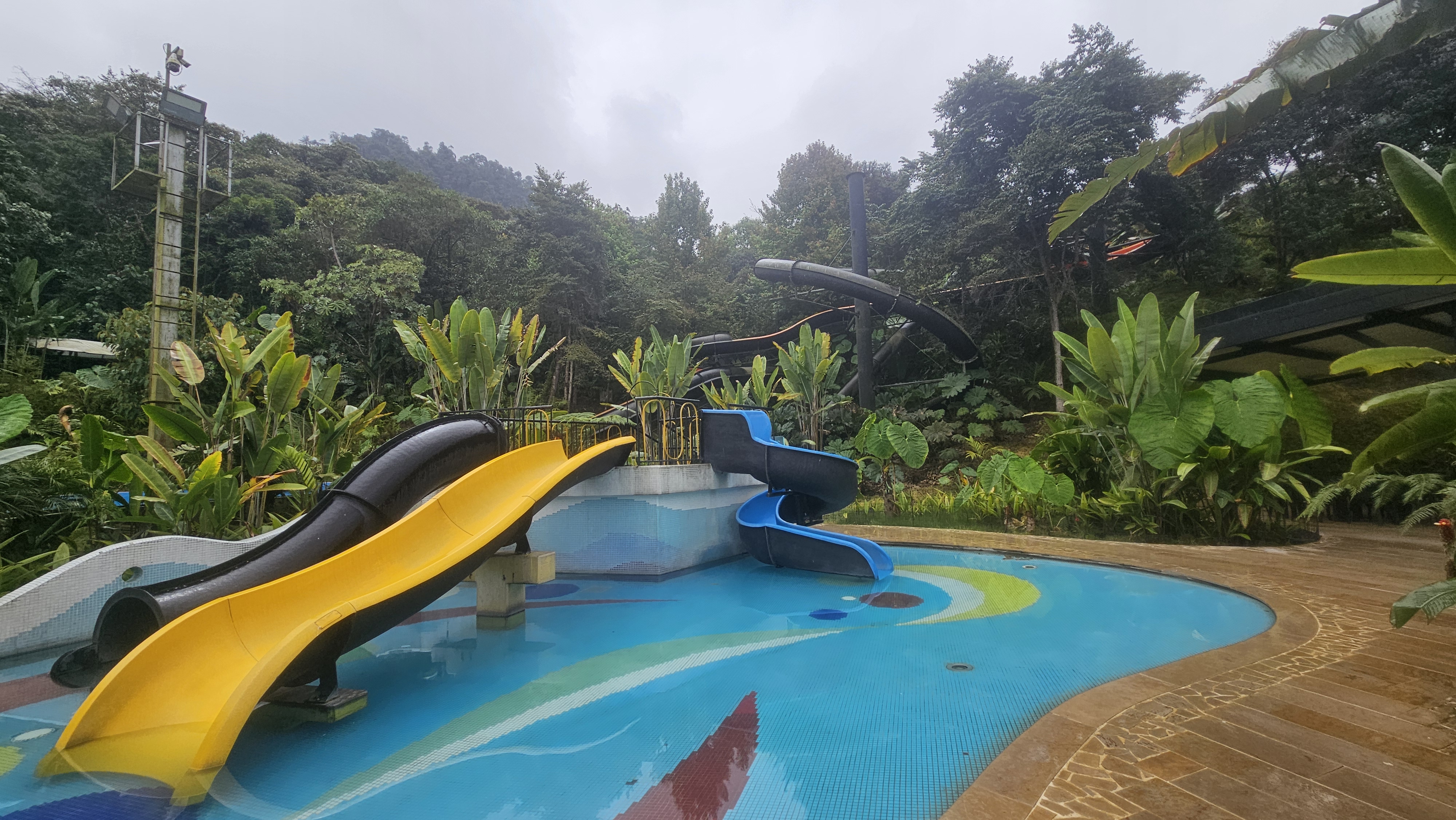


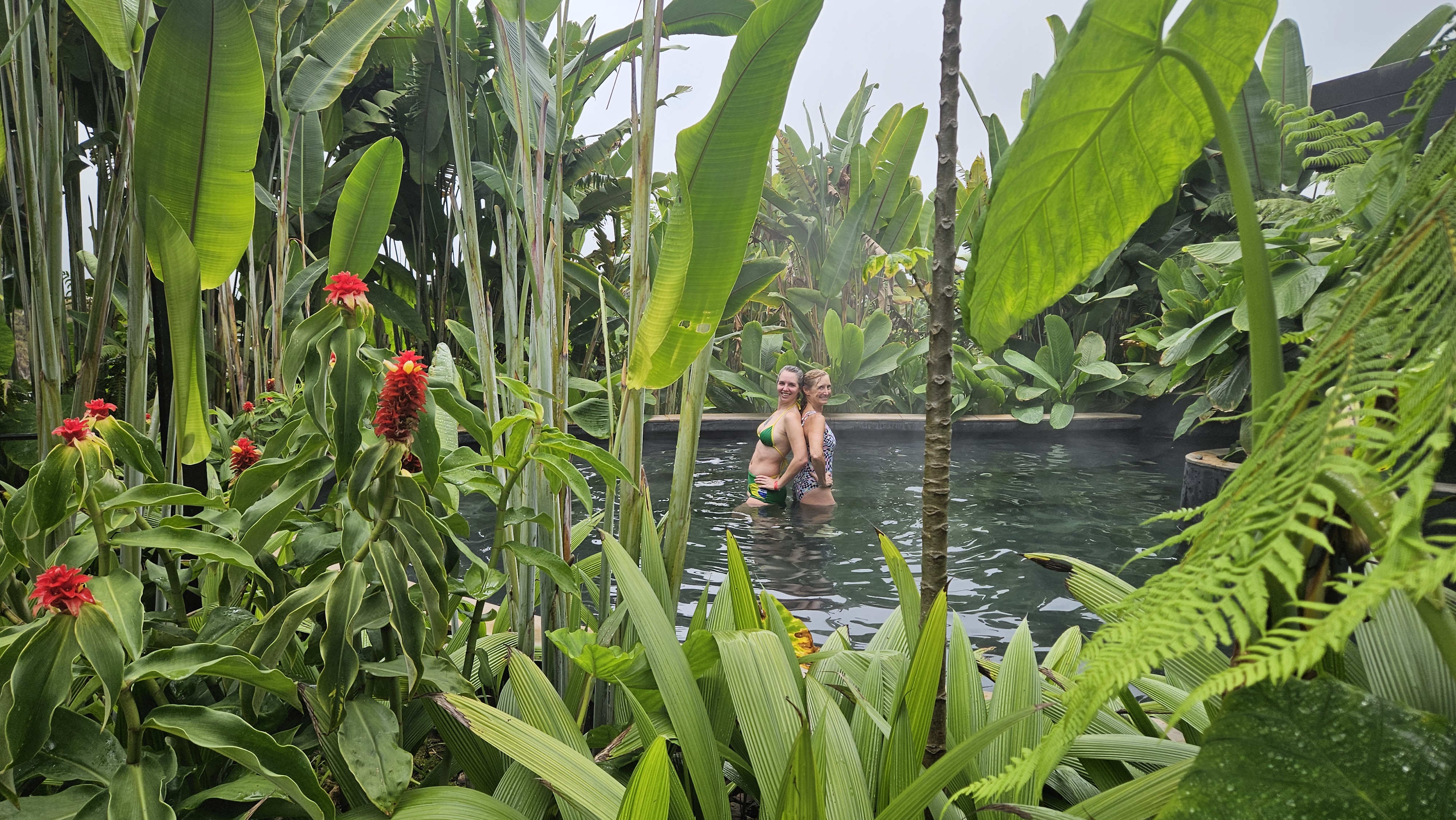


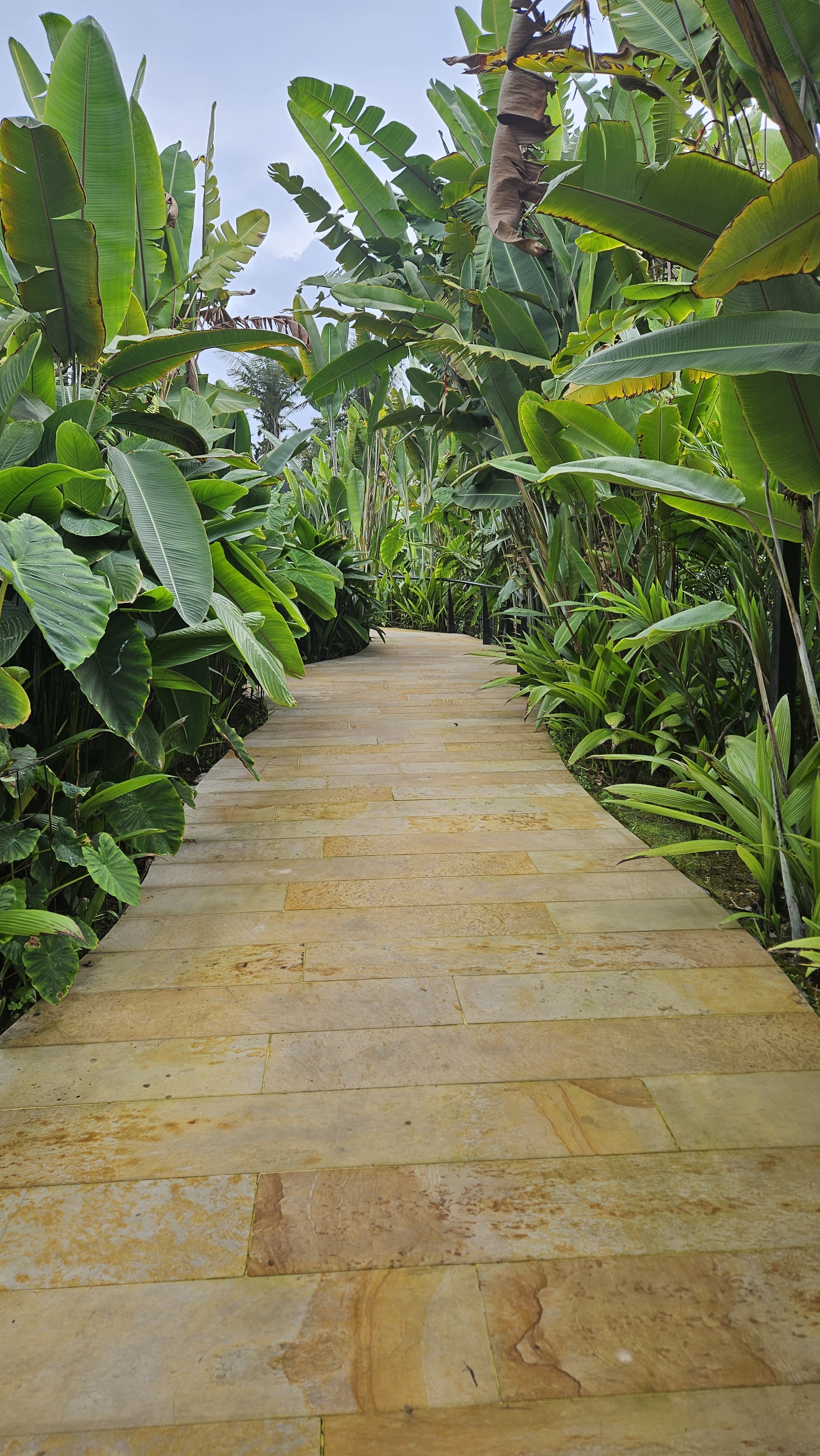
After hiking up some hills (just the workout we were looking for), we found the parking lot near the top. We were greeted by a friendly black and white kitty. Because it was Saturday, we had to pay 10k more than the usual price (60k instead of 50k – still only $14 USD). On the plus side, on the weekends it opens earlier; during the week, doors open at 12 pm. It worked out perfectly.
The park is shrouded in mist and overtaken by vivid vegetation. The information on the Manizales website painted a different picture. Clearly outdated, the price listed is about half the actual price. Many years have passed since the post was made showing a bare, open, somehow brighter version of the park. Its current version is better, more exotic, and the awnings are a practical addition considering the frequent rains.
I tried out one of the three slides. It was hard to work up the courage for several reasons: I didn’t have flip flops, for one thing. That made getting up the hill on the mossy walkway difficult. Getting up there was hard enough, but then psyching myself up to get in the icy waters (yes, the slides waters are not from the springs) was another challenge. I got a lot a water up my nose as I rushed down. It was fun, but getting up there to do it two more times was too much to ask.
We were also informed that the eco-trail was closed. Though the hike up the road had been nice, we were disappointed. Apparently the unseasonably heavy rains had done some damage and made it too dangerous for hiking. Oh well, if we ever go back, we will have something left to experience.
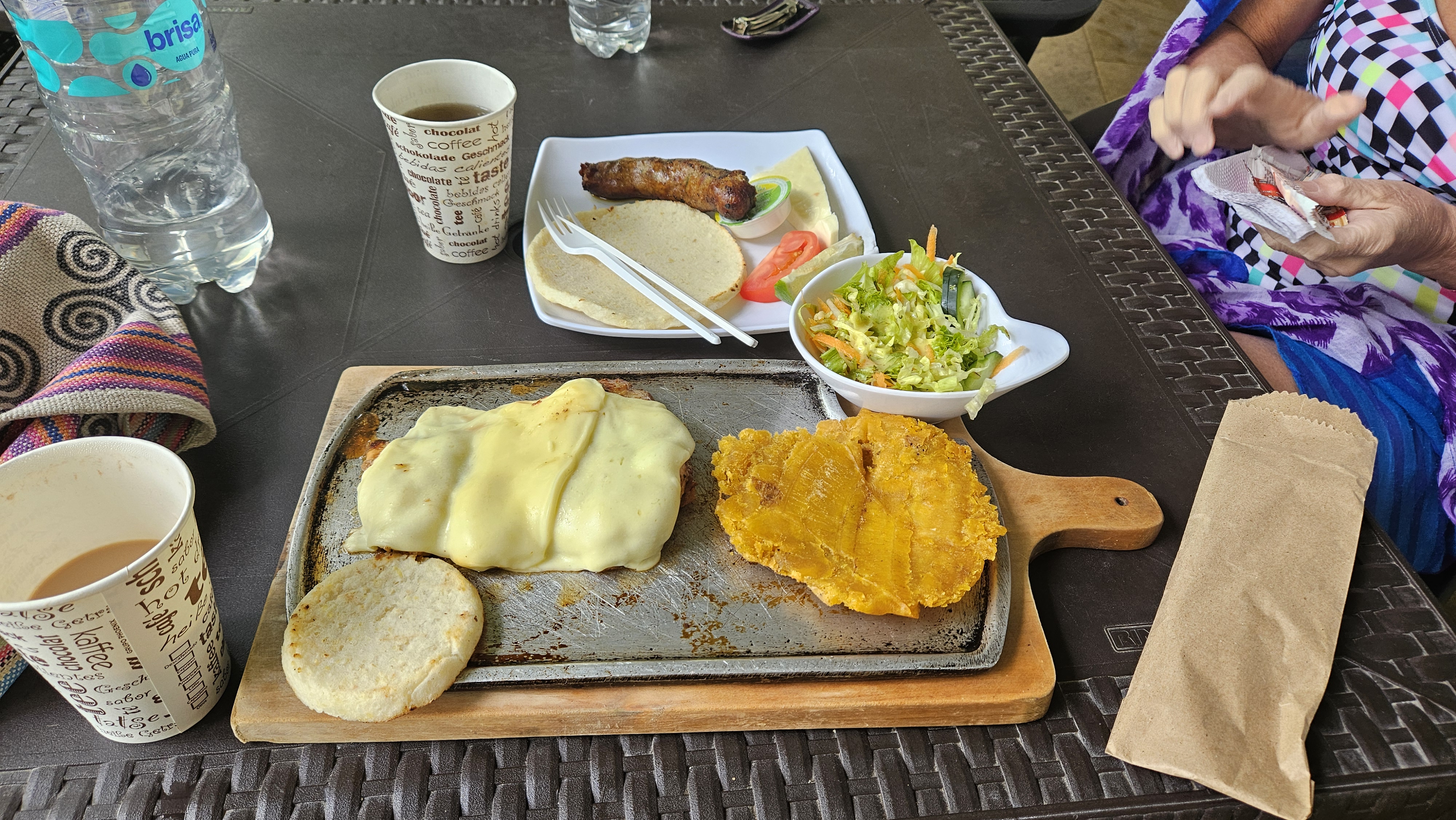
All in all, we had a relaxing day. At lunchtime, the menu had plenty to choose from. Carin went for the traditional agua de panela (brown sugar cane infused water) with an arepa, chorizo, and cheese. I went for something a little pricier, patacon and Neapolitan-style chicken with an arepa and salad and hot chocolate. The drinks helped us warm up. The cold rain had made it hard for us to get out of the pools.
We mostly lounged in the warm waters and made new friends. After our lunch, we got back in to get some tasty cocktails at the wet bar. We floated from pool to pool lazily, enjoying the contrast of cold raindrops and steamy water.
Once the weather had cleared up, we decided it was time to get back to Manizales. We had to make the most of our last full day in the city. Resting in the water had recharged our batteries, so no need to go back to the ecotermales. Our skin and hair felt super soft, our hands pruny from the hours spent in the hot springs. What a refreshing experience! With the shuttle, we got back to the hotel in a few minutes. We jumped straight on the Gran Calda bus headed back into the city to spend the afternoon and evening exploring.













 Nómada [con] Rumbo