Beach Day in Brazil: Reflections from Praia do Espelho

This journal excerpt is taken from week 4 in Brazil, January 25th, 2025. Since I named my blog “adventurer’s diary” I figured, why not post one of my journal entries? Along with some photos taken at this stunning destination.
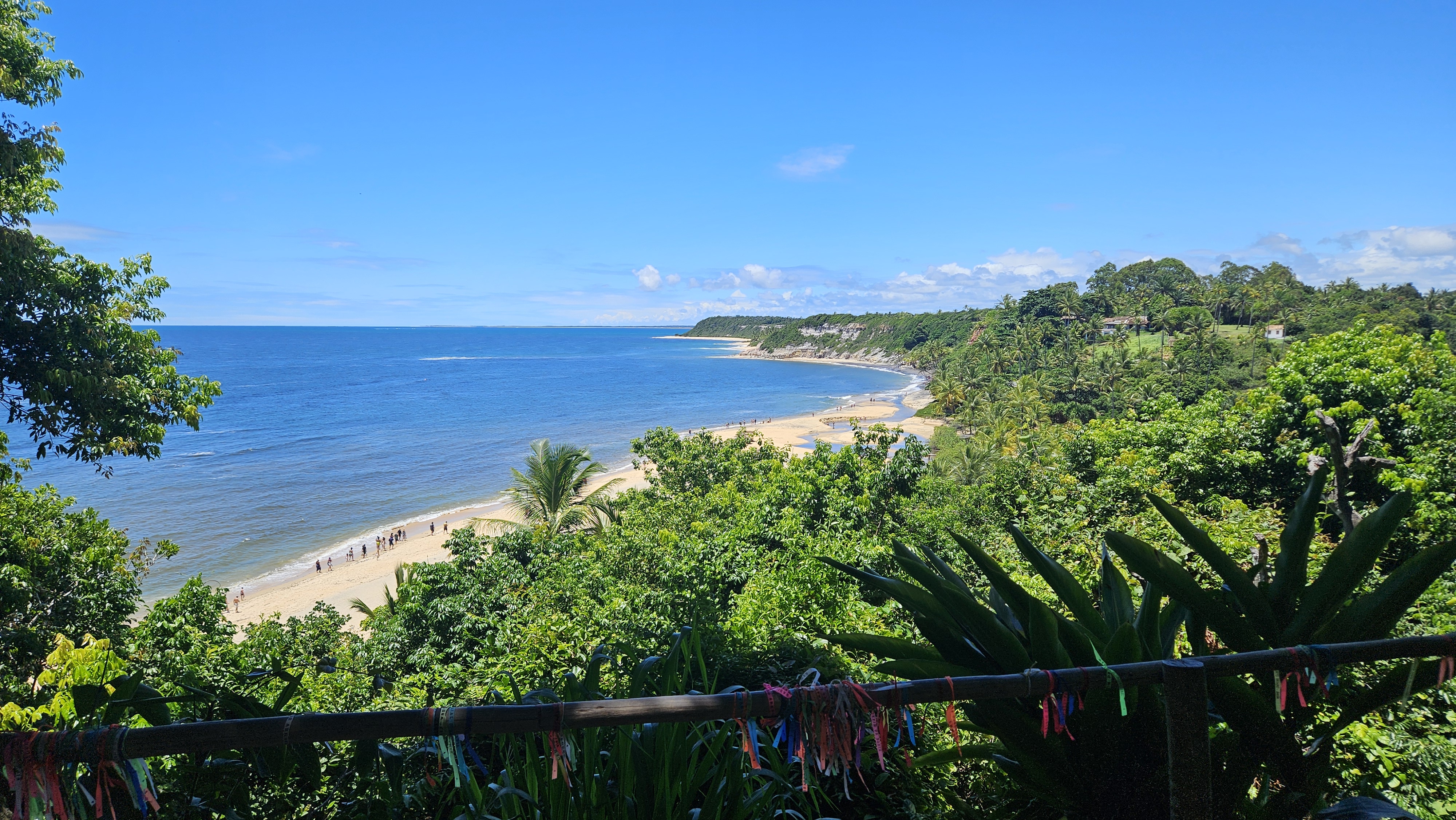
This entry came 10 days after my time in Salvador. I arrived in Brazil on December 28th after sorting out the over-stay fine with Colombian immigration in Leticia. I took a motocarro to Tabatinga, the Brazilian border town, with my flight ticket bought, ready to go to Manaus. Or so I thought.

My entire time in Brazil, I had issues with GOL Linhas. I would buy a ticket online; they would say it was confirmed. Then I would find out my payment was refunded. With no email notification. Both in Tabatinga and Manaus I ended up having to buy the ticket in the airport. I never did figure out why. Was it due to the security on my credit card (which is supposed to be ideal for travel – come on Aviator Mastercard!)? Or the hold they put on my bigger transactions after a random case of fraud.

Whatever the case, I showed up at the airport thinking I had a flight and found out it was canceled. Lucky for me, there was another flight leaving about an hour after the flight I showed up for. So, it all worked out.

That was to get to Manaus. After attempting and failing to buy my Manaus-Salvador flight ahead of time, I knew what to expect. I made sure to get an airbnb close to the Manaus airport. Then, I went to buy my ticket in person.

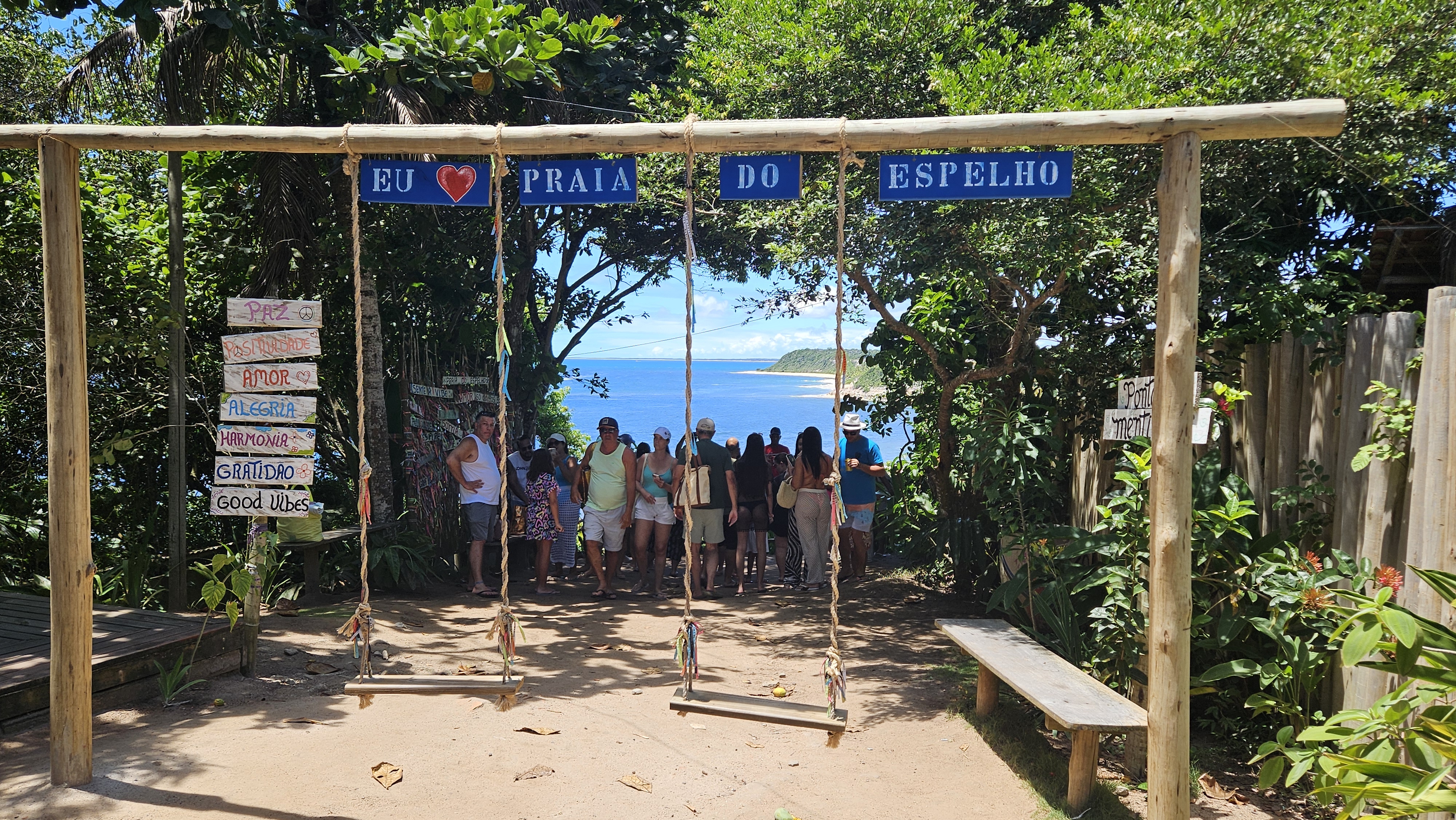
This was just a sample of the setbacks I experienced. By making a plan, I finally could have this transcendent day at the beach – Praia do Espehlo, some 2 hours from where I was staying in Porto Seguro.
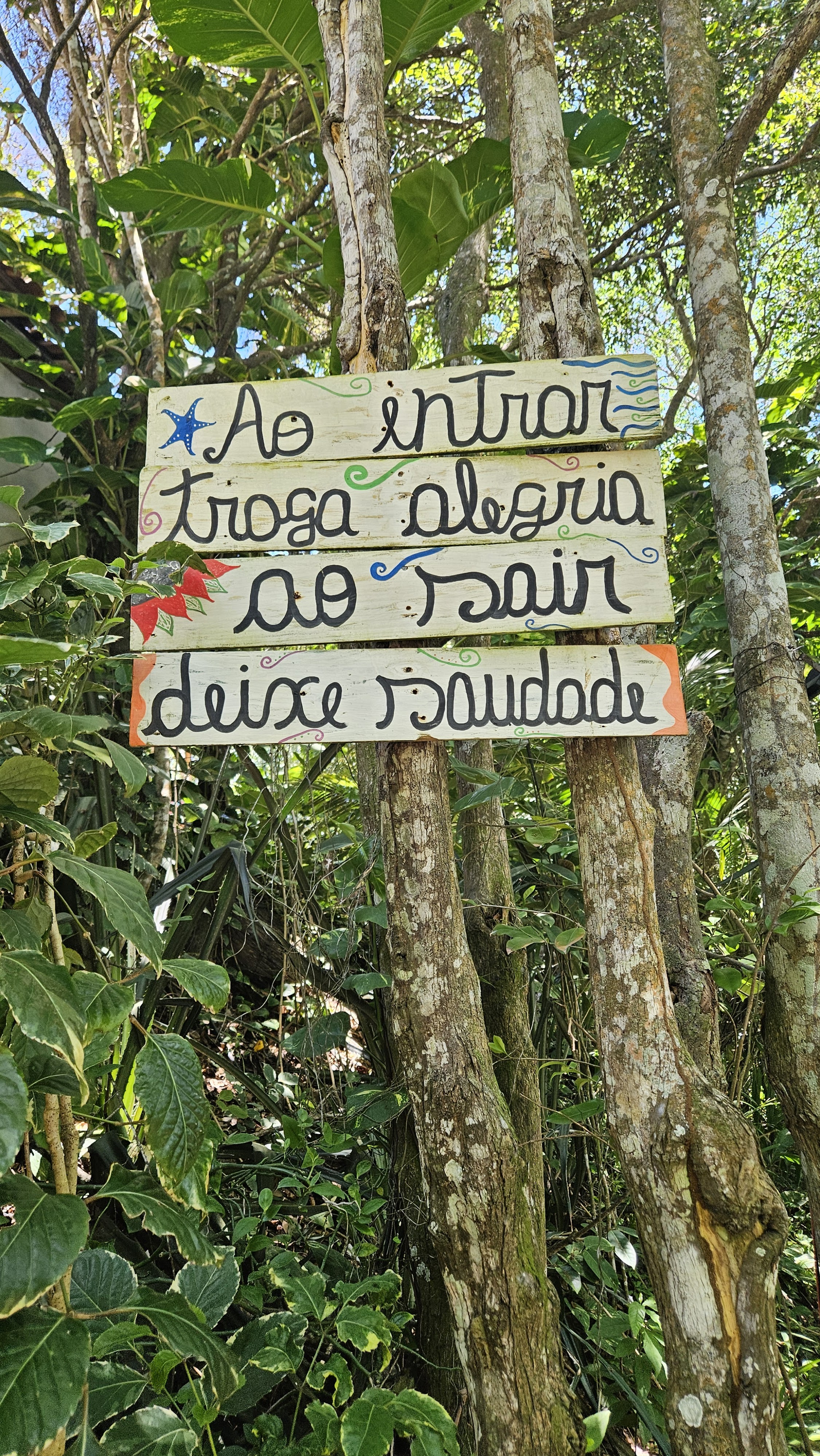
When you enter, bring happiness, when you go, leave yearning.

Here’s a slice of my experience:

I’m at Praia do Espelho with a tour group. The tour cost 120R$ (~21 USD). The ride here on the tour van was bumpy, but I’ve been so tired, I still fell asleep.

It’s hard to describe vibes and generalize my experience with Brazilian people. On one hand, groups I have been haphazardly integrated into have been hit or miss – sometimes coming off as cold or discordant. I guess in those rare cases where I was invited to join close friends, I felt like there was little room for a third wheel. Or maybe I’m not confident enough in Portuguese to break the ice. I could just as well be misjudging the situation based on the little I can see on the surface.
All the same, Brazilians have been some of the most helpful and patient people I’ve encountered. Even on the street. One of the silly little things that has stood out to me after so much time in Colombia is how people actually respect pedestrian crossing. Even in the States that is insanely rare – you’re at a crosswalk, and the drivers stop to signal you to cross. Even bike riders take heed. The sense of awareness of other people and road rules seems stronger here.

What scares me is the intensity of the men. If they find you cute, they shoot their shot at all costs. I’ve gotten three or more new contacts because of this. You have to set boundaries, but I learned that well in Colombia. Been there, done that, could write a book on it. You can’t take all the flattery too seriously because that is typical modus operandi. A thinly veiled tactic to convince you they’re sincere.

But, on the other hand, it’s been nice not being pegged as gringa right off here. Brazilians come in all shapes and sizes. And they’re aware of that. It helps that I also speak Spanish. Still, I try not to default to speaking it. That has made being spontaneous more challenging. But that’s the idea. I’m mainly asked if I’m “Argentina” because most tourism comes from there. After all, it is summer here in the Southern Hemisphere. It’s high season in beach towns (so not great for my wallet). I imagined that but still didn’t prepare. Sometimes you just have to do things, accepting all consequences of your rash decisions.
Brazilian music is fire. You don’t hear Colombian music much or any music in Spanish. And, why would you, I guess? You rarely hear Brazilian music in Colombia. Brazilian’s have such a rich variety of musical styles and rhythms of all types that unless you happen to be in a community where Hispanic people live (mainly of the Venezuelan diaspora), you aren’t likely to hear Vallenato or merengue, or even reggaeton for that matter.

That means full immersion.

I just explored the beach. We got here around 10 am and leave at 3 pm.
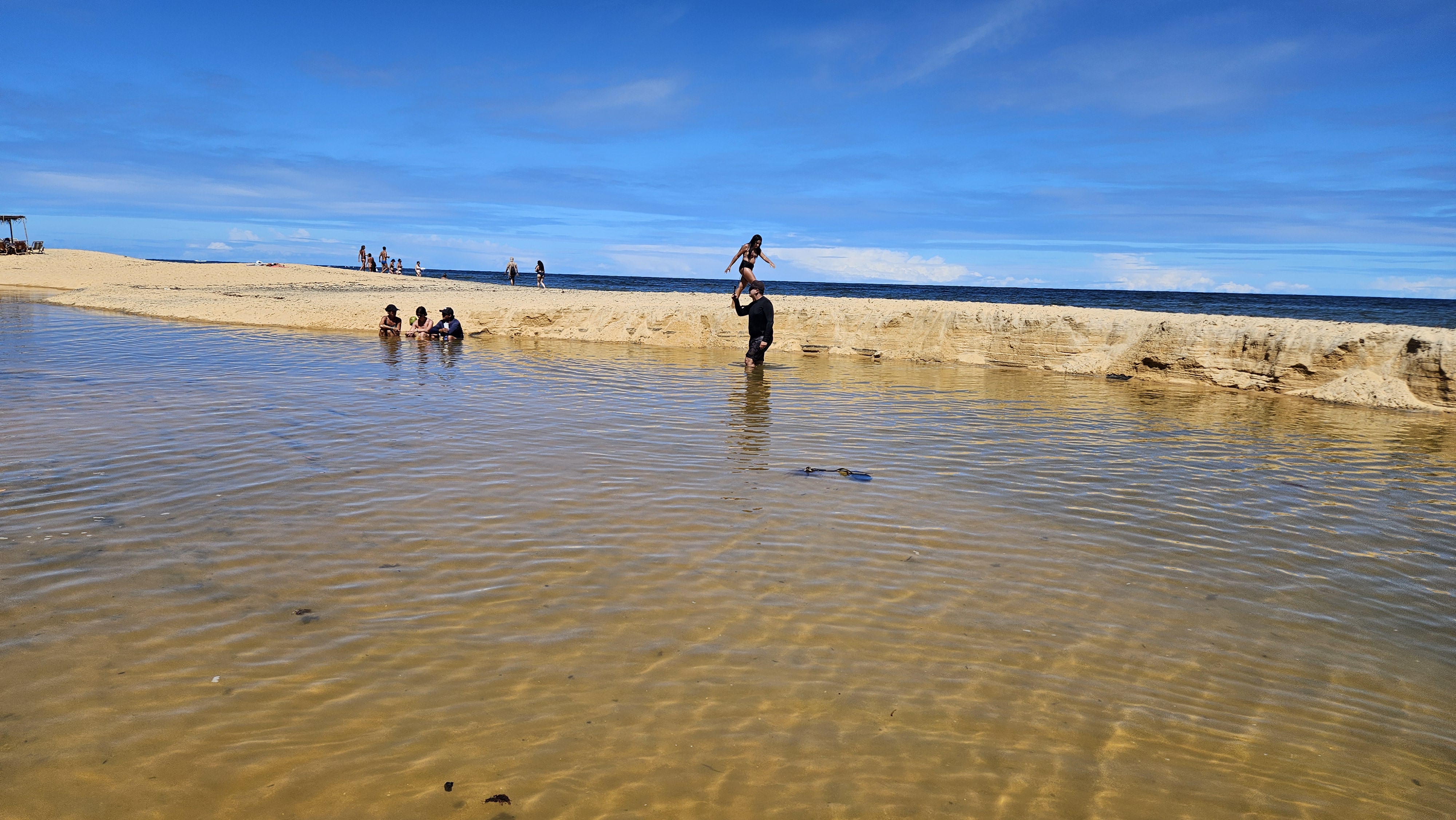
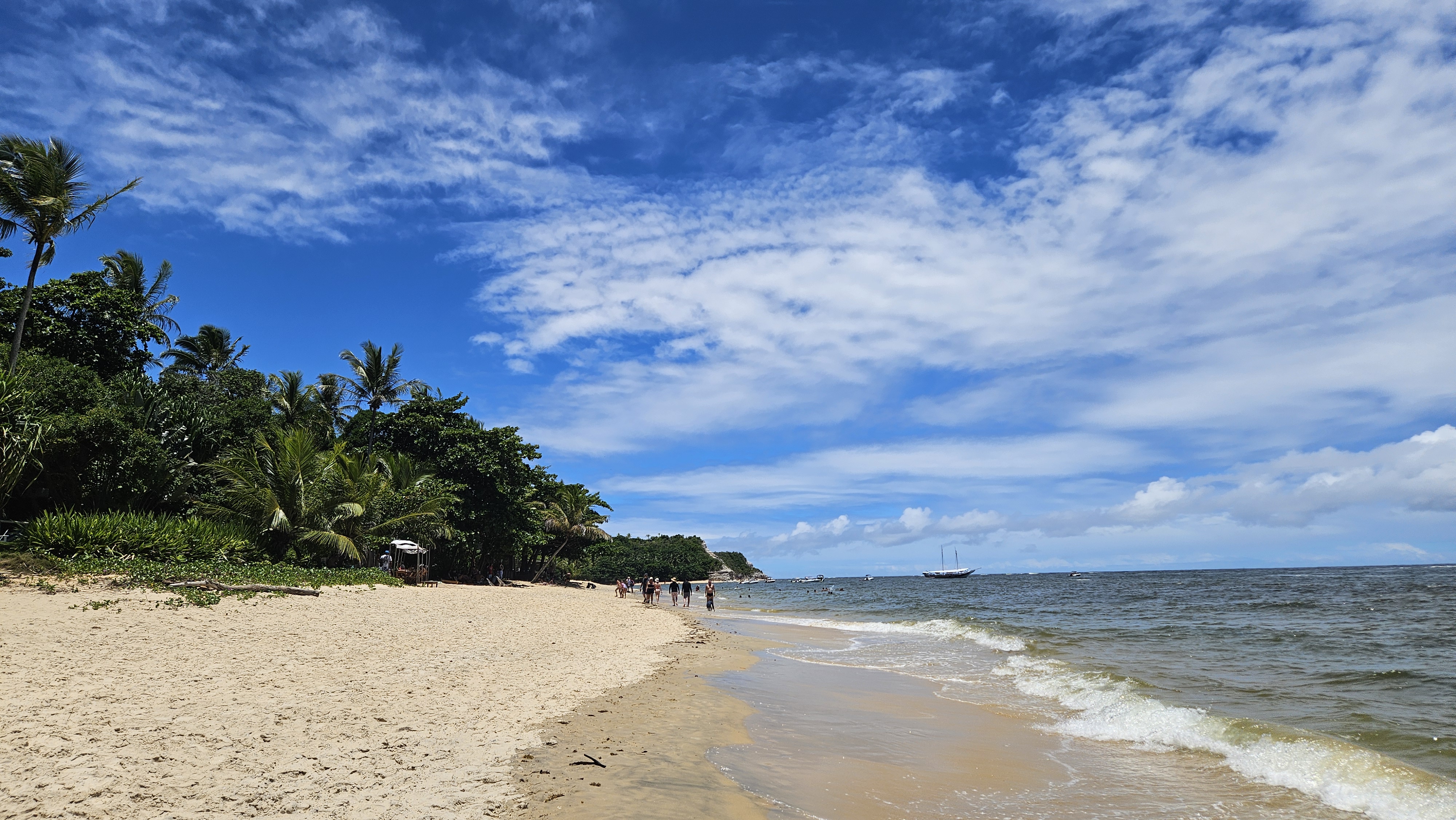
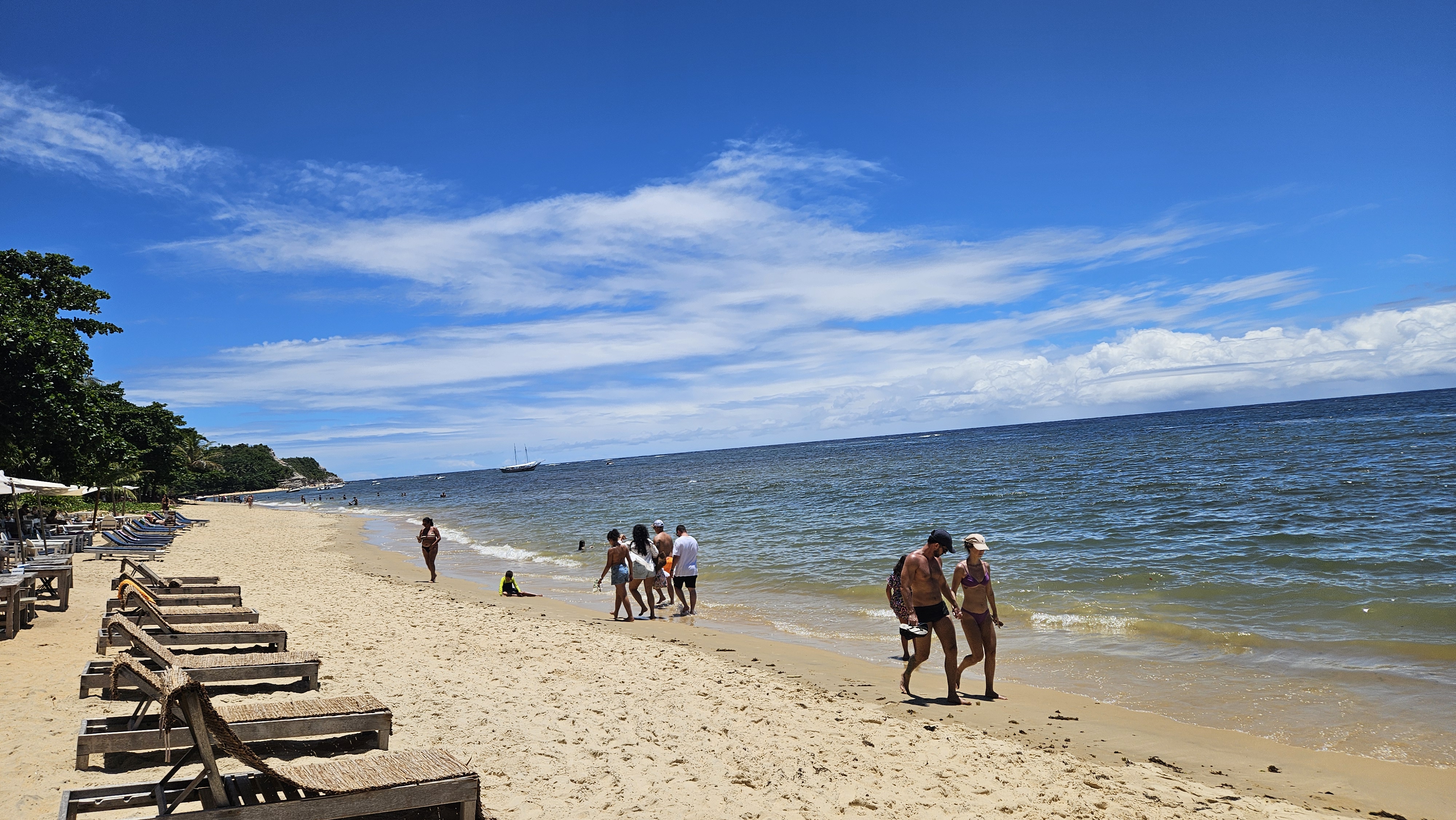
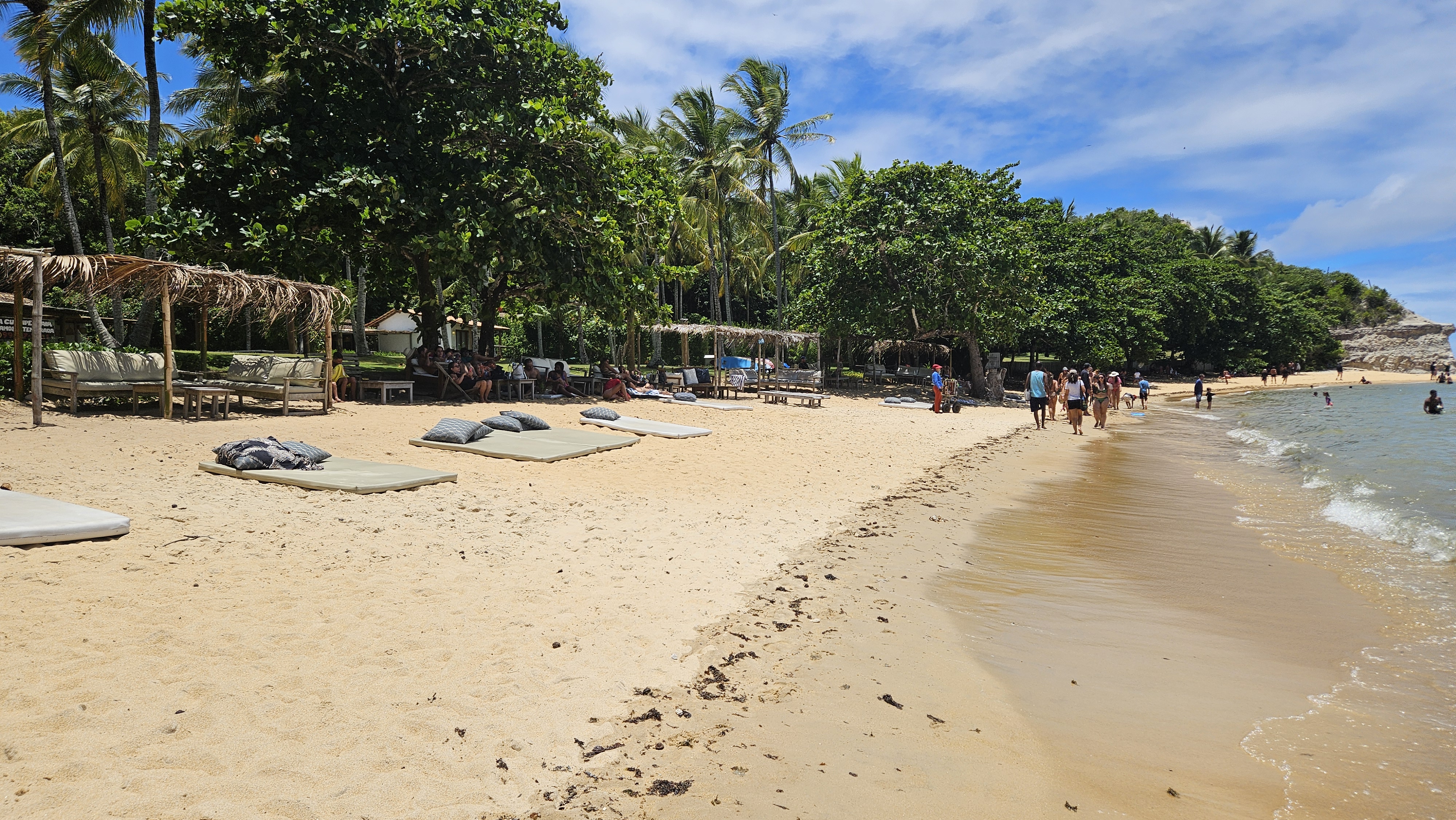
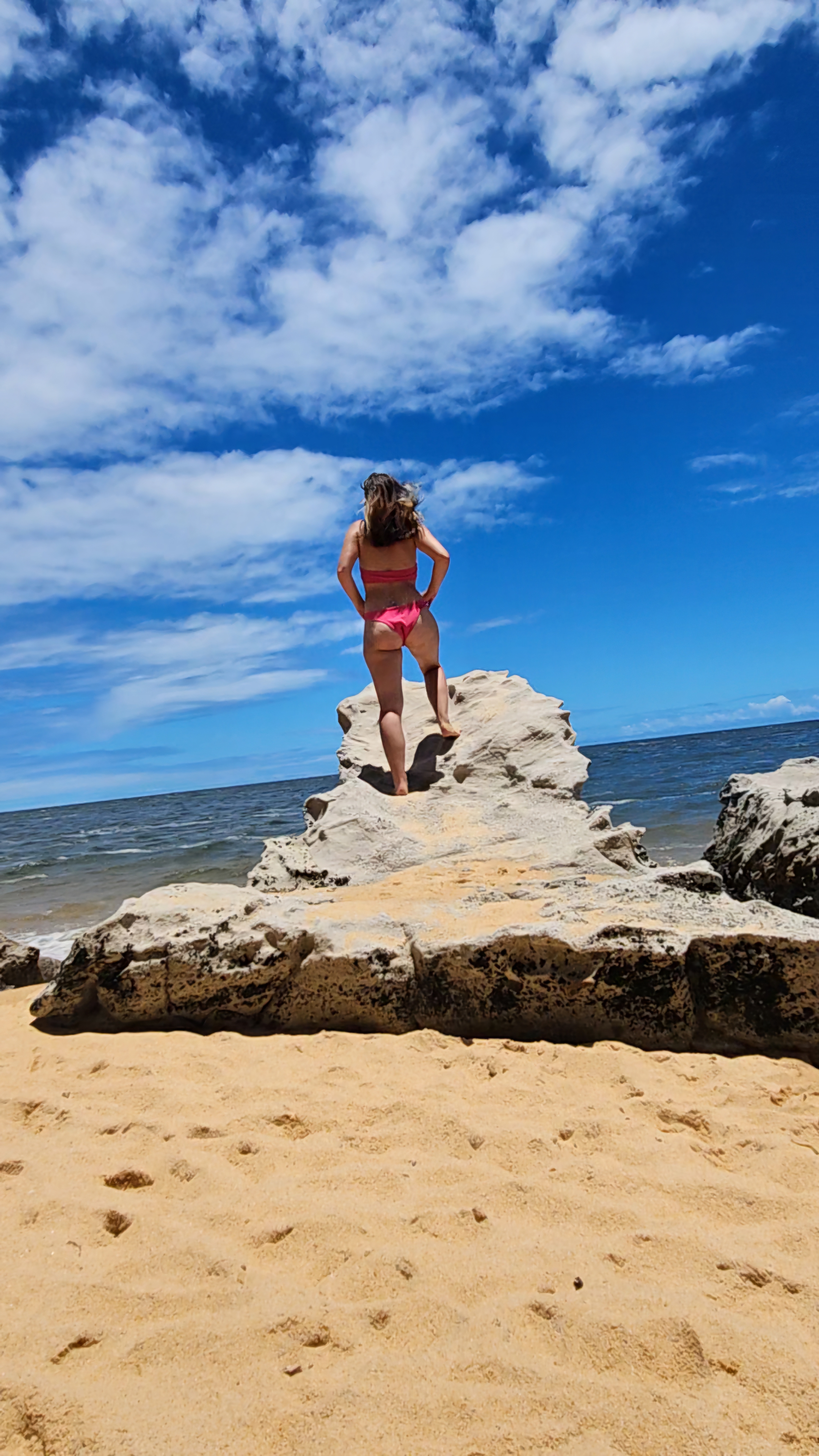
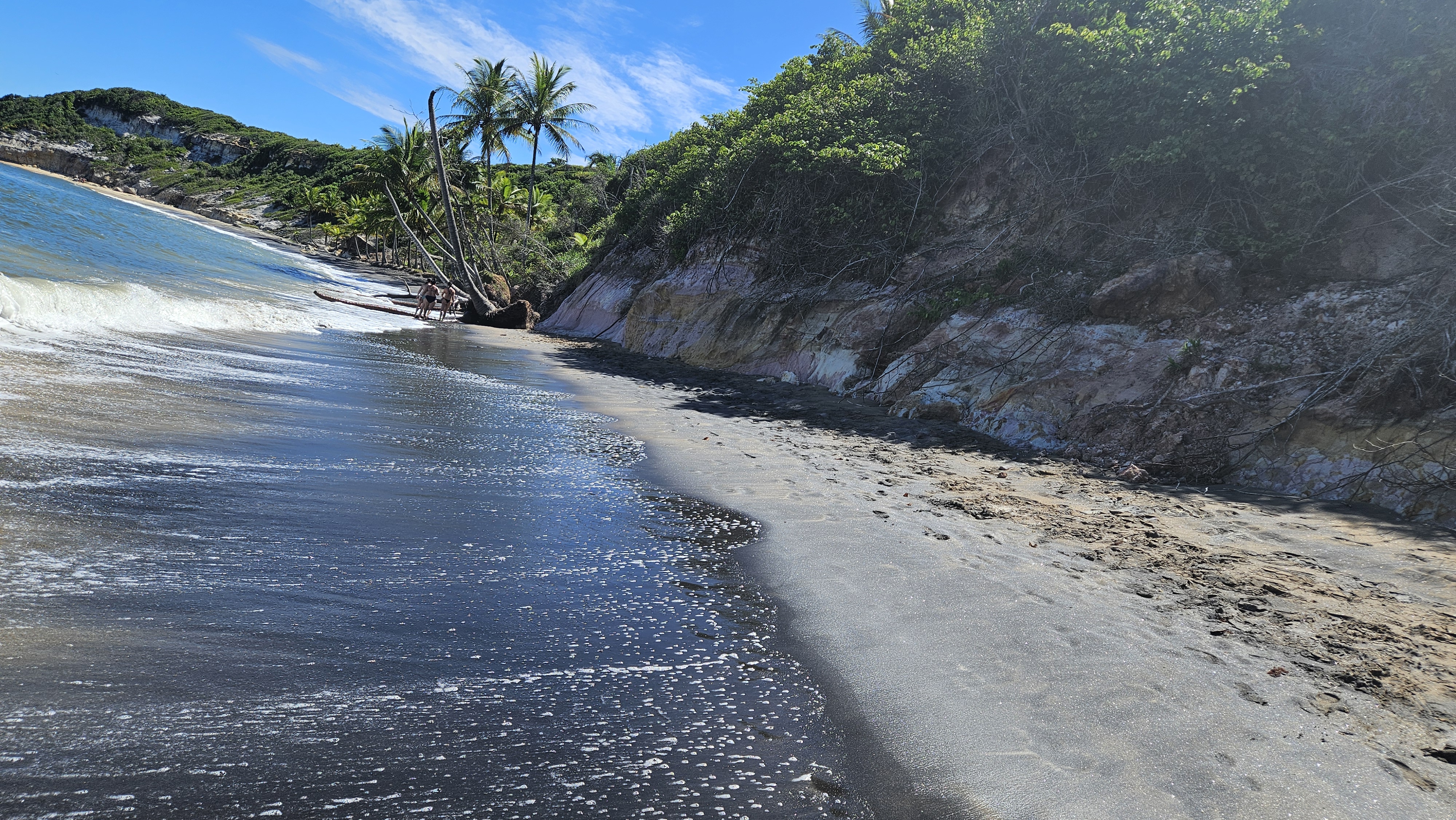
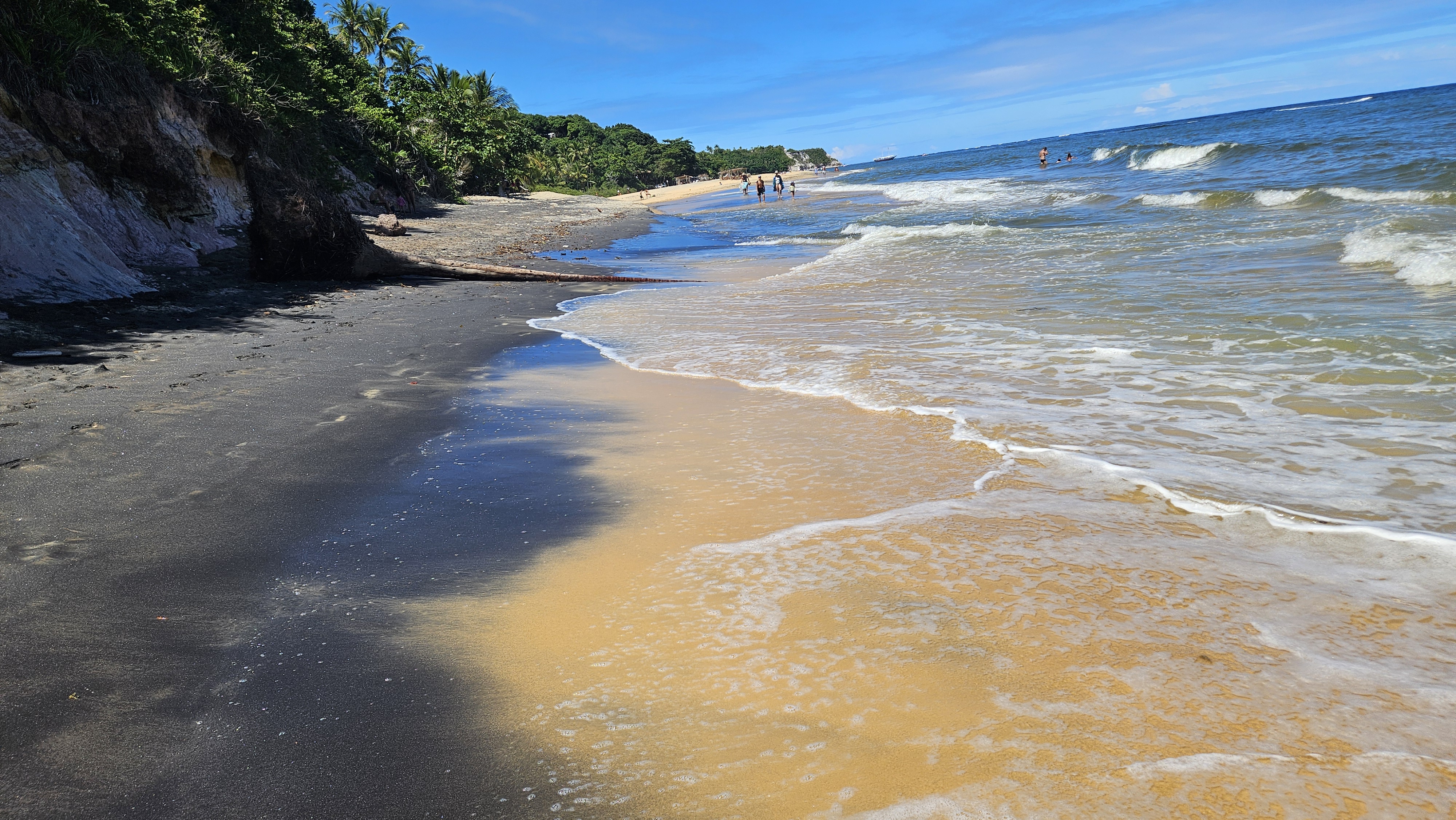
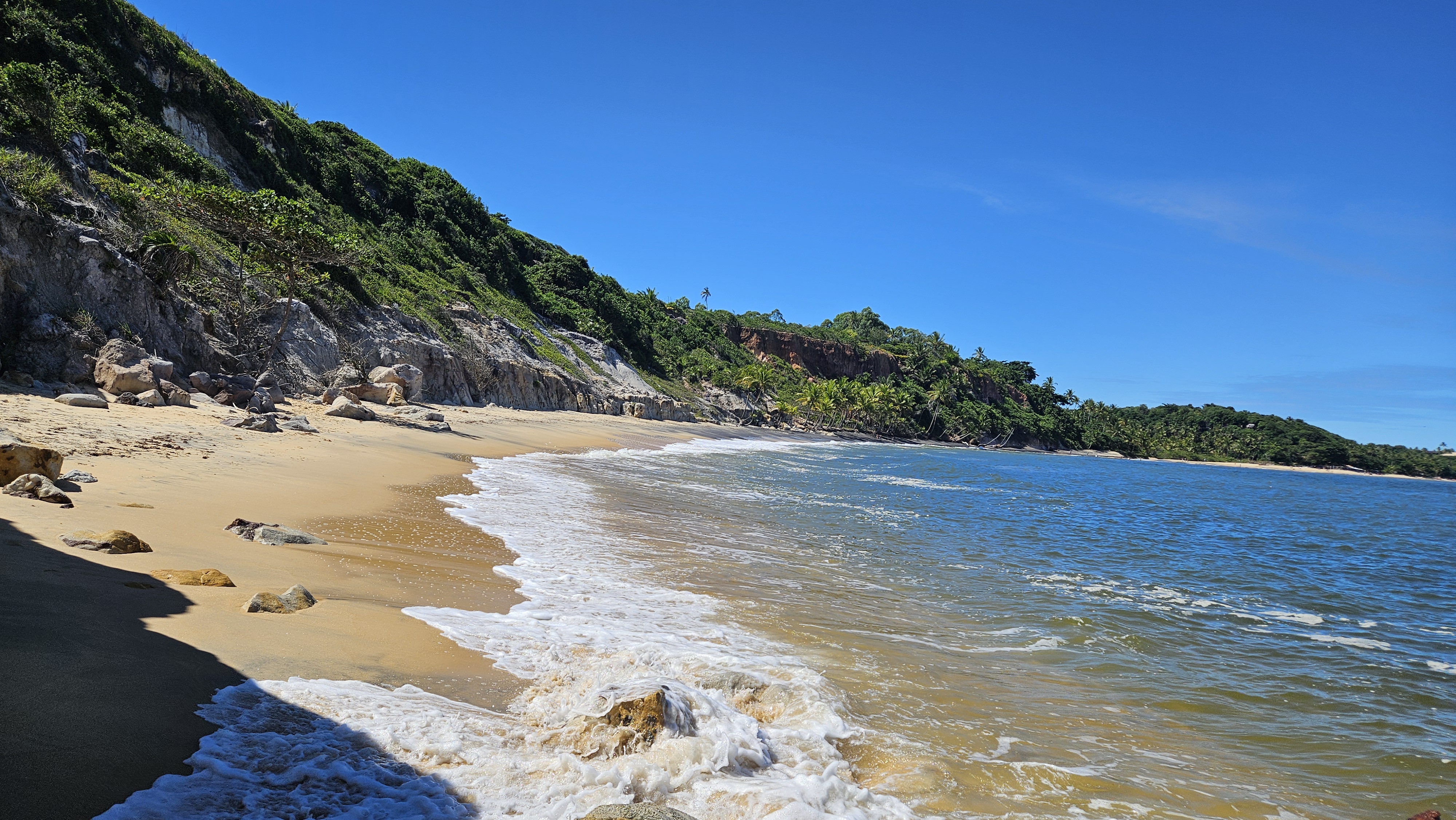
The beaches here are like natural swimming pools: few big waves, soft, fine sand, lukewarm water – cool but not cold enough to shiver. I walked along 4 different small beaches connected to this stretch, sectioned by rocks, cliffs, and reefs. I saw people snorkeling, and I imagined all the colorful fish, coral reefs, and anemones they could see.

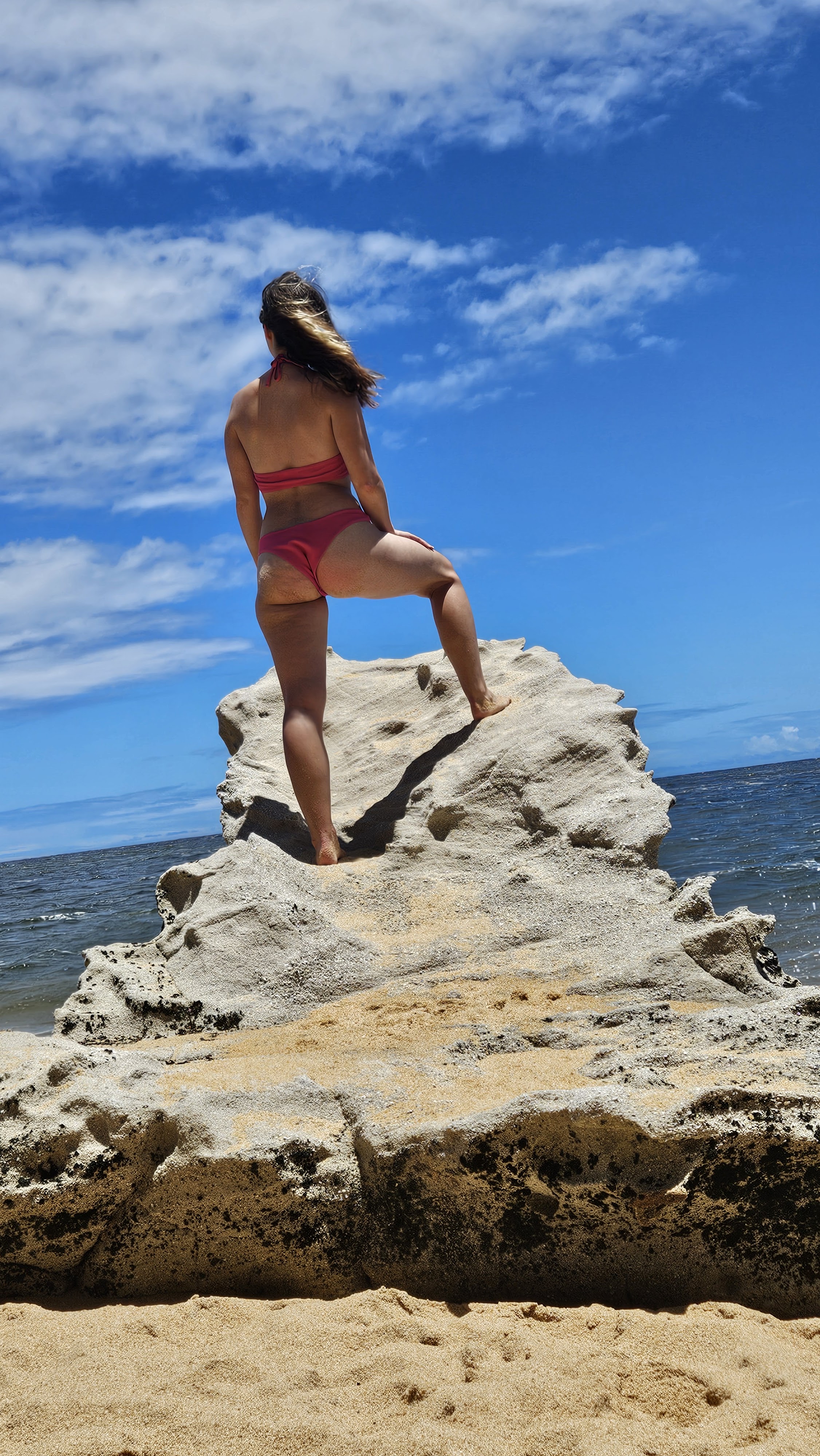
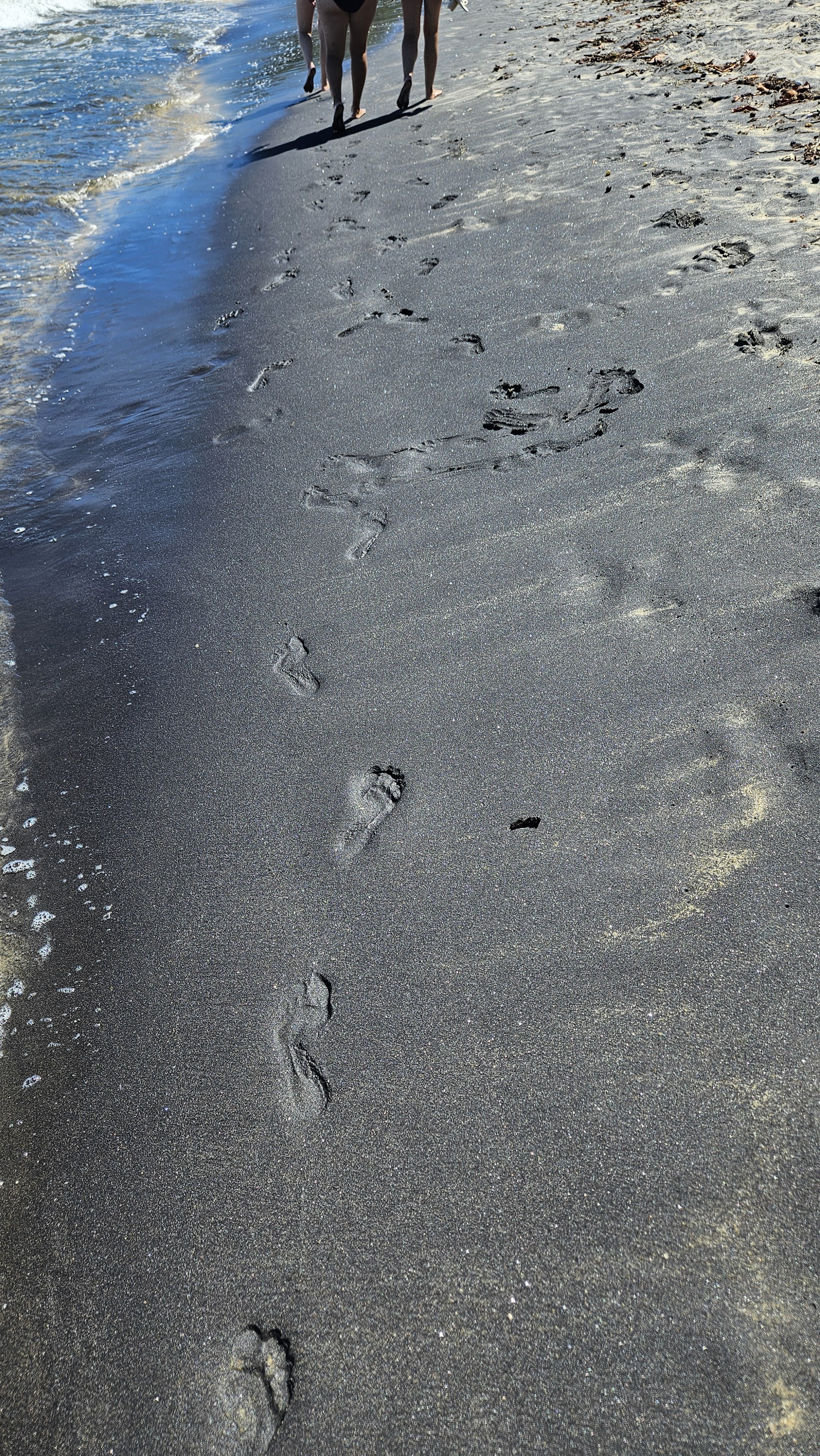
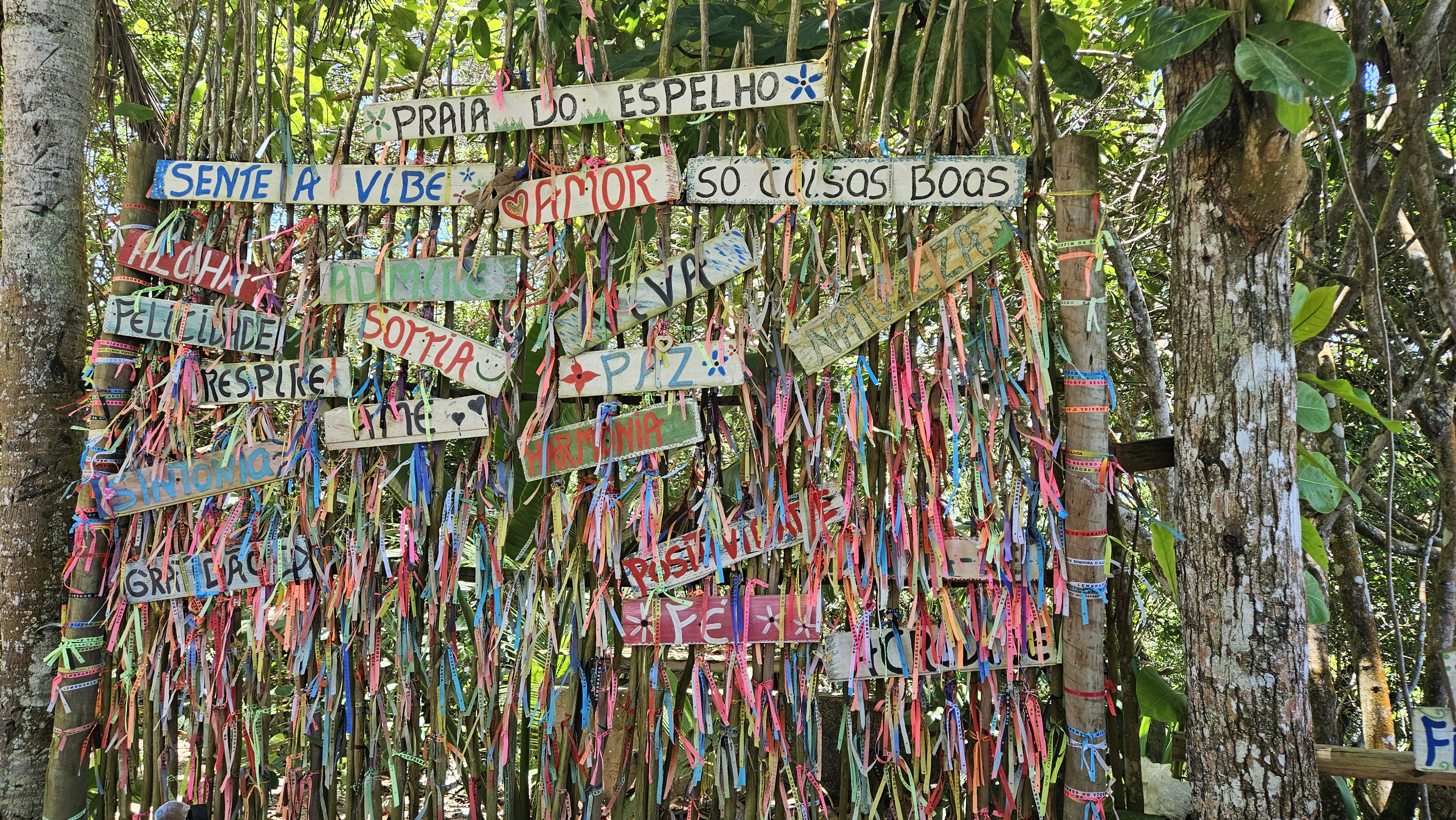
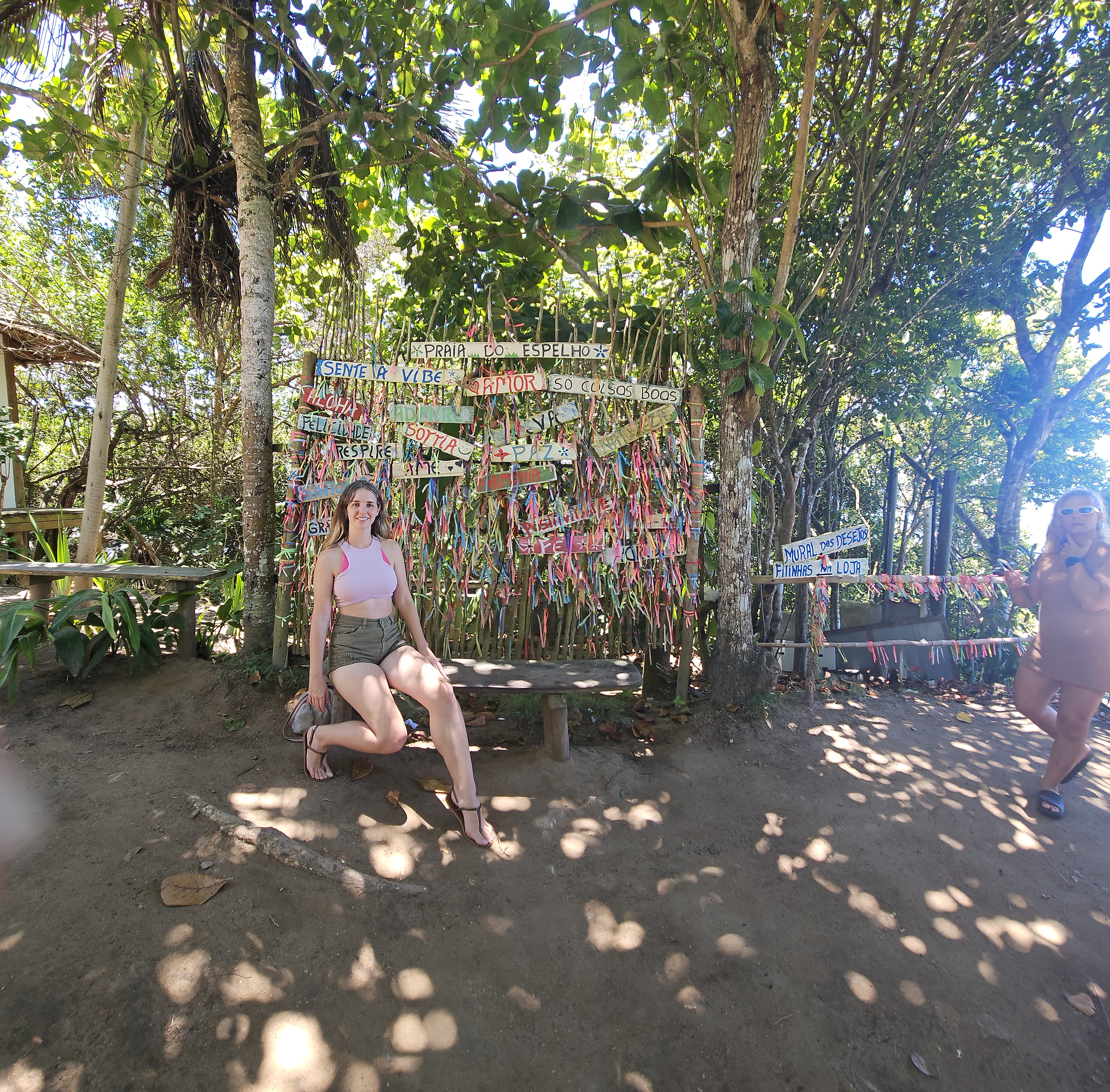
I floated on my back, peacefully rocked by steady waves. No rocks under foot in most of the sections. Some are covered by black sand that ripples when you walk on it, others orange, almost red when mixed with the deep blue water; the sand turns black and seems to pulse like something alive when you step on it. In other parts of the beach stretch the sand looked almost tanned ivory, shining in the sun, lending credence to the name: Mirror beach. All of the sand is smooth, inviting when wet, hot from the Brazilian summer sun, but I followed the shoreline to soak my feet as I went.

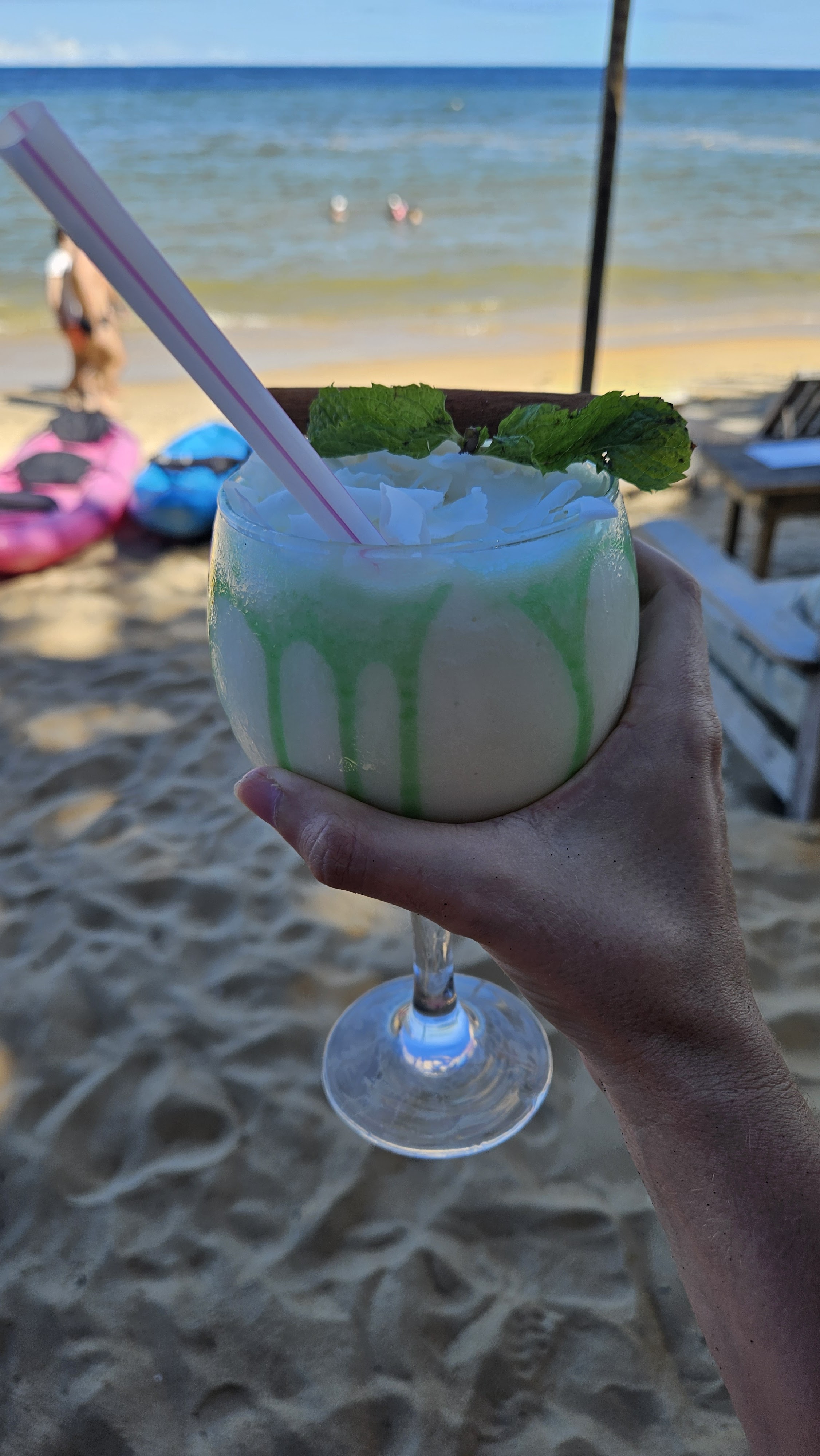
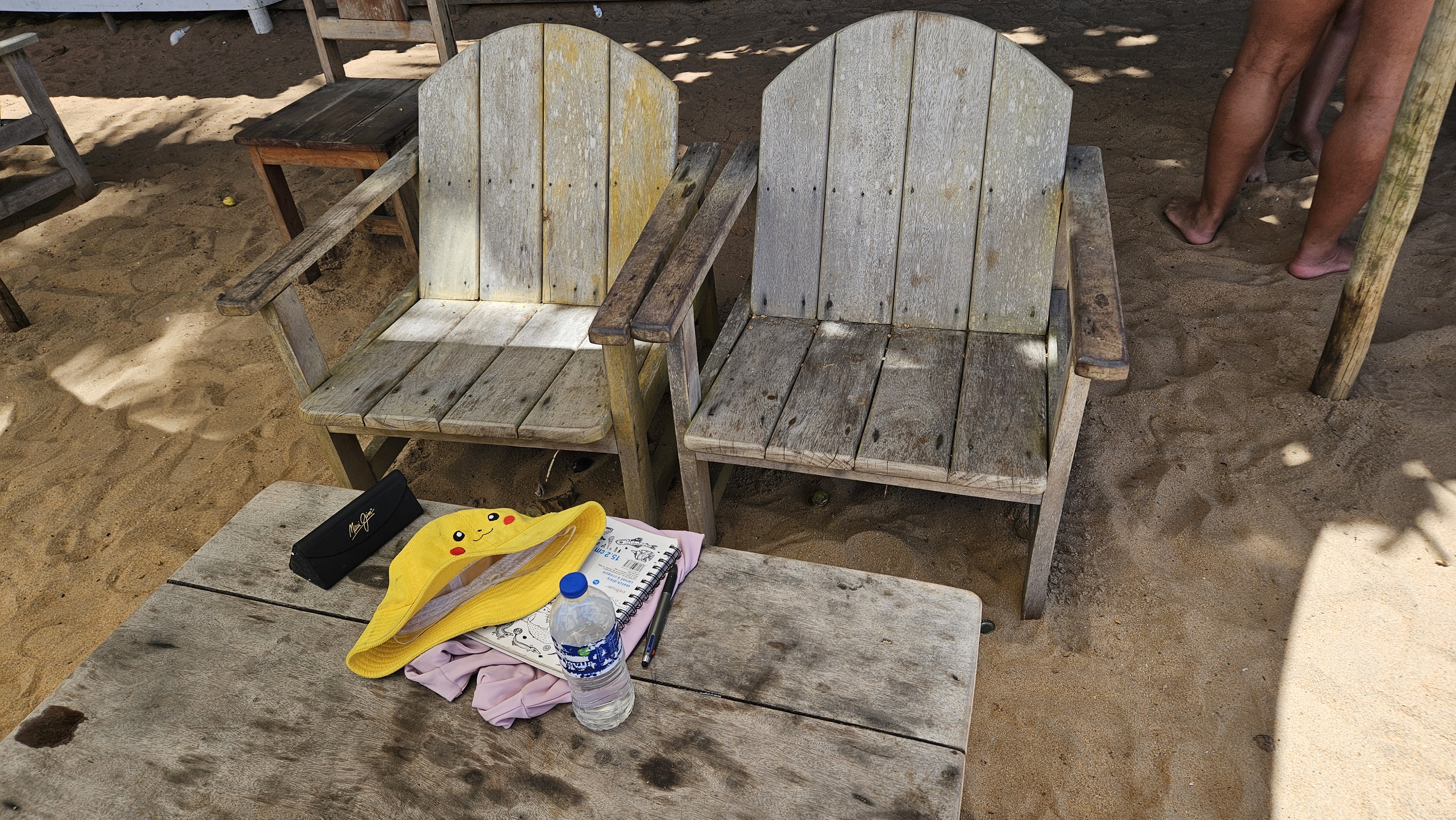
Now I’m listening to a three-man band play what sounds like Brazilian zydeco. They play the same type of accordion popular in Louisiana. There’s a guy playing a triangle, and the accordionist is also the singer. I think I’m in heaven: sipping my obligatory (over-priced) cocktail, a mint-flavored piña colada, taking it all in from my wooden beach chair in front of the ocean under a parasol…
Overstaying in Colombia

Today is Christmas, and instead of spending time with loved ones, opening presents, feeling abundance, I’m recovering from a beaten down immune system, sitting in a cheap hotel room in the middle of Leticia, Colombia. I was supposed to be spending Christmas on a boat cruise through the Amazon. However, I made a huge mistake, and I am hoping my experience can be of use for others that might also encounter a similar situation.

I have been spending a lot of time in this beautiful country. As a tourist with no visa, I knew that my days were numbered. 180 days is the standard, with a total of 90 days you can spend in two separate entries (or divide it up how you will). This year has been somewhat hectic, and though I haven’t been officially living in Colombia, I did use it as a homebase before deciding to go home and save money in August. I had calculated my days, but I wasn’t 100% certain where I stood in the system.

Generally, upon reentry, the migration officer is supposed to review your days, stamp your passport, and write the exact number of days allowed to stay in the country. I know this because last year when I was in a similar situation, the officer told me exactly how many days I had left and warned me that if I didn’t leave before that time, I should pay for an extension (salvoconducto) to avoid bigger problems — like the ones I’m facing now.

This time was different. I still remember how the guy looked at me. With disdain, indifference — and this strange air that he knew he was taking a shortcut by writing 90 days and didn’t care how that might affect me in the end. Sure, he may have been tired, and a lot of people come and go at this time of the year. But once I showed my passport to get my exit stamp, initially I was told there must be a mistake on their end.

When I got to Leticia early on Christmas Eve, I found a very mediocre (to avoid a stronger word) airport with little guidance. It was the taxi drivers, ironically, that told me where I should get my passport stamped (no signs indicating that there was a migration office in the ugly building that honestly resembled a bus terminal more than an airport). That was after I had consulted the internet and found I would need to go downtown to the migration office — the information on the internet always seems to contradict, and that’s part of why I’m writing this now.

Ironically, when you enter Leticia, they charge a 45k COP tourist fee that is supposed to support the local processes, sustainability, and infrastructure for tourism. Nobody talked about this before I got there either, but it was required in order to leave the airport.

I went back into the airport and entered the migration area. There was an office with one guy working. I found him busy trying to approve an entry stamp for two Guatemalan ladies with long, tired faces. Avianca had rerouted their flight, and now they were stuck entering Colombia officially when it was supposed to be just a layover. Although I empathized with their situation, I was impatient because as usual the process was far too slow, with the guy calling and calling and typing and carrying on, rehashing the same details as if they had not explained what had happened clearly enough.

I had left my bags with the taxi driver and two other foreign women I had decided to join to split the taxi, so I was even more aware of how long it was taking just to get a stamp. The ladies had time, plenty as they would need to wait for the next flight, and they also told the officer that if I just needed an exit stamp, he could take care of that and then get back with them (bless their souls for that kindness). But he dismissed me and told me it wouldn’t be long. Then when I mentioned why I was in a rush, he snapped at me. Clearly he didn’t like that I was questioning the operation or why it was so inefficient. Trust me, I’ve been in a position like his, and I wasn’t blaming him, but he should have been clear that what he was doing would take a while so I could act, not just ignore me then get irritated when I asked how long it would take.

The tension mounted with me repeatedly saying “Hagale, hagale” because he would not just do his job after that. He had to keep reprimanding me for being out of line and defending himself and the migration system. When he finally called me forward, he did apologize, I’ll give him that, but he made it clear that he was more concerned with saving face in front of the other ladies. I had mentioned that it was unfortunate how problematic the immigration process could be, and he had corrected me saying this was a routine issue that was no fault of his or Colombian immigration. In short, the defensiveness was because he knew the job he was doing sucked.

Then came the moment he finally checked my passport and the system. He found I overstayed and that I would need to go to the central immigration office to pay — just what I hoped I would not have to do since by this point, I’m running low on COP in my Bancolombia account. Of course, he couldn’t take care of the process there. (That would be too convenient)

When I left that building, disgruntled, I was lucky to be received by a very kind taxi driver named Jose. He gave me a fair price, recognized my emotions, and told me that these sorts of things happen every day. He had seen so much that I didn’t even have to say what was wrong. I felt both sad and comforted as he told me about his late-wife’s inability to receive medical care in Colombia because of paperwork and fees he was not able to pay. They were charging him in dollars, only because she was Brazilian, a foreigner, unable to be affiliated to a Colombian medical plan.

That broke my heart. His words will stay with me forever: “My wife died of cancer before they were able to solve this bureaucratic problem appropriately.” No solution could be offered, just money that he didn’t have.

The folklore as they call it in Colombia continued once I spoke to the immigration officer in the official office. She was a kind woman with a killer style, purple and blue hair and tattoos a plenty. She spoke to me openly and seemed to be on my side, especially when she observed the 90 dias written on my passport stamp. She recognized that it wasn’t right or fair – unlike the guy at the airport who told me it was my responsibility to keep track of my days, not theirs.

Still, you know that this and worse happens regularly. I broke down sobbing at the prospect of having to choose between paying almost 400 USD to “fix” this constancy problem or be deported and no longer welcomed into Colombia without a passport. She didn’t console me as much as she told me that everything has a solution and not to cry. Typical.

But imagine a Christmas like the one I’ve had. My throat swelled with inflammation and my head hurt more than I could stand. The option of just leaving for Brazil and accepting deportation was not an easy out with me feeling that way. After some time using the shitty internet they offered trying to ask for advice and weigh the pros and cons of both options, I decided to get a hotel nearby and sleep on it.

That was the best choice I could have made. Today I feel better. Although I didn’t eat all of yesterday, I got medicine and had a good lunch today. I’ve been looking at my budget and logistics. Flying straight home would cost me more than toughing it out and moving forward with my plans. I decided I will pay the fine — tomorrow, since the office is closed for Christmas today — to avoid bigger problems in the future. As many friends have reminded me, even if I evade the fee, they will find a way to get their money sooner or later.

This means that I have to adjust my travel plans, my budget, and how much I’m willing to do. I could change my flight out of Brazil, but at the price I got it, I don’t think it would be worth it. Now I’m looking at a month traveling. If I find hosts to couchsurf with or stick to hostels, I have a budget in order where the primary expenses are transportation or potential tours I decide to go on. Local food is not so expensive, so I can handle those costs as well.

Tomorrow I will go back and pay the fine. Then I’ll book my place on the ship to Manaus for Saturday. If all goes well, I’ll get to Manaus on New Years Day, where I will spend a week or two there before flying to Salvador and then making my way down the coast to Rio.

There are still question marks circling my head. How will tomorrow go? Will they charge more than what they said? What about when I’m in Brazil — what if something else goes wrong?

Well, at least I have students and friends that support me. My family has also been there encouraging me to do what I feel is best. So, it’s just a matter of staying flexible and open-minded.

That’s traveling. That’s life. And this year has been nothing if not one learning experience after another.