Migracampi: Ecotourism in Pueblo Bello

Finally! Some inspiration to publish travel content, brought to you by my first paseo (short/roadtrip) of 2021 in Colombia!

Let’s start with the facts:

Town: Pueblo Bello, Cesar, Colombia
Lodging: Migracampi (just say “donde John” to the driver — they’ll know where to drop you off)
Distance: 53 km, about an hour from Valledupar (the capital of Cesar)
Transportation: bus or Coomaple Colectivo ($15.000/~$5 USD per person)
Style: Camping/Glamping
Prices: 35-40.000 pesos (~12-14 dollars)/night
Breakfast, coffee, and tea Included
Food and drink available to buy on site (including beer! and other more “exotic” local spirits)
Host: John Alvarez (@migracampi)

The long and short of it – follow me on Instagram for more!

Now that I’ve gotten the key info out of the way, let me narrate my incredible experience with Migracampi.

This was my second time staying at the backyard campsite. It had been just over a year ago when I first decided to explore. My third time going to Pueblo Bello.

Pueblo Bello, although a small town, is something of a cultural crossroads between the indigenous cultures under the “Arhuaco” cultural umbrella that live in and around the Sierra Nevada and the post-colonial mainstream Colombian culture. And then people like me, foreigners from all over the world that have been drawn to these little-spoken-of gems hidden among a kaleidoscope of more “developed” tourist attractions in the country.

The creator of Migra, John, is acutely aware of the cultural and ecological significance of the space he inhabits. He paves the way as an entrepreneur who has managed to grow his space greatly within the course of a single year. In fact, he never seems to tire of his various projects to expand on the sustainable mission of his lodging and tour ecotourism services.

Let me start from the beginning. To get to Pueblo Bello from Valledupar, my friend and coworker Carin and I only had to take a taxi to downtown Valledupar. Near an outdoor shopping center called La Galeria, in an alley-like street bursting with venders of fruits, vegetables, clothing, and even school supplies, you can find several transportation offices.

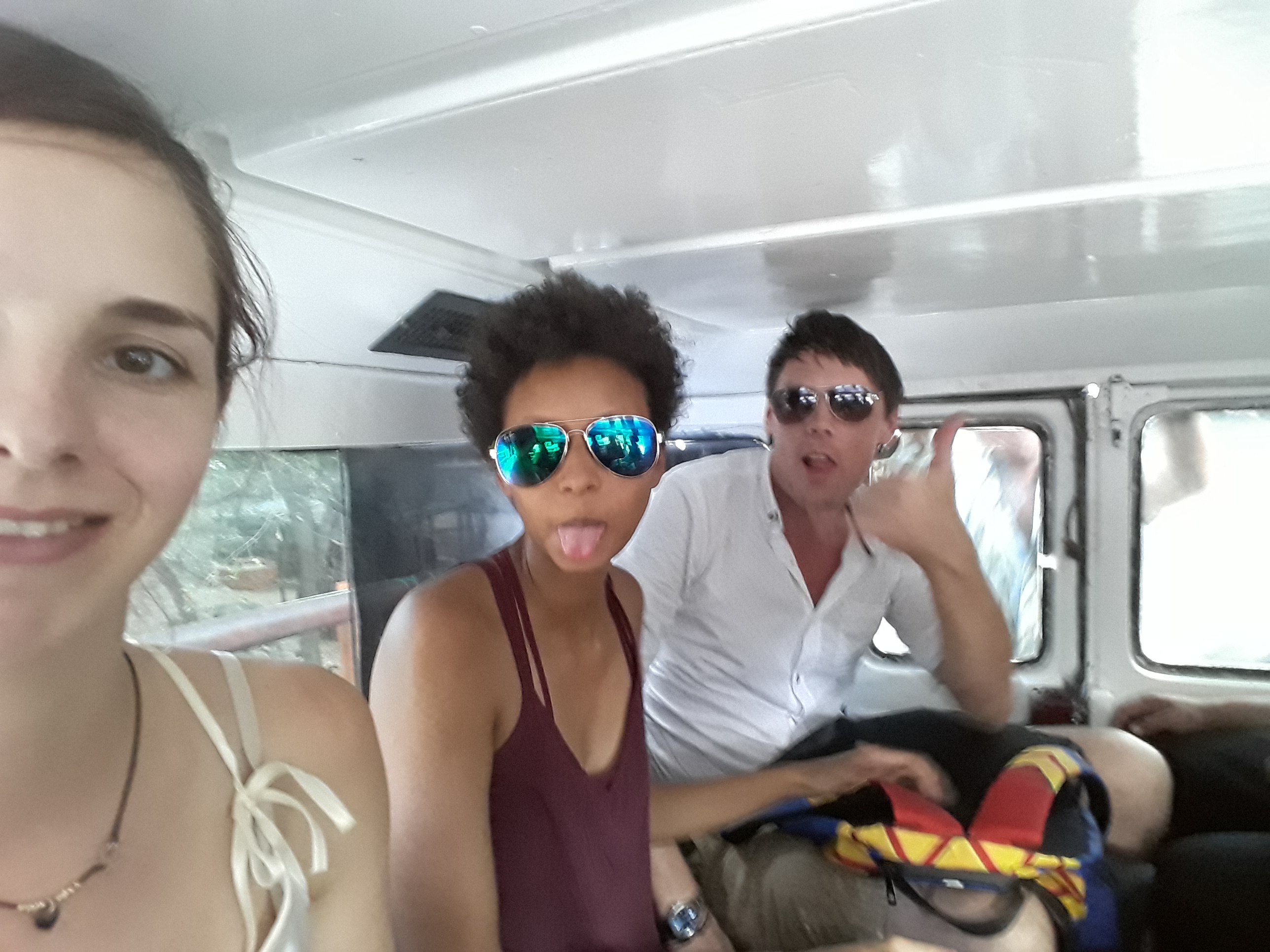
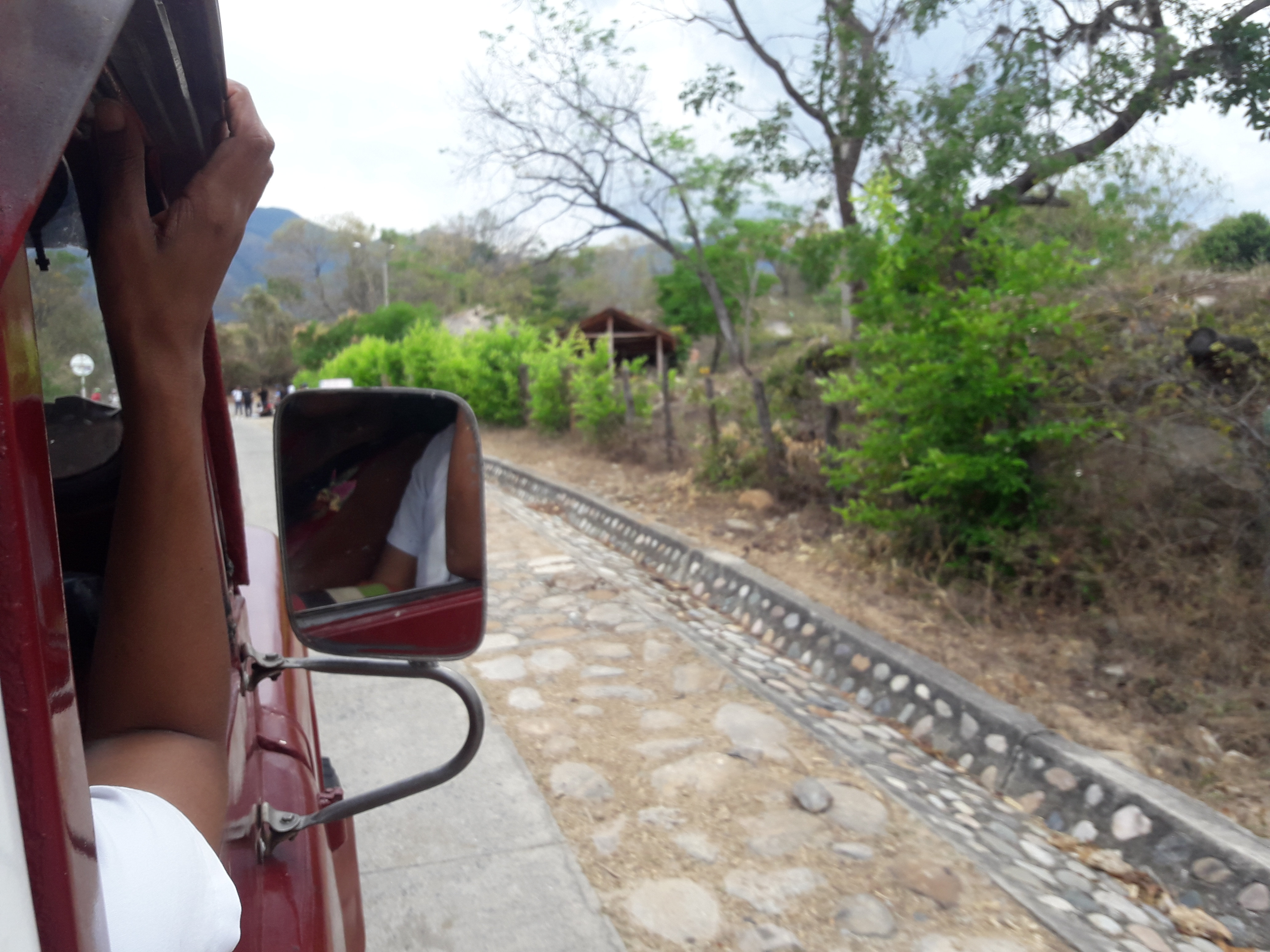
The one we were looking for was easy to spot — Coomaple. We walked in, gave our names, and were quickly instructed to load a white truck by the driver. We paid the driver the 15.000 peso fare once we got to Pueblo Bello — after picking up two and a half more passengers (including their adorable white puppy, Aaron).

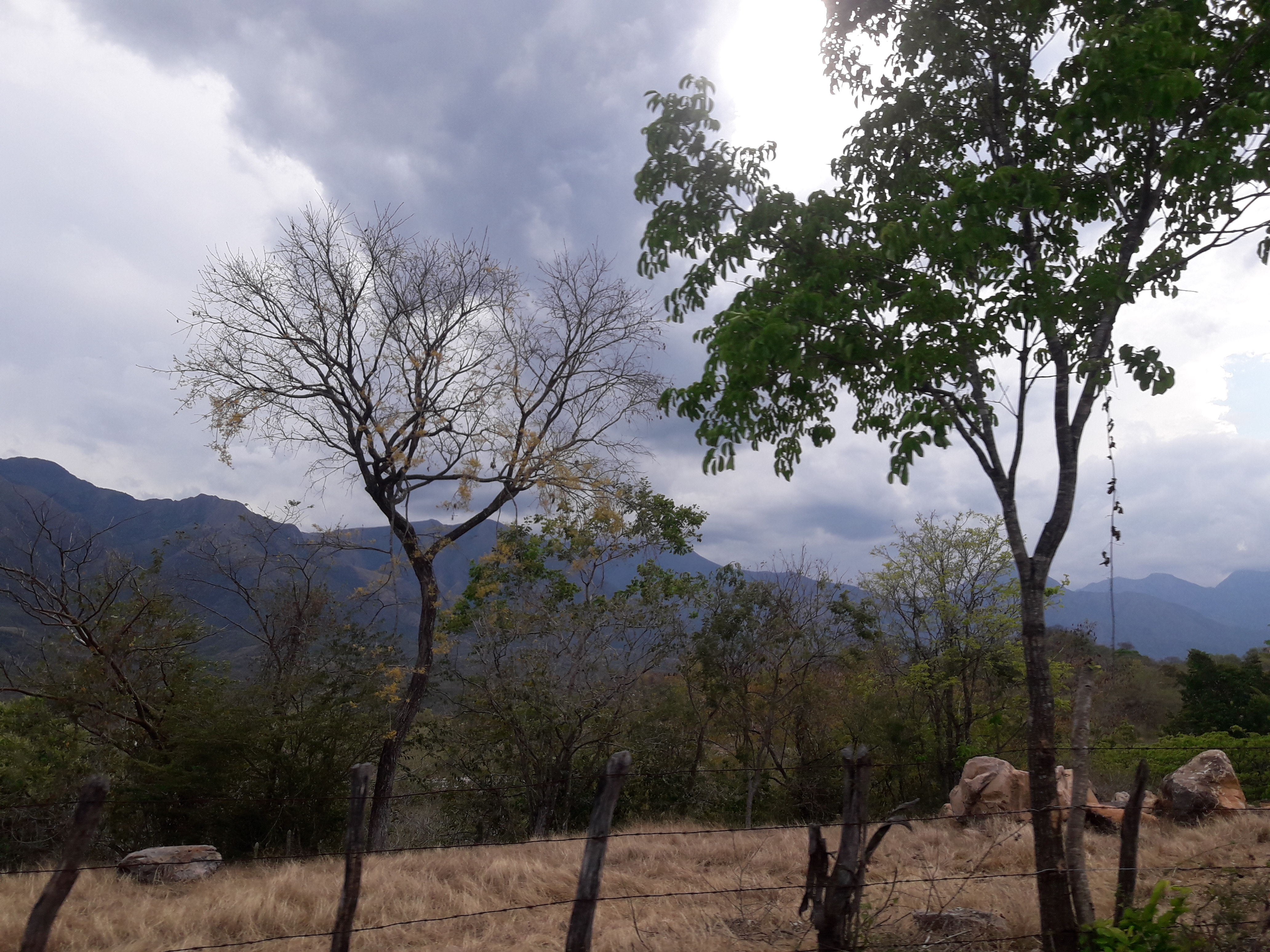
The ride up through the mountains leading to the Sierra Nevada is twisted and gave me a bit of motion sickness on the way up, but “luckily,” the truck got a flat tire. While the driver used rocks in the place of a car jack, I sat on the curb of the road, trying to remind myself that things like this happen in Colombia all the time. A flat tire on a sloped incline should be the least of my concerns!

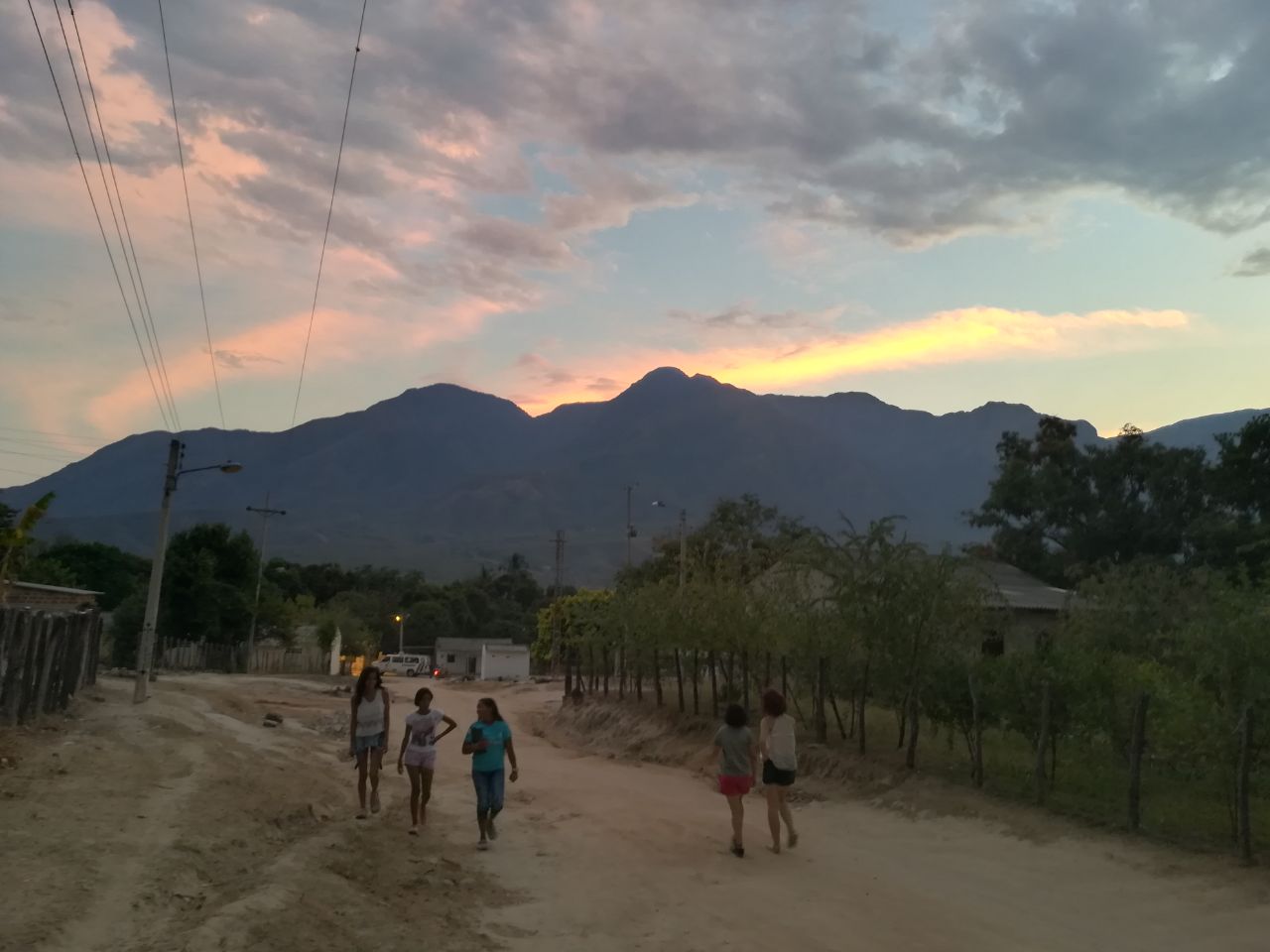
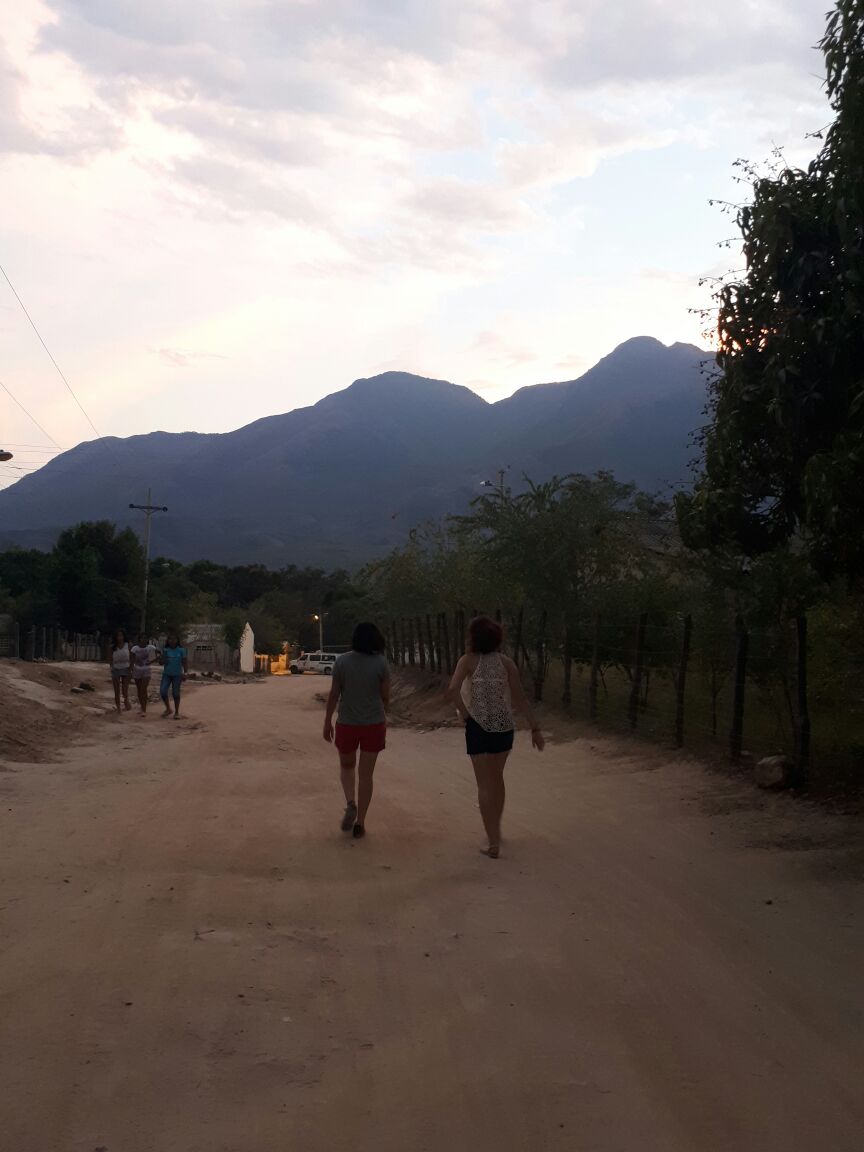
The greenery and blooming flowers welcome you into Pueblo Bello. Unlike in Valledupar, it has been raining regularly. The air is crisp and fresh. The sound of birds fills your ears from all sides. For those that appreciate it, like my friend Jose, it is the perfect place for bird-watching and spotting varieties of birds unique to the region.

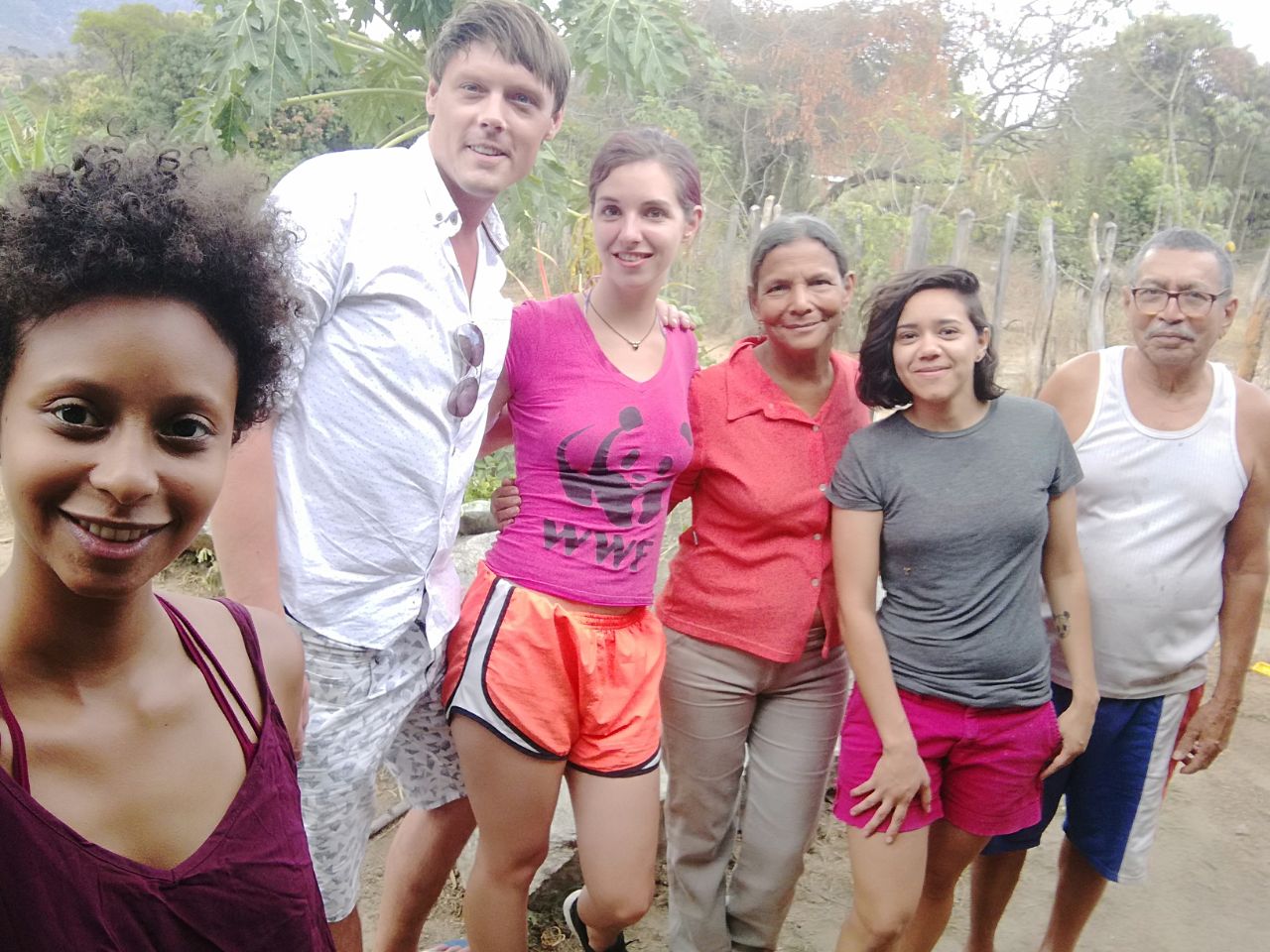
We were greeted by John upon arrival. I felt like I was being welcomed home by an old friend — secret handshake and all. A native of Pueblo Bello, John has a sort of energy that makes you feel immediately relaxed and open. He’s just a genuine person, on top of being an earnest host, and a fantastic trail/tour guide.

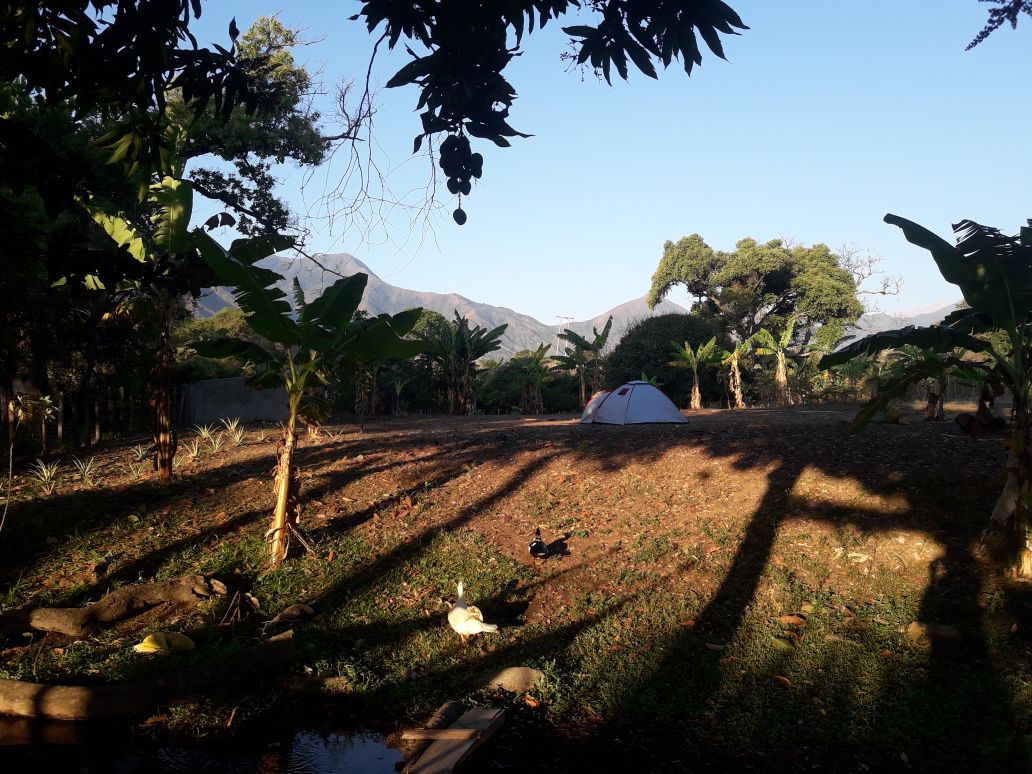
He showed us our lodging, which exceeded our expectations – even mine having stayed at Migra before. When I visited Migra for the first time a year ago, I had opted for the simple tent experience. The tents are set up by John and include a sleeping pad, bedding, and a flashlight. They are comfy and minimalist. However, this time I had opted to try the “Glamping” experience.

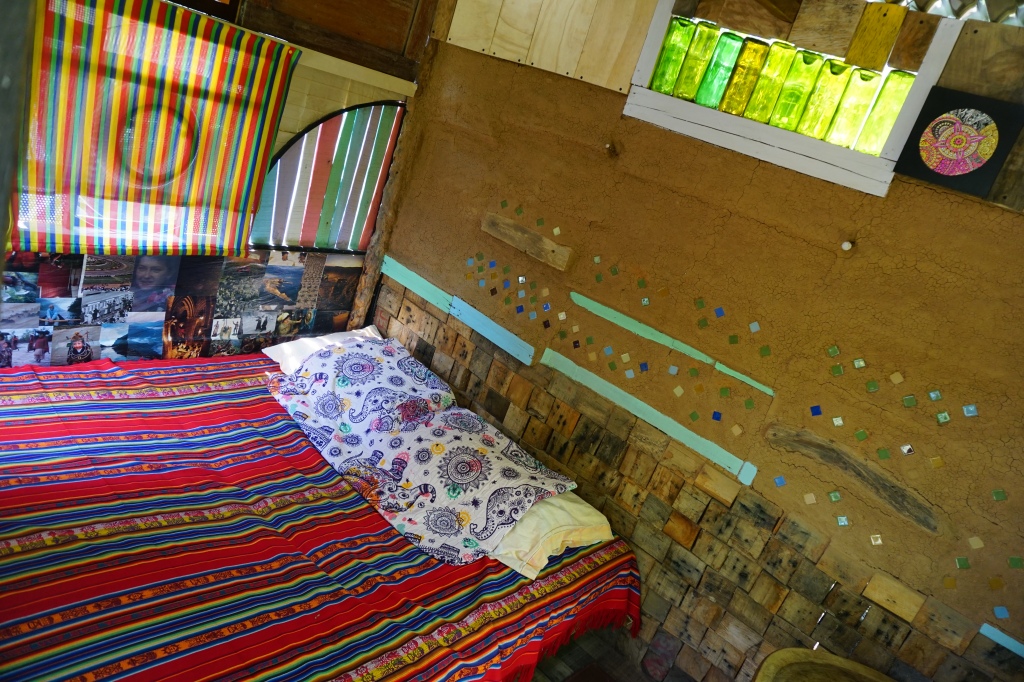
My gorgeous, inviting bed for the weekend. ~Glamping~

Products of his ingenious crafting abilities, John offers two mini homes, cabins made from recycled materials. The windows shine green as the light hits repurposed beer bottles which have been set in the place of glass windows to allow for air to constantly circulate within the cabin. The two cabins sit on different sides of the enclosed camping space. One is made for an individual and the other can fit two people in a queen-sized bed. The decorations are impeccable, reflecting the same attention to detail that you can observe and appreciate around the entire space.

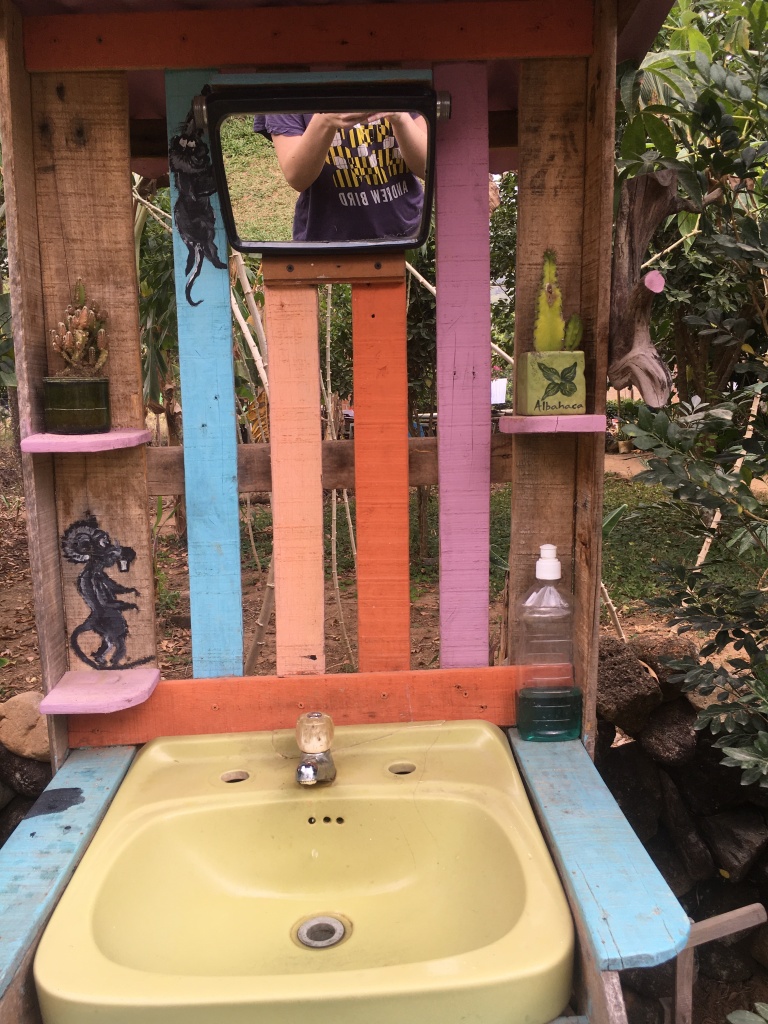
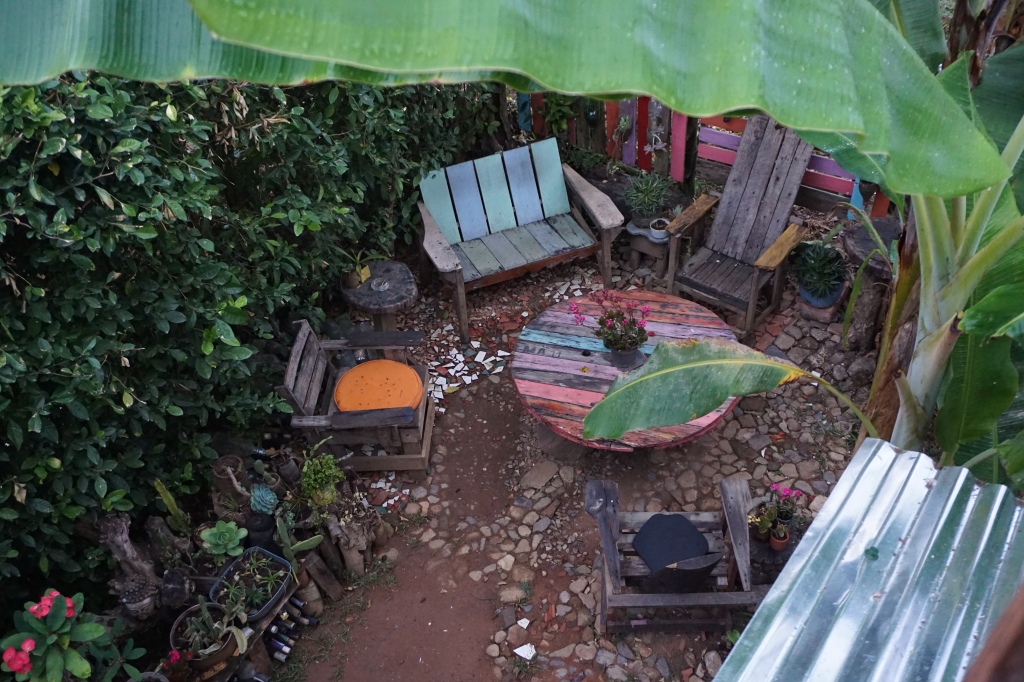
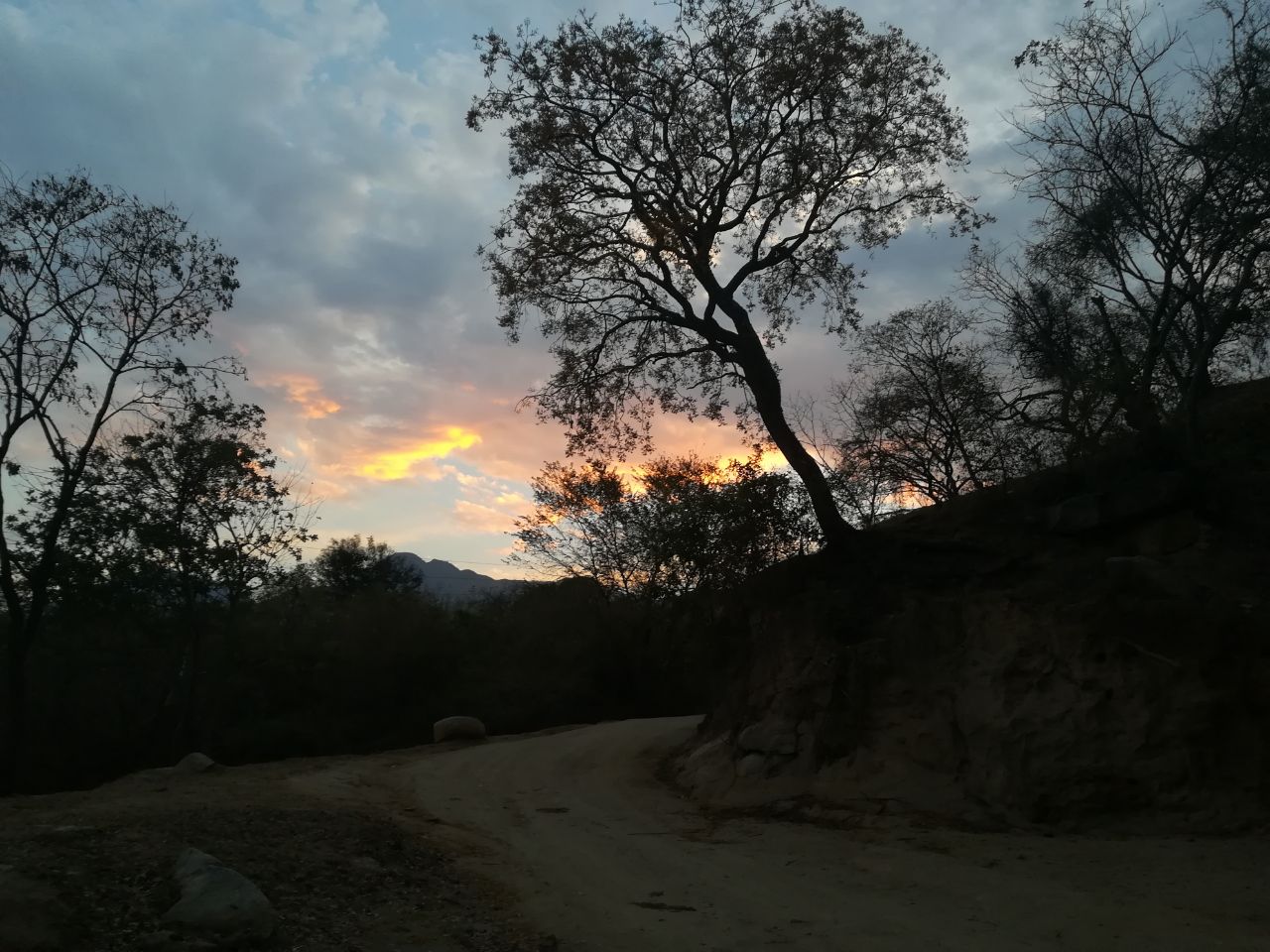
Every personal touch makes sense while creating an inviting, familiar atmosphere. In the middle of camp, there is a public sink with a mirror and handsoap, additional to the two bathrooms with sinks, showers, and mirrors of their own. There is a garden with chairs set up perfectly to enjoy the sunset and sounds of nature or even a smoke, if that’s your fancy. John even dabbles in beekeeping and has his own bee house of friendly bees on the grounds. The signature bar to the left of the entrance continues to be the hub where music plays, and food and drink are offered at low prices that belie their quality.

Even a simple sandwich displays John’s individual style and attention to detail.

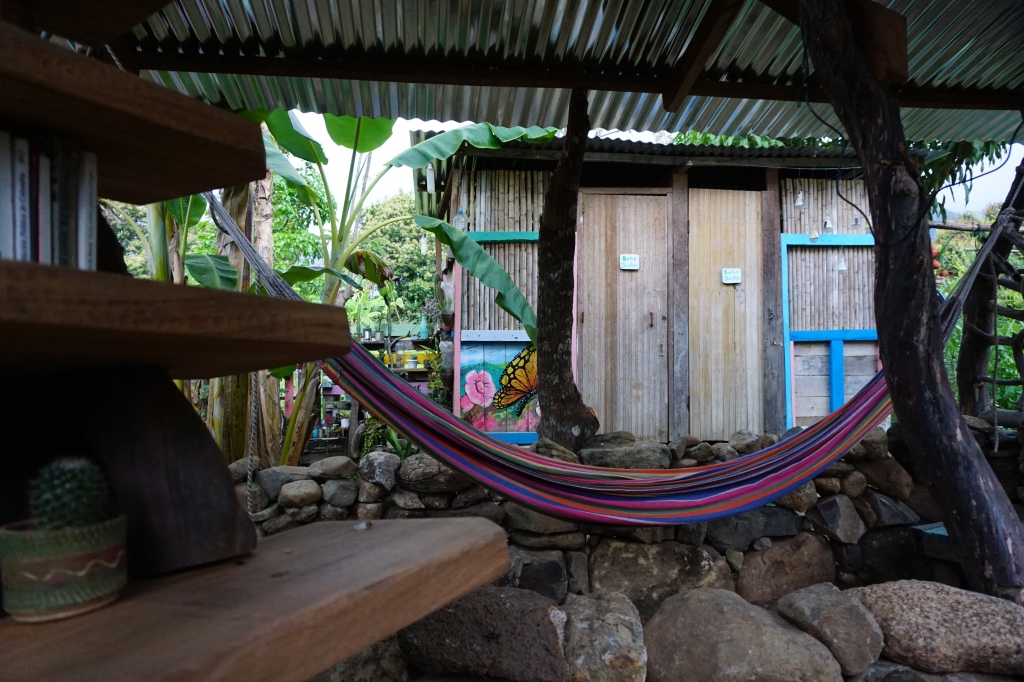
With so much to offer, I had not imagined how much more I would find this time around, only a year later. As I noted, John had not taken a day off. Now the Migra campgrounds include a treehouse deck (which will eventually be converted into a cabin) with hammocks hanging in a chill space underneath. This area is cleverly furnished with plants and books, just like the other spaces of Migracampi. We rested and ate in the shade, waiting for our other friends to arrive before going on a bike ride around Pueblo Bello.


John helps you get information and reserve any activities you might want to do in Pueblo Bello. After a quick phone call, he found out that the locals that rent out bikes only had 3 available that day. There were 5 of us. John rented out two of his own bikes so that we could all take off together without a problem.

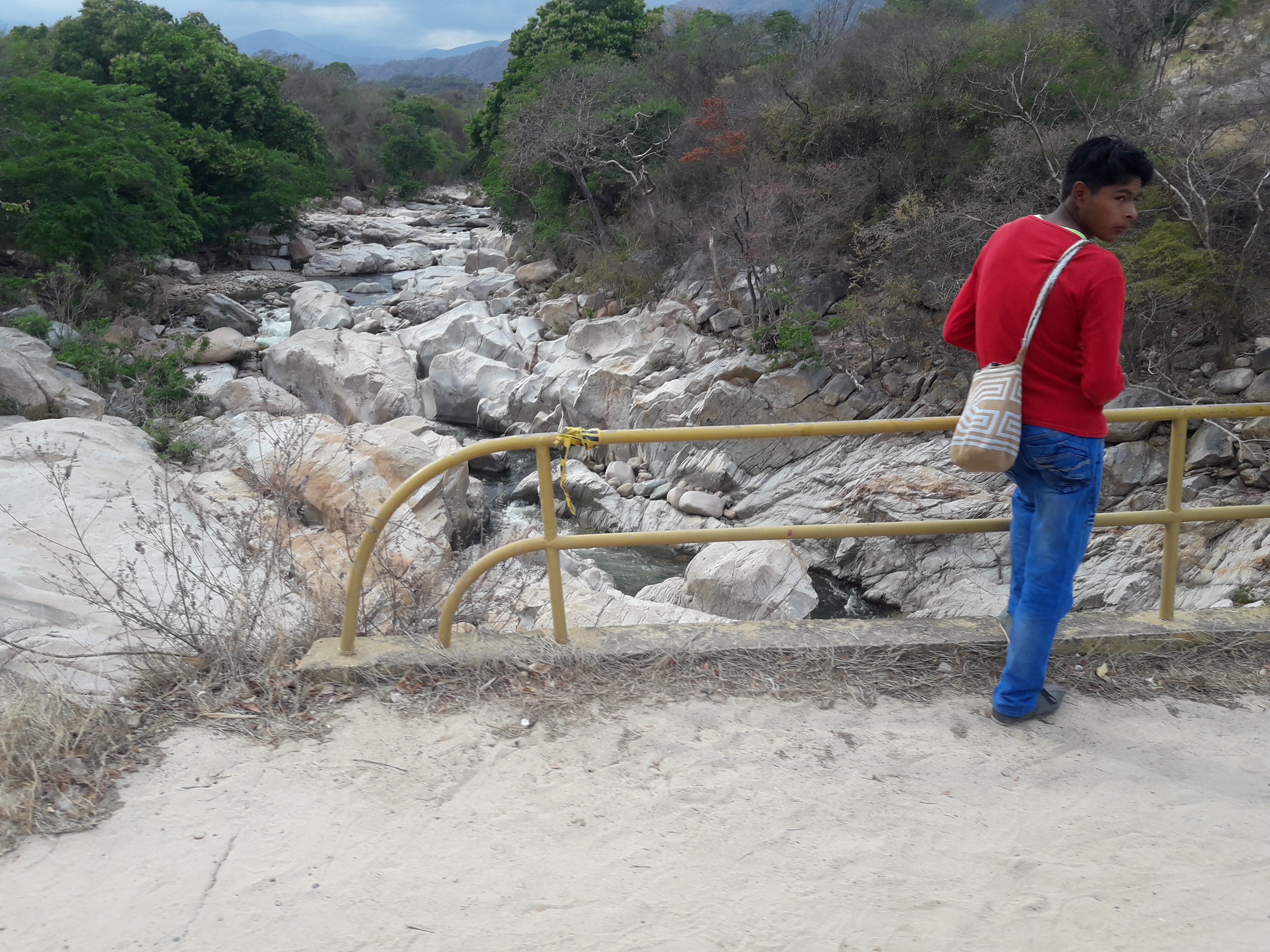
Biking in Pueblo Bello is just 5.000 pesos an hour. We spent three hours — 2 of which were spent at the river drinking and enjoying the water — exploring Pueblo Bello from top to bottom — literally. The majority of the ride through the town is downhill when heading towards the river and hiking towards the waterfall. The way back posed a problem for me since I had opted for two beers and we had stopped at an ice cream shop before going down to the river. I quickly got winded trying to fight my way up the rather steep hills. Then I started to feel dizzy and nauseous.

My friends helped me to get a bottle of water and a automoto taxi back, just as it started to rain really hard. I was more than relieved to unload the bike and leave it in the front so that I could lay down in a hammock and catch my breath. Once again, the host was graceful enough to return the bike for me without any hesitation.

Another thing to keep in mind about Pueblo Bello is that it rains pretty frequently, depending on the time of year, sometimes suddenly and heavily, especially during the rainy season. Rainy season starts around the end of February, so we are finally seeing an end to the months of drought typical of the dry season.

My poor friends had to book it to get back to the house where we rented the bikes in the rain. They returned their bikes, and we all convened for dinner and drinks on the campground. The rain fell hard, harder than I had seen since I left Louisiana, and lightning streaked the sky in a soothing yet intimidating way. There was no danger; this is typical of the rainy season.

I stayed up until the sun had completely disappeared, but once I ate, with the rain still coming down, I slid into my glamping cabin, slipped under the fluffy quilt and went straight to sleep, even as some of my friends stayed up to chat and drink Churro, a distilled ancestral liquor found in this region of Colombia.

I’ll end this with the peaceful memory of that cool night. The bedspread was just thick enough to keep me cozy and comfortable despite the low temperatures. The sound of birds is a constant symphony at Migracampi, one that lulled me to sleep and then woke me up early the next morning.

To be continued…. (leave some applause if you liked this review/check out my instagram!)

Day 2: The hike to La Tranquilidad and the Deluge that came after.

Agency and Protest: Paro Nacional (21N)

Colombia has been going through a lot recently. Honestly, I look around and I think the world is going through a lot right now. And perhaps it always has.

What have the protests in Colombia been about? Anybody who watches international news or claims some awareness of world events (even by glimpsing it via memes or article clickbait) knows that in South America there have been a lot of protests. Chile was the first place I recalled getting a lot of attention. Colombians were soon to follow.

The simple answer to this question is that: they are protesting what people are always protesting in capitalist societies. Education is undervalued and underfunded. Teachers, including university professors, are underpaid or even not paid at all (much less on time) for months. There is a notorious problem in Colombia with the unequal exchange of services for money. Most consumers still seem accustomed to the system upon which the Americas was sadly founded: slavery. They want your labor and the product of it for free, or at least for dirt cheap.

I can’t begin to tell you (although I know it falls into the category of anecdotal evidence, but still) the number of people I know which work in the service industry for scraps – and then their employers don’t pay them a full wage. And it’s almost never paid within the agreed upon time frame.

So yes, economic unrest. Another issue seen in the States as well as here is the cutting of pensions and social security. This has a negative impact on the old and those planning to retire. Although they may have worked hard every day for their entire lives, they are expected to be happy with making a minimum or less wage. Not to mention that minimum wage in Colombia is only 800.000 some pesos – that’s well less than $300 USD – and the economic reform people are protesting called for that amount to be cut by 75%.

Many cities (like Valledupar) are in crisis because of an influx of refugees, a lack of institutions in place to manage them, and the strain this interaction has caused in already fragile border economies. Now the poorest of the working class is forced to compete with desperate refugees who legally cannot be hired, have families to take care of, and therefore are willing to work for the bare minimum of the bare minimum in order to survive.

The effect of this is obvious: whenever a local person demands their pay, the employer cuts them off and replaces them with a desperate refugee, not unlike what has been seen in the Southern region of the states when refugees surge. The cities become more and more poor as Colombians feel more and more resentment towards incoming foreigners. Many are tired of the government’s weak approach to handling labor laws and accommodating (or not) for refugee populations.

Those community leaders who have struggled to give their people a voice are quickly snuffed. Violence (paramilitary and police and otherwise) is rampant, with no acknowledgment of a peace settlement with the radical guerrilleros in sight.

But my question, looking at the situation here, is who wouldn’t be radical? Accepting these conditions is absurd. I watch my friends unable to find jobs when they have degrees in a myriad of subjects – the same thing that is happening in the states right now. I watch degrees postponed due to on-going strikes because teachers aren’t given a decent salary – much less paid on time.

That led to the protesting, which has been on-going since November 21st (21N makes reference to the 21st of November). It was launched in universities, especially, all over the country after minors were killed by the military in a community once dominated by the FARC. Only 2 days after the protests began, a 17 year old was killed in a protest at the hands of the police who were shooting grenades into the crowd. Bogota and other cities became militarized – supposedly for the protection and safety of the people, but the feeling of those protesting was anything but one of safety. The violence had gotten so bad, the disgust with Duque, and the cut to social service packages in the country, that these peaceful strikes were mixed with some intense displays of frustration. I’ve heard and seen some destruction caused in major cities like Bogota and Cali, but rumors claim that the police and paramilitaries are just as likely behind this as individuals that mar the image of the Paro.

A problem the world over is the people on top telling the people that are suffering on the bottom how they should react to their own oppression. What’s the “right” way to protest. For the most part, people have followed the law while standing firm in their rights and convictions. During the weekend following 21N I attended several protests, all peaceful, but equally trembling with outrage at the actions and attitude of the Colombian government and military. Dry laws were set up during the weekend of the initial strikes, assuming that drinking would lead to hooliganism among the protesters. In some cities, curfews were established to keep people in their homes or else face the impunity of the police as they squash the backlash – I mean, maintain order.

I attended a Velaton, an event where everyone lit a candle outside of the city hall, chanting, remembering those social leaders that have fallen defending their rights, a muted cry for justice and an end to Duque’s presidency. Some do not wish for it to end considering him legally and democratically elected, but do assert that more needs to be done to fix the mess of reforms and address the big problems.

Duque himself has been something of a puppeteer in the eyes of the Colombians. Currently he has around a 28% approval rating. He is a young – 43 years old – the youngest president Colombia has had –  and a clear ally of controversial political figures like Alvaro Uribe. Uribe’s regime (to give you an idea) consisted in lots of paramilitary violence and covering up of injustices committed to silence communities disadvantaged under his regime – indigenous, AfroColombian, workers, women, guerrillas – which the rest who protested were defaulted. He’s a “liberal” in the neoliberal sense, and held power officially for 8 years. His legacy continues, and that’s why most do not trust Duque to actually be acting and thinking on his own. Because in spite of all of this, Uribe has a cult following – which mainly falls into two ironic camps: the very poor and the very rich.

Sounding familiar to any US Americans out there? I know to me it does. In many of these post-colonial countries, and even the colonizers, the population is divided into two camps: haves and have-nots, landowners and laborers. Well, Uribe and Duque represent the landowners, and their treatment of people outside of their class has been violent and atrocious, at best. The amount of corruption in institutions like schools and among the police has gone up remarkably.

21N started with a march. Just a marching of all that identify with the movement – the poor, working, and middle class, teachers, professors, Afrocolombianos, indigenous people, elderly, women – and yes, even foreigners like me. I look at these issues and I see world issues reflecting in every story, the same pattern. I know this pattern did not start with the corruption here. If anything, it has a foreign sponsor – the US, lest we forget the US’s own intervention in the 90’s and early 2000’s.

I could write a book, and books have been written (Colombia: The Drug Wars is a great place to start. But suffice it to stay, I stand with the Paro Nacional. I stand with Paros all over the world – Paris was in the middle of one when I went early this month, mainly for the same reasons. It’s a lot of data, and a lot to take in – more complex than this simple summary from my perspective that I have written here. But it matters. And it needs international attention.

Right now, the Paro is rebooting. It’s still standing firm on the same issues, which have not improved or even been addressed as far as anyone can tell. Protesting is a long, harrowing path. One mustn’t wonder why some would rather fight bloody wars to be treated fairly and be able to live in peace. It’s a contradiction, but when the mechanism of power is so strong that even workers all over are unable to cease to work without dying, where even when they stop working, they are ignored (let them die, the attitude seems, fewer to worry about), well, sometimes it’s even led me to ask myself: what more can be done?

The most cathartic part of that paro weekend was the Cacerolazo – a term coined in reference to when Latin Americans take to the streets with pots and pans, banging them in a cacophony of protest (there’s a long history of this in Latin America – I felt pretty tripped out participating in something I’d only read about in Latin American history classes before). We met in Parque Viajero, a haunt in the heart of the city where young people usually gather to smoke and talk. Some usually play dominoes there or share their music or a drink. That night, it was Sunday, and yet the park was full. All because of the Bailaton, or dance off that was proposed as part of the continued strike.

Many cannot afford to stop working. Many do not even have work. So what’s left is causing a small disturbance to remind everyone around them of why people are protesting. Many chanted angrily about the president, about the slaughter of social leaders, about the lies and corruption, as the throng struck their pots and pans in a war-like rhythm. People are tired, tired of not having a voice or agency in their society. Of not having a future. Of not having employable prospects, unless they choose to leave or know the right people. People are tired. Of how unsustainable our situation has become.

And not only in Colombia – the world is feeling the same strain. We must be willing break that which is already broken, to revolt, to create something new, a mix within the mess. And that’s what the people of Colombia who are protesting hope for, trapped in a Sisyphusian cycle of struggle and pushback in order to attain it.

Epic Semana Santa: Cali y el Eje Cafetero

April was a busy month for me. It was full of my greatest aspiration: traveling! I made lots of new memories and travel friends along the way. I also made a lot of mistakes and I learned a lot of lessons, which I will be sharing with you guys, free of charge, today! After all, as you may recall, another one of my great aspirations for this blog is sharing information and experience gathered while traveling, as well as my general experiences teaching and living abroad.

This year, Holy Week (or Semana Santa), a Catholic holiday which marks the “Spring Break” of Colombian schools, fell between April 14th and 21st. Most people take this time to travel and detach from work as much as possible. During this week I was able to visit 5 different cities and many places in between. So where did I begin my week-long excursion? Cartagena de las Indias, the capital of the department of Bolivar. Where was I supposed to begin my trip? Barranquilla, Atlantico.

This slideshow requires JavaScript.

The first leg of the journey^

Cartagena: Misadventures and ProTips

How did that happen? Because I didn’t pay attention to my itinerary and got mixed up with my flight to San Andres out of Cartagena (a trip I took 2 weeks later). I ended up going to Cartagena instead of Barranquilla. Oops.

Sometimes mistakes end up being big wins. I can’t complain because I got to spend a day with two of my best friends. We went to the closest (if far from the best) beach, Bocagrande, located conveniently in downtown Cartagena.

I stayed the night at Folatún hostel, a hostel right next to San Felipe Castle in a neighborhood called Mango. This area is pretty touristy. During that weekend they charged only 21.000 pesos for a bunk in a shared room – a great price when lodging costs usually go up during Semana Santa. They have good ratings because of their low prices compared to other options in Cartagena, but I wasn’t too impressed with the space. It’s a pretty small hostel, located on the floor above a salsa restaurant called La Colonia in a bright green colonial house-style building. The view looking out on the city isn’t that great either considering there’s construction going on in the area. But, true, for the price – and the delicious breakfast it included – it got the job done.

Bear in mind, the historic part of Cartagena is super touristy in general. If you go, even just for a layover, and you want to go out, expect to spend. One of the two friends I met up with had lived there teaching English for several years so he was able to keep the price reasonable with the taxis, but as a rule of thumb, be wary of taxis in Cartagena. The drivers are not the friendly, serviceable type. In every city I stayed in I could tell you volumes just by how the taxi drivers treated me and how much money they tried to get out of me – not to mention their methods for doing so. The taxi I took from the Cartegena terminal drove around in circles groaning about not knowing where my hostel is based on the address. Of course he wouldn’t hear that I couldn’t do much more as I’d only been to Cartagena briefly twice before…and yet I had to be the one to suggest that we stop at a nearby hotel and ask for directions to get to the hostel. Then he tried to overcharge me. Note: make sure you confirm a price you’re okay with before getting in the cab. That’s what saved me.

As an aside, if you plan on taking a taxi in ANY city in Colombia, I 100% recommend you download the In-Driver app. While it may seem sketch, it’s just as legit as the uber app in my opinion, but the major difference is you set the price. I didn’t pay more than 10 mil for any taxi I took during my whole trip thanks to it, even in routes where the taxi drivers naturally up the price (airports, long treks downtown, terminals, etc.). It’s yet to steer me wrong.

During my visit to the beach with my friends we had lunch (McDonald’s – I know, so Colombian, but it had literally been almost a year since the last time I had McDonald’s) and had to head back in time for me to get a taxi to the bus terminal and take off to my actual departure point, the airport in Barranquilla. Luckily Barranquilla is only 2 hours (3 max with traffic) from Cartagena, so I left in the afternoon and had just enough time to make it to fly at 8:30 pm.

This slideshow requires JavaScript.

Cali

I loved Cali. If I could go back and stay even a month, I would (and I’ve met people traveling for months in Colombia that ultimately go back and stay in Cali indefinitely). I would even be so bold as to state that it is my favorite Colombian city that I have visited so far, Medellin notwithstanding.

That being said, I suffered a relatively drastic misfortune during the beginning of my stay there. I arrived late Monday night only to realize the bag I had checked wasn’t my bag. I thought, “Surely this must be Avianca’s fault!” But no, it’s more bizarre than that.

I was riding on a bus in a rush to get to the airport, because, you know, I went to the wrong city to begin with. When I got off the bus, it was dark, we were stopped in the middle of the highway, and the bus guy literally threw a bag that in the dark bore a strong resemblance to my grey backpacker’s bag (it was even mostly the same color). The only clue I had at the time was that it felt…heavier. But I was in a rush and had to call a cab right away and basically threw it in without stopping to study it closely. When I got to the airport, I had to run to check the bag and run back to withdrawal money and pay the taxista. Throughout all the running, I never realized I had someone else’s bag.

It took me getting bombarded by likes, messages, and a friend request from a girl that had been on the same bus for me to realize what had happened. I had left her bag with Avianca, assuming the mix-up had happened post check-in. And that was the story I was sticking to so that Avianca would play a major role in switching our bags back.

After lots of calls and stress (and wearing the same clothing I had traveled in for almost 2 days straight, the real nightmare), I finally had my bag sent to me (no easy feat and not cheap as the other girl basically used the argument that she had no money to send me my bag and refused to take equal share of the blame). All of the stress and having to return to the airport was worth it to get my clothes back, though.

The moral of the story? Be careful on those smaller colectivo-style buses in Latin America. Most of the big buses will tag your bag. This bus did not, and ultimately cost me some stress, time, AND money.

In spite of all this background stress, I went on an excellent Street Food walking tour organized by a tour company called Callejeros (wearing the same clothes I had arrived in the day before and sweating my ass off in jeans and a black shirt, no less). Cali is pretty ideal for walking tours as it may get hot around midday but is pretty mild in general and quite cool in the morning and at night, especially when it rains.

The Street Food Walking tour was guided by a Cartagenero, so we got to discuss some differences between Cali and the coast. Turns out Caleños favor ¨cachaco¨ slang like chimba even though they are practically on the coast too – albeit the Atlantic coast. The Caribbean coast is just special I guess. The tour guide and I both agreed that costeño Spanish was a million times more vulgar (backed by lots of evidence which deserves its own post), and we had a good laugh which other tourists probably found hard to understand.

We made our way to the big market, Galeria Alameda, stopping along the way to try ceviche and local mini empanadas, all the while discussing Cali identity, safety, salsa culture, and art found around the city. Once we got to Galeria Alameda, we started by sampling lots of fruit. I loved it. Some I was familiar with but new for a lot of the Europeans and gringos on the tour (like lulo) and others were totally new to me or avoided because it looks weird but actually really good. We also had samples of dishes like sancocho (a typical stew also eaten in the coast), ceviche,  and samples of morcilla (blood sausage), yuca, catfish, and a Colombian-style corn meal tamale called “bollo.” We also stopped and tried juices like borojo which I had tried before but not love nearly as much as I did in Cali. Last but not least we had some delicious coffee and gelato on the way back to the hostel.

Now as far as Colombian cuisine goes, most foreigners I know find it bland. I like it, but I also have a low tolerance for spice due to my dear friend Acid Reflux. Colombian spices tend to revolve around cumin and salt. But Cali people seem to enjoy a good deal of peppers (called aji in Colombian Spanish) and spices. Most of the us on the tour were quite impressed, even me after living so long in Colombia. The tour costs 30.000 (aprx. 10 dollars) which when you consider all the food you try and the places the guide shows you and the great information, it’s totally worth it. I could go on more about this tour but it practically deserves it’s own post.

Thanks to the tour, I made some cool friends from South Africa. We got together from the beginning when we were both waiting to go on the same tour. We grabbed a cab together and started talking about what travelers usually talk about – where we had come from, why we were there, and where we were going. They were two girls, both in their early twenties, who had done so much that I honestly was not expecting to be so much older than them. I love meeting people while traveling. They told me about how safe and serene it is to travel in Africa, at least in non-conflict zones and all they had seen. They were coming from Boulder, Colorado and just barely learning the basics in Spanish so I was happy to give them some mini lessons and translate when needed.

That night, they invited me to go out and even gave me a change of clothes. I had decided to do another walking tour to learn about the history of Cali and see some of its major landmarks, so I was feeling really tired. Once I laid down, I knocked out fast. Oasis hostel is nice because it’s in a calm part of the city but still not that far from the center. It has a slight party hostel edge – a nice patio, a jacuzzi which never got used while I was there, and space for travelers to congregate and swap stories – yet noise winds down at a reasonable hour. The girl working the majority of the time I was there was also from the Caribbean coast and was super helpful in all things, especially when it came to retrieving my bag and avoiding getting over charged by taxis.

The next day, I struck out on my own to explore. I went to the famous Parque de los Gatos, a path lined with fantastical painted cat sculptures – a real cat fanatic’s attraction. I meandered around downtown and had lunch before deciding to grab a taxi up to the famous Cristo Rey, a 26 meter tall Jesus monument overlooking the sprawling city of Cali. The air was cool, and leading up to the statue there was a cute park and a marketplace full of religious and Cristo Rey paraphernalia and dulce cortado, a treat Cali is famous for. The panorama view made the 15 mil I ended up paying the taxista more than worth it – and that was a big bargain considering he also waited for me and took me all the way up.

The same taxista was kind enough to make some recommendations for what to see from there. He told me about Caliwood, a museum honoring Cali and Colombia’s cinematic history. This was a treat, and more so because the owner happened to be there. We started talking as soon as I walked in. It so happened that he had visited New Orleans and was a well-known director in his own right. The tour started with an explanation and showing of 6 original short films and included an audio walk-through (via headphones) of the history of cinematography in Colombia and in general.

Afterwards, the owner gave me his card and tipped me off on where to go next in my journey. I told him I wanted to go to Valle de Cocora but wasn’t sure where to go after that. He suggested Manizales and its hot springs. He also told me about the other museums I went to see once I left. This was another one of those moments that have taught me in recent years that it’s better to take a chance and talk to strangers than keep to yourself when traveling. That’s how you can get the most out of your journey!

From there, I walked to the closest museums he pointed out for me on my tourist map and got to explore La Tertulia. La Tertulia Museum of Modern Art impressed me because in every room, there was an art expert or historian available to explain each piece displayed. Sometimes art is not just about interpretation – talking to the experts, I was able to realize that even a plain dirty canvas had volumes to say about the social and historical climate of Colombia. If you enjoy art and history, it’s worth the visit.

Now, I’m sure at this point thinking: Hang on, you said you were in Cali, right? So what about the salsa? Well that night, thanks to my Couch Surfing App, I was able to experience Cali night life and squeeze in some salsa dancing before heading out to my next destination. I had taken a free salsa class at the hostel in the evening once I got back from my tours and was ready to try my new moves! I messaged a few people before finding someone that was free and willing to go out and show a foreigner the ropes. We went to his favorite salsa club (can’t remember the name right now, but it was not the one everyone always goes to – that one had an endless line out front). We, on the other hand, enjoyed live salsa music and danced a few songs. Seems like I’m not half-bad at salsa, but don’t take my word for it!

This slideshow requires JavaScript.

Salento

As I said, Cali was a real catch. Like all Colombian cities, it was easy to get to the terminal de transporte and take off the next morning on one of the earliest buses and begin the next leg of my adventure. (*only downside: Cali’s terminal is one of the few I’ve been in with no source of wifi)

Many towns were recommended to me, but if you want to be close to the mystical Valle de Cocora, Salento is the one. The downsides: it was full of tourists. Semana Santa is high tourist season for pretty much any attraction in Colombia. The colorful colonial streets were full, I found myself wandering through elbow-to-elbow with people.

The weather was chilly and the atmosphere quaint. In the end, I was happy to have picked one of the last available hostels in the town – Coffee Plantation Hostel. Just as the name suggests, the hostel is connected to a coffee farm in the outskirts of the city where most people go to see how coffee is grown and produced. At my hostel, coffee is harvested regularly and sold to guests who can then roast it themselves. I watched the process but didn’t partake as it was already late at that point and there was no coffee left to buy.

The highlights of Salento were the beautiful colonial architecture and a charming, majestic lookout point on the extreme end of the city opposite where my hostel was. The walk up the winding staircase was steep, and as I mentioned, crawling with people. But the view at the top was worth it – the only bad thing? My phone was dead. Just like it was in La Tertulia. Sadness. But the image captured in my mind of the rolling green, a river and tons of palms off in the distance, past the mountains, marking Cocora Valley will not soon be erased. I learned from a local (creep – but I won’t get into that here) that the palms and trees are unique to the region, and there are several different species which produce woods and cocos. The area has been incredibly preserved, unlike other parts of Colombia. That along with its cool and temperate climate make this region the most comfortable and beautiful part of Colombia, on a practically objective level.

I spent a night bundled up in the cabin-like room of the Coffee Plantation Hostel, going to bed early in spite of the distant drumming of the Holy Week celebration. That was Good Friday, the night when they commemorate Jesus’ death on the cross. I didn’t feel like walking far in the cold to watch because the next day I had to wake up early to go back uphill into town to find a Landrover that would take me to the Valle de Cocora.

This slideshow requires JavaScript.

Valle de Cocora

This had been at the top of my to-visit list. I had seen pictures and one night, I even dreamed about visiting the misty, enchanting Valle de Cocora. It’s a valley full of the some of the tallest palm trees in the world. I took a horseback riding tour, a typical tourist trap (40 mil or so to enter – it was way more if I wanted to do an entire runthrough “recorrido”), but I have to admit, it was fun and I got some excellent information about the palm season.

One drawback to keep in mind: April and the middle part of the year are rainy season months. I knew this going into it, so I was smart and took the earliest 4×4 Jeep to get there (thanks, Liz, for the heads up!), but many wait and get caught in the rain. Clouds started to push their way in around midday, and 1. I was out of there and out of the town by 2, just when it was starting to pour, and I regret nothing. Since I got to the park around 8 am, I had a solid 4 hours to walk around, hike up and down the path, and take loads of pictures of the otherworldly landscape.

So, protip: Go early to avoid the heavy fog that would ruin your photos and rain that would cause you to get stranded in the tourist-heavy area. Ask a local or the hostel people if you aren’t sure what season it is.

4×4 travel was super cheap, 6 mil or around that (I might need to go back and check). I was able to catch a ride in the first Jeep I saw on its way out, no hassle. It left me at the entrance of the city, so all I needed to do was walk back to the hostel, grab my things, check out, and head to the little bus station. As fate would have it, a bus was just heading out of the town. Most of these local buses and colectivos have a super low cost, anywhere between 4 and 8 mil depending on the distance. This one was heading for Armenia, which I had been advised to go to in order to catch a bus more easily to my next destination: Manizales, Caldas.

This slideshow requires JavaScript.

Manizales

I booked a hotel once I had decided the route I was going to take in Cali. The Eco-friendly hotel is tucked away in the mountains, a bit far from the bus terminal, but the view is absolutely breath-taking. It was the priciest of my accommodations because it was an actual single-room hotel, but that was what I was aiming for. I decided after so much hiking, I would need a space to relax before making the 14+ hour bus ride back to Valledupar.

The 80 mil that I paid (only ~$35 USD so still VERY cheap) did not include the meals I ate there, but the additional cost was low, $10 mil a meal. I practically had the open-air hotel to myself, so I was able to enjoy the tranquil sounds of birds chirping and rain falling. It rained a few times while I was there, adding to the soothing atmosphere. The ladies that worked there made me feel at home and readily provided me with details when I asked about the hot springs, my biggest motivation for stopping in Manizales to begin with. They hooked me up with a taxi driver they knew and trusted (taxista de confianza) that gave me a ride there and back and also to the airport the following day.

I was charmed by how polite the people I encountered in this part of Colombia were. Nobody was trying too hard to get every last penny out of me (a regular thing living in the cost), people were calm while also eager to help out. Even the conversations I had with the taxi driver and hotel staff were pleasant. I truly felt a sense of hometown hospitality.

I didn’t get to see much of Manizales. Most of what I saw was from the taxi window on the 45 minute ride to the hot spring. In spite of how long of a distance it was, I was able to arrange with the driver a pretty reasonable fair – $30 mil roundtrip. He picked me up at the time I said and even pointed me towards the spring with the best deal: Termales de otoño. The entrance fee was only 25 mil. I also reserved a meal and had a delicious canelazo while enjoying the three levels of pools that were included. Once paid for, I could stay as long as I wanted, so I decided since I arrived at 6 to stay until 9.

This was the perfect plan to relax and contemplate everything I had done and seen in only 5 days. Colombia is truly an amazing country with a diversity of landscapes and activities. The best part is traveling is so accessible, and if you travel like I do, avoiding pricey things you can get cheaper, you are able to enjoy some luxuries here and there. My stay in Manizales was my luxury, my peace and quiet, my retreat before the long trek back to Valledupar. The warm, steaming pools were the ideal contrast to the chill of the region and the remedy I was hoping for to sooth my aching feet after all of the uphill walks in Cali and Salento.

The next morning, it was back to the terminal – which YES, does have wifi. Unlike the two buses I had to take to get back to Valledupar which did not. The return was my least favorite part, naturally, because neither one of the buses I took was spacious or nice, and the trip was long. Long. There was construction on the highway from Manizales to Medellin, causing a regularly 5 hour trip to take almost 7 hours due to lots of stops along the way. Then, I had to take a bus from the Southern terminal to the Northern terminal in Medellin – yes, that’s how big of a city it is. From there, it was a full night on the bus to get back to Valledupar. That usually has a length of 14 hours. I got lucky in that it was an hour or so less, but man was it a relief to be back.

Seeing the Eje Cafetero gave me a different view of a Colombia, a green, scenic, peaceful side I would not mind spending more time exploring in the future. I will definitely be going back in 2020!


Tu tranquilx: Finding Time for ME, Festival Vallenato, and Costeñol

In life, it can be very difficult to make time for yourself, and more so when you think you’re making time for yourself when you’re actually juggling your time with a million different activities or obligations.

Sound familiar to any of you out there?

We find ourselves running in circles, trying to fulfill so many duties and live up to so many expectations – our own expectations – that we forget to sit back and reflect on the nice little things happening in our everyday lives.

So here, I want to reflect (also because my therapist suggested it and its therapeutic and maybe, just maybe, this will help someone else) on all of the little ways life in Colombia has led me to explore new things and challenge my own mindset.

Last weekend was the celebration of the 51st annual Festival Vallenato. To Colombians from this region, Festival Vallenato is like freaking Coachella. The Coachella of Vallenato music. Of course, Vallenato music is a niche genre (shhh, don’t tell the average Colombian that (obviously I’ve met many exceptions that don’t like Vallenato, but yeah)). So while people here will boast that Festival Vallenato brings people from all over the world to the humble city-town of Valledupar, they mostly mean it attracts cachacos, or Colombias from further inland and south in Colombia, to come visit, drink in the street, enjoy a few parades, live music, and general chaos.

IMG-20180505-WA0026

IMG-20180505-WA0027
The Piloneras is one of the biggest cultural attractions – people dance in traditional clothing to the rhythms of traditional music. Carlos Vives happened to be present in the middle of the parade this year, which meant people were even more obnoxious than usual.

Any New Orleanian reading this will probably think, “Hey! That sounds like Mardi Gras!” Well, you would be correct, because just like New Orleans in Mardi Gras, for anyone that doesn’t enjoy an overly-crowded, intoxicated, stuffy, obnoxious atmosphere brimming with tourists, it is absolutely exhausting and overrated. Don’t get me wrong, I enjoyed going to some Mardi Gras parades (like Bacchus and the more adorable Barkus and the more nerdy Chewbacchus -spin offs for the whole family to enjoy- that’s why I love New Orleans, right there), but overall the city just became a lot…heavier, and I’ve never had much love for tourists. For one thing, everything revolves around making a buck and taking advantage of those that don’t know that things are actually usually way cheaper. It happens here, it happens there, it happens everywhere.

That’s how the two cities are connected. They are both popular for clear reasons: party, music, and atmosphere. However, those same things make the cities slow and stagnant. Which is where I’ve been thinking I feel stuck in a pattern of always picking the same sorts of things, even if I don’t like them and they aren’t necessarily good for me.

Beyond the comparisons between Festival Vallenato and Mardi Gras, the folclor of both lends some time for teachers to rest because the world of these small places revolves around niche annual celebrations. So I had Thursday through Wednesday off. Not bad. However, did I get anything done?

No.

I got drunk, and I got sick. I missed work, and I didn’t go to the gym. Basically, I had a down week. But I’m hoping to use this apparent down week to put together renewed energy to return to old projects.

IMG-20180503-WA0003
Graphic description of how “productively” I spent my relaxing weekend off. Also pictured: Churro.

It’s difficult to start over in the middle of the year, but in reality I’m not starting over because I got a strong start. The school year is almost over, and there’s a lot to do and even more to look forward to. It’s just moving on to a new chapter, really.

In the past few months, and especially during Festival, I’ve become much closer with my Colombian friends, specifically of the costeño variety. Remember that costeños don’t necessarily live in the coast but are referred to by this term based on their location in coastal departments (states connected to the coast in some way), accent/dialect (they share a common language that is deeply embedded in their culture), and folclor, or a general set of musical, dance, and folkloric traditions that the likes of Festival Vallenato and Carnaval embody. I want to share with you guys a small list of vocabulary I’ve picked up by spending more time integrating myself here and practically becoming* costeña:

guandolo/wandolo: an alcoholic beverage, resembling a moonshine that tastes like a sweet beer, distilled from panela, distributed low-key in Valledupar. I have tried it, and all I can say is: I couldn’t feel my face. My ear felt like it was on fire. I felt woozy and like general crap. I drank it too fast. Apparently I was drunk. Without the euphoria. Hopefully it’s better next time (whenever that will be).

panela-100-organica-la-mejor-panela-de-origen-natural--D_NQ_NP_853725-MCO25492020671_042017-F[1]
It may not look delicious, but panela does wonders for congestion and a sore throat. Just heat it up in boiling water, add lemon and honey, and voila!
Churro: a strong, tequila-like alcoholic beverage also distilled from panela – not to be confused with the delicious cinnamon treats you can buy from local street vendors. This was great when michelado with lemon, orange, and pepper (weird, I know, but when in Valledupar…), but I swear the hours of high did not prepare me for a whole day of feeling like absolute shit. This brings out the worst in people. However, will try again. It’s hella good but look out for the…
guayabo: term used in Colombia for hangover. Every country has its own term: crudo en Mexico, goma in Nica/Costa Rica/Guate, etc., resaca in most other places. But in Colombia, you can be enguayaba@. And also it feels like shit.
parche: a group of amigos that do amigo things, like drink wandolo in the plaza or go on trips to La Mina or a casa campo. The verb parchar means to do these sorts of things, or just chill/hangout and gossip with friends.
‘So va (eso va): the adorable costeñol way of saying I’m down, that’s on, hell yeah. Also, most words and syllables are shortened here in the coast.
marica/mk: used to express strong or serious feelings which should punctuate all your sentences when talking to someone in confidence (i.e. a good member of your parche), shortened to mk in text, not to be confused with the homophobic insult.
el vacile (se pega): catchphrase of Monofonico (a popular and spectacular local champeta band), the term vacile has several meanings, including a non-serious, uncommitted relationship within which the goal is having fun to anything that is considered a good time, entertaining, or fun; can be applied to music (i.e. a live show), a group of people with a good vibe, an entertaining person or video, etc. i.e. Eso es cule vacile, marica. (That’s chill as hell/a hella good time/fucking amusing, dude – wow this is really hard to translate into American slang because Americans also have way too many phrases and slang depending on the region you’re from, plus it’s constantly changing and evolving. And I’ve been out of the country for most of the time for almost 2 years now, so forgive me if the phrase I use is actually super outdated and lame).
Cule: literally culo de, or an assload of something. A lot. So if someone wants to understate how much they like you, they might say, tu me gustas cule poco.
barro: used to react to something shitty. Oh, your girlfriend cheated on you? Barro, cachon.
cachon: a guy that’s been cheated on. I don’t know why in Latin America they add insult to injury by having terms for people that have been cheated on, usually used to insult or mock them, but here you are. It comes from the phrase pegar cacho which is the Colombian way of saying to stick horns on someone, which was an old English phrase as well (used by Shakespeare, even!) for cuckolding. The more you know! I suppose another translation would be a cuckold or a cuck…without the erotic/fetishy connotation that is. The female alternative is, of course, cachona.
peye: something that is just really shitty or lame. Cule cosa peye – that’s some lame ass shit.
jopo: ass or butt, usually a fat one, but can also be referred to something that’s lame and sucks. Cule evento jopo. “Fucking lame/shitty event.” Cule vaina jopo = any random thing that is really, seriously ass in nature.
arrecho: in la Costa de Colombia, not in Venezuela or many other places, this means horny. Anywhere else it means pissed off. Be careful with this one.
Nojoda: used to punctuate a sentence to express frustration or shock. Deja la flojera, nojoda! “Stop being so fucking lazy!” Nojoda, enserio, mk? “Fuck, seriously, dude? Are you fucking kidding me?” I could list a million examples more, this one is super common. And not only Colombian – I first learned no me joda/no me jodas in Costa Rica back in 2011. True story.

There’s waaaaay more where that comes from, but I think I’ll save that along with a more comprehensive list of examples and English-language equivalents for another post. To summarize, it’s been cool to immerse myself so thoroughly in another culture and dialect. Soon I’ll be talking about my time in Bogota and Medellin and sharing the different ways in which people there speak and act. Language, as I have always believed, is so deeply entwined in culture. It exists to compliment culture and also to express its invisible beliefs and values. So, rest assured: there’s more to come on this subject.

Please feel free to mention any of your favorite costeñol expressions or terms I may have missed below! Costeño Spanish is fast becoming one of my favorites, and it is in no small part due to the expressive, dynamic culture it is a part of.

So, while Festival Vallenato was full of peyes and being sick is even more peye (cule vaina peye, mk, at that), I’m happy with everything I’ve been able to take in while living in Valledupar. I’ve been staying productive with English classes and transcription writing. I’m trying to remain grounded and centered on both what I want and what I need for this moment. Yes, even in a city as small and slow as Valledupar, good times are all around to be had. To appreciate other places, we must also learn to appreciate the place we are at.

IMG-20180505-WA0017
Parchando con las mejores ❤ Festival Vallenato 2018

*Spoiler: I will never actually be costeña; relax people, it’s just a “decir

Escapaditas/Weekend Getaways: La Mina

Sometimes you have just got to get away. Away from your routine, work, socializing, stress, the endless toil and trouble that seems to fill life in the city. Not to say that I live in a particularly booming metropolis, but sometimes being constantly connected to everyone around me, glued to my phone, obsessing over my goals, planning parties – it can all just really weigh me down psychologically.

Luckily, living in Colombia means having lots of inexpensive avenues to explore more and to really soak in and appreciate the natural world around you. There are so many communities, seemingly untouched by the outside world. Not to say that they aren’t perfectly modern – everyone has to have their smartphone, their TVs, their car, etc. You know, technology is ubiquitous.

But these places are low on signal and high on calm. The interactions and pace of life is slower and more relaxed. It’s almost like being in another time, simply because these places are so different to what any American is used to.

For a while now, I’ve been wanting to get out of Valledupar. Parties every weekend can be draining. My friend Linda had mentioned wanting to go to this river called La Mina and stay with her relatives, camping out, so all that was left was to make it happen.

Allow me to help you envision it: a big backward, filled with dogs, ducks, chickens, and plants of all kinds, all set against the most serene of backdrops, the Sierra Nevada mountains.

IMG-20180225-WA0008
Basically: this.

finca, which can translate to property or farm depending on how you look at it, is just that – a large patch of land with some crops, palms, and animals (usually) running around. Sometimes its accompanied by a casa campo (country home) and sometimes it has nothing more than a small, hand-constructed casita. The latter was the case in the finca I went to. In the end, my friend was kind of enough to ask her aunt and uncle, who were then kind enough to accept us into their finca.


First thing’s first: transportation. How did we get to La Mina? Well, in Colombia, it is also really easy to get around with minimal planning beforehand. Linda already knew where to go to get the little car, or carrito, that would take us out of the city. My friends Josh, Ninoska, and I met up with her downtown and immediately hopped into the back of a little van.

20180224_15071020180224_144439

The goal of these vehicles is to fill up as much as possible, which is why they are so cheap (we only paid $8.000 each to ride – that’s only about 3 dollars to travel almost an hour away!). So of course the car was full – a lady and her baby and a man in the front, another man, woman, and baby in the back along with the 4 of us. At one point, a man even stood on the back bumper and held on to travel from another town to La Mina! Needless to say, these cheap, easy modes of transportation are a bit clown-car-ish, but they’re hassle-free and cheap, so no complaining is ever done, no matter how sweaty and crowded the conditions.

20180224_15344720180224_15340520180224_153455

The ride was short but filled with lovely scenery. There are around 4 rivers (Rio Guatapurí, Seco, Badillo, Mojao, and a couple other smaller ones I can’t recall) along the way. Once we made it to a small town called Patillal, we headed off-carretera and worked our way along a bumpy path leading towards the mountains.


After arriving, we went about looking around, deciding where we would sleep and setting up camp. Linda and I made the back-friendly decision and slept out in hammocks under a couple trees while Josh and Ninoska set up camp in a big tent towards the far end of the finca.


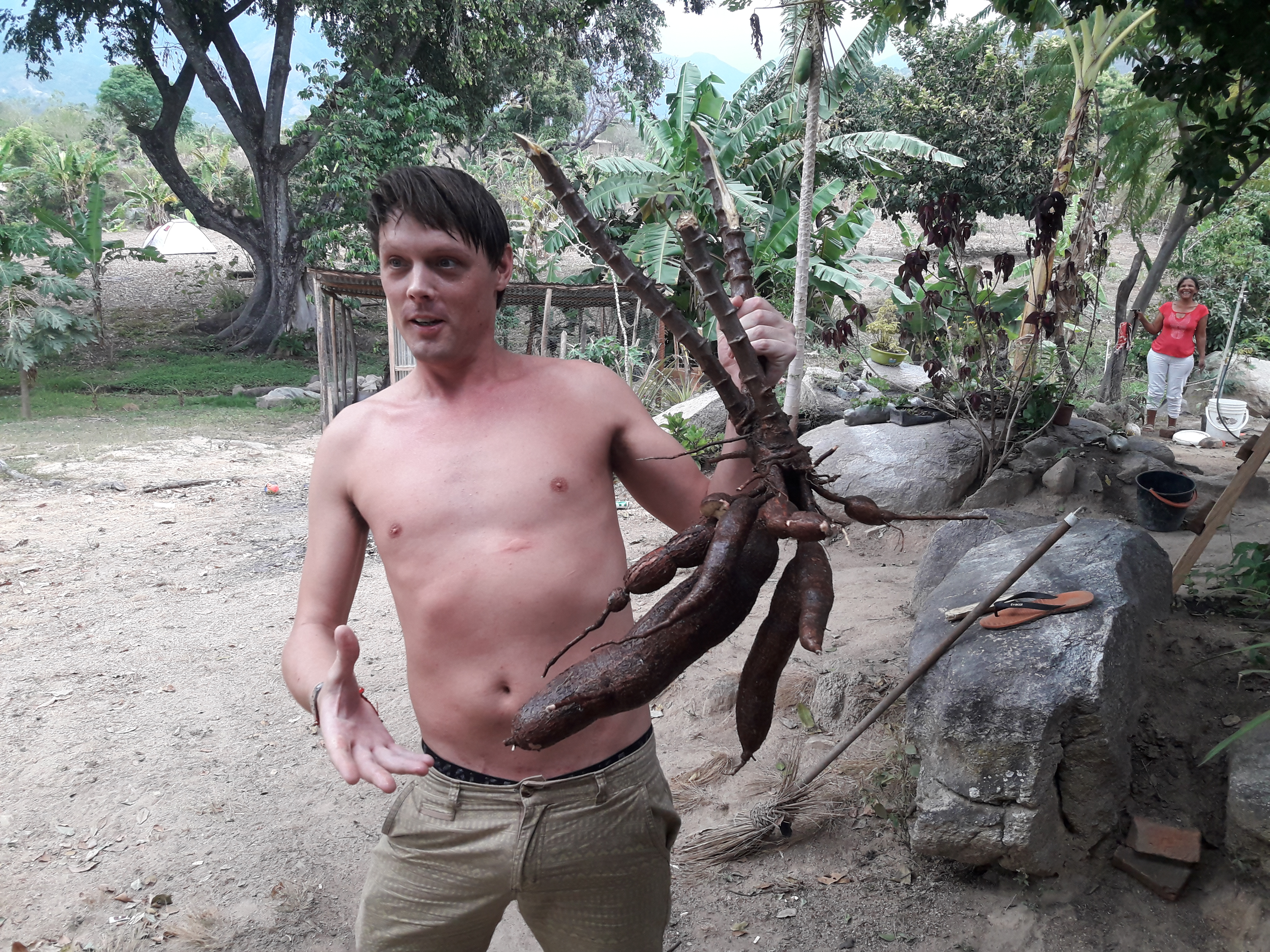
We goofed around and took loads of pictures. Our hosts treated us with the utmost of hospitality. Not long after we arrived, they picked some large plantains and grilled them up for us while we set up camp and then headed off to take a swim in La Mina river. They also picked some giant yuca which would be our breakfast on Sunday.

20180224_163546
Josh pretending he dug up this amazing yuca that Linda actually dug up. So very British of him.

After settling in, we all were ready to go dip our toes into La Mina river. The quiet walk through the town was enough to spark conversation between me and Linda as we found ourselves walking much faster than the couple with camera in tow. As we past indigenous Arawak people with their traditional dress – ancient men and young children playing on the side of the road – donkeys and hogs, we discussed how life has become far more complicated for us over simple illusions: time and money. So much of what we do is rushed by this feeling that we aren’t doing enough. This year is for me, I told her, and I want to spend it doing what matters to me, not simply living to work and spend money and then work some more.

IMG-20180225-WA0133
Loving the sky I’m under.

As we strolled through the crepuscular dirt paths leading down towards the river, we both agreed that it is important to disconnect from all of that noise in order to discover what it really means to be human. We are not so different from any other animal – yet we over-stimulate ourselves constantly with no regards for our basic needs. So much of what we think we need is based on distractions modern society has filled our heads with. Both of us took this trip for a mutual goal: to get out of the city, away from the things that endlessly leave us Stressed Out. We dared to ask ourselves if any of that was what life was actually about or if it is in fact a simple departure from something our ancestors knew all along.

IMG-20180225-WA0099IMG-20180225-WA0132

It’s interesting to note that even though this walk was peaceful, blasts of Vallenato were not far away at any given moment. People in the coastal region of Colombia are bullosa – loud and not ashamed of it. So even as we enjoyed this lazy walk from the finca to the river and back again, we were accompanied by Vallenato blaring somewhere in the distance or at the nearest local. Linda explained that this is a tradition in coastal towns and a strategy to get people to go out and drink at the estancos, or watering hole-bars located along the winding, otherwise abandoned roads.

La Mina river is dangerously beautiful. In some parts, when the water is high, a wrong step on one of the rocks will send you slipping into swift currents that will pull you down into the harsh rockbeds laid out throughout. Some areas have whirlpools and dark waters full of soapy foam. Linda said it was probably due to the water trapped in the same area being splashed against the rocks. A part of me mused if it wasn’t because people often literally bathe in these rivers. Either way, I did very little swimming in the river because though the waters were low, the movement seemed much swifter than what I had seen before and in other places. Not to mention the recent death of a boy in the river came up during conversation. Still, the view at sunset was absolutely breathtaking, and the calm was perfect for an impromptu yoga session.

IMG-20180225-WA0144

Once we were back at the finca, Josh continued to gather wood to make a bonfire. We had decided to roast our salchichas (sausages) over the fire old school camping style and enjoy the clear panorama of the night sky. When we got back, the plantains were ready to eat, so first we restored our energy by eating large, grilled plantains with sloppy, sweet suero, a white cream akin to sour cream but a bit more chunky and – of course – homemade. Linda’s aunt and uncle offered us as much as we wanted, which meant pile after pile of delicious suero on the two big plantains I managed to consume. It’s a must if you live or travel in coastal Colombia!

Then, we stuck our salchichas on sticks and began cooking them up on the fire we built. This went better than expected, however, don’t be fooled – it was hot. It hadn’t hit those low 20 degrees- Celsius temperatures, and the blazing fire just about melted the skin off my hand and face as I tried to hold my sausage over the fire. Josh’s clever solution was to stick the skewers in the ground and watch as they roasted. Once mine was ready, I stuck them in bread and added ketchup American hotdog-style. Linda and her aunt and uncle seemed to find it pretty novel – and tasty.


With bellies full, all that was left was to sit out by the fire and share stories and marvel at the night sky. We looked up and tried to find satellites among the constellations which we also tried to identify. The moon seemed so bright that once the fire simmered out, everyone was lit by an eerie blue light.

With limited technology, I realized how quickly the fatigue filled my body after sunset. Once the sun is down, without artificial light, it’s actually very easy to go to bed early. By 9, Linda and I were curled in our hammocks under blankets, being rocked by the wind – but not sleeping, all the while stirred occasionally by the undulating boom of distant Vallenato and the occasional bursts of barks and cries from the dogs and roosters.

At night, Linda and I were freezing in our hammocks. Turns out one blanket was not enough – my back was cold against the hammock and I curled up to form a cocoon against the chill wind trying to cover every inch of myself with the blanket and the hammock to trap some warmth. Still, in spite of the cold and noise, there is nothing as peaceful as sleeping under the stars (even if the distant music did steal from the orchestra of insects surrounding us – until it finally stopped, briefly at around 4 am).

The climate of La Mina is much cooler than Valledupar because of the higher elevation, and we even saw a bit of rain on the way back (sidenote: it hasn’t rained at all – and much less torrentially, which is the norm – in Valle for over a month). Even though the sun can burn during the day, when the sun went down at night, things gradually became cooler and cooler.

20180225_064419
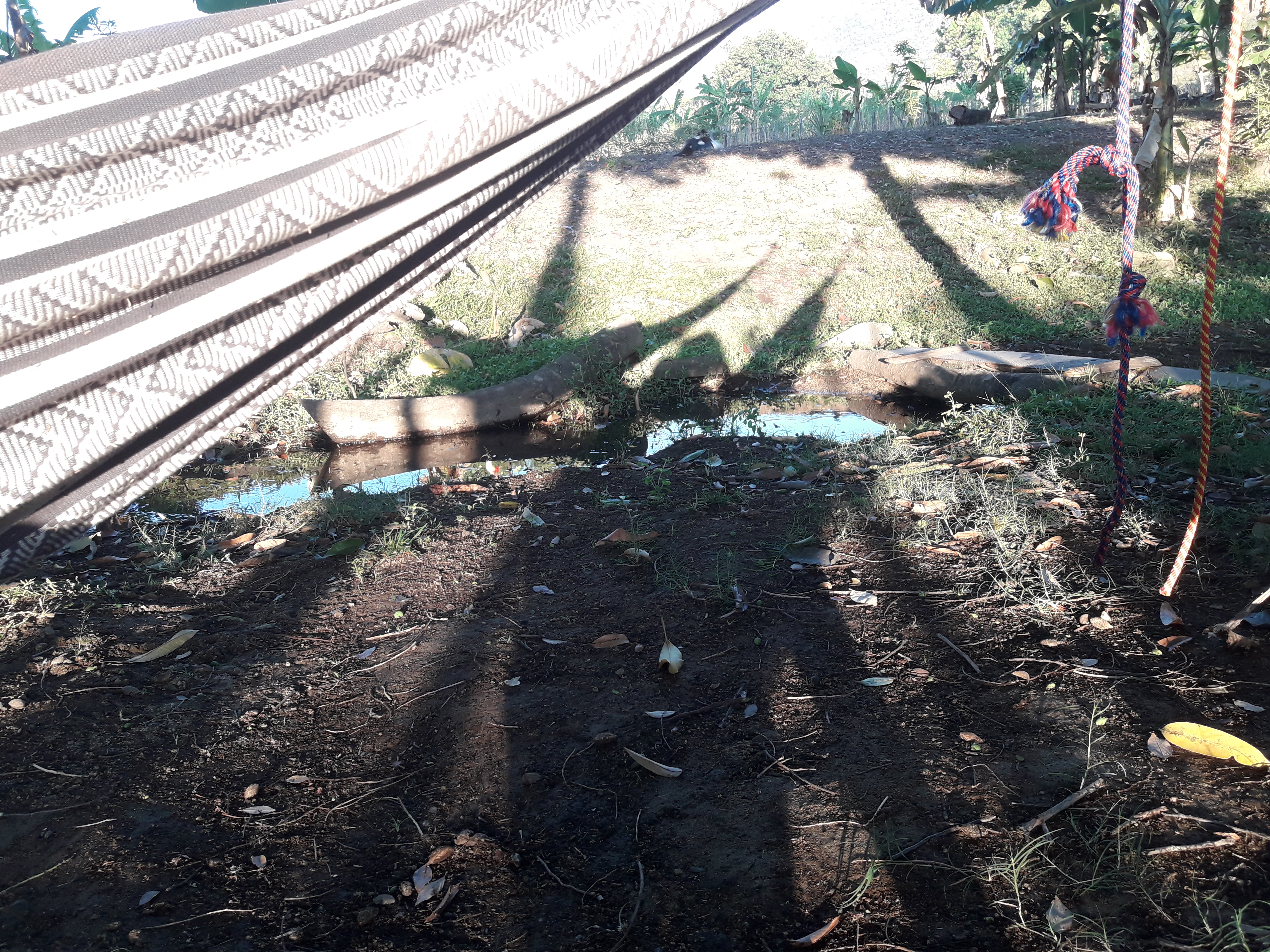
Morning shadows and hammocks.

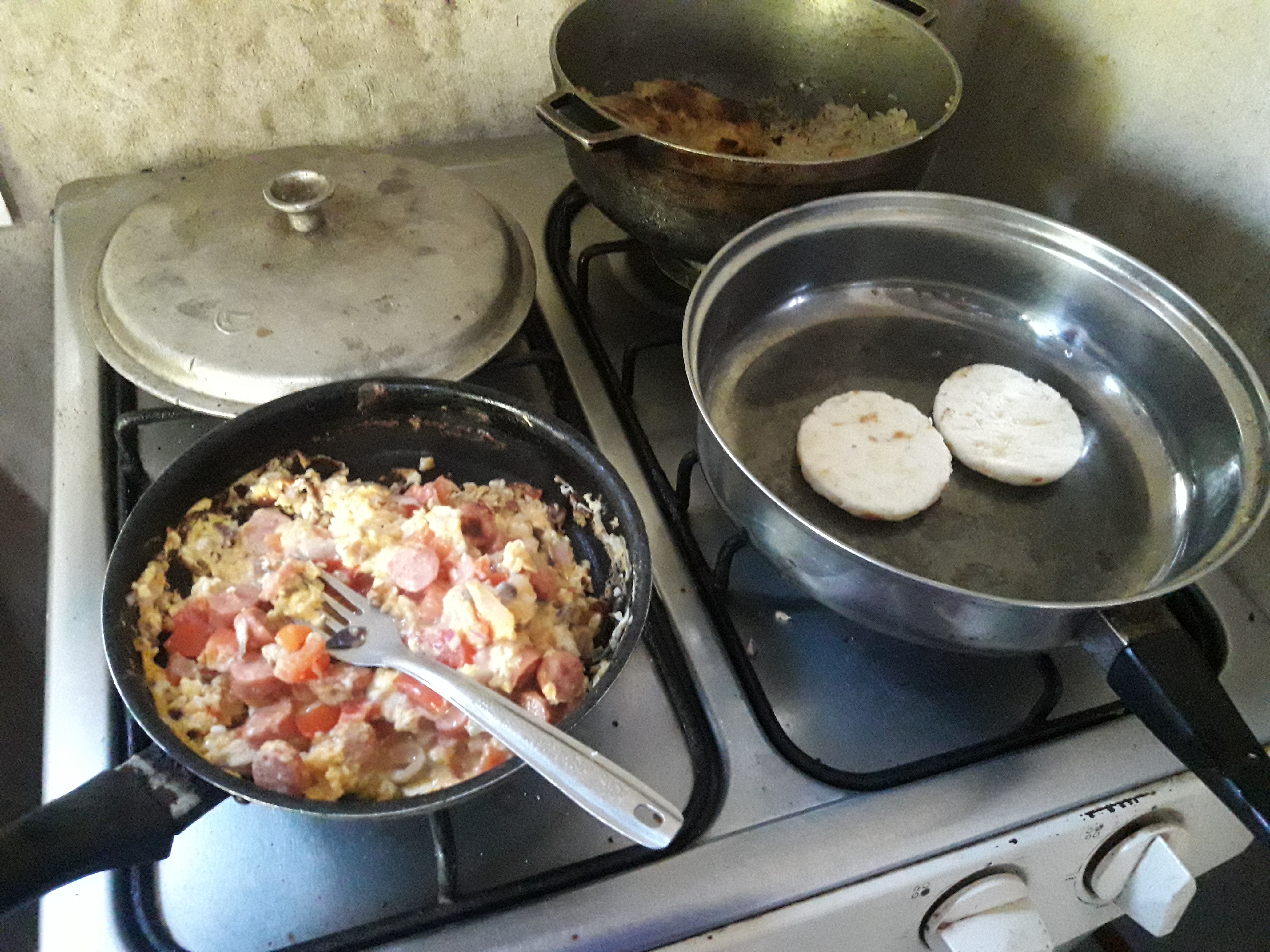
The next day, I struggled to get out of the little womb I had made of the hammock to start the day and make breakfast. By 8 am, everything was ready and eaten. I made a small omelette and some arepas and Linda’s relatives made boiled yuca pulled from the ground the day before along with that delicious suero casero. Of course, all of this went with the traditional tinto, little cups of delicious black coffee. Josh and I couldn’t help by sigh, feeling lucky to be living this amazing Colombian life.

20180225_070817
The eggs and arepas I made, my humble contribution.


We didn’t have enough time to go up the mountain path to Atanquez, a small indigenous village with its own river landmark. So instead we took off for the chorros, or rushing waters (like a small waterfall crossed with a natural water slide) of La Mina. We took lots of pictures along the hike and enjoyed ourselves splashing in the clear waters (at least until a few families with kids in tow showed up and kind of muddied the experience). It’s a good thing I put on sunscreen, because that sun was blazing hot. Whenever we made it back to the house, we were happy to find bolis, or little bags of ice and juice, waiting for us. They had chocolate, lulo (one of my favorite juices found in Colombia), and some other berry; all were utterly refreshing.


Three things you cannot do without if you make this trip: marshmellows (obviously), bug spray, and weed (if you’re into that sort of thing). We had no insect repellent, which led to Linda and I using the local method of warding off gnats with bites more elusive than bigger mosquitos – a “magic” soap that actually does a good job of keeping them away (don’t ask me how). Still, if you go, I recommend you go prepared. Also, extra blankets don’t hurt either.

We finished our stay by having lunch and lounging around, napping, reading, and joking around in the hammocks. The weather cooled so much that I really did not want to leave, but a bit past two, our transport arrived to take us back, this time in a tiny car with no AC (just like the first).

IMG-20180225-WA0147

I won’t soon forget the hospitality shown to us by Linda’s family, the beautiful sunset and chilly sunrise, the rejuvenating rush of the rivers, and the peaceful Colombian paradise tucked away a mere 45 minutes from Valledupar. It’s mini escapades like this that remind me of just how privileged I am to live in a place still so connected to its land and traditions.

All in all, it was a pretty great way to start my birthday week.

Goals for 2018: Consistency, Discipline, and Amor Propio

Lately I have a lot of good energy moving around from my core to the tips of my fingers and toes. I feel like now is the moment to take advantage of that energy. To write, to share, and to manifest what I want from my life.

What sort of energy do you find yourself with today? Were you tired, tense, stressed? Indifferent, restless? Unsure, neutral? Relieved and relaxed? Calm and content?

It’s good to read your own energy and know how to spend it in the most efficient way. After all, we are made of the energy we surround ourselves with as well as the energy we generate and put out into the universe. One of my personal goals has been to carefully monitor and manage my own energy as well as the sort of energy I allow close to me. I’m an emotion sponge – always have been – and by being mindful of that, I can use that trait to benefit myself and forward my goals.

It’s all a matter of balance. Which is where I’m going with this post. How do we manage our energy? By putting in the right amount of time and energy into the right sorts of pursuits.

And how can we do that more effectively? I’ve been reflecting on that a lot since the beginning of this year. My personal answer has been a love of self and respect for one’s own needs, goals, and energies.

I want to share my goals, and the methods I will use to pursue them, not just to have a typical resolutions post but to show how the short-term goals we call resolutions can be turned into the beginning steps towards long-term projections toward the future.

Of course, there are no guarantees I won’t fall off the wagon and lose sight of all of this. There are never guarantees that we won’t suffer depressions or tragedies that muddy up our energy and take time to treat and heal. But that’s okay. My goal is not to be rigid when I commit myself to this disciplined mentality. Rather it’s to be adaptable and focus on all of the different avenues that help me to continue moving forward while still coping with the ups and downs and fluctuations of life.

Every day is made up of 24 hours. Time is limited and finite. I know, everyone knows that, right? But it’s also fluid and, yes, in some ways, a social construct. One of my primary goals is to construct my plans around time in this sort of way. Do I know if I will be able to commit to a master’s program by next year, for example? No, and I don’t know if it will be completely necessary to fulfill my long-term goals; however I’m in the process of figuring out the next step in my education, so I think putting that in there makes sense because it’s a part of my projection for the future.

Speaking in broad, fluid strokes, my goals are the following:

  1. Writing: Blog, Poetry Collection, Novel, Essays

Writing is not only something I want to focus on for professional reasons: it’s a necessity to me. I’ve realized throughout my life that, no matter how tired or stressed or frustrated I am with life, I am always writing. No matter if nobody reads it. No matter if I don’t share it or it’s completely therapeutic. Or it’s dry and academic. In some way or another, I always have to be writing and expressing myself in this way.

So my goal is to build on that. To hone my craft and develop my voice, and beyond that, to put my voice out there and allow others to hear it. In the past, I have been very self-critical to the point of over-thinking and limiting myself. My goal now is to produce, to create in every way that I can, a la Neil Gaiman. Because, come on, no one ever got better by not trying. If I don’t apply myself now, all of these ideas I have floating around in my head will never materialize.

To put it in terms of time: this year I want to create a concrete collection of poems and send them for publishing and/or send them to different journals. I want to fill this blog with posts every month (a new post at least once a week) – and develop within my niche. And I’m hoping to have a good draft for my novel, The Dark Realm, by November. I haven’t really started working chapter by chapter because of energy place on establishing other habits, but once I have a good rhythm, I plan on taking my outline/planning and starting to chip away at those ideas bit by bit until I get something concrete to share. Essays, of course, go with the blog to a certain extent, although the blog will also include more anecdotal and list stuff. It’s more of a platform to highlight various parts of my experience.

     2. Travel – and Document

This summer, I’ve already got two concrete travel plans: Backpacking in South America independently (with a little help from my friends that live in different countries and couch surfing/hostel friends I have yet to meet). The other is a mochilero trip with a friend who was actually my chaperone back when I went to Spain for a couple weeks as a senior trip in high school (how cool is that continuity?). I’ve been saving a lot to make these plans a reality, which of course is another big goal/goal-facilitator that can’t be overlooked.

In these travels, I want to combine my writing and picture-taking to tell a cohesive story of Latin America, the reality that I once only knew on an academic level, which is to say the complexities of the culture and societal dynamics (economy, history, current events, etc.). I love exploring for exploration’s sake, but if I could do at least a little to lessen the ignorance we see on a broad scale in the States, well, hey, I sure as hell want to contribute my two sense/cents.

Plus, the goal is to get other people intrigued so that they will go out and explore more, too. By living an experience, immersing yourself in another culture, we grow as individuals and as global citizens. Our mind’s horizons expand. You can feel the change and, I kid you not, nothing is ever the same. It sounds dramatic, but I know living abroad has changed me for the better. It’s made me more aware of what matters to me, the sort of person I am, and what other’s can teach me. We grow up thinking the world consists of what is truly only a bubble of reality, a small fragment of a much larger novel (hell, it’s more of a Robert Jordan-esque multileveled universe of epics, but I digress). So this goal is a real big one for me and for my development as a human being, which revolves around the broader goal of self-actualization.

     3. Get a good camera and develop a photography portfolio

On that note, I need to get a good camera (which, again, is where saving right now is so crucial) so that I can properly document these experiences. There are so many things which catch my eye: people, relationships, shades, little details that create connections between language and images. I’ve always had this goal, but I never had the means. Now, with my budgeting, I feel fairly confident I can afford a good camera by the time summer rolls around and start focusing on a new craft.

     4. Increase fluency in Portuguese and start developing some conversational/integrated skills in at least 2 other languages

This is fairly self-explanatory: by the time I’m 30, I want to be able to call myself confidently mult-lingual. That shit doesn’t happen on its own over night. There are some people that have amazing memories. Some people are surrounded by a multitude of languages and have to learn out of necessity or have the social circle that facilitates them learning. But the absence of those attributes and unique circumstances is not an excuse not to throw myself into self-studying and improving the capacities I already have in a few languages now.

The specific languages I’m focusing on are Portuguese (for obvious reasons, it’s the easiest for me because I’m already fluent in Spanish; it’s more being persistent and speaking as much as I can while developing vocabulary via listening, writing, and reading). I want to go to Brazil this summer, so this one is a big one. Luckily, I have a few years of casual study and a few Brazilian people that can help me. It’s just a matter of taking advantage of that.

The other primary language I would like to become conversational in is Japanese. You might ask, why Japanese? Well, I want to live and work in Japan by the time I’m 30. How I will do this, I haven’t entirely figured out, but I will make it happen. I’ve already got the basis in the language. I can write decently. The pronunciation is easy. But I need to get some good conversation practice and learn more vocabulary, which takes work. For now, I’m working on vocabulary so that when it comes time to speak I have some knowledge to draw on.

On the periphery, there is my basic knowledge of German and French. Those two are next on the list, but they seem further away. Language study takes time. I try to make it a daily thing so it’s easier to integrate it into my life and keep those mental pathways open. However, there aren’t that many people around speaking these languages in Colombia. So it takes effort. And these two are harder in terms of grammar and pronunciation. But once I have a good rhythm in Portuguese and Japanese, I’m going to start working more seriously on these two. And from there, the list goes on….

     5. Start a new career more centered on my passions*

This is going to take time, and I know it. Right now, I’ve got a pretty good thing going for me as a teacher. I enjoy it. It motivates me and keeps me disciplined. However, it is not what I want to do indefinitely, and I know it. It is a passion, but it isn’t the passion I want to marry, you feel me?

I want to work with non-profits. I need to volunteer more. Build a more diverse resume. Advertise my translation skills. What does that certificate I studied  and the money I paid for worth if I don’t? Hay que poner pilas!

     6. Translation and potential Interpretation Certification/Experience

Obviously this is a big part of the previous goal, but more specifically I need to build my translation portfolio. And look for an interpretation program. It’s a skill that takes practice, plus that will help boost my resume.

     7. Choose a Master’s program and work on the application process**

I’ve began looking into different Master’s programs. I know that if I want to go into diplomacy and international relations in the future, it would behoove me to, well, study and deepen my knowledge in that area. Living abroad isn’t enough. I need the contacts and the research to really get me to where I want to be as a professional. It’s just hard to decide when I haven’t settled on a place to live next year. Stability is something I have lacked and something I’m trying to cultivate despite my very spontaneous life style and multifaceted interests and pursuits.

Right now, I think I’m going to keep researching online programs. Its a resume-builder, for sure, but honestly, I’m more concerned with a continued pursuit of knowledge than a higher pay grade. Although that part would kind of help with the rest of my goals, so….it can’t hurt.

     8. Stay fit – in body and mind (dance, yoga, and weights)

I love being active. I love the way it makes me feel. I was reflecting today, and there are three activities that make me totally zone out and forget about everything that stresses me: cooking, dancing, and any other physical activity (as well as writing, but sometimes channeling that energy can increase my anxiety, too). Oh and washing dishes. I’m weird, okay?

In short, I don’t want to be fit to be skinny. I don’t want to be fit for the instagram followers or the praise or the interest of boys. I want to be active. I need to be fit to be active and healthy. I need to be strong so that my body can handle more stress. If I can handle more stress, I’m sick less, and being less sick makes me less stressed and being less stressed makes me less sick. See how that one works? So, really, being fit is more about being strong so that I can do more.

Also, I really love dancing, but I’d like to feel more confident when I do it. Yoga helps with balance and meditation. Weights provide strength. All of them require discipline and practice.

     9. Maintain a healthy diet and good eating habits – oh and more cooking.

All of my goals are kinda related, no? Well, if I wanna be strong and get sick less, I have got to eat better. This one I’ve been working on a lot lately, starting with waking up and making myself a good breakfast. Like, not just cereal or yogurt or breakfast bar, but actual omelettes (du fromage), granola, yogurt, fruit, juice, water…. The works. I still don’t really eat dinner, but I think I balance my meals okay throughout the day. And if I need to eat at night, I’m trying to cook on Sundays and plan meals ahead of time.

Last year, I started getting and staying chronically ill. Gastritis, acid reflux, and sometimes an inability to eat without feeling awful, no matter what I ate. During the holidays, I was able to reset, and I realized that the doctor that performed my endoscopy was totally right: my problems are linked to stress. Stress and poor eating habits. So I’m trying to work on both and get sick less. Because when I’m sick, I’m miserable. I feel like I’m unable to do anything, which leads to this awful sense of stagnation and anxiety. And then the vicious cycle repeats ad nauseum. Literally.

     10. Continue building and strengthening positive relationships with people around me and leave negativity at the door.

This goal is definitely a strong personal one. Networking is important, but having real friends that you can rely on is even more important. Living abroad has made me realize that these genuine ties are so vital. They practically set a benchmark for defining our own happiness and fulfillment in whatever life situation we find ourselves. Without a strong support system, everything else seems greyer and less meaningful. Work is just work. But when you feel like you are part of something and work to maintain good relationships with the people around you, life and its labors become more meaningful. It also creates a sense of peace of mind.

I’ve been known to be confrontational. Negative. A bit abrasive. And I’ve had some relationships in my life that did not help me overcome those sorts of character traits. Being abrasive and direct is not necessarily a bad thing, but like all things, it requires moderation.

Living in Colombia has made me realize the importance of strong, positive interpersonal relationships – for accomplishing goals and just generally living a more fulfilling life. I see how my attitudes and actions can affect others and also affect the general outcome of various scenarios. When I’m positive and bear in mind the things I am in control of rather than dwelling on those I am not, I am able to connect to others in a meaningful way and truly enjoy the moment. These lessons have been invaluable for me. My goal is to continue strengthening the close relationships I have and doing what I can to contribute to a positive local and global community, focusing on the Butterfly Effect, the ripple of every choice and action we make.


Okay, I think that’s a good broad portrait of the things I want to work on and accomplish.

Here is how I hope to achieve them:

  • Budgeting
  • Time Management
  • Prioritizing
  • Flexibility
  • Habits. Make it a habit.
  • Developing and sharing hobbies 
  • Mindfulness and meditation (be more stoic)
  • Focusing on the self and maintaining a healthy growth mindset
  • Getting help (and not being afraid to ask)
  • Dedicate time each day to the areas that need improvement 
  • Self-assess and check in (continue with therapy)
  • Read more and take advantage of daily learning opportunities (be a life-learner)
  • Game plan and follow-through

I would expand on each, but I think it’s all pretty clear at this point. We have a limited amount of hours in the day, but if we prioritize and think of how we can work on each area every week and find moments in between – well, we make progress. As long as we’re working and making an effort to do something with our energy, we are making progress.

And I want 2018 to be my year of progress. Every year has involved metamorphosis. Sometimes it has involved loss. Often it has. Mainly, the loss has been a result of focusing my energy on the wrong thing or simply not focusing at all. Harnessing energy and managing time in a meaningful way takes a lot of effort, but I know it will be worth it in the end.

Because, in the end, successful or not, I will have created something. This all might be fairly self-indulgent, but let’s face it: we all are self-indulgent. We all want to leave our mark and contribute something to the universe. We want our existence to be significant.

But significance doesn’t generate itself. I plan to take advantage of whatever opportunity I’ve gotten and not to spend as much time internally panicking and stressing the little things that ultimately will be forgotten by the next year, and more so by the next 10 years. It’s not about checking off every detail and simply focusing on the accomplishment itself. It’s about the journey towards these goals, not the destination.

How are you accomplishing your goals? Do you feel over-ambitious or under-ambitious? How do you manage your time and plan things realistically? Maybe we can swap insights. Leave a comment below!


Dating and /Not/ Dating in Colombia

In honor of Valentine’s Day (and its wonderfully appropriate alternative: Galentine’s day, brought to us by the comedic genius of Parks & Rec), I’d like to recap some of my horrifyingly hilarious experiences I’ve had in the Colombian dating arena.

Many times, I was thrust into this game unwitting or unwillingly. You’ll soon see how that is possible by the powers of machismo, though I assure you, it should come as no surprise.

In Colombia, I think it’s fair for me to say that dating culture, in general, is quite toxic. This is because of some harmful stereotypes-made-real and culturally-accepted norms, ranging from no-means-yes and yes-means-anything-goes and lying (both benevolently and not) in order to maintain a certain facade within the relationship (which does almost inevitably lead to straight up infidelity).

I know it’s been said, but this is, of course, anecdotal. There may be no studies relaying just why it is or the frequency at which these sorts of things happen. However, that doesn’t diminish the fact that they do happen, and mostly it’s because of the dominant machista culture. I’ll go in to what machismo is via examples throughout the post.

Most recently, I was invited to go swimming with a guy I barely knew. I met him while hanging out with a friend and her friends (and their friends) the night before. Bear in mind: I had expected us to go to the pool in a group, which seems safe, am I right? But his intentions weren’t completely unclear either. That morning, he had sent me several texts that read very…flirtatious. But that’s normal here. What Colombian doesn’t call most women “mi vida,” “bebe,” “mi amor,” “princesa,” etc.? You would be surprised. However, the excessive amounts of winking and suggestive-face emojis clearly gave him away.

Now, I really wanted to go swimming. Just keep that in mind. So I said yes, why not? I mean, worst case scenario, he’s just very awkward, right? I have to shun a few untoward remarks, maybe. No big deal.

Wrong. You see, when men like you here, they don’t care if you are as stiff as a corpse. They will touch YOU. Now doesn’t that just have the word RAPE spelled all over it in big crimson letters. Sometimes I forget this, and the shock is real.

As soon as I got in the cab when he pulled up at my house, he put his arm around me. Strike one. He started to caress my shoulder in this utterly cringe-inducing way as he spoke at length about things he assumed I knew nothing about and made general smalltalk. I tried to pretend not to notice, attempting to keep things light and friendly. He kept getting closer and closer to me. I could feel my skin crawling, that sensation you get when there are tons of invisible ants all over you.

By the time we got to the pool, he was trying to hold my hand, not letting me more than a few inches from him. We would talk and laugh or carry on (conversation in all its forms is my ultimate defense mechanism when I am really uncomfortable), and then he leaned in and without any sort of preamble (other than some sort of throw-away “sultry” – in his mind – phrasing) tried kissing me, which landed on my chin. This happened several times. When it happened, I went rigid. I told him I barely knew him, the physical contact is too intense, it’s making me uncomfortable – I mean how much clearer could I be?

He pretended to care, said it was no problem, insisted on asking if I was comfortable and having a good time. But as soon as I dropped my guard, the same awkward dance would begin again.

He would look for pretexts to touch me. In the pool, he tried to lift me up and carry me around. On the balcony looking over the city’s valley and surrounding mountain peaks, while I was trying to admire the view, he cornered me and blocked my line of vision. He recited poetry to me, sang at me, basically wrapped his legs around me at one point.

Need I go on? It was absolutely obnoxious. Then he had the nerve, after I told him more than once that none of that was cool, to ask me if I would be interested in going out with him some more. To which a cocked my head to the side and coyly responded, “Wait, what? Since when was this a date? I’m just barely getting to know you. And no, I would not be and am not interested in going out with anyone at the moment. No offense.”

Why do I feel the need to tack on the disclaimers? “No offense.” I suppose it’s hard to reject men flatly when you’re in a situation in which you are forced to be around them alone. It’s not that I felt physically threatened by him, but it’s just uncomfortable. My instincts to be polite often get me in trouble, and more so in situations like this. I imagine on some level it’s because women are trained to be polite above all else. Which in no way backfires, of course…

This phenomena of touching the other person whether they express that they want it or not and assuming that it is okay to press boundaries is all too common.

Even with my ex, there were times I did not want to be intimate, and to be frank, he would ignore just how rigid and indifferent my body language was, or that my words expressed that I felt. Somehow, all of this behavior gets written off as normal here. Which has led me to having to fight to express myself and then feel ignored or written off when I say, hey, stop, that’s not what I’m into.

If you are going to date a guy here, as with any cultural context, you must recognize that everyone is different. No two people are alike. This might maintain you with at least a little bit of hope and optimism. However, there are some broad norms that become patterns for some underlying reason. Most of what I’m describing here is do to machismo.

To give you a textbook definition, machismo is a strong or exaggerated sense of manliness; an assumptive attitude that virility, courage, strength, and entitlement to dominate are attributes or concomitants of masculinity. Are you seeing the assumptive patterns here?

Another example of how toxic dating culture can be here is the constant feeding of the male ego. I’ve now had several encounters with men who literally do not shut up about themselves. They will start asking you questions – only to cut you off before you’ve even completed a sentence.

It starts with them asking a million questions in order to seem like they are actually interested in you. Like, “So, tell me about yourself. What do you like? Where are you from? What’s your passion in life?”

Your mind begins to work over the slew of questions. You begin, “Well, I’m not sure where to begin. I’m really passionate about–”

“Oh, so did I tell you I just started working at this company blahblahblah.”

It really is that bad. And they expect you to just go along with it. And god forbid you interrupt them, because I have seen more than one guy get indignant or simply ignore everything I have said because, hold on, he didn’t finish.

Entitlement. When he cares, it matters. When you are interested, it’s up to him. And generally speaking, whenever a guy gets hit by the urge to mess around here, he expects his demands to be met. As illustrated with my ex as well as the guy I barely met, women are expected to just bend over and take it. Your refusal or disapproval is easily ignored. But don’t expect him to be around when you need or want something.

Which leads me to the next point: vanity. On one hand, it can be nice to date someone that cares about his appearance and actually wants to look good for you. But the dark side of that is the problematic behavior that concern can generate. It manifests itself in more than just an obsession for one’s physical appearance, but general appraisal of everything related to oneself. In a word: ego. I have seen how the image of a person can be set before the person themself. Sometimes it manifests itself in insisting that you only post pictures in which they look perfect. Other times, its demanding that you change your image in order to suit their whims. In all cases, it is exhausting and superficial.

Another common occurrence is texting in order to “manage” you and maintain your interest. “Que haces” is the most common and literally repetitive question. Sometimes I’ve been asked what I am doing with no more than a few minutes in between, as if there were literally nothing else to say or talk about. There is a sense of micromanaging as a means of control here. If you don’t respond, you obviously are devoting your time to someone else or something that *gasp* may be more important than your pretendiente!

Then there is planning. This spontaneously can pop up on the whim of your lover, and the proposal may be more of a pointed “we are going to do…” or “I want to do…” and less of a “hey, I was wondering if you would like to…”

As an American, I was used to the latter, more courteous manner of suggesting activities. Most Americans aren’t that forward when they are just getting to know each other, at least, not the crowd I tend to run with. I have never experimented with Tinder, but I did have my fair share of okcupid dates, and aside from a few cocky bastards, very rarely was a date demanded rather than suggested, without some caveat to make sure the other person feels comfortable even considering it a date. We Americans, in my experience, are less determined to put a label on our relationships too early in the game. In my opinion, it avoids conflict but can lead to confusion once someone inevitably catches feels and wants to know where they stand.

Speaking of being American, thanks to being the minority in the small coastal city I live in, I have been blessed with the experience of being exotified. If I was insensitive or indifferent at some point to the struggle of women of other ethnicities in the states, I can safely say that I do understand how it must feel to be reduced to a label, a stereotype, and fetishized for it – and it’s awful. It sucks. It really makes you hate everything associated with that label. The comments are cringe-worthy. The “be my sexy English teacher” and “let me teach you how to dance” and “all gringas are easy” are a broken record that drives you madder and madder everytime it enters conversation – and believe me, if you meet a guy here and you are American, it will. I don’t think I will ever date anyone again that clearly had some romanticized or crude American-Pie-fueled image of me again.

But going back to Colombian culture, dating is a clearly established game. However, the rules are generally “don’t ask, don’t tell” when it comes to the sort of transparency that tells you if other people are in the picture or not. Exclusivity, I have realized, is not as much as a given as the fact that if you accept an invitation to go on a date, in the guy’s mind you are probably “dating” unless he says otherwise. Even if he’s also seeing several girls on the side. Or one “officially.”

I have still yet to meet a man here that will straight up tell me if he has a girlfriend when he expresses interest in me. Even if I meet him with another girl that is clearly somehow sentimentally or physically involved with him, there is often a lie, either implicit or explicit: no, it’s nothing serious, I’m into you. 

I’m starting to develop a sixth sense for this shadiness. Now I won’t take a guy as seriously and will most likely just walk away if he even suggests having something serious too quickly, assuming that he has a girlfriend. This is because I have been led on or straight up duped into thinking a guy was single only to be told by others or find out clandestinely that there was another woman in the picture the whole time. For me, as someone that as a rule would never go for a guy that is committed to someone else, that is absolutely devastating.

Returning to the theme of machismo, I’ve realized that there is an implicit cultural acceptance for infidelity if the man is doing the cheating. It shows his “swagger”, his prowess, his…insecurity. I think the root is insecurity and the lack of genuine relationships. Because these same people that tend to be unfaithful and dishonest about it also assume and go nuts over the idea that their partner could do the same to them.

Once, I realized a guy was acting rather cold with me after showing so much interest every time we saw each other. I thought maybe I was overthinking it or projecting, but it came back to me that he actually lived with someone and was in a committed relationship. This never came up in any of our conversations. The only tip was the cold manner in which he texted me and the spontaneous attention whenever we would see each other.

There’s a certain feedback loop of men doing what they want because they want it and not considering the consequences. I think this is a direct symptom of machismo, which is all about the ability of men to do just that in order to assert their manliness. However, if a woman does the same, I need not even go into the litany of insults that exist in Spanish to describe her.

Infidelity is a man’s game here. And a game it is. These days, I don’t date, and if I do in the future, it will be with utmost detachment and caution.

Obviously, I am just a cynic that has seen some of the worst in dating in Colombia. Perhaps I’ll write a post in which I contradict all of this because some beautiful person comes and sweeps me off my feet. I highly doubt it though, as a lot of this is less to do with my personal experience and more to do with the broad echoes of the dull roar of the antiquated conquista attitude that remains embedded in dating culture here today.

A imagem pode conter: 1 pessoa, texto

On that note, I wish you all a Happy Valentine’s (or Galentine’s) day! Love yourselves first – then and only then can you appreciate and recognize the genuine love of others.

Versos de Colombia

I’ve decided to share the poems that I have written since living and being inspired by life in Colombia. Some days the inspiration is so great, I can’t help but sit and let flow poem after poem. They generally aren’t long, but I feel they are significant for where I am in my life and the person this experience has molded me into being.

Plus, come on, y’all. I’m practically 26. I’ve been telling people I’m 26 without meaning to because subconsciously I’m already there. I feel like in this year and a half I have grown and matured more than in all of my years before combined.

Okay, maybe that is a bit hyperbolic. But yes, I’ve really settled into myself. And that shift in perspective, the embrace of self and denial of anything that does not grow or nourish the self is due in large part to the simple decision I made to live and teach in Colombia.

I will put the Spanish and English versions for those that don’t speak Spanish, so you can hopefully really absorb the meaning.

Al mal Tiempo

Her voice
Like the arroyo washing back
A reassuring hush

Her eyes
Like half moons hidden
Beneath dreamy clouds

Her bones
Brittle yet stark like yue bark
Not easily bent

I see her
Sitting in her mecedora
Reading Catholic psalms
In her flowing, multihued manta

The strength of the Colombian-
Of the Wayuu-
Al mal tiempo, buena cara.

This first poem I wrote back when I was first living in Fonseca at the end of 2016. I stayed with an older woman of Wayuu-indigenous origins (though she is very much a part of that culture presently) who was the sister of the woman that inspired this poem. I was always struck by her straight back in the face of difficulties and hardship and her unwavering resolve. Just every part of her radiates strength that her fragile body would deny. The Wayuu are a strong people. Even though there were moments she could get under my skin, I’m so happy for the time I spent with her and her family.

El Abismo

No es que sea por rencor
Pero espero que sigas con ese ardor
Y ese salado sabor
Cuando mi nombre pasa por tu boca,
Por todas las lágrimas y sudor
Gastados en vano por tocar
El abismo más profundo de mi alma.

The Abyss

It’s not to be bitter,
But I hope you still feel the burn
And that salty taste
When my name passes through your mouth,
For all the tears and sweat
Spent in vain by touching
The deepest abyss of my soul.

Love has come knocking at my door, although the fruit of that love was far from savory. Sometimes, recontextualizing myself within this culture, understanding the way people play the game of relationships, was something I had to do in order to survive and remove myself from situations that did not serve me on my journey or help me love myself, but instead led me further astray and caused me to forget myself and what has always been important to me.

Dark times, toxic relationships, shifts that have challenged me in this journey and have inspired my verses as well. Sometimes the best way to phrase and manage the hurt people can cause you is via poetry. The end of my last relationship can be summed up as a…

Twisted Fairytale

In truth, the slate has been wiped clean.
He broke the chains of my denial
With his poor, decrepit tongue
Sugar-coated in lies and poisoned in seduction.
I could never live, could never know true
Desire, love, heartache
Again by that harsh sword-

I would rather fall on my sword
Than taste those bittersweet remedies
Again and fall beneath myself.

Thank my pride for the strength it provides;
Thank my love of self and other to realize-
I was never loved by that other and never
Would be or could be-
Thank my nerve to say enough is enough.

And most importantly, thank the signs
Held up by angels among me,
Those gentle voices that know
And eyes that have seen and stung
With tears so that mine would not-

Thank my friends who have taught me
My own self-worth, to trust my own inner voice,
For they are the true heroes in this sad story
Where I am both the damsel and the knight,
And happy endings are never what they seem.


So, with that epoch sealed, I decided to love myself. To love myself ferociously and passionately, secure in the knowledge that I am all I have got.

Narcissus

I would jump into a million lakes,
Head down, face first
Into my reflection,
If it means that I could love
Myself,
Alone; Forever.

Faithful

I made a promise
To never be unfaithful again
To the most important person
In my whole world,
The one I go to bed with
Every night:

Me.

In spite of the pain I experienced, the journey itself has been totally worth it. It has aided in my process of self-discovery and the affirmation of my self-worth and independent spirit. Since breaking up with my ex, I have traveled both outward and inward – to Tayrona, Santa Marta, Ocaña, climbed the beautiful Estoraques, and began planning my independent summer adventures throughout South and Central America. The breakup opened a floodgate of creativity for me that has led me to be more reflective and respect and recognize the beauty in all the things around me.

Continuum

Puedo verlos bailando,
La ondulación como olas
En un mar ámbar
E inquieto.

I can see them dancing,
The undulation like waves
In an amber, restless sea.

IMG_20180110_222830361.jpg
Taken outside of a club in Santa Marta during my get-away in early January

Acertijo

Mi Esencia
No se puede atrapar
En una mirada de miel
Y un cuerpo
De carne y hueso.
Soy tierra y fuego–
El mar y sus olas bailadoras–
Soy palabra y aire–
Soy–

Riddle

My Essence
Cannot be trapped
In a honey gaze
And a body made
Of meat and bone.
I’m earth and fire–
The sea and its dancing waves–
I’m word and air–
I am–

The idea here was to be phrased like a riddle. I start by going to the root of my meaning, my essence, that which makes me as a person. I was reflecting not too long ago on the selfie sensation, the need to post pictures of oneself and show the world our best face. I realized that who I am really isn’t contained by that image–in fact, it could never be contained by it because that image of decaying perfection is also impermanent.

So what am I? I am a human being. And human beings transcend the prisons their flesh holds them in. Our spirits and energies make us one with nature, and nature brings meaning to what we are. I suppose it’s something I’ve learned about myself, the view I have of myself as being now far less narrow and 2-dimensional.

There have been other scribblings and fragmented thoughts along the way, but these were the principle verses I have written here. I feel like they represent the metamorphosis – the starting and beginning again where I started from but a bit fuller and wholer, the whole cycle of self-growth – really well. Now, to add some more to the list.

Tiny Victories

To be honest, I meant to post this back in February. A lot has happened in my life in the past 3 months since starting this post, but because I feel it is important and may even serve as inspiration for other frustrated teachers working abroad, I decided it was worth finishing and sharing. Better late than never!

Over the past months, I’ve basically been exposed to a baptism-by-fire-esque melee of first-year teaching obstacles. It hasn’t been easy, but I can say that I’m happy to note the little things that have gone right among the long, interminable list of failures. Or, perhaps failures is too strong a word–dismaying mishaps? These seemingly minuscule events that keep me getting up and dressing myself each morning are what I like to call “Tiny Victories.” In the end, they have added up to be far more significant than any of the broader struggles I’ve faced.

Here is my short, (non)exhaustive list of things that have gone right this year:

1. Seeing the difficult ones make progress (even if it seems slow and daunting with much backsliding and daily struggles).

Samuel, one of my “difficult” students has stopped running out of the classroom. This is by no means to say that he is now behaving and participating in class like most of the other students, but for Samuel, it will have to be enough…for now. EDIT: these incidences have now ceased along with most of his formerly daily outbursts. Today I met with his mom and got to tell her personally how proud I was of Samu’s progress and maturity. Sure, he still has trouble staying engaged in class and avoiding his caprichos but I have to say he is one of my success stories from this year. It’s not always a power struggle, I’ve found.

IMG_20170516_072554

2. Finishing a lesson on time / good time management days where I’m able to stay on track.

My lessons have come together, and I finish tasks on schedule. This one was HUGE but gradual, because it turns out time management is not always innate. Eventually I developed a good sense of time without even looking at the clock. This has done wonders for keeping class running smoothly. Some days run smoother than others, which makes this one a prototypical Tiny Victory.

IMG-20170502-WA0001.jpeg

3. Witnessing students using and engaging with the language in and out of class.

My students are listening and speaking English – sometimes without prompting! Sometimes they even pester me during recess to tell me or ask me things in English. It’s adorably endearing – a true testament to the fact that my effort to immerse them and actually teach something organically has, in fact, been working. The listening part is a huge improvement considering when I started I could barely get them to even look at me while I spoke, much less actively listen and participate.

IMG-20170504-WA0003

4. Being able to take everything in stride.

I’ve gained a general increased confidence, in spite of the exhaustion and occasional confusion that weighs me down. I no longer am obsessing over the little things. If I get through all of the days activities, as I have done on most days, at least I have something positive to take away from it.

5. Seeing the little sprouts pop up from the seeds I’ve been planting from day one.

There are days when my difficult students repeat little things that I’ve taught them. For example one of my really frustrating, stubborn guys often comes out reminding other classmates of the importance of “making good decisions.” I’ve given a lot of motivational talks about how each student needs to control her or himself. Most of these talks boil down to thinking about the consequences of bad decisions and how to distinguish between good choices and bad choices. Pretty important stuff at this age.

IMG_20170509_074527

6. Anytime a student shows they actually care about/like the content of my classes. Seriously.

Also smaller things, like walking in line and hearing a normally quiet student repeating phrases I often use as attention getters under her breath really have made even my toughest discipline days more manageable. The best part is how silly these phrases are and how cute my students look as they say them. Most of them are sing-song, and extremely catchy. For example, when I want to get the students thinking and paying attention before asking a reading comprehension question, I semi-sing, “I have a question,” to which they reply, “What is your question?” Others are sillier like “Hocus pocus, everybody focus,” but it turns out the kids love them – and, yes, they work. As a small cliff note, I fully admit to plagiarizing and borrowing these tactics from more experienced teachers I have observed. Applying what you observe and seeing the results is the best.

festivalfolclorico

7. When the big stress factors turn out okay.

I successfully conducted some parent-centered events where I basically had to coach children to speak in English in front of a crowd. That was no small feat, but I experienced more than a few “minor” tiny victories during both English Speaking Cultures Fair and the Science Fair. But perhaps the most satisfying part was the children actually enjoyed it. And learned something.

IMG-20170519-WA0020

8. Days when I know I have the help I need.

I also got a great co-teacher, which was in a way a victory in itself as we have a good chemistry and since then, the little things have become far more manageable and less like the constant, gradual build up of explosive stress and pressure that I was feeling for the first month and a half.

guapasdelfestival

Now, I take everything in stride. I don’t let myself get as angry and frustrated or take things as personally as I once did. Score for learning how to use my own energy wisely! That’s a tiny victory in and of itself considering that there are rarely “perfect” days (in fact, I am now completely convinced these are myths on par with those of the Greeks). And that’s all thanks to focusing on the daily tiny victories!

I think this post shows how formerly “tiny” victories add up to be Long-term Successes. All you need is the right combination of passion, interest, patience, and persistence. So if you are a struggling new teacher going through the whole baptism by fire or awaiting to go through it in the coming year, all I can say is keep going! Your work will pay off in the end, even if it means accepting that nothing will ever be perfect.