Becoming a Digital Nomad on Preply

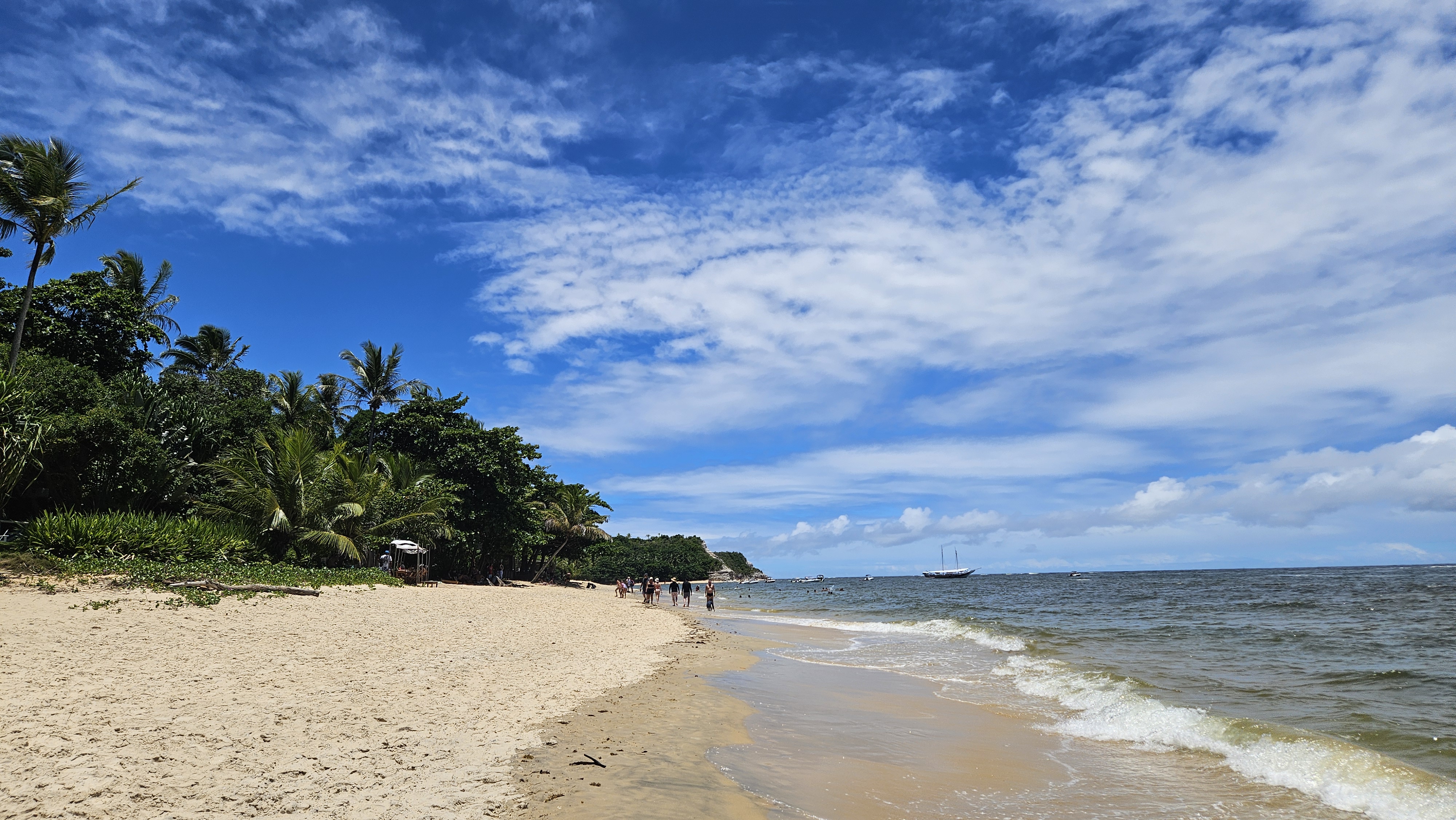
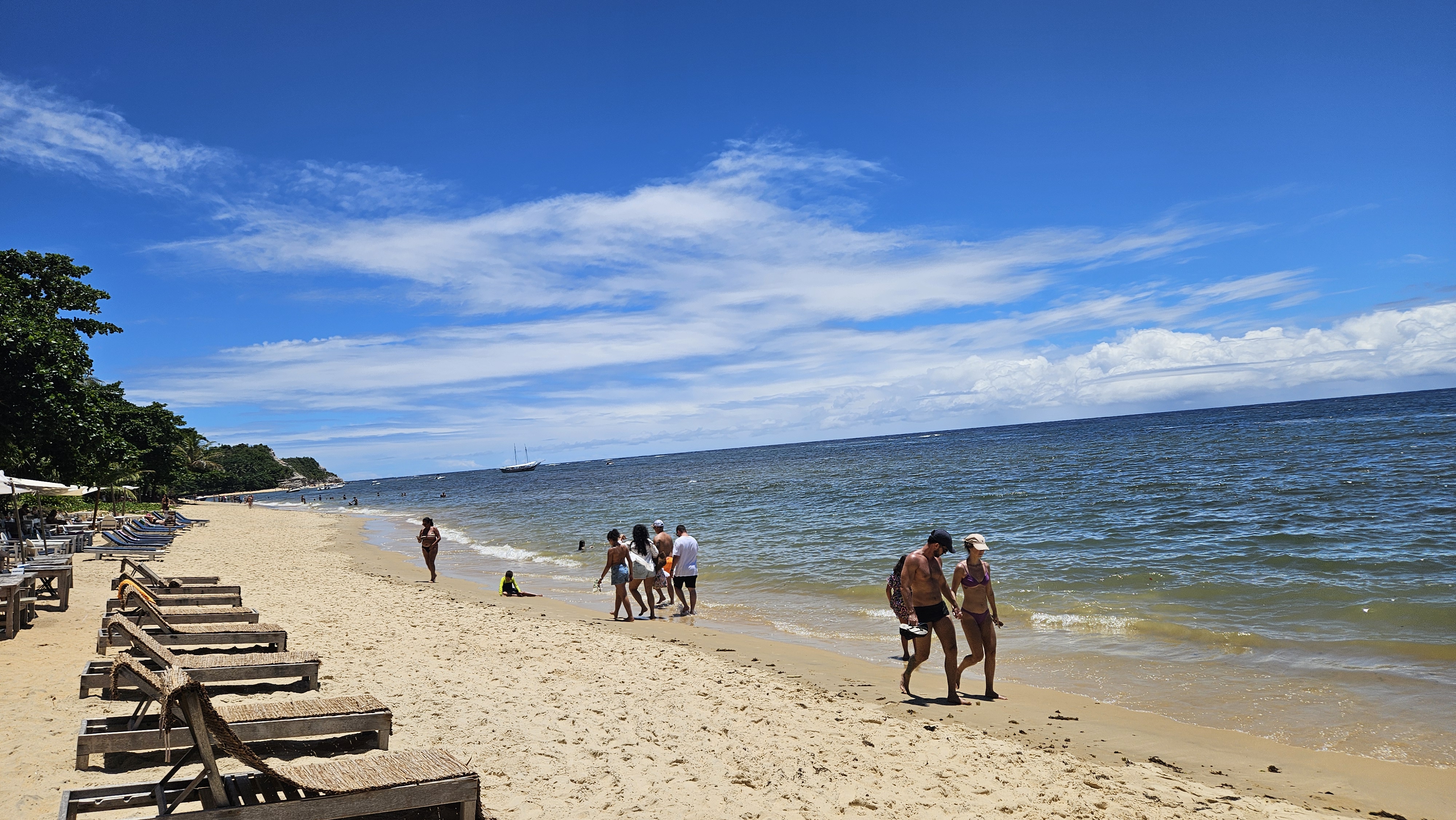
How I built a digital nomad lifestyle teaching on Preply—traveling through Colombia, Japan, Brazil, and more while rediscovering purpose and connection.

“Language is the bridge that lets us step into each other’s invisible worlds—and teaching has allowed me to cross more of them than I ever imagined.”


After two years teaching online from jungle hostels, airport gates, cityscapes, and even my own bedroom, I’m finally ready to talk about what becoming a digital nomad on Preply.

It’s been over a year since I came home to live with my parents. It feels like I lived in that jungle hostel in another life, even though it was only last year. And now we’re suddenly at the end of 2025. But that was really only the beginning.

Slowing Down to Grow

I’ve had a lot to process. At last, I feel ready to come back to my blog and share more consistently. I’ve been thinking about it since last year, telling myself that with all of my free time, it would be easy to write and post something every week. The reality is more complex.

When I came home, I went through a period of exhaustion. I wasn’t stagnating; I was growing, gradually and subtly. I call it my cocoon phase. I needed frequent naps, a light work schedule, and time with myself. I worked on a Cybersecurity program on Coursera and finished all of the major courses. I learned about security architecture and Python, assets and risk assessment. I found that I really like coding and learning how our information moves through channels invisible to the untrained eye.

Learning Languages Along the Way

In the past year, I also continued studying languages. My French classes have taken the backseat lately, but thanks to my wonderful tutor, Hapsa, I can now hold a conversation in French. In prep for my trip to Brazil in January, I also started working on fluency in Portuguese with another great tutor I found on Preply, Nathalia. Finally, after an unexpected invitation by my aunt to go to Japan, I even started studying Japanese in earnest (for the first time since college), on Preply, too.

Starting My Online Teaching Journey

To be honest, the progress I’ve made has to be owed to these platforms that have flourished in the aftermath of the pandemic. Last January (2024) I decided: what the hell? Why not go for it? Just like that, I started my online teaching business.

When I started, I was working full time at the hostel. Still, I found myself idly wasting time and money. My projects there were uphill battles. Teaching English to my coworkers didn’t go the way I had hoped. Burnt out employees with limited schedules and in many cases no real interest in learning a language were not the best students. Being in the same situation, I couldn’t say I was the best teacher either. Once again, I had to accept that I’m no miracle worker.

Either way, I was still using my teaching skills formally and informally. So finally, I got up the courage to record my Preply intro video on the Valley deck during my free time. Honestly, just doing that had been the biggest hurdle. I hate the sound of my own voice, as many do, and the more I edit a video, the more I notice my flaws.

Once the video and profile were approved though, my calendar started filling up. I knew it was going to be a strange year. My work visa expired in 2023, and I hadn’t found a way to secure a new one, so my days were numbered in Colombia. This obstacle opened the door for my digital nomad adventure to begin. If not for my strong start on Preply, I would never have been able to fund a trip through the States (from New York to home to California) and then finally 3 months in Peru to culminate an unbelievable birthday month.

The Reality Behind the Adventure

It wasn’t all roses, of course. Once I started working online, I was wearing myself thin. During my free hours (mornings, usually) I was teaching from 3 to 5 sessions. Then I was working from 2 pm till sometimes 11 pm and not falling asleep until 1 am sometimes, only to wake up with the sun the next day and go at it again. It was unsustainable and limited, as was my time in Colombia.

When I was traveling, I was having to organize my time to avoid any last-minute cancellations due to travel setbacks while also somehow making time for tours and sightseeing once I was free. I became very good at playing schedule Tetris, and that’s a skill I believe now to be foundational for any self-employed person or small business owner. Your time is finite, and it needs proper distribution.

The Digital Nomad’s Constant Companion: Wi-Fi

Working online while living at a jungle hostel – and then traveling in between for visa runs – also taught me how to manage the frustration that comes with relying on technology in precarious situations. Some days, there was no electricity. Sometimes no internet. Sometimes no water and all of the above.

In some hostels and apartments and, hell, even hotels, the signal was so weak I could feel the distance between me and my students. The lag, the robotic voice, the audio and mic issues — it seemed to add up.

So, I learned to pick my accommodations wisely and scour reviews to make sure I wouldn’t be in for an unlucky surprise when it came time to connect. It struck me how much the right tools can change the entire tone of this lifestyle.

Highs and Lows From Country to Country

This wasn’t too much of a problem on my short trip to Montreal, Quebec in May. First, I stayed in this lovely little bed and breakfast in the Village. Then I saved lots by staying with two different Couchsurfing hosts. The city being as modern as it is, internet connection problems were rare. It was an extremely positive experience.

After months of saving and staying between my parents’ and my grandma’s house, I found myself back in Colombia. Last time I travel logged, I was living an absolute nightmare in Leticia, the most isolated little capital I’d ever been in. The internet matched the environment, and it didn’t improve greatly during a lot of my trip in Brazil. By my last hostel in Rio, Acuarela do Leme, where even with a “coworking space,” the wifi was terribly slow — I couldn’t wait to get back to somewhere stable.

And I had such high hopes for it, too…

To be frank, a digital nomad’s wifi woes are just as common in the States. You really do have to pick wisely. The last hostel I stayed at in New Orleans, City House Samesun, had completely unusable wifi. I had better luck at coffee shops, which unfortunately were noisy and wide open. Geographic location has as much to do with internet quality as the price of the service.

Even here at my parents’ house, the wifi connection is sometimes patchy. I had my grandma’s uninstalled because the phone line DSL connection was so old that no matter how close I was to the router, the connection was always weak af. She lives out in the country, so there we see how geography and service quality options go hand-in-hand.

On the polar opposite end of the spectrum, Japan was a digital nomad dream. For under $100, I bought a pocket wifi router with fast speed internet at my fingertips. Best of all, I found one with no data caps (here’s lookin’ at you, Japan Wireless <3). I experimented with teaching on the go. Still wouldn’t recommend it, but if you’re going to carry your laptop around and take breaks from sightseeing to work, I’d say go for it.

The pocket wifi router came with a kit that included the mini router, a portable power bank, an adapter with cable and this cute case.

Finding My Direction

The beauty of this lifestyle is that it keeps asking me to evolve, and I’m finally learning to say yes. Over the course of these 2 years, I truly have had the freedom to explore the world. Some part of me feels like it’s just been good luck — you can’t choose the students that book a lesson with you, but I’ve found some of the best by complete random chance. They’ve come along with me on adventures and enjoyed my antics in between learning grammar and improving their pronunciation.

Thanks to this experience, I’ve decided to continue to grow my business. I plan to use my blog not only to talk about my travel (and digital nomad) experiences, but also to share the insights I’ve gained as a teacher. It’s hard to believe it’s been over 10 years since I started my education journey. I never would have imagined opportunities existed for me outside of a traditional classroom, much less ones in which I could make strong connections with people from all over the world.

Lately, the idea of getting my Master’s has resurfaced. However, I no longer feel divided or unsettled about my purpose or direction. Like my blog name, I’m con rumbo (with a heading/direction). I think I always have been. Now more than ever, I feel invisible forces like magnets pulling and propelling me. I don’t feel so lost.

Language is the one thing that truly connects us as human beings. In all its forms, it allows us to share bits of our consciousness and invisible worlds with one another. What a privilege it is to help people build and strengthen their bridges into different worlds through words.

So, yeah, I guess I’m a digital nomad, full time. I’ve been doing it, and I don’t plan on stopping anytime soon. I want to continue to connect people, to connect myself to all of the different parts of me that I find clandestinely in other parts of the world.

I’m going to continue investing in my own education. There’s still so much to know. I want to write more and improve. I want to transmit my experiences and those of others and teach through videos and media. I’ve been dabbling for a while, but in the last year, my mindset shifted completely. Kinda like… wow, this is actually a way to make a living. Somehow, I believe if I follow this path, things will continue to work out.

This is my latest project to connect my students from different parts of the world in order to form a supportive community where they can practice their skills.
1766966340

  days

  hours  minutes  seconds

until

Deadline to Sign Up for FluentFriends

I’ll invest in my projects and help others as best I can with the help of platforms like Preply (get your discount to try a lesson with any tutor, completely refundable, here) and Instagram (@acamaleonica29). Are you looking to learn a language and find your own path as a digital nomad? Let me know in the comments! Any support or feedback I can get through this blog, I’ll be eternally grateful and happy to give back. ❤

Until the next time…

Your best friend is you: Part 1 (Translation)

Self-demanding, my worst enemy

There’s no better way to start than with the origin of 90% of all of my emotional woes: perfectionism and demanding too much of myself. In other words, my black and white, all-or-nothing thinking, 100 or 0 thinking. The profound conviction that I was never enough. That I always had to do a little more. I was even convinced that I shouldn’t celebrate or be happy about the accomplishments that I had invested so much time and effort into because I was just doing my duty. It’s what I had to do. So, automatically, without time to process what had happened, I had to continue being productive, reaching objectives, chasing goals. For example, if I managed to get good grades on tests, it wasn’t a reason to celebrate. I was just fulfilling my obligation. No matter how much blood, sweat, and tears it cost me to pull it off, I didn’t even feel gratification but rather a sense of spectacular indifference that made me shift my attention to reaching the next goal.

When I try to find the root of all this, I realize that one of my biggest concerns since I was very young has been to not disappoint others. Act the right way. That’s made me had a huge sense of responsibility and an extremely rigid and demanding mindset.

You know those horses that have blinders on both sides of their eyes to give them tunnel vision to keep them from getting distracted so that it’s clear what path they must take? Well, I’ve been exactly like that all my life.

As children, we observe what happens in the adult world, all of the problems and discomfort that comes with it, which is why we don’t want to add more fuel to the fire. Therefore, we force ourselves to be perfect little beings to not cause any trouble for those people that we love and admire so much. Or at least, that’s what happened to me.

Wanting to control everything in a world where nothing is predictable produces a tremendous amount of anxiety. It’s living and constantly trying to keep a multitude of factors and circumstances that escape us under control.

I’ve always believed that there was a sort of drill sergeant in my head that spent all day ordering me around, disregarding how I felt completely. “Don’t stop! You have to be skinny to be beautiful! You have to tell everyone yes so that no one gets disappointed. You have to be popular, be the best friend that everyone would wish to have. Be the best daughter, the best student, the best girlfriend. You must study to have a degree that makes other people proud. Give your 100% in everything, be super clear about everything, show self-composure.”

All my life spent repeating these mantras to myself, beating myself up, and talking to myself as if I were my worst enemy. My worst teacher or my worst boss. Little by little, this took its toll on me and, of course, on my mental health. Sometimes when I look back, I would like to hug that girl and tell her not to be so hard on herself. To not be so afraid. To not put so much pressure on herself. That it’s not worth it and isn’t going to be good for her. But I guess that everything that happened has also turned me into the person I am today. It’s something that I had to go through to grow and learn.

Allowing myself even the smallest margin of error was the same as failing. I had to always be the best in everything I did. I remember perfectly that when I started going to therapy years later, one of the first things that my therapist said was: “Cris, you have to choose what you truly value and prioritize it to try to invest the most attention and time you can. You have to be an 8 or a 9. But there are other things where you might be a 5 or a 6. And that’s okay. If you try to be a 10 in everything, you’ll end up nosediving to 0. Because there is no way that your mind and your body can take that level of pressure. Assume that you can’t be a 10 in all aspects of your life.” Her words managed to open my eyes. It seemed very simple, but it wasn’t. Because for as long as I could remember my thought process had always been rigid and closed off.

Sometimes we have to hit rock bottom to realize that the level of pressure that we are putting on ourselves is completely unsustainable. And that’s exactly what happened to me. The result of demanding so much of myself ended up snowballing into a stubborn anxiety. But I’m getting ahead of myself. I’ll go into more detail about this later on.

What I have learned for sure is that we are not perfect machines. Even if we sometimes feel that the world’s pace demands that of us, we are not. In the end, as my mother says, we are nothing more than little bags of chemicals, people full of feelings and emotions, not robots. We can’t always get to everything, we can’t be liked by everyone, we can’t always be in the best mood. We can’t expect ourselves to never make a mistake ever. It’s impossible. When you internalize that and accept it, you feel an enormous freedom, even if it’s hard at first. You’re human, and therefore, vulnerable.

And that’s not a bad thing. It’s an innate part of our condition. We have no reason to run from that vulnerability. That only hurts us. And the best thing of all is that the world will not end if we are a little imperfect.

Now I know that people will not stop loving me. I’m not going to stop pursuing my goals, and I’m not going to die either. Quite the contrary. Now that I recognize that vulnerability, I stop putting so much pressure on myself. I let myself flow more, resulting in being more myself and happier.

The next time you think about demanding so much of yourself and berating yourself in some way, ask yourself if you would talk that way to a good friend that is doing the best she knows how, that’s giving her all, that’s making an effort every day to live life however she can. You wouldn’t, right? Well, don’t do it to yourself either. Because ultimately you are your own best friend.

Dear friend, invest your time and attention in the things that you value. Accept that you can’t be liked by everyone. Talk to yourself as you would talk to your best friend. After all, you’re going to be on this journey with yourself until the last day of your life.

We cannot expect perfection from ourselves, much less demand it. This chapter could have been written by me. I’ve often felt when I travel alone that there is the perfect representation of life. The novelty. The stress. The growth. And while on a trip alone you always find friends or kind strangers along the way, the takeaway stays the same. You go to sleep each night with yourself. You wake up and begin again and plan with yourself in mind.

We have to take care of ourselves. To be that friend, that parent, that partner, that support person that does not waver. Through thick and thin. Only then are we able to pick people that treat us the way we truly deserve to be treated. Only then can our self-demands stop turning into self-sabotage. We can be present and whole, prioritizing what we value. Showing up for ourselves. Appreciating our successes and learning from our failures.

Be your own best friend (Tu Mejor Amiga Eres Tú)

How I learned to accept and love myself and stop suffering (Cómo aprendí a aceptarme, quererme y dejar de sufrir)

I found this audiobook on Spotify. It’s extremely relatable for any person, especially femme, that has felt too much, sacrificed their own authenticity, and surrendered their power to others. Who has listened to a drill Sargent (as the author Cris Blanco aptly calls it) in their head yelling at them Elsa style: “Conceal, don’t feel! Don’t let them know!”

This has been my journey since 2023. Forming a cocoon around myself, trying to emerge, struggling to accept what I perceive. I’m learning the message that any therapist helps you see: You need to be your own best friend. The person that believes in you the most has to be you. It is vital if you want to move forward and overcome doubts, about the self, the future.

So, instead of summarizing her words, I’ve decided to translate them for this blog today. I’m sure an English translation already exists online, but I am intentionally combining this with a daily practice. I started translating while listening in the past month since deciding I will test for my ATA translator’s certificate.

Let me showcase the resounding wisdom this author shares in her book. Let me know in the comments if you can relate to this subject as much as me! And if you want more. 🙂

Part 1: Feeling like you aren’t enough

You think that your perfectionism is your worst enemy. That you’re a failure for having anxiety and intrusive thoughts. For only knowing how to relate to others in a toxic way. Or obsessing over your body and your self-image. For feeling like you don’t fit in with the people around you. For not knowing what to do with your life. Sound familiar? If the answer is yes, then this book is for you.

I’ve always had the feeling that the things that I thought or felt only happened to me, and this caused me a lot of suffering. Life can be a real rollercoaster, full of twists and surprises, ups and downs, and strong emotions that we often don’t know how to handle. No one teaches us how to, either. And ultimately, all of that ends up blowing up in our faces.

For years, I’ve done everything possible to be the perfect girl. For example, I would try to conform to all the unattainable standards. I had a huge fear of disappointing others. Without realizing it, I kept putting more and more pressure on myself – pressure that was gradually taking me over from the inside and ended up destroying me emotionally.

Additionally, in my short life I’ve had the opportunity to experience different types of relationships from romantic to platonic, that while painful, have allowed me to understand that my way of interacting with others perhaps was not the best. In these relationships, my insecurities were reflected through many behaviors that could be considered toxic, although at the time, I was incapable of seeing them that way. Jealousy, dependency, and control are the worst enemies of a relationship. And I had to learn that the hard way. I guess that being a highly sensitive person also did not help when it came to regulating my emotions.

I always considered being sensitive a flaw, or rather, a synonym for weakness. And for years I have felt it is one of my greatest insecurities. I’m still in the process of understanding and accepting my sensitivity. Trying to start seeing it as another personality trait. That while it makes me feel everything, both good and bad, with more intensity, at the same time it allows me to appreciate the little things in life. To be more creative and to connect better with others.

This load of self-imposed requirements, perfectionism, limiting beliefs, and toxic relationships took the form of long-standing anxiety. I believe that I always had it. It was just silenced until these situations became too much for me and I couldn’t control it anymore. I could say that what seemed like the worst thing that had ever happened to me was in fact a new door opening for me. Both my body and my mind were telling me: “I can’t do this anymore. This has to change.” And as the saying goes: Once you hit rock-bottom, the only way to go is up. And that’s what I did.

It took me a lot of time, therapy, tears to start dismantling those limiting beliefs that I held about myself, the world around me, and to recognize that I’m still in this process. In fact, I think I will always be in the process. There is still plenty of things for me to understand and experience. But in the meantime, learning to accept what I think, feel, and am has given me the freedom I never thought I would achieve.

How can something that sounds so simple radically change your present and your future? In effect, it seems easy, but it isn’t because throughout our entire lives we force ourselves to repress our emotions. We try to control our thoughts. In short, we train ourselves to be living robots – bodies without souls that go around doing what they must, trying to satisfy the desires of everyone except themselves. How are we not going to explode at any given moment?

For me, accepting this vulnerability that makes us human was an authentic wake up call. A call to stop rejecting who I really was. And above all else to understand that although I couldn’t control my thoughts or my emotions, it was in my hands to decide how I would respond to them. Who would have thought that recognizing my vulnerability would be precisely what would make me successful? Understanding my success as the joy of being able to dedicate myself to what I’m passionate about. Fulfilling many of my dreams. Knowing that with it, I am making a positive impact on hundreds of people and real connections with them as well.

Aware of the road ahead of me, everything left to live, and all of the lessons that I still have to learn, I find it therapeutic to express myself and speak my truth. That’s why today I’m writing what I hope are the words that will stay with you like a heart-to-heart between friends.

Termalismo: Hot Springs in the Eje Cafetero (Colombia) Part 1

Well, well, well. Time to start my recap series. The first two months of this year were full of travel. I spent all of January in Brazil and February revisiting some gems in Colombia. My posts most likely won’t be in chronological order but rather highlights as I feel inspired to share.

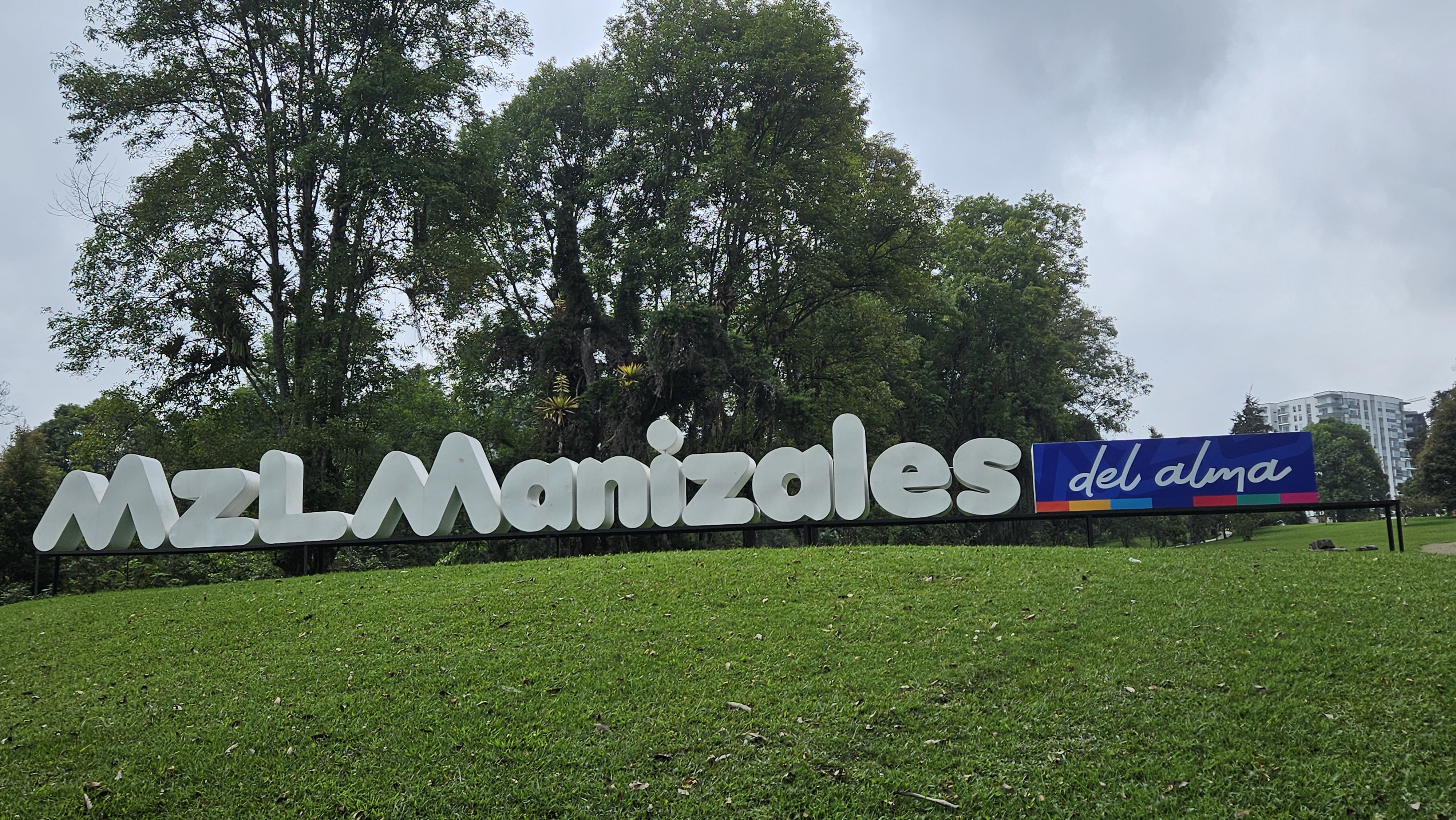
After last year’s February travel success, I had to spend my birthday month traveling again this year. Once again, I made catching up with friends the guiding light of my route. Lucky me, they live in different parts of Colombia. So, I got to revisit 3 capitals: Bogota (THE capital of Colombia), Medellin, and Manizales.

In this post, I’m going to break down some gems in the Eje Cafetero. I like to call it the Coffee Country of Colombia (because, alliteration). I’ll start with one of its capitals: Manizales. After a week in Medellin, I chose not to take a bus or plane straight to Manizales. I took a smaller bus to cross Antioquia and reunite with my friend Carin in Jardin.

While discussing our reunion, we had gone back and forth about where we would go to take advantage of our new lease on life as digital nomads. On one hand, neither of us had been to the Colombian Pacific Coast (Chocó). However, if we were going to meet in Jardin, that would be farther from our set-off point so, we compromised to visit an area I had some experience with. I didn’t need to be convinced to go back because for me, Coffee Country is best country.

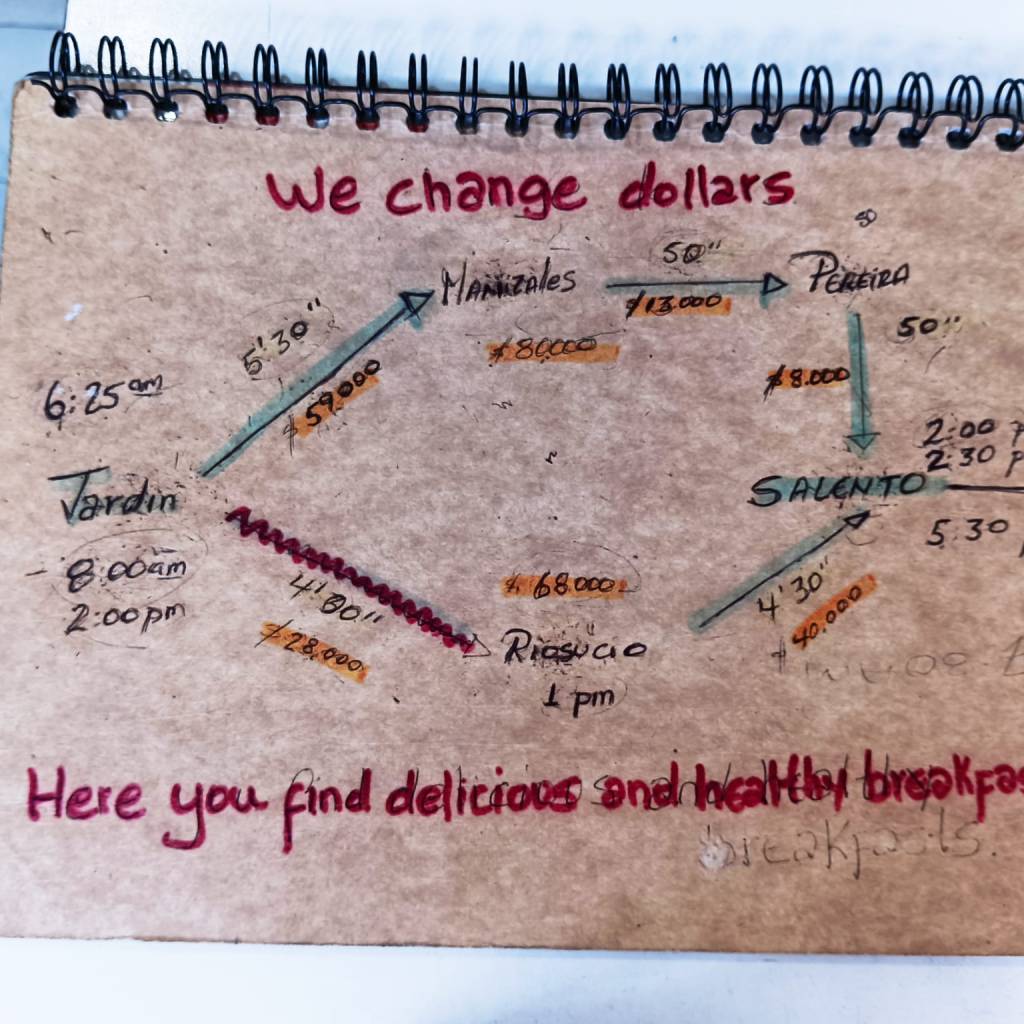
This was the route option laid out by my wonderful friend, including the times we could go and the prices available. The trip from Jardin to Manizales was supposed to take 5 and a half hours.

Carin helped plan and coordinate an adventure for two remote-working ladies. Her organization and practical mindset were the tools that my more spontaneous style needed to make everything work. Having a timeline was key, especially since this would be my last hurrah in Colombia before my flight from Bogota back to the States.

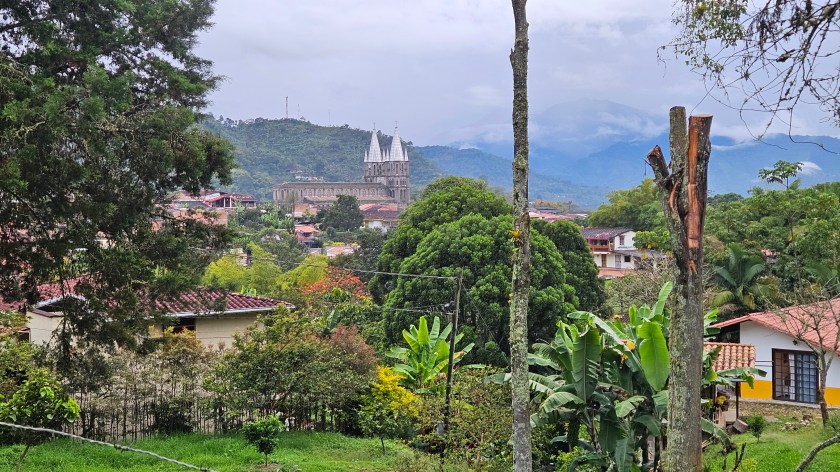
Jardin itself is a verdantly scenic mountain village right on the edge of Coffee Country (official map above). It attracts international tourists year-round, and for good reason. It may not be an official part of the Eje Cafetero, but it’s surrounded by farmland including coffee farms that form a big part of local culture and identity. It’s always a joy to visit. For the sake of proximity, budget, and practicality (plus a bit of nostalgia), we decided to spend 5 days there before going east.

In spite of a week of mostly perfect weather, lightning, thunder and heavy rain kept us up the night before the ride to Manizales. This came as no surprise since one of the consequences of global warming in Colombia has been the rise of long droughts and unpredictable torrential rainfall outside of the usual rainy/dry seasons. The problem is, there are only a couple routes in and out of Jardin. One of those routes is through “trocha” – muddy off-roading. This was the only way Carin had taken before.

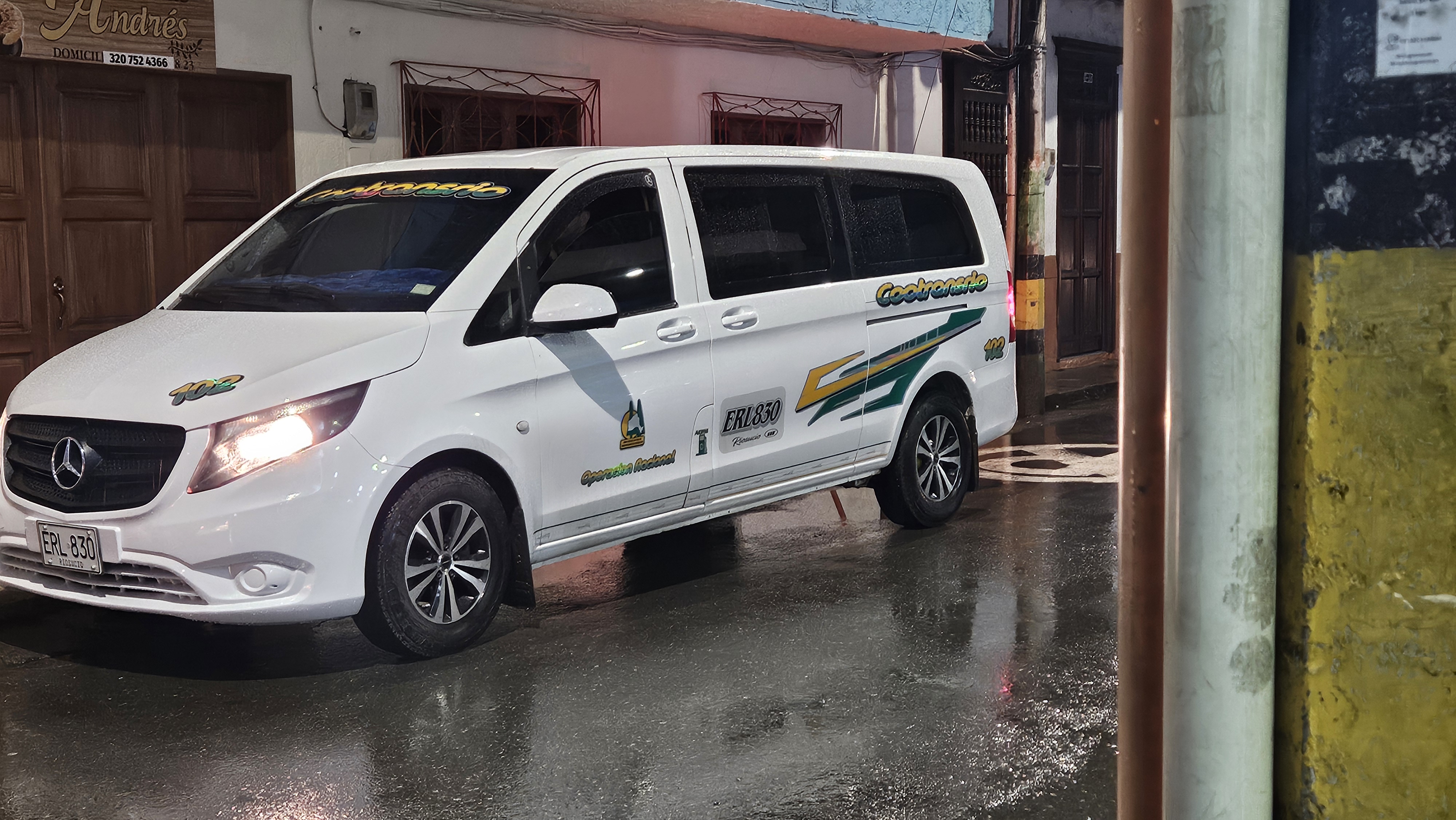
When we rolled out of bed by 5 am, there was a feeling of foreboding. We had bought our tickets for the van to Manizales ahead of time. If it went off-road, chances are the road would be closed due to the heavy rain. I was anxious to check that the trip wouldn’t be canceled. So, I charged out, umbrella in hand, to mall walk all of 5 blocks to the tiny terminal area. I saw a bus to Medellin was already pulling away from the Rapido Ochoa garage. Everybody seemed to think I was crazy for worrying (small town people don’t worry, as God always provides). It turned out, we’d be on the other road out of the town. Crisis averted.

The van involved a short but brutal, winding mountain path that actually gave me motion sickness. I’d never puked in a bag before and seriously hope I never will again. But that aside, it was a smooth trip, and we made it to the Manizales terminal in record time.

Manizales Trip Summary

Land transportation from Jardin to Manizales: 80k COP for a shared van (pay in El Portal, on Calle 8, and get lunch or a snack while you’re there!)
We left at 6:30 am and were there by 10:30 am, shaving a full hour and a half off of the expected travel time.

From Manizales Terminal to Santa Rosa del Cabal: 13k COP for a small bus (Empresa Arauca)

Lodging: 3 bed apartment (Booking) in La Enea neighborhood (ideal for hiking and contact with nature)

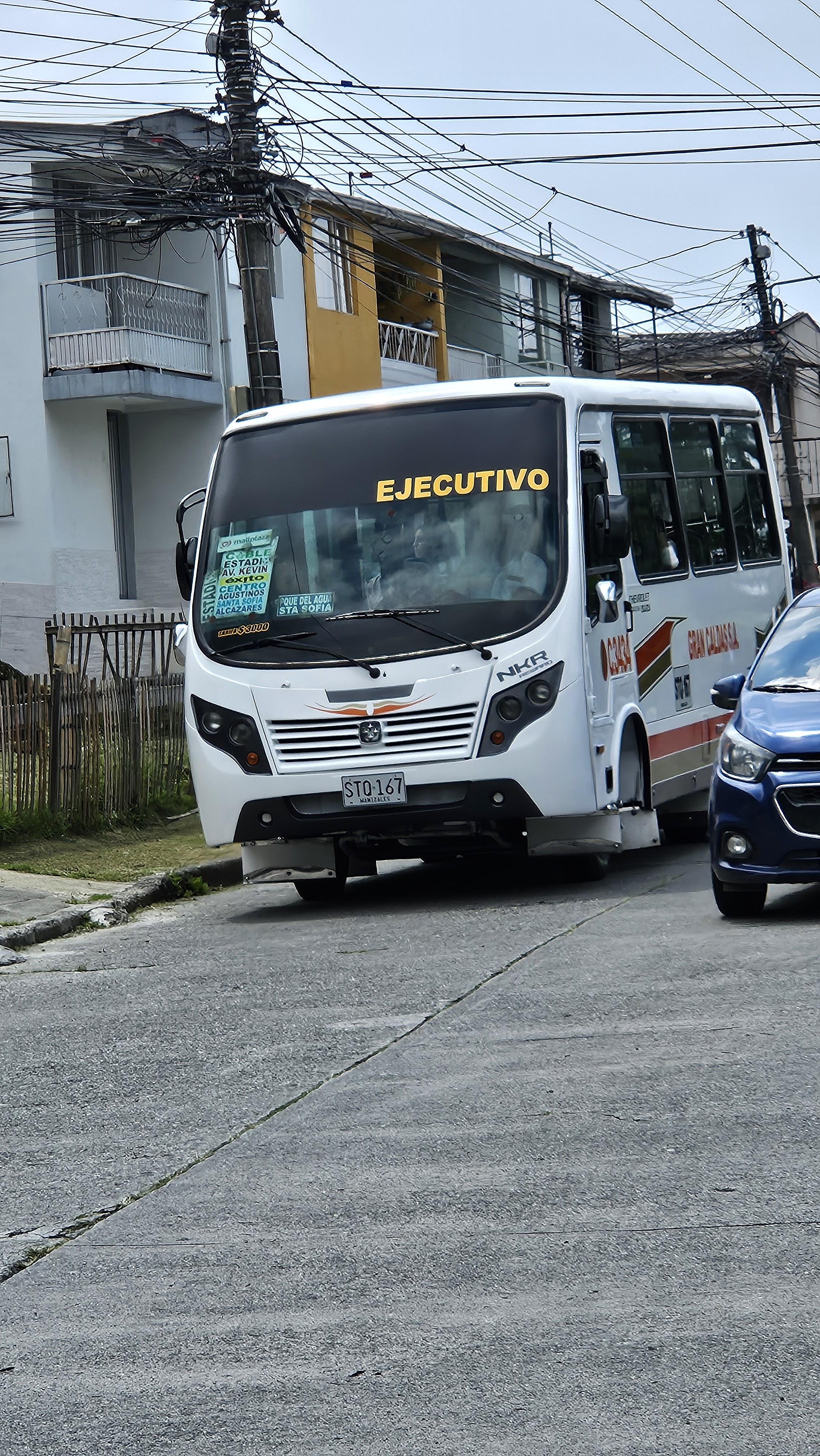
Getting Around in the City: local buses (Gran Caldas) – 3k COP (though you can see the fare written, and some buses cost less)
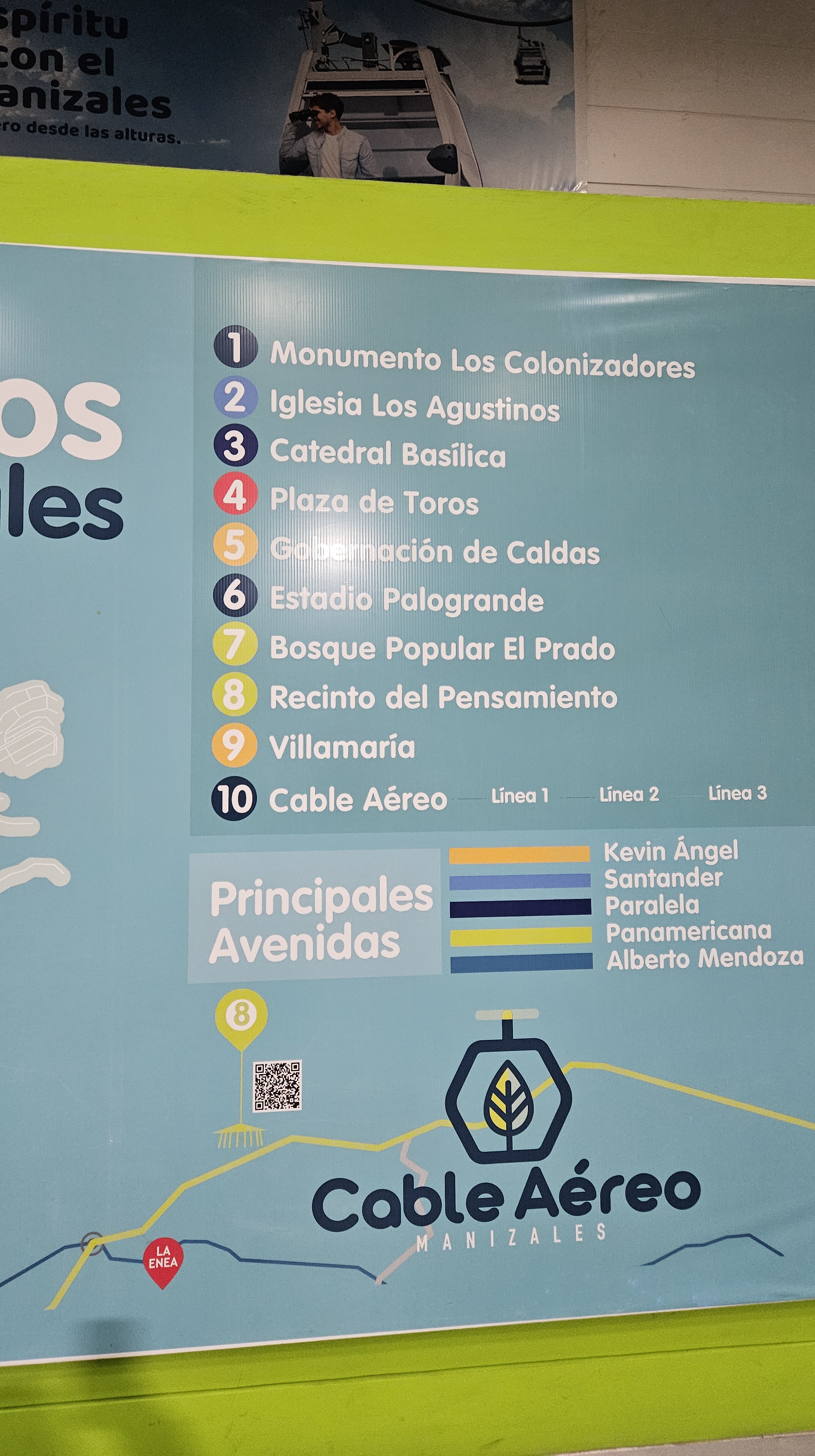
-Teleférico (cable cars): a bit limited, they can take you from one end of the city to the other, through the bus terminal or downtown. It’s great for the highlights of “touristing” – the views and the experience.
-Taxis – we didn’t have to rely too much on them since public transportation in the city passed often and was reliable. Still, they aren’t the most expensive option – we paid 14k to travel 9 km from the Bus station to our apartment.
Highlights: -El Bosque City Park
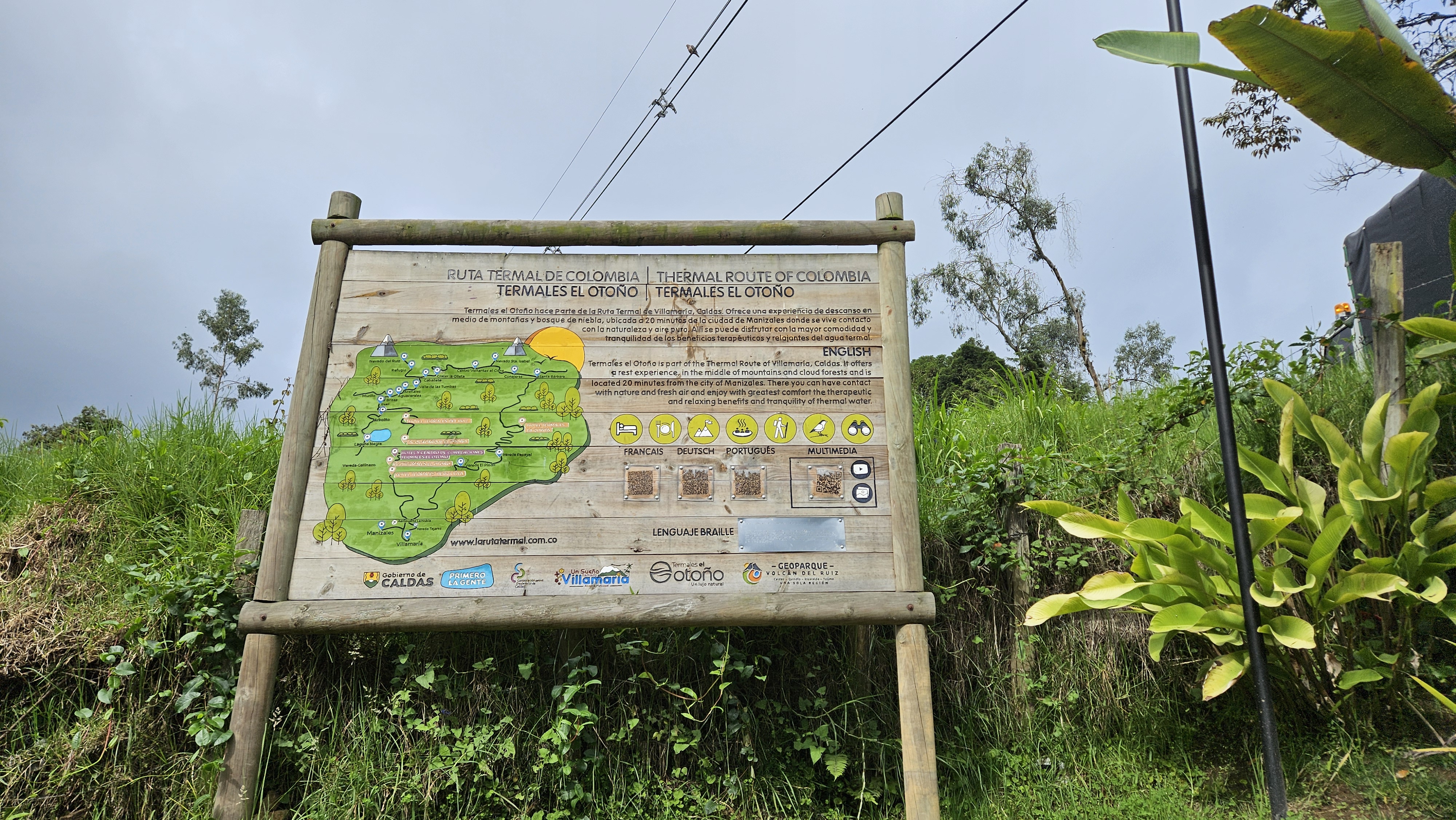
-Termales del Otoño and Acquaparque (just outside of the city)
-El Centro – the heart of the city
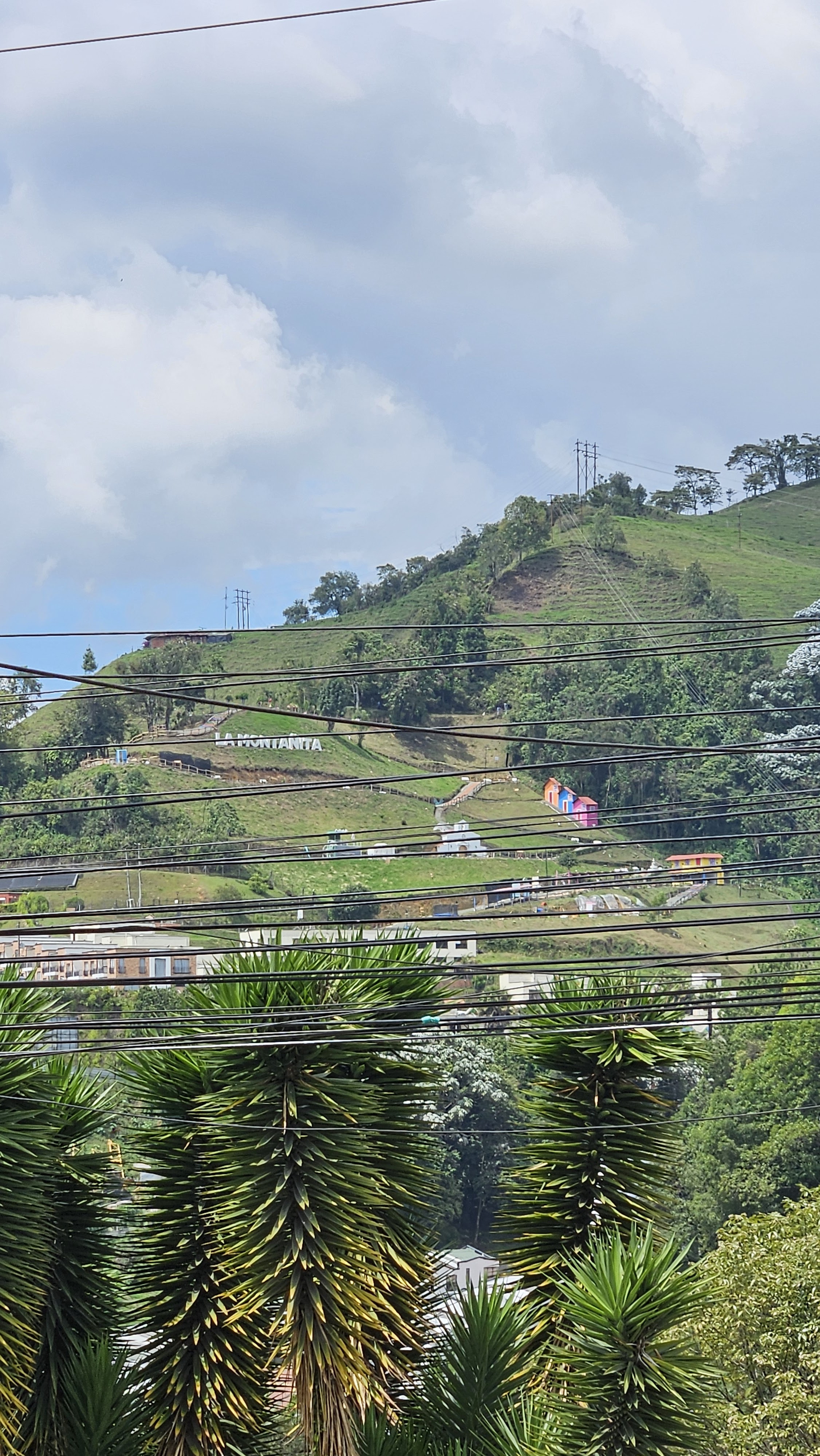
-Chipre – the best view of the city (when it isn’t cloudy)
-El Cable – limited but practical public transportation and a rush to see the city from above
-the architecture and cultural attractions
-the hospitality and politeness of the locals

Where to Stay

I’ve had the pleasure of staying in Manizales twice now. The first time was during a solo travel adventure in 2019. It was at the tail-end of my Semana Santa week-long vacation, so peace and comfort were my focus. That’s how I ended up staying in Lodge Paraíso Verde. Living up to its name, it was a green paradise surrounded by lush mountain vistas of the city’s northern outskirts.

That was a perfect introduction to this city. I remembered the hospitality of the workers at the lodge. They helped organize an affordable taxi ride to get to the other side of the city and go to Termales del Otoño. The taxi driver was so nice, I kept his contact and called him again when it was time to go back to the bus terminal.

This time, Carin and I knew that we wanted to go to the hot springs. The first time, I wasn’t aware of “termalismo” or hot springs tourism, nor had I ever heard of the termales in Manizales, so the recommendation led to a revelation. Carin and I had been working hard and traveling harder; thus, our objective was to explore, get in touch with nature, and relax at some point while doing it. What better way than hot springs?

Since our goal was clear, when looking at booking options, we picked out something to the south of the city. Little did we know, we were uncovering a gem a casual tourist may not consider. La Enea is a residential neighborhood surrounded by serene trees and mountains. Being that it’s so suburban, we also found the accommodations less expensive. We spent about $76 usd (319,200 cop) to stay 3 nights in a 3-bedroom apartment. We needed good internet and our own spaces to work, which “el acogedor apartamento La Nubia” provided.

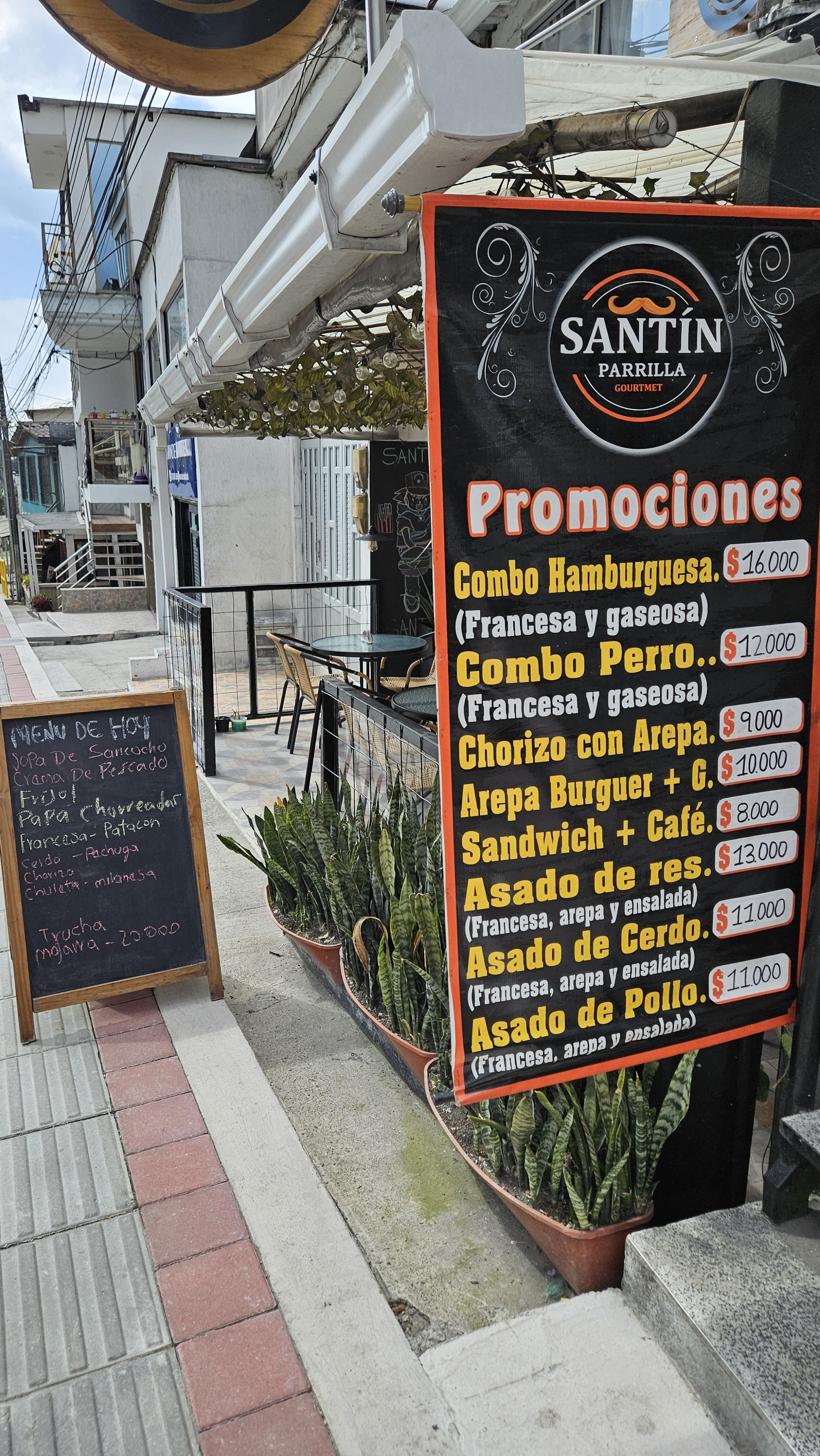
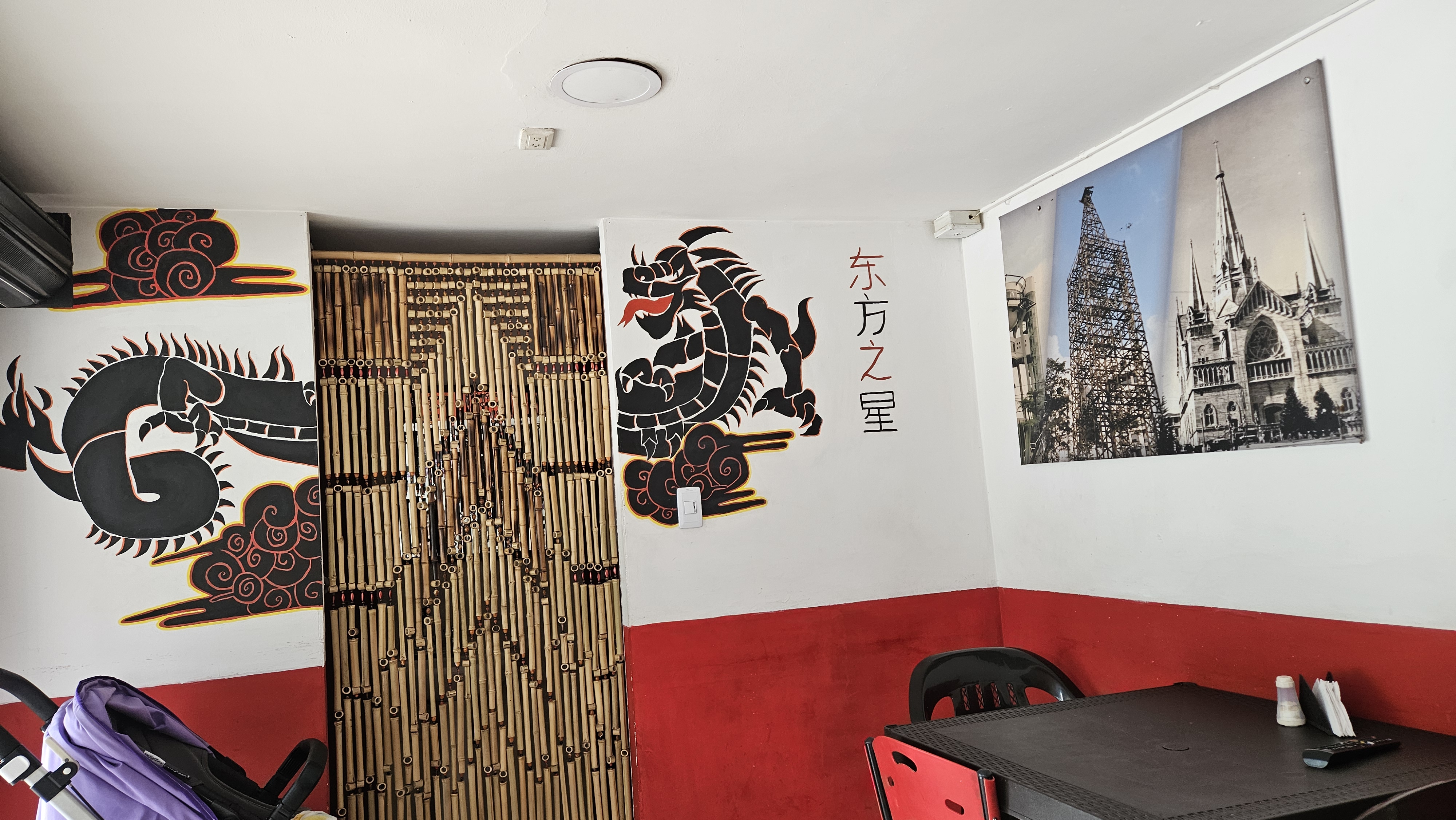
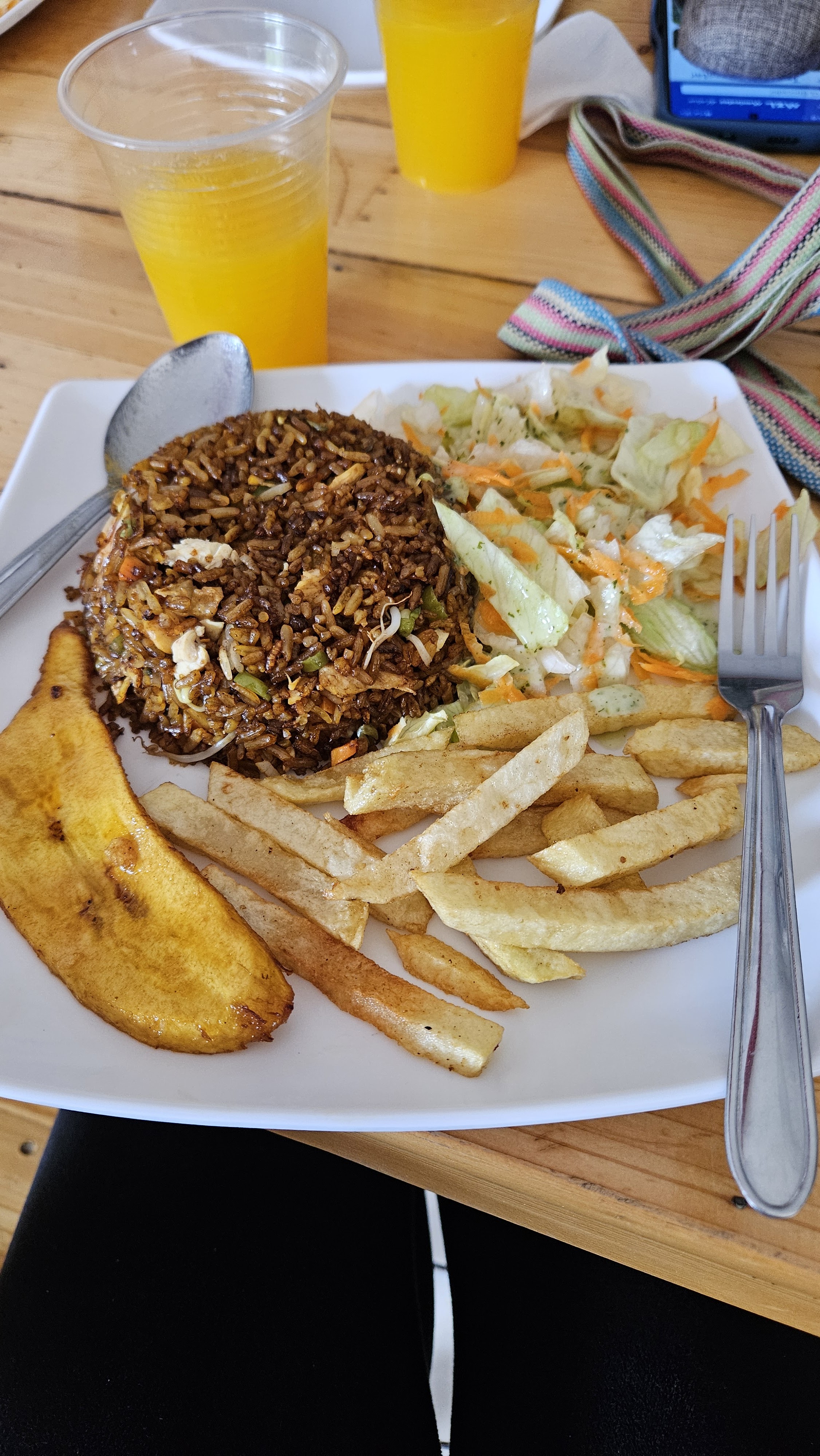
We were walking distance from a plethora of shops and local dining options (mostly standard fare: bakeries, fast food joints, delicious arepa stands, with a few niche options like (Colombian style) Chinese food and a rock bar).

That first day, I needed to work, so Carin set out and explored for the both of us. She discovered that the city was extremely walkable, even reminding her of Germany in the way city crosswalks are set up. While out, she was “adopted” by a local family that offered to take a picture of – and then with – her. Her first impressions: friendly, clean, safe, and organized!

Getting Around

While out and about, the locals were happy to answer our questions or point us in the right direction. The few times we got disoriented, we were directed by a local to look for the Gran Caldas bus. They explained that on the sign posted in the window we would see which direction it was headed – either out of the city towards the springs or towards the cable cars and the city center.

One of the first things we found out was that there was no need to waste money on taxis in Manizales. The local buses, particularly the Gran Caldas, have routes that connect the city from the center outward. That’s how we were able to save money on transport. Traffic also was nowhere near as bad as in crowded cities like Bogota and even Medellin at peak hours. The bus got us around pretty quickly and efficiently.

We could even use it to get across the highway to the forest that caught our eye on the taxi ride to our apartment. Of course, Carin found out firsthand that walking there was not a problem either. In fact, it was just as straightforward as asking a bus driver where to get off. The foot bridge over the highway was easy to reach and cross, and then it was all uphill from there. The Bosque Popular El Prado was the perfect break from a long day of lessons.

We took the bus to get to the Termales del Otoño hotel and after that to go back into town. We only needed to stay on that same bus till we reached the downtown cable station, Fundadores.

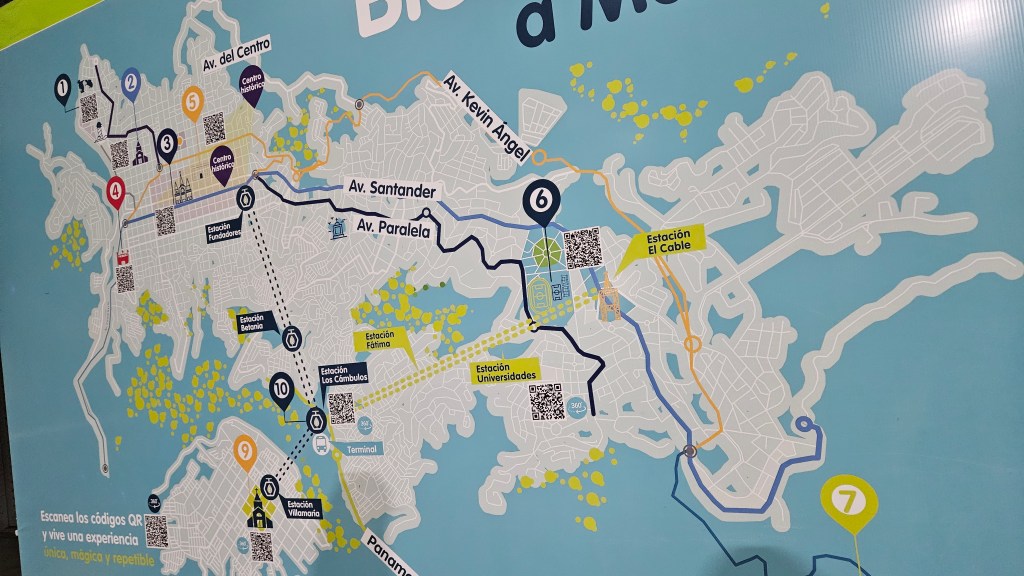
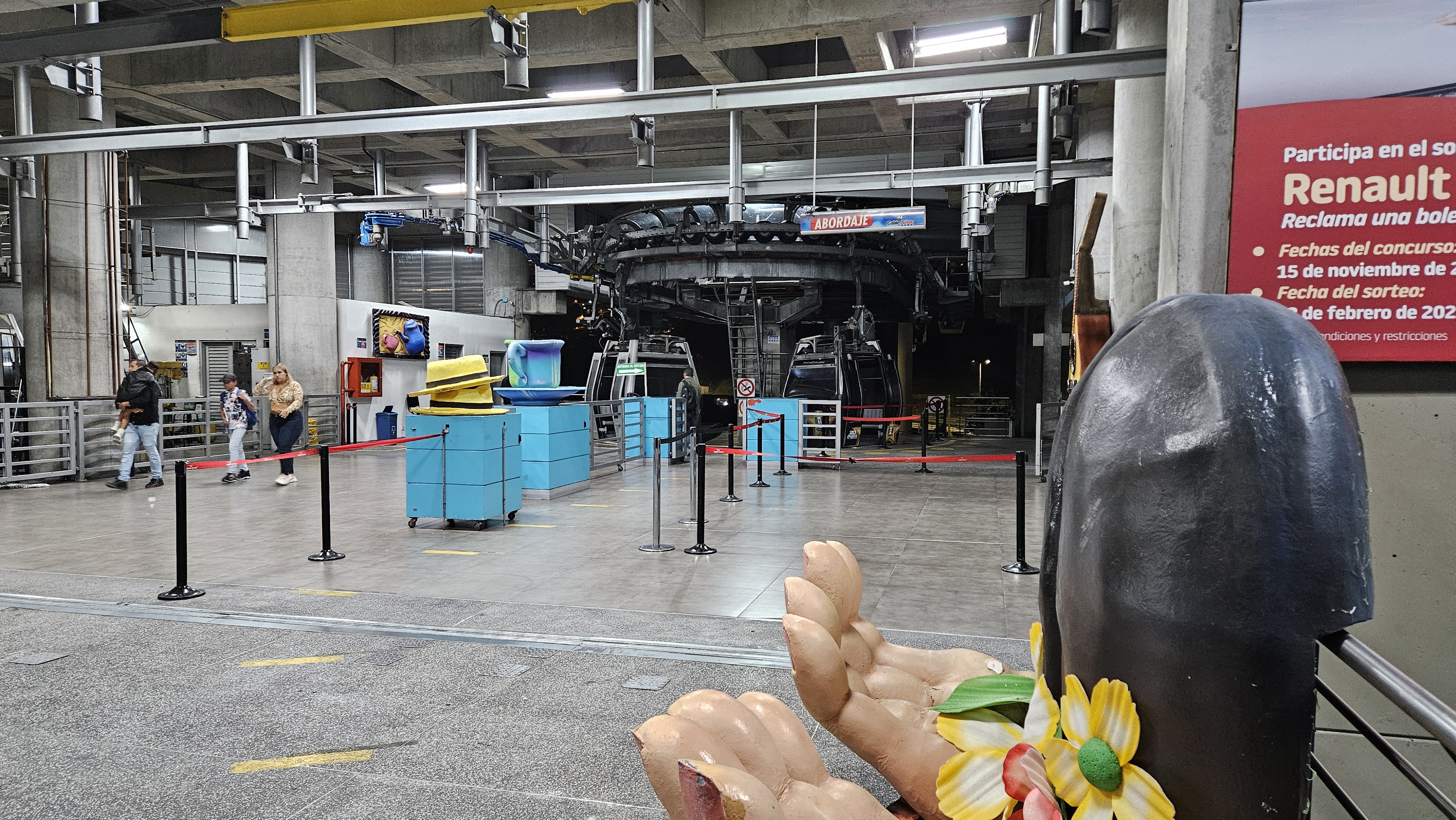
There, you can take the cable car for just $2,900 pesos per trip. I’ll be honest: we did this at night and while it was worth the experience, I was petrified. The distance covered by the hanging gondolas is long, the boxes seat about 6 people, and at one point, the line stopped with alarms sounding. Thank God we weren’t suspended in the middle of the cable, but can you imagine? It would have been better if I had done it in daylight like Carin had when she went out alone, but after an amazing 3rd day, I didn’t want to skip it (even if dangling in the sky makes my stomach drop).

Highlights and Attractions: Termalismo

Once I recovered from the ride (the next day), I was ready to explore!

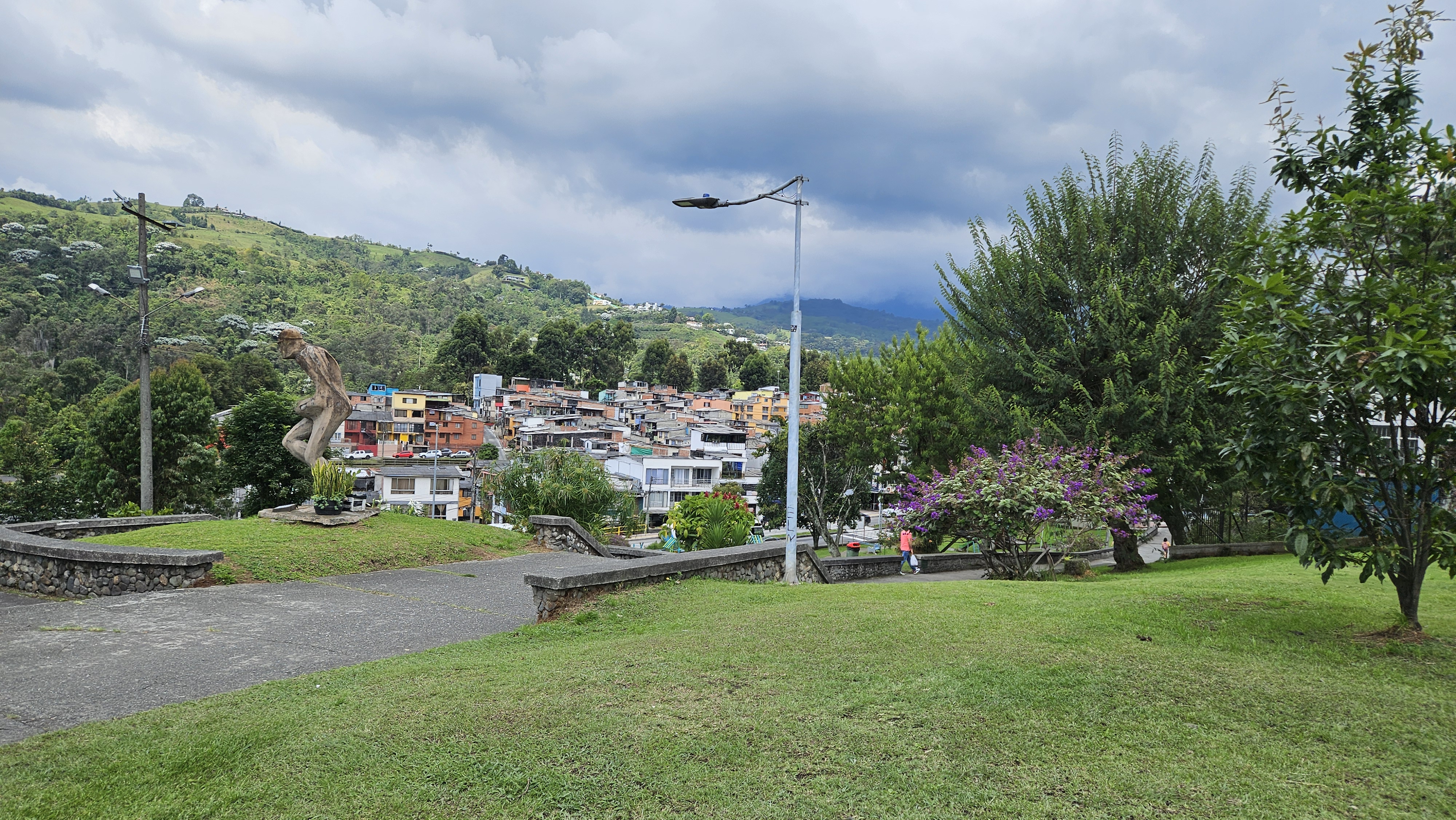
Manizales combines all of the things I love about Colombian Coffee Country: friendly, helpful locals, clean, organized cities surrounded by idyllic towns, lush greenery, perfect temperatures, and natural wonders. Manizales itself is the most peaceful capital city. It’s another world compared to the hot, chaotic coastal cities like Santa Marta, Riohacha, and Cartagena. In my opinion, it’s a city that doesn’t get enough credit – and perhaps that lends to its appeal.

However, we weren’t traveling just to explore the city. Our aim was to enjoy the scenery, take hikes, and then soak in the hot springs. This sort of tourism has a name in Spanish: termalismo. If you look up the different tourist attractions in the area, it even has its own category: Hot springs tourism.

On the Manizales tourism website and app (https://visitmanizales.com/que-hacer-en-manizales/termalismo/), we discovered there were 3 main destinations under the “termalismo” category (not including Termales del Ruiz, located closer to the national park than to the city of Manizales). We also found out that the website – a smart resource, in theory – was not exactly up to date. This post can hopefully shed some light on what to expect if you are looking for hot springs in Manizales.

We took the Gran Caldas down the via a Gallinazo. Its last stop left us just outside of the Termales del Otoño hotel. Coincidentally, the hotel and its three pools were closed for a private event that day. That part was the only one I had visited in 2019. The day pass is cheap, but the luxurious hotel is quite pricey. There were still two other options to visit hot springs connected to el Otoño.

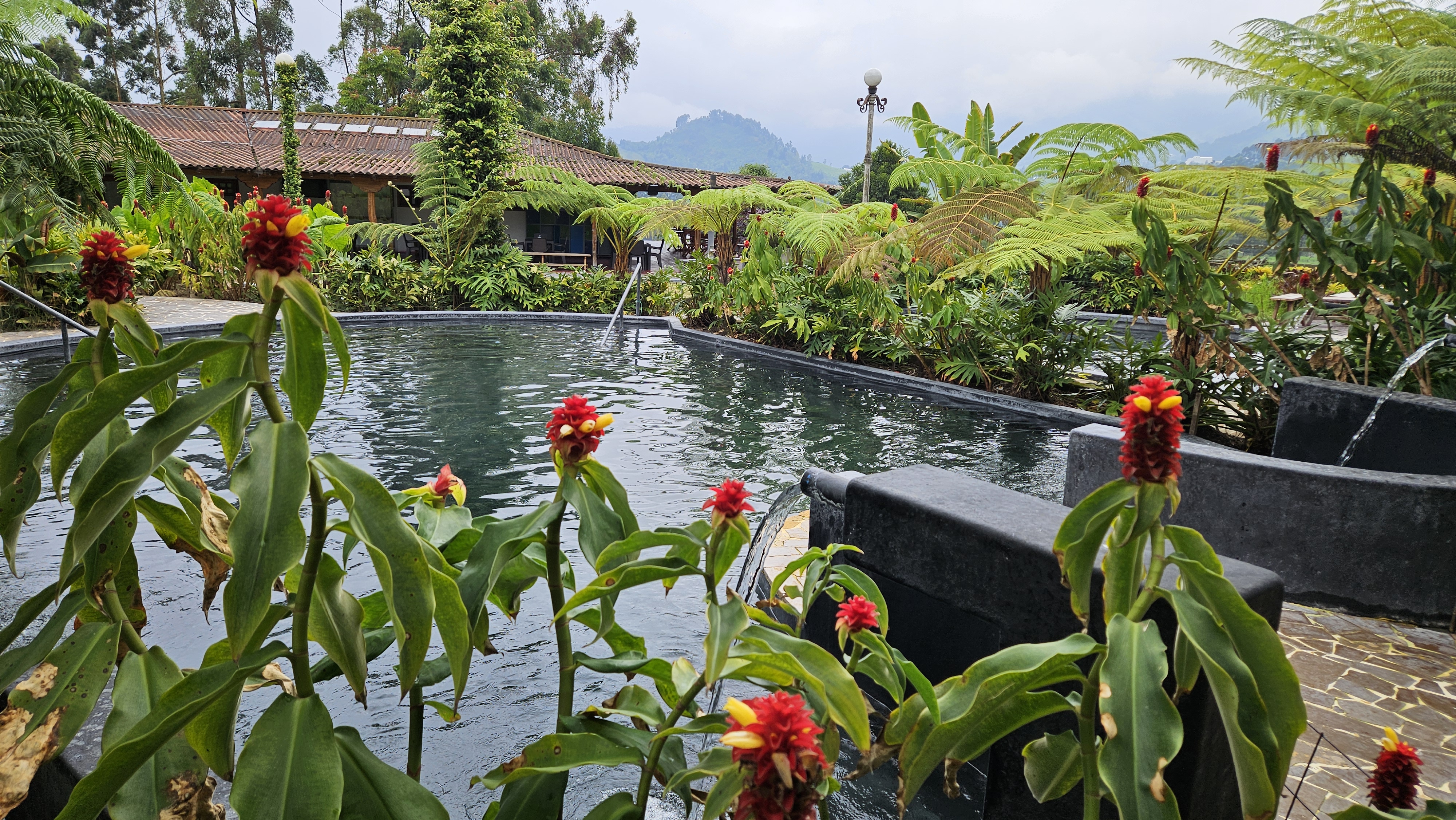
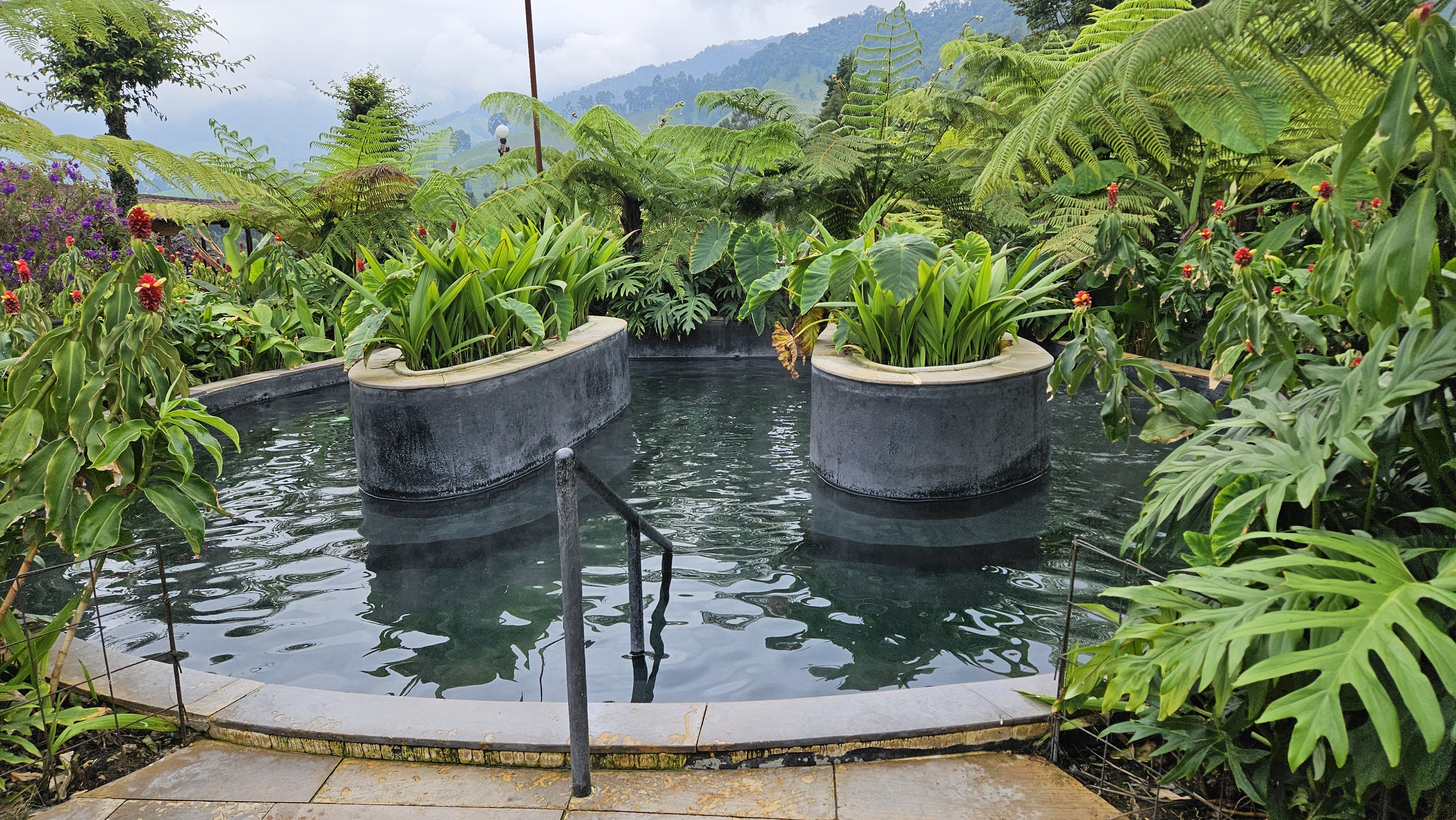
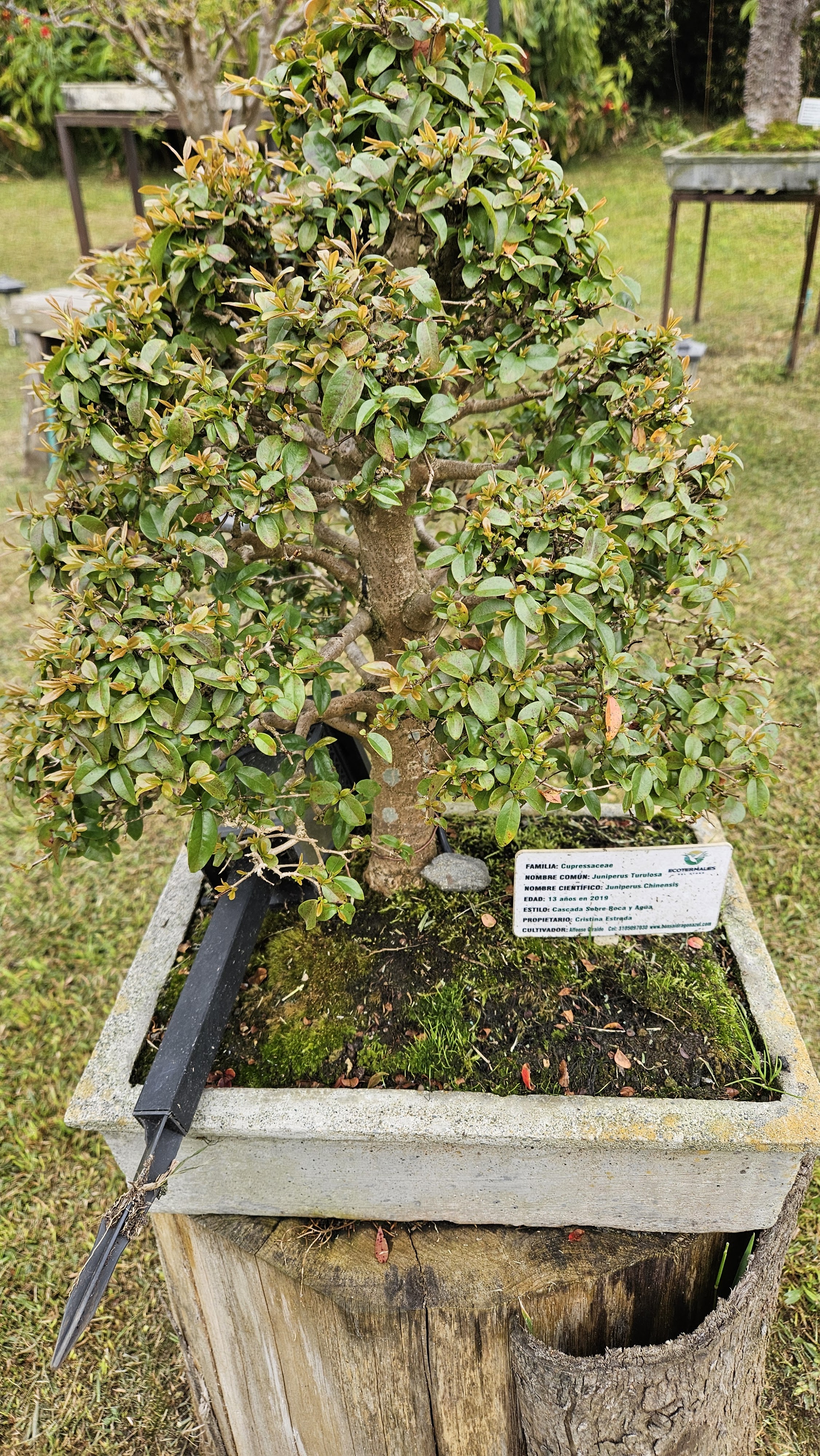
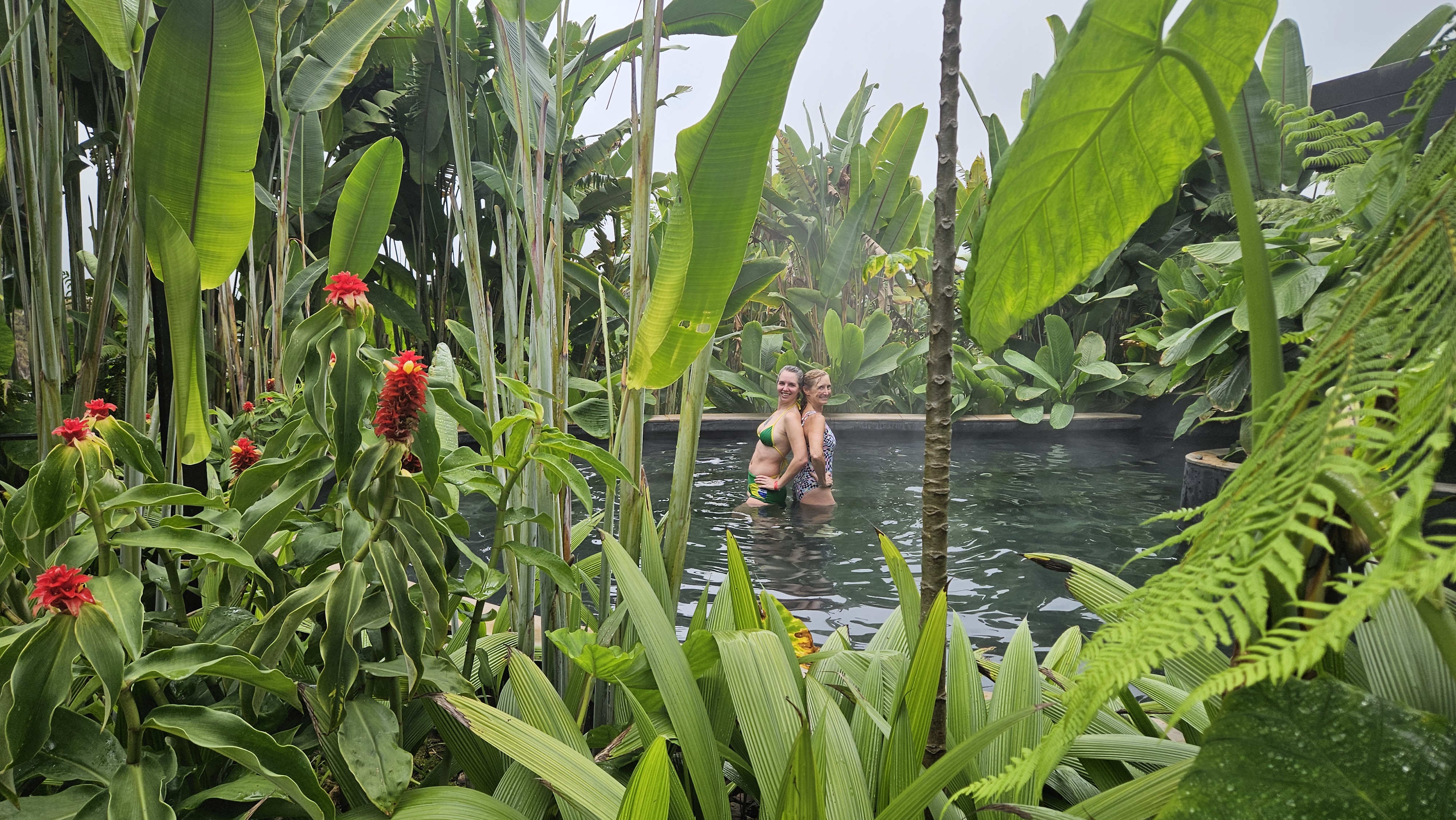
The first was the Ecotermales, a zen garden surrounding relaxing pools. There you can order food at the restaurant or even book a massage with the spa. The garden is teeming with flowers attracting hummingbirds and other colorful feathered friends. Although we were there before the official opening time, the kind attendants allowed us to enter and look around. We took full advantage, snapping pictures of the beautiful pools, the bonsai garden, the decorations. Still, this was all you could do there. There was no hike, contrary to what the website lists. It was better for rest and relaxation, and we wanted a little adventure. We ultimately decided that we would consider coming back after visiting the water park.

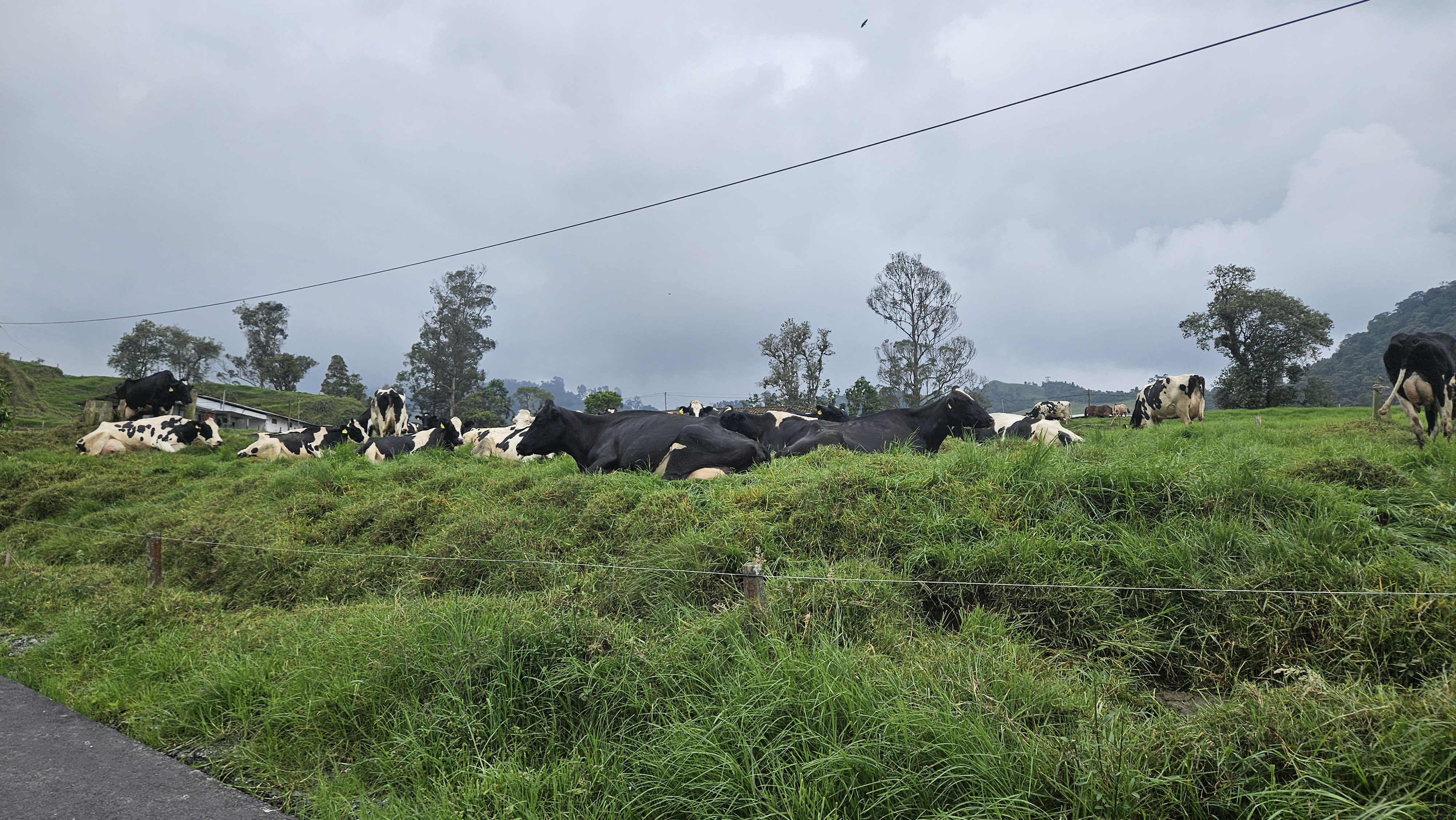
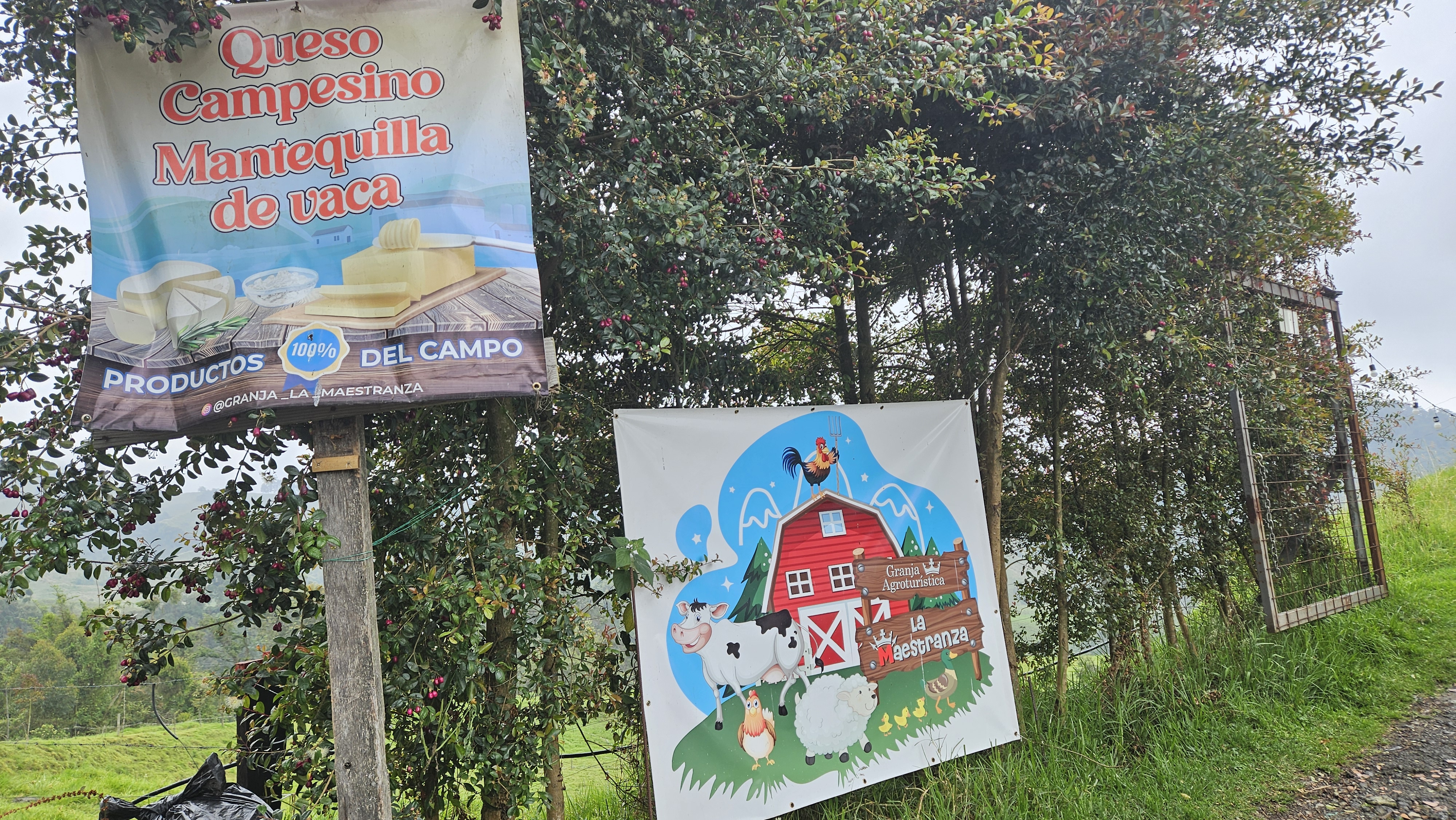
The Ecotermales people told us that we would either need to get a taxi or walk to the Acquaparque. We wanted a hike, so we went for it. The 30-minute hike did not disappoint with its views. We passed Finca Guayabito and felt like we were in Wisconsin, surrounded by dairy cows. On the way back from the park, we given a ride by the shuttle driver working for the hotel. He affirmed the impressive investment needed to have dairy cows in Colombia. The land was rich and owned by someone even richer. Outside of the park, across the road you could buy cheese and butter produced by that investment.

After hiking up some hills (just the workout we were looking for), we found the parking lot near the top. We were greeted by a friendly black and white kitty. Because it was Saturday, we had to pay 10k more than the usual price (60k instead of 50k – still only $14 USD). On the plus side, on the weekends it opens earlier; during the week, doors open at 12 pm. It worked out perfectly.

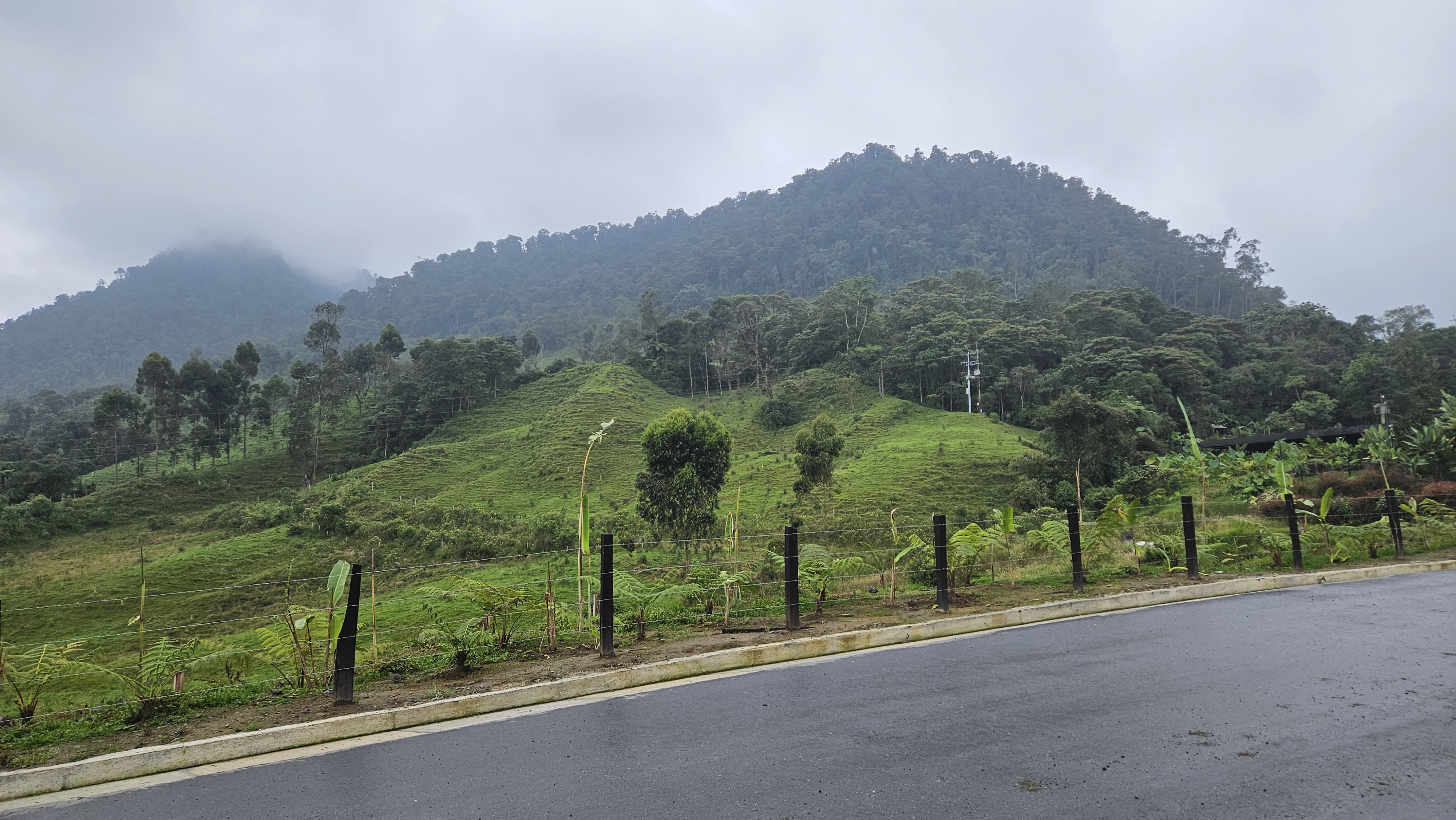
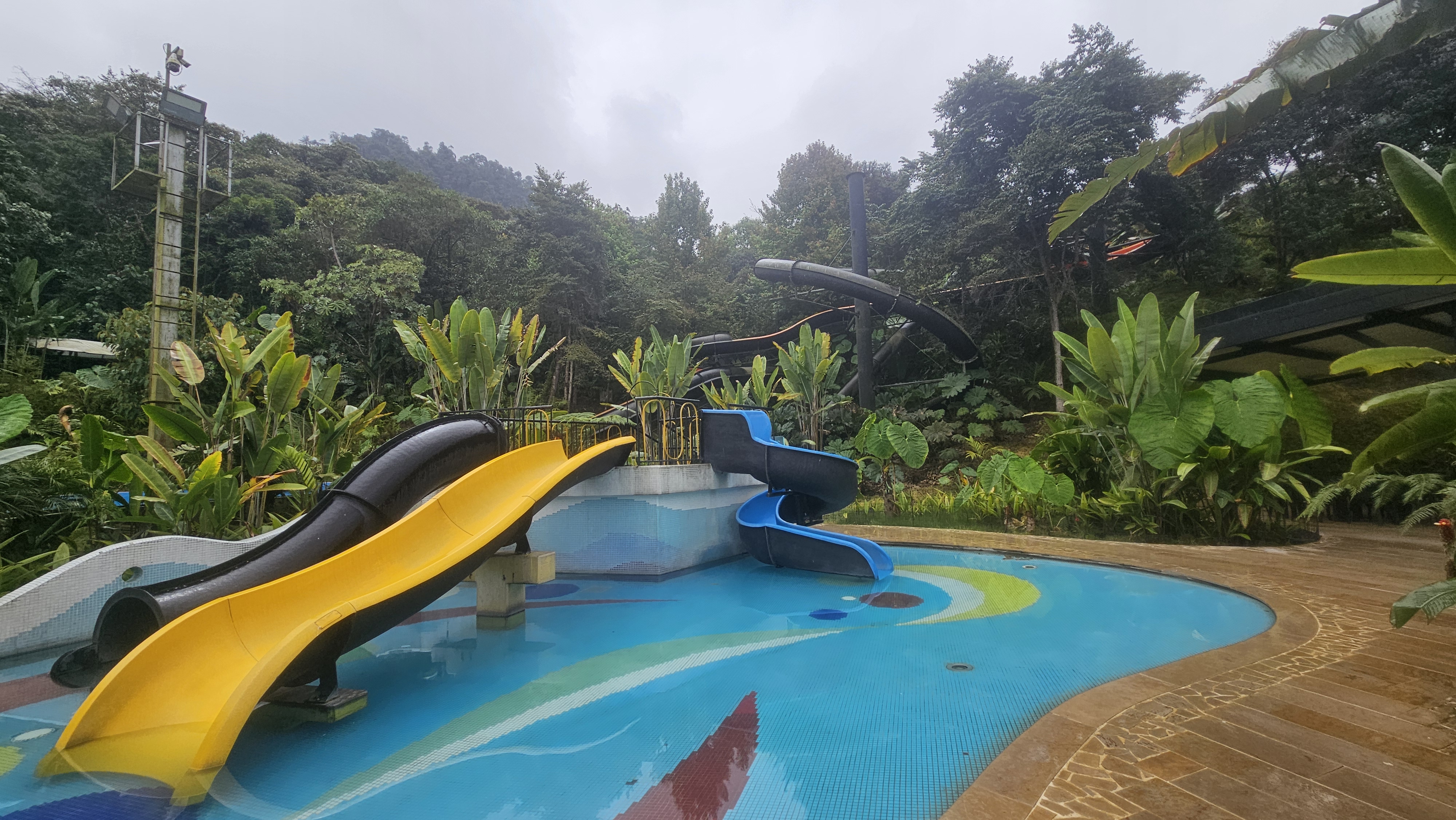
The park is shrouded in mist and overtaken by vivid vegetation. The information on the Manizales website painted a different picture. Clearly outdated, the price listed is about half the actual price. Many years have passed since the post was made showing a bare, open, somehow brighter version of the park. Its current version is better, more exotic, and the awnings are a practical addition considering the frequent rains.

I tried out one of the three slides. It was hard to work up the courage for several reasons: I didn’t have flip flops, for one thing. That made getting up the hill on the mossy walkway difficult. Getting up there was hard enough, but then psyching myself up to get in the icy waters (yes, the slides waters are not from the springs) was another challenge. I got a lot a water up my nose as I rushed down. It was fun, but getting up there to do it two more times was too much to ask.

We were also informed that the eco-trail was closed. Though the hike up the road had been nice, we were disappointed. Apparently the unseasonably heavy rains had done some damage and made it too dangerous for hiking. Oh well, if we ever go back, we will have something left to experience.

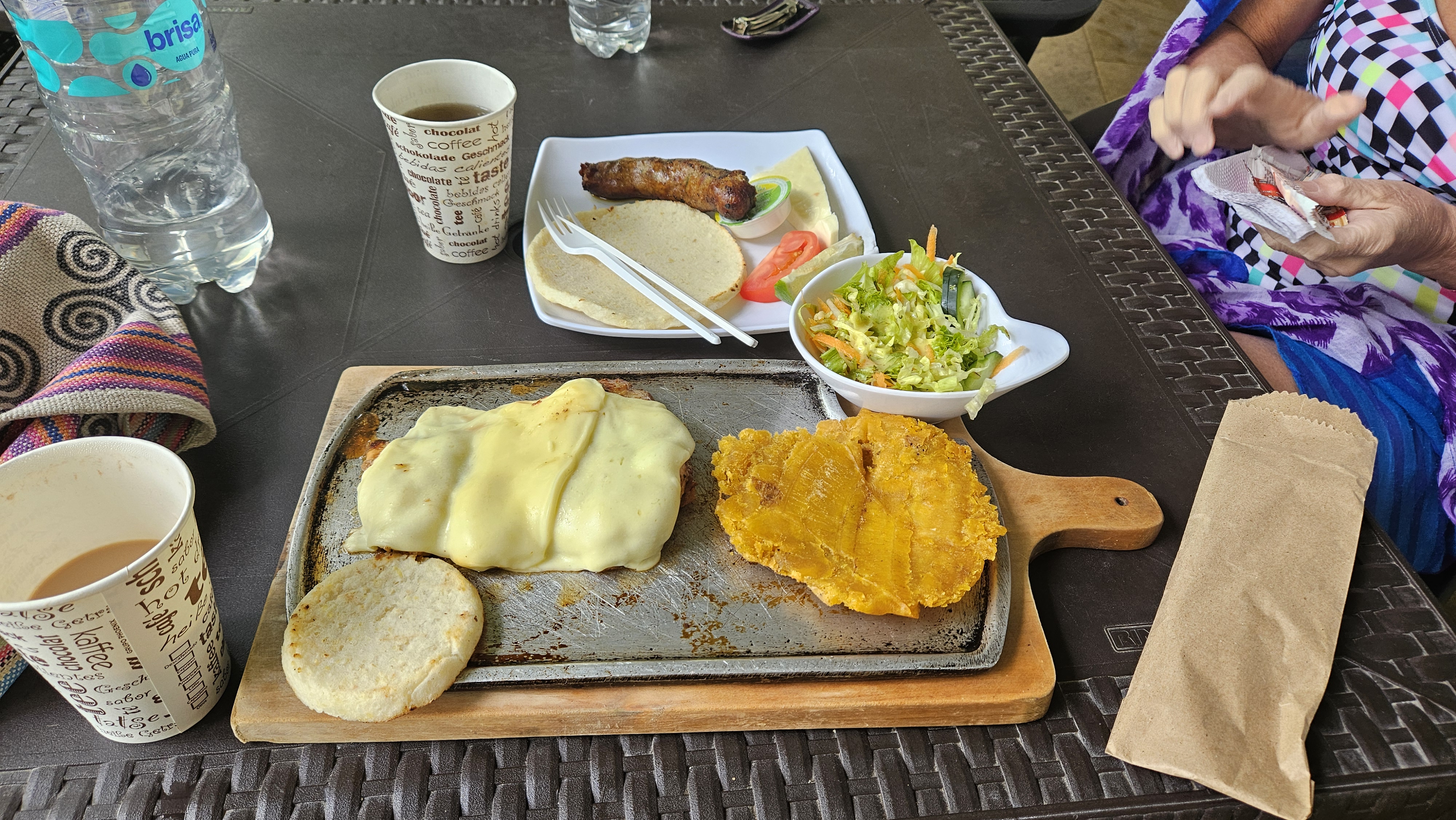
All in all, we had a relaxing day. At lunchtime, the menu had plenty to choose from. Carin went for the traditional agua de panela (brown sugar cane infused water) with an arepa, chorizo, and cheese. I went for something a little pricier, patacon and Neapolitan-style chicken with an arepa and salad and hot chocolate. The drinks helped us warm up. The cold rain had made it hard for us to get out of the pools.

We mostly lounged in the warm waters and made new friends. After our lunch, we got back in to get some tasty cocktails at the wet bar. We floated from pool to pool lazily, enjoying the contrast of cold raindrops and steamy water.

Once the weather had cleared up, we decided it was time to get back to Manizales. We had to make the most of our last full day in the city. Resting in the water had recharged our batteries, so no need to go back to the ecotermales. Our skin and hair felt super soft, our hands pruny from the hours spent in the hot springs. What a refreshing experience! With the shuttle, we got back to the hotel in a few minutes. We jumped straight on the Gran Calda bus headed back into the city to spend the afternoon and evening exploring.

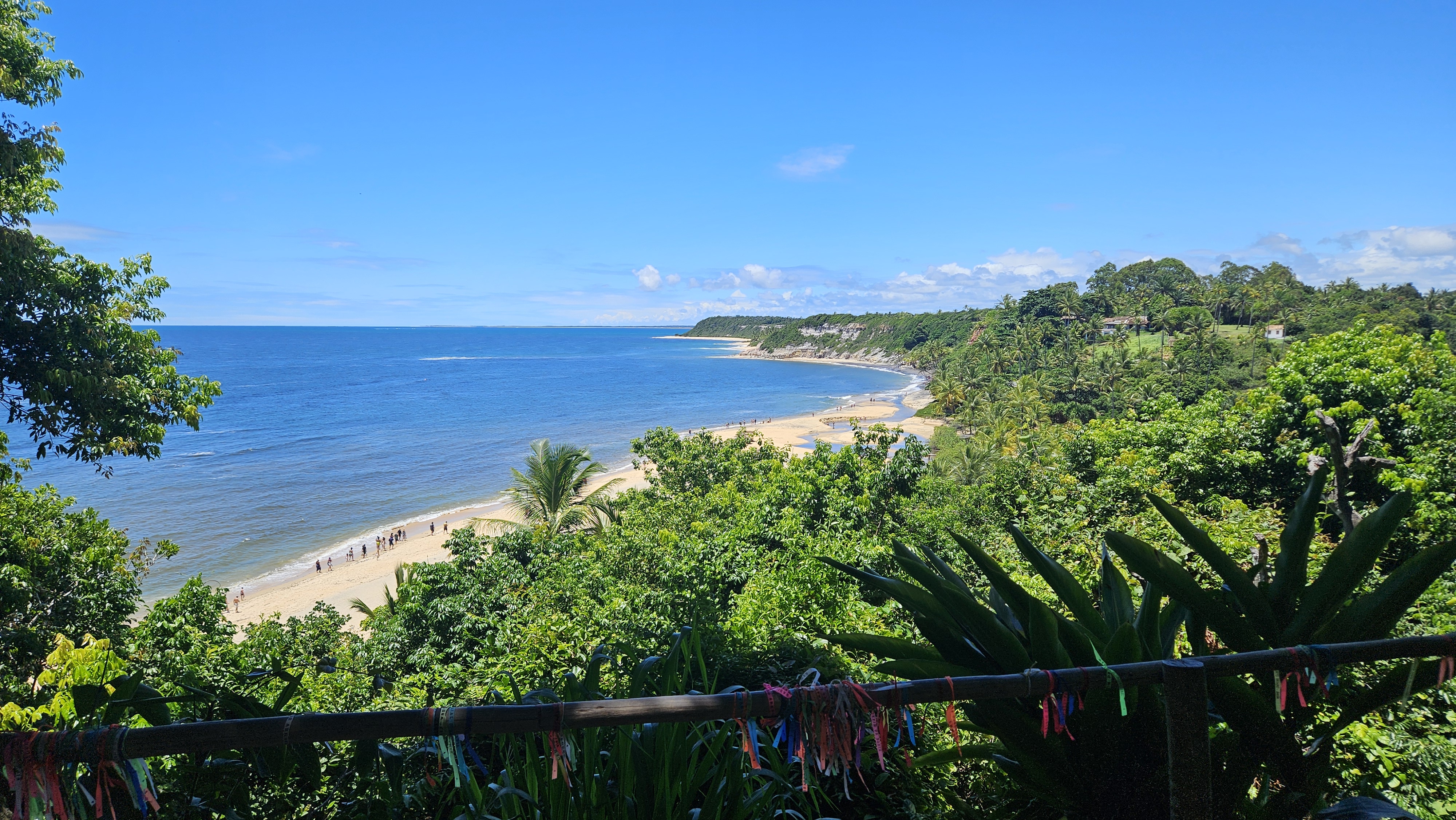
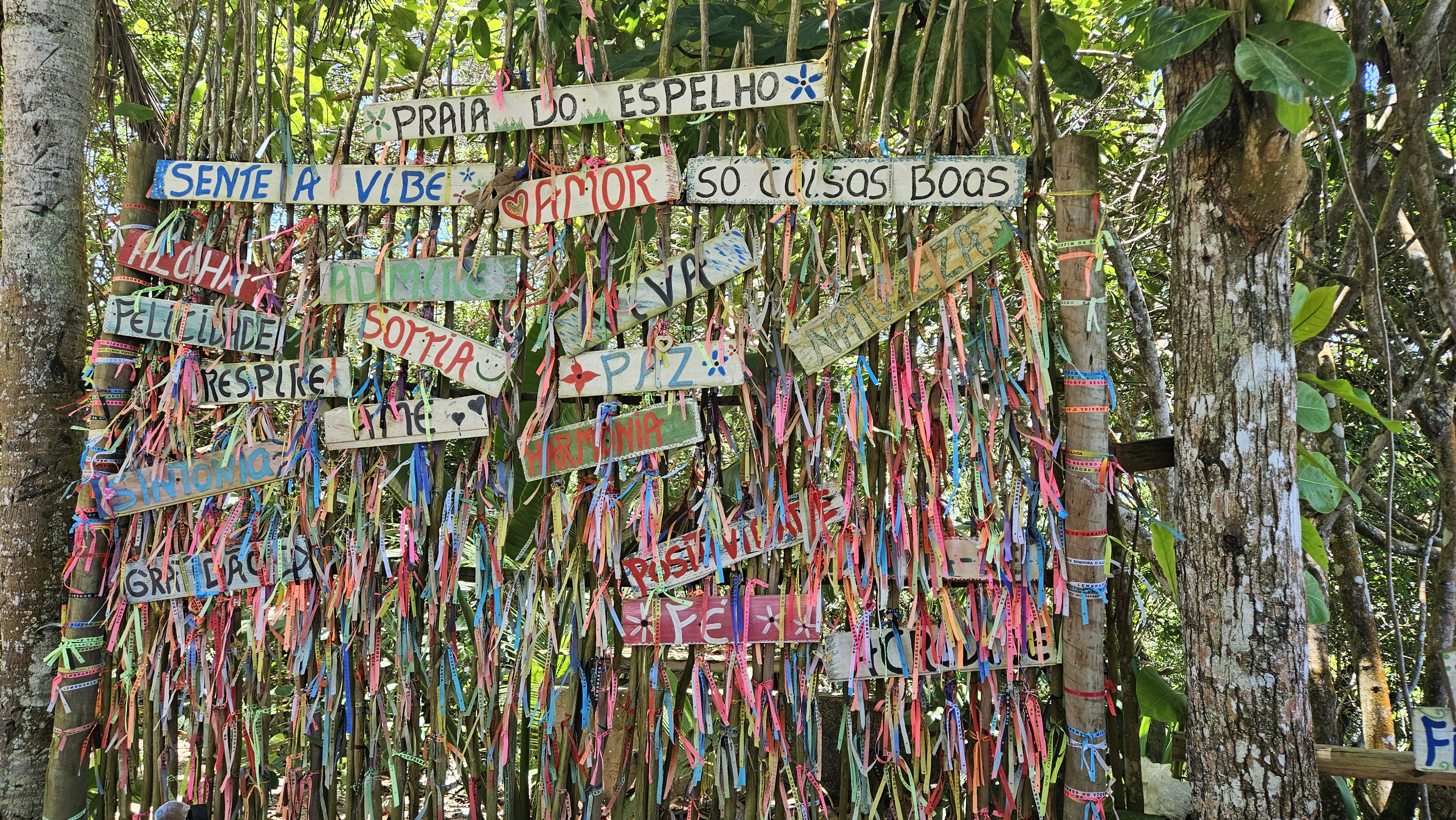
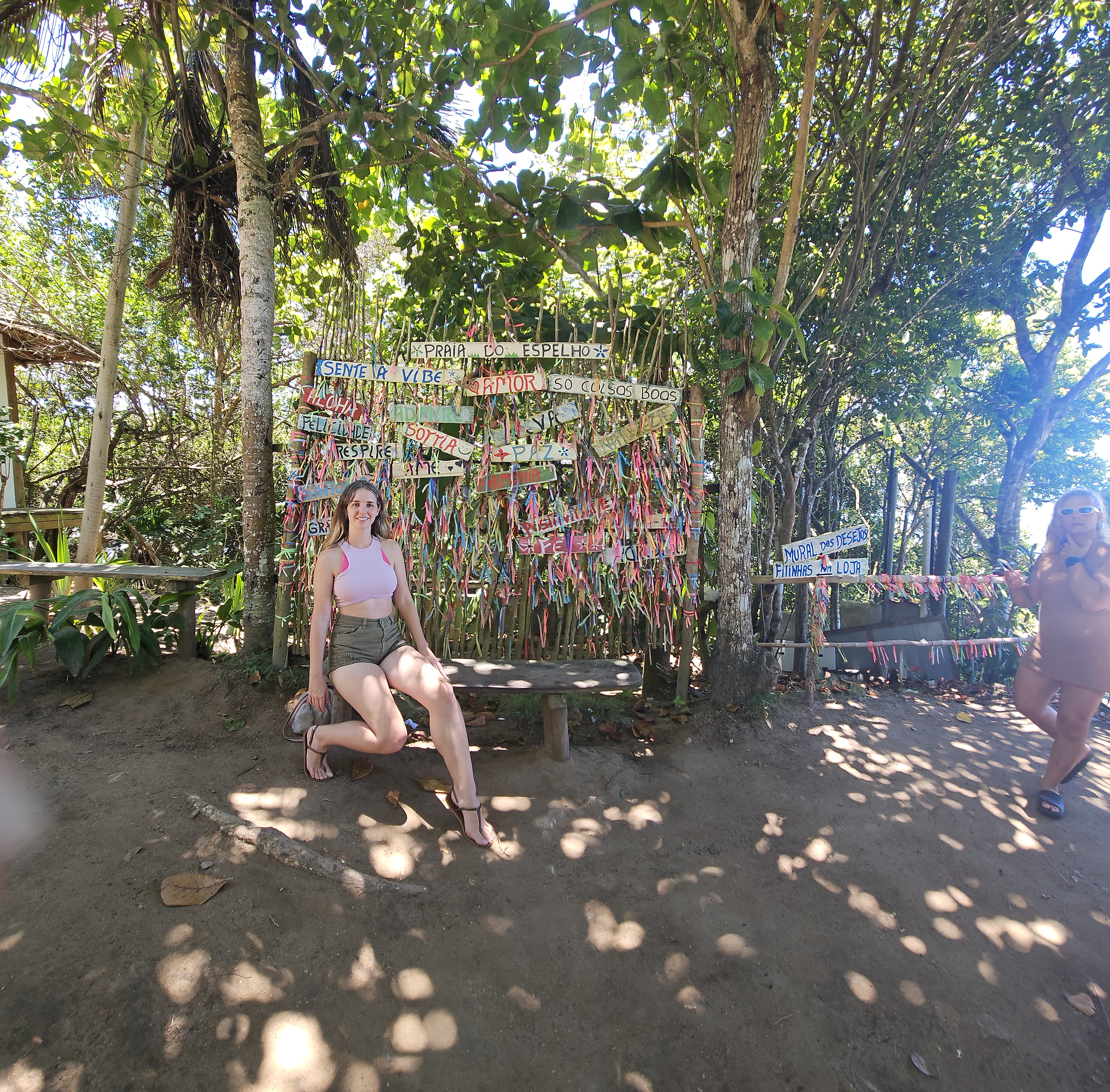
Beach Day in Brazil: Reflections from Praia do Espelho

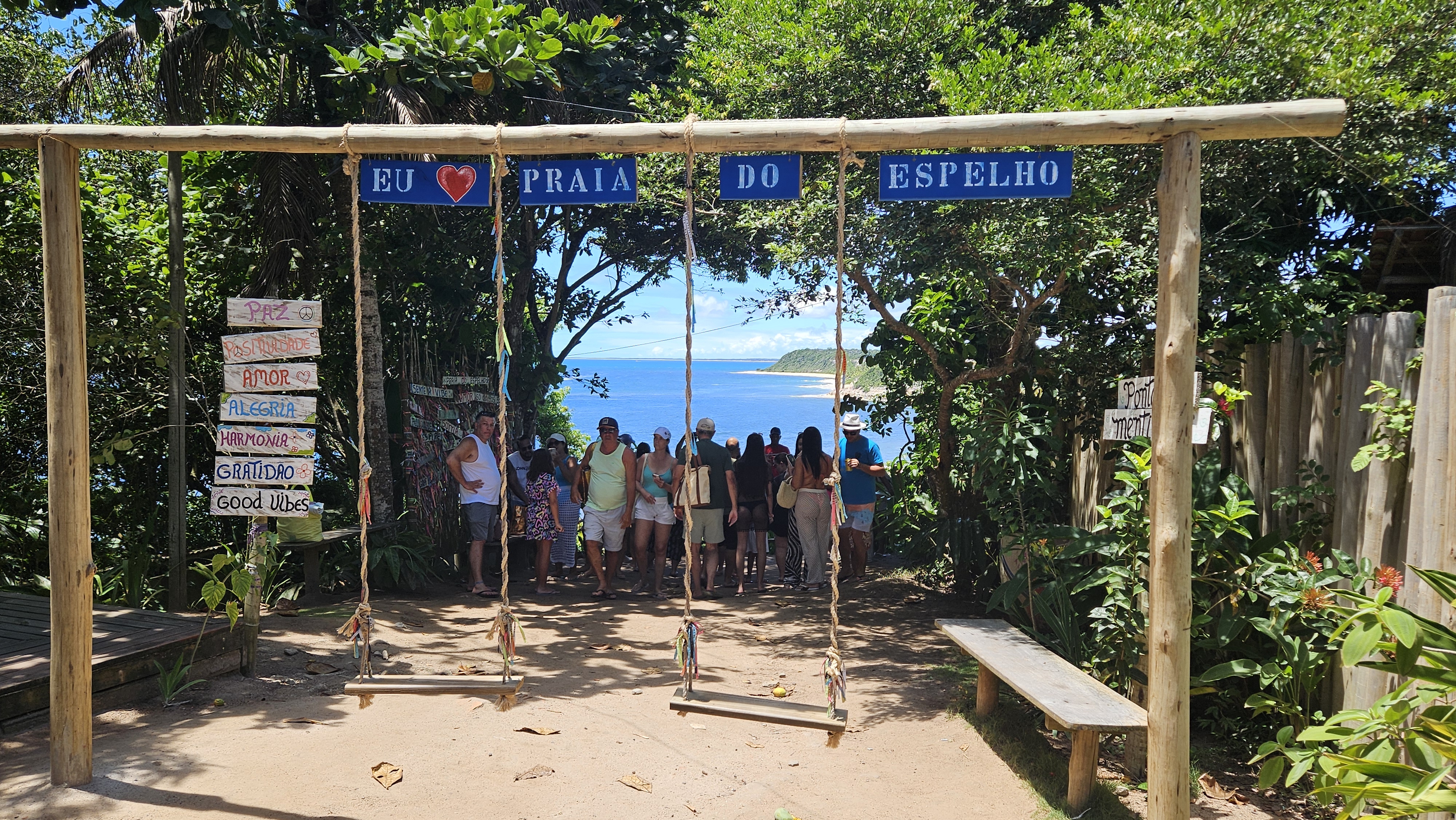
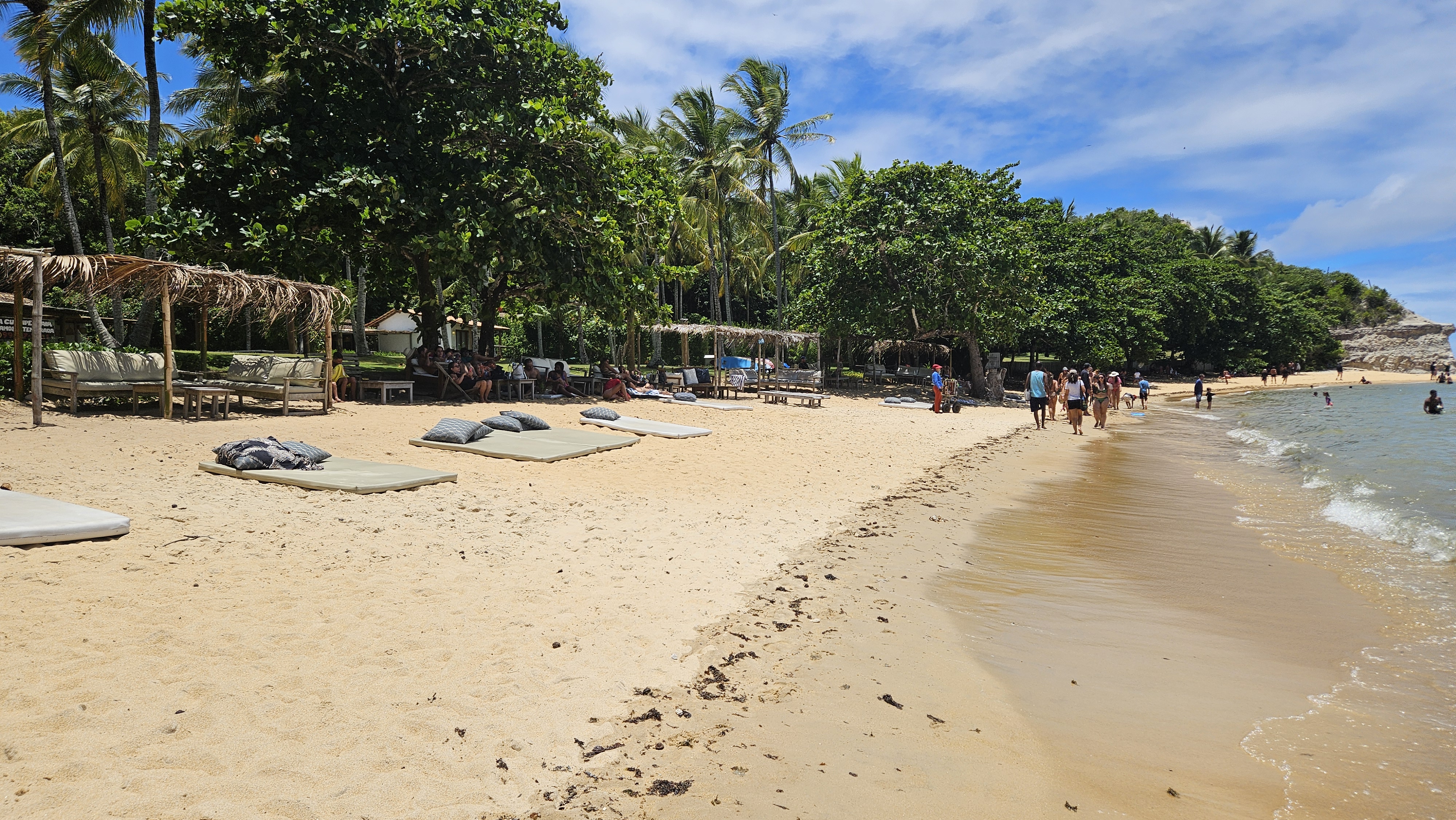
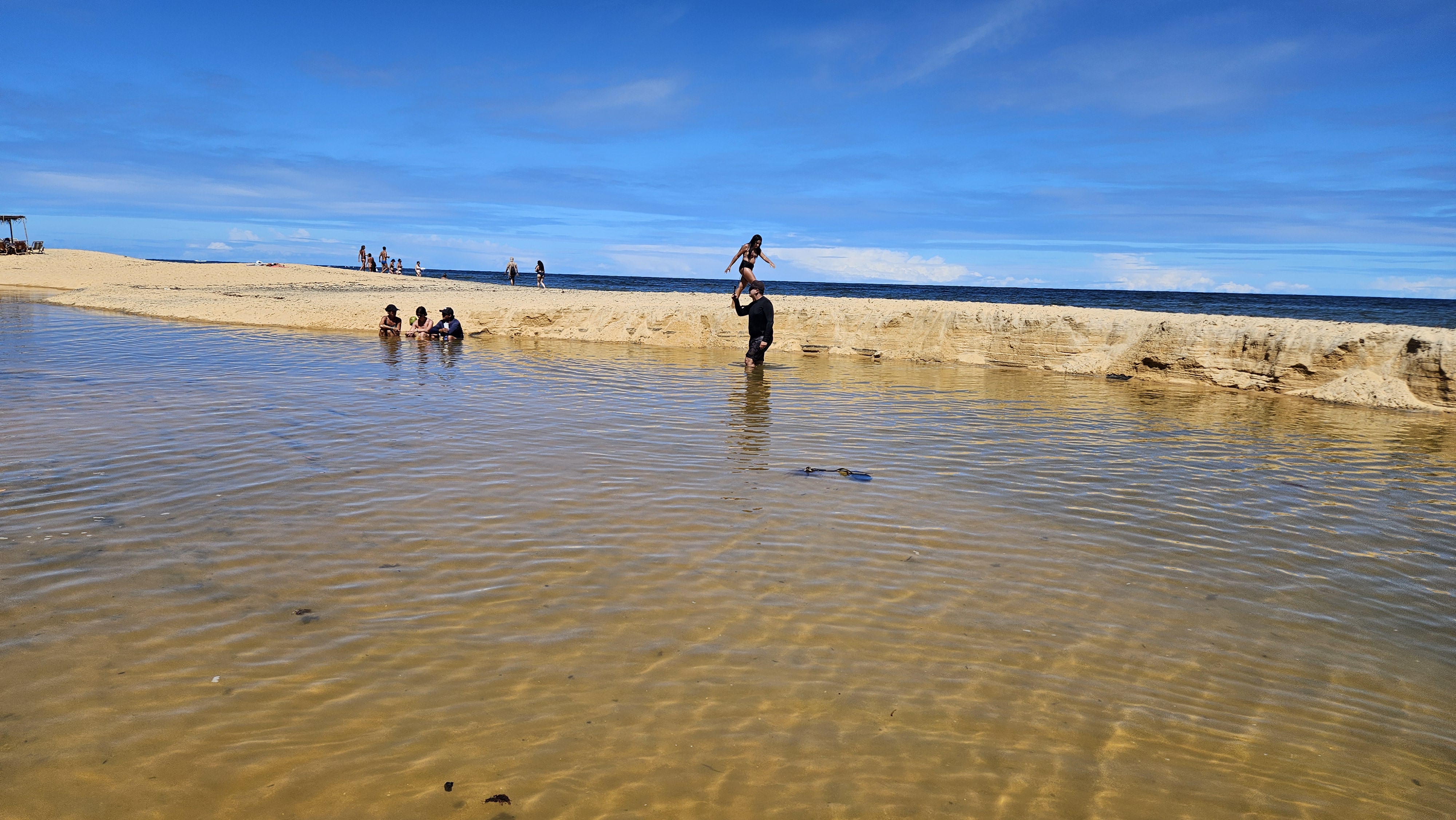
This journal excerpt is taken from week 4 in Brazil, January 25th, 2025. Since I named my blog “adventurer’s diary” I figured, why not post one of my journal entries? Along with some photos taken at this stunning destination.

This entry came 10 days after my time in Salvador. I arrived in Brazil on December 28th after sorting out the over-stay fine with Colombian immigration in Leticia. I took a motocarro to Tabatinga, the Brazilian border town, with my flight ticket bought, ready to go to Manaus. Or so I thought.

My entire time in Brazil, I had issues with GOL Linhas. I would buy a ticket online; they would say it was confirmed. Then I would find out my payment was refunded. With no email notification. Both in Tabatinga and Manaus I ended up having to buy the ticket in the airport. I never did figure out why. Was it due to the security on my credit card (which is supposed to be ideal for travel – come on Aviator Mastercard!)? Or the hold they put on my bigger transactions after a random case of fraud.

Whatever the case, I showed up at the airport thinking I had a flight and found out it was canceled. Lucky for me, there was another flight leaving about an hour after the flight I showed up for. So, it all worked out.

That was to get to Manaus. After attempting and failing to buy my Manaus-Salvador flight ahead of time, I knew what to expect. I made sure to get an airbnb close to the Manaus airport. Then, I went to buy my ticket in person.

This was just a sample of the setbacks I experienced. By making a plan, I finally could have this transcendent day at the beach – Praia do Espehlo, some 2 hours from where I was staying in Porto Seguro.

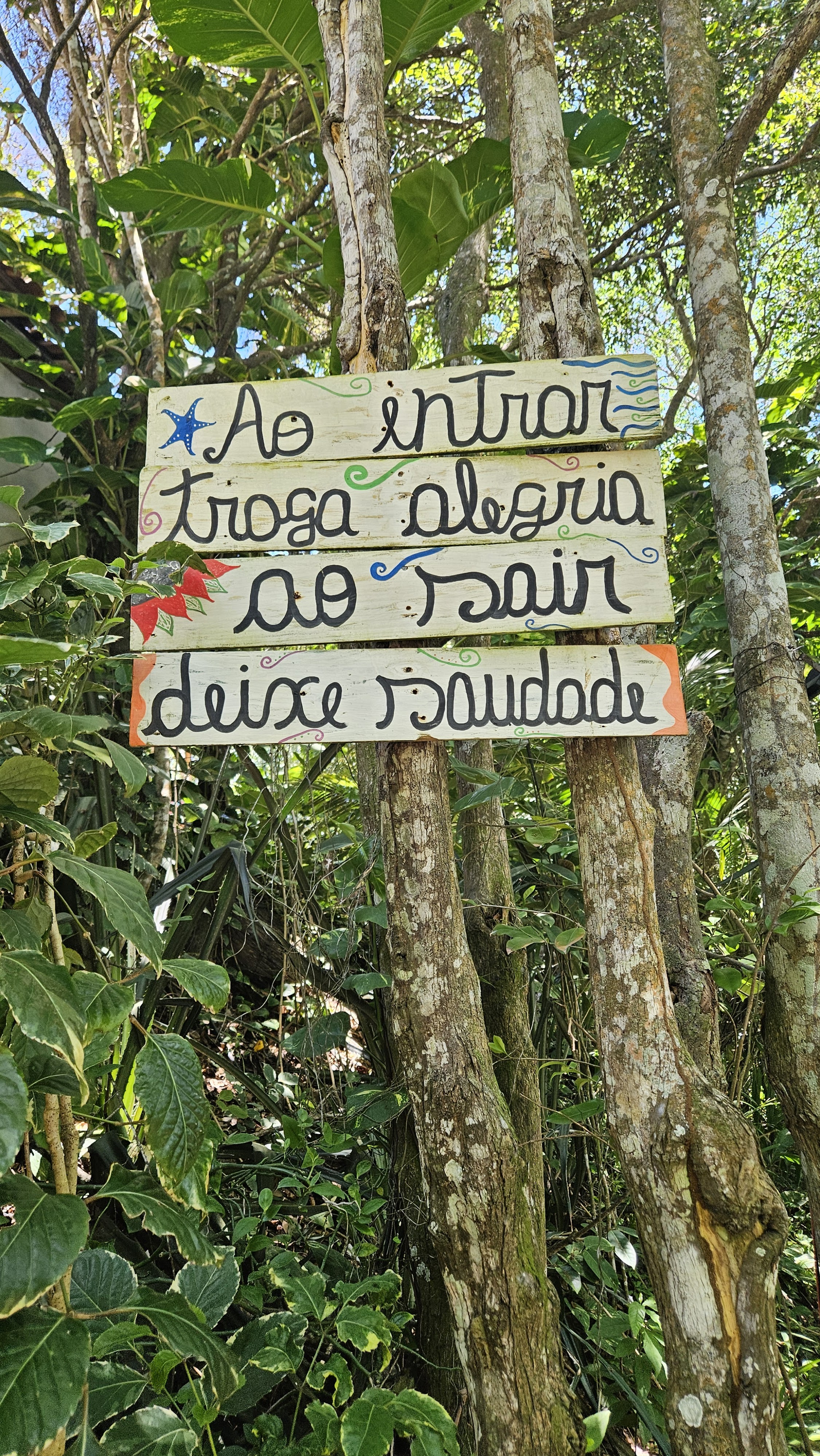
When you enter, bring happiness, when you go, leave yearning.

Here’s a slice of my experience:

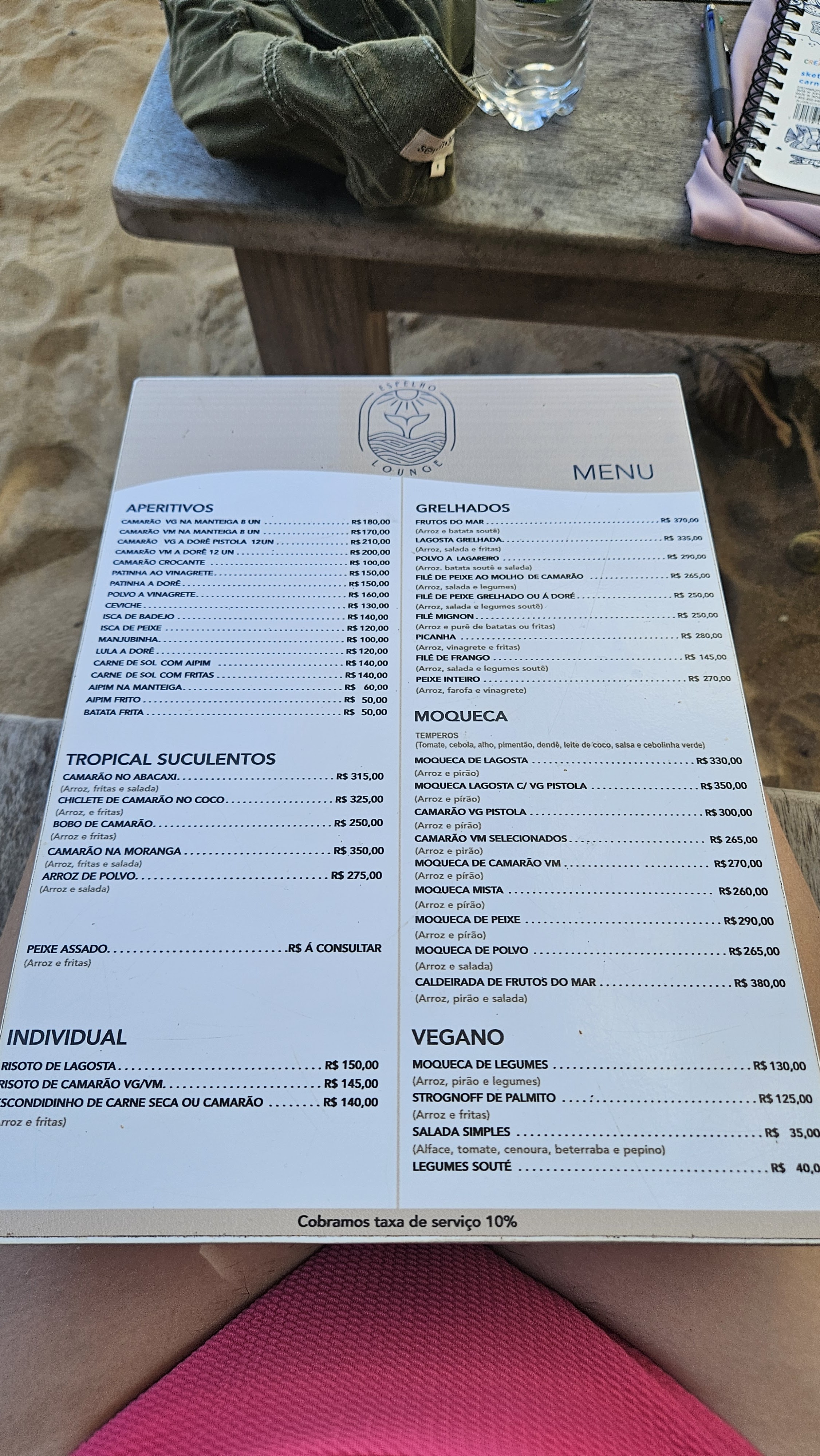
I’m at Praia do Espelho with a tour group. The tour cost 120R$ (~21 USD). The ride here on the tour van was bumpy, but I’ve been so tired, I still fell asleep.

It’s hard to describe vibes and generalize my experience with Brazilian people. On one hand, groups I have been haphazardly integrated into have been hit or miss – sometimes coming off as cold or discordant. I guess in those rare cases where I was invited to join close friends, I felt like there was little room for a third wheel. Or maybe I’m not confident enough in Portuguese to break the ice. I could just as well be misjudging the situation based on the little I can see on the surface.

All the same, Brazilians have been some of the most helpful and patient people I’ve encountered. Even on the street. One of the silly little things that has stood out to me after so much time in Colombia is how people actually respect pedestrian crossing. Even in the States that is insanely rare – you’re at a crosswalk, and the drivers stop to signal you to cross. Even bike riders take heed. The sense of awareness of other people and road rules seems stronger here.

What scares me is the intensity of the men. If they find you cute, they shoot their shot at all costs. I’ve gotten three or more new contacts because of this. You have to set boundaries, but I learned that well in Colombia. Been there, done that, could write a book on it. You can’t take all the flattery too seriously because that is typical modus operandi. A thinly veiled tactic to convince you they’re sincere.

But, on the other hand, it’s been nice not being pegged as gringa right off here. Brazilians come in all shapes and sizes. And they’re aware of that. It helps that I also speak Spanish. Still, I try not to default to speaking it. That has made being spontaneous more challenging. But that’s the idea. I’m mainly asked if I’m “Argentina” because most tourism comes from there. After all, it is summer here in the Southern Hemisphere. It’s high season in beach towns (so not great for my wallet). I imagined that but still didn’t prepare. Sometimes you just have to do things, accepting all consequences of your rash decisions.

Brazilian music is fire. You don’t hear Colombian music much or any music in Spanish. And, why would you, I guess? You rarely hear Brazilian music in Colombia. Brazilian’s have such a rich variety of musical styles and rhythms of all types that unless you happen to be in a community where Hispanic people live (mainly of the Venezuelan diaspora), you aren’t likely to hear Vallenato or merengue, or even reggaeton for that matter.

That means full immersion.

I just explored the beach. We got here around 10 am and leave at 3 pm.

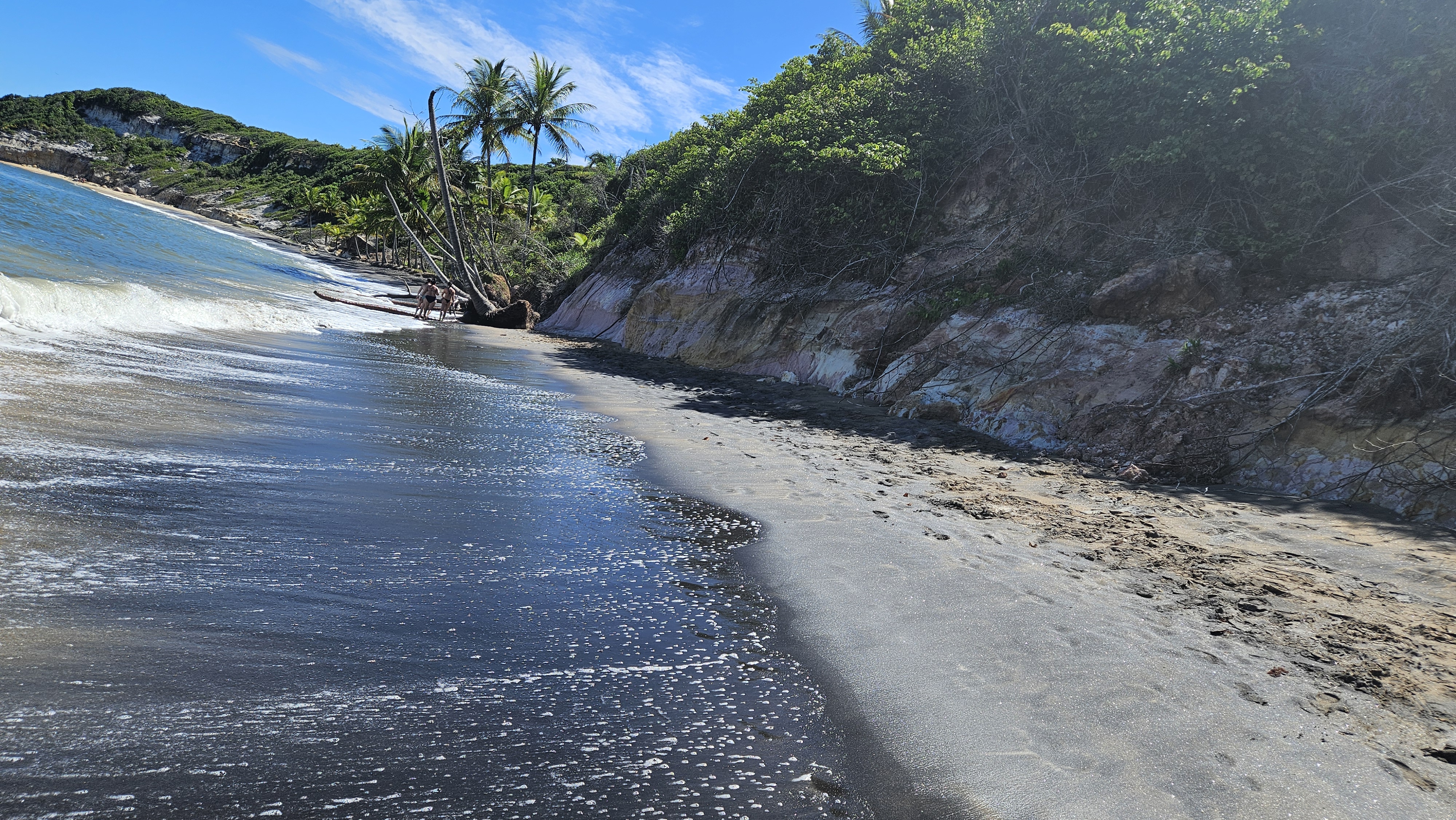
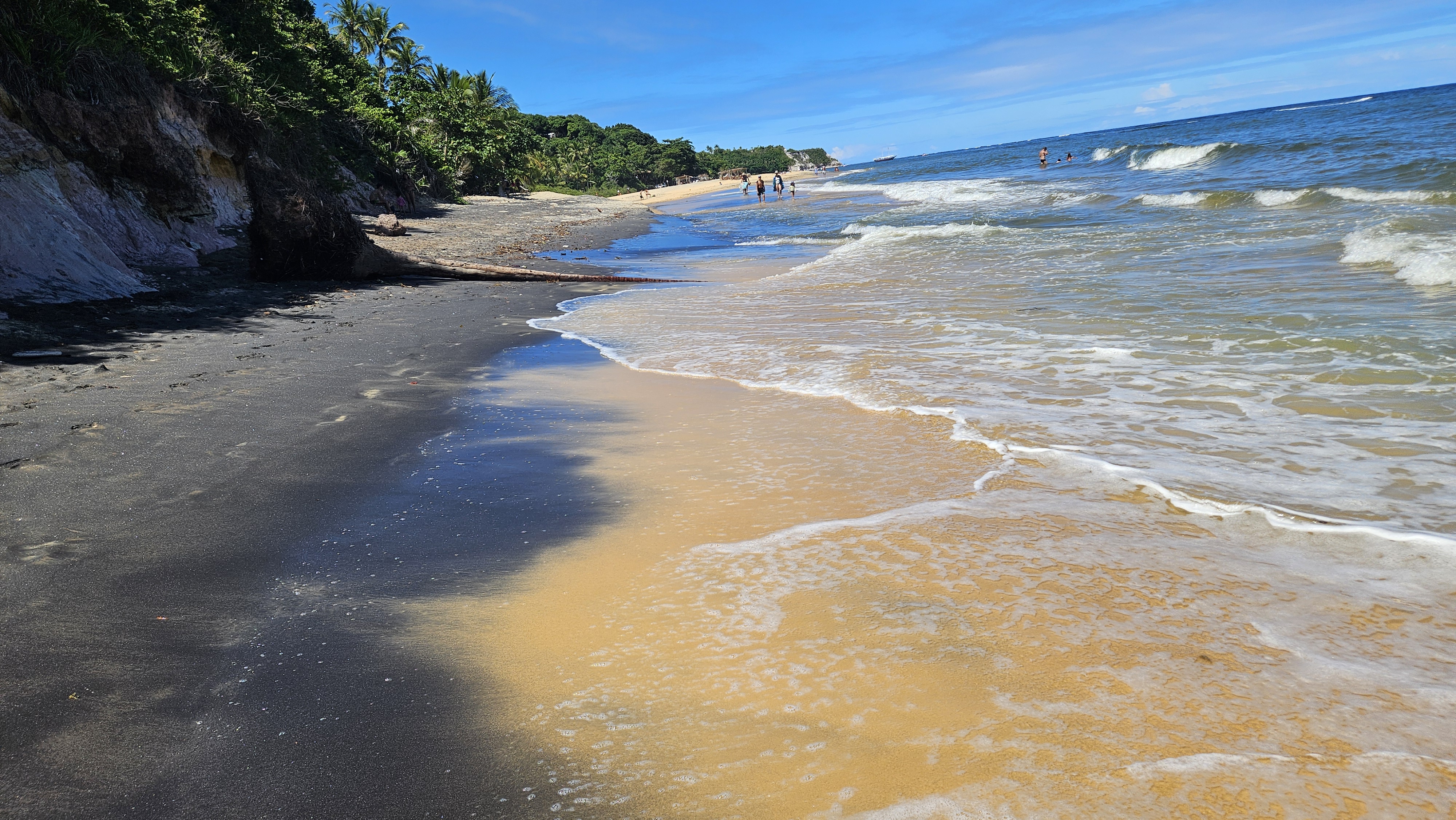
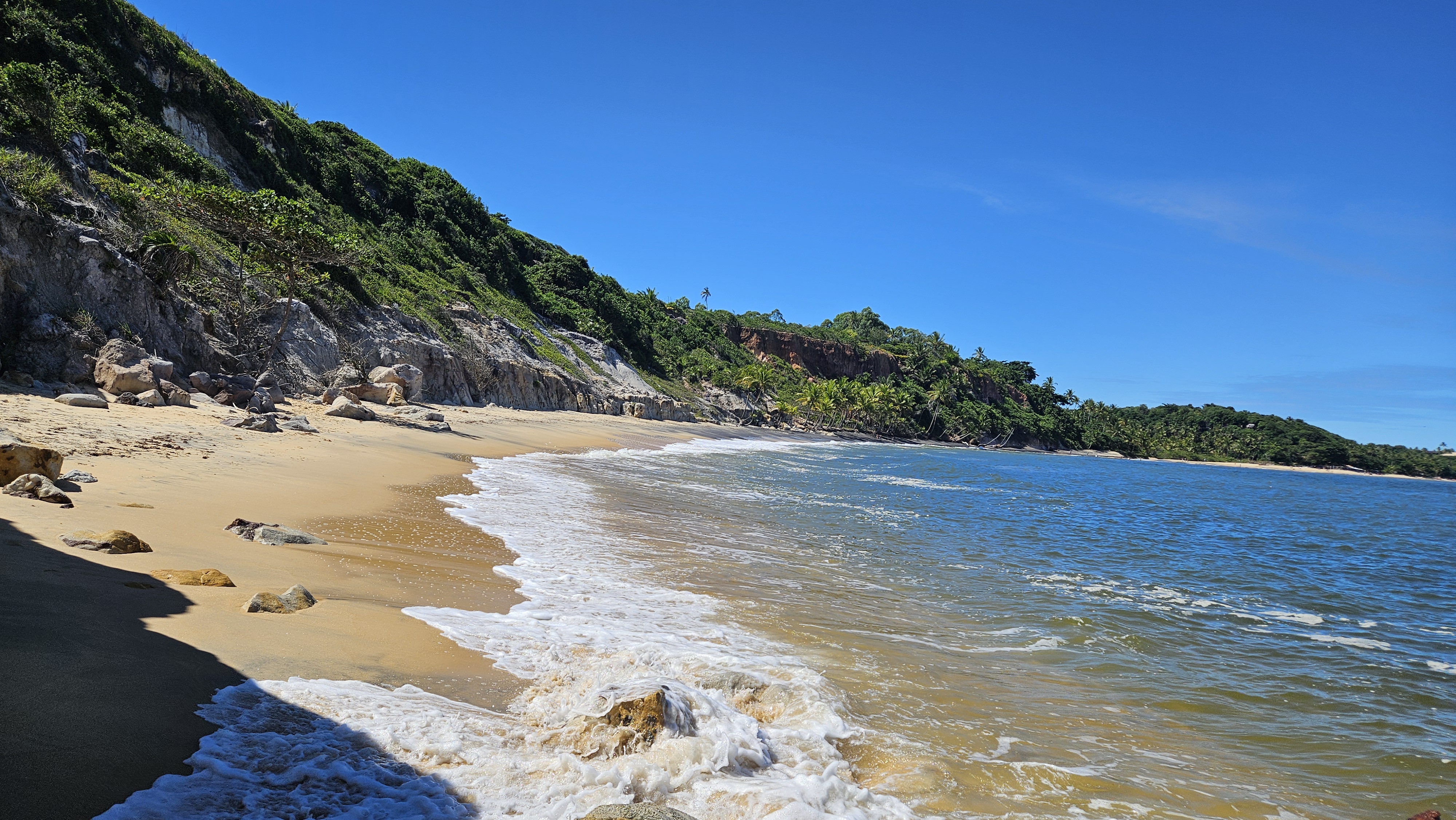
The beaches here are like natural swimming pools: few big waves, soft, fine sand, lukewarm water – cool but not cold enough to shiver. I walked along 4 different small beaches connected to this stretch, sectioned by rocks, cliffs, and reefs. I saw people snorkeling, and I imagined all the colorful fish, coral reefs, and anemones they could see.

I floated on my back, peacefully rocked by steady waves. No rocks under foot in most of the sections. Some are covered by black sand that ripples when you walk on it, others orange, almost red when mixed with the deep blue water; the sand turns black and seems to pulse like something alive when you step on it. In other parts of the beach stretch the sand looked almost tanned ivory, shining in the sun, lending credence to the name: Mirror beach. All of the sand is smooth, inviting when wet, hot from the Brazilian summer sun, but I followed the shoreline to soak my feet as I went.

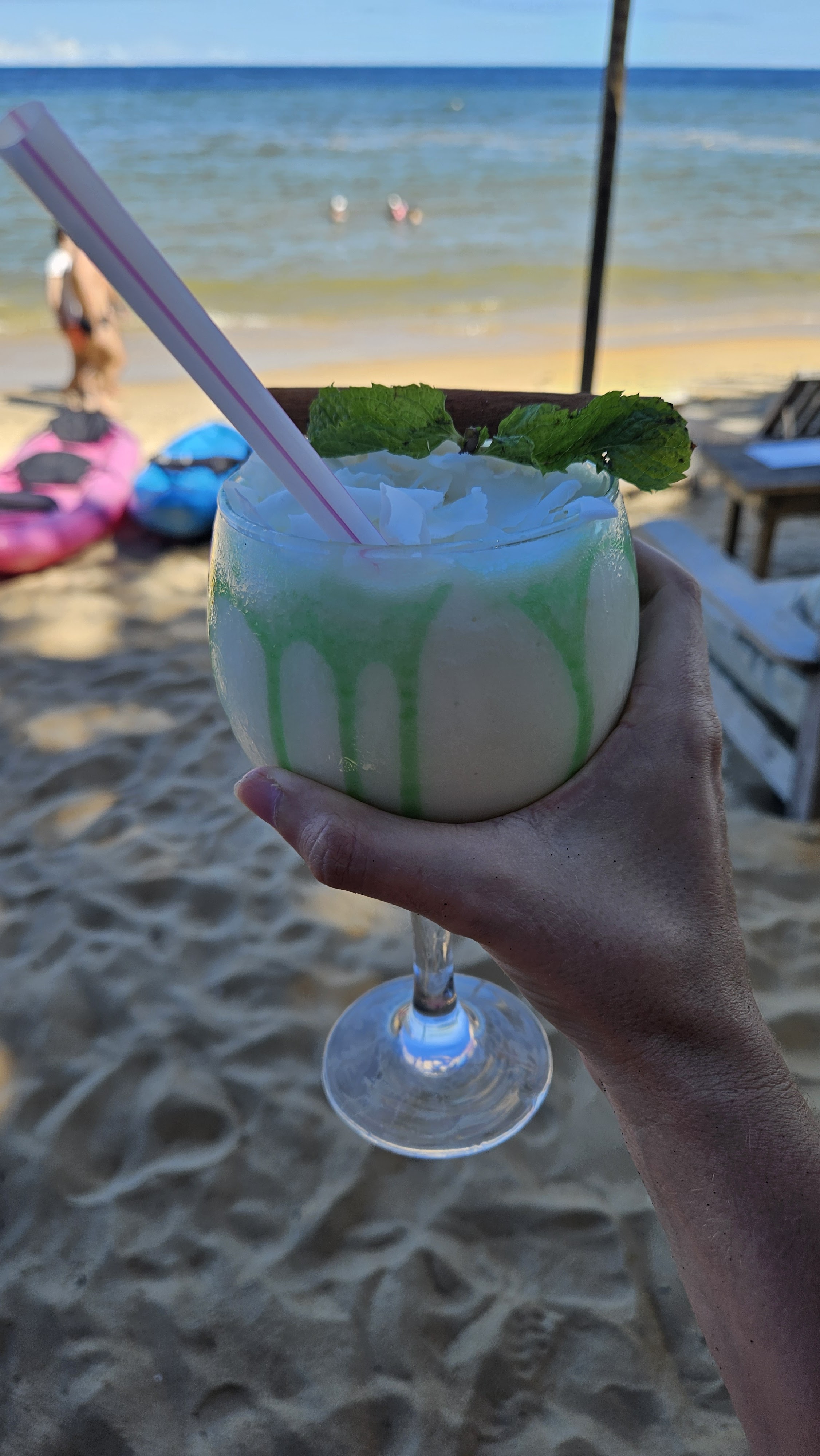
Now I’m listening to a three-man band play what sounds like Brazilian zydeco. They play the same type of accordion popular in Louisiana. There’s a guy playing a triangle, and the accordionist is also the singer. I think I’m in heaven: sipping my obligatory (over-priced) cocktail, a mint-flavored piña colada, taking it all in from my wooden beach chair in front of the ocean under a parasol…

The Handmaid’s Tale: A Cautionary Tale of Religion’s Divisive Power

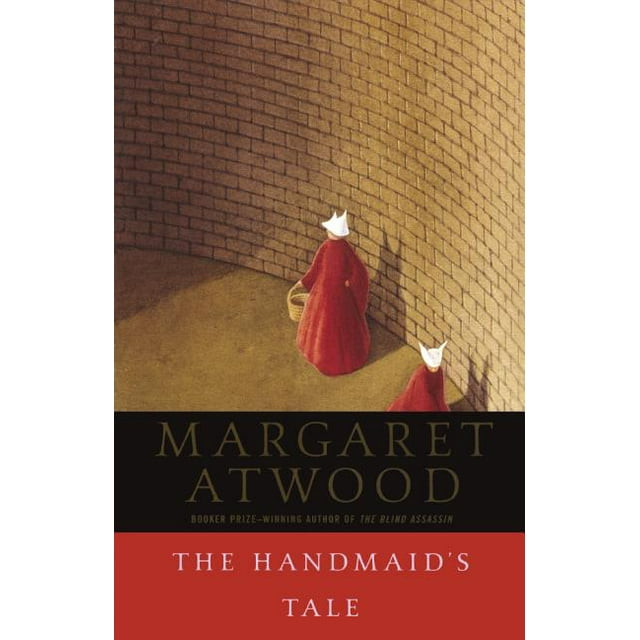
I picked up The Handmaid’s Tale during my travels earlier last year. I finally started it on my way home in August. The timing couldn’t have been more apt with the 2024 election season looming. As I read, I was struck by how Atwood’s dystopian vision reflects today’s struggles with democracy, justice, and the rise of extremism. The Hulu adaptation, released during the first Trump administration, expands the novel’s themes, offering a grim exploration of how fragile freedom can be—and how quickly it can be surrendered by those with even the best of intentions. The parallels between Atwood’s imagined world and our own are unsettling, especially as the adaptation explores how societal complacency and extremism intertwine to erode fundamental freedoms.

A US Tradition: Freedom of Religion or Dominance by Faith?

The Handmaid’s Tale draws on the history how the US was founded, where many of the original colonists came seeking freedom to practice their religious sects and form their societies according to their interpretation of divine law. It all started with religious freedom. Or was it religious hegemony? Was the pursuit of religious freedom, in reality, driven by a desire to reshape society’s hierarchy according to a different dogmatic order?

Is that where things all went wrong? With the state of American democracy, the state of global regression and reactivity, it’s hard not to ask these questions, especially after reading a dystopian novel and watching a series which reflects on how the US has evolved since the novel was published in the 80s. Or rather, how the issues have advanced and the socially conservative continue to openly veer further and further to the right.

The colonization of the United States, colonization in general, entailed “freedom and justice” for a small margin of the population that at the time was significant in comparison to the Europe of the time. Still, which part of the world has been able to move past the dark ages? We still seem so mired in the Puritanical (and rightly named) dilemmas of our “forefathers.” Now that block has led us into the hands of a tyrant, someone that would fire and threaten those that oppose him or disagree with him and have the final say on how we define truth.

That is, concretely, the antithesis of freedom. The antithesis of justice, represented by immunity being granted by being elected. In this case. Exceptions are dangerous. Is the law no longer something that applies to everyone? We’ve grown so corrupt and so confused that some would believe he has earned his clemency by popular vote.

These themes of American identity and the idea of a collapsed US state are sketched on the page and brought to life by the Hulu series. In the book, the titular Handmaid June remains nameless. Her true identity was never discovered, as noted by the historians in the epilogue that spoke about analyzing and studying her recordings. They could not even be sure of who her Commander was, though they had some theories. That was something both fascinating and frustrating about the read. A frustration that the series satisfies, an itch that was scratched by realizing the world building hinted at vividly.

From Fiction to Reality: Lessons for Modern Politics

“I hate this world,” the Luke of the TV show says as he adjusts the straps of his wife’s bulletproof vest. That sentiment could not resonate with me any deeper. So much of the series deals with a wish-fulfillment induced by the novel’s air of hopelessness, including the definitive reunion of this couple, divided by Gilead law that, once established, had the power to annule marriages and divide families “in the name of God.”

The final season of the show explores the backlash of Canadians towards the influx of American refugees due to a scenario in which the US divides along religious and political lines. I feel that the Americans expressing this sort of hostility towards Haitian refugees and other immigrants need to watch this show, need to imagine a world where their home is no longer theirs, where they become the unwanted immigrants by no fault of their own choices or power. Empathy is the weak point of many, sadly, drowned out by American arrogance and dogmatic belief in “one nation, under God, indivisible…”.

After the final episode of Season 5, I was devastated by the idea that, as in real life, the problems had only continued to mount, with new challenges, and no clear, neat resolution. Like the handmaids in training forced to scrub an old church, I feel a stir; I want more.

Characters and Parallels

This final handmaid scene centers on the affection Aunt Lydia has developed for Janine. A character like Aunt Lydia is worthy of a deep analysis of her own. She reminds me of the many women that believe that they are doing the Lord’s work by oppressing and punishing others, no matter how much they want to sincerely help people and do the right thing. They can’t break free of the system they are complicit with without being broken in turn. Moreover, the woman herself is such a broken character. The glimpse of her backstory did well to show her on-going conflict between giving people a chance and her outward and inward rigidity with herself and her own natural needs and urges. She is hard on others because she is harder on herself. That makes her, as detestable as she can be, a sympathetic character on a road to hell paved with good intentions.

In the 5th season, June’s violent journey of healing comes full circle. It’s almost like a detox and a reckoning after the conclusion of the 4th season where she takes revenge on Commander Waterford and starts the 5th season unhinged and blood thirsty. Yet by the end of the final season, she questions her husband about the need to have a gun. She has realized that Gilead and the violence normalized there in its mass executions and torturous practices are what pushed her to embrace her own dark side and cling to it in a situation where she had otherwise been powerless.

Parallel to the protagonist, the Serena Joy’s development was something I would never have expected to be so pleased and uplifted by. Admittedly, from my perspective, they are both women being oppressed by the same system in different ways. The difference is that, of course, Serena is humbled and forced to face the consequences of the flaws in the society she helped build and promote. She’s stubborn and self-interested, self-assured on narcissistic levels, but there is a sense that she has realized that she was blinding herself, unable to accept the mistakes made by supporting a regime like Gilead’s. With the shoe on both feet, her eyes are opened in an irrevocable way that adds to my excitement to see what happens next in a future season.

For me, Serena represents so many pious women, as does Lydia, that do not realize how their own beliefs and dogmas can ultimately do more harm than good. By passing judgment on others, they also make themselves more vulnerable to have judgment passed on them, as women in this patriarchal system have no real power. The warning: When you sign away your rights, be aware that there may be no going back.

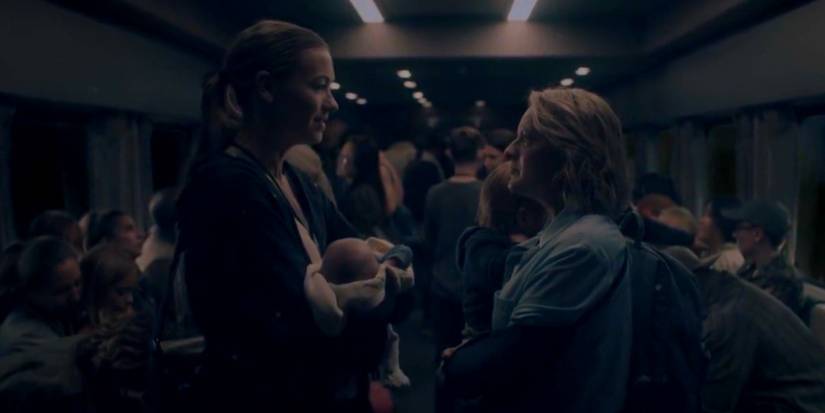
What a closing shot. Billy Eilish’s Bury a Friend set the perfect tone as a bemused June stares into the eyes of a happily surprised Serena, a woman who had to free herself by following June’s advice, two women that were turned against each other by Gilead, by the system, by men and the hierarchy they created.

Self-Fulfilling Prophecy: Warning or Reality?

“America wasn’t Gilead until it was too [redacted] late. And then it was.” This powerful line comes from a June waking up to the reality that Canada is not the safe haven she had hoped for. No place is safe once extremism takes hold, and that is the fear I feel seeing the direction of US politics in 2024 (early 2025).

The ending of this season is a wakeup call. This is how freedom dies. It might seem dramatic, but I hear the warning from Elizabeth Moss’s character loud and clear. All this time, people see that things are changing and yet they choose to reject reality because “This is America.” But what happens when what America means, its very foundations, are revealed? Our American dream is a warped, redacted version of our history and reality. A manipulation of truth. And it all started with this religious freedom leading to religious extremism – in spite of the effort to separate church and state – so much so that this tenuous separation is brought under fire in every election, especially in states that have not fully stepped out of the dark shadow of our history, that scarcely learned the real history of this country.

What does it mean to live in a totalitarian regime? It means the threat of lost life for expressing any opinion, thought, or sentiment that goes against the established order of things. You might feel comfortable along the path to this sort of autocratic society thinking that you will be protected from some “enemy within.” But the truth is, you might just lose everything in the process, even your humanity. Even your home. Even your life.

All in all, the series does a good job of fleshing out the world that Margaret Atwood offered a limited first-person perspective of in the novel. It brought me to tears several times because of how real it all felt. How real it could be. Division between religious extremists and everyone else is feeling more and more inevitable. And at the end of the day, the extremism is propped up by non-religious figures like Joseph Lawrence in the series, people that know how to take advantage of the dogma, fear, and selfish interests of the average person.

To conclude my reaction to the end of the Handmaid’s Tale season 5, it was not the most satisfying ending — as I’ve said, I want more. The heart wants what it wants, and mine is broken. Luckily, at the point that I am editing this post (3/11/25), season 6 is right on time which should hold up an even more unsettling mirror now that Trump has undeniably taken over and set up an even more extreme, unsettling regime.

In the wake of the 2024 elections and everything following the inauguration, The Handmaid’s Tale serves as a stark reminder of the fragility of freedom and the dangers of complacency. Atwood’s warnings are not just fiction—they are a call to action. Let us not wait until it’s too late to protect our rights, our democracy, and our humanity. Let us not surrender our freedom to love out of fear and clinging to the false promise of stability.

This reflection was written around the time before and after the 2024 election — I didn’t want to rewrite it including all we know and have seen now, but I think it still speaks to the big picture and observations the show brought up for me.

Day 3 in Leticia: Change of Plans (Again)

I’ve spoken till I’m blue in the face at this point on instagram and whatsapp and messenger voicenotes, but I figure why not add to the chronicles with a blog post?

I am the living, breathing example that not everything is rainbows and beautiful instagram shots when you travel. In fact, a great many things can stress you out, leaving you drained and frustrated.

I woke up feeling tired but optimistic. The internet signal was too weak in my last hotel to teach my classes, and surprise: it was raining. I got here at the beginning of “winter” as the locals call rainy season. I knew that I would, but I didn’t think it would end up affecting me this much. I had to reschedule my first class of the day as a result.

With nothing else to do, I decided to check out quickly and use that hour to try to get things sorted out with immigration as fast as possible. To cover myself from the rain, the receptionist at the Tapir hotel gave me a plastic rain poncho. That was an act of kindness I really do appreciate. And with that, I hurried to the office around the corner.

Well, as was to be expected, more complications were waiting for me. Lisbeth, the migration lady, printed out an invoice I was to take to efecty to pay. (Efecty, for the uninitiated, is a Colombian company similar to Western Union) Second “surprise” of the day: I have to pay with cash. Like the rain, this wasn’t really a surprise, I mean, I figured as much, but I still wanted to believe there might be another way. I wanted to be wrong, basically.

What’s a girl to do? Thank Buddha for good friends. One was able and willing to transfer the money I needed to my Colombian account. I just needed to take care of my preply classes first so that I could go take out the money to pay the fine. At my next hotel, which is further out of the way than I expected or would like, the internet was just strong enough for me to have 3 lessons. With the camera off, of course, because it was pouring all day, which meant even starlink’s signal wasn’t strong enough.

Words can’t express the gratitude I feel for my students’ patience with me. I did the best I could, and once I was finished, I headed out searching for an ATM or corresponsal (shop that partners with a bank where you can withdrawal money). Good thing this capital city is small — smaller than Valledupar, more like a town (Fonseca, La Guajira comes to mind). Walking around in the rain would have been worse if I couldn’t have oriented myself as well as I did. Plus, on the bright side, no taxis needed!

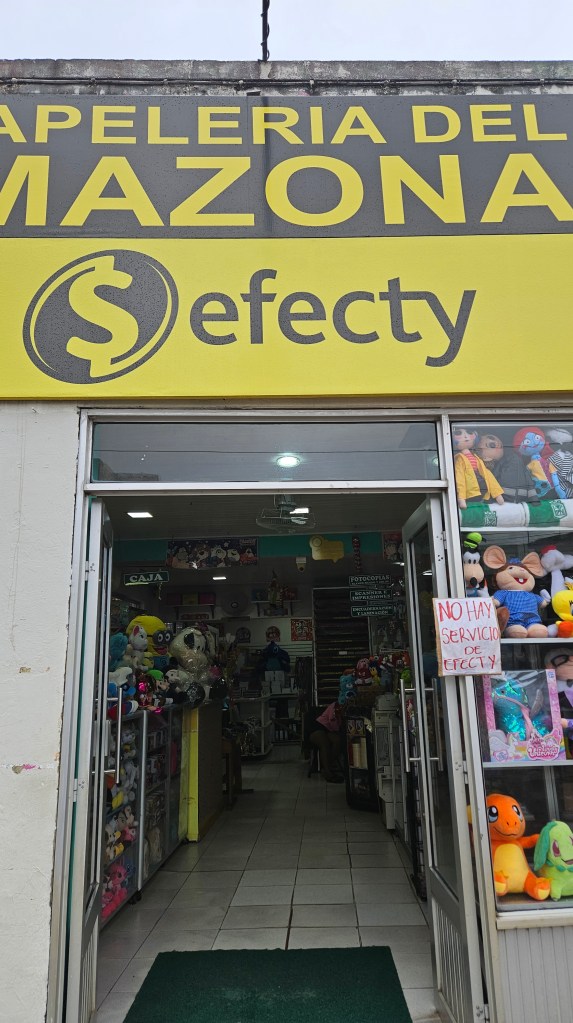
Once I got to the efecty, I was hit with my 3rd “surprise” of the day: no service! The people working in the shop with the efecty sign were blunt: there are no efecty’s working in the city. This floored me, but of course I wasn’t going to take their word for it.

Like a game of cat and mouse where the mouse is always a bit faster…or is it like a dog chasing its own tail? Similes aside, I turned around and headed straight for the migration office around the corner. First I asked the guard about what I had heard about efecty, and he immediately pointed me to Lisbeth.

When I told her what had happened, her face froze. According to her, if they said that efecty was down in the city, then there were no other options. She made it clear as day to me that the only way I could pay my fine was at an efecty — there was no longer a bank with a government connection. I could not — still cannot — believe what I was hearing. I thought about those people that she had told me were also being fined in December. Apparently, there were more of us than usual. I tried to stay calm and asked her, “Do you have at least a list of efecty locations that I can check instead of going door to door trying to find one?” To be clear, I had not had much success looking on google maps.

Ultimately, she gave me this list, and the place that she recommended the most was not even listed on google maps. She apologized for everything, telling me she was embarrassed but unable to change the system. I get it. It has to suck just as much for her, being the bearer of bad news. I also apologized for my own frustration; it’s just nothing had prepared me for such a ridiculous conundrum. She claimed that most likely it was the rain that had caused the system to crash, and that it could be fine the next day.

When I walked outside, I noticed that just next door there was an efecty sign on the building. Huh? One right next door and she didn’t even mention it? As soon as I walked in, I also saw the sign saying there was no efecty service for the moment. I decided to ask the teller if she knew where I could find a working efecty.

The 4th (well 5th if we consider only being able to pay a government fine at an efecty that apparently isn’t available a “surprise”) gut-punch of a surprise I did not see coming. All efecty’s had been down, according to the lady, and that’s why the people at the first one had said what they did. And not only that, efecty had been unavailable for over a month. I felt stupified. How did the immigration officer not know in such a small town where she had had to charge so many people that the only form of payment was not available — for over a month?! How?!

The light at the end of the tunnel was that there was one “rumored” to work, the same one the officer had recommended to me saying that no one had any trouble using as far as she knew — but why not just tell me about it in the first place instead of sending me on a wild goose chase? We may never know.

So, I walked the 7 odd blocks to get to this place, my blisters growing by the moment, only to find it closed for the day. There was also not a single efecty sign on the building. Should I be worried?

Well, with my luck, I am more than a bit worried. I need to get out of this town. I’ve even started a gofundme because as I said in the migration office, all of this mess is costing me by the day just to stay and drag things out when all I want to do is pay the government what I owe it. The worst thing is I can’t even leave the town unless I want to be considered culpable and deported — which is to say, not allowed back into the country without a visa ever again.

A wise man on my instagram feed says that for something to be beautiful or strong, it had to be “burnt and battered and bent into shape.” Maybe that’s what I’m going through? Maybe I’m just an idiot? Maybe, but I hope this information prepares you in case you are ever unsure about your immigration status — don’t trust officers, do the math and be proactive. But also I guess the message is, don’t give up, because you never know when the answer might be waiting behind the next obstacle.

So, with that, I bid you all adieu and goodnight. I am exhausted, and all I can hope is that tomorrow will be a little bit less awful than today.

You guys can find my gofundme here: https://gofund.me/f4dabab1

Every little bit helps ❤

Overstaying in Colombia

Today is Christmas, and instead of spending time with loved ones, opening presents, feeling abundance, I’m recovering from a beaten down immune system, sitting in a cheap hotel room in the middle of Leticia, Colombia. I was supposed to be spending Christmas on a boat cruise through the Amazon. However, I made a huge mistake, and I am hoping my experience can be of use for others that might also encounter a similar situation.

I have been spending a lot of time in this beautiful country. As a tourist with no visa, I knew that my days were numbered. 180 days is the standard, with a total of 90 days you can spend in two separate entries (or divide it up how you will). This year has been somewhat hectic, and though I haven’t been officially living in Colombia, I did use it as a homebase before deciding to go home and save money in August. I had calculated my days, but I wasn’t 100% certain where I stood in the system.

Generally, upon reentry, the migration officer is supposed to review your days, stamp your passport, and write the exact number of days allowed to stay in the country. I know this because last year when I was in a similar situation, the officer told me exactly how many days I had left and warned me that if I didn’t leave before that time, I should pay for an extension (salvoconducto) to avoid bigger problems — like the ones I’m facing now.

This time was different. I still remember how the guy looked at me. With disdain, indifference — and this strange air that he knew he was taking a shortcut by writing 90 days and didn’t care how that might affect me in the end. Sure, he may have been tired, and a lot of people come and go at this time of the year. But once I showed my passport to get my exit stamp, initially I was told there must be a mistake on their end.

When I got to Leticia early on Christmas Eve, I found a very mediocre (to avoid a stronger word) airport with little guidance. It was the taxi drivers, ironically, that told me where I should get my passport stamped (no signs indicating that there was a migration office in the ugly building that honestly resembled a bus terminal more than an airport). That was after I had consulted the internet and found I would need to go downtown to the migration office — the information on the internet always seems to contradict, and that’s part of why I’m writing this now.

Ironically, when you enter Leticia, they charge a 45k COP tourist fee that is supposed to support the local processes, sustainability, and infrastructure for tourism. Nobody talked about this before I got there either, but it was required in order to leave the airport.

I went back into the airport and entered the migration area. There was an office with one guy working. I found him busy trying to approve an entry stamp for two Guatemalan ladies with long, tired faces. Avianca had rerouted their flight, and now they were stuck entering Colombia officially when it was supposed to be just a layover. Although I empathized with their situation, I was impatient because as usual the process was far too slow, with the guy calling and calling and typing and carrying on, rehashing the same details as if they had not explained what had happened clearly enough.

I had left my bags with the taxi driver and two other foreign women I had decided to join to split the taxi, so I was even more aware of how long it was taking just to get a stamp. The ladies had time, plenty as they would need to wait for the next flight, and they also told the officer that if I just needed an exit stamp, he could take care of that and then get back with them (bless their souls for that kindness). But he dismissed me and told me it wouldn’t be long. Then when I mentioned why I was in a rush, he snapped at me. Clearly he didn’t like that I was questioning the operation or why it was so inefficient. Trust me, I’ve been in a position like his, and I wasn’t blaming him, but he should have been clear that what he was doing would take a while so I could act, not just ignore me then get irritated when I asked how long it would take.

The tension mounted with me repeatedly saying “Hagale, hagale” because he would not just do his job after that. He had to keep reprimanding me for being out of line and defending himself and the migration system. When he finally called me forward, he did apologize, I’ll give him that, but he made it clear that he was more concerned with saving face in front of the other ladies. I had mentioned that it was unfortunate how problematic the immigration process could be, and he had corrected me saying this was a routine issue that was no fault of his or Colombian immigration. In short, the defensiveness was because he knew the job he was doing sucked.

Then came the moment he finally checked my passport and the system. He found I overstayed and that I would need to go to the central immigration office to pay — just what I hoped I would not have to do since by this point, I’m running low on COP in my Bancolombia account. Of course, he couldn’t take care of the process there. (That would be too convenient)

When I left that building, disgruntled, I was lucky to be received by a very kind taxi driver named Jose. He gave me a fair price, recognized my emotions, and told me that these sorts of things happen every day. He had seen so much that I didn’t even have to say what was wrong. I felt both sad and comforted as he told me about his late-wife’s inability to receive medical care in Colombia because of paperwork and fees he was not able to pay. They were charging him in dollars, only because she was Brazilian, a foreigner, unable to be affiliated to a Colombian medical plan.

That broke my heart. His words will stay with me forever: “My wife died of cancer before they were able to solve this bureaucratic problem appropriately.” No solution could be offered, just money that he didn’t have.

The folklore as they call it in Colombia continued once I spoke to the immigration officer in the official office. She was a kind woman with a killer style, purple and blue hair and tattoos a plenty. She spoke to me openly and seemed to be on my side, especially when she observed the 90 dias written on my passport stamp. She recognized that it wasn’t right or fair – unlike the guy at the airport who told me it was my responsibility to keep track of my days, not theirs.

Still, you know that this and worse happens regularly. I broke down sobbing at the prospect of having to choose between paying almost 400 USD to “fix” this constancy problem or be deported and no longer welcomed into Colombia without a passport. She didn’t console me as much as she told me that everything has a solution and not to cry. Typical.

But imagine a Christmas like the one I’ve had. My throat swelled with inflammation and my head hurt more than I could stand. The option of just leaving for Brazil and accepting deportation was not an easy out with me feeling that way. After some time using the shitty internet they offered trying to ask for advice and weigh the pros and cons of both options, I decided to get a hotel nearby and sleep on it.

That was the best choice I could have made. Today I feel better. Although I didn’t eat all of yesterday, I got medicine and had a good lunch today. I’ve been looking at my budget and logistics. Flying straight home would cost me more than toughing it out and moving forward with my plans. I decided I will pay the fine — tomorrow, since the office is closed for Christmas today — to avoid bigger problems in the future. As many friends have reminded me, even if I evade the fee, they will find a way to get their money sooner or later.

This means that I have to adjust my travel plans, my budget, and how much I’m willing to do. I could change my flight out of Brazil, but at the price I got it, I don’t think it would be worth it. Now I’m looking at a month traveling. If I find hosts to couchsurf with or stick to hostels, I have a budget in order where the primary expenses are transportation or potential tours I decide to go on. Local food is not so expensive, so I can handle those costs as well.

Tomorrow I will go back and pay the fine. Then I’ll book my place on the ship to Manaus for Saturday. If all goes well, I’ll get to Manaus on New Years Day, where I will spend a week or two there before flying to Salvador and then making my way down the coast to Rio.

There are still question marks circling my head. How will tomorrow go? Will they charge more than what they said? What about when I’m in Brazil — what if something else goes wrong?

Well, at least I have students and friends that support me. My family has also been there encouraging me to do what I feel is best. So, it’s just a matter of staying flexible and open-minded.

That’s traveling. That’s life. And this year has been nothing if not one learning experience after another.

Survival Mode and Learning to Slow Down to Thrive

I wrote this on October 15th, almost a year ago when I was over two months into working at a jungle hostel. The transition from living in a city working at a private school and working and living in the middle of the jungle, in the middle of nature, in the hospitality industry, was not an easy one, as much as I wanted to be there and felt blessed by circumstance. There, I reflected and wrote about my internal struggle with living in survival mode and how hard it is to truly thrive in that state.

I went to walk down the closest stream today with the intention of simply observing and being present – meditating. All day I have been in fawn mode. Our body’s response to being in danger can come in many forms, but we are most familiar with fight or flight. We forget about fawn and freeze. Fawning is when we think we can placate the cause of our extra-alert state and by doing so, be safe from danger (the reason our nervous system is dysregulated). Freezing obviously is when we shut down completely (playing dead) when we can no longer fawn or fight or run away.

In this role I feel constantly stuck between the 4. I have been living in survival mode for so long, my nervous system doesn’t even know how to regulate itself – or rather, the processes it would go through need to be heavily strengthened because as it stands, I am in a state of hypervigilance that doesn’t allow me to function properly. This affects mood and bodily functions, and everything in between.

But the biggest thing I’m finding that it affects is the ability to be present. Without being present, you cannot observe and take in anything around you. An animal being chased by a predator does not stop to notice the ripples in the river or the color of the plants around it or even the scents left by other animals. It compromises this ability to stay alive, and to survive, it only needs to run as quickly as possible without feeling its own exhaustion.

That’s flight, but the same is true when we fight and black out. We might not even remember what set us off or who threw the first punch – this is why we so often misremember events after going through something dramatic or traumatic. We act on instinct, and that instinct could be to hit back.

It might equally be to fawn. No one is threatening my livelihood, but I fear being hated by my bosses and coworkers, making a bad impression on customers, and so on, and since these things rely on my disposition and the way other people perceive me. So, in this state the urge is to perform behaviors that will keep the perceived threatening party happy. The worst thing for me about being stuck here is that I can vacillate to fight because I am aware that this job is not a big deal. I am so grateful for the experience, which can lead to me being fearful of doing something wrong and losing it, but in reality, I am free, and my livelihood is not relying whatsoever on me working here. And I know that.

Sometimes though, we just freeze. For me it feels like my head is full of cement. It’s trying to move and form thoughts, phrases, actions, but it’s like pushing a boulder through pudding. Sometimes nothing makes sense to me. I can’t even breathe, think, take a moment to connect with my body and my surroundings.

That’s when it hit me. The water in that stream is full of ripples, forming little waves. Those ripples are caused by the movement of tons of tiny, small fish and insects and living things living in the stream, pushing against the waters. And that is every person and circumstance, moving through a stream we cannot control, hitting obstacles, running into other people and their feelings and their consciousness and not being able to see what causes those ripples. We can only see it if we slow down. We can only see the cause of the movements around us if we are present, observing, noticing. This has been coming up in my meditations a lot, the reason being still can be so essential to meditation. The need to connect.

The need to acknowledge other forms of consciousness and life. Living matter all must have some level of conscious awareness, even if it is not able to manifest itself. The living matter is full of energy that changes forms without being destroyed.

I would not notice this if I didn’t choose to slow down, stop, observe. I cannot notice anything in survival mode.

This thought led to another of my theories. Our bodies and our biology have a reason and a purpose molded by all of the thousands of years of evolution and changes we’ve faced as living things on this Earth. At one time, our survival depended as much on observing as it did on fighting or any of the other instinctual behaviors. Well, observing can be instinctual as well. It has also served us to thrive as living beings. And with our lives today, our threats have been misplaced to mundane situations related to our source of livelihood: money, jobs. For that reason, we cannot tell the difference between a true threat and something that simply feels uncomfortable.

Furthermore, we spend so much of our day passively engaging with technology. I realized that the energy in my body must be channeled in an active way. Otherwise, it could only be fueling my anxiety – the cortisol levels are not divorced from eons of evolution. We feel stress because we were wired to some extent to move. To use our consciousness to think, analyze, and observe. To use our bodies to walk, run, be useful, be active. And yet so much of our time is dedicated to sitting and staring at a screen and reacting to other people’s actions and thoughts and possibly expressing our own but in limited and formulaic ways. This can’t be serving the purpose we human beings have, our needs as complex beings to move both mentally and physically and act.

These reflections came to me sitting on a mossy rock in the middle of the jungle, watching the stream, observing mushrooms growing on a log. Something this mundane is still crucial for us to reach our full potential as living things. A leaf has as much purpose as we do – it grows to feed its tree; it dies to feed other living things and to nourish the soil. And the cycle continues. 

Thinking about life in this way is hugely comforting to me. It reminds me I can find the motivation I need to fulfill my own purpose as a living being, no matter how small and insignificant it may seem. But I must use all the tools available to me as a human: my mind connected to my body and the environment that surrounds me.

Of Aging

Every wrinkle, like a scar, is part of my story,
It’s part of my journey,
It’s deeper than the tattoos on my skin,
Written into my DNA
Like the generational trauma,
Passed down like family heirlooms
Through the years.

It is what I make it,
Like my story of–
pain, beauty, humanity,
witnessing.
I can erase my wrinkles,
But they would remain
All the same–
the wisdom, the hard fought
hard won wars with myself–
the stress and anxiety–
the fear of abandon.

Is beauty youth or grace?
Does “aging gracefully” mean
Showing grace, self-possession
And self-acceptance,
or is it dyeing my hair and getting botox?
Is that all a lie, manufactured confidence?
Is aging gracefully winning the genetic lottery?
Does it mean having no scars?

I’m 32,
and society already
has me labeled as
irrelevant, no matter
the creases on my forehead,
the greys in my hair.
Or at least that’s how it feels,
How it once was and for many
Still is.

Yet I choose to love who I am now,
Who I’m becoming and un-
Becoming–
Age-willing, time-abiding
Chronos-Prothimos,
I’m not done changing yet,
And to change is to live
And be alive.