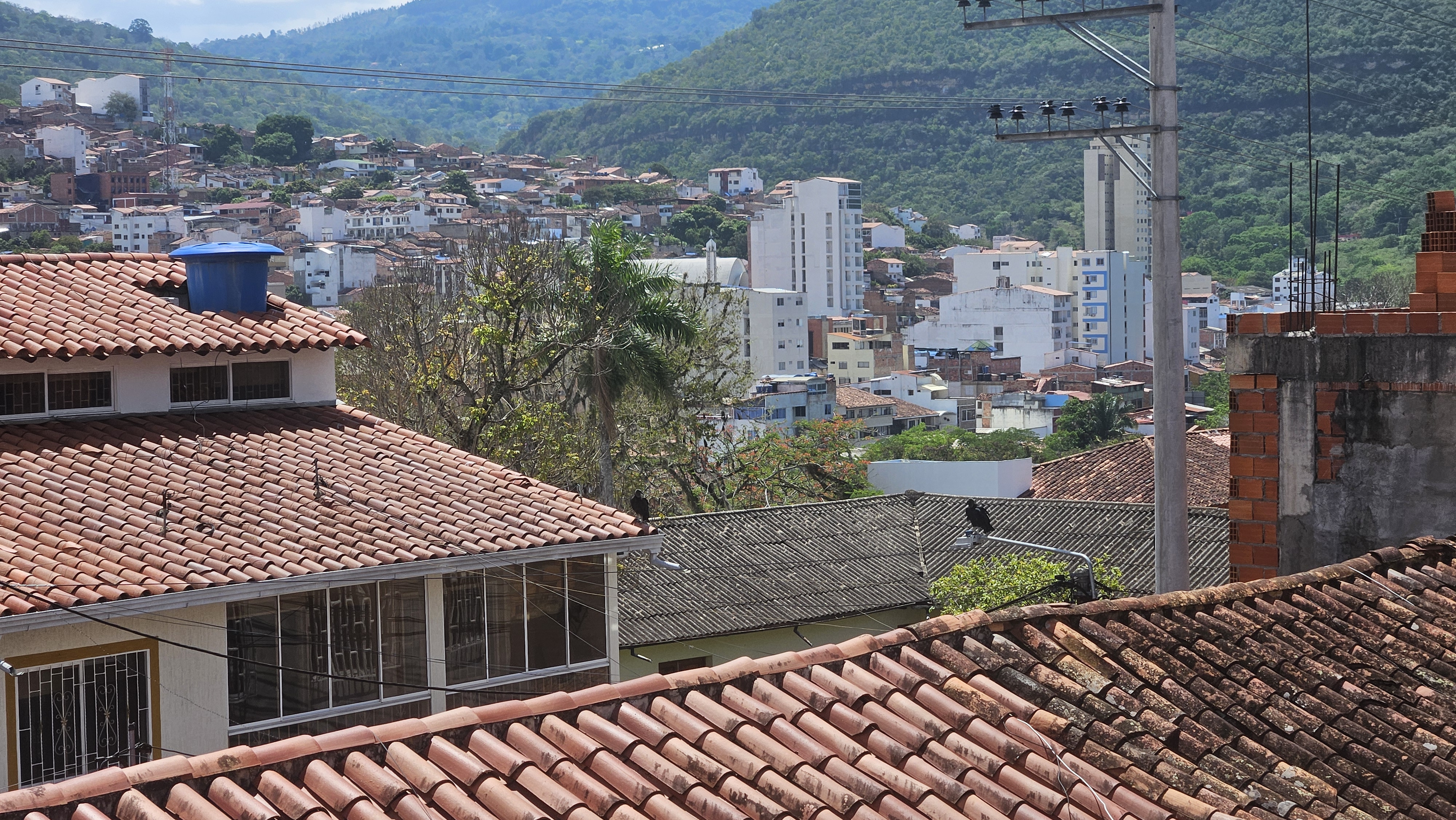
Return to Colombia: The Drama

If you follow my blog, you should know by now that I’m very candid. I don’t just share my travel tips and destinations. I also share my life, my insights, my failures, and my revelations.
3 weeks ago exactly, I came back to Colombia with great expectations. There was a lot to look forward to: a birthday, a baptism, and a wedding. Wow, all that was missing was the irony of a funeral. And, in a metaphorical sense, that’s what I got.

But first, some context. The first week of January this year whilst sitting on a plane minding my own business, I met someone. I fell asleep on him, to be more exact. Snored and drooled on him. And felt completely mortified. Not because I thought anything would happen with this person, but because I would never want someone to invade my space, and there I was, all up in a stranger’s grill. Looking disgusting.

All the same, I was exhausted because that was day following a night sleeping in the Atlanta airport. I had woken up after about 4 hours of sleep and groggily taken my flight to Florida, then got on the next plane to Cartagena with the intention of making up for the sleep I lost.

When I finally came out of it (after the plane landed and abruptly jolted me awake), I realized something bewildering in the state I was in: my earbud had fallen out of my right ear. The same ear that had been leaning against the guy on my right. Now, I didn’t want to cause a scene, so I tried to look around as casually as possible, but when it wasn’t in my seat or by my feet or anywhere around me, I started panicking.

That’s when my neighbor spoke up. He helped me find the earbud, and we started talking organically. That never happens. My first thought was: How can I make sure this conversation doesn’t turn into awkward small talk? And before I knew it, he was telling me about the sabbatical he’d taken for his mental health, and I was sharing the similar experience I had when I decided to leave Colombia.

There was a transparency, an understanding. A spark. As we got off the plane, I started walking slowly to not cut off our conversation. When finally we split up, I couldn’t help but wonder if I should have given him my instagram – and as if he had read my mind, when he got out of the bathroom, he came back to the line (his line was shorter because he didn’t have to go through immigration) and asked me for just that.
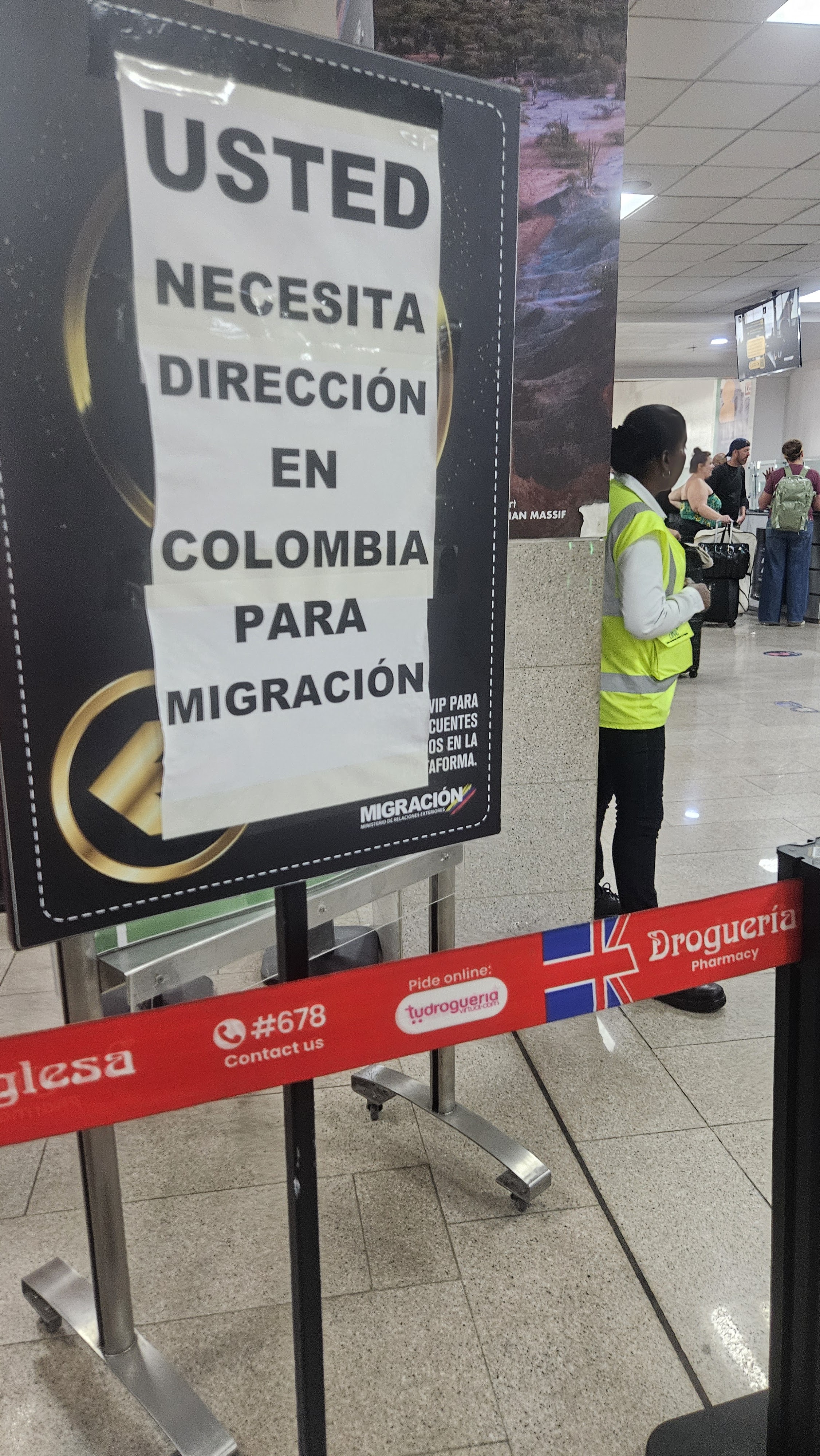
Random point of interest: Colombian immigration now expects you to provide verbal confirmation of where you will be staying while in Colombia.

Of course, my eyes lit up. But I still didn’t expect anything. We added each other, and I scanned his grid. I liked what I saw; he wasn’t someone extravagant and fake. He had few pictures and most were with family or traveling. Shortly after that, he texted me saying he had gotten out already and offering to give me a ride to my hotel. I had told him I was meeting a friend, and she came to meet me. I took him up on the offer.

The look on my friend’s face when I told her some random guy from the plane offered to give us a ride was priceless. But I trusted my instincts. And from that moment, we stayed in contact for 4 straight months. About a week later, he visited Valledupar, we met each other’s friends, and spent a weekend getting to know each other in person, taking it slow. Then 2 weeks later, we arranged to meet again when we were both in Bogota and spend a whole 9 days together.

I guess it’s strange to say we were taking it slow with all the talking we did and all the time we spent together, but that’s really all it was. There was a mutual respect for boundaries that I found refreshing. The second time around, we opened up even more about traumas, expectations, the past, the future… Let’s face it. I’m 34 years old. There’s no way I’m interested in an extended “talking stage.”

But now, I’m left wondering what qualifies as wasting time if you define your desires quickly and things still end shortly after. Well, you don’t waste as much time. The transparency is something I will definitely take with me. But still, my mind can’t separate and detach, even if I’m just getting to know someone. The more I fantasize about the future, the harder it gets. Finding a middle ground is challenging for me.

Long story short, our inside joke when discussing the future was “TBD” – nothing was certain, but we were okay with that. Things happen as they should, and time always tells.

I went back to the States with my plans to return to Colombia already clear for the aforementioned baptism/wedding. As our communication remained consistent, we decided to plan a trip together. We both agreed that you can’t fully know someone from afar, so what better way than traveling together? It’s true and proven by my previous experience travelling with friends and ex-partners that you really do see everything clearly about the other person when you travel with them: the good, the bad, and the ugly.

Spoiler alert, but I really was banking on this experience not ending up in the ugly or bad category. We made a google doc together. He likes clarity, and over the years, I’ve also grown better at planning ahead, budgeting, choosing accommodation, transport, etc. I quickly put together the first leg; that one was crucial because I’d be coming back just in time to celebrate his birthday with him.

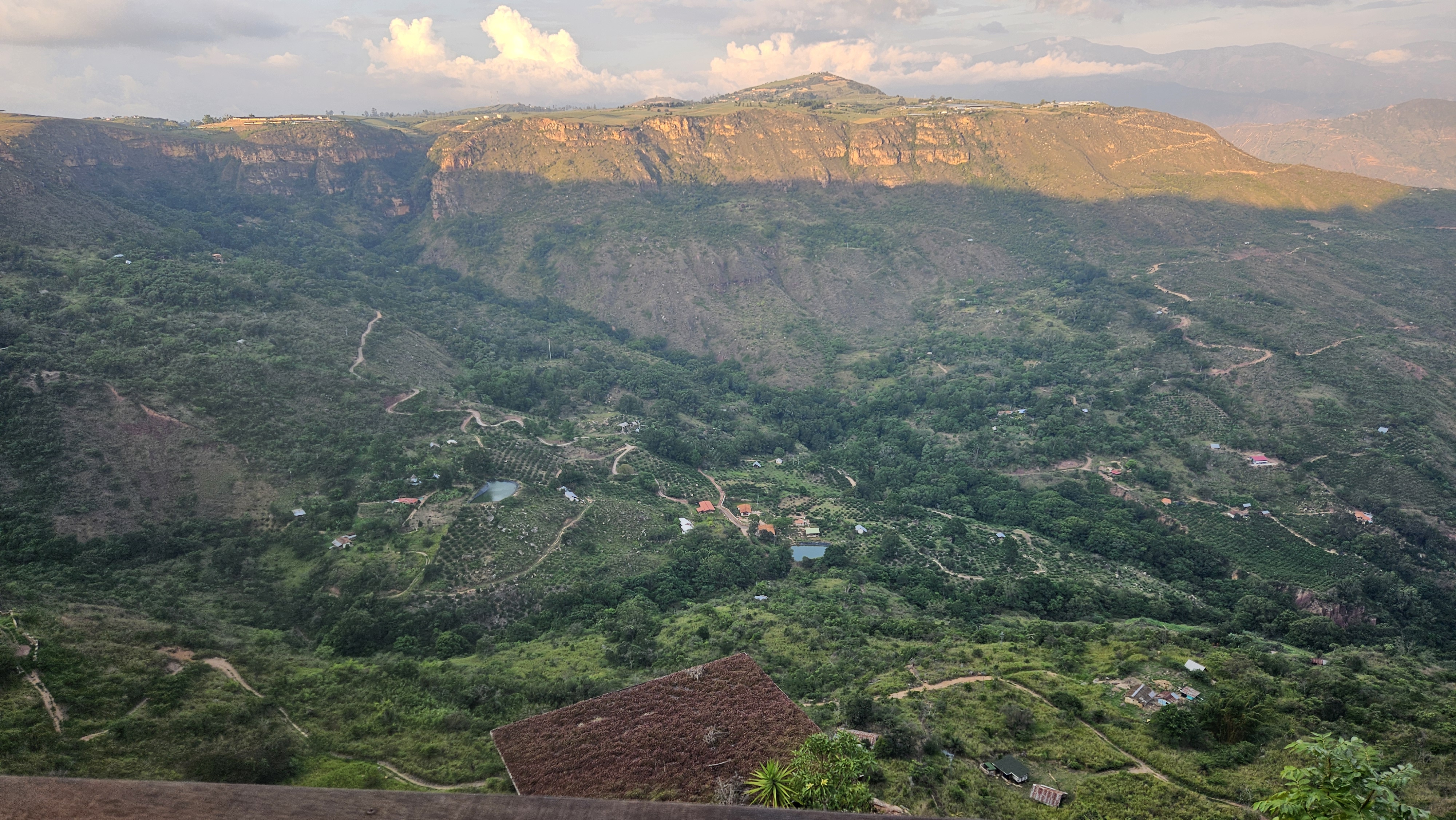
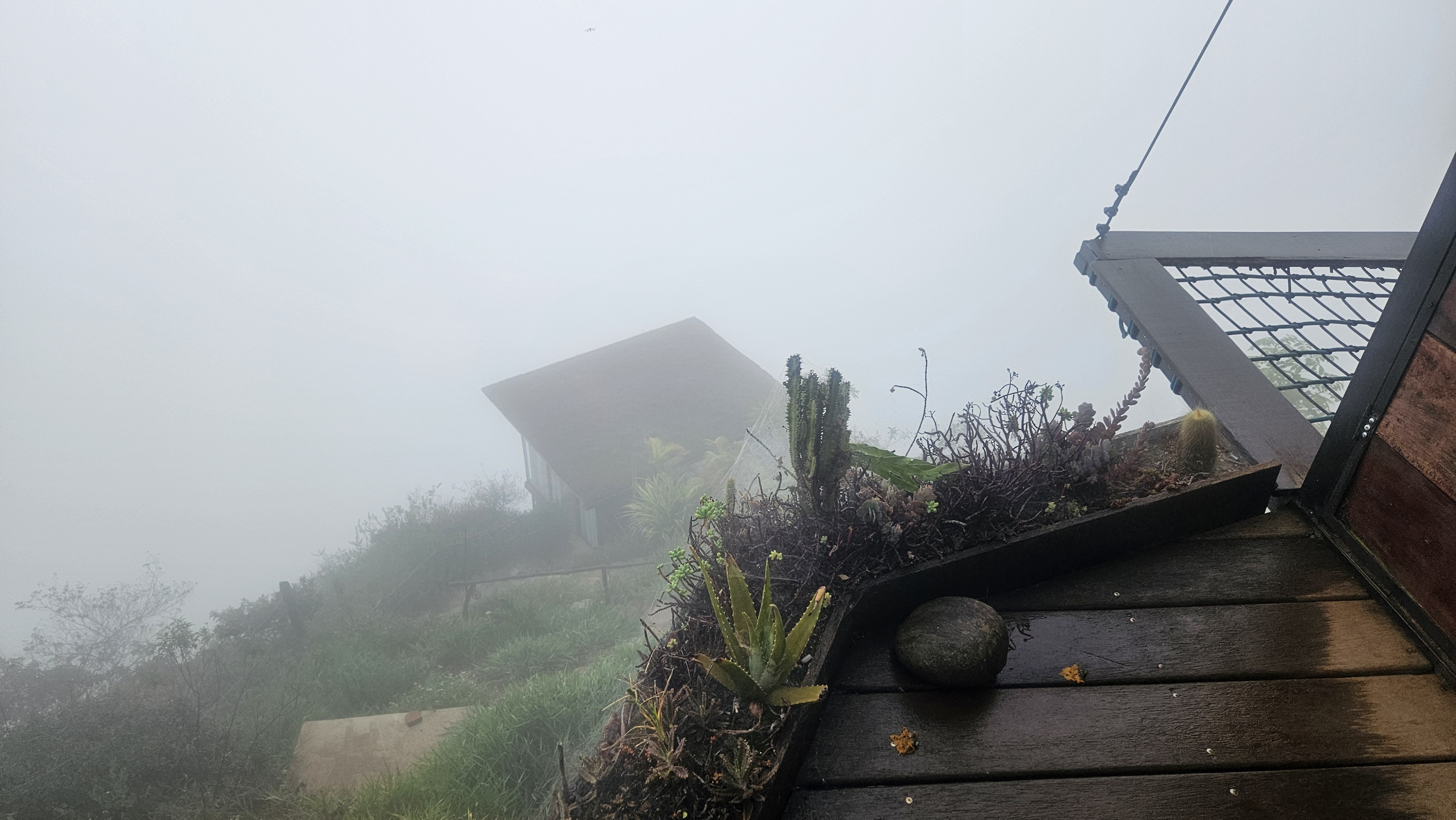
The plan went like this: 5 days in Bucaramanga staying in an apartment, a night at Refugio La Roca at 1 and a half hours from the city surrounded by canyon vistas for his birthday, a week in San Gil, and from there, there were a few options, but we weren’t able to define it all because I didn’t have all the information about the baptism. Still don’t, except that I probably won’t be here for it.
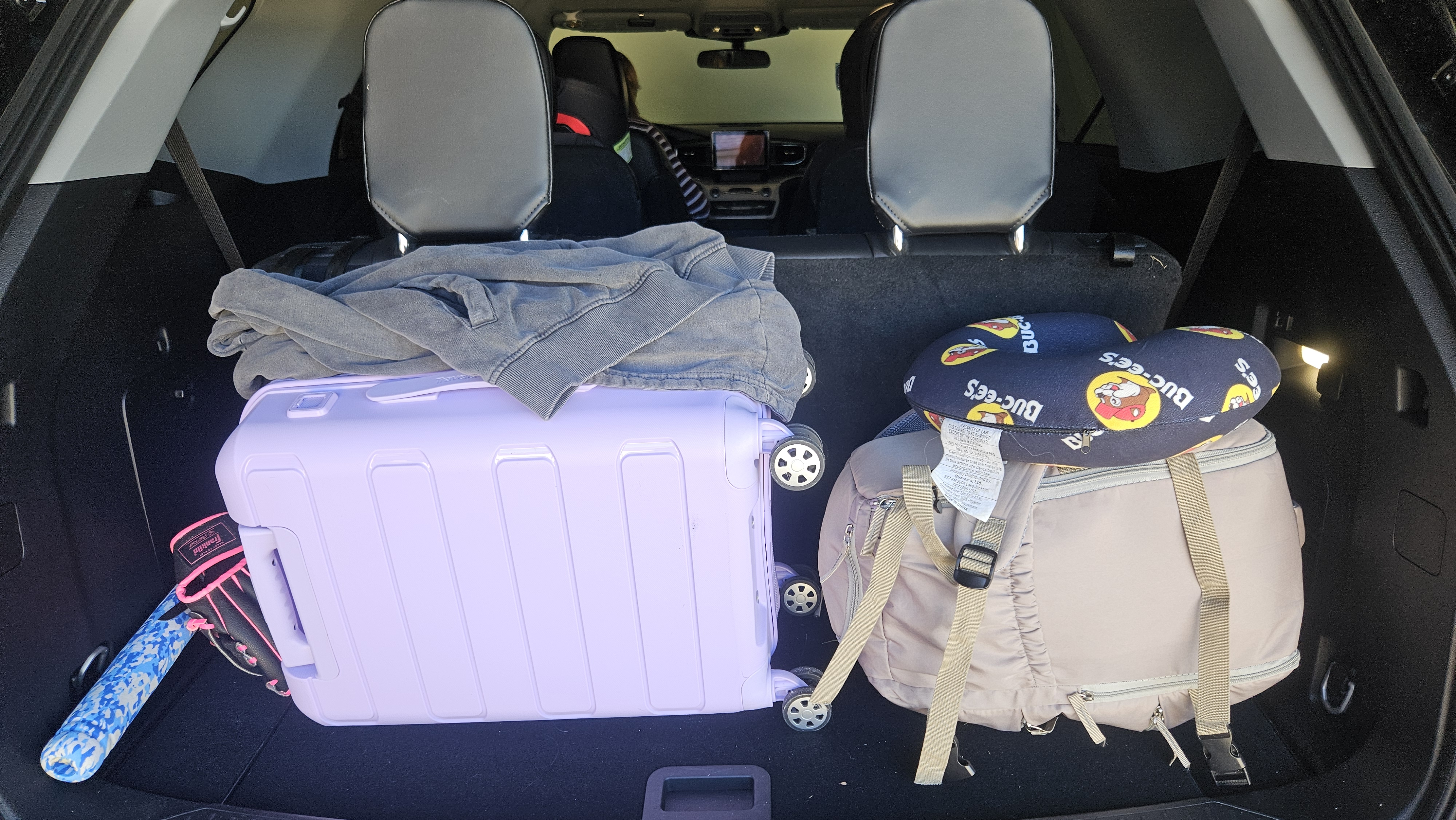
My luggage for a 3 and a half month trip – how’d I do?

A few flights later, lunch, and a taxi, and we’re on a 12 hour bus from Cartagena to Bucaramanga. The next day basically I got sick. I’ve only just really recovered from that icky flu (congestion still hanging on tho). Then, I felt the tell-tale signs of a UTI. Lovely. Just in time for his birthday in the middle of nature. I was weak, in pain, and yet still teaching my lessons and trying to do my part to make the trip go smoothly.
I got a uroanalysis done in San Gil and only got prescribed with antibiotics last week, so it was a long process of pain and discomfort.

The setup is to say, I wasn’t at all at my best. I was messy and feeling pretty unmotivated to establish my routines. I didn’t realize how this might be coming off, but there were moments. Like when I used his towel to avoid getting the floor wet. I do that with my own towel, but if I was in a dirty place, I’d usually dry myself off first. Still, I didn’t do that this time, he noticed, and it bothered him.

Since the end of January, he had already expressed that the way I chew (especially when I’m tearing into something out of hunger or enthusiasm) activated his misophonia. I have misophonia, so I could understand that. But it still kept causing trouble. When he first told me it bothered him A LOT, I’ll admit, my thought was DOOMED because I know it’s an unconscious habit that would take me time to improve, and if it was that distressing for him (I think of how partners that snored or smoked affected me), then even a small thing could be a dealbreaker.

Still, we both were able to discuss it, and after quickly processing the feedback, I turned off my black-and-white thinking that he would never accept me and instead chose to think proactively. We came up with a code for him to remind me when the smacking was obnoxious.

2 months apart, less than 2 weeks together again, and we’re sitting at a table in Gringo Mike’s talking about his conflicting feelings about our future. The past few days had been tense, but it was a slow burn.
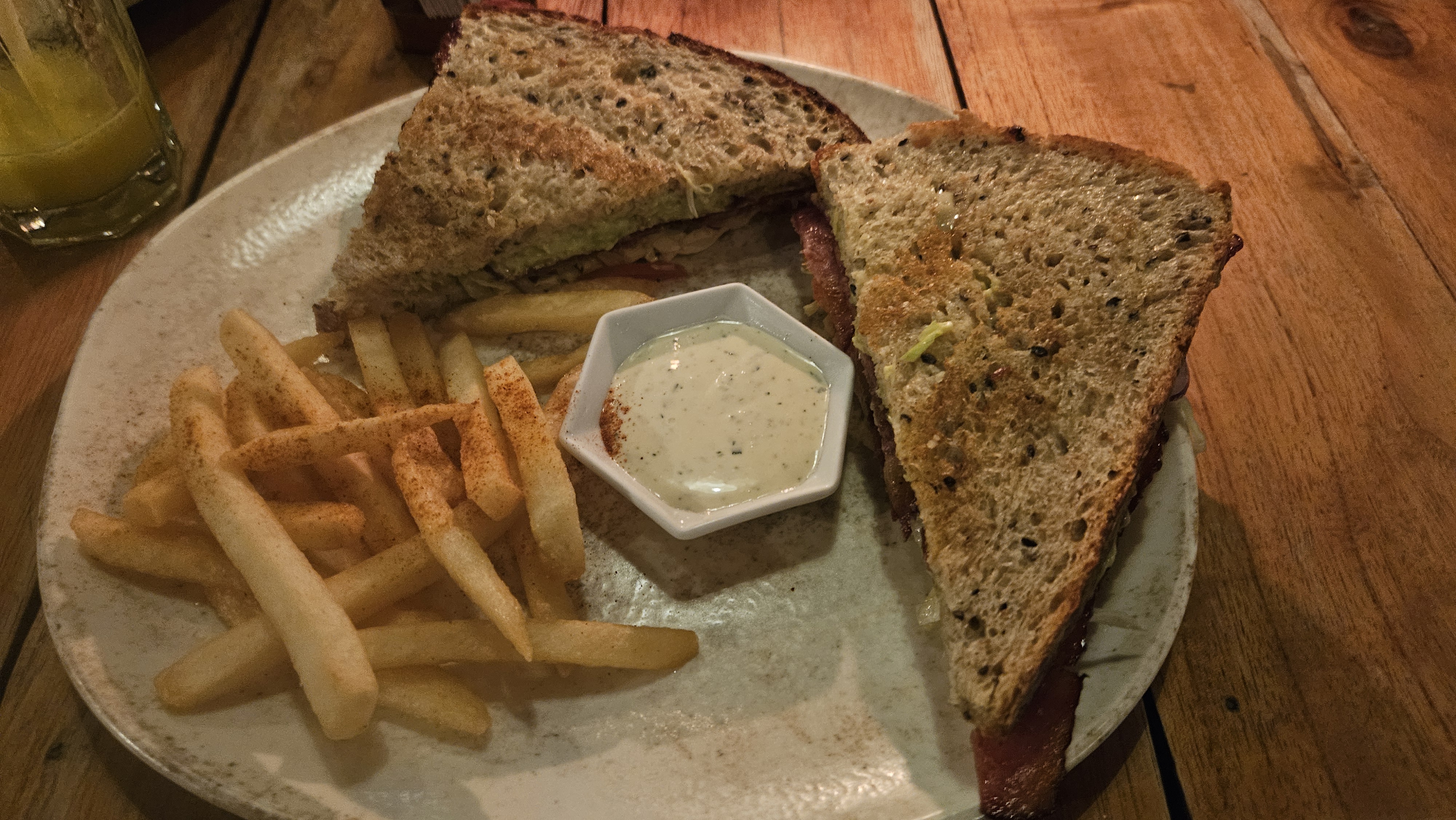
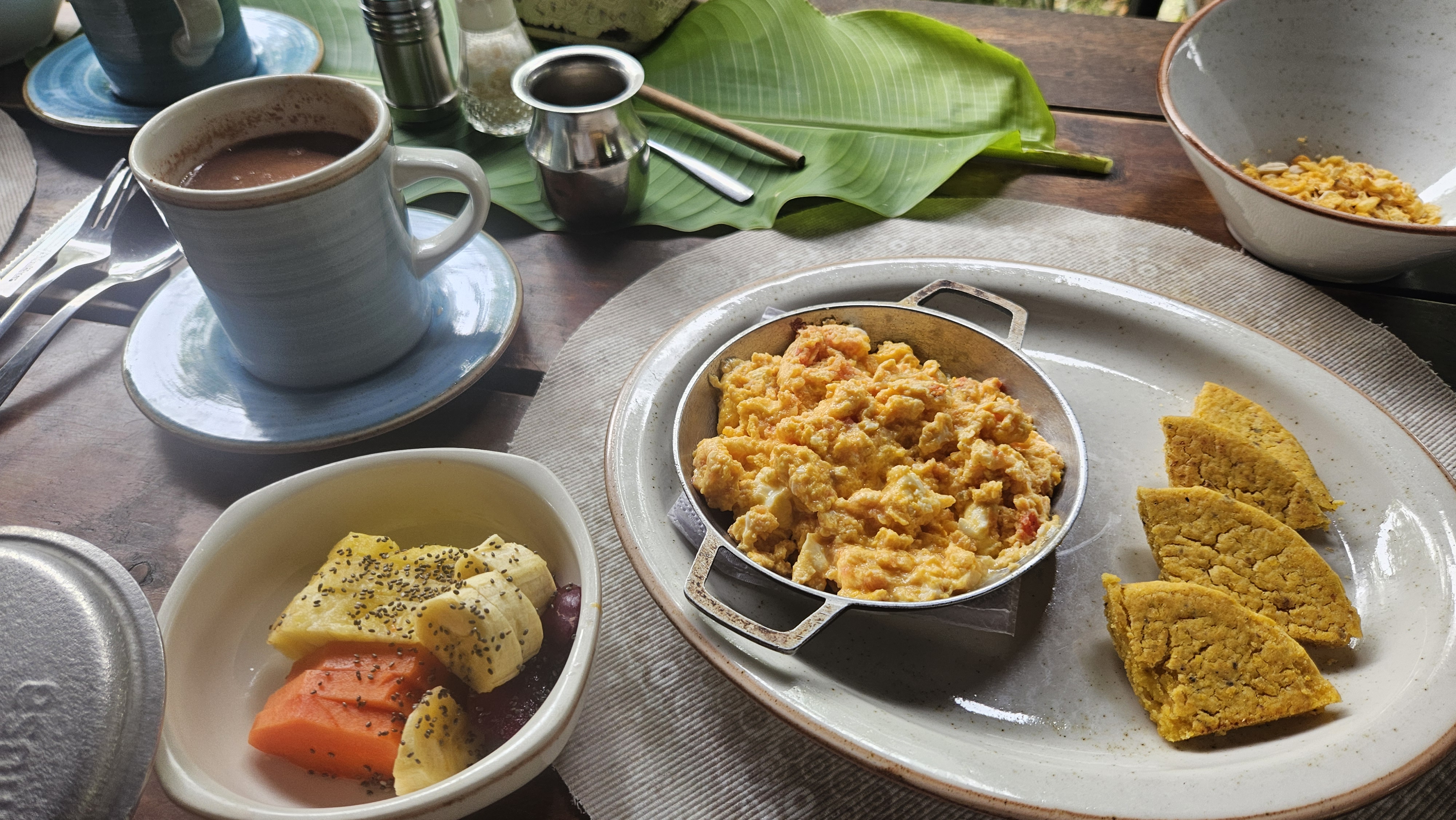
The Last Supper in question

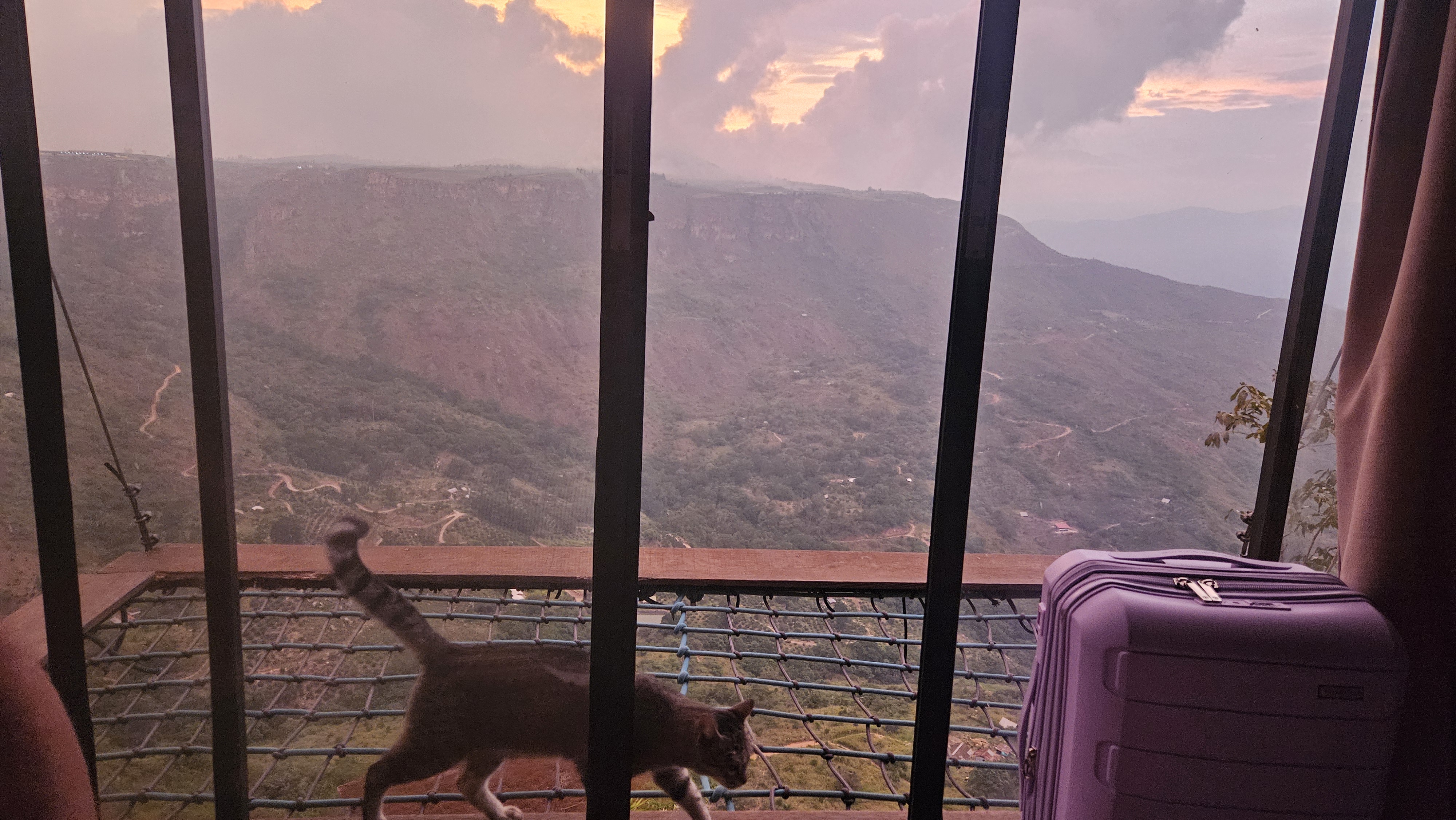
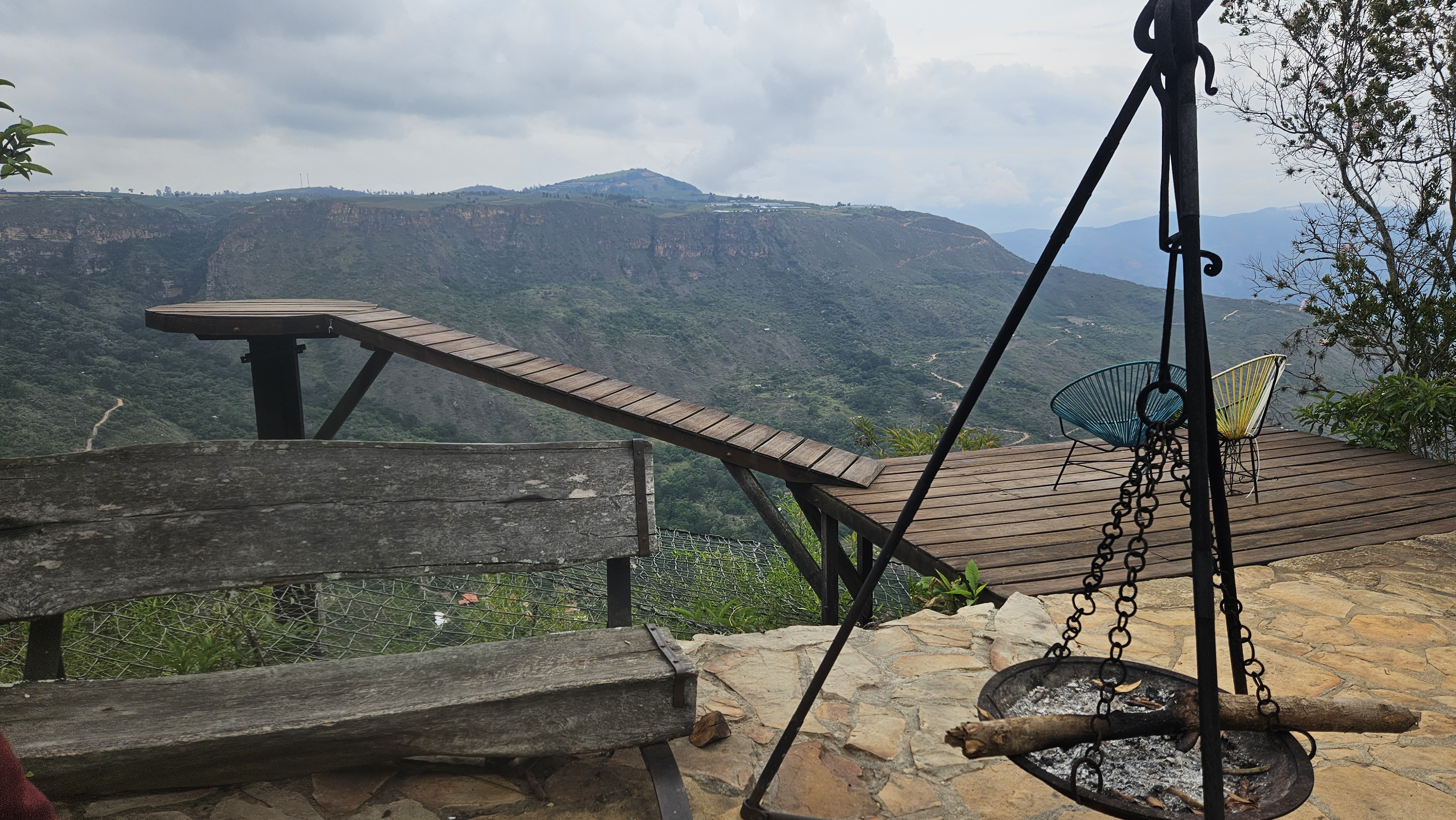
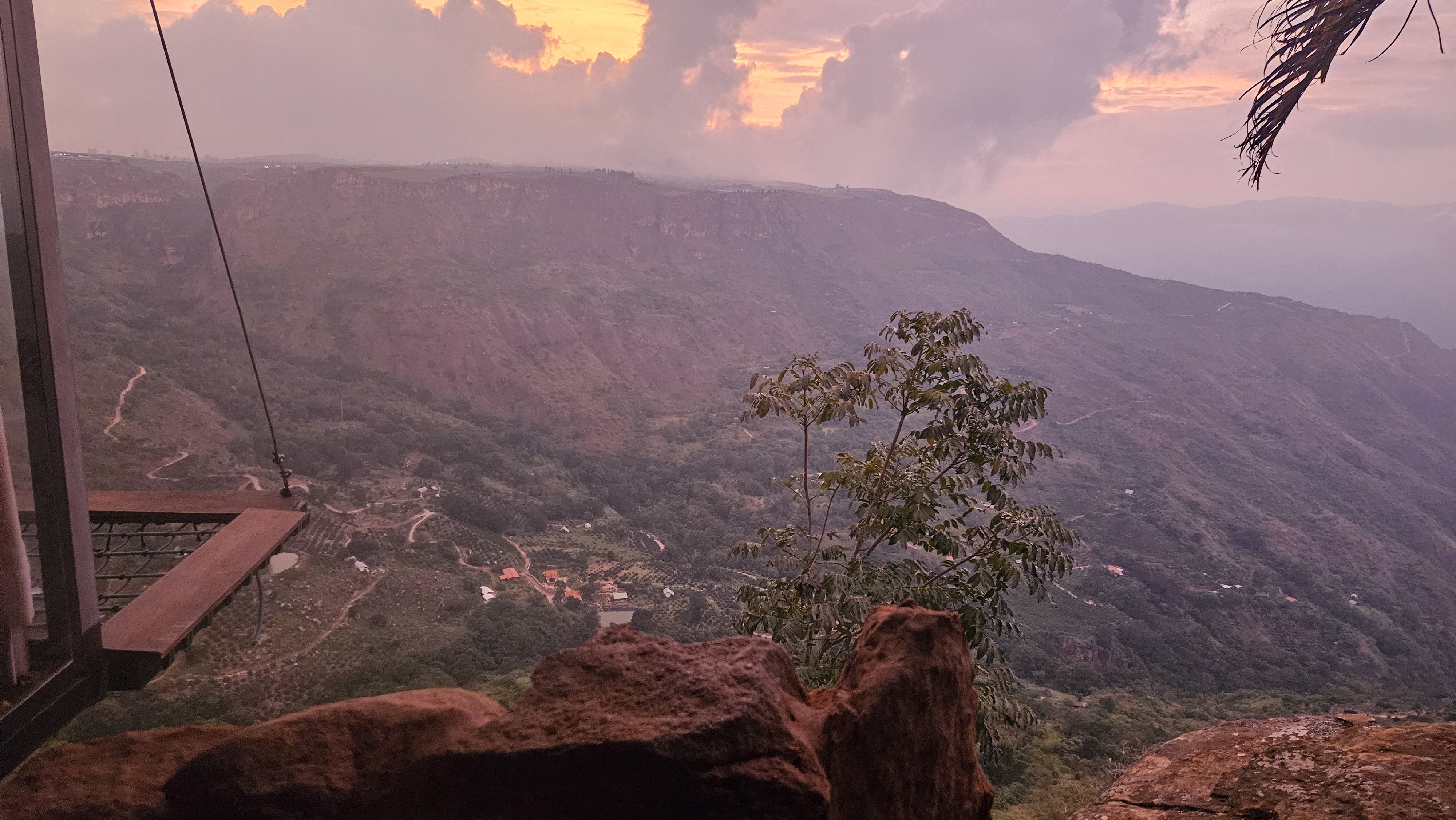
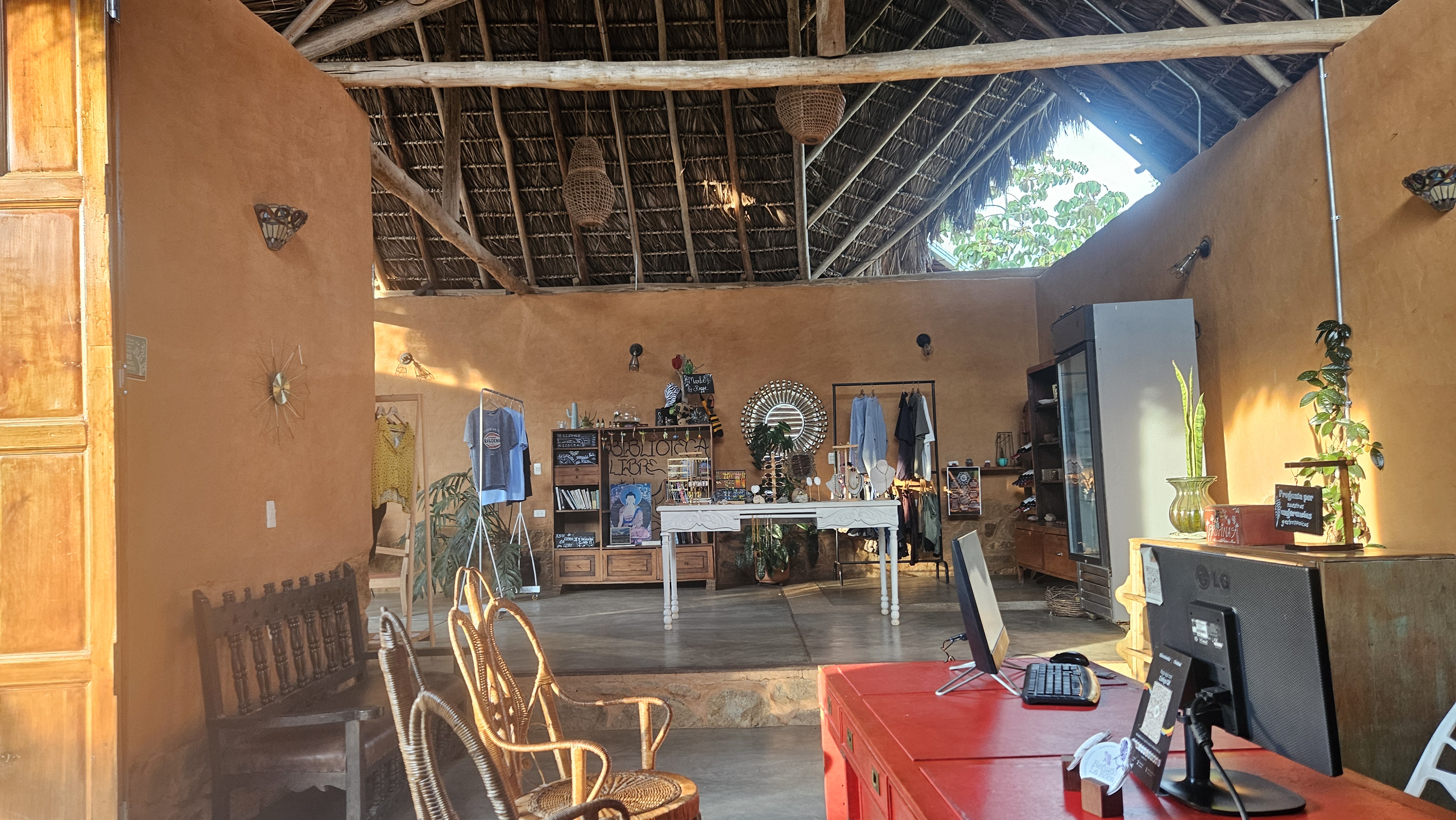
There was a paro (road blockage caused by strike) in Santander, so we ended up spending 3 nights instead of one in Refugio. The staff was lovely to us. They gave a generous discount for the nights we were stuck there that even eliminated the cost of food we had consumed. The place was beautiful and utterly worth it. Cool air, stunning sunrises and calming sunsets. I had the room decorated for his birthday, and they had gone above and beyond, covering the bed and floor with flowers and providing a moist, delicious brownie and a bottle of wine. There was even a cat that came and snuggled with us every day. Plus, the internet was strong enough in the restaurant for me to get all of my work done in relative comfort.
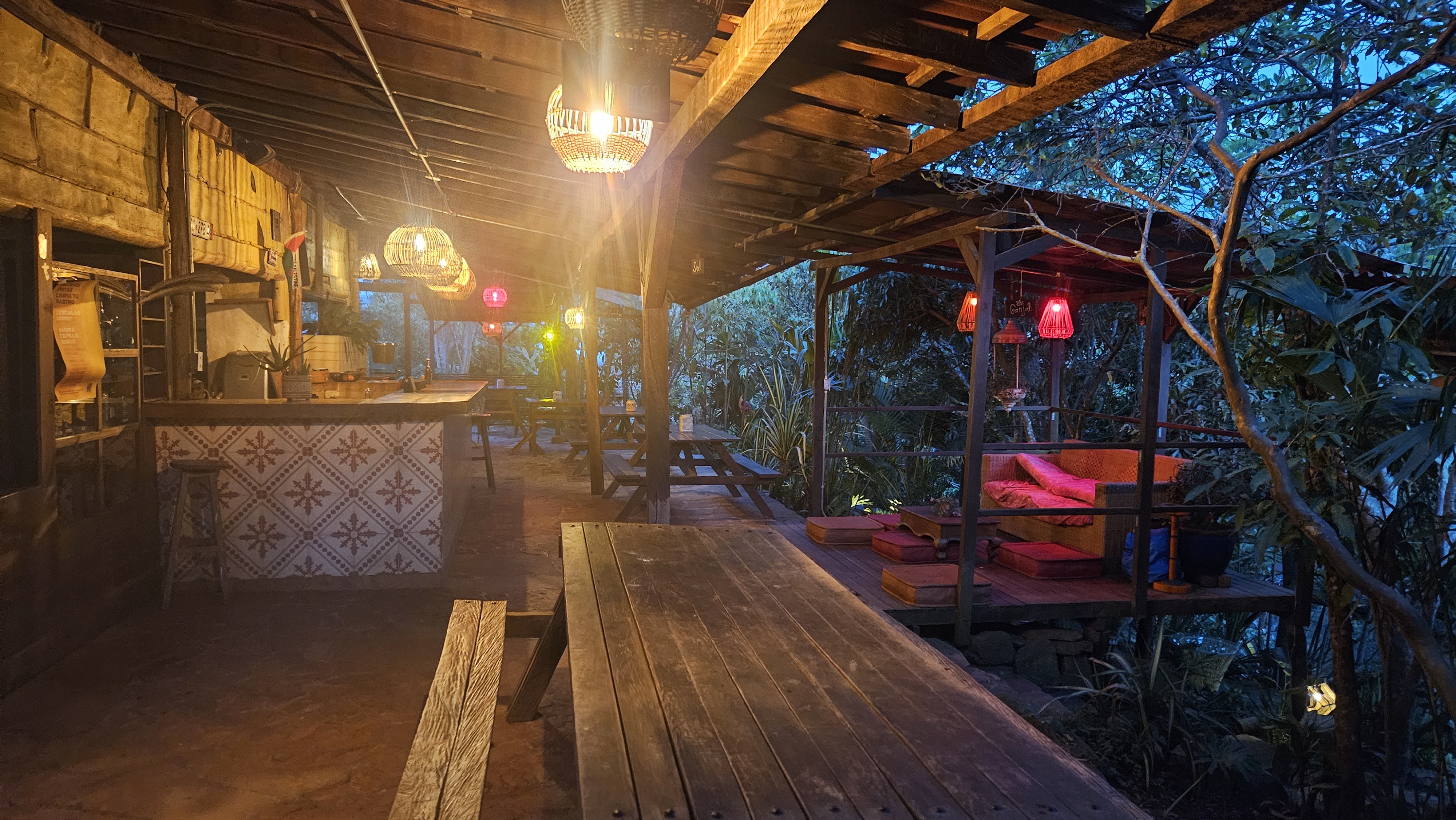
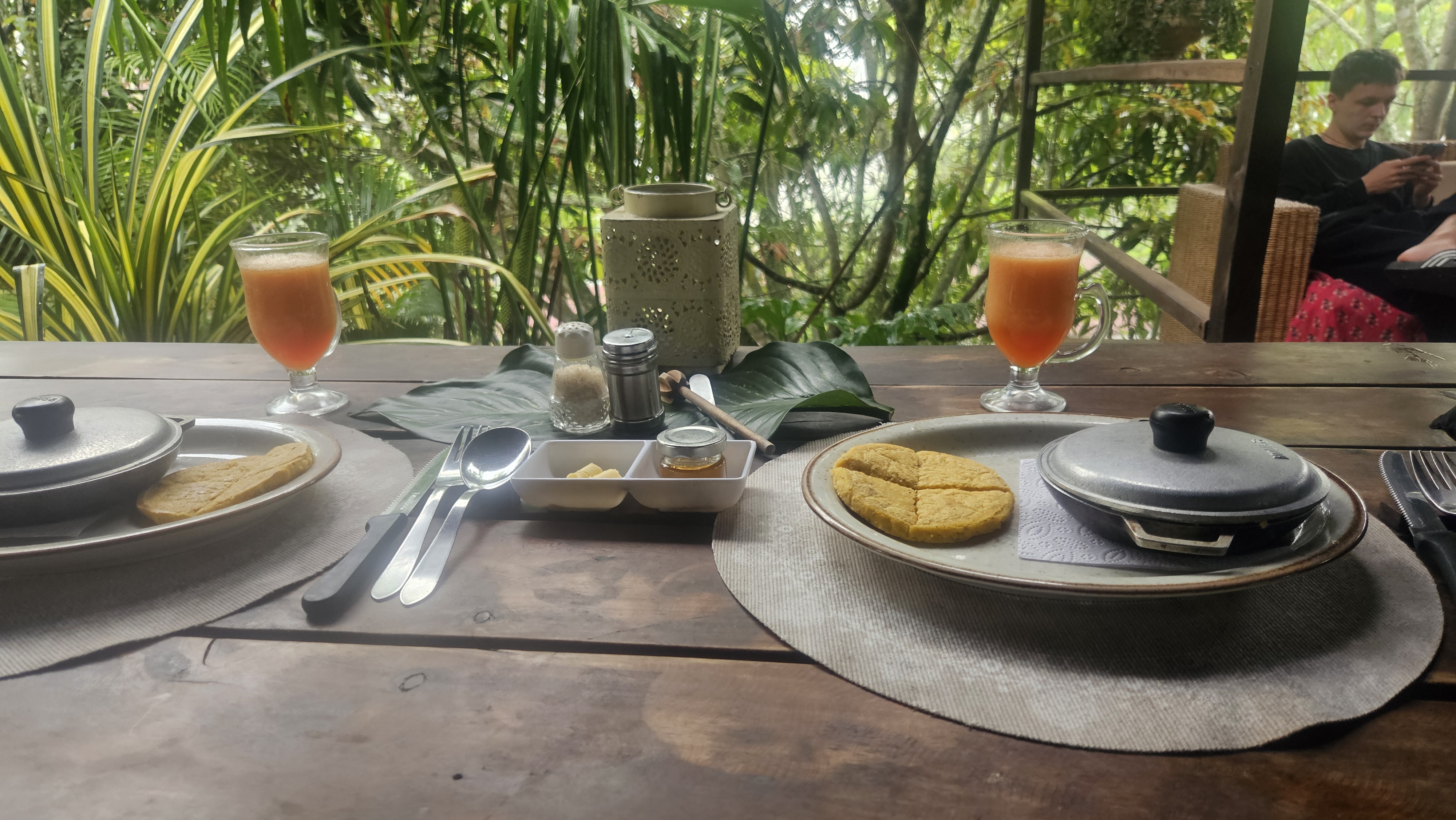
Yes, there were stressful moments. I felt shutdown because my body was in misery. UTI’s and nature do NOT go well together. I woke up at 5 am from the pain and had to just sit on the toilet or stand under the soothing hot waters of an outdoor shower complemented by a colorful landscape view. Yet, I was not okay. I felt lucky that he stepped in and helped make sure we got the discount and communicated proactively with the staff, because I didn’t have the energy to. The situation was frustrating, and I felt like a Colombian would be better received. In the end, everything went well. Crisis averted.
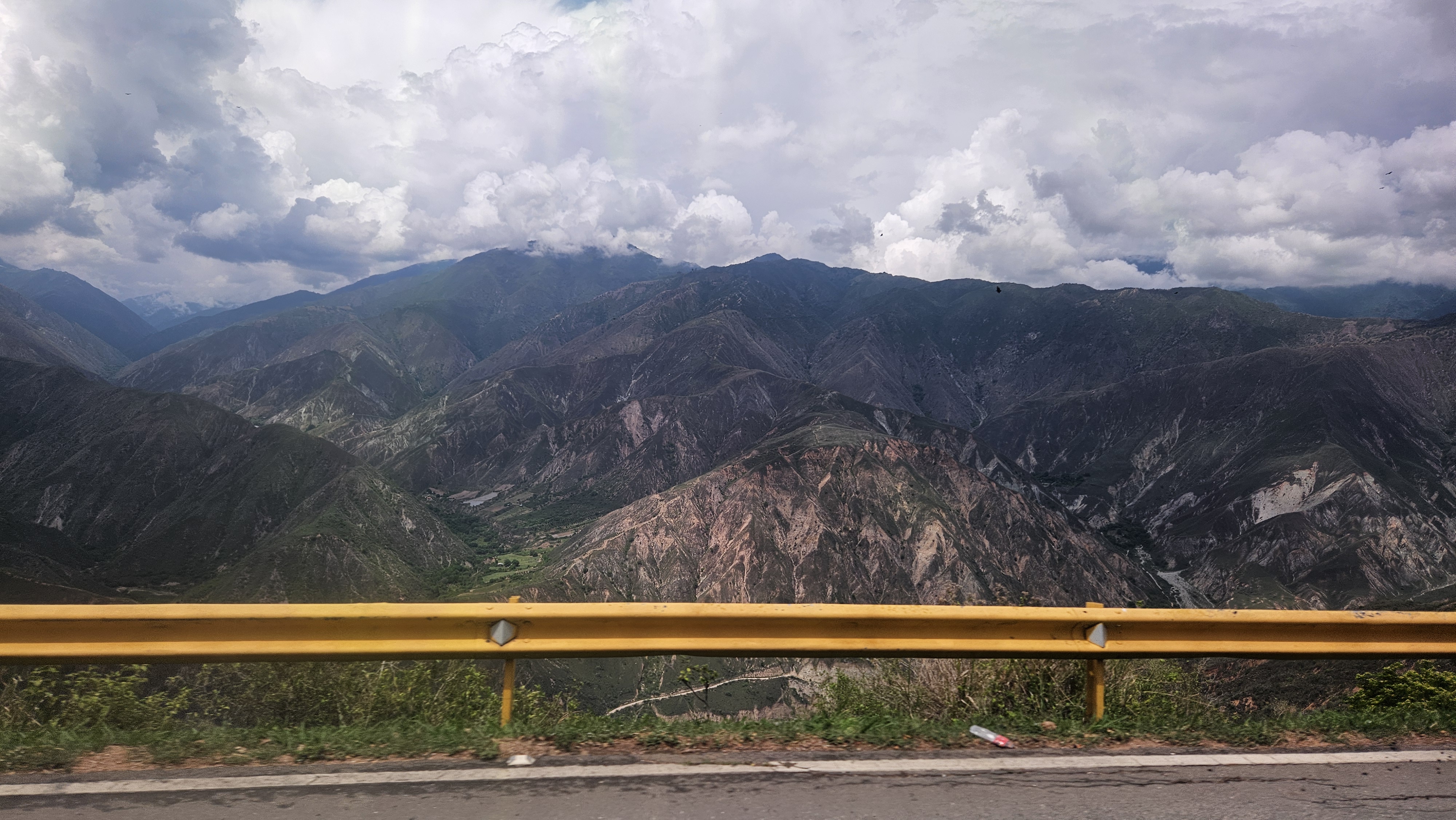
What did we learn? Well, we had a nauseating ride to San Gil. Those curves are BRUTAL. We both felt like shit. He was having trouble hearing. I spoke to him in Spanish, he asked me to repeat myself in English, and I took it the wrong way. I admit, my insecurities with partners using me to practice their English was my main hangup. That escalated quickly, and we were outside of Meraki boutique hostel arguing. I thought he’d called me an asshole (my hearing after that ride was also shit, apparently), everything happened fast.
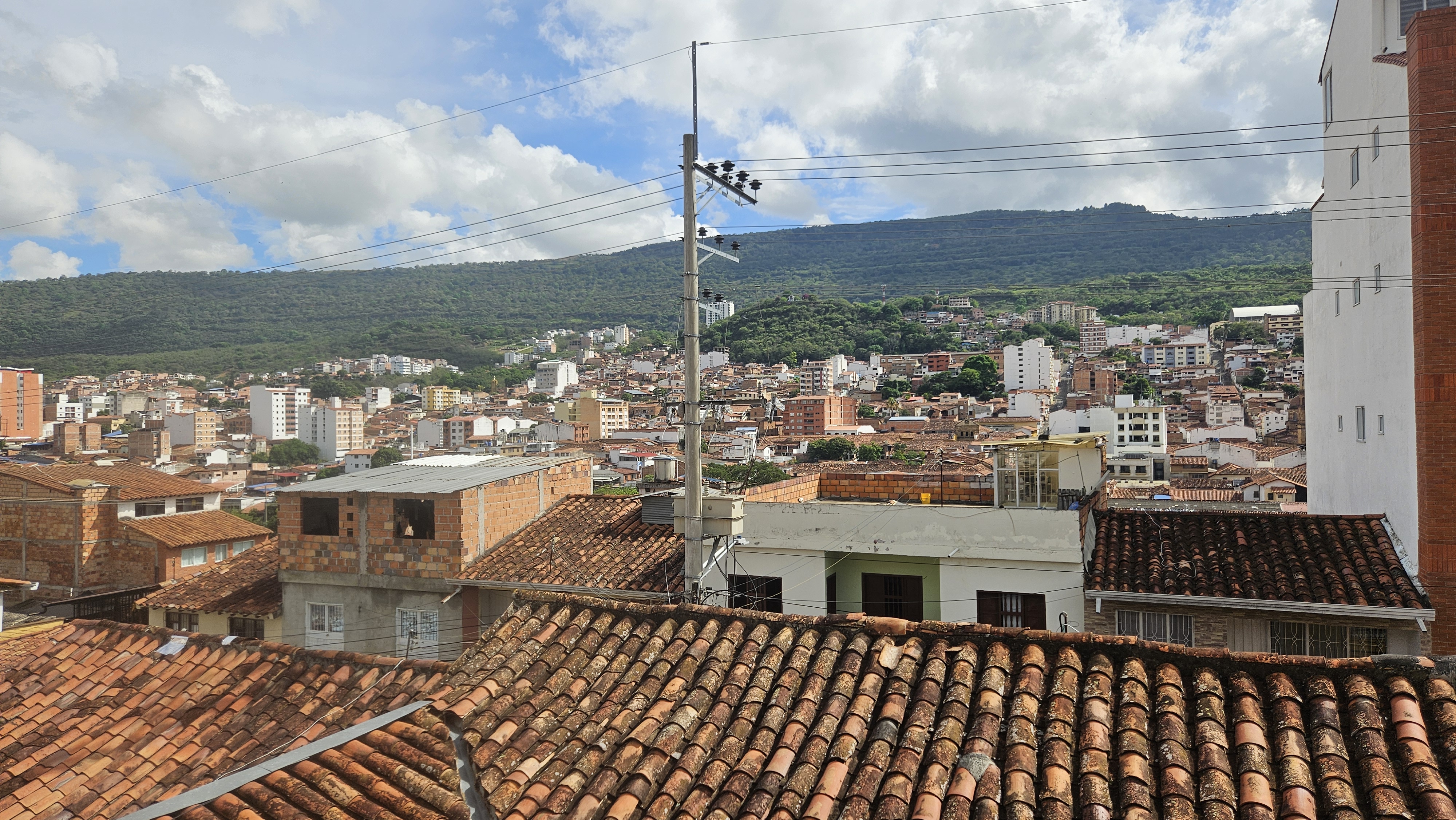
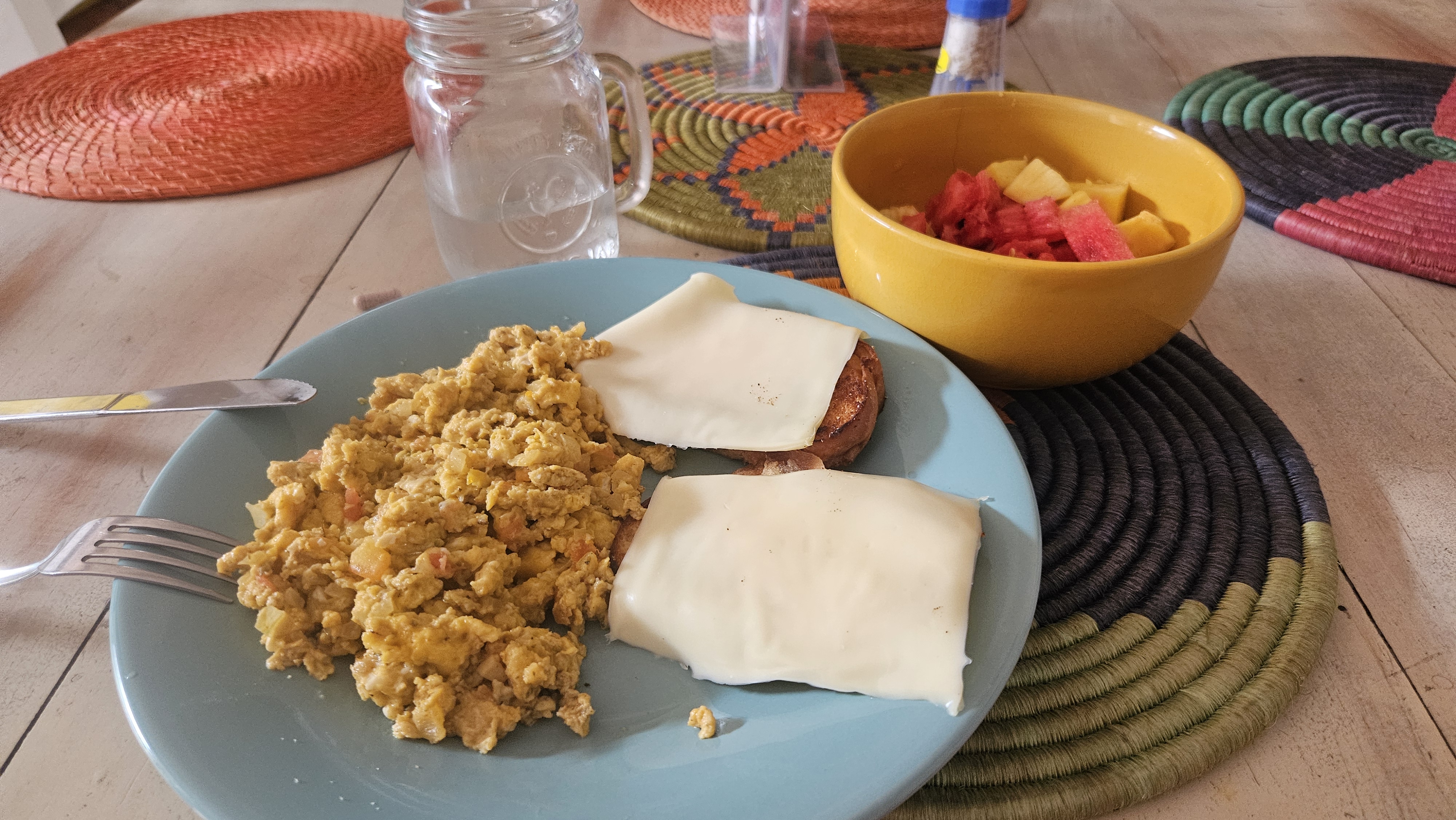
There it was. The cracks that showed. And then the next night, dinner, he uses our code word in an irritated tone just as I am opening my mouth to answer a question he had asked me – and I snapped. That was the beginning of the end. Hard conversations, irreconcilable differences – to him, that to me had just been motivated by stress and discomfort. No future. That was his conclusion. No use investing more time, energy, and money.
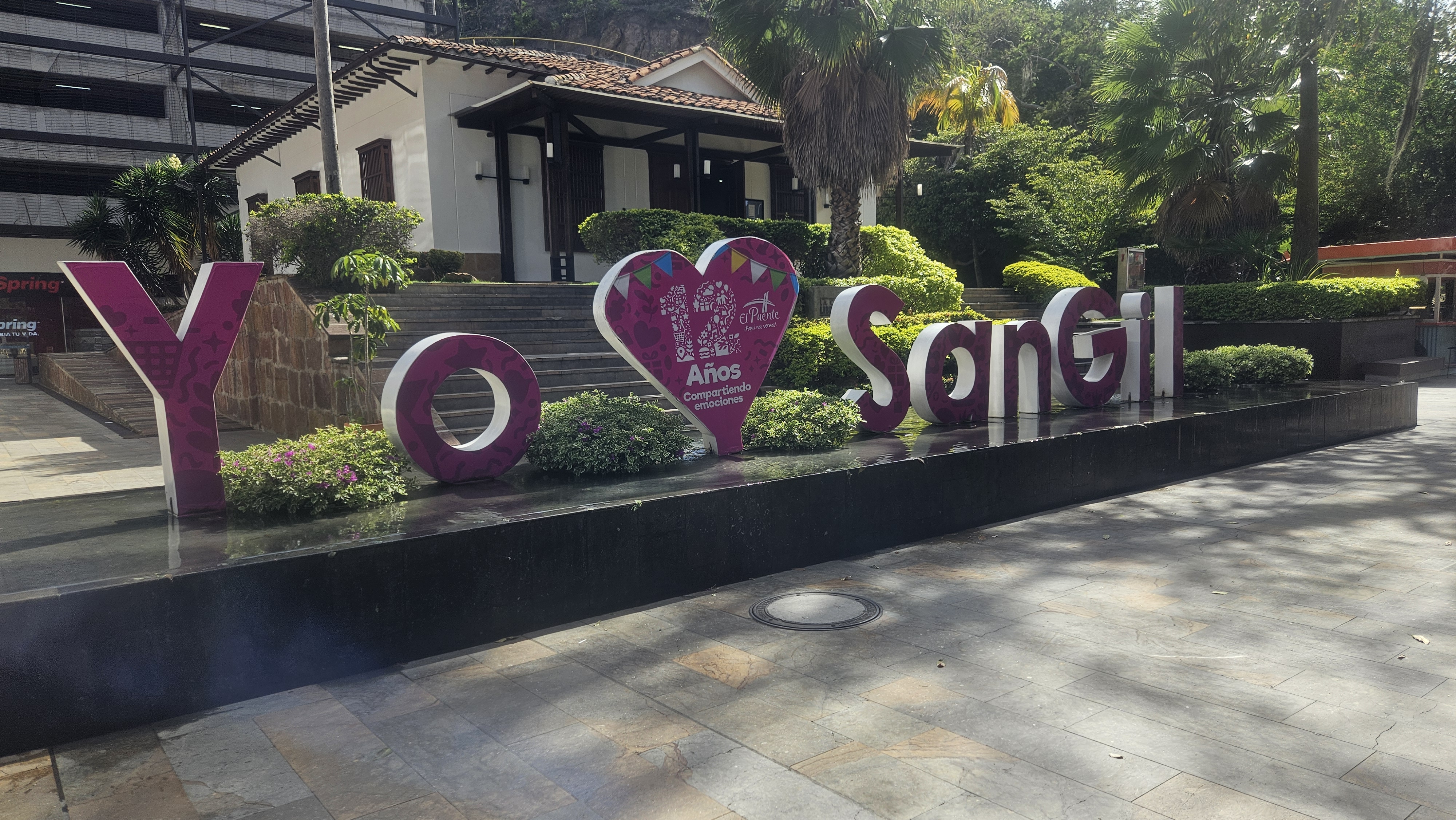
So, now I’m solo traveling, unexpectedly, and dealing with a breakup I equally was not prepared for. I thought that maybe things would go downhill slowly so we could handle it with grace, but it turned out to be a fucking avalanche. I’m still conflicted about his reasons, the way he spoke to me and decided to leave. I honestly believed him when he said he didn’t give up easily. I guess I underestimated just how serious his past trauma and triggers were. Because apparently, I activated all of them. And to him, no amount of time and calm to reconsider was going to change anything.

Takeaways? If you want to get to know a person, you can travel with them. It works. But be prepared for anything. Even ending up alone. Always have a backup plan in mind, an exit plan or an escape door for the other person. I didn’t think he would get tired of me first, and I think the blow that dealt to my ego has been the worst of it, but I’m trying to cope and treat myself with compassion.
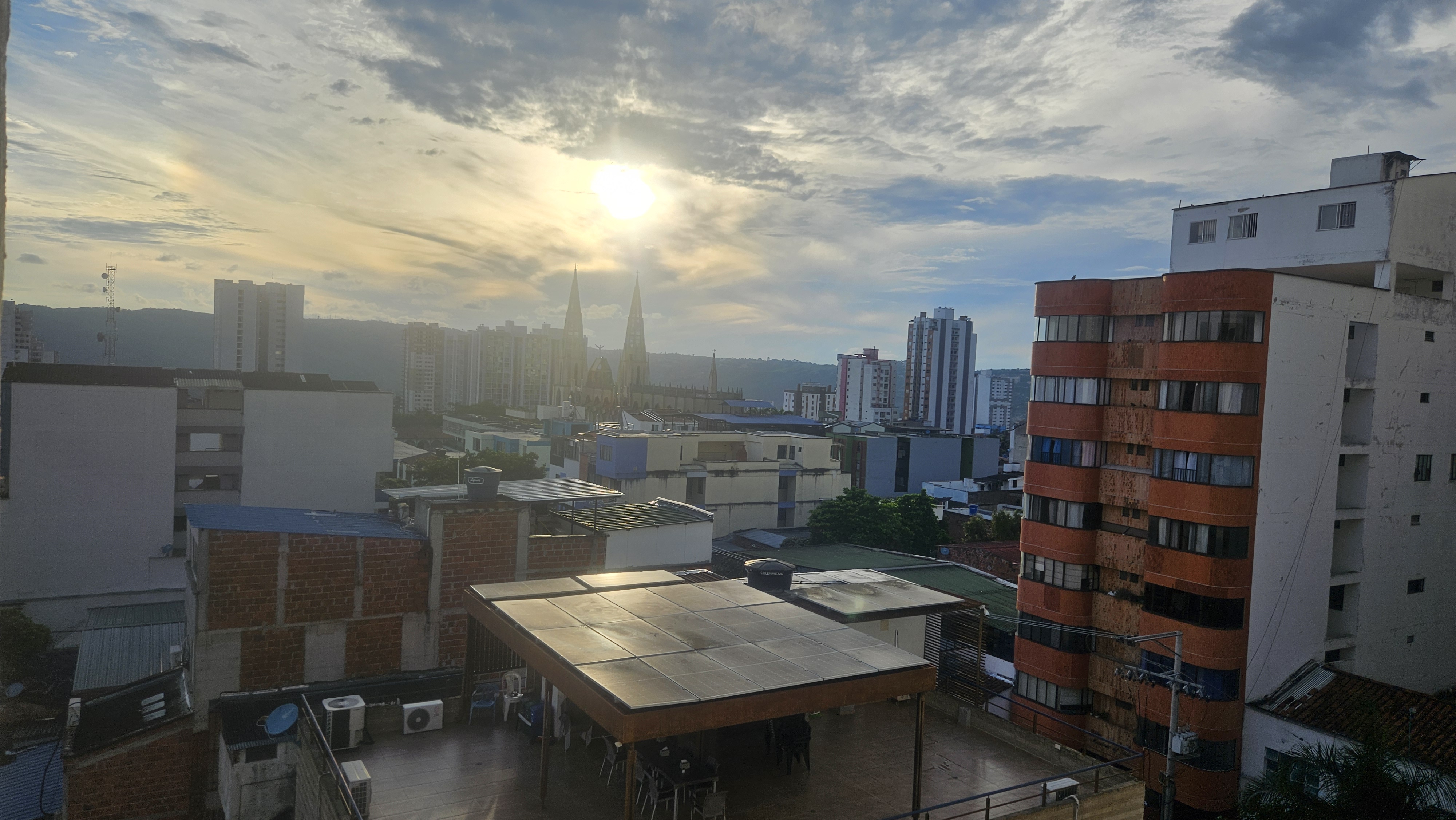
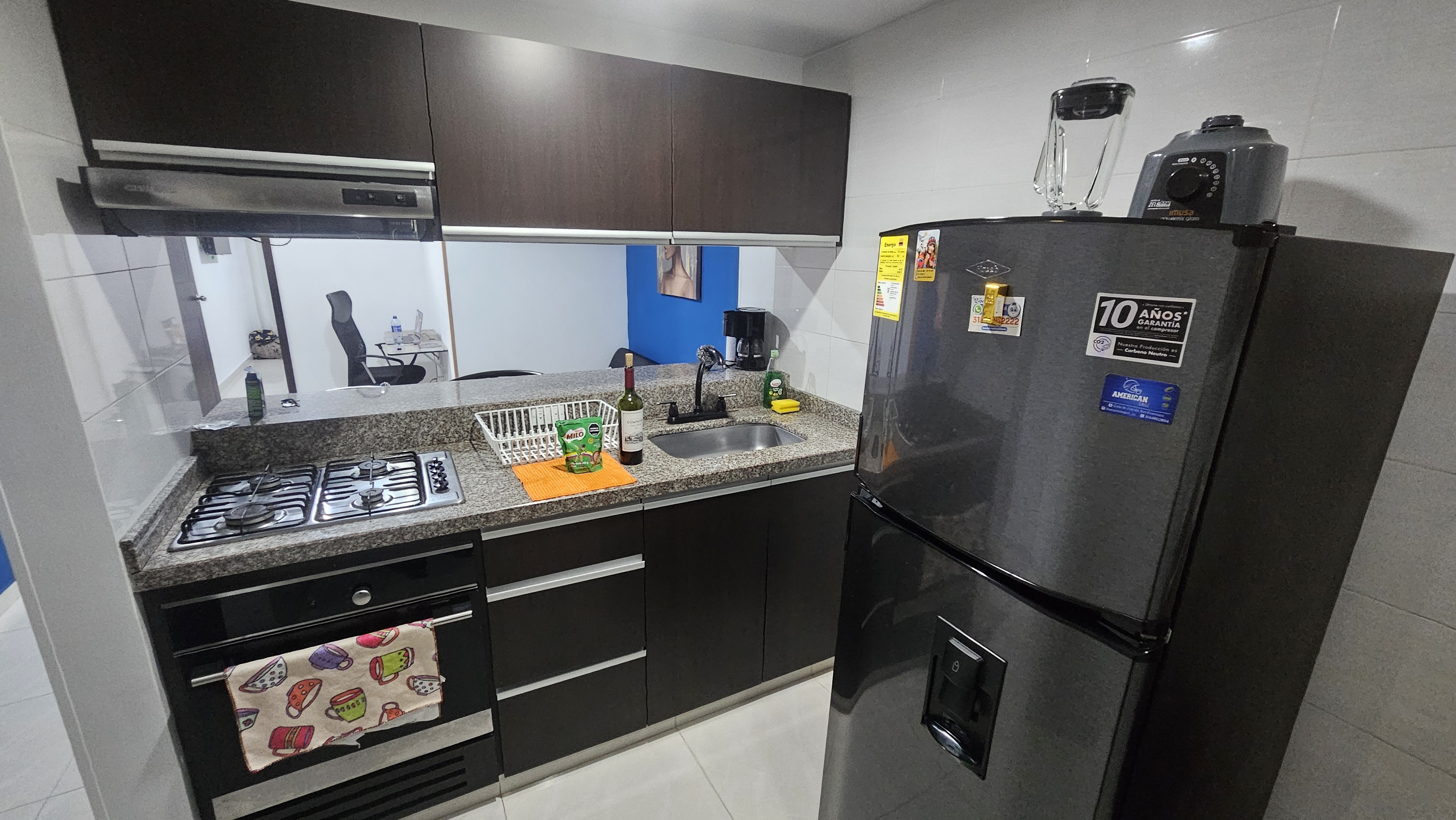
All of this being said, I have been working hard and trying to stay on track with my side projects. I’m almost done editing my next youtube video. My next move was to go back to Bucaramanga and get an apartment with a workspace – and it was my best choice. As much as staying with my friends can be convenient, I’ve realized I really love being alone. I don’t feel like I’m bothering anyone and able to keep things to my liking. I’ll be posting about my accommodations and budget – another reason I came back to Bucaramanga is because food and taxis are CHEAP here, it’s not a sprawling city like Bogota, but it has all of the luxuries, and the weather is practically perfect.
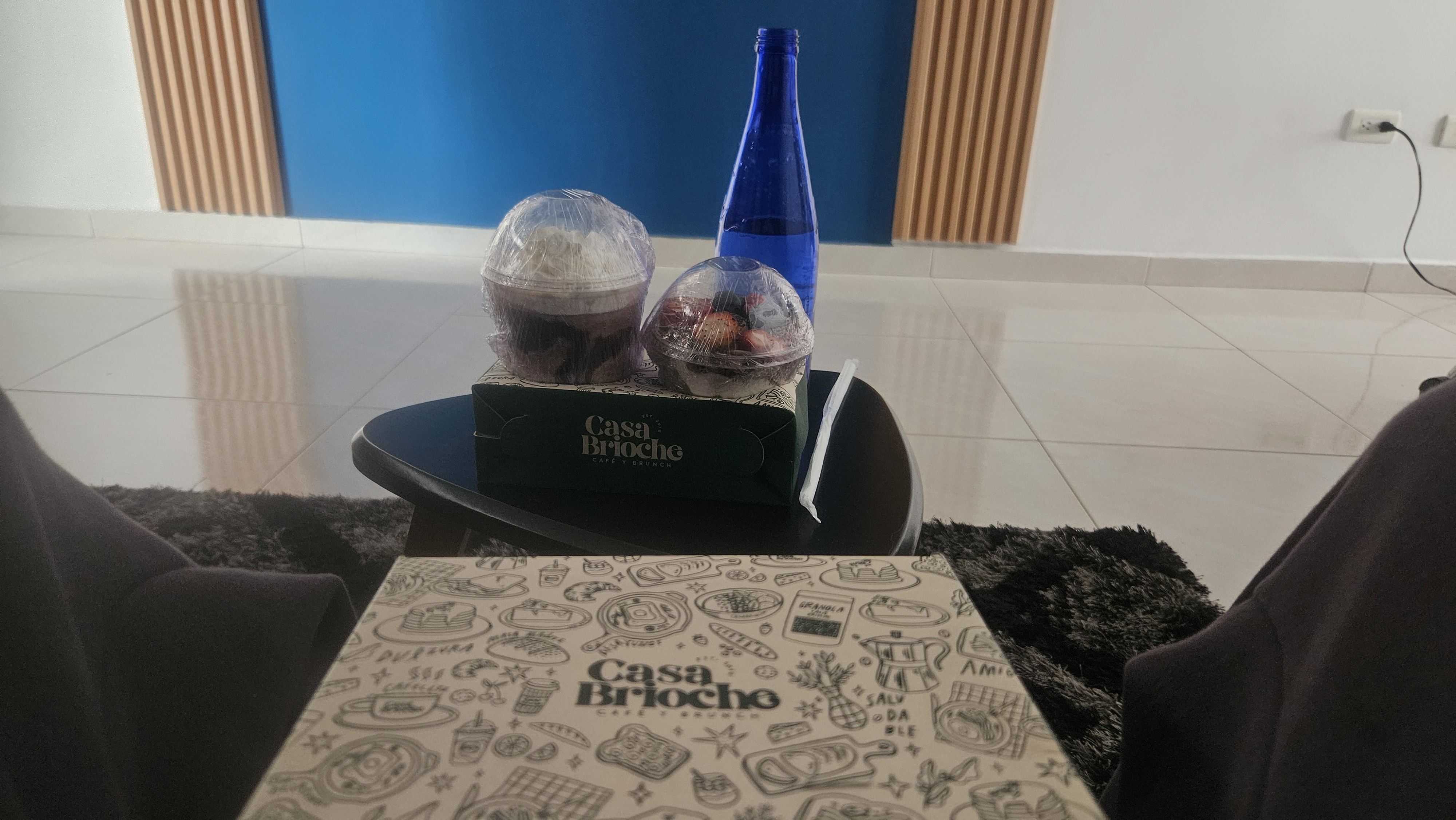
I’ll also be sharing insights and tips as I prepare to go from Colombia to East Asia. Korea, Japan, and Thailand, I’m coming for you! I just need this time to process… And I thank you, compassionate reader, for letting me vent and share my Drama with you on this blog.
P.S. The Drama reference is intentional: I saw the movie on Sunday, and WOW. If you like morally ambiguous, emotionally charged movies that challenge you, where you don’t know whether to laugh or cry, I would highly recommend it.

Your best friend is you: Part 1 (Translation)

Self-demanding, my worst enemy

There’s no better way to start than with the origin of 90% of all of my emotional woes: perfectionism and demanding too much of myself. In other words, my black and white, all-or-nothing thinking, 100 or 0 thinking. The profound conviction that I was never enough. That I always had to do a little more. I was even convinced that I shouldn’t celebrate or be happy about the accomplishments that I had invested so much time and effort into because I was just doing my duty. It’s what I had to do. So, automatically, without time to process what had happened, I had to continue being productive, reaching objectives, chasing goals. For example, if I managed to get good grades on tests, it wasn’t a reason to celebrate. I was just fulfilling my obligation. No matter how much blood, sweat, and tears it cost me to pull it off, I didn’t even feel gratification but rather a sense of spectacular indifference that made me shift my attention to reaching the next goal.

When I try to find the root of all this, I realize that one of my biggest concerns since I was very young has been to not disappoint others. Act the right way. That’s made me had a huge sense of responsibility and an extremely rigid and demanding mindset.

You know those horses that have blinders on both sides of their eyes to give them tunnel vision to keep them from getting distracted so that it’s clear what path they must take? Well, I’ve been exactly like that all my life.

As children, we observe what happens in the adult world, all of the problems and discomfort that comes with it, which is why we don’t want to add more fuel to the fire. Therefore, we force ourselves to be perfect little beings to not cause any trouble for those people that we love and admire so much. Or at least, that’s what happened to me.

Wanting to control everything in a world where nothing is predictable produces a tremendous amount of anxiety. It’s living and constantly trying to keep a multitude of factors and circumstances that escape us under control.

I’ve always believed that there was a sort of drill sergeant in my head that spent all day ordering me around, disregarding how I felt completely. “Don’t stop! You have to be skinny to be beautiful! You have to tell everyone yes so that no one gets disappointed. You have to be popular, be the best friend that everyone would wish to have. Be the best daughter, the best student, the best girlfriend. You must study to have a degree that makes other people proud. Give your 100% in everything, be super clear about everything, show self-composure.”

All my life spent repeating these mantras to myself, beating myself up, and talking to myself as if I were my worst enemy. My worst teacher or my worst boss. Little by little, this took its toll on me and, of course, on my mental health. Sometimes when I look back, I would like to hug that girl and tell her not to be so hard on herself. To not be so afraid. To not put so much pressure on herself. That it’s not worth it and isn’t going to be good for her. But I guess that everything that happened has also turned me into the person I am today. It’s something that I had to go through to grow and learn.

Allowing myself even the smallest margin of error was the same as failing. I had to always be the best in everything I did. I remember perfectly that when I started going to therapy years later, one of the first things that my therapist said was: “Cris, you have to choose what you truly value and prioritize it to try to invest the most attention and time you can. You have to be an 8 or a 9. But there are other things where you might be a 5 or a 6. And that’s okay. If you try to be a 10 in everything, you’ll end up nosediving to 0. Because there is no way that your mind and your body can take that level of pressure. Assume that you can’t be a 10 in all aspects of your life.” Her words managed to open my eyes. It seemed very simple, but it wasn’t. Because for as long as I could remember my thought process had always been rigid and closed off.

Sometimes we have to hit rock bottom to realize that the level of pressure that we are putting on ourselves is completely unsustainable. And that’s exactly what happened to me. The result of demanding so much of myself ended up snowballing into a stubborn anxiety. But I’m getting ahead of myself. I’ll go into more detail about this later on.

What I have learned for sure is that we are not perfect machines. Even if we sometimes feel that the world’s pace demands that of us, we are not. In the end, as my mother says, we are nothing more than little bags of chemicals, people full of feelings and emotions, not robots. We can’t always get to everything, we can’t be liked by everyone, we can’t always be in the best mood. We can’t expect ourselves to never make a mistake ever. It’s impossible. When you internalize that and accept it, you feel an enormous freedom, even if it’s hard at first. You’re human, and therefore, vulnerable.

And that’s not a bad thing. It’s an innate part of our condition. We have no reason to run from that vulnerability. That only hurts us. And the best thing of all is that the world will not end if we are a little imperfect.

Now I know that people will not stop loving me. I’m not going to stop pursuing my goals, and I’m not going to die either. Quite the contrary. Now that I recognize that vulnerability, I stop putting so much pressure on myself. I let myself flow more, resulting in being more myself and happier.

The next time you think about demanding so much of yourself and berating yourself in some way, ask yourself if you would talk that way to a good friend that is doing the best she knows how, that’s giving her all, that’s making an effort every day to live life however she can. You wouldn’t, right? Well, don’t do it to yourself either. Because ultimately you are your own best friend.

Dear friend, invest your time and attention in the things that you value. Accept that you can’t be liked by everyone. Talk to yourself as you would talk to your best friend. After all, you’re going to be on this journey with yourself until the last day of your life.

We cannot expect perfection from ourselves, much less demand it. This chapter could have been written by me. I’ve often felt when I travel alone that there is the perfect representation of life. The novelty. The stress. The growth. And while on a trip alone you always find friends or kind strangers along the way, the takeaway stays the same. You go to sleep each night with yourself. You wake up and begin again and plan with yourself in mind.

We have to take care of ourselves. To be that friend, that parent, that partner, that support person that does not waver. Through thick and thin. Only then are we able to pick people that treat us the way we truly deserve to be treated. Only then can our self-demands stop turning into self-sabotage. We can be present and whole, prioritizing what we value. Showing up for ourselves. Appreciating our successes and learning from our failures.

Survival Mode and Learning to Slow Down to Thrive

I wrote this on October 15th, almost a year ago when I was over two months into working at a jungle hostel. The transition from living in a city working at a private school and working and living in the middle of the jungle, in the middle of nature, in the hospitality industry, was not an easy one, as much as I wanted to be there and felt blessed by circumstance. There, I reflected and wrote about my internal struggle with living in survival mode and how hard it is to truly thrive in that state.

I went to walk down the closest stream today with the intention of simply observing and being present – meditating. All day I have been in fawn mode. Our body’s response to being in danger can come in many forms, but we are most familiar with fight or flight. We forget about fawn and freeze. Fawning is when we think we can placate the cause of our extra-alert state and by doing so, be safe from danger (the reason our nervous system is dysregulated). Freezing obviously is when we shut down completely (playing dead) when we can no longer fawn or fight or run away.

In this role I feel constantly stuck between the 4. I have been living in survival mode for so long, my nervous system doesn’t even know how to regulate itself – or rather, the processes it would go through need to be heavily strengthened because as it stands, I am in a state of hypervigilance that doesn’t allow me to function properly. This affects mood and bodily functions, and everything in between.

But the biggest thing I’m finding that it affects is the ability to be present. Without being present, you cannot observe and take in anything around you. An animal being chased by a predator does not stop to notice the ripples in the river or the color of the plants around it or even the scents left by other animals. It compromises this ability to stay alive, and to survive, it only needs to run as quickly as possible without feeling its own exhaustion.

That’s flight, but the same is true when we fight and black out. We might not even remember what set us off or who threw the first punch – this is why we so often misremember events after going through something dramatic or traumatic. We act on instinct, and that instinct could be to hit back.

It might equally be to fawn. No one is threatening my livelihood, but I fear being hated by my bosses and coworkers, making a bad impression on customers, and so on, and since these things rely on my disposition and the way other people perceive me. So, in this state the urge is to perform behaviors that will keep the perceived threatening party happy. The worst thing for me about being stuck here is that I can vacillate to fight because I am aware that this job is not a big deal. I am so grateful for the experience, which can lead to me being fearful of doing something wrong and losing it, but in reality, I am free, and my livelihood is not relying whatsoever on me working here. And I know that.

Sometimes though, we just freeze. For me it feels like my head is full of cement. It’s trying to move and form thoughts, phrases, actions, but it’s like pushing a boulder through pudding. Sometimes nothing makes sense to me. I can’t even breathe, think, take a moment to connect with my body and my surroundings.

That’s when it hit me. The water in that stream is full of ripples, forming little waves. Those ripples are caused by the movement of tons of tiny, small fish and insects and living things living in the stream, pushing against the waters. And that is every person and circumstance, moving through a stream we cannot control, hitting obstacles, running into other people and their feelings and their consciousness and not being able to see what causes those ripples. We can only see it if we slow down. We can only see the cause of the movements around us if we are present, observing, noticing. This has been coming up in my meditations a lot, the reason being still can be so essential to meditation. The need to connect.

The need to acknowledge other forms of consciousness and life. Living matter all must have some level of conscious awareness, even if it is not able to manifest itself. The living matter is full of energy that changes forms without being destroyed.

I would not notice this if I didn’t choose to slow down, stop, observe. I cannot notice anything in survival mode.

This thought led to another of my theories. Our bodies and our biology have a reason and a purpose molded by all of the thousands of years of evolution and changes we’ve faced as living things on this Earth. At one time, our survival depended as much on observing as it did on fighting or any of the other instinctual behaviors. Well, observing can be instinctual as well. It has also served us to thrive as living beings. And with our lives today, our threats have been misplaced to mundane situations related to our source of livelihood: money, jobs. For that reason, we cannot tell the difference between a true threat and something that simply feels uncomfortable.

Furthermore, we spend so much of our day passively engaging with technology. I realized that the energy in my body must be channeled in an active way. Otherwise, it could only be fueling my anxiety – the cortisol levels are not divorced from eons of evolution. We feel stress because we were wired to some extent to move. To use our consciousness to think, analyze, and observe. To use our bodies to walk, run, be useful, be active. And yet so much of our time is dedicated to sitting and staring at a screen and reacting to other people’s actions and thoughts and possibly expressing our own but in limited and formulaic ways. This can’t be serving the purpose we human beings have, our needs as complex beings to move both mentally and physically and act.

These reflections came to me sitting on a mossy rock in the middle of the jungle, watching the stream, observing mushrooms growing on a log. Something this mundane is still crucial for us to reach our full potential as living things. A leaf has as much purpose as we do – it grows to feed its tree; it dies to feed other living things and to nourish the soil. And the cycle continues. 

Thinking about life in this way is hugely comforting to me. It reminds me I can find the motivation I need to fulfill my own purpose as a living being, no matter how small and insignificant it may seem. But I must use all the tools available to me as a human: my mind connected to my body and the environment that surrounds me.

Looking for “normal” in a “weird time of life”

I’ve been wanting to write a confessional tell-all for a while now, ever since I became more mindful of myself and my journey. Unfortunately, I’ve also wanted to write about a million other topics, and for some reason (hmmm) it hasn’t been easy.

For starters, I am not writing this on my own laptop. Hell, I’m not even sitting in my own house. Well, for the time being, I don’t have a house of my own. I do, but it’s in Colombia, across the Caribbean Sea, which might as well be the other side of the world. But relatively speaking, I haven’t returned thanks to the Coronavirus, a global pandemic, but also because this has been an important time for me to spend with my family.

To recap, I came home in June of this most “blessed” year – 2020. I made this decision in spite of the risks to my own health and even the health of my family for a somber reason: my grandpa – my pawpaw – was dying. He had been given 6 months maximum to live back in March, just as the virus was being recognized internationally, and nobody believed he would make it until December. His C0PD had crippled him. For several years, he struggled with the aftershocks of years of hard labor, asthma, smoking, and alcoholism. He did not have an easy life, and I knew that if I waited until the pandemic passed to be with him, it would be too late.

So even though I was relatively comfortable in Colombia, if fairly isolated, I chose to leave after getting the greenlight from my school’s principal. Before coming home, ever day seemed the same. I was trapped in that quarantine loop of endless “What day is it?” and a routine of pacing around my apartment, cooking, watching shows, repeat, with a weekly outing for shopping. That became my new “normal.”

Then I came home. And once again, the illusion of normalcy shifted in another direction. I watched my pawpaw die, held his hand as he took his last breath – after a full week of being there to support him while he suffered and refused to eat, unable to speak after some time, expressing repeatedly that he was ready to go. I was grateful to be able to be there for my grandma, to cry with her and comfort her as the presence of her husband of 45 years faded from the house they had built together. Family gathered to be near to him, friends came to say their goodbyes, until finally his last will – to be allowed to die peacefully rather than being kept alive on life support – was fulfilled.

More than my own sorrow and anxiety at being home for the longest time in years, this was my grandma’s journey through grief. We were all ready for the moment when it came, but no one could imagine the empty feeling that would follow. I could see my grandma’s restlessness growing even as she accepted my grandpa’s passing. I felt her tension acutely. And yet, she persisted. She developed a routine that worked for her, that helped her to keep moving forward. Just as my grandpa had admonished, she did her best not to lie around crying and missing him. But the tension hung over us, and my anxiety was making it harder for me to be there for her.

Around this time, I finally spoke to a doctor after getting on Medicaid thanks to my low income status (after all, I am still only making money in pesos and far below what is considered an average income in the States). For years, I have struggled with the ebbs and flows of anxiety and depression. I recognized it, have been to therapy for it, and actively sought to overcome it with a combination of mindfulness meditation, yoga, and other coping mechanisms, some healthier than others.

A year ago, I was awakened to the extent of my father’s bipolar disorder. His struggle to find the right ratio of medications and therapy had been difficult to watch, sometimes frustrating, other times equally upsetting as it seemed almost futile and inadequate against all of his years of trauma, unhealthy coping mechanisms, and escalating mental and physical illness.

However, there was one thing I took away from all of that. He had improved. The journey was tough, and progress was not linear, but the change was undeniable. So although my mother and other family members have a wary view of medication, I decided to follow my doctor’s advice to see if it could help me sort out my physical and mental issues.

Honestly, I could not have picked a better time to try. I’m not sure how else I would have gotten through the rollercoaster that was only just beginning in mid-August. Once the emptiness of my grandfather’s death passed – or at least was managed – we became almost immediately and comically (if in only a “divine” way) uprooted by Hurricane Laura. I don’t need to describe the devastation of the storm – it’s left its own mark on the media and public imagination as much as Hurricane Katrina has, even if it has received what most would consider less coverage (which as others have pointed out, could be due to all of the other natural and human disasters shaking the globe). We were displaced for an entire month. Three of those 4 weeks I spent living in my uncle’s house so that I could continue to teach online. Most of my time has been consumed by that work, and I am so grateful. Routine and responsibilities do help loads during uncertain times. They create a sense of normalcy, a grounding of consistency. Plus they help to remind you what day it is. My students have been a godsend during these times.

But after all of it passed, we were still left with land covered in debris and homes, while inhabitable, feeling alien to us. My grandma and I returned and steadily began to clean up and pick up the pieces left behind.

And then, almost ironically, just after the ceremony we held to lay pawpaw’s ashes to rest in Bogata, Texas…another storm reared its nasty head. Hurricane Delta went through while I was comfortably traveling with my younger brother, yet for all that we enjoyed ourselves, the twist in my stomach at not being able to return home – again – was sharp and sickening. Once again, we are craving normalcy during an utterly weird time of our lives, a time when everything seems possible and yet nothing seems easy. A time when so many are struggling, losing parents, neighbors, and loved ones of all sorts.

And I am brought back to the purpose I seek – the unity, the understanding, the compassion. And I am reminded that by being able to face my own problems, I have been more equipped to achieve this with others. A calm in the storm, a clarity of mind unattainable by me before.

To close this reflection, I would like to share some poems I have written over the past year that I feel encapsulate this awakening, this painful growth, and the power it has given me to persevere in spite of all adversity. These are more so portraits of what I’ve seen and where I’ve been. Yet they make me all the more grateful for where I am today. Weird a place as it may be.

Depression is not a silent killer

Depression is not a silent killer.
It screams and shouts
Sometimes
It breaks things –
Plates and forks and frames
Sometimes –
It just breaks hearts.

Depression is wishing:
You were dead
Thinking:
Who’s gonna care anyway?
Being immobile:
Neither asleep
Nor awake.

Depression is a flatline
It’s seeing your dad dressed for his own
Funeral –
It’s not knowing
If waking up is ever really worth it
While the dreams fill you with fear of sleep –
But still –
It’s a cycle.

Depression is living –
It’s alive and breeding
Making a home in your darkest thoughts
Making a chant of your biggest flaws.

Depression is feeling
Awake while you’re asleep
And asleep while you’re awake.

The fact is –
Even though you can’t hear it –
Even if it doesn’t make sense –
If the words don’t come out right –
If there are no I-need-you/help-me’s –
No cries for help –
The signs are there:

Depression is not
A silent killer.

Trauma

Trauma lives
deep inside our bones.
We can’t sweat it out,
our tears won’t make it go away.

Trauma
blinds us
and breaks us.
But sometimes
it breaks us free.

When I remember
his hands around my neck
my hands pulling his hair
our fists and teeth clenched
his fingers pinching the razor blade
till red paint bursts across my eyes
the hatred in his eyes
the fear and heavy breathing
the sweat and heady tension –

I remember that
I am free.
And I thank God
that it’s just a memory:
a deep-seated
PTSD.

Unhealthy

How to break the cycle?
How do I become more whole
So that I avoid breaking myself
In two for someone else?

Today
The earth reminds us
With every fire, every shake, every storm
Of the old adage
That no matter where you are:
What injures the hive, injures the bee.

I thank you, reader, for looking outward and inward. During this time, we must remember that we aren’t alone in our struggles, and while there is no one simple solution, we can overcome the worst and the darkest. We might need to fall a thousand times or lose our homes or just have the courage to reach out to others. But it’s worth it. Today, in spite of all of this, I feel grateful to wake up every morning, to have something to write about, to be alive – and that’s not always been an easy thing to say. And I’m grateful to you.

Thanks for accompanying me on this journey.

Anxiety and Working Abroad

Considering it’s the beginning of a new academic period, I feel reflecting on some of the struggles I’ve had with anxiety are quite apropos. I started this post last year, and since, I have made progress and even have some advice. That being said, and at risk of sounding cliche, this is a daily struggle.

For some time, perhaps my entire life, I have lived with all sorts of nagging fears I knew to be completely irrational. They’re the sort of feedback loop of kneejerk reactionary thoughts that have you literally rolling around in bed, tossing and turning for hours. Every time I’ve been under stress, that feedback loop tends to become deafening and even debilitating to my abilities to socialize and feel good about myself. Unfortunately, as much as I enjoy living abroad and the challenges it has brought me, the anxiety is still there, like a constant rain cloud a la Eeyore from Winnie the Pooh.

Disclaimer: I have never been diagnosed with General Anxiety. I don’t know if that makes my experience less legitimate or if I should avoid self-diagnosis, but it’s one of the few helpful frameworks I have for dealing with these types of feelings and experiences.

Before I knew anything about mental health, I thought of myself as simply defective. Why were things that seemed so normal for other people so damn hard for me? Why couldn’t I just go out and smile and talk to people when I lived somewhere new? Why was it so hard to acclimate to new situations, to feel stable under pressure, to cope with minor shake-ups? Why did I feel like I needed to hide away, to be invisible, to avoid some sort of terrible consequence that even I couldn’t fathom? Sometimes I still feel defective and angry with myself for being that way, despite realizing that it isn’t my fault.

Living with anxiety on its own is just hard. Being put into a new environment with strangers and rigorous expectations can be crushing.

My first year taught me how to cope with the over-stimulation I often get when my anxiety peaks. However, I still have a lot to learn.

As the holidays lurched to a close, it began to dawn on me just how unprepared I was. Impostor syndrome soon followed, and before I knew it, I was incapable of eating without my stomach tying itself into knots (fun fact: last year I realized the full link between stress/anxiety and my acid reflux/gastritis; my symptoms are mild when I am in a non-stressed, neutral state, however the peak had me thinking I had an ulcer last period and practically incapable of eating without suffering from extreme heartburn and cramps – the more you know).

I’m no stranger to this feeling; however, last year at this time, there were moments I thought it would actually fully impair my ability to teach. So, I developed coping methods. Some better than others, but they have served me well. Now, at the end of week two of classes with lots of projects and goals staring me in the face, I feel more centered than ever in spite of my strong bouts of momentary panic.

So without further ado, let me give you a rundown on some tricks I’ve learned (the hard way, of course) for managing anxiety and stress:

1. Me time. Me time, me time, me time.

When I leave the school and stop being forced to be around other people, I have come to realize there is zero guilt in absolutely indulging myself. That can be as simple as taking a long (*cold* – this is Coastal Colombia, after all) shower, painting my nails, laying around with phone in hand, and just generally doing nothing but soaking in the essence that is me. I can’t believe that ever made me feel guilty, I mean, seriously, how diluted was I to think the need to constantly be around others and not “missing out” didn’t just add to my anxiety. But boy, does it ever. So now, I embrace a night in or a solo date getting ice cream (or better yet, a smoothie from Cosecha’s) or a meal at the mall conveniently located at walking distance from my house. Nothing resets me more in the midst of exhaustion from a demanding work environment than bringing my gaze inward and treating myself.

2. Explore more.

I’m not talking full-blown trips (though that is related, but I have chosen to separate the two in my mind for reasons). It could be as simple, if the place is new to you (as Valledupar was to me), as looking up a restaurant containing your favorite type of food and making a plan to go check it out. Many times when I have been lonely and overwhelmed, I have taken it upon myself to arm my own plans to go walking and bathing in the local river, to checking out different art galleries downtown, to just soaking in the little things around me and letting myself meander along and get lost in the new place I now feel I can call home.

3. The arts are your friend – even if you think you aren’t an “artist.”

Whatever your interests, art heals. Performing for others has always amplified my anxiety, it’s true. But jamming with others, now that’s something I can get behind. It doesn’t have to be making music though. Writing – a poem, short story, song, journal entry – whatever floats your boat can really help with those stressful days when other, more pressing matters just don’t seem doable. It also helps process thoughts and alleviates  my anxiety in that way so that I feel less overwhelmed and burdened. Something I picked up back when I lived in Los Angeles and still do to this day is light sketching. I am by no means super talented, but that really doesn’t matter when engaging in the arts as an act of survival and a means of distracting from or channeling intrusive, anxious thoughts and energy. This could also include enjoying a good film or getting lost in a book. Creativity is the key.

4. Traveling, and doing so with as little baggage as possible.

Now, this was a hurdle I’ve had to overcome that also challenges me because it generates anxiety initially. But I love to travel. Truth be told, a lot of things I love cause my anxiety to peak in an uncomfortable way, but I’ve found if I can power through it, the feeling after the fact of satisfaction really outweighs the knots in my stomach caused at the outset. One of my favorite things about Colombia is the ability to explore the country on a budget, to just take off at pretty much any time and go almost anywhere on the bus. Is this difficult? Yes, sometimes it is, especially if you are the planning every pit stop type, but it has helped with the restless spurts I get with my hectic, demanding work schedule which often makes me feel like life revolves around work (and thus has me “missing out”). Of course, there’s no reason it has to be that way! It just takes effort to plan (minimally) and take off.

5. Don’t be afraid to talk to (relative) strangers.

I’m still not a huge advocate of approaching random people or inviting them into your house. I mean, friendliness is good, but reserves aren’t all bad either. But I’ve found that feeling down and anxious can lead one to perpetuating a cycle brought about by projecting onto and avoiding others. Then we sort of craft a negative reality removed from the perceptions and perceived criticisms of others which could even enhance that sense of loneliness and unease. So one way to combat the anxiety that causes it to simply talk to people. If there’s a topic or a question, hiding it away does no good. It can be hard, but when the moment comes, I have learned to embrace even the same conversation a million different times and ways with the taxista. These casual exchanges can sometimes lead to friendships or at least interesting encounters that can improve your whole day. Having an open mind doesn’t hurt, and I think being less guarded has actually helped a lot with my anxiety as a whole.

6. Ask for help.

I think this may be the biggest lesson the last few years have taught me. I recently started going to a therapist to learn more about myself and how to process my own experiences and difficulties related to anxiety and depression. All of my friends and family that know have been so encouraging. It’s true that we all have suffered in some way, and frankly I think everyone could benefit from therapy. But also asking for help in general can be so difficult when dealing with anxiety because, at least for me, it makes me feel like something of a burden upon others. Paying someone to shoulder part of that burden by simply listening and providing insight, strategies, and feedback is so nice. But if that is too much, reaching out to friends and family, as hard as it can be (especially if you’re like me and have too much pride at times) is so very worth it. That’s how we know we aren’t truly alone.

7. Be present. 

Don’t forget to breathe. Live in the moment. Let the anxiety settle on you like a restless, weary traveler – it’ll be gone before you know it. It just takes time. Those days have happened to me plenty often, the days when I feel like I’m buzzing or overheating and boiling over like a pressure cooker left on too long. Those are the days when it’s important to unplug and focus on the now. Mindfulness and stoicism have been some of my saving graces that I have been working on ever since I moved to California. Here in Colombia, it continues to help me maintain my balance when I feel tossed about by life’s unpredictable, fickle nature. Yoga, meditation, journaling – all are tools I would highly recommend. Just breathe.

Hopefully this list will continue to grow, as I truthfully, as I predicted, this experience has drawn the anxiety out of me and drain me. It has been an immense challenge at times – between the personal and the professional struggles I have faced and my own worries about the future – for me to follow this advice and remain present and in my element despite being pushed out of my comfort zone. But I will say, it has been worth it. I wouldn’t trade this experience for anything.

Please share your own experiences with anxiety in the comments. Anybody else living abroad who has had that utterly horrifying, restless feeling of not knowing what they’re truly doing with their life? Finding it hard to do simple, mundane things or to ask for help in a new environment? Trust me, I’ve been there, and I’m all for giving (and receiving) advice and tips.

Especially those that don’t involve simply downing a bottle of aguardiente until you forget what country you’re from, not to mention your anxieties. (You can file that under the list of unhealthy coping methods I would kinda-sorta-not-really recommend when dealing with these situations – you know, only when the situation calls for it, of course)